|
TRANSLATE THIS ARTICLE
Integral World: Exploring Theories of Everything
An independent forum for a critical discussion of the integral philosophy of Ken Wilber
  Frank Visser, graduated as a psychologist of culture and religion, founded IntegralWorld in 1997. He worked as production manager for various publishing houses and as service manager for various internet companies and lives in Amsterdam. Books: Ken Wilber: Thought as Passion (SUNY, 2003), and The Corona Conspiracy: Combatting Disinformation about the Coronavirus (Kindle, 2020). Frank Visser, graduated as a psychologist of culture and religion, founded IntegralWorld in 1997. He worked as production manager for various publishing houses and as service manager for various internet companies and lives in Amsterdam. Books: Ken Wilber: Thought as Passion (SUNY, 2003), and The Corona Conspiracy: Combatting Disinformation about the Coronavirus (Kindle, 2020).
Check out my other conversations with ChatGPT
APOCALYPTIC IRAN?
Review of the Original Article Origins of the “Apocalyptic Iran” Narrative Western Projection and Apocalyptic Thinking Christian vs. Shi'a Messianism Historical Lineage of the Narrative Theological and Factual Errors in the Article Academically Defensible Reformulation of the Argument Misreading the MahdiWhy Western Analysts Misunderstand Shi'a MessianismFrank Visser / ChatGPT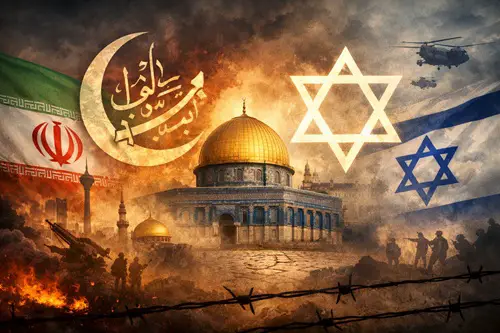 Western discussions of Iranian ideology often assume that Shi'a messianism works like Christian end-times theology. In reality, the two traditions differ in crucial ways. Because analysts unconsciously interpret Iranian rhetoric through a Christian apocalyptic template, they sometimes misread what Shi'a theology actually teaches. 1. The Christian Apocalyptic ModelIn many Christian traditions—especially evangelical and dispensationalist ones—the end times unfold through a dramatic sequence of historical events. Popular interpretations influenced by writers like Hal Lindsey or the Left Behind novels assume that: • History is moving toward a climactic apocalyptic confrontation. • The restoration of Israel plays a central prophetic role. • War in the Middle East may precede the return of Jesus Christ. In this framework, believers sometimes see geopolitical events as actively fulfilling prophecy. This mindset encourages the idea that humans might participate in bringing about the end times, or at least interpret contemporary conflicts as steps toward it. 2. Classical Twelver Shi'a MessianismThe Shi'a doctrine of the Mahdi developed very differently. Twelver Shi'a Muslims believe that the twelfth Imam, Muhammad al-Mahdi, disappeared in 874 CE and entered a state of occultation. Key features of this doctrine include: Passive expectation Traditionally, believers wait patiently for the Mahdi's return rather than trying to trigger it. Divine timing Only God decides when the Mahdi will reappear. Moral preparation Believers are encouraged to cultivate justice and faith, not to create chaos. In other words, classical Shi'a theology discourages attempts to force the apocalypse. 3. The Khomeini InnovationThe Iranian Revolution led by Ruhollah Khomeini introduced a major political reinterpretation. Khomeini argued that Islamic jurists should govern society during the Mahdi's occultation—a doctrine known as Velayat-e Faqih (Guardianship of the Jurist). However, even Khomeini did not teach that humans could trigger the Mahdi's return through war or chaos. His revolution was framed as preparing a just Islamic society, not precipitating apocalypse. 4. Why Western Analysts Misread the DoctrineSeveral factors encourage misunderstanding. Christian Cultural TemplatesWestern analysts often unconsciously assume all messianic religions function like Christian apocalypticism, where historical events fulfill prophecy. Revolutionary RhetoricIranian leaders sometimes use dramatic language about the Mahdi to inspire political mobilization. Media SimplificationComplex theological doctrines are reduced to simple narratives like “Iran wants to start the end of the world.” These interpretations flatten centuries of Shi'a theological nuance. 5. Iran's Actual Political TheologyModern Iranian ideology blends three elements: • Shi'a symbolism (martyrdom, justice, the Mahdi) • Revolutionary nationalism • Strategic geopolitical interests Even leaders who invoke the Mahdi—such as Mahmoud Ahmadinejad—have governed within the constraints of state survival. Iran's foreign policy behavior, including its cautious indirect conflict with Israel, reflects strategic calculation rather than apocalyptic urgency. 6. The IronyThere is a subtle irony in the Western debate. Some of the strongest proponents of the “Iranian apocalypse” thesis come from political cultures where Christian end-times theology itself influences public discourse. Thus, Western commentators sometimes interpret Iranian beliefs through their own religious framework, producing a mirror-image misunderstanding. In summary:Shi'a messianism centers on waiting for divine intervention, whereas many Western interpretations assume a theology of humanly triggered apocalypse. The gap between these two frameworks explains much of the confusion surrounding Iran's religious rhetoric.
Widget is loading comments...
|