|
TRANSLATE THIS ARTICLE
Integral World: Exploring Theories of Everything
An independent forum for a critical discussion of the integral philosophy of Ken Wilber
  Frank Visser, graduated as a psychologist of culture and religion, founded IntegralWorld in 1997. He worked as production manager for various publishing houses and as service manager for various internet companies and lives in Amsterdam. Books: Ken Wilber: Thought as Passion (SUNY, 2003), and The Corona Conspiracy: Combatting Disinformation about the Coronavirus (Kindle, 2020). Frank Visser, graduated as a psychologist of culture and religion, founded IntegralWorld in 1997. He worked as production manager for various publishing houses and as service manager for various internet companies and lives in Amsterdam. Books: Ken Wilber: Thought as Passion (SUNY, 2003), and The Corona Conspiracy: Combatting Disinformation about the Coronavirus (Kindle, 2020).
Check out my other conversations with ChatGPT
BIG NAMES IN BIG HISTORY Big History Pioneers David Christian's Grand Narrative Eric Chaisson's Cosmic Evolution Fred Spier's Big History Tyler Volk's Grand Sequence Other Cosmic Models Erich Jantsch, the Forgotten Architect Sagan and Schneider on Entropy Bobby Azarian's Evolutionary Model Brendan Graham Dempsey's Emergentism Jagers op Akkerhuis' Third Law Ken Wilber and Big History Wrapping Up: Six Questions for Big History From Quarks to CultureA Critical Assessment of Tyler Volk's Grand SequenceFrank Visser / ChatGPT
 Tyler Volk's Quarks to Culture: How We Came to Be is an ambitious attempt to tell the story of reality without pretending to have discovered a Theory of Everything. Published in 2017, the book proposes a “grand sequence” of twelve fundamental levels stretching from fundamental quanta through nucleons, atomic nuclei, atoms, molecules, prokaryotic cells, eukaryotic cells, multicellular organisms, animal social groups, tribal metagroups, agrovillages, and finally geopolitical states. Volk's central concept is “combogenesis”: the genesis of new kinds of things and new relations through the combination and integration of previously existing things. 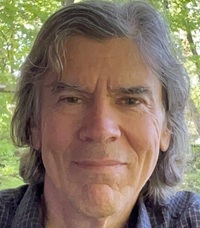 Tyler Volk The attraction of this model is obvious. It offers something that Big History often lacks: not merely a chronology of events, but an attempt to identify a recurrent structural pattern in the history of the universe. Volk wants us to see the emergence of atoms from subatomic particles, molecules from atoms, cells from molecular systems, multicellular organisms from cells, and increasingly complex societies from organisms as variations on a common theme. In this respect, Quarks to Culture is an impressive exercise in scientific synthesis. But precisely because Volk attempts such a sweeping synthesis, the critical question becomes unavoidable: does “combogenesis” actually explain the transitions it identifies, or does it mainly provide an attractive vocabulary for describing them? My assessment is that Volk's model succeeds brilliantly as a map and heuristic, but much less decisively as a theory of evolutionary innovation. Its greatest strength is also its greatest weakness: it discovers a striking pattern by selecting a particular trajectory through cosmic history, but that trajectory is considerably more contingent, discontinuous and heterogeneous than the elegant sequence suggests. The basic idea: from parts to wholesVolk begins with a deceptively simple observation. The world is nested. Things are made from other things, and once new wholes arise, they acquire properties and relationships unavailable to their components. A molecule is not simply a pile of atoms. A cell is not merely a collection of molecules. A multicellular organism is not merely an aggregation of cells. A human society is not reducible to a list of individual human beings. At each level, combinations create new possibilities. Volk calls the process producing these new levels “combogenesis”: “the genesis of new types of things by combination and integration of previously existing things.” This is a useful conceptual move because it avoids some of the metaphysical baggage that has accumulated around words such as “emergence,” “self-transcendence,” and “evolutionary advance.” Rather than saying that something mysteriously “emerges,” Volk asks what actually combines with what, what new structure results, and what new relations become possible. His example of water is particularly instructive. Hydrogen and oxygen do not merely coexist. Under appropriate conditions they form H2O, a molecule with properties that cannot be attributed to either hydrogen or oxygen considered separately. Those properties subsequently enable further relationships, including hydrogen bonding between water molecules. The new level therefore creates a new repertoire of possibilities. This is one of the strongest features of Volk's approach. It brings the discussion of emergence back down to physical reality. Instead of treating novelty as a mysterious metaphysical event, it asks what novel organization actually consists of. A hierarchy without a cosmic ladderThe term “hierarchy” can be misleading here. Volk's sequence is not supposed to mean that geopolitical states are metaphysically “higher” than atoms, or that modern civilization represents the culmination toward which the universe was inevitably heading. That distinction matters enormously. The twelve levels are better understood as successive organizational regimes than as rungs on a ladder of intrinsic value. The publisher describes them as a sequence across three broad dynamical realms—physics, biology and culture—and emphasizes that Volk is looking for recurring structural patterns rather than proposing a conventional Theory of Everything. This makes the book considerably more defensible than many grand evolutionary narratives. There is no need to invoke a cosmic Spirit, a universal consciousness, or a mysterious force pulling matter toward mind. Volk can remain within a broadly naturalistic framework. This is particularly important when the model is compared with more metaphysical theories of evolution. The temptation in integral and other holistic philosophies is to interpret the repeated appearance of novelty as evidence that evolution itself must be driven by some deeper principle of creativity. Volk's achievement is to show that one can identify recurring patterns of increasing organizational complexity without immediately converting those patterns into metaphysics. That is a considerable virtue. But it does not mean that the problem of directionality has disappeared. The grand sequence is not the history of everythingThe first major criticism is methodological. Volk calls his sequence a “grand sequence,” but it is not literally the sequence through which everything in the universe developed. It is a selected pathway through cosmic history leading eventually to human culture. That distinction is easy to overlook because the narrative is so compelling. The universe did not begin by setting out on a twelve-step journey toward geopolitical states. Stars, galaxies, planets, mineral systems, weather systems, ecosystems, and innumerable other structures emerged along the way. Many of these are genuine complex systems, but they do not fit neatly into Volk's sequence. Volk himself recognizes that his scheme is a logical model rather than a mathematical one and acknowledges the subjectivity involved in selecting the levels. That intellectual modesty is important. Still, the problem remains. Once the endpoint is defined as “culture,” the investigator can work backward and identify the organizational innovations that appear to lead toward it. But this is not the same as demonstrating that the sequence itself constitutes a universal law. There is a subtle anthropocentrism here. The story begins with the simplest physical entities and ends with us. The apparent direction of the sequence therefore partly reflects the fact that human beings are doing the counting. The sequence is a history of how we came to be, not necessarily a history of how complexity as such comes to be. That is a perfectly legitimate project. But it should not be confused with a general theory of cosmic complexification. “Combogenesis” versus emergenceThe second problem concerns the novelty of the central concept. Is combogenesis genuinely a new explanatory principle, or is it a particularly useful reformulation of emergence, hierarchical organization, major evolutionary transitions, and self-organization? There is a strong case for the latter. The general idea that wholes acquire properties not possessed by their components is familiar throughout systems biology, chemistry, complexity science and philosophy of science. The idea that evolutionary history repeatedly involves formerly independent entities becoming integrated into larger units is also well established. The origin of eukaryotic cells through endosymbiosis and the evolution of multicellularity are classic examples of major evolutionary transitions. Volk's terminology is nevertheless useful because it emphasizes a particular aspect of emergence: combination and integration. A reviewer in The Biologist made essentially this point from another direction, observing that the theory sometimes amounts to the observation that at successive levels “innovations” enable the next level, while noting that the model's missing pieces include the origin of fundamental particle properties and the transition from molecules to cells. The distinction matters because description and explanation are not the same thing. To say that eukaryotic cells arose through the combination and integration of previously existing organisms is illuminating. But it does not by itself explain why that combination occurred, under what ecological conditions it was favored, what mechanisms stabilized it, why most combinations failed, or why particular evolutionary routes were taken rather than countless alternatives. “Combogenesis” identifies a form of historical transition. It does not necessarily provide its causal theory. That is perhaps the single most important limitation of the model. The difficult middle: from chemistry to lifeThe weakest link in any “quarks to culture” narrative is almost inevitably the transition from chemistry to biology. At the physical end of Volk's sequence, the mechanisms are comparatively well understood. Quarks, nucleons, nuclei, atoms and molecules are governed by physical laws that can be expressed mathematically with extraordinary precision. We understand how atomic nuclei form, how electrons organize around nuclei, how chemical bonds arise, and how molecules acquire their properties. At the biological end, evolutionary theory gives us an equally powerful explanatory framework. Once self-reproducing populations exist, variation, inheritance and differential reproductive success can produce cumulative adaptation. But between these domains lies the origin of life. Volk's sequence moves from molecules to simple cells, but this is not remotely analogous to the formation of a water molecule from hydrogen and oxygen. The origin of the first evolving systems remains a major scientific research problem. We have increasingly sophisticated hypotheses involving autocatalytic networks, compartmentalization, RNA-like replicators, metabolism-first scenarios and other possibilities, but no single experimentally established pathway from ordinary prebiotic chemistry to the first open-ended evolutionary system. This is not a minor missing detail. It is a conceptual discontinuity in the entire narrative. The formation of molecules is not evolution in the Darwinian sense. The origin of life introduces heredity, reproduction, variation, selection and historical accumulation. The transition therefore requires more than “combining parts into wholes.” It requires the appearance of a new dynamical regime. This is precisely where Volk's broad pattern becomes less explanatory. Combogenesis works extremely well as a description of the resulting architecture, but much less well as an account of the mechanisms that generated it. Evolution is not simply building upwardA related problem is that the visual architecture of the grand sequence can make evolution look more directional and progressive than it really is. Biological evolution does indeed generate new levels of organization, but most evolution does not consist of organisms combining to form increasingly complex organisms. The overwhelming majority of evolutionary change occurs within existing levels. Species diversify. Genes duplicate. Populations adapt. Morphologies change. Organisms specialize. Lineages go extinct. Ecosystems reorganize. None of this necessarily creates a new ontological level. Volk is aware of this distinction. The model specifically focuses on major transitions rather than treating every evolutionary change as combogenesis. That is an important qualification. A worm becoming a whale, for example, is not combogenesis in the relevant sense, whereas formerly independent cells becoming integrated into a multicellular organism can be. But this distinction reveals an important asymmetry. Combogenesis identifies the relatively rare moments when evolutionary history changes organizational level. It therefore tells us something important about the architecture of evolutionary history, but it does not explain evolutionary history as a whole. There is a danger of mistaking the skeleton for the organism. The grand sequence captures the major transitions, while the enormous amount of ordinary evolution occurring between those transitions disappears into the background. Yet those supposedly “lesser” processes are precisely what generate the variation, specialization and ecological complexity that make the larger transitions possible. The social levels are particularly problematicThe upper half of Volk's sequence is conceptually more controversial than the lower half. The progression from atoms to molecules to cells has relatively clear physical boundaries. But once we reach animal social groups, tribal metagroups, agrovillages and geopolitical states, the nature of the “things” being combined changes dramatically. A molecule is a physical entity. A cell is a biological entity. A state is an institutionally constituted social system. The latter does not simply consist of human beings in the same way that a molecule consists of atoms. This was one of the issues I highlighted in my earlier integrally informed review of the book: the lower levels can readily be understood as individual physical or biological entities, whereas the higher levels increasingly describe collectivities and social organization.[1] The distinction becomes especially important when the model is compared with Ken Wilber's holarchical framework. Wilber's criticism of holistic hierarchies was that they can confuse individual developmental levels with collective levels: an organism and a society are not simply successive versions of the same kind of entity. There is something to this criticism, although it should not be overstated. Volk's model does not become invalid merely because societies differ ontologically from organisms. But the analogy becomes increasingly metaphorical as we move upward. A geopolitical state does not literally “grow” out of humans in the same way that a multicellular organism grows out of cells. Human societies are constituted not only by combination but by institutions, norms, language, symbolic systems, political power, economic exchange and collective representations. These are mediated by individual brains but cannot simply be reduced to physical aggregation. In other words, the upper levels require a theory of social organization, not merely a theory of combination. Alphakits: one of Volk's more interesting insightsOne of the most promising elements of Volk's framework is his concept of the “alphakit.” The idea is that certain evolutionary innovations provide a relatively small set of combinatorial building blocks from which enormous diversity can subsequently be generated. The alphabet provides letters from which countless words can be constructed. Genetic systems use a limited biochemical vocabulary to generate immense biological diversity. Likewise, the physical world obtains an enormous chemical diversity from combinations of a relatively limited set of fundamental particles. This is more than a poetic analogy. Combinatorial possibility is genuinely one of the great generators of complexity. Once a system possesses a reusable vocabulary of components and a mechanism for combining them, the number of possible configurations can increase enormously. This helps explain why evolutionary history repeatedly produces explosions of diversity. The innovation is not necessarily the production of each new form individually. It is the creation of a generative system capable of producing many forms. This is an important distinction. The periodic table is not itself a collection of every possible chemical compound. DNA is not a catalogue of every organism. Language is not a dictionary of every possible sentence. Each is a combinatorial system that makes an immense possibility space accessible. Here Volk's “alphakit” idea potentially connects his model to deeper concepts in information theory, evolutionary biology and generative systems. Yet again, however, it is more illuminating as a conceptual framework than as a complete causal explanation. The existence of a combinatorial alphabet does not tell us which combinations will actually appear. Selection, constraints, developmental architecture, ecological opportunity, historical contingency and chance still determine the realized trajectories. Cooperation is not the whole storyThere is another subtle issue. Combogenesis places combination and integration at center stage. This provides a useful alternative to the simplistic picture of evolution as pure competition. Evolutionary transitions often do involve cooperation: genes cooperate within genomes, cells cooperate within organisms, organisms cooperate within societies, and formerly independent lineages can become deeply integrated. But combination does not replace competition. It operates alongside it. Indeed, the evolution of stable higher-level individuality often creates new conflicts between levels. Genes can conflict with genomes; cells can conflict with organisms; individuals can conflict with groups; and political actors can conflict within states. The history of major transitions is therefore not simply a history of increasingly harmonious integration. It is a history of integration under conditions in which conflicts of interest must somehow be controlled, suppressed, aligned or exploited. This is where evolutionary theory adds an important dimension to Volk's architectural picture. The question is not merely, “What combines with what?” It is also, “Why does the combination persist?” That second question brings us back to selection. A temporary aggregation is easy to produce. A stable new level of individuality is much harder. The danger of reading direction into the sequenceThe most philosophically interesting criticism concerns directionality. Once we arrange fundamental levels from quanta to states, the sequence looks like a movement toward greater complexity. There is an obvious temptation to interpret that pattern as evidence that the universe itself has a tendency toward increasing complexity. Volk is more careful than this interpretation suggests. His project is naturalistic and explicitly framed as an inquiry into recurring patterns rather than proof of cosmic purpose. The publisher describes the book as a synthesis of physical, biological and cultural history rather than a metaphysical Theory of Everything. Nevertheless, the visual and narrative structure of the model can generate a progressive impression. The universe is not simply “winding upward.” Complexity is episodic, uneven and highly local. The vast majority of the universe is extremely simple by biological standards. Stars form and die. Species emerge and disappear. Civilizations rise and collapse. Evolution sometimes produces greater complexity and sometimes dramatic simplification. There is no universal monotonic law of complexification. What we can say is more modest and, in my view, more interesting: under certain physical, chemical, ecological and informational conditions, new organizational levels become possible. Once they become possible, evolutionary and cultural processes can exploit them. But possibility is not destiny. That formulation preserves the grandeur of Volk's story without turning it into cosmic teleology. A useful corrective to integral theoriesThis is where Volk's model becomes particularly interesting from an integral perspective. Integral theorists have long been fascinated by developmental sequences, holarchies and the apparent emergence of increasingly complex forms. But such frameworks often become vulnerable when their conceptual vocabulary begins to substitute for empirical explanation. “Transcend and include” is an elegant phrase. “Self-transcendence” is suggestive. “Eros” is philosophically evocative. But none of these concepts, by themselves, explains why hydrogen and oxygen form water, why mitochondria became incorporated into eukaryotic cells, or why human beings invented agriculture. Volk's approach offers a valuable corrective because he starts with the actual mechanisms and structures. His water molecule does not need a metaphysical principle of transcendence. Its properties can be explained through chemistry. The emergence of eukaryotic cells can be investigated through evolutionary history and endosymbiosis. Cultural transitions can be investigated through archaeology, anthropology and history. This is the strongest philosophical lesson of Quarks to Culture: we should resist the temptation to turn every instance of novelty into evidence for a mysterious cosmic force. Novelty is real. Emergence is real. Increasing organizational complexity is real. But none of these facts automatically establishes a metaphysical principle behind them. Yet Volk's model needs evolution more than it sometimes admitsThere is an irony here. Volk's project is explicitly evolutionary, but the deepest explanatory machinery of evolutionary theory sometimes recedes behind the structural pattern of the grand sequence. The sequence tells us that new organizational levels appeared. Evolutionary theory tells us something about how populations change and how novel adaptations spread. Major transitions research tells us how formerly independent entities can become integrated evolutionary individuals. Developmental biology tells us how complex organisms are constructed. Ecology tells us how organisms and environments interact. Cultural evolution investigates how information and institutions are transmitted and modified. No single one of these frameworks is sufficient. That suggests that the real value of Quarks to Culture may lie not in replacing these disciplines with combogenesis but in providing a conceptual architecture in which their findings can be placed. In that sense, the book is better understood as a natural philosophy than as a scientific theory. Volk himself is remarkably candid about this. His model is explicitly logical rather than mathematical, and he acknowledges that the selection of levels is subject to revision as scientific knowledge improves. That modesty should be preserved. From a “grand sequence” to a pluralistic Big HistoryInterestingly, Volk's later work with Gregg Henriques moves in precisely this direction. Their 2023 proposal for “Big History 2.0” distinguishes combogenesis from emergence more generally and connects major transitions to evolutionary dynamics involving propagation, variation and selective retention. This is potentially a significant improvement. It places the structural insight of combogenesis within a more explicitly evolutionary framework. The important question is no longer simply why larger wholes appear, but how innovations arise, propagate, vary and become selectively retained. That brings us closer to an actual theory of evolutionary change. It also helps solve one of the central weaknesses of the original Quarks to Culture model. A sequence of levels tells us what the historical architecture looks like. Evolutionary dynamics help explain how the architecture is generated and maintained. The distinction between these two tasks is crucial. The real achievement of Quarks to CultureIt would therefore be unfair to judge Volk's model by the standards of a predictive scientific theory when Volk himself does not really present it as one. Its genuine achievement is synthetic. Volk manages to place physical, biological and cultural history on a single conceptual canvas without pretending that they are governed by identical mechanisms. That is difficult to do well. The book's twelve levels are not simply a list of increasingly complicated objects; they are an attempt to identify major transitions in which new kinds of entities and relations become possible. The model is especially valuable in drawing attention to the fact that evolutionary history is not only about modification within established levels. Sometimes the organization of reality itself changes. • Atoms permit chemistry. • Chemistry permits increasingly elaborate molecular systems. • Molecular systems permit life. • Cells permit multicellular organisms. • Multicellularity permits new forms of animal organization. • Animals permit increasingly sophisticated sociality. • Sociality, language and cumulative culture permit human civilization. This is a genuinely profound pattern. But it is a pattern, not yet a law. Conclusion: a map, not a mechanismTyler Volk's Quarks to Culture occupies an interesting position between science, systems theory and natural philosophy. It is neither a conventional Big History narrative nor a metaphysical Theory of Everything. Its central concept, combogenesis, highlights a real and important feature of the history of complexity: new organizational levels can arise when previously existing entities combine and become integrated, thereby creating new entities and new relational possibilities. The model's weakness is that its elegance can make the history of reality look more continuous, directional and law-like than it actually is. The transition from molecules to life remains vastly more problematic than the formation of molecules from atoms. Most evolution takes place within levels rather than between them. Social organization differs fundamentally from physical aggregation. And “combogenesis,” while suggestive, does not by itself explain why particular combinations arise, stabilize and spread. The grand sequence is therefore best treated as a powerful heuristic rather than a universal evolutionary law. And perhaps that is enough. There is something intellectually healthy about Volk's refusal to inflate his insight into metaphysics. He does not need the universe to possess an intrinsic urge toward Spirit, consciousness or cosmic self-realization. He asks us instead to look carefully at what nature actually does. Matter combines. New structures appear. New relations become possible. Life exploits chemical possibilities. Organisms combine into larger units. Social animals create increasingly elaborate forms of organization. Humans add symbolic inheritance and cumulative culture. At every stage, history opens possibilities that did not previously exist. The deepest lesson of Quarks to Culture may therefore not be that the universe follows a twelve-step ladder from quarks to civilization. It is that reality repeatedly creates new possibility spaces by reorganizing what already exists. That is a considerably more modest claim than a cosmic law of upward evolution—but also a more defensible one. Volk gives us a map of the great transitions. Evolutionary biology, chemistry, physics, archaeology and the social sciences must still explain the roads that actually produced them. The intellectual task ahead is not to choose between these perspectives, but to connect them without confusing a compelling pattern with the mechanism that generated it. In that sense, Quarks to Culture succeeds precisely where many grand evolutionary narratives fail: it gives us a reason to marvel without requiring us to believe that the universe was secretly aiming at us all along. NOTES[1] Frank Visser, "From Quarks to Culture: A Critical Assessment of Tyler Volk's Grand Sequence", www.integralworld.net, February 2018. SEE ALSO[1] Frank Visser / ChatGPT, "Tyler Volk and the Ecology of Everything", www.integralworld.net, March 2026.
Widget is loading comments...
|