|
TRANSLATE THIS ARTICLE
Integral World: Exploring Theories of Everything
An independent forum for a critical discussion of the integral philosophy of Ken Wilber
  Frank Visser, graduated as a psychologist of culture and religion, founded IntegralWorld in 1997. He worked as production manager for various publishing houses and as service manager for various internet companies and lives in Amsterdam. Books: Ken Wilber: Thought as Passion (SUNY, 2003), and The Corona Conspiracy: Combatting Disinformation about the Coronavirus (Kindle, 2020). Frank Visser, graduated as a psychologist of culture and religion, founded IntegralWorld in 1997. He worked as production manager for various publishing houses and as service manager for various internet companies and lives in Amsterdam. Books: Ken Wilber: Thought as Passion (SUNY, 2003), and The Corona Conspiracy: Combatting Disinformation about the Coronavirus (Kindle, 2020).
Check out my other conversations with ChatGPT
BIG NAMES IN BIG HISTORY Big History Pioneers David Christian's Grand Narrative Eric Chaisson's Cosmic Evolution Fred Spier's Big History Tyler Volk's Grand Sequence Other Cosmic Models Erich Jantsch, the Forgotten Architect Sagan and Schneider on Entropy Bobby Azarian's Evolutionary Model Brendan Graham Dempsey's Emergentism Jagers op Akkerhuis' Third Law Ken Wilber and Big History Wrapping Up: Six Questions for Big History Erich JantschAnd the Forgotten Architecture of Big HistoryFrank Visser / ChatGPT
 Erich Jantsch occupies a curious position in the history of Big History. He is simultaneously one of its most important pioneers and one of its least remembered architects. Long before “Big History” became the name of an interdisciplinary field, Jantsch attempted something remarkably close to what the contemporary movement would later undertake: he constructed a single evolutionary narrative extending from cosmological processes through the emergence of life and consciousness to human society. His great synthesis, The Self-Organizing Universe: Scientific and Human Implications, appeared in 1980, only shortly before his death. Fred Spier, who later developed The Structure of Big History (1996), eventually acknowledged that Jantsch had preceded him, calling attention to the Austrian thinker's neglected achievement. 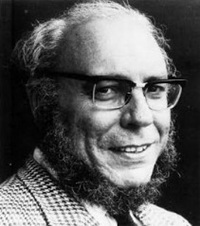 Erich Jantsch Yet Jantsch's legacy is more complicated than simply declaring him “the father of Big History.” His work contains a genuinely important conceptual breakthrough: the realization that the history of the universe can be understood in terms of successive regimes of self-organization, rather than as a collection of disconnected histories belonging to separate academic disciplines. At the same time, his evolutionary vision sometimes slides from a scientifically defensible account of self-organization into a much more ambitious philosophy of cosmic development. The result is a fascinating hybrid: part systems science, part evolutionary theory, part futurism, and part philosophical speculation. The enduring importance of Jantsch therefore lies not in the claim that he got Big History completely right. It lies in the fact that he asked, unusually early and unusually boldly, what a genuinely unified evolutionary history would look like. The intellectual landscape before Big HistoryThe fragmentation of modern knowledge is one of the central problems that Big History attempts to overcome. Cosmology studies the universe, geology studies the Earth, biology studies life, anthropology studies humans, and history traditionally begins somewhere near the appearance of literate civilizations. Each discipline has developed its own methods, vocabulary and standards of evidence. The boundaries between them can consequently begin to look like boundaries in reality itself. Jantsch rejected this fragmentation. His intellectual background was unusually broad. He worked across systems theory, cybernetics, technology, ecology, futures studies and the emerging science of self-organization. Already in the 1970s, he was attempting to understand human organization using ideas derived from nonequilibrium physics. His Design for Evolution (1975) explored how human systems could deliberately participate in evolutionary processes, while his earlier work connected technological planning and social organization to larger evolutionary dynamics. This is important because Jantsch did not arrive at Big History simply by asking, “What happened after the Big Bang?” His deeper question was: What kind of process could generate the extraordinary succession of organized structures that constitute cosmic and terrestrial history? That question shifts the emphasis from chronology to dynamics. From events to process structuresJantsch's distinctive contribution was his concept of the “process structure.” Instead of treating a galaxy, organism, ecosystem or society merely as an object, he regarded such entities as relatively stable patterns maintained within ongoing processes. This was closely connected with the work of Ilya Prigogine on dissipative structures and nonequilibrium thermodynamics. Jantsch saw in this research a possible bridge between physics and the broader phenomenon of evolution. Systems sufficiently far from equilibrium can spontaneously develop organized structures because energy and matter continuously flow through them. Jantsch proposed that this principle might provide a general framework for understanding the emergence of increasingly complex forms of organization. That was a powerful intuition. A hurricane is not an equilibrium object. It exists because energy flows through the atmosphere. A living organism similarly maintains its organization by continuously exchanging matter and energy with its environment. An ecosystem, a city and perhaps even a civilization can likewise be understood as dynamic systems rather than static things. This perspective offers Big History something deeper than a mere timeline. It suggests a possible grammar of cosmic history. The universe does not simply contain galaxies, stars, planets, organisms and societies. Rather, successive forms of organization emerge within an evolving network of physical processes. This is one reason Jantsch's work still deserves serious attention. Contemporary discussions of complexity, emergence, self-organization and nonequilibrium dynamics repeatedly return to precisely the conceptual territory he was exploring decades ago. Jantsch as a genuine precursor of Big HistoryIt is tempting to regard Big History as an invention of the 1980s and 1990s, associated primarily with David Christian, Fred Spier and later Eric Chaisson. That chronology is misleading. Christian himself has acknowledged that modern attempts at universal history multiplied from the 1980s onward and identifies Jantsch's The Self-Organizing Universe as probably the first modern attempt to formulate a comprehensive Big History model. Spier has been even more explicit: he discovered Jantsch only after developing his own framework and concluded that Jantsch deserved priority for the first general structure of Big History. This is an important historical correction. Jantsch did not merely anticipate a few themes later adopted by Big Historians. He attempted the synthesis itself. His narrative moved through cosmological, physical, chemical, biological and human levels of organization. His concern was the emergence of new forms of organization at different scales, with each relatively stable regime depending upon the energetic and informational processes underlying it. Later Big History models would use different terminology, different thresholds and different explanatory mechanisms, but the basic ambition was remarkably similar. In this sense, Jantsch deserves to be placed alongside the major pioneers of the field rather than relegated to the prehistory of Big History. The thermodynamic insightOne of Jantsch's greatest strengths was his refusal to treat evolution as something that begins with biological organisms. Evolution, in his broader sense, concerns the emergence and transformation of organized structures throughout nature. Biology represents an extraordinary phase of that history, but it is not the beginning of organization. This immediately addresses one of the perennial conceptual problems in Big History: how can increasingly organized and complex structures arise in a universe governed by the second law of thermodynamics? Jantsch's answer was essentially to shift the frame of reference from isolated systems to open nonequilibrium systems. Local organization does not violate the second law. A system can maintain or increase its internal organization by exporting entropy into its environment. Dissipative structures are precisely examples of order emerging under conditions of energy flow. This is a much better starting point than treating entropy as the cosmic enemy of evolution. But here a critical qualification is necessary. Nonequilibrium thermodynamics does not by itself predict a universal trajectory toward greater complexity. It provides conditions under which particular forms of organization can emerge and persist. It does not establish that the universe as a whole must become increasingly complex. This distinction is crucial. Jantsch sometimes came close to transforming a powerful physical principle into a general evolutionary metaphysics. The scientific insight is strongest when it says: energy flows through nonequilibrium systems can generate and sustain organized structures. It becomes more speculative when this is reformulated as a universal principle of progressive cosmic development. That difference would become increasingly important for later Big History. Self-organization is not the same as progressThe most significant weakness in Jantsch's vision is therefore the tendency to associate self-organization with directional evolution. There is an understandable temptation here. When we look backward through cosmic history, we see an astonishing sequence: particles, atoms, stars, galaxies, planets, chemistry, life, nervous systems, intelligence, language and civilization. The sequence seems to point somewhere. But historical sequence is not necessarily evolutionary direction. Self-organization does not imply progress. Complex systems can emerge, persist, collapse and disappear. Evolution generates extraordinary novelty, but it also generates extinction. Galaxies collide. Stars die. Ecosystems collapse. Species disappear. Civilizations decline. Complexity can increase in one domain while decreasing in another. Consequently, the existence of an upward-looking historical sequence does not establish an intrinsic cosmic tendency toward complexity. This is where Jantsch's synthesis becomes philosophically vulnerable. His model is strongest as an account of how organized structures can emerge in a nonequilibrium universe. It is considerably less secure as an account of why evolution should be understood as a directional ascent toward higher forms of organization. That distinction separates systems science from evolutionary metaphysics. The human being enters the pictureJantsch did not stop at biology. Indeed, his work became increasingly concerned with consciousness, culture and the possibility that human beings might become conscious participants in evolution. This theme was already prominent in Design for Evolution, where he argued that human beings possess the capacity to influence the future development of human systems through planning, design and conscious intervention. His 1974 work on organizing the human world described social evolution in terms of alternating stability and mutation, with human design increasingly becoming a factor in the transformation of social systems. This makes Jantsch particularly interesting from a Big History perspective. Most Big History narratives have an implicit problem at precisely this point. They can describe the emergence of human beings, but what happens after that? Once symbolic culture, technology and deliberate planning emerge, evolution acquires a new dimension. Humans no longer merely adapt to environments; they transform environments. Jantsch understood this transition remarkably well. Human beings become evolutionary agents. Technology, institutions, knowledge and culture become mechanisms through which evolution operates. The history of evolution consequently becomes partly a history of increasingly sophisticated forms of self-organization and feedback. This is one of the most fruitful elements of Jantsch's legacy. But here too, teleology creeps inThe problem is that Jantsch's language of evolutionary development sometimes makes the transition from description to prescription almost imperceptibly. If human beings become conscious participants in evolution, does that mean evolution itself has become conscious? Not necessarily. Humans certainly possess foresight, planning and symbolic representation. We can deliberately construct institutions and technologies. But it does not follow that the universe has thereby acquired an overarching evolutionary purpose. Jantsch occasionally approaches precisely such a conclusion. His writings on human evolution, values and consciousness suggest an increasingly integrated evolutionary process in which humanity might consciously participate in its own further development. His 1975 discussion of values, for example, described value dynamics as part of an internal, non-Darwinian learning process of humanity. This is intellectually suggestive, but scientifically much less secure. There is an enormous difference between saying that cultural evolution has mechanisms different from biological evolution and saying that humanity collectively constitutes a higher-order evolutionary subject. The first is a reasonable proposition. The second is a philosophical hypothesis. Jantsch sometimes moved too easily between the two. Jantsch and the problem of “higher”This exposes a deeper ambiguity in his vocabulary. What does it mean for one regime of organization to be “higher” than another? A human brain is vastly more complex than a bacterium in certain respects. But the bacterium is extraordinarily successful in evolutionary terms. A civilization is more technologically complex than a hunter-gatherer society, but complexity does not automatically imply greater adaptability, wisdom or well-being. Likewise, modern civilization may contain forms of organization that are simultaneously more complex and more destructive. The danger is that “higher complexity” can silently become “higher value.” Jantsch's writings on human evolution occasionally flirt with this conflation. The vocabulary of integration, individuation and evolutionary development can suggest that history is moving toward progressively superior forms of existence. That interpretation is not required by systems theory, but it is an easy interpretation to extract from it. Big History should resist that temptation. A scientifically responsible Big History needs to distinguish at least four different claims: • Complexity can increase. • Organization can emerge spontaneously. • New levels of integration can arise. • Evolution is therefore progressively improving. The first three can be investigated scientifically. The fourth is a philosophical interpretation. Jantsch's genius was to illuminate the first three. His weakness was occasionally treating the fourth as though it followed naturally from them. The forgotten alternative to David ChristianThe eventual dominance of David Christian's model has made Big History appear more uniform than it really is. Christian's framework emphasizes “thresholds of increasing complexity,” while Fred Spier's model places greater emphasis on Goldilocks conditions and the emergence of complexity within favorable ranges of energy and matter. Eric Chaisson emphasizes free-energy rate density and the energetic basis of increasing complexity. Jantsch represents a different possibility. His central organizing principle is not simply complexity, energy density or Goldilocks conditions, but self-organization across levels of process. That difference matters. Christian's thresholds tell us where major transitions occurred. Spier's Goldilocks principle helps explain why certain conditions allowed complexity to emerge. Chaisson's energetic framework attempts to quantify the flow of energy associated with complex systems. Jantsch, by contrast, asks how new organizational regimes arise from the dynamics of nonequilibrium systems. These approaches are not mutually exclusive. Indeed, one of the most promising uses of Jantsch today would be to place his systems perspective alongside rather than against the later Big History models. What Jantsch got spectacularly rightThere are several things that deserve particular credit. • First, Jantsch recognized that the boundary between cosmology and biology is conceptually porous. The emergence of life should not be treated as an isolated miracle inserted into an otherwise lifeless history. • Second, he recognized that organization is fundamentally processual. Stable structures are maintained dynamically rather than simply existing. • Third, he saw the importance of nonequilibrium thermodynamics for understanding the emergence of order. • Fourth, he anticipated the central importance of emergence. New levels of organization possess properties that cannot simply be read off from the components of the preceding level. • Fifth, he recognized that human cultural evolution introduces reflexivity. Humans can represent evolutionary processes and deliberately modify the systems in which they participate. • And sixth, he attempted all of this within one coherent intellectual framework. That last achievement is perhaps the most impressive. The modern academic system makes such synthesis extraordinarily difficult. A cosmologist, biologist, historian, sociologist and philosopher are expected to master increasingly specialized literatures. Jantsch attempted to move across these boundaries and construct a common conceptual vocabulary. That is precisely what Big History subsequently institutionalized. What Jantsch got wrong—or at least overstatedThe critical assessment is equally important. Jantsch's biggest problem was not that self-organization is irrelevant to evolution. It is that he sometimes gave self-organization too much explanatory authority. Self-organization is a genuine phenomenon. But the existence of self-organizing processes does not eliminate the need for natural selection, historical contingency, ecological interaction, developmental constraints, genetic drift, mutation and other mechanisms of biological evolution. Nor does thermodynamics provide a substitute for evolutionary biology. The emergence of life cannot simply be explained by saying that nonequilibrium systems self-organize. That describes a physical possibility, not a complete account of abiogenesis. Likewise, biological complexity cannot be reduced to energy flow. The same caution applies at the cultural level. Human societies exhibit self-organization, but they are also shaped by conflict, power, institutions, historical accidents, ideology, geography and intentional agency. Jantsch's grand synthesis sometimes risks compressing these radically different mechanisms into a single evolutionary grammar. That is elegant. But elegance is not the same thing as explanatory adequacy. The tragic timing of his legacyThere is also an historical irony. Jantsch's The Self-Organizing Universe appeared in 1980, and he died later that same year, shortly before his fifty-second birthday. His death almost certainly contributed to the disappearance of his work from the emerging intellectual networks that would later develop Big History. The timing was unfortunate. Had Jantsch lived another twenty or thirty years, he might have participated directly in the formation of the Big History movement. Instead, later pioneers often rediscovered ideas that had already appeared in his work. This is one reason his influence can be difficult to trace. An intellectual legacy does not necessarily consist of direct citations. Sometimes an idea survives while the person who first articulated it disappears from collective memory. Jantsch's ideas survived in systems thinking, complexity theory, ecological thought and evolutionary philosophy. They also resurfaced in Big History. But his name did not survive proportionately. Jantsch's relevance to the entropy-evolution debateThere is a particularly interesting reason to revisit Jantsch today: the persistent confusion surrounding entropy and evolution. The crude formulation of the problem is familiar: if entropy increases, how can complexity increase? The answer is that the second law applies to total entropy production, while local order can emerge and persist in open systems through energy and matter flows. Dissipative structures provide a rigorous physical example. Jantsch understood this point and made it central to his synthesis. But the lesson should not be exaggerated in the opposite direction. The fact that entropy does not prevent local complexity does not mean that entropy somehow causes evolution to become progressively complex. That is precisely where some popular interpretations of Big History go astray. The universe is not simply “winding up” because complexity increases locally, nor is evolution somehow defeating thermodynamics. Both the increase of entropy and the emergence of complex dissipative structures belong to the same physical history. Jantsch's framework can help dissolve this false opposition, provided it is read thermodynamically rather than metaphysically. A bridge between Big History and complexity sciencePerhaps the most valuable contemporary interpretation of Jantsch is therefore neither as prophet nor as failed theorist, but as a bridge. He anticipated the systems-oriented Big History that has become increasingly important in recent decades. Contemporary complexity science has made it possible to speak much more carefully about emergence, nonlinear dynamics, attractors, self-organization, adaptive systems, network effects and multiscale processes than was possible in Jantsch's time. His basic intuition can therefore be retained while his stronger philosophical claims are subjected to scientific scrutiny. That would produce a more modest but also more powerful Jantschian Big History. Instead of saying that the universe inevitably evolves toward greater complexity, we could say that the universe contains physical conditions under which increasingly elaborate forms of organization can emerge. Instead of saying that evolution has a predetermined direction, we could say that evolutionary histories exhibit statistical tendencies, constraints, path dependencies and recurrent transitions without requiring a cosmic goal. Instead of treating consciousness as the culmination of cosmic evolution, we could regard consciousness as one extraordinary emergent phenomenon within a much larger history of organization. And instead of interpreting humanity as the universe becoming conscious of itself, we could say something both less grandiose and more defensible: human beings are a part of the universe that has acquired the capacity to construct models of the universe and to act upon those models. That is already astonishing enough. The real legacy of Erich JantschJantsch's greatest contribution to Big History was not a particular chronology, threshold or formula. It was the conviction that the history of the universe should be understood as a connected history of evolving organization. That conviction remains one of the foundational intuitions of Big History. His work also provides a useful warning. The desire for a unified evolutionary narrative can easily become a desire for a unified evolutionary meaning. Once the history of the universe is represented as a sequence from simplicity to complexity, from matter to life to mind, it becomes tempting to interpret the sequence as progress, purpose or cosmic ascent. But the scientific achievement of Big History does not require such metaphysical conclusions. Indeed, Big History becomes more intellectually compelling when it can tell the story of increasing complexity without pretending that complexity was the universe's destination. This is where Jantsch's legacy should be critically recovered rather than simply celebrated. He was ahead of his time in seeing that cosmology, physics, chemistry, biology, ecology and human history could be treated as chapters in one enormous evolutionary narrative. He was ahead of his time in recognizing nonequilibrium processes and self-organization as central to that narrative. And he was remarkably prescient in recognizing that human beings introduce a reflexive dimension into evolution. But he also illustrates the danger inherent in every grand synthesis: once disparate scientific findings are woven into a single narrative, the narrative can acquire a direction that the individual findings do not necessarily possess. Jantsch gave Big History one of its earliest architectures. The task for contemporary Big History is not to return uncritically to that architecture, but to renovate it. His self-organizing universe should therefore be regarded neither as an obsolete curiosity nor as a prophetic final theory. It is better understood as a pioneering framework whose strongest insights have survived while its more teleological ambitions require qualification. In that sense, Erich Jantsch's legacy is remarkably contemporary. He reminds Big History of both its greatest promise and its greatest intellectual danger: the promise of seeing the universe as one interconnected evolutionary process, and the danger of mistaking the existence of that process for evidence that it was always going somewhere.
Widget is loading comments...
|