|
TRANSLATE THIS ARTICLE
Integral World: Exploring Theories of Everything
An independent forum for a critical discussion of the integral philosophy of Ken Wilber
  Frank Visser, graduated as a psychologist of culture and religion, founded IntegralWorld in 1997. He worked as production manager for various publishing houses and as service manager for various internet companies and lives in Amsterdam. Books: Ken Wilber: Thought as Passion (SUNY, 2003), and The Corona Conspiracy: Combatting Disinformation about the Coronavirus (Kindle, 2020).
Check out my other conversations with ChatGPT
Lawrence Taub's Macrohistory:
The Macrohistory of Futurist Lawrence Taub The Hindu Caste System Varna, Caste and the Meaning of Taub's Model Taub's Four Ages Reconsidered Who Rules History and Who Comes Next? Can Taub's Four Ages Survive Their Reconstruction? Can Taub's Four Ages Survive Their Reconstruction?Jan Krikke's Defense of a Prophetic Theory of History and the Problems It Still Cannot ResolveFrank Visser / ChatGPT
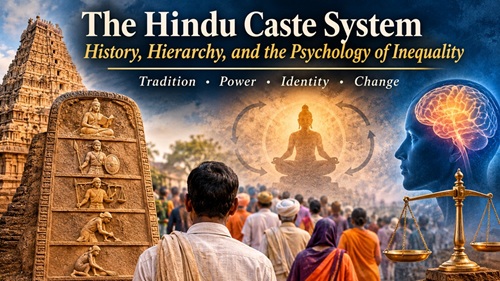 Jan Krikke has submitted a thoughtful defense of Larry Taub's historical theory in response to my essay, "Taub's Four Ages Reconsidered: Jan Krikke's Defense of a Prophetic Social Theory." His contribution, entitled "Who Rules History—and Who Comes Next?", deserves a serious examination. Unlike many defenses of grand historical narratives, Krikke does not simply insist that Taub was right. He acknowledges weaknesses, introduces qualifications, proposes empirical tests, and even identifies predictions that may already have failed. This is intellectually welcome. Yet his response raises a question that goes beyond the original discussion: Can Taub's Four Ages survive the reconstruction required to make them intellectually defensible? My central observation is that Krikke improves Taub's model as a framework for discussing historical developments, but does not establish it as a theory of historical evolution. In fact, the more carefully he tries to make the model testable, the more apparent its unresolved conceptual and methodological problems become. To appreciate this, we need to examine the three principal claims underlying Taub's Caste Model: its psychological foundations, its historical sequence, and its prediction of a Second Spiritual Age. 1. From psychological types to Weberian ideal typesTaub distinguishes four basic psychological orientations: spiritual-religious, warrior, merchant, and worker. These supposedly represent fundamental human dispositions that, in turn, shape the dominant institutions and values of entire societies. My original objection concerned the empirical status of these categories. What research demonstrates that these are four fundamental and sufficiently distinct psychological types? How would we measure them? What would count as evidence against their existence? Krikke makes an important concession: "I am not aware of empirical psychometric research validating Taub's four types, and Taub did not claim there was any." He therefore proposes a different interpretation. Rather than treating the four castes as personality factors comparable to those investigated in contemporary psychology, he suggests understanding them as Weberian ideal types: analytical constructions that help us recognize broad patterns in social life. This is a reasonable adjustment, but it comes at a price. Ideal types are not necessarily fundamental psychological realities. They are conceptual instruments, useful insofar as they illuminate social phenomena. The four categories might indeed capture different orientations toward authority, power, wealth, and expertise. But this does not establish that they are exhaustive, mutually distinguishable, or psychologically fundamental. Nor does it demonstrate that one orientation necessarily predominates in individuals or entire societies. Krikke proposes a possible empirical investigation using questionnaires about what people value most: meaning and wisdom, honor and rank, wealth and possessions, or competence and craft. He also mentions Schwartz's theory of basic human values and the World Values Survey as possible points of comparison. This is constructive, but the necessary research has not yet been conducted. Moreover, even if four distinct value orientations could be identified, it would remain necessary to demonstrate that they correspond to Taub's historical castes and explain the succession of historical ages. Krikke also compares Taub's fourfold classification with Michael Mann's four sources of social power: ideological, economic, military, and political. The comparison is interesting, but the categories do not correspond one-to-one. Mann describes different sources of social power, not four psychological types of people. Taub, meanwhile, divides economic power into capital and expertise and treats political authority as an expression of whichever caste predominates. The fact that both thinkers employ fourfold classifications does not establish that they have identified the same underlying structure. Krikke's appeal to the Bhagavad Gita is similarly suggestive but not decisive. Verse 4.13 associates the four varnas with qualities and actions, an interpretation often used to distinguish the original classification from hereditary caste. However, the relationship between this philosophical formulation and the historical caste system remains contested. An ancient religious text cannot independently validate a modern psychological or sociological theory. My conclusion is that Krikke has successfully reformulated Taub's psychological categories as a heuristic classification. He has not demonstrated that Taub discovered four fundamental human orientations. 2. The historical sequence: pattern recognition or historical law?The second question concerns the proposed succession of the four ages. According to Taub, history moves through a First Spiritual-Religious Age, a Warrior Age, a Merchant Age, a Worker Age, and eventually a Second Spiritual-Religious Age. Each emerging caste develops its own bases of power, challenges the preceding order, and eventually establishes a new historical predominance. My objection was that Taub did not provide sufficiently precise criteria for determining when these transitions begin or end. Krikke acknowledges this: "Taub does not supply formal boundary criteria." He proposes three indicators of ascendancy:
These are sensible indicators. They might indeed help historians investigate changing configurations of power. But they are largely Krikke's own reconstruction rather than a methodology systematically established by Taub. How much influence must merchants acquire before the Merchant Age begins? When does professional expertise become more important than capital ownership? How do we distinguish a genuinely new historical age from a changing balance of power within an existing social order? Krikke suggests that historical transitions should be identified through the convergence of several indicators. That is a reasonable methodological improvement, but it does not yet provide precise boundaries or demonstrate that the proposed sequence actually occurred. There is also a problem with the coexistence of the four castes. Krikke rightly points out that all four orientations are present in every historical period. The question is which one predominates. But this qualification makes the model harder to falsify. If merchants flourish during the Worker Age, their presence does not contradict the model. If warriors retain political authority, they may still be interpreted as subordinate to another caste. If spiritual movements emerge during a supposedly materialistic age, they can be presented as precursors of the next one. The distinction between presence and predominance is necessary, but it requires operational criteria. Otherwise, almost any historical development can be accommodated by adjusting the interpretation of which caste is supposedly dominant. The rule of revolutionOne of Taub's more interesting propositions is his rule that successful transitions occur through revolution outside the established centers of power and through evolution within them. Krikke illustrates this with the bourgeois revolutions in the Netherlands, England, America, and France, followed by worker revolutions in Russia, China, Cuba, Vietnam, and Nicaragua. This is an intriguing pattern. It also invites comparison with Lenin's weakest-link theory and Trotsky's uneven development, which similarly attempt to explain why revolutionary transformations occur outside the most advanced centers of capitalism. Krikke argues that Taub offers a more unified interpretation because he applies the same rule to both the bourgeois and worker transitions, and expects it to govern the next transition as well. However, selecting historical revolutions that fit a proposed pattern is not the same as demonstrating a historical law. Krikke himself recognizes this difficulty. He identifies France as an uncomfortable case and proposes a systematic investigation of major revolutions since the seventeenth century, including unsuccessful and ambiguous cases. That is precisely what is needed. Such an investigation would have to establish in advance what qualifies as a major revolution, how we identify the caste that takes power, and what distinguishes revolutionary from evolutionary change. It would also have to include cases that do not fit the pattern. Two successive examples may suggest a recurring pattern, but they cannot establish a universal mechanism of historical transformation. The burden of proof remains considerable. 3. The Worker Age: who actually rules capitalism?One of the strongest objections to Taub's model concerns his unusually broad definition of the Worker caste. It includes not only industrial laborers but also salaried executives, engineers, administrators, and professionals. The underlying distinction is supposedly between those who derive their power from capital ownership and those whose position rests on expertise and occupational competence. Krikke engages directly with this problem, and his discussion is particularly useful. He invokes the distinction between ownership and control developed by Berle and Means, the managerial revolution anticipated by James Burnham, and John Kenneth Galbraith's concept of the technostructure. A corporation may remain capitalist in its ownership structure while its practical direction passes to salaried managers and technical specialists. In that sense, the rise of professional management might represent a transition from merchant to worker predominance without abolishing capitalism. But Krikke also recognizes the countertrend since the 1980s: shareholder-value capitalism, executive compensation through shares and options, activist investors, private equity, and the growing influence of large asset managers. He formulates the central difficulty particularly well: "If expertise is a resource that capital buys, the rise of managers and technocrats is not a caste transition at all. It is a division of labor within capitalism: owners decide, experts carry out." This is precisely the question that Taub's model needs to answer. Krikke proposes investigating whose priorities prevail when owners and experts disagree. That is the right approach. If shareholders increasingly dictate corporate priorities, if private equity overrides managerial judgment, and if financial markets discipline corporate decision-making, the supposed Worker Age may be less dominant than Taub suggests. Yet another difficulty remains. An engineer, a factory worker, a corporate CEO, and a self-employed professional may all derive their income from work, but this does not make them a coherent social or psychological category. Their interests, values, economic positions, and relationships to power can be radically different. Calling all of them members of the Worker caste does not resolve these differences. It risks turning the category into a residual classification for almost everyone who is not a capital owner. Krikke's proposed distinction between ownership and control is more useful than Taub's original terminology, but it also shows that the theory requires substantial reconstruction before it can adequately describe contemporary capitalism. China and the technocratic eliteKrikke's discussion of China illustrates the problem. He points to the rise of technically educated leaders in the Chinese Communist Party, particularly during the period when engineers occupied prominent positions in the leadership. This was consistent with Taub's prediction that the Worker Age would reach its peak in Confucian East Asia. But Krikke also acknowledges that engineering credentials do not necessarily translate into technocratic rule. Since 2012, political loyalty has increasingly counted for more, and the Communist Party retains ultimate decision-making authority. This is an important qualification. A society can have a large technical and professional elite without being governed by that elite. The distinction between possessing expertise and exercising political authority is crucial. The Chinese example therefore illustrates one possible interpretation of Taub's model, but does not independently establish that East Asia represents the culmination of a Worker Age. 4. The East Asian prediction: a clever test with qualificationsTaub predicted that the Worker Age would reach its peak in the Confucian societies of East Asia: Japan, China, Taiwan, and Korea. Krikke makes a commendable effort to turn this geographical prediction into a measurable proposition. He proposes four indicators:
His suggested test is that East Asia should lead both North America and Europe on at least three of these four indicators by approximately 2040. This is a considerable improvement over vague assertions about the rise of a new historical age. But the proposal has limitations. First, the geographical comparison is not entirely symmetrical. Four East Asian economies are compared with larger regional groupings. The choice of which countries belong to each region matters. Second, purchasing-power parity is a defensible measure of productive capacity, but it is not interchangeable with economic power measured at market exchange rates. Krikke acknowledges that the PPP measure favours Taub's prediction. Third, and most importantly, economic dominance does not establish Worker-caste dominance. A region can become economically powerful through private capital, state-directed investment, technological expertise, or military-industrial organization. These are not equivalent forms of social power. Krikke recognizes this last problem explicitly. He also separates Taub's economic prediction from his institutional predictions concerning East Asian integration, Korean reunification, and the emergence of particular geopolitical blocs. These institutional developments have not materialized. His distinction between the economic forecast and the institutional forecast is appropriate. But the economic prediction remains provisional, and even its eventual confirmation would not establish that the Worker caste had become historically dominant. In other words, Taub may have anticipated an important geographical shift in economic production without necessarily having identified the historical mechanism behind it. 5. The Second Spiritual Age: the weakest linkThe most ambitious part of Taub's theory is also its least substantiated: the prediction that the Worker Age will eventually give way to a Second Spiritual-Religious Age. According to Taub, this new age will be preceded by a revival of established religions and fundamentalist movements, but will eventually develop into a more mature spirituality based on inner authority, equality, and less hierarchical institutions. Krikke attempts to distinguish two phases: an initial revival of established religion and a subsequent movement towards personal spirituality and self-discovery. This is a reasonable reconstruction, but it raises a serious problem. How do we distinguish a genuine spiritual transformation from a political revival of religion? Krikke introduces Olivier Roy's distinction between Christian identity and Christian faith. He also recognizes that religious nationalism, personal spirituality, and religious practice are different phenomena. This distinction is essential. The political resurgence of religion is not necessarily evidence of a spiritual awakening. Religious nationalism can be explained through familiar political and sociological mechanisms: identity politics, cultural backlash, authoritarian mobilization, geopolitical conflict, and resistance to social change. Krikke mentions Norris and Inglehart's Cultural Backlash as an alternative explanation. This is precisely the kind of competing explanation that Taub's theory needs to confront. The problem is that the initial fundamentalist revival can be interpreted as a preliminary stage of the coming spiritual age, while a later turn towards individual spirituality can be interpreted as its maturation. This gives the model considerable interpretative flexibility. Krikke tries to address this by specifying falsification criteria. If fundamentalist movements harden into authoritarian regimes that suppress gender equality and spiritual autonomy by mid-century, Taub's prediction would fail. Similarly, if a mature spiritual age emerges in the industrialized North rather than in the predicted Religious Belt, the geographical forecast would be falsified. These are useful qualifications. But the central concept remains insufficiently defined. What exactly constitutes a Second Spiritual Age? How do we measure spiritual autonomy? How much religious influence must the Religious Belt acquire before we can say that Taub's prediction has been fulfilled? The proposed indicators—gender equality, declining coercive religious authority, ethical commitments, and ecological awareness—are not particularly distinctive to a spiritual age. They can also be explained through secular humanism, liberal democracy, and ordinary processes of modernization. Conversely, a region can acquire considerable geopolitical influence without undergoing any corresponding spiritual transformation. Taub's spiritual prediction therefore combines two independent claims: a geographical shift in world power and a transformation in human consciousness. Neither automatically implies the other. This is a fundamental weakness, and Krikke has not resolved it. 6. AI and the authority of expertiseKrikke's final substantive section introduces artificial intelligence as a possible test case for Taub's model. He identifies two possible consequences. AI could concentrate economic power in the hands of those who own computing infrastructure, models, and data, strengthening a new Merchant caste. Alternatively, AI could make professional capabilities more widely available and weaken people's identification with their occupations, potentially preparing the ground for a Second Spiritual Age. I find this an interesting extension of the discussion. However, there is an additional possibility that deserves attention: AI might undermine the distinction between the Merchant and Worker castes altogether. In the traditional model, merchants control capital while workers supply expertise and labor. But in an AI-driven economy, expertise itself becomes increasingly embedded in technological infrastructure owned by capital. The resulting power structure may not represent a transition from one caste to another. It may represent a new configuration of economic and technological power. Krikke acknowledges that these developments can coexist, but does not fully explore their implications for the fourfold model itself. And there is an important distinction between the weakening of occupational identity and the emergence of spirituality. People who lose their jobs or professional status do not automatically become more spiritually oriented. Economic dislocation can produce insecurity, resentment, political radicalization, and new forms of authoritarianism just as easily. AI is therefore an interesting future test of Taub's model, but not evidence for its predictions. 7. The deeper problem: Krikke is reconstructing Taub rather than simply defending himThis brings us to the most important observation about Krikke's response. Throughout his essay, he carefully distinguishes between what Taub actually wrote, what his model implies, and what Krikke himself proposes. This is intellectually honest. He acknowledges that several of the proposed empirical tests are his own rather than Taub's. But consider the cumulative effect of these revisions.
These are all constructive suggestions. But they also show how much theoretical work remains to be done. The distinction between a theory and a heuristic is crucial here. A heuristic helps us organize observations and formulate questions. A historical theory should do more. It should identify causal mechanisms, establish a sequence of developments, explain why alternative outcomes do not occur, and generate predictions that could prove wrong. Krikke moves Taub in the direction of a testable theory, but he has not demonstrated that the original model meets that standard. There is also a danger of progressively redefining the categories to accommodate historical reality. If the Worker caste includes almost everyone whose position rests on expertise, if all four castes coexist in every age, and if historical transitions are gradual and geographically uneven, the model becomes increasingly difficult to distinguish from a general description of changing power structures. The burden of proof is not merely to find historical developments compatible with the model. It is to demonstrate that Taub's particular fourfold sequence explains something that competing historical theories cannot explain equally well or better. This raises a question of theoretical ownership. If the improvements necessary to make Taub's theory defensible are largely supplied by Krikke, how much of the resulting framework can still be attributed to Taub? More importantly, does the reconstructed model retain the explanatory and predictive power claimed for the original? 8. What would actually establish Taub's theory?Krikke's reconstruction suggests a more rigorous research program, but several questions would have to be addressed before Taub's model could be considered an established theory of history. First, the four categories would need clear operational definitions. Their psychological and sociological dimensions should be distinguished, rather than assuming that individual orientations and institutional power structures are interchangeable. Second, the historical transitions would need to be investigated systematically. This means examining not only successful revolutions and apparent examples of caste succession, but also failed revolutions, counterexamples, and societies that do not follow the proposed sequence. Third, the model would need to identify a causal mechanism. Why should spiritual-religious authority give way to warrior power, then to merchants, then to workers? What causes these transitions? Are they driven by economic changes, technological developments, institutional conflicts, demographic pressures, or shifts in collective values? Taub's classification does not adequately answer these questions. Fourth, the proposed historical ages would need to be compared with competing accounts of social transformation. Marx, Weber, Mann, and other historical sociologists have offered different explanations of changing power structures. Taub's model must demonstrate what it adds beyond a suggestive fourfold vocabulary. Finally, the Second Spiritual Age would need a definition that distinguishes it from ordinary religious revival, political nationalism, secularization, and liberal social reform. Otherwise, almost any future combination of religious and cultural developments could be retrospectively interpreted as confirmation. These are not unreasonable demands for a theory that claims to explain the grand course of human history. Conclusion: a promising heuristic, not yet a theory of history Jan Krikke's response is a serious and constructive contribution to the discussion. He does not merely defend Taub against criticism; he attempts to make the model more precise, more empirically accessible, and more open to falsification. I appreciate that effort. In particular, his discussion of the ownership-versus-expertise problem, the proposed indicators of East Asian economic predominance, and the distinction between religious nationalism and personal spirituality advance the debate. But the fundamental difficulties remain. The four castes have not been established as fundamental psychological orientations. The succession of historical ages has not been demonstrated as a recurring causal mechanism. The Worker Age remains difficult to distinguish from contemporary capitalism with increasingly complex managerial structures. And the Second Spiritual Age remains a speculative prediction whose defining characteristics are insufficiently specific. Krikke's concluding observation is telling: "Showing that history is complicated does not show that a pattern is absent. Showing that a pattern can be found does not show that history follows it." I agree with the second sentence. It captures much of my original objection. But I would add a third: showing that a pattern can be constructed retrospectively does not establish that it has explanatory or predictive power. That is the standard Taub's theory still has to meet. Krikke has made the model more intellectually respectable by introducing qualifications, distinctions, and empirical tests that were missing or insufficiently developed in the original. But in doing so, he has also revealed how much theoretical work remains to be done. I would welcome the research program that emerges from his reconstruction. I would not yet accept its conclusions. The question, then, is not whether Taub's Four Ages can be made compatible with the history we already know. Almost any sufficiently flexible historical scheme can accomplish that. The real question is whether they can tell us something about history that we did not already know—and, more importantly, whether they can risk being wrong about what comes next.
Comment Form is loading comments...
|