|
TRANSLATE THIS ARTICLE
Integral World: Exploring Theories of Everything
An independent forum for a critical discussion of the integral philosophy of Ken Wilber
 Jan Krikke is a former Japan correspondent for various media and former managing editor of Asia 2000 in Hong Kong. He pioneered the study of axonometry, the Chinese equivalent of European linear perspective overlooked by Jean Gebser. He is the author of several books, including Leibniz, Einstein, and China, and the editor of The Spiritual Imperative, a macrohistory based on the Indian Varna system by feminist futurist Larry Taub.
Lawrence Taub's Macrohistory:
The Macrohistory of Futurist Lawrence Taub The Hindu Caste System Varna, Caste and the Meaning of Taub's Model Taub's Four Ages Reconsidered Who Rules History and Who Comes Next? Can Taub's Four Ages Survive Their Reconstruction? Who Rules History and Who Comes Next?Larry Taub, Frank Visser, and the evidence for a coming spiritual ageJan Krikke / Various LLMs
 In his essay "Taub's Four Ages Reconsidered: Jan Krikke's Defense of a Prophetic Social Theory," Frank Visser offers a fair critique of Larry Taub's macrohistory. What follows is my attempt to answer it. Full disclosure: I knew Taub for more than 30 years, edited the second edition of his book, and published a volume of essays on his work. I believe he would have welcomed Frank's critique, accepted some of it, and argued with the rest. But the thoughts that follow are mine. Lawrence (Larry) Taub (1936-2018) developed three connected models of history in The Spiritual Imperative. This essay concerns the Caste Model. Frank accepts its distinction between psychological orientations and hereditary caste, but questions its psychological foundations, historical sequence, and forecast of a Second Spiritual Age. Each claim requires its own evidence. I outline the model before answering his three questions. Part One: The Model at WorkThe four castes in everyday lifeTaub's Caste Model is based on the ancient Indian idea of varna, not the caste system. Varna sorts people into four broad psychological orientations. The varna classification emerged after humans gave up nomadic existence and established permanent settlements that became larger communities and ultimately civilizations. Every functional human civilization requires four pillars to survive: knowledge, security, capital, and labor. If we remove any one of these elements, a society collapses into chaos. By restricting the categories to exactly four, the Vedic system provided an elegant, exhaustive heuristic for historical sociology and structural organization. The Gita explicitely decouples the fourfold division of society (Chaturvarnya) from birth or heredity. Instead, Lord Krishna states that this system is created based on an individual's innate nature (Guna) and inherent tendencies or actions (Karma). The foundational verse for this concept is found in Chapter 4, Verse 13: "Cāturyavarṇyaṁ mayā sṛṣṭaṁ guṇa-karma-vibhāgaśaḥ..." "The fourfold system was created by Me according to people's qualities (Guna) and activities (Karma)." These types are not exotic. They show up in ordinary speech. "He's a born salesman" points to the merchant type—someone who measures success in deals, money, and possessions. "She's a true professional" points to the worker type—someone who identifies with skill, craft, and doing the job well. "He's a fighter," or "she's a natural leader in a crisis," points to the warrior type—someone who values courage, rank, and command. "He's a seeker," or "she's deeply spiritual," points to the spiritual-religious type—someone for whom meaning, inner authority, and transcendence come first. Every person has some of all four; the model claims only that one usually predominates, and that whole societies can be sorted the same way. History, Taub argued, moves through ages in which each orientation in turn becomes predominant: a first Spiritual-Religious Age, then a Warrior Age, a Merchant Age, a Worker Age, and finally a Second Spiritual-Religious Age. Each caste takes power from the one before it through "caste struggle" rather than class struggle. 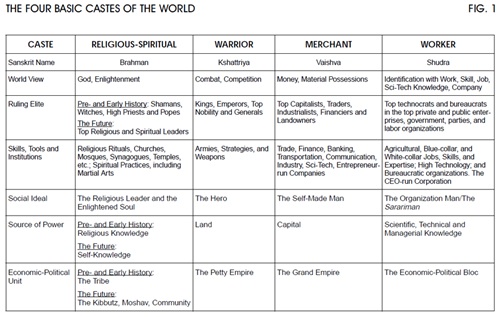
Figure 1: The Four Basic Castes of the World (from The Spiritual Imperative)
Taub was not the first to read history through varna. The Indian thinker P. R. Sarkar developed a related social cycle in the 1950s. But Taub attached dates, places, and forecasts to the idea, and that makes it testable. How a caste age worksEach caste transition passes through three stages. In the pioneering stage, the rising caste builds bases of power inside the old order. In the revolutionary-evolutionary stage, it takes power—by revolution in countries outside the main centers of the old caste's power, and by evolution within those centers. In the peak stage, it reaches its height where the culture is most attuned to its worldview. 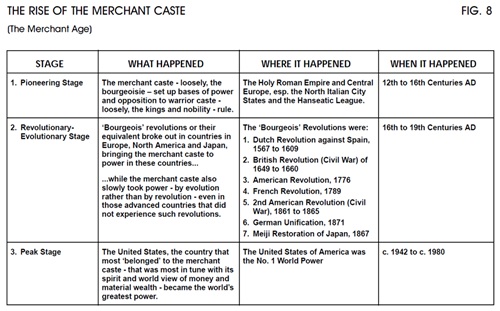
Figure 2: The Rise of the Merchant Caste (from The Spiritual Imperative)
From the Warrior Age to the Merchant AgeUnder Taub's "rule of revolution," successful bourgeois revolutions occurred outside the main centers of warrior power: in the Netherlands, England, America, and France. In older warrior centers such as Spain, Prussia, the Habsburg Empire, and Japan, change came by evolution, as merchants married into the warrior elite and warriors went into business. The age peaked in the United States, which had skipped the Warrior Age and carried little aristocratic tradition. From the Merchant Age to the Worker AgeTaub describes a shift in the basis of power from ownership of capital to the technical, professional, and managerial expertise needed to run complex societies, and a shift in identity from family name and fortune to occupation. "Worker" includes salaried executives, engineers, administrators, and specialists as well as industrial laborers. Workers organized trade unions, parties, and uprisings (1848, the Paris Commune, Russia in 1905). Under the rule of revolution, successful worker revolutions came outside the main capitalist centers, in Russia, China, Cuba, Vietnam, and finally Nicaragua in 1979, not in Britain, France, or Germany, where Marx expected them. In the capitalist centers, change came by evolution: welfare states, professional administration, and professional managers in business. 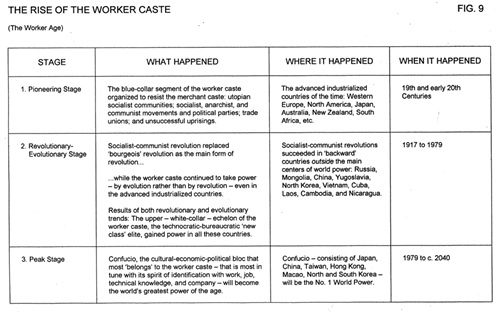
Figure 3: The Rise of the Worker Caste (from The Spiritual Imperative; original Figure 9)
The peak unfolds where the culture is most attuned to the worker worldview—devotion to work, skill, and company identity rather than money. Taub identifies these as the Confucian societies of East Asia. The opposing systems of the early period, merchant capitalism and revolutionary communism, converge in what Taub calls "teamwork capitalism." From the Worker Age to the Second Spiritual AgeThe transition begins when work, expertise, and material achievement cease to provide sufficient meaning, and people begin to question the identification of self with occupation. In the pioneering stage (mid-1950s to 1979-80), the counterculture and the human-potential movement expressed dissatisfaction with careers and consumption, and Taub read feminism, environmentalism, and human-rights activism as expressions of an emerging spiritual concern. He dates the revolutionary stage from the Iranian Revolution of 1979, with fundamentalist movements as an early front. In his 2009 summary, the peak of the Worker Age lasts until about 2030-2040. The revolutionary-evolutionary stage of the Second Spiritual Age extends to the middle of the century, when world power is to shift toward what he called the "Religious Belt," and its peak comes at the end of the century. Part Two returns to how these forecasts can be tested. 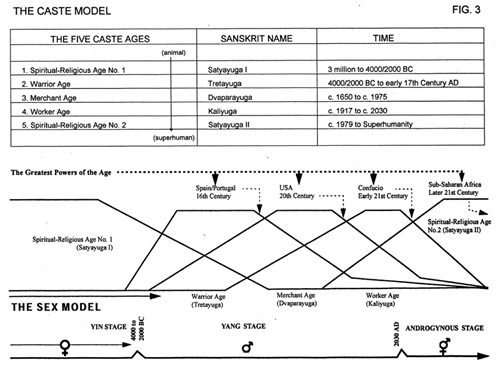
Figure 4: Mapping the Caste Ages to History (from The Spiritual Imperative)
Part Two: Answering Frank's Three QuestionsThroughout, I try to keep three things apart: what Taub wrote, what his text implies, and what I think it means. 1. Psychological validityFrank asks: What empirical research shows that spiritual, warrior, merchant, and worker orientations are four fundamental and sufficiently distinct psychological types? How would we measure them, and how could the classification be falsified? I am not aware of empirical psychometric research validating Taub's four types, and Taub did not claim there was any. He called them "psychological profiles," not personality factors, so his claim that these are four fundamental orientations has not been independently validated. The right comparison is not the "Big Five" personality traits, but Max Weber's ideal types. Taub is not alone here. Gebser's structures of consciousness have no psychometric basis at all, and while Wilber's stages draw on developmental psychology, his overall synthesis has not been validated as such. All three models are best read as heuristic maps: not literal descriptions of history or consciousness, but frameworks that make large patterns visible. Gebser would have resisted the label, Wilber accepts it only in part, and Taub claimed more, since he offered his model as a predictive theory. But as maps they can be judged by a fair standard: what they help us see that we would otherwise miss. That standard is lower than proof, but it is still a standard, and it is the one I apply here. The four types distinguish orientations toward spiritual or ideological authority, force, capital, and expertise. This gives them a sociological rationale without establishing an exhaustive account of psychology. Assigning creativity or caregiving to an existing category cannot prove that the four are fundamental. That use also places Taub closer to mainstream historical sociology. Michael Mann's The Sources of Social Power, one of the field's major works, likewise rests on four sources: ideological, economic, military, and political power. The two schemes do not match one-to-one. Taub splits economic power into capital and expertise, and treats political power as an expression of whichever caste holds it. The parallel does not validate Taub's categories or his sequence, but it shows that a fourfold typology of power is not in itself arbitrary. Taub did not invent the four types. The Bhagavad Gita associates the varnas with qualities and action (4.13), a verse often read, as I read it, as grounding varna in character rather than birth, though that reading is contested. In 1899, Swami Vivekananda described history as successive rule by priests, warriors, and merchants, and predicted that the workers would rule next; Sarkar developed this into a social cycle. Taub himself stressed that his model differs from the Hindu "core idea," with its religious trappings. His contribution lies in the historical interpretation and forecasts he built around the old categories, which is what makes the model testable. Ideal types are not measured directly, but the orientations can be tested if they are treated as value orientations rather than fixed personality traits. The most direct route would be a short questionnaire on what people value most: meaning and wisdom, honor and rank, wealth and possessions, or competence and craft. Schwartz's theory of basic human values and the World Values Survey offer possible comparisons, but neither was designed to find Taub's types. Similar terms cannot establish a correspondence: Schwartz's self-transcendence, for example, is not a measure of spiritual realization. The questionnaire would need independent validation. How to falsify it: If the answers do not cluster into four distinct factors, or if those factors predict nothing about occupational choice, elite careers, or national trajectories, the typology fails as psychology. It would then survive, at most, as a heuristic for historical sociology. 2. Historical validityFrank asks: What independent criteria establish the beginning and end of each of Taub's historical ages? Can the proposed sequence be shown without retrospectively selecting historical developments that fit it? Taub does not supply formal boundary criteria, but his 2009 summary gives three markers of ascendancy: leading elites derive power from the caste's characteristic resources; its values define status and identity; and its tools and institutions flourish. Relevant resources shift from land and command to capital and then expertise, while status shifts from lineage toward wealth and occupation. These markers suggest emergence when new groups build institutions, shared authority as their influence grows, and predominance when elite power, values, and institutional prestige converge. They guide inquiry rather than supply precise transition dates. Credentials and occupations are easier to record than values, but neither automatically reveals the basis of authority. The markers apply to the leading centers of world power, not to every society. Frank is right that Mesopotamian temples traded, that medieval churches were landowners and bankers, and that merchants wielded influence long before capitalism. Taub does not deny that all four orientations are present in every age. His claim concerns which one sets the terms in the societies that lead the world at the time. National histories, such as those of the Netherlands, Britain, the United States, and China, need not follow the full sequence, because countries skip ages and peak at different times. China shows how the markers work, and also where their limits lie. Frank asks whether contemporary China is a Worker, Merchant, or Warrior society, since productive, commercial, and political-military power are all prominent there. Apply the markers. The Standing Committee appointed in 2002 was overwhelmingly trained in engineering and technical fields. Cheng Li has documented the rise of technocratic recruitment since the 1980s. This is consistent with Taub's Worker description, though education alone cannot establish the basis of political authority. Second, the place of merchants. Reform-era China brought private business back: special economic zones, foreign investment, a private sector. But business people gained wealth and social standing, not command of state policy. The state still controls the largest banks and industrial enterprises, appoints the heads of state-owned companies, and sets industrial policy; private capital operates within limits the state sets. That is Taub's distinction between a caste being present and a caste ruling. The merchant caste returned as a junior partner, not as the ruling elite. The qualifications matter: Party authority outranks expertise, and engineering credentials are not technocratic rule. My earlier suggestion that communism failed because it sidelined merchants was also too simple. China's reform trajectory cannot be reduced to reintegrating one psychological type. The broader prediction, that the Worker Age would peak in Confucian East Asia, Taub made in advance; the details of China's leadership are observations made after the fact. They test the markers; they do not by themselves confirm the forecast. The marker must also be tracked over time. The 2002 Standing Committee is more than twenty years old, and since 2012 the leadership has included more members trained in economics, law, and the social sciences, while loyalty to the Party has counted for more. Cheng Li has documented this decline of the technocrats. On the first marker, then, the trend since 2012 is ambiguous at best. Is the sequence selected after the fact? For the past, partly yes, as with all macrohistory: Marx, Weber, and Mann also periodize in hindsight. The real question is whether Taub merely selected confirming cases. Two approaches help answer it. First, the same pattern recurs in two separate transitions. Taub's "rule of revolution" places successful bourgeois revolutions outside the centers of warrior power, and successful worker revolutions outside the centers of capitalist power, while the old centers change by evolution. A pattern that holds twice is harder to dismiss as selection, although individual cases can be disputed. France, with its powerful monarchy, is the least comfortable fit for the first transition. Two cases cannot establish a law of history; they can only show that the pattern is not an artifact of a single transition. Whether it holds as a rule requires a systematic comparison, which remains to be done. Such a comparison would code every major revolution since the seventeenth century by which caste took power and whether it occurred inside or outside the old centers of power, and it would include the awkward cases: France in 1789, Germany's failed revolution of 1918-19, and Japan's Meiji Restoration, a revolution from above. Second, and more important, the markers can be applied going forward, and Taub's timetable is now close enough to check. His book places the end of the Worker Age peak around 2020 or 2030; in his 2009 summary, he wrote "until about 2030 or 2040." I take the later date as the outer limit, not to be extended further. During that peak, Taub expected "Confucio," the region comprising Japan, China, Taiwan, and Korea, to be the world's economic leading region. The tests that follow are my proposals, not Taub's, and they should be agreed before the results are assessed. East Asian leadership can be measured by four indicators: share of world GDP at purchasing-power parity, share of global manufacturing, research and development spending, and the number of the world's 500 largest companies headquartered in the region. The claim holds if, by around 2040, East Asia leads both North America and Europe on at least three of the four. I use purchasing-power parity rather than market exchange rates because Taub's Worker Age is about productive capacity, what an economy can make and do, which PPP captures better. Since I chose that measure knowing that it favours the forecast, I mention the market-rate result as well. On present evidence, the claim largely holds, with qualifications. At purchasing-power parity, the case is strong. In 2025, the combined GDP of China, Japan, South Korea, and Taiwan was roughly $53 trillion, against about $31 trillion for the United States, and the lead over Europe is larger still. The other indicators are more mixed. East Asia dominates global manufacturing, and its combined research and development spending at purchasing-power parity exceeds that of either the United States or the European Union; WIPO estimated China's 2024 R&D spending at $786 billion against $782 billion for the United States, in constant 2015 PPP dollars. The 2025 Fortune Global 500 included about 130 companies from Greater China (the mainland, Hong Kong, Macau, and Taiwan), 38 from Japan, and 14 from South Korea, about 182 from the region against 138 from the United States. But in GDP at market exchange rates, the ranking reverses, and East Asia trails North America. The PPP measure favours Taub's forecast; the market-rate measure does not. Both are defensible, because they answer different questions, which is why the choice must be stated and justified in advance. Taub's institutional forecasts fare worse. He expected leadership to come with integration: an East Asian union with a reunified Korea, ahead of a European bloc and a northern bloc joining the United States and Russia. None of this has happened, and, despite Trump's overtures to Putin, a US-Russia bloc looks further away now than when he wrote. I treat this as a separate claim from economic leadership, not a subsidiary one, and on present evidence it has failed. The economic forecast largely holds; the institutional one does not. Even a clear East Asian lead would settle only the geographic forecast. A region can lead through capital ownership, state power, or expertise, so East Asian ascendancy alone does not show that the Worker caste predominates there. That requires a separate test. Does capital still rule?Frank asks whether expanding corporations, finance, and digital platforms contradict the supposed decline of the Merchant Age. Taub's text gives a clear first answer. His worker caste includes top executives, engineers, and professionals: everyone whose position rests on skill and salaried work rather than ownership. A corporation can remain capitalist while its practical direction passes to salaried specialists. The ownership-control distinction predates Taub: Berle and Means described it in 1932, Burnham anticipated a managerial revolution in 1941, and Galbraith developed the idea of the technostructure in the 1960s. Since the 1980s, the shareholder-value revolution has pushed the other way. Agency theory recast managers as agents to be disciplined by owners. Executive pay shifted to shares and options, tying managers' fortunes to the stock price. Activist investors, private equity, and the concentration of shareholdings in a few giant asset managers gave capital new levers over management. This allows the sharpest form of Frank's objection. If expertise is a resource that capital buys, the rise of managers and technocrats is not a caste transition at all. It is a division of labor within capitalism: owners decide, experts carry out. Taub also emphasizes occupational identity: standing increasingly comes from what people do. This can be investigated through surveys and biographies, but professional prestige and institutional control must remain separate tests. A culture can celebrate engineers while leaving owners with the final decision. The record can therefore yield a mixed verdict: owners may regain control while occupation remains culturally central. Self-made fortunes and founders' professional identities do not alone establish the displacement of capital. The relevant question is whose priorities prevail when owners and experts disagree. The test can also be stated in terms of corporate control. If shareholders increasingly dismiss chief executives, private equity dictates corporate priorities, and financial markets override managerial judgment, capital is reasserting control over expertise, and that would count against Taub's account of the Worker Age. This, rather than the mere survival of capitalism, is the question the debate should take up. The test takes a different form in China, where the question is not whether shareholders or managers control firms, but whether the Party's political authority has begun to yield to expertise. So far, it has not. Engineering credentials are widespread in the leadership, but the Party retains ultimate decision-making power. That is a limit on the claim, not a refutation of it. The rule of revolution also bears on Frank's question about what Taub adds. Marx expected worker revolutions in the advanced capitalist countries; Taub's rule explains why they came in Russia, China, and Cuba instead. Lenin's "weakest link" and Trotsky's uneven development offered similar explanations, but Taub claims the same rule governed the bourgeois revolutions too, and will govern the next transition. Compared with Sarkar, whose cycle runs from workers to warriors to intellectuals to merchants, Taub places the Worker Age last, widens "worker" to include managers and technocrats, and attaches dates and places. These claims are specific enough to be wrong, which is what separates a theory from a classification system. 3. Predictive validityFrank asks: What specific, observable developments would show that humanity is entering the Second Spiritual-Religious Age? And what developments would count as evidence that this prediction is wrong? Taub distinguishes fundamentalist revival, an early revolutionary front, from a mature spirituality based on inner authority, equality, and less hierarchical institutions. Occupational success would cease to be the principal source of meaning. This is a directional narrative, but its specific forecasts can be tested without accepting a necessary spiritual destiny. The return of religionTaub's forecast is now being tested in plain sight. Across much of the world, religion is returning to politics, though not always as faith. In the United States, Europe, India, and Russia, political leaders increasingly speak the language of civilization: Western civilization, Christian Europe, Hindu civilization, the "Russian world." Olivier Roy's distinction between Christian identity and Christian faith matters here. Political religious mobilization, personal spirituality, and religious practice are different developments. Their coexistence does not establish the sequence Taub predicts. This is what Taub's model leads us to expect. He saw the spiritual awakening taking two directions at once: a return to established religion, which he regarded as a transitional refuge, and a search for self-discovery beyond it. He dated the revolutionary stage of the Second Spiritual Age from the Iranian Revolution, and expected Islamic, Indian, and Jewish fundamentalism to play a "somewhat violent revolutionary role" before giving way to a higher spirituality. The fit has limits. Christian nationalism in the United States and Europe arises inside the industrialized centers, where Taub expected change by evolution rather than revolution, so it fits his map less neatly. And there is a rival explanation. Pippa Norris and Ronald Inglehart, in Cultural Backlash (2019), explain the same phenomenon as a reaction by older and more traditional voters against value change, with no spiritual age in prospect. If these revivals harden into entrenched authoritarian regimes by mid-century, Taub's forecast fails, as the first of the falsifying developments below states. What counts for Taub is not the trends alone but their sequence and geography: that the fundamentalist revival is followed, not merely accompanied, by a turn toward personal spirituality, and that the new age eventually centers on the "Religious Belt", the region stretching from Tibet and Bangladesh across South Asia, Islamic Central Asia, the Arab countries, Turkey, and Israel to Morocco. Developments that would confirm it:Declining coercive religious authority, greater gender equality, and stronger ethical and ecological commitments would fit the mature Spiritual Age. These are compatible developments, however, not distinctive confirmation. More distinctive evidence would be a transition from fundamentalist revival toward spiritual autonomy within the Religious Belt, together with growing international influence from that region. Secularization elsewhere would not establish the predicted sequence or geography. Developments that would falsify it:If, by mid-century, today's fundamentalist revivals, such as religious nationalism, have hardened into entrenched authoritarian regimes that suppress gender equality and individual spiritual autonomy. If a mature spiritual age emerges in the industrialized North rather than in the Religious Belt, Taub's geographic prediction fails, even if the spiritual turn itself occurs. If, by mid-century, world power has not begun to shift from the industrialized North toward the Religious Belt, as Taub forecast, the model's most distinctive prediction for the Second Spiritual Age fails. AI and the Authority of ExpertiseAI tests two dimensions at once: the bargaining power of expertise and the importance of occupational identity. If professional capabilities become cheaper and more widely available, the people supplying them may lose leverage relative to infrastructure owners. Power may flow back to those who own the models, the data, and the computing capacity, concentrating wealth in the hands of a new merchant class. Or the automation of expert work may loosen the identification of people with their jobs, which is exactly the opening Taub expected for the Second Spiritual Age. The two outcomes are not mutually exclusive. AI could concentrate economic power in a few owners while loosening most people's tie to their work. That mixed result would split the verdict: a setback for Taub's account of the Worker Age, while weaker identification with work would be consistent with one condition he anticipated for what follows it. Spiritual renewal would require further evidence, since unemployment, insecurity, and alienation can also weaken people's attachment to their work. ConclusionFrank has identified what the Caste Model must demonstrate, and he is right that Taub did not establish his sequence as a law of history. He is also right that the Sarkar Game, which my earlier essay introduced, illustrates the framework rather than confirming it. His deeper worry is that each clarification—psychological rather than occupational categories, coexistence rather than exclusion, predominance as a matter of degree—makes it harder to say what the theory predicts. Frank's questions have made the model more precise than Taub left it, and that is a service to his legacy. We need not wait to reconsider Taub. Historical claims and earlier forecasts can be assessed now; his later timetable supplies checkpoints around 2030-40 for East Asian leadership and mid-century for the Religious Belt. These are commitments, not reasons to suspend judgment. Showing that history is complicated does not show that a pattern is absent. Showing that a pattern can be found does not show that history follows it. NotesThe summaries of Taub's positions and the figures are based on The Spiritual Imperative, especially the Introduction, Chapters 7-8, and Chapters 13-14 (printed pages 167-173 and 187-191), and on Larry Taub, "Sex, Age, and Caste: The Grandest Narratives of All," Prout Journal (2009). Taub's 2009 essay also describes his 1966 stay at Sarkar's ashram in Jamalpur and his later reading of Sarkar's social cycle in the Proutist magazine Dharma (1980); Sohail Inayatullah's response in the same issue disputes Taub's characterization of Sarkar's cycle, holding that Sarkar's worker stage is "real and pivotal" though short-lived, not absent. Economic figures: IMF World Economic Outlook (2026), WIPO Global Innovation Index (2025), Fortune Global 500 (2025). Other works cited: Cheng Li, China's Leaders: The New Generation (2001); Pippa Norris and Ronald Inglehart, Cultural Backlash: Trump, Brexit, and Authoritarian Populism (2019); Olivier Roy, Is Europe Christian? (2019). Further reading: Taub in his own words: https://wiki.p2pfoundation.net/Spiritual_Imperative
|