|
TRANSLATE THIS ARTICLE
Integral World: Exploring Theories of Everything
An independent forum for a critical discussion of the integral philosophy of Ken Wilber
  Frank Visser, graduated as a psychologist of culture and religion, founded IntegralWorld in 1997. He worked as production manager for various publishing houses and as service manager for various internet companies and lives in Amsterdam. Books: Ken Wilber: Thought as Passion (SUNY, 2003), and The Corona Conspiracy: Combatting Disinformation about the Coronavirus (Kindle, 2020). Frank Visser, graduated as a psychologist of culture and religion, founded IntegralWorld in 1997. He worked as production manager for various publishing houses and as service manager for various internet companies and lives in Amsterdam. Books: Ken Wilber: Thought as Passion (SUNY, 2003), and The Corona Conspiracy: Combatting Disinformation about the Coronavirus (Kindle, 2020).
Check out my other conversations with ChatGPT “Everyone Does It”Why Dillard's Defense Misses the PointFrank Visser / ChatGPT
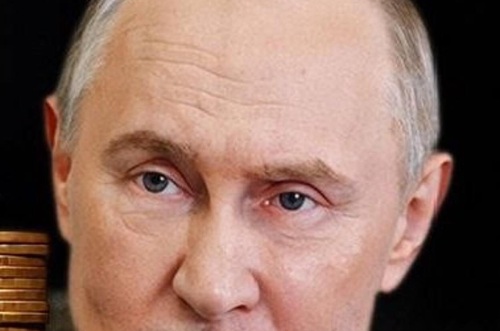 Joseph Dillard's response to Putin's speech is thoughtful, even-handed in tone, and clearly motivated by a desire to resist moral absolutism.[1] Yet precisely because it strives for balance, it ends up blurring distinctions that matter. The recurring move in his reply—everyone does this, all sides are guilty, hypocrisy is universal—has an air of realism. But realism can easily slide into moral flattening, and that is largely what happens here. Let us take his points in turn. 1. “All leaders frame aggression as defense”Dillard begins by noting that Putin frames aggression as defense, then immediately neutralizes the charge: who doesn't? This is descriptively true. States routinely justify violence in self-defensive terms. But the analytic question is not whether this rhetoric is common; it is whether it is credible, proportionate, and consistent with observable facts. If “everyone does it” were sufficient grounds for suspending judgment, then propaganda itself would become immune to critique. The fact that rhetorical self-justification is universal does not absolve any particular instance from scrutiny. On the contrary, it makes scrutiny more necessary, not less. Otherwise, we replace moral evaluation with sociological shrugging. 2. Selective history is not morally neutral just because it is widespreadDillard correctly observes that emphasizing Western colonialism while ignoring Russia's imperial past is a diversionary tactic—and then immediately universalizes it: people in all societies do this. Again, true in a trivial sense. But here the argument subtly shifts from diagnosis to deflection. Yes, pointing out selective memory in others does not make one immune to selective memory oneself. But that does not mean all selective memories are equally consequential in a given context. Putin is not writing an academic essay; he is justifying an ongoing war of conquest. In that context, omissions are not merely rhetorical flourishes—they are instruments of legitimation. Calling out those omissions is not “changing the subject”; it is addressing the subject. 3. Hypocrisy does not dissolve responsibilityDillard places significant emphasis on Western violations of international law—Venezuela, Libya, Iran, Gaza, Kosovo, tanker attacks—and argues that this hypocrisy undermines Western claims to moral authority. There is real force in this argument. Western powers have indeed treated international law instrumentally. But here we encounter a crucial distinction that Dillard does not sufficiently honor: exposure of hypocrisy is not exoneration of wrongdoing. One can simultaneously hold that: • Western powers have violated international law repeatedly, and • Russia is violating international law in Ukraine now, in ways that are neither mitigated nor justified by Western behavior elsewhere. The danger of the hypocrisy argument is that it subtly converts law into a credibility contest: whoever has sinned before loses standing to criticize. But international law is not a confessional sacrament; it does not require moral purity from the accuser. If it did, law would collapse the moment any powerful actor behaved badly—which, historically, is always. 4. “Authentic Russian perspective” is not the same as justified actionDillard's strongest point is also his most ambiguous: the insistence that Putin's speech grows out of an authentic Russian perspective, rooted in historical memory, NATO expansion, and long-standing cultural narratives about Ukraine. This is undeniably correct. Russian historical consciousness does not reset every generation. Many Russians genuinely experience NATO expansion as threatening. Many do see Ukraine as historically intertwined with Russia. But acknowledging the existence of a perspective is not the same as endorsing its normative authority. History explains motivations; it does not confer rights. If historical depth alone justified territorial claims, much of the world would still be at war over medieval boundaries. The moral and legal problem is not that Russia feels threatened or aggrieved; it is that it translates those feelings into the denial of another nation's sovereignty. 5. Moral high ground versus moral accountingDillard frames the global situation as a struggle for the moral high ground: the West claims it through law, democracy, and human rights; Russia claims it through exposing Western aggression. This framing is insightful—but incomplete. What Putin seeks is not merely moral equivalence; it is moral inversion. His argument is not “we are flawed like you,” but “your flaws invalidate your criticism of us.” That move does not level the moral field; it attempts to erase it. The result is not plural moral reasoning, but moral nihilism dressed up as realism. 6. The Global South calculus—and the missing distinctionDillard's final section, outlining why many nations hesitate to side openly with the West despite recognizing its crimes, is one of the most perceptive parts of his response. Power, incentives, fear, prestige, and self-interest all play decisive roles. This is geopolitics, not ethics class. However, the crucial distinction missing here is between: • refusing Western dominance, and • endorsing Russian imperialism. Many countries are doing the former without embracing the latter. Non-alignment, hedging, and strategic ambiguity are not endorsements of Putin's moral narrative; they are survival strategies in a fragmented world. To frame the choice as “the West or Putin” is already to accept Putin's framing. Conclusion: Explanation Is Not ExonerationDillard is right about many things: hypocrisy is real; historical memory matters; moral posturing is universal; the global audience is fractured and skeptical of Western claims to virtue. But where his response falters is in treating these observations as reasons to soften critique of Putin's rhetoric, rather than sharpen it. Understanding why a narrative resonates does not require suspending judgment about what that narrative does. Putin's speech is effective precisely because it fuses genuine grievances with strategic omissions and moral reversals. To analyze that fusion is not to dismiss Russian perspectives—it is to take them seriously enough to examine their consequences. The danger today is not that we judge too harshly, but that in our eagerness to avoid hypocrisy, we end up confusing explanation with justification, and realism with resignation. NOTES[1] See his comment at: Frank Visser, "Empire in Anti-Imperial Drag: Putin's Multipolar Rhetoric Revisited", www.integralworld.net
Comment Form is loading comments...
|