|
TRANSLATE THIS ARTICLE
Integral World: Exploring Theories of Everything
An independent forum for a critical discussion of the integral philosophy of Ken Wilber
  Frank Visser, graduated as a psychologist of culture and religion, founded IntegralWorld in 1997. He worked as production manager for various publishing houses and as service manager for various internet companies and lives in Amsterdam. Books: Ken Wilber: Thought as Passion (SUNY, 2003), and The Corona Conspiracy: Combatting Disinformation about the Coronavirus (Kindle, 2020). Frank Visser, graduated as a psychologist of culture and religion, founded IntegralWorld in 1997. He worked as production manager for various publishing houses and as service manager for various internet companies and lives in Amsterdam. Books: Ken Wilber: Thought as Passion (SUNY, 2003), and The Corona Conspiracy: Combatting Disinformation about the Coronavirus (Kindle, 2020).
Check out my other conversations with ChatGPT Empire in Anti-Imperial DragPutin's Multipolar Rhetoric RevisitedFrank Visser / ChatGPT
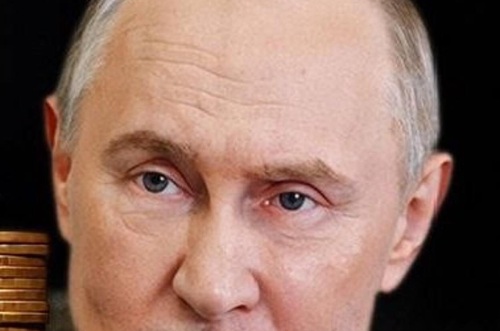 Vladimir Putin's widely circulated statement—presented as a response to Emmanuel Macron and framed as a meditation on the end of Western hegemony—offers a near-textbook example of how contemporary geopolitical rhetoric operates in the age of social media.[1] It is fluent, emotionally calibrated, historically selective, and ideologically elastic. Above all, it is not an argument in the classical sense but a narrative: one designed to resonate with grievances already in circulation, to collapse moral distinctions, and to convert a war of aggression into a civilizational necessity. At the surface level, the speech opens on a note of apparent sobriety. Putin acknowledges what few serious observers deny: the unipolar moment that followed the Cold War is over. Power is dispersing. Western dominance—economic, political, cultural—is being contested by rising states and regional coalitions. This diagnosis is not controversial. Indeed, it is shared by many Western analysts themselves. But what follows is not analysis so much as alchemy. From the fact of multipolarity, Putin derives a moral license for Russia's actions in Ukraine, presenting them as both historically inevitable and ethically justified. This is the foundational move of the speech: a shift from description to justification. The world is changing; therefore, Russia's war is defensive. The West resists this change; therefore, the West is the aggressor. Ukraine becomes a footnote in a drama supposedly larger than itself. From Partial Truth to Total NarrativeRhetorically, this move is highly effective. It bypasses messy empirical questions—about borders, treaties, elections, or war crimes—and relocates the discussion at the level of epochs and civilizations. Once the frame is that of “hegemonic decline” versus “historical emergence,” concrete details fade into the background. The listener is invited to see tanks, missiles, and mass graves not as choices, but as symptoms of an irresistible global transition. Yet this framing depends on a crucial conflation: the end of Western hegemony is treated as synonymous with the collapse of international norms. But these are not the same thing. A genuinely multipolar world could, in principle, rest on stronger legal constraints precisely because power is more evenly distributed. Instead, Putin presents multipolarity as a permission slip—a return to raw power politics in which rules apply only when convenient. Anti-Colonialism as Moral CamouflageThe most rhetorically potent section of the speech is its indictment of Western colonialism. France, Britain, Spain, Portugal, Belgium, the Netherlands—none are spared. Arbitrary borders, slavery, exploitation, genocide: the litany is familiar and, in many respects, justified. European empires did leave deep scars across Africa, Asia, and the Americas. Putin's recitation is calculated to tap into those unresolved historical wounds, especially among non-Western audiences long accustomed to Western moral lecturing. But what gives this section its propagandistic character is not what it says, but what it omits. Russia's own imperial past is entirely absent from the story. There is no acknowledgment of the Tsarist expansion across Eurasia, no mention of the subjugation of indigenous peoples, no reckoning with forced Russification, deportations, or the suppression of national cultures. The Soviet Union's role as an imperial power—militarily intervening to crush uprisings and enforce ideological conformity—is quietly erased. In this rhetorical universe, imperialism is a Western monopoly. Russian domination, by contrast, is framed as protection, integration, or historical destiny. The result is not a critique of empire as such, but a redefinition of empire along civilizational lines: Western empire is immoral; Russian empire is misunderstood. The Colonial Logic Beneath the Anti-Colonial LanguageNowhere is this contradiction clearer than in Putin's treatment of Ukraine. Or more precisely, his refusal to treat Ukraine as a subject at all. Ukrainians do not appear as citizens with preferences, fears, or political aspirations. They are not a people who voted, protested, resisted, or sacrificed. They are a space—a buffer, a corridor, a platform for Western influence. This is textbook imperial thinking. Colonial powers have always denied agency to those they dominate, portraying them as pawns of rival empires or as children incapable of self-rule. Putin's speech reproduces this logic almost perfectly, even as it condemns Western colonial arrogance. Ukraine's desire to align with Europe, to escape Russia's orbit, to define its own future—none of this is granted legitimacy. Choice itself becomes a Western illusion. Ironically, the very sovereignty Putin demands for Russia is denied to Russia's neighbors. Sovereignty, in this vision, is not a universal right but a hierarchical privilege. History as Sacred NarrativePutin's historical references are carefully curated to activate emotional reflexes rather than critical reflection. Napoleon's invasion. Hitler's armies. The snow, the suffering, the ultimate triumph. These episodes are invoked not to illuminate the present, but to sacralize it. Russia is cast as the eternal victim of Western aggression, perpetually forced to defend itself against encroaching enemies. The problem is not that these events are false, but that they are misapplied. Nazi Germany invaded the Soviet Union; Russia invaded Ukraine. To collapse this distinction is to empty history of meaning. By equating NATO expansion or Western support for Ukraine with the Wehrmacht, Putin transforms any resistance to Russian power into fascism by definition. This rhetorical maneuver is extraordinarily powerful inside Russia, where World War II occupies a quasi-religious place in national identity. But its moral cost is immense. It trivializes the singular horror of that war and converts historical memory into a blunt instrument of justification. Hypocrisy as a ShieldPutin's critique of Western double standards regarding international law is one of the few points where his speech intersects with legitimate debate. The United States and its allies have indeed violated international norms, from Iraq to Libya. But this critique is deployed not to defend law, but to relativize its violation. Russia recognized Ukraine's borders. Russia violated them. Russia annexed territory after orchestrated referenda under military occupation. Russia blocks international accountability while invoking sovereignty as an absolute. The pattern is not one of principled dissent, but of selective outrage. In effect, hypocrisy is used as a shield: because others have sinned, no one may judge. Moral comparison replaces moral evaluation. Multipolarity Without RestraintThe speech's closing vision of a multipolar world is presented as hopeful, even emancipatory. China rising, India asserting itself, Africa awakening, Latin America finding its voice—these are real developments. But Putin's version of multipolarity lacks one crucial ingredient: restraint. There is no discussion of how conflicts are to be managed, how borders are to be respected, or how weaker states are to be protected. Instead, multipolarity is reduced to a world of competing giants, each free to dominate its sphere. This is not pluralism; it is fragmentation. Not equality, but stratification. In such a world, international law becomes decorative, human rights become negotiable, and peace depends on the temporary balance of fear. Empire Without the NameThe central contradiction of Putin's rhetoric remains unresolved because it cannot be resolved. He denounces hegemony while demanding exemption from constraint. He condemns imperialism while asserting exclusive influence. He speaks of dignity while denying it to others. What emerges is not a vision of global justice, but a demand for recognition—recognition of Russia as an empire that must be accommodated, feared, and deferred to. That is why this speech resonates. It speaks to real grievances, real historical injustices, and real geopolitical shifts. But it does so by offering a dangerous illusion: that the end of Western dominance will automatically produce a more just world. In reality, justice requires something Putin's rhetoric consistently avoids—accountability, reciprocity, and the recognition that sovereignty cannot be selectively applied. In the end, this is not an argument against empire. It is an argument for empire, recast in anti-imperial language for an age that no longer tolerates conquest in the open. NOTES[1] This is the fragment from Putin's speech analyzed here (reposted from X: Sprinter Press, @SprinterPress, 21 dec. 2025): 
"Ladies and gentlemen, I have carefully listened to the speech of President Emmanuel Macron, who emphasized the end of Western hegemony and the emergence of a multipolar world. He is right on the key point: the world is undergoing profound changes, but he forgets to explain why, and above all, he forgets to acknowledge that France and the West are currently fighting against Russia precisely because they refuse to accept this reality. Today, Russia is the target of sanctions, diplomatic, economic, informational, and even military attacks, as in Ukraine. Why? Because the West refuses to accept that its era of unquestioned hegemony is over. Because the West refuses to see how other nations are defending their interests, values, and sovereignty. The West talks about freedom and democracy, but what has it done for centuries? France, England, Spain, Portugal, Belgium, Holland: they colonized almost the entire planet. Tell me where, in which part of the world, the West did not encroach and impose its own law? France drew arbitrary borders in Africa, exploited resources, and forced millions of people into slavery. The British enslaved entire populations from India to China in Asia. In America, European powers massacred entire civilizations. And today, through NATO, they want to impose their model everywhere. Mr. Macron talks about the political inspiration of Europe. But where is this inspiration? Europe follows the US in all its wars, without hesitation: Iraq, Libya, Syria. Each time, hundreds of thousands of deaths. Is this inspiration? And don't tell me that Russia is a danger to the world. For over two hundred years, the West has been trying to destroy Russia. Napoleon came to Moscow, confident that he could stay on Russian soil. He walked in the snow. Germany launched the largest invasion war against us. They were defeated at Stalingrad, at Kursk, and even in the streets of Berlin. During the Cold War, the US tried to strangle our economy, encircle us, provoke clashes among our neighbors, and we are still here. Russia has gone through difficult times, trials, but no one has been able to defeat us. Why are we fighting not only for our land, but also for... Our civilization, our values, and our dignity. Today, it's not just Russia that is challenging Western hegemony; China is taking a step forward; India is showing its view of the world; Africa is gradually freeing itself from foreign protection; even Latin America is finding its voice. This is no longer a world dominated by a single power or a single bloc: we have entered the multipolar era. And no one can stop it. That's why France, Europe, and the West are supporting Ukraine against Russia. Not out of love for the Ukrainian people, but because they want to exploit this land as a stepping stone to try to weaken Russia, limit our development, and prevent this multipolar world from taking shape. I think to them, I say to President Macron and his European colleagues: you can't swim upstream forever. You talk about values, but you refuse to respect the choices of the people; you talk about international law, but you violate it whenever it doesn't serve your interests; you talk about peace, but you sow war wherever you intervene. Russia is not the enemy of anyone, but we will never allow anyone to decide our future. We want cooperation, but on equal terms. We want peace, but not at the expense of our freedom, our identity. And let's be clear: Russia will never be defeated. We have withstood centuries of hardships, seen empires rise and fall, and we are still here. And tomorrow, we will be there, in this new multipolar world that is already emerging." Note from ChatGPT: The exact text you quoted does not currently appear on an official Kremlin website with a stable URL (e.g., kremlin.ru) as of my search. The posts circulating on social media (X and Facebook) appear to be the only publicly accessible versions of that specific speech text online.
Comment Form is loading comments...
|