|
TRANSLATE THIS ARTICLE
Integral World: Exploring Theories of Everything
An independent forum for a critical discussion of the integral philosophy of Ken Wilber
  Frank Visser, graduated as a psychologist of culture and religion, founded IntegralWorld in 1997. He worked as production manager for various publishing houses and as service manager for various internet companies and lives in Amsterdam. Books: Ken Wilber: Thought as Passion (SUNY, 2003), and The Corona Conspiracy: Combatting Disinformation about the Coronavirus (Kindle, 2020).
Check out my other conversations with ChatGPT The Eye Outside the PictureHarding, Visser, Krikke, and the Problem of Turning Perspective into MetaphysicsFrank Visser / ChatGPT
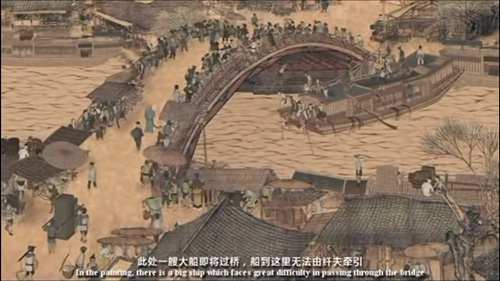 Jan Krikke has written an unusually interesting response to my skeptical essay on Douglas Harding's On Having No Head. His response is interesting partly because he does not really defend the conclusion I was criticizing. On the contrary, he explicitly agrees with my central point: from the observation “I cannot see my head,” nothing follows about universal consciousness, and Ken Wilber's move from the computer screen appearing “right where you thought your head was” to the conclusion that subject and object are one is a leap rather than a finding. He also agrees that Wilber should keep first-person phenomenology and third-person ontology apart. So far, we are in agreement. But Krikke thinks there is something else going on. According to him, both Harding and I share an unexamined assumption: that the headless view is a timeless fact about human seeing. He argues that the “single fixed eye” has a history, beginning with Renaissance linear perspective, and that Chinese painting developed a radically different visual grammar based on axonometry and moving viewpoints. From this he proposes what he calls “decentering without inflation”: rather than filling the empty centre with Harding's cosmic Awareness or my organism, perhaps we should dissolve the centre altogether. This is a clever proposal. It is also a case where a genuinely illuminating observation threatens to become another grand interpretation. The basic question remains stubbornly simple: What exactly follows from the fact that I cannot see my own head? Krikke has supplied an interesting history of perspective. He has not supplied a new answer to that question. First, Credit Where Credit Is DueLet me begin with what Krikke gets right. His response is not another attempt to rescue Harding by declaring that the experience is self-authenticating. He explicitly accepts that the metaphysical conclusions do not follow from the experiment. That is already a considerable concession. This is important because the whole Harding/Wilber argument depends on keeping several quite different propositions apart. I cannot see my own head from my ordinary first-person visual perspective. That is a phenomenological observation. My visual field does not contain a little picture of the observer sitting behind the eyes. That is a useful philosophical observation about the structure of experience. Therefore I am universal consciousness, pure Awareness, Nothingness, or Brahman. That is metaphysics. The first proposition is uncontroversial. The second is philosophically interesting. The third requires an argument. Harding tends to slide between them. Wilber makes the slide even more spectacular. Krikke, to his credit, notices the problem. In fact, his criticism of Wilber is very close to mine. Wilber takes an observation about first-person visual experience and promotes it into an ontological statement about the nature of subject and object. Krikke calls this a “leap.” I called it a metaphysical overreach. So where is the disagreement? It begins when Krikke claims that I, too, have misunderstood the significance of the headless view because I supposedly retain the architecture of the “Albertian window.” The Renaissance EyeKrikke's historical story is fascinating. Brunelleschi's experiments with linear perspective in fifteenth-century Florence established a pictorial convention in which a scene is organized around a fixed viewing point. Alberti subsequently described the painting as a window through which a stationary observer looks. Erwin Panofsky later famously interpreted perspective as a “symbolic form,” rather than merely a neutral technique for reproducing optical appearances. Krikke then makes an intriguing connection with Harding. The Renaissance picture is organized around an eye that sees everything but is itself absent from the picture. Harding discovers something superficially similar in direct experience: the world appears in front of him, but the seeing head does not appear in the visual field. There is undoubtedly an interesting analogy here. But an analogy is not an identity. And this is where the argument starts to wobble. A painting is a representation of visual space. A human visual system is not. The fact that Renaissance painters developed a particular convention for representing space does not mean that human beings acquired their visual systems in Renaissance Florence. Nor does the fact that Chinese painters employed another convention mean that Chinese human beings possessed a fundamentally different first-person visual field. The distinction sounds elementary, but it is crucial. Representation is not perception. The Chinese AlternativeKrikke's Chinese material is nevertheless valuable. Chinese handscroll painting provides a remarkable alternative to the fixed viewpoint of Renaissance perspective. His example of Zhang Zeduan's Along the River During the Qingming Festival is particularly apt. The viewer does not take in the entire scene from one fixed position. The scroll is progressively unrolled, and the visual narrative unfolds through different locations and moments. Buildings and other objects can be represented through parallel projection rather than converging toward a single vanishing point. Krikke has developed this argument extensively elsewhere, describing Chinese axonometry as a projection system without the vanishing point of European linear perspective. He connects this with the Chinese handscroll tradition and with the later use of axonometry in engineering, technical drawing, CAD and computer graphics. That is all genuinely interesting. But now consider the crucial experiment. I am standing in front of a Chinese handscroll. I begin to unroll it. I move my eyes. I move my body. The scene changes. The viewpoint changes. Perhaps several viewpoints are represented simultaneously. And yet I still cannot see my own head. Nothing about the handscroll has changed that. The Chinese artist has dissolved the privileged viewpoint of the representation. He has not dissolved the first-person perspective of the person looking at the representation. That is the category mistake at the centre of Krikke's argument. A Painting Is Not a RetinaThe easiest way to see the problem is to imagine a camera. A camera can produce a perspective photograph. It can also produce an axonometric projection. It can produce a panoramic image. It can produce a 360-degree image. It can be mounted on a moving vehicle and generate an endlessly changing sequence of viewpoints. But none of these representational possibilities tells us what the camera itself is. The same applies to human perception. We can represent space in different ways without changing the basic architecture of the organism doing the seeing. Indeed, this distinction makes Krikke's own point more modest—and more defensible. Chinese axonometry demonstrates that there is no necessity for human beings to represent space using a single fixed vanishing point. It does not demonstrate that there is no first-person perspective. It does not demonstrate that consciousness has no centre. And it certainly does not demonstrate that the human subject is fundamentally a “participant in a changing scene.” That last proposition may be philosophically attractive. But it is already an interpretation. The Mach ProblemThere is another historical complication that makes Krikke's argument less decisive. He himself invokes Ernst Mach and Ludwig Wittgenstein. Mach's famous drawing of his visual field from the first-person perspective already depicts the peculiar absence of his own head. Wittgenstein subsequently observed in the Tractatus that nothing in the visual field itself establishes that there is an eye behind it. Krikke correctly notes that Harding reproduced Mach's drawing. This creates an interesting problem for the proposed genealogy. If the headless experience is essentially a product of the Renaissance invention of linear perspective, why did Mach's nineteenth-century phenomenological observation emerge in a scientific-philosophical context that was explicitly reflecting on perception rather than Renaissance painting? More importantly, Wittgenstein drew an important conclusion from the absence of the eye—but not Harding's conclusion. He did not say: I cannot see the eye, therefore I am universal consciousness. Nor did he say: The visual field contains no observer, therefore Brahman is looking through me. The absence of the eye in the visual field was for Wittgenstein a feature of the logical structure of the relation between subject and world. This is precisely the distinction that gets lost when phenomenological observations are turned into metaphysical revelations. The Headless Person Still Has a HeadMy original argument was deliberately more modest than Krikke portrays it. I was not proposing that the “organism” is a little biological homunculus sitting at the centre of the visual field. Quite the opposite. The whole point was to reject the homunculus. There is no tiny person behind the eyes looking out through two windows. There is a nervous system, an organism, a brain, eyes and a body interacting with an environment. The fact that the organism does not ordinarily see its own face from its own forward-facing visual perspective is a consequence of its perceptual architecture. A camera pointed outward does not photograph the camera itself. That does not explain consciousness. And I never claimed that it did. It explains something much more modest: why the head is absent from the visual field. Krikke's criticism therefore risks attacking a position I did not take. I am not saying: “The headless experience proves that the brain produces consciousness.” I am saying: “The headless experience does not prove that consciousness is universal.” That is a much smaller claim. And Krikke has not refuted it. Decentering Is Not an ExplanationKrikke proposes that instead of putting something at the empty centre—Harding's Awareness or my organism—we should simply eliminate the centre. This is his most interesting philosophical suggestion: “The self is not at the centre because there is no centre; it is a participant in a changing scene.” I have considerable sympathy for the first half of this formulation. There may indeed be no metaphysical “centre” corresponding to the little Cartesian observer we habitually imagine. But “there is no centre” does not solve the problem. It reformulates it. Who or what is having the experience? How does an organism acquire a first-person perspective? Why does anything appear at all? How do perceptual systems construct a usable model of an environment? How does subjective experience relate to neural processing? Krikke's Chinese handscroll does not answer these questions. It gives us a beautiful metaphor for relationality. But a metaphor for relationality is not an explanation of consciousness. This is where the argument becomes recognizably Integral. We start with an interesting fact. We discover that our habitual conceptual framework may be culturally conditioned. We then introduce a richer conceptual framework. And finally we begin to talk as if the richer framework has explained the original phenomenon. It hasn't. It has redescribed it. The Same Old Integral TemptationThere is a delicious irony here. Krikke is criticizing Wilber for doing precisely what Wilber is so fond of doing: taking an apparently simple insight and embedding it in a much larger worldview. Wilber sees that the observer cannot be located as an object within experience and turns this into a story about nonduality, Spirit and universal consciousness. Krikke sees that Western linear perspective is not the only way of organizing visual space and turns this into a story about decentering, relationality and Chinese thought. The two interpretations are radically different in content. But structurally they have something in common. Both go beyond the evidence. This is not a criticism of philosophy as such. Philosophers are perfectly entitled to develop interpretations of experience. The problem arises when the interpretation is presented as though the original experience had established it. And that is exactly the mistake I was criticizing in Harding. The Chinese Alternative Does Not Rescue HardingThere is therefore something slightly paradoxical about Krikke's intervention. He wants to provide a third option between Harding's mystical interpretation and my naturalistic one. But he does not actually need to. The third option is already contained in the skeptical distinction between experience and interpretation. We can accept the headless experience. We can appreciate its existential power. We can recognize that the ordinary image of a little self sitting behind the eyes is philosophically misleading. We can even agree that the self is relational, embodied, situated and dynamically constituted. None of that requires us to conclude that the experience reveals a deeper metaphysical reality. And none of it requires us to deny the biological basis of perception. Perhaps the most interesting conclusion is simply: The experience is real. Harding's interpretation is optional. That is enough. And What About China?Krikke's broader work gives his response another interesting dimension. He has repeatedly argued that Western thought has underestimated Chinese intellectual traditions and that Chinese approaches to space, time, science and worldview deserve a much larger place in integral theory. His work on axonometry is part of that larger project. That is a legitimate corrective to simplistic Western narratives. But there is a danger here too. One should not replace the old myth of Western superiority with a new myth of Chinese philosophical superiority. Chinese artists developed extraordinarily sophisticated systems of visual representation. That does not prove that Chinese consciousness was more relational. Chinese handscrolls integrate multiple viewpoints. That does not prove that Chinese people had a more advanced conception of subjectivity. Axonometry lacks a vanishing point. That does not prove that Chinese metaphysics escaped the “sovereign observer.” And the fact that modern engineers and computer designers make extensive use of axonometric projection does not prove that modern technology has rediscovered an ancient Chinese worldview. Krikke makes some of these larger historical connections explicitly in his earlier work. The evidential burden remains the same on both sides. Artistic form is evidence about artistic form. To infer from it a structure of consciousness requires an additional argument. Gebser and the Missing Axonometric RevolutionKrikke's criticism of Jean Gebser is potentially more substantial. Gebser's account of the emergence of perspectival and eventually “aperspectival” consciousness gives enormous historical significance to changes in spatial representation. Krikke points out that axonometric representation has a long Chinese history that does not fit neatly into Gebser's developmental sequence. He argues that axonometry is neither simply pre-perspectival nor post-perspectival but constitutes an alternative way of representing space. That is a legitimate challenge to Gebser's historical scheme. But it may actually undermine the kind of consciousness-history that Gebser—and subsequently Wilber—wanted to construct. If different cultures can develop different visual grammars without passing through the same supposedly universal sequence, then perhaps the history of perspective is not a reliable proxy for the history of consciousness after all. And that would be a useful lesson. Perhaps consciousness does not march through a single staircase from magical to mythical to rational to integral. Perhaps artistic innovations do not automatically indicate mutations in the structure of consciousness. Perhaps history is messier than the developmental diagrams suggest. If so, Krikke's Chinese example is potentially valuable precisely because it weakens developmental grand narratives, rather than because it provides a new grand narrative. The Vanishing Point of Integral TheoryThis brings us back to Wilber. Krikke's most provocative phrase is that Integral Theory itself becomes a kind of “magnificent vanishing point.” He argues that Wilber's ambition to include all perspectives resembles a single privileged standpoint from which every perspective can be seen and organized. That is a genuinely interesting criticism. There is a persistent paradox in integral theory. It wants to honor multiple perspectives. But who is doing the honoring? It wants to include every quadrant. From where are the quadrants being surveyed? It wants to transcend partial perspectives. From which perspective is the transcendence being described? It wants to avoid privileging any single worldview. Yet the integral map itself can begin to function as a privileged meta-perspective. Krikke's Chinese handscroll provides a useful metaphor here. A world does not necessarily need a single viewpoint from which everything is visible. But there is an important difference between saying “there is no omniscient viewpoint” and saying “Chinese visual culture has demonstrated that consciousness is relational.” The first is a useful epistemological caution. The second is a philosophical thesis requiring evidence. The Headless Emperor Has Now Acquired an Axonometric HatAnd so we return to Harding. His experiment remains ingenious. Point at where your head should be. Look. Notice what is actually present. Notice that the head is not present as an object in the immediate visual field. Notice that the experience of being a separate observer is stranger than ordinary language suggests. All of this is worth doing. Then stop. That last step is apparently the hardest. Harding could not stop. The missing head became Nothingness, Awareness, one's True Nature, enlightenment and ultimately a radically different conception of reality. Wilber could not stop. The same missing head became nonduality and the identity of subject and object. Krikke cannot quite stop either. The missing head becomes the disappearance of the centre, a relational Chinese alternative, and a critique of Western perspectival consciousness. My skeptical suggestion is considerably less exciting: Perhaps there is simply no need to put anything in the hole. There is no cosmic Self. There is no metaphysical Nothingness. There is no Chinese consciousness hiding where the head ought to be. There is just an organism looking at the world from somewhere—and, inconveniently for metaphysicians, not seeing its own face. A Better Lesson from KrikkeIronically, Krikke's response can therefore strengthen the skeptical case against Harding even while challenging some of my framing. His historical discussion reminds us that the way we conceptualize perception is not inevitable. His Chinese examples remind us that there are many ways of representing space. His criticism of Wilber reminds us that a phenomenological observation should not automatically be inflated into ontology. And his criticism of Gebser suggests that cultural history is much more complicated than the developmental narratives of Integral theory imply. All of these are useful. But they do not establish that the headless experience reveals a special metaphysics. If anything, they make the metaphysical conclusion more precarious. Because now we have learned that the interpretation of the experience is influenced by cultural assumptions, artistic conventions, philosophical traditions and conceptual frameworks. That should make us more cautious, not less. The headless experiment may indeed be liberating. But liberation from one conceptual framework does not automatically reveal the truth of another. The Skeptical Bottom LineKrikke's response leaves us with three possible reactions to the missing head. Harding says: Nothingness/Awareness. Wilber says: Nondual Spirit. Krikke says: No centre—relational participation. The skeptic says: Interesting. Now show me the evidence for the extra metaphysics. That is not a denial of experience. It is a refusal to confuse experience with explanation. And perhaps this is the real lesson of the Chinese handscroll. The world does not need a single vanishing point. Neither does philosophy. We do not have to choose between putting God at the centre and putting the brain at the centre. We can question the assumption that every interesting experience must have a metaphysical centre at all. But once we have done that, we should resist the temptation to turn “no centre” into yet another metaphysical doctrine. The headless emperor may have lost his head. Krikke has now removed his vanishing point. But the philosophical question remains exactly where it was: What, exactly, are we—and what evidence do we have for any answer beyond the experience itself? That is a much harder question than looking for one's head. And unlike Harding's experiment, it cannot be solved by pointing a finger into an empty space.
Widget is loading comments...
|