|
TRANSLATE THIS ARTICLE
Integral World: Exploring Theories of Everything
An independent forum for a critical discussion of the integral philosophy of Ken Wilber
 Ray Harris is a frequent contributor to this website. He has written articles on 9/11, boomeritis, the Iraq war and Third Way politics. Since 2007 he took to writing his novels Navaratri, Wild Child and Eden. Harris lives in Ballarat, Victoria, Australia. Ray Harris is a frequent contributor to this website. He has written articles on 9/11, boomeritis, the Iraq war and Third Way politics. Since 2007 he took to writing his novels Navaratri, Wild Child and Eden. Harris lives in Ballarat, Victoria, Australia.
The Hypocrites: Part One: Refugees and Immigration Part Two: International Humanitarian Law Part Three: On Self-determination Part Four: On Genocide The HypocritesPart Three: Self-DeterminationRay HarrisI can think of no better example of political double standards than the issue of who is entitled to self-determination. It is here that partisan bias is the most blatant. I was reminded of this with recent comments by Australian Greens Senator, Mehreen Faruqi, a strident Palestinian advocate.
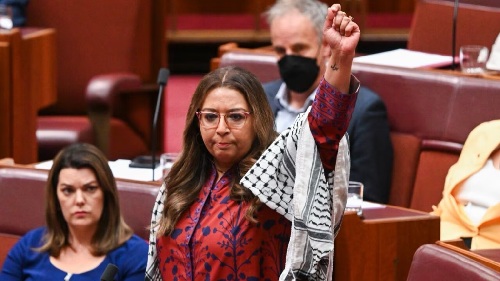
Mehreen Faruqi in the Australian Senate
Her hypocrisy lies not in her advocacy but in her statements that she is a proud Australian Muslim of Pakistani heritage. Can she not see the irony? Israel and Pakistan have parallel histories. Both were created at the same time through partition and the violent displacement of citizens. Both were inspired by militant ethno-religious movements. Israel by Zionism and Pakistan by the eponymous Pakistan Movement. Both Zionist and PM ambitions were managed (or mismanaged) under British supervision. Both have resulted in considerable resentment and ongoing, violent conflict. This lead to India, Pakistan and Israel developing the bomb. Yet the creation of Pakistan is seen as legitimate whilst the creation of Israel is not. How do we decide which independence/separatist movements are legitimate and which are not? Three catastrophes.Every independence movement is unique, however there is some value in making comparisons. Here I'm going to compare Palestine with Pakistan and Türkiye because they are examples of mass expulsion based on ethno-religious separatism linked by region and historical period. 1. Türkiye.The first is the Armenian and Greek genocides committed by Ottoman and early Republican Turkey. Greece and Turkey have long been territorial rivals with each holding territory claimed by the other over the centuries. Hellenic kingdoms ruled most of Anatolia for around 200 years before being absorbed by the Romans. The area remained largely Greek speaking until invading Muslim Turkmen took control in the 13th century. The Ottomans further expanded their borders to rule Greece and the Balkans for around 350 years (1460-1822). The Ottomans were pushed out of Greece and the Balkans after a series of wars of independence. Fearing a further loss of territory Ottoman and Republican Turkey launched a series of genocidal campaigns against Christian communities during and after WW1, the Armenians in East Anatolia and the Pontiac, Caucasus, Cappadocia and Thracian Greek communities. The intention was to create a unified Muslim ethno-state. The Turks first targeted the intellectuals and leaders, then summarily executed or sent all able bodied men into brutal forced labour. The women, children and elderly were forcibly marched into the Syrian desert where they were abandoned without shelter, food or water. An estimated 1.2 million died. Another 100-200 thousand women and girls were forcibly converted with tens of thousands enslaved. Western Armenia was absorbed into the Republic of Turkey and Eastern Armenia was absorbed into the Soviet Union. It regained its independence with Soviet dissolution in 1991.
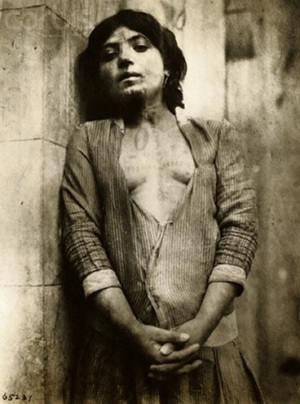
Armenian slave, the tattoos mark ownership
A similar fate befell the Greek population with an estimated death toll of around 900,000 and the same pattern of forced conversions and enslavement. The Greek genocide ended in 1923 with the Treaty of Lausanne. This resulted in the forced population transfer of over 1.2 million Orthodox Christians to Greece and around 400,000 Muslims to Turkey. Between 1912 and 1924 the Orthodox population of Turkey had been reduced from 4.4 million to around 700,000 (a decline of around 85%). Here it is important to note that Germany and Turkey had been allies during WW1. Hitler was fully aware of the genocide of the Armenians and this inspired his policy of extermination of Jews, Gypsies and other ethnic minorities. As part of the Ottoman Empire, the ruling elites of Palestine also knew of the genocide, although it was never extended to their Christian communities (likely due to their low numbers posing no threat). 2. India/PakistanThe idea that Muslims and Hindus/Sikhs could not live together was first articulated by Muslim reformer and educationalist, Syed Ahmad Khan (1817-98). In a speech in 1888 he said: “Now, suppose that all English, and the whole English army, were to leave India, taking with them all their cannon and their splendid weapons and everything, then who would be the rulers of India? Is it possible that under these circumstances two nations—the Mahomedans and the Hindus—could sit on the same throne and remain equal in power? Most certainly not. It is necessary that one of them should conquer the other and thrust it down. To hope that both could remain equal is to desire the impossible and the inconceivable.” The two nation policy was adopted by the All-India Muslim League under Mohammed Al-Jinnah. This lead to the catastrophic decision to partition India. It is estimated that up to 2 million people lost their lives in the inter communal violence with around 10-18 million forced to flee. This was the largest population transfer in history. As a consequence the Hindu and Sikh population has been reduced to just 2% in Pakistan and 8% in Bangladesh, whereas Muslims make up to 15% in India. 3. Israel/PalestineThe Partition of India and Pakistan occurred on August 14-15, 1947. On November 27 of the same year, the UN passed resolution 181 calling for the establishment of the state of Israel. Three days later Arab militants ambushed two buses killing seven Jews. This was the beginning of tit for tat communal violence that would evolve into the 48 war and the intervention of five Arab armies. The Palestinians call this the Nakba, the catastrophe. It is estimated that over 750,000 Palestinians either fled or were forcibly expelled during the conflict, with around 15,000 killed due to a combination of armed conflict, massacres and deprivation. One incident that gets particular mention is the massacre at Deir Yassin in which at least 107 villagers were killed. But there were atrocities on both sides. Arab forces attacked a medical convoy on its way to the Hadassah hospital killing 79, including doctors, nurses and patients, all protected persons under IHL, allegedly to revenge the killings at Deir Yassin. However, not all Palestinians fled or were expelled. Some stayed and became Israeli citizens. But it is not a simple case of Jews and Arabs being transferred between the new borders. What is often not mentioned is that in retaliation, more Jews were expelled from Arab countries than Palestinians were expelled from the new territory of Israel - 850,000 (with over 900 killed in pogroms) compared to 750,000. And whilst much has been written about plan Dalet, the Israeli plan to forcibly transfer Arabs out of Israel, little is said about Arab plans to expel Jews from Palestine. As I pointed out in my previous essay on immigration, the chairman of the AHC, al-Husseini, was a Nazi collaborator who directly asked Hitler to help him solve his Jewish problem. It is not hard to imagine that had the Arab armies been victorious, that there would have been a mass exodus of Jews and a series of retaliatory massacres. Competing narrativesA common theme in these three conflicts, indeed, in most conflict, is the dispute over the details, especially when it comes to determining fault. The Turkish government has been very active in denying claims of genocide against the Armenians and Greeks, particularly in applying political/diplomatic pressure against any state or organisation that recognises the Armenian claim. In the same way, the details of the India/Pakistan and Israel/Palestine conflicts are bitterly contested. Ideally commentators should be aware of politically motivated narratives and do the due diligence to sort the facts from the propaganda. Unfortunately this is easier said than done. Self-determination under international law.Self-determination is an important guiding principle in the UN Charter and other instruments of IHL. It is NOT however, legally binding. There is no requirement for states to recognise independence movements. Article 1.2 of the UN Charter states the aim: “To develop friendly relations among nations based on respect for the principle of equal rights and self-determination of peoples, and to take other appropriate measures to strengthen universal peace;” However, article 2.4 also states: “All Members shall refrain in their international relations from the threat or use of force against the territorial integrity or political independence of any state, or in any other manner inconsistent with the Purposes of the United Nations.” It is acknowledged that these two provisions can, in certain instances, contradict each other. What happens when a distinct minority agitates to seperate from a majority? There are many examples that have ended in serious conflict. The attempt by the Chechens to separate from the Russian Federation. The Bosnian war. The ongoing struggle of the Kurds. The conflict between Tamils and Sinhalese in Sri Lanka. The Uyghur in China. A further distinction is made between external and internal self-determination. External self-determination occurs when a group gains independence from an external power that has absorbed or colonised it. The obvious examples are the granting of independence to former colonies. A more recent example is the independence struggle of the Uyghur in Xinjiang, with the Chinese claim on the territory based on the Qing dynasty's annexation in 1759. Internal self-determination principally concerns the rights of indigenous people or ethnic and religious minorities within existing states. Whilst it can come with demands to secede, it most often involves establishing cultural autonomy, self-government and language and traditional law rights within a given state. For example, the demand of Australian Aborigines for land rights and self-governing land councils. In the case of the Yolngu of Arnhem Land, the recognition of traditional law in parallel with Western law. Liberal embrace of self-determination versus conservative resistance.Where people stand on the issue of self-determination is one of the principles that seperate progressives from conservatives. But not, I would argue, the left from the right. As I have argued in other essays, there is a 'regressive' left, or Campist left which regards the 'West' as the principle cause of the world's ills. Yet, when we look at the states that have accepted the principle of self-determination and made concessions to achieve that goal and compare them to the actions of the two alternative great powers, Russia and China, it is clear that it is the 'West' that has been the most progressive force. Russia and China act as hegemons, suppressing attempts at self-determination within their spheres of influence. Russia has invaded Ukraine to try and prevent it joining Europe and China threatens to invade Taiwan to bring it under communist party control. ChinaAs I have argued elsewhere, the goal of the Marxist-Leninist revolutionary project was to transition every culture from feudalism/capitalism to socialism/communism. There was little recognition of cultural or indigenous rights, except on a superficial, tokenistic level that reduced culture to costume, dance, folk music and cuisine - artefacts that didn't threaten communist party control. But even this performative tolerance was subject to ideological scrutiny, especially during Mao's cultural revolution. A period that saw ethnic distinctions eradicated and labelled 'backward' and 'primitive'. The death of Mao and the subsequent reforms saw the party move towards a semblance of ethnic autonomy. However, it has since reversed that policy with the adoption of the Law on Promoting Ethnic Unity and Progress.
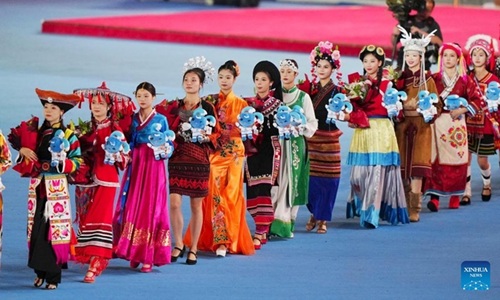
Chinese ethnic diversity as performance
China's record speaks for itself. The CCP has pursued a consistent policy of hegemonic expansion: annexing Tibet, suppressing the Mongol language and culture, suppressing democracy after taking control of Hong Kong, committing genocide against the Uyghur and threatening to seize control of Taiwan. Russia has been no better, suppressing independence movements in Chechnya, Georgia, Dagestan, Ingushetia, Tartastan, and of course, Ukraine. Australia as a counter example.Australia has an appalling history regarding the treatment of its indigenous people. The initial policy was genocide. Aboriginal culture was to be wiped out with violence and the forced assimilation of those that survived. It follows the pattern found in Canada and the US. However, things began to change in the 60's. The first step was a successful referendum to grant Aborigines citizenship and the right to vote. This was followed by decades of reform to remove segregation and discrimination. The next major step was the legal recognition of land rights and the formation of indigenous land councils. This lead to the blossoming of indigenous talent across multiple fields. It is now common to see Aboriginal people represented at the highest level and to see and hear Aboriginal artists perform using traditional language. Most major events now begin with a traditional welcome to country, the traditional lands of the many tribal groups. As I drive around my part of Australia there are signs that tell me I am entering this or that tribe's traditional land.
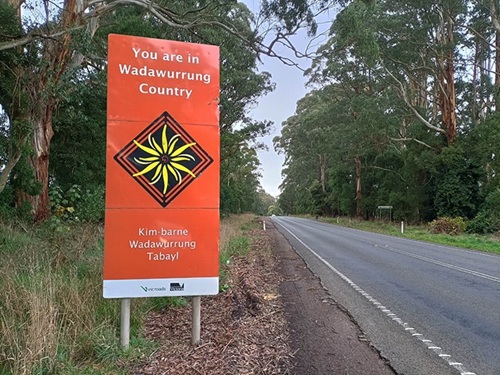
Acknowledging Aboriginal land
Of course, this is not without controversy, with political conservatives resisting some of these reforms. However, the point here is that since the 60's the trend has been towards reform and correcting the discriminatory policies of the past. During this period Australia granted independence to Papua New Guinea (1975) and Nauru (1978). The point here is that in general (there are always exceptions), the 'West' is tending towards acknowledging the right to both internal and external self-determination, whereas the 'Rest' demonstrably denies the right of self-determination. Britain once had a great empire. It surrendered that empire and now struggles to remain unified under challenge from Irish, Scottish and Welsh independence movements. In contrast China and Russia seek to expand their territory. The nature of the hypocrisyOn December 10th, 1948, the UN proclaimed The Universal Declaration of Human Rights. The key word is universal. Not partisan. Universal. Article 2 states: “Everyone is entitled to all the rights and freedoms set forth in this Declaration, without distinction of any kind, such as race, colour, sex, language, religion, political or other opinion, national or social origin, property, birth or other status. Furthermore, no distinction shall be made on the basis of the political, jurisdictional or international status of the country or territory to which a person belongs, whether it be independent, trust, non-self-governing or under any other limitation of sovereignty.” Everyone. Without distinction. Not 'some' based on their political opinion. Obviously, there would be no contradiction if you believe, as many do, that there are no 'universal' human rights. The contradiction only arises when people claim universal rights for the side they support but not for their political opponents. Or more typically when they point to the abuse of human rights by their political opponents whilst ignoring the abuses of their political allies.
Widget is loading comments...
|