|
TRANSLATE THIS ARTICLE
Integral World: Exploring Theories of Everything
An independent forum for a critical discussion of the integral philosophy of Ken Wilber
 Dr. Joseph Dillard is a psychotherapist with over forty year's clinical experience treating individual, couple, and family issues. Dr. Dillard also has extensive experience with pain management and meditation training. The creator of Integral Deep Listening (IDL), Dr. Dillard is the author of over ten books on IDL, dreaming, nightmares, and meditation. He lives in Berlin, Germany. See: integraldeeplistening.com and his YouTube channel. He can be contacted at: joseph.dillard@gmail.com Dr. Joseph Dillard is a psychotherapist with over forty year's clinical experience treating individual, couple, and family issues. Dr. Dillard also has extensive experience with pain management and meditation training. The creator of Integral Deep Listening (IDL), Dr. Dillard is the author of over ten books on IDL, dreaming, nightmares, and meditation. He lives in Berlin, Germany. See: integraldeeplistening.com and his YouTube channel. He can be contacted at: joseph.dillard@gmail.com
SEE MORE ESSAYS WRITTEN BY JOSEPH DILLARD
THE DREAMING KOSMOS
A Naturalistic Approach to Emergence and Transformation through Transpersonal Dream Yoga Harnessing Negentropy, Chaos Theory, and the Attractor Informational network to Unlock Emerging Potentials Chapters 01 | 02 | 03 | 04 | 05 | 06 | 07 | 08 | 09 | 10 11 | 12 | 13 | 14 | 15 | 16 | 17 | 18 | 19 | 20 21 | 22 Contains AI-generated content. The Precipitation of CultureWhen the Sky Hardens into LawThe Dreaming Kosmos, Chapter 18Joseph Dillard
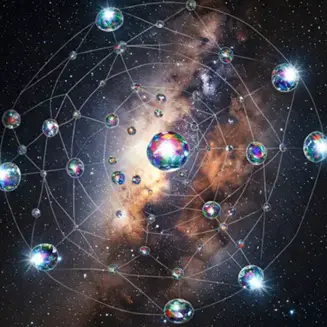 In many flood myths, catastrophe does not arrive because rain falls, but because it does not stop. What begins as nourishment becomes threat when water cannot return to the sky. In the Epic of Gilgamesh, the gods regret the flood not because water is evil, but because saturation becomes total. In the Genesis narrative, the crisis resolves only when the waters recede and covenant replaces inundation. The same mythic intuition appears in stories of divine law: what descends as guidance hardens into commandment; what begins as orientation calcifies into control. Culture precipitates in this way. Human cultures are not designed, chosen, or invented in the way they later imagine themselves to be. They condense. They form when shared relational, emotional, and existential pressures exceed the collective capacity to remain fluid. At that moment, meaning localizes. Norms, myths, institutions, roles, and moral frameworks precipitate as stabilizing forms. Culture, like weather, emerges because it must. Culture as Condensation, Not Design
Human cultures are not designed, chosen, or invented in the way they later imagine themselves to be. They condense. They form when shared relational, emotional, and existential pressures exceed the collective capacity to remain fluid. Early agrarian societies did not “decide” to invent kingship; centralized authority precipitated in response to irrigation coordination, food storage, and defense pressures in Mesopotamia and the Nile Valley. At that moment, meaning localizes. Norms, myths, institutions, roles, and moral frameworks precipitate as stabilizing forms. Culture, like weather, emerges because it must. From Individual to Collective SaturationEarlier chapters described precipitation at the levels of matter, dream, and identity. Culture represents the next scale of the same process. What individuals cannot metabolize alone, threat, scarcity, grief, awe, uncertainty, is distributed across the group until it can no longer remain diffuse. After repeated natural disasters, Polynesian societies externalized anxiety into taboo systems regulating fishing seasons and sacred spaces. In post-World War I Europe, unprocessed collective grief and humiliation exceeded individual coping capacity and condensed into nationalist mythologies. At that threshold, collective experience condenses into shared form. At that threshold, collective experience condenses into shared form. Ritual, taboo, hierarchy, narrative, and law are not primarily ideological artifacts; they are adaptive condensations. They reduce uncertainty, synchronize behavior, and preserve group viability under conditions of saturation. Culture does not arise from agreement. Military rank structures synchronize behavior under lethal uncertainty. Funeral rites metabolize grief by formalizing it. Marriage norms stabilize inheritance and attachment patterns. Culture does not arise from agreement. It arises from necessity. Myth as Early PrecipitateMyth is among the earliest cultural precipitates. Long before formal institutions, myth localized shared experience into narrativized form. The myth of Indra slaying V?tra, releasing the bound waters encodes an intuition of blocked flow and catastrophic saturation. Similarly, the Greek myth of Persephone stabilizes collective anxiety around seasonal death and return, anchoring agricultural cycles in story. Such myths do not explain reality; they stabilize it. They provide orientation when relational and environmental conditions exceed the group's capacity for improvisation. Myth precedes belief. Belief merely defends what myth has already precipitated. This is why myth can persist even after belief erodes: modern nations still reenact founding myths long after their literal truth is questioned. Institutions: Stabilized Solutions to Recurrent ThreatAs cultures scale, myths alone cannot regulate behavior. Institutions precipitate next: kinship systems, priesthoods, armies, markets, bureaucracies. Each emerges in response to a specific saturation, a resource scarcity, violence, coordination failure, or uncertainty of authority. Roman law arose to manage the coordination failure of a rapidly expanding empire. The medieval Church stabilized moral authority after the collapse of imperial governance. Modern welfare states condensed in response to the destabilizing saturation of industrialization. Institutions are collective symptoms that worked well enough to persist. Once established, they develop inertia. The very stability that preserves order also resists adaptation. Over time, institutions mistake their precipitated form for necessity rather than contingency. What once reduced tension begins to generate it. Ideology as Frozen PrecipitationIdeologies represent a later-stage precipitation: meaning condensed not only into form, but into justification. Where myth or ritual once sufficed, ideology explains why the structure must remain. This is where pathology begins. Stalinism did not arise merely from political ambition, but from ideological irreversibility, the inability of the system to dissolve failed assumptions without threatening identity itself. An ideology is not dangerous because it is wrong, but because it is irreversible. Religious fundamentalism, market absolutism, and technocratic determinism all share this feature. It prevents cultural forms from re-entering solution. Polarization, fundamentalism, and authoritarianism arise when cultures lose the capacity to dissolve their own precipitates. In this sense, cultural pathology mirrors trauma: adaptive stabilization that has outlived its context. Collective Trauma and Cultural ArrestJust as individual trauma represents arrested precipitation, collective trauma produces cultures unable to re-fluidize. Post-genocide societies often organize around threat vigilance. Israeli and Palestinian identities, shaped by historical saturation, reenact mythic narratives of victimhood and survival. Indigenous cultures subjected to colonization may freeze identity around preservation rather than evolution. Historical violence, colonization, genocide, famine, and ecological collapse saturate relational fields beyond metabolization. The resulting cultures organize around threat. Hypervigilance, rigid moralism, scapegoating, and mythic reenactment become normative. Dissent becomes dangerous because it threatens the precipitate that holds chaos at bay. Cultural identity narrows. Dissent becomes dangerous. The system confuses stability with survival. Understanding culture through precipitation reframes these dynamics not as moral failure, but as unfinished adaptive cycles. The Role of Technology in Cultural PrecipitationTechnology accelerates saturation. The printing press destabilized medieval Europe by overwhelming interpretive authority. Information density, speed of communication, and symbolic amplification overwhelm traditional cultural holding capacities. Social media, algorithmic reinforcement, and global crises push cultures toward premature precipitation. Memes function as micro-precipitates: localized meaning formations that stabilize affect rapidly but shallowly. Viral outrage, identity signaling, and performative morality are symptoms of cultural systems precipitating faster than they can integrate. Algorithmic reinforcement accelerates identity hardening. The problem is not technology itself, but threshold compression, cultures precipitate before integration can occur. The problem is not technology itself, but threshold compression. Culture, Decoherence, and LocalizationAt the microcosmic quantum level, decoherence describes the transition from superposition to localized event when relational entanglement with the environment exceeds a threshold. Culture behaves analogously at the macrocosmic social level. Multiple possible futures coexist until relational pressures demand commitment. At that point, culture “chooses”, not by decision, but by constraint collapse. A law is passed. A border is drawn. A narrative becomes dominant. Importantly, this analogy is structural, not causal. Psychological and cultural processes do not derive from quantum mechanics, but they share a threshold logic of localization. Why Cultural Change Feels ImpossibleCultural change threatens identity because identity is nested within cultural precipitates. To dissolve a cultural form is to reintroduce uncertainty at scale. Climate data does not dissolve fossil-fuel ideology because it does not restore relational safety or economic holding capacity. This explains why facts rarely change minds. Facts do not alter saturation conditions. They do not restore holding capacity. Only changes in relational density, trust, safety, reciprocity, permit culture to re-enter solution. Revolutions fail when they attempt to shatter precipitates without restoring the conditions that allow reorganization. The Arab Spring collapsed where institutions were dissolved faster than trust could be rebuilt. Listening as a Cultural InterventionIntegral Deep Listening was developed at the interpersonal and intrapsychic level, but its logic extends to culture. Listening does not impose direction; it increases holding capacity. Truth and Reconciliation Commissions function not by verdict, but by metabolization. Restorative justice programs reduce recidivism not through punishment, but through relational repair. The foundational characteristics of respect, reciprocity, trustworthiness, and empathy underlie and ground both individual and collective relationships, social norms and international law. Listening in a deep and integral way both assumes and generates these fundamental characteristics of relationship. At cultural scales, listening appears as pluralistic dialogue without forced consensus, truth and reconciliation processes, restorative justice practices, and myth revision rather than myth eradication. These practices do not dismantle culture; they soften precipitates. Toward Reversible CultureA healthy culture is not one without structure, but one capable of reversibility. Japan's ability to ritualize dissolution after crisis, through apology and reform, exemplifies this capacity. Indigenous oral traditions that allow stories to change preserve orientation without fixation. It can allow norms, roles, and institutions to dissolve temporarily without collapse. Such cultures tolerate ambiguity. They permit multiple perspectives and distinguish orientation from law. This is not utopian but ecological. Conclusion: Rain Must Return to SkyCulture precipitates because it must, but it survives because it can dissolve. When rain never returns to the sky, flood follows. When law never re-enters story, tyranny emerges. The work of the present era is not to abolish culture, but to restore its solubility, to remember that what once condensed under pressure can dissolve under care. Culture, like dreams, is a message. It speaks most clearly when we listen to what has already taken form. Endnotes
Widget is loading comments...
|