|
INTEGRAL WORLD: EXPLORING THEORIES OF EVERYTHING
An independent forum for a critical discussion of the integral philosophy of Ken Wilber

Publication dates of essays (month/year) can be found under "Essays".
|
|
INTEGRAL WORLD: EXPLORING THEORIES OF EVERYTHING
An independent forum for a critical discussion of the integral philosophy of Ken Wilber
Publication dates of essays (month/year) can be found under "Essays".
|
 HUGH MARTIN is listed in Who's Who in America and Who's Who in the World. He has appeared on numerous talk shows, led seminars at many colleges and corporations, and spoken at numerous professional conferences and colloquia. Mr. Martin is president of the FINRA-registered securities brokerage firm, Hugh Martin Securities, and of the SEC-registered investment advisory firm, Hugh Martin & Co. Hugh is also president and co-founder of the life planning and counseling firm, Whole Life Counseling. AMALIA KAYE MARTIN ('Kaye') is an early-education specialist, a gifted natural medicine practitioner, and an instructor in nutrition and natural medicine at Baumann College.
|
|
|
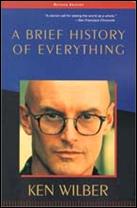 PREFACE
What does Ken Wilber really say about human development? This study places all Wilber’s pronouncements on each topic of human growth side-by-side, so we can make informed comparisons.
Are Wilber’s positions on these topics clear and consistent? As our excerpts show, Wilber’s statements are sometimes vague, ambiguous, or even contradictory.
Are Wilber’s interpretations on the key issues of human growth complete and correct? This study finds at least 81 significant instances where Wilber’s perspective deserves careful re-examination, and perhaps revision.
Is AQAL[1] the best summary of Wilber’s own model? As this study demonstrates, Wilber’s AQAL (and his more complete Integral Operating System) is actually a version of a more comprehensive, more differentiated, more finely articulated model we call ADAPT – All Dimensions, All Participants, All Processes, Together.
The Fundamental Ken Wilber is an investigation into the foundational principles of Ken Wilber – the basic components of Wilber’s model of human growth. This study will be different things for different people:
1. Reader’s anthology. For the casual reader and the Wilber aficionado, this study is an anthology of the best and most informative passages from Ken Wilber’s classic on human growth, Integral Psychology.
2. Topical reference. For the growth practitioner and the integral researcher, this study is a comprehensive, topical reference compendium of all Wilber’s major pronouncements on each aspect of human development, as drawn from Integral Psychology.
3. Critical examination. For the analyst and skeptic, this study is a respectful critique of the fundamental concepts comprising Wilber’s model of human growth.
4. Alternative growth model. For the visionary and seeker, this study is a presentation and demonstration of a broader, more nuanced model of human development – the model we call ADAPT.
Our intention here is to reconsider, elucidate, refine, reorganize, expand and consolidate Wilber’s admirable work – not to challenge, contest, bash, denigrate, debunk, or supersede it. Wilber is a Titan on whose shoulders all our efforts stand.
The Fundamental Ken Wilber
PREFACE..................................................................................................................................................................................... 2
The Fundamental Ken Wilber............................................................................................................................................ 2
HUGH & KAYE MARTIN......................................................................................................................................................... 4
TABLE OF CONTENTS............................................................................................................................................................. 4
Division 1: PREPARING FOR WILBER................................................................................................................................ 4
OVERVIEW OF THIS STUDY................................................................................................................................................... 4
HOW TO STUDY KEN WILBER.............................................................................................................................................. 4
THE ADAPT MODEL OF HUMAN GROWTH..................................................................................................................... 4
A: The ADAPT Model....................................................................................................................................................... 4
D: Dimensions .................................................................................................................................................................... 4
P: Participants..................................................................................................................................................................... 4
PR: Processes...................................................................................................................................................................... 4
T: Together-ness................................................................................................................................................................. 4
Ken Wilber Reconsidered .............................................................................................................................................. 4
ADAPT vs. Wilber: Comparing Positions.......................................................................................................................... 4
Division 2: THE FUNDAMENTALS OF KEN WILBER..................................................................................................... 4
A: THE ADAPT MODEL....................................................................................................................................................... 4
Aa: The Purpose of Growth............................................................................................................................................... 4
Ab: Wilber’s Integral Operating System -- Essential Components.................................................................................... 4
Ac: Methodology & Validation........................................................................................................................................... 4
D: THE DIMENSIONS OF THE GROWTH CONTINUUM............................................................................................. 4
D1: Stage growth................................................................................................................................................................. 4
D1a: Stages/Individual........................................................................................................................................... 4
D1b: Stages/Collective.......................................................................................................................................... 4
D1c: Stages/Cultural.............................................................................................................................................. 4
D2: Transition growth......................................................................................................................................................... 4
D1&2: The Developmental Sequence of Stages and Transitions........................................................................................ 4
D1&2a: The Transition Cycle.............................................................................................................................. 4
D1&2b: Fundamental Developmental Sequence................................................................................................... 4
D1&2c: The Clusters & Chakras.......................................................................................................................... 4
D1&2d: The Generation Cycle............................................................................................................................. 4
D1&2e: The Developmental Sequence – Collective/ Cultural.............................................................................. 4
D3: State Growth................................................................................................................................................................ 4
D3a: Natural States............................................................................................................................................... 4
D3b: Altered States............................................................................................................................................... 4
D3c: Peak Experiences and Permanent States....................................................................................................... 4
D4: Realm Growth.............................................................................................................................................................. 4
D4a: Life Passages................................................................................................................................................ 4
D4b: Psyche Passages........................................................................................................................................... 4
D4c: Body Passages (experienced)....................................................................................................................... 4
D4d: Spirit Passages............................................................................................................................................. 4
D4e: Architecture of the Self................................................................................................................................ 4
D5: Arena Growth.............................................................................................................................................................. 4
D5a: LIFE ARENAS............................................................................................................................................ 4
D5b: PSYCHE ARENAS..................................................................................................................................... 4
D5b1: Fundamental Needs.............................................................................................................................. 4
D5b2: Sexuality & Sensuality.......................................................................................................................... 4
D5b3: Affect & Emotions............................................................................................................................... 4
D5b4: Ego & Experienced Self......................................................................................................................... 4
D5b5: Leadership............................................................................................................................................ 4
D5b6: Cognition.............................................................................................................................................. 4
D5b7: Art, Aesthetics, & Creativity............................................................................................................... 4
D5b8: Ethics & Morality................................................................................................................................ 4
D5b9: Worldviews........................................................................................................................................... 4
D5c: BODY ARENAS (experienced)................................................................................................................... 4
D5d: SPIRIT ARENAS........................................................................................................................................ 4
D5d1: Archetypes & Myths........................................................................................................................... 4
D6: Vector Growth............................................................................................................................................................. 4
D6a: Perspectives of Growth............................................................................................................................... 4
D6b: Paths of Growth.......................................................................................................................................... 4
D6c: Directions & Polarities of Growth............................................................................................................... 4
D6d: Cyclic Flow.................................................................................................................................................. 4
D6e: Tree-like Growth.......................................................................................................................................... 4
D7: Actualization & Restoration growth............................................................................................................................ 4
D7a: Actualization Growth.................................................................................................................................. 4
D7a1: Actualization Growth/Individual.......................................................................................................... 4
D7a2: Actualization Growth/Cultural............................................................................................................. 4
D7b: Restoration Growth..................................................................................................................................... 4
D7b1: Restoration Growth/Individual............................................................................................................. 4
D7b2: Restoration Growth/Collective............................................................................................................. 4
Specific Impediments............................................................................................................................................ 4
D7A-D1&2a: The Impediment Self................................................................................................................ 4
D7A-D1&2f: The Romantic Fallacy............................................................................................................... 4
D8: Coordination Growth................................................................................................................................................... 4
P: THE PARTICIPANTS IN THE GROWTH PROCESS.................................................................................................. 4
P1: The Experienced/Observed Self.................................................................................................................................... 4
P2: The Individual & Collective Selves............................................................................................................................... 4
P2a: Individual Self............................................................................................................................................... 4
P2b: Collective/Group Self................................................................................................................................... 4
P2c: Collective Self/Culture.................................................................................................................................. 4
P2d: Collective Self/Spiral Dynamics................................................................................................................... 4
P3: Personae & Types........................................................................................................................................................ 4
P3a: Gender........................................................................................................................................................... 4
P3b: Birth-order Types........................................................................................................................................ 4
P3c: Enneagram Roles........................................................................................................................................... 4
P3d: Inter-Passage Growth................................................................................................................................... 4
P3e: Jungian Types............................................................................................................................................... 4
P4: The Functional Self....................................................................................................................................................... 4
P5: The Impediment Self..................................................................................................................................................... 4
P5a: Sub-personalities........................................................................................................................................... 4
P6: The Generational Self.................................................................................................................................................... 4
P7: The Witness.................................................................................................................................................................. 4
PR: THE PROCESSES OF GROWTH................................................................................................................................ 4
PR1: Foundational............................................................................................................................................................... 4
PR1/1: Natural Nutrition...................................................................................................................................... 4
PR1/2: Natural Medicine...................................................................................................................................... 4
PR1/3: Nurturing & Bonding................................................................................................................................ 4
PR1/4: Relationships & Marriage......................................................................................................................... 4
PR1/5: Sexuality & Sensuality.............................................................................................................................. 4
PR1/6: Family Dynamics...................................................................................................................................... 4
PR2: Physical world............................................................................................................................................................ 4
PR2/7: Sensory Experience................................................................................................................................... 4
PR2/8: Physical Activity...................................................................................................................................... 4
PR2/9: Life Experience.......................................................................................................................................... 4
PR2/10: Natural Environment............................................................................................................................... 4
PR3: Socio-cultural.............................................................................................................................................................. 4
PR3/11: Skills........................................................................................................................................................ 4
PR3/12: Habits & Programming............................................................................................................................ 4
PR3/13: Responsibility......................................................................................................................................... 4
PR3/14: Enterprise & Leadership......................................................................................................................... 4
PR3/15: Ethics & Service...................................................................................................................................... 4
PR3/16: Acculturation.......................................................................................................................................... 4
PR3/17: Archetype & Myth................................................................................................................................ 4
PR4: Formal investigation................................................................................................................................................... 4
PR4/18: Structure & Order................................................................................................................................... 4
PR4/19: Explanations............................................................................................................................................ 4
PR4/20: Technologies........................................................................................................................................... 4
PR4/21: Logic & Reasoning.................................................................................................................................. 4
PR4/22: Planning & Orchestrating........................................................................................................................ 4
PR4/23: Sciences & Proofs................................................................................................................................... 4
PR5: Self-expression........................................................................................................................................................... 4
PR5/24: Language & Communication................................................................................................................... 4
PR5/25: Recorded Experiences............................................................................................................................. 4
PR5/26: Humor & Fun.......................................................................................................................................... 4
PR5/27: Stories & Literature................................................................................................................................. 4
PR5/28: Expressive Arts....................................................................................................................................... 4
PR6: Conscious development............................................................................................................................................. 4
PR6/29: Body Therapies...................................................................................................................................... 4
PR6/30: Introspection & Self-awareness.............................................................................................................. 4
PR6/31: Psychotherapies...................................................................................................................................... 4
PR6/32: Psycho-biologic Techniques................................................................................................................... 4
PR6/33: Spiritual Practices................................................................................................................................... 4
PR7: Comprehensive........................................................................................................................................................... 4
PR7/34: Holistic Processes................................................................................................................................... 4
PR7/35: Integral Processes.................................................................................................................................... 4
T: ‘TOGETHER-NESS’ (Guidance & Orchestration).................................................................................................... 4
COLLECTIVE & SOCIETAL GUIDANCE...................................................................................................................... 4
T1: Parent/s......................................................................................................................................................................... 4
T2: Community & Culture.................................................................................................................................................. 4
T3: Holistic Growth Situations........................................................................................................................................... 4
T4: Growth Centers............................................................................................................................................................ 4
T5: Authorities.................................................................................................................................................................... 4
INDIVIDUAL & PERSONAL GUIDANCE..................................................................................................................... 4
T6: Partner/Friend............................................................................................................................................................... 4
T7: Therapist...................................................................................................................................................................... 4
T8: Spiritual Guide.............................................................................................................................................................. 4
T9: Other Growth Professionals......................................................................................................................................... 4
T10: Integral Life Counselor............................................................................................................................................... 4
INTERNAL GUIDANCE.................................................................................................................................................. 4
T11: Internal Navigator....................................................................................................................................................... 4
T12: Witness....................................................................................................................................................................... 4
SYSTEM OF REALITY (Section S).................................................................................................................................... 4
Sa: Wilber’s Personal evolution........................................................................................................................................... 4
Sb: Structures...................................................................................................................................................................... 4
Sc: Concepts........................................................................................................................................................................ 4
Sd: Antecedents................................................................................................................................................................... 4
Division 3: THE WISDOM OF WILBER................................................................................................................................ 4
ONE: THE FOUNDATION.............................................................................................................................................. 4
1: The Basic Levels or Waves............................................................................................................................................. 4
2: The Developmental Lines or Streams............................................................................................................................. 4
3: The Self........................................................................................................................................................................... 4
4: Self-Related Streams—The Self-Stages…...................................................................................................................... 4
-- Spiral Dynamics: An Example of the Waves of Existence.............................................................................................. 4
-- Horizontal Typologies.................................................................................................................................................... 4
TWO. FROM PREMODERNITY TO POST-MODERNITY......................................................................................... 4
5: What Is Modernity?........................................................................................................................................................ 4
6: To Integrate Pre-Modern and Post-Modern................................................................................................................... 4
-- Modernity at its Best: All-Quadrant............................................................................................................................... 4
-- Flatland............................................................................................................................................................................ 4
7: Some Important Modern Pioneers.................................................................................................................................. 4
THREE. AN INTEGRAL MODEL................................................................................................................................... 4
8: The Archeology of the Spirit.......................................................................................................................................... 4
-- The Self and its Pathologies............................................................................................................................................. 4
-- Lower Pathologies (F-0 To F-3)...................................................................................................................................... 4
-- Intermediate (F-4 To F-6) and Higher (F-7 To F-9) Pathologies.................................................................................... 4
-- Typical Therapy............................................................................................................................................................. 4
-- Subpersonalities............................................................................................................................................................... 4
-- The Archeology Of The Self........................................................................................................................................... 4
-- A Full-Spectrum Therapy............................................................................................................................................... 4
-- Depth and Height............................................................................................................................................................ 4
-- Four Quadrant or Integral Therapy................................................................................................................................. 4
9. Some Important Developmental Streams........................................................................................................................ 4
-- Morals............................................................................................................................................................................. 4
-- Motivation: Levels of Food............................................................................................................................................. 4
-- Worldviews...................................................................................................................................................................... 4
-- Affect............................................................................................................................................................................... 4
-- Gender............................................................................................................................................................................. 4
-- Aesthetics........................................................................................................................................................................ 4
-- Different Types of Cognitive Lines................................................................................................................................ 4
-- Different Lines of the Self............................................................................................................................................... 4
-- Integral Psychology......................................................................................................................................................... 4
10: Spirituality: Stages or Not?........................................................................................................................................... 4
-- The Importance of Spiritual Practice............................................................................................................................... 4
11: Is There a Childhood Spirituality?................................................................................................................................ 4
-- Altered States and Trailing Clouds.................................................................................................................................. 4
12: Sociocultural Evolution................................................................................................................................................. 4
-- Collective Evolution........................................................................................................................................................ 4
-- Spiritual Revelations: The Growing Tip of Evolution.................................................................................................... 4
13: From Modernity to Postmodernity.............................................................................................................................. 4
-- Conclusion....................................................................................................................................................................... 4
14: The 1-2-3 of Consciousness Studies............................................................................................................................. 4
-- What Do We Mean by ‘Mind’ and ‘Body?’................................................................................................................... 4
Step One: All Quadrant....................................................................................................................................................... 4
15: The Integral Embrace..................................................................................................................................................... 4
-- From Premodernity......................................................................................................................................................... 4
-- The Integral Embrace—From Modernity....................................................................................................................... 4
-- Spirit-in-Action Has Come to Awaken........................................................................................................................... 4
Division 4: APPENDICES & TABLES.................................................................................................................................... 4
Table A: ADAPT AND WILBER COMPARED.................................................................................................................. 4
Table B1: INTEGRAL LIFE PRACTICE -- from Integral Spirituality......................................................................... 4
Table B2. INTEGRAL LIFE PRACTICE (precursor) – from Integral Psychology & One Taste........................... 4
Table B3. PATHOLOGIES & TREATMENT MODALITIES – from Integral Psychology........................................ 4
Appendix C: IMPEDIMENTS TO THE GROWTH PROCESS........................................................................................ 4
I-D: IMPEDIMENTS—DIMENSIONS........................................................................................................................... 4
IA-D: ACTUALIZATION IMPEDIMENTS—DIMENSIONS..................................................................................... 4
IA-D1: Stage impediments......................................................................................................................................... 4
IA-D2: Transition impediments................................................................................................................................. 4
IA-D1&2: Stage/transition impediments.................................................................................................................... 4
o IA-D1&2a: Transition Cycle impediments............................................................................................................ 4
o IA-D1&2d: Generation Cycle impediments.......................................................................................................... 4
o IA-D1&2e: Cultural impediments – Spiral Dynamics........................................................................................... 4
o IA-D1&2f: Romantic Fallacy impediments........................................................................................................... 4
IA-D3: State impediments......................................................................................................................................... 4
IA-D4: Realm impediments....................................................................................................................................... 4
IA-D5: Arena impediments........................................................................................................................................ 4
IA-D6: Vector Impediments...................................................................................................................................... 4
IA-D6a: Perspective impediments........................................................................................................................ 4
IA-D6b: Path impediments................................................................................................................................... 4
IA-D6c: Direction & Polarity impediments.......................................................................................................... 4
IA-D6d: Cyclic Flow impediments....................................................................................................................... 4
IA-D6e: Tree-like Growth impediments............................................................................................................... 4
IA-D7: Actualization & Restoration Growth............................................................................................................ 4
IA-D8: Coordination impediments............................................................................................................................ 4
IR-D: RESTORATION IMPEDIMENTS—DIMENSIONS........................................................................................... 4
IR-D1&2: Stage/transition impediments.................................................................................................................... 4
o IR-D1&2a: Transition Cycle impediments............................................................................................................ 4
Section I-P: PARTICIPANT IMPEDIMENTS................................................................................................................ 4
IA-P: ACTUALIZATION IMPEDIMENTS -- PARTICIPANTS.................................................................................. 4
IA-P1: Experienced/Observed Impediments.............................................................................................................. 4
IA-P2: Individual/Collective Impediments................................................................................................................. 4
IA-P2a: Collective Impediments........................................................................................................................... 4
IA-P2b: Culture Impediments............................................................................................................................... 4
IA-P3: Persona/Type Impediments........................................................................................................................... 4
IA-P3a: Gender Impediments............................................................................................................................... 4
IA-P3b: Birth-Order Impediments........................................................................................................................ 4
IA-P3c: Enneagram Impediments.......................................................................................................................... 4
IA-P3d: Inter-Passage Impediments..................................................................................................................... 4
IA-P4: Functional Impediments................................................................................................................................. 4
IA-P5: Impediment Self............................................................................................................................................. 4
IA-P6: Generational Impediments............................................................................................................................. 4
IA-P7: Witness Impediments..................................................................................................................................... 4
IR-P: RESTORATION IMPEDIMENTS—PARTICIPANTS........................................................................................ 4
IR-P1: Experienced/Observed Impediments.............................................................................................................. 4
o IR-D1&2a: Transition Cycle impediments............................................................................................................ 4
Section I-PR: PROCESSES IMPEDIMENTS................................................................................................................... 4
IA-PR: ACTUALIZATION IMPEDIMENTS—PROCESSES....................................................................................... 4
IA-PR1: Foundational impediments.......................................................................................................................... 4
IA-PR2: Physical world impediments....................................................................................................................... 4
IA-PR3: Socio-cultural impediments......................................................................................................................... 4
IA-PR4: Formal investigation impediments............................................................................................................... 4
IA-PR5: Self-expression impediments....................................................................................................................... 4
IA-PR6: Conscious development impediments......................................................................................................... 4
IA-PR7: Comprehensive impediments...................................................................................................................... 4
TOGETHER-NESS IMPEDIMENTS............................................................................................................................... 4
IA-T: ACTUALIZATION IMPEDIMENTS – TOGETHER-NESS............................................................................... 4
IA-T1: Parental Impediments.................................................................................................................................... 4
IA-T2: Societal/Cultural impediments....................................................................................................................... 4
IA-T3: Holistic Growth Situation Impediments........................................................................................................ 4
IA-T4: Growth Center Impediments......................................................................................................................... 4
IA-T5: Authority Impediments................................................................................................................................. 4
IA-T6: Partner Impediments...................................................................................................................................... 4
IA-T7: Therapist Impediments.................................................................................................................................. 4
IA-T8: Spiritual Guide Impediments......................................................................................................................... 4
IA-T9: Growth Professional Impediments................................................................................................................ 4
IA-T10: Integral Counselor Impediments.................................................................................................................. 4
IA-T11: Internal Navigator Impediments.................................................................................................................. 4
IA-T12: Witness Impediments.................................................................................................................................. 4
IR-T: RESTORATION IMPEDIMENTS -- TOGETHER-NESS.................................................................................... 4
IR-T1: Parental Impediments..................................................................................................................................... 4
IR-D1&2a: Transition Cycle impediments........................................................................................................... 4
Appendix D: GLOSSARY OF TERMS.............................................................................................................................. 4
Appendix E: CREDITS......................................................................................................................................................... 4
HUGH AND KAYE MARTIN Biographical Information................................................................................................ 4

|
The Fundamental Ken Wilber is a study of the foundational principles of Ken Wilber’s Model of Human Development. It consists of four main Divisions:
{ Division 1. Preparing for Wilber. Information you will need to make best use of this study.
{ Divisions 2. The Fundamental Ken Wilber. The core of this study: A compilation from Integral Psychology of Ken Wilber’s most important pronouncements on human development, organized according to the ADAPT Model.
{ Division 3. The Wisdom of Wilber. A collection of Wilber’s best writings on human growth from Integral Psychology – showing the context from which the excerpts in Division 2 are drawn.
{ Division 4. Appendices. Important background information that illustrates and illuminates essential points we have made in the main text.
This study elucidates Ken Wilber’s major positions on human growth. However, it also shows that many of Wilber’s views are due for serious reconsideration, and perhaps revision. It further demonstrates that Wilber’s Integral Operating System is actually a version of the more comprehensive and finely-articulated Model we call ADAPT.
The contents of the four Divisions are as follows:
Division 1: PREPARING FOR WILBER
This division provides a framework for understanding and interpreting Ken Wilber’s writings on human growth. It contains four sections: an overview of this article, recommendations on How to Study Wilber, a brief summary of the ADAPT Model, and a discussion on why Ken Wilber’s positions on human growth should be reconsidered.
 OVERVIEW OF THIS STUDY
An effective program of personal growth contains four components—Dimensions (of the Growth Continuum), Participants (in the growth process), Processes (of growth), and ‘Together-ness’ (Integration of all four components). When all four components are complete and combined, they form an Integral Program we call ADAP2T – All Dimensions, All Processes, All Participants, Together.[2] This study employs the ADAPT Model as set of parameters to compile and compare the best and most informative passages on human development from Ken Wilber’s classic work, Integral Psychology.
The article consists of four Divisions – Preparing for Wilber, The Fundamentals of Wilber, The Wisdom of Wilber, and the Appendices:
Division 1. PREPARING FOR WILBER (‘Introduction’). This division contains four sections:
{ Overview of This Study (‘Overview’). This Overview you are now reading.
{ How To Study Ken Wilber. A process for reading Ken Wilber that will give you a fresher, deeper, more thorough understanding of his work.
{ The ADAPT Model. The basic features of the ADAPT Model—whose parameters we use to organize Wilber’s various pronouncements on human growth.
{ Ken Wilber Reconsidered. The culminating section of Division 1: A comparison between Ken Wilber and ADAPT on the various parameters of human development. Demonstrates why Wilber’s AQAL and Integral Operating System Models are due for serious re-consideration and revision.
Division 2. THE FUNDAMENTALS OF KEN WILBER.
{ The Fundamentals of Wilber (‘Fundamentals’). The core Division of this entire study: A topical anthology of Wilber’s key pronouncements on each parameter of human growth – organized according to the ADAPT model.
Division 3. THE WISDOM OF WILBER (‘Wisdom’).
{ The Wisdom Of Wilber (‘Wisdom’). A collection of Wilber’s best and most informative passages on human growth from Integral Psychology – provided as a context for the excerpts in Division 2.
Division 4. APPENDICES AND TABLES (‘Appendices’).
These Appendices, Tables, and footnotes are important extensions of the main article – not just as background material. This division consists of seven parts:
{ Table A: ADAPT and Wilber Compared (‘Comparisons’). An extended point-by-point comparison of Wilber’s position on each growth parameter to that of ADAPT – which highlights areas where Wilber’s model may need re-examination, refinement, or revision. A key section of this study, since it substantiates the most controversial contentions of this study.
{ Tables B1-2: Integral Life Practice (‘ILP’). Wilber’s recommended Processes of growth – as outlined in Integral Spirituality and Integral Psychology.
{ Table B3: Ken Wilber’s Pathologies and Treatment Modalities (‘Pathologies’). Wilber’s continuum of mental Pathologies and recommended Treatments – as outlined in Wilber’s Tables from Integral Psychology.
{ Appendix C: Impediments to Growth (‘Impediments’). A comprehensive outline of the Impediments that can occur in each parameter of the growth process – including any Wilber pronouncements made on these issues.
{ Appendix D: Glossary of Terms (‘Glossary’). Definitions of the most important terms and concepts in this study.
{ Appendix E: Credits. Acknowledgment of sources for quotes and graphics.
{ Biographical Background. Background and qualifications of the authors, Hugh and Kaye Martin.
{ Other Appendices. Our companion article AQAL, The Next Generation? contains additional important Appendices: Resources for Study and additional Tables of Comparison between ADAPT’s positions and those of Wilber.
Since no one can be an expert on such a vast array of fields, this study is offered not as a definitive pronouncement – but as an invitation to focused inquiry and spirited discussion. Please send your comments, questions, and proposed modifications to the addresses shown at the beginning of this article.
 HOW TO STUDY KEN WILBER
Every Ken Wilber enthusiast is familiar with the major Wilber concepts – the Quadrants, the Levels, the Lines, the States, and so forth. But what exactly does each term mean? What are the fine points of their definitions and descriptions? Are there discrepancies and divergences between various explanations of the same term? Are there ambiguities, and even incongruities, in how these terms are used? Are there further implications, ramifications, and interrelationships of these concepts that should be considered? How can we expand the AQAL acronym to encompass all the concepts of Wilber’s own Integral Operating System (IOS)? How can we extend Wilber’s IOS itself to incorporate all the essential variables of a comprehensive model of human development? In other words, what must be revised and added to make AQAL (or even IOS) a relatively complete and reasonably accurate ‘Theory of Everything’?
The Fundamental Ken Wilber offers answers for such questions – and provides tools for a fresher, deeper, more detailed understanding of Ken Wilber and Integral theory. For the casual reader, this study will help you understand the main outlines of Wilber’s thought. For the Wilber devotee and aficionado, this article will enable you to read with renewed appreciation concepts you’ve heard repeated time and again. For the diligent researcher, this investigation will make it easy to compare Wilber’s various pronouncements on each aspect of human growth, and then to evaluate those positions for accuracy and adequacy. For the iconoclast and visionary, this study will demonstrate how to view the entire spectrum of human development from a completely new perspective.
To make the best use of this material, here are some guidelines for study:
1. Read Integral Psychology. To begin, read fairly quickly through the full text of Integral Psychology – familiarizing yourself with the highpoints, the major concepts, the overall flow.
2. Study ADAPT. Read carefully the following section, Introduction to ADAPT. Get a basic understanding of each category and Parameter, and how they relate to one another.
3. Download the MS Word version. To navigate easily around this large reference work, download the MS Word version (5MB) of The Fundamental Ken Wilber [see link at the top of this page]. In that version, you can hyperlink quickly between corresponding topics of each section. [Permission to download is granted, but please email us that you have done so.]
4. Choose a topic. Choose a topic of study you want to understand or investigate more fully. For instance, you might choose one of Wilber’s less obvious and less familiar concepts – the Functional Self. Note at the outset that the Functional Self is not one of the five parameters of AQAL. As we shall see, this entity is actually a feature of Wilber’s much broader growth model we call his Integral Operating System (IOS).
5. Review the topic. Review that topic by returning to the pertinent section of ADAPT. The Functional Self is Part 4 of the Participants section.
6. Read the Fundamentals section. Read the highlights of Wilber’s thoughts on your selected topic in the Fundamentals section. In the case of the Functional Self (Wilber’s ‘functional invariants’), note that the topic is addressed in Integral Psychology six different times – all of which are relatively brief and tangential. [In the MS Word version, click on the topic name in the ADAPT section to link to the corresponding section of Fundamentals.]
7. Fundamentals: Note diverges and discrepancies. Now we arrive at the core of Wilber study. In a system as beautifully-conceived as Wilber’s, one might expect that each reference to a given topic would reiterate more or less the same information. However, as we’ll see with the following example, this is far from the case. In Wilber’s six references ‘functional invariants’ (what we call Functional Selves), he names a total of ten different items—metabolism, tension regulation, defenses, will, intersubjectivity, identity (or identification), cognition, aesthetic apprehensions, Navigation, and Integration. However, in no single reference does he list them all. Where he does offer an extended list, he twice comes up with seven, once with six, and yet another time with five. Nor are the functions clearly identified and distinguished. For the terms integration and navigation, it is unclear in one reference whether they represent one function or two. Likewise, for the terms identity and identification, it is unclear whether the two are the same or different. In other words, it is impossible to understand what Wilber means until all references to a given concept are taken into account.
8. Compare ADAPT to Wilber. Read to pertinent section of the Comparisons Table, Appendix A—where ADAPT’s position on each parameter of human growth to Wilber’s. [In the MS Word version, click the topic name in the Fundamentals section to link to the corresponding Comparison.] Note the degree of correspondence or Divergence between positions, as well as the authors’ degree of Confidence in the ADAPT position. The entry for Functional Self shows that ADAPT consolidates several diverse versions, as we have just discussed.
9. Read the Wisdom section. Now, to see the excerpt in its full context, look up each citation in the Wisdom of Wilber section. [In the MS Word version, click on the Fundamentals quote or citation page number to link to the underlying quotation in Wisdom.] For the Functional Self, note right off that these quotes are spread all over the book. Furthermore, there is no single reference that focuses specifically on this topic, explains it thoroughly, and clearly establishes its position in Wilber’s system. And yet, as Wilber says in these very quotes, “the self and its functions seem to be absolutely crucial in any integral psychology.”[3]
10. Wisdom section: Note elaborations, connections, and/or discrepancies. Note how the full context reveals additional understandings. Two of our references, for example, draw important connections between the static Functional Self and the dynamic Proximate Self. Two other references emphasize the importance of the Metabolism function in converting temporary states to permanent traits. Another reference explores the retention of normal functional capacities even when we ascend to higher Stages and States. In short, the Wisdom section provides the necessary context for understanding the fuller implications of each concept.
11. Note the Impediments. For each feature of growth in ADAPT, there is a corresponding Impediment that can undermine or sabotage that aspect of growth. Consult Appendix C, Impediments to the Growth Process, to discover the Impediments that pertain to a particular feature. [In the MS Word version, click on the topic letter/number in the Fundamentals section to link to the corresponding Impediment.] For the Functional Self, the potential Impediments turn out to be relatively minor.
12. Check the Glossary. For a clarification of any term, consult the Appendix D, Glossary of Terms. The definition of Functional Self enumerates the ten Functions already noted. The Glossary also matches each ADAPT term with Wilber’s terminology (where it exists). [In the MS Word version, clicking the page number of the Glossary entry will take you to its first significant occurrence in the text.] Thus, ADAPT’s Functional Self matches very closely to Wilber’s Functional Invariant.
13. Repeat the process. For other components and parameters of ADAPT, follow the same process of investigation – by repeating Steps 4 through 12.
14. Consolidate your understanding. Once you have studied various components and parameters in detail, read again the ADAPT section of this article. [Read also the more extended description of the Model in ADAPT, the Next Generation?] Note how much clearer the model becomes as each term is fleshed out.
15. Read Integral Psychology again. Now read Integral Psychology again—this time more slowly, more carefully, more discerningly. What do you now understand more fully? Where do you agree with Wilber? Where do you agree with ADAPT? How might either of them be improved? Please send us the results of your findings.
|
[In the MS Word version, each topic heading links to the pertinent section of Fundamentals.]
The following is a brief overview of ADAPT and its various components.[4]
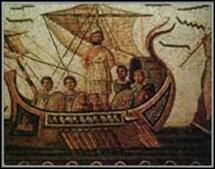 A: The ADAPT Model
 When sailing to some distant port, we need four things – a map, a set of voyagers, a ship, and a navigator. Likewise, in devising an effective program of personal growth, we need four Domains -- Dimensions (of the Growth Continuum), Processes (of growth), Participants (in the growth process), and ‘Together-ness’ (Orchestration of all four Domains). When all four Domains are complete and combined, they form an Integral Program we call ADAP2T – All Dimensions, All Participants, All Processes, Together.[5]
The Growth Continuum is a map of all the routes and destinations our journey of growth can take. The Dimensions are the coordinates that define different Features of that map. In the ADAPT Model, the eight Dimensions of the Growth Continuum are: Stages, Transitions, States, Realms, Arenas, Vectors, Actualization/Restoration, and Coordination—as described below:
Ø D1: Stages.[7] Stages are the levels of development, maturity, enlivenment, or enlightenment through which we pass as we grow.
Ø D2: Transitions.[8] Transitions are the quantum leaps that take us from one Stage to the next.
Ø D1&2: Developmental Sequence.[9] The Developmental Sequence is the series of alternating Stages and Transitions by which continuing growth takes place.
Ø D3: States.[10] The States are the higher levels of consciousness beyond ordinary experience.
Ø D4: Realms.[11] Realms are the major spheres of human experience in which growth and development can occur – everyday Life, the Psyche, the Body, and the Spirit.
Ø D5: Arenas.[12] Arenas are the various areas of activity within each Realm.
Ø D6: Vectors. Vectors are the various sectors of experience in which growth takes place – including Perspectives,[13] Paths, Directions,[14] Polarities, and Cyclic Flow. Of particular importance are the four Perspectives from which reality can be observed – composed of inner or outer, plus individual or cultural.
Ø D7: Actualization and Restoration Growth. Actualization Growth is ‘growing forward’ – actualizing qualities for which we have an innate potential, by moving progressively to higher and higher Stages of development. Restoration growth[15] is ‘ growing backward’ – revisiting past Stage/s to resolve distortions and Impasses, so that normal, forward-directed Actualization Growth can resume.
Ø D8: Coordination growth[16] is the weaving together and harmonizing of all Dimensions of the Growth Continuum into a balanced, unified, consistent whole.
The Participants are all the voyagers who take part in our life journey. They are the seven aspects of identity (or aspects of Self) that partake in the growth process. In the ADAPT Model, the seven major Participants are: the Experienced/Observed Self, the Individual/Collective Self, the Personae, the Functional Self, the Impediment Self, the Generational Self, and the Witness—as described below:
Ø P1: The Experienced/Observed Self.[17] The Experienced Self is the observing, subjective, inside, I-Self—the Self that identifies with our current Stage of development. The Observed Self is the detached, objective, outside, Me-Self—the Self from a prior Stage of development that we have transcended, or otherwise ceased to identify with. The Experienced/Observed Self is the hero of our journey, the central Participant in the growth process.
Ø P2: The Individual/ Collective Self. The Individual Self[18] is the Self that acts as an independent individual. The Collective Self[19] acts as a member of a group.
Ø P3: Personae and Types.[20] Types are categories of personality that recur in human populations with some degree of regularity. The Persona is a particular kind of personality Type. The Persona is our ‘public face’—the set of attributes and behaviors we construct to enable the Self to play a part in the drama of life.
Ø P4: The Functional Self.[21] The Functional Self represents fundamental human abilities we may utilize and identify with while performing a particular function.
Ø P5: The Impediment Self.[22] The Impediment Self is the Inner Saboteur—a disattached, distorted scrap of identity produced by Impediments that undermines and sabotages our growth.
Ø P6: The Generational Self.[23] The Generational Self is the self that identifies with a particular biological Generation of the population, and participates in the Generational Cycle.
Ø P7: The Witness.[24] The Witness is the all-seeing, all-knowing observer of our journey. It is our Transcendent Self—our Essence, True Self, or True Nature.
The Processes are the sailing vessels, and other means of transit, that carry us along the channels, coastlines, trade routes, and open seas of our growth. They are all the methods and techniques that move us along the Growth Continuum. In the ADAPT Model, there are 35 major Processes, encompassed in seven broad Process Themes – as described below:
Ø PR1: Foundational Processes. These Processes are fundamental to all other Processes of growth. Six Processes: 1) Natural Nutrition, 2) Natural Medicine, 3) Nurturing & Bonding, 4) Relationships & Marriage, 5) Sexuality & Sensuality, and 6) Family Dynamics.
Ø PR2: Physical World Processes. These Processes engage us with material reality. Four Processes: 7) Sensory Experience, 8) Physical Activity, 9) Life Experience, and 10) Natural Environment.
Ø PR3: Socio-Cultural Processes. These Processes engage us with groups of people – from pairs to whole cultures. Seven Processes: 11) Skills, 12) Habits & Programming, 13) Responsibility, 14) Enterprise & Leadership, 15) Ethics & Service, 16) Acculturation, and 17) Archetype & Myth.
Ø PR4: Formal Investigation. These Processes engage our thinking and reasoning powers. Six Processes: 18) Structuring & Order, 19) Explanations, 20) Technologies, 21) Logic & Reasoning, 22) Planning & Orchestration, and 23) Science & Proof.
Ø PR5: Self-expression. These Processes enable us to express our inward reality in outward form. Five Processes: 24) Language, 25) Humor & Fun, 26) Stories & Literature, 27) Recorded Experiences, and 28) Expressive Arts.
Ø PR6: Conscious Development. These Processes are explicitly designed to promote growth, resolve problems, and facilitate enlightenment. Five Processes: 29) Body Therapies, 30) Introspection & Self-awareness, 31) Psychotherapies, 32) Psycho-Biologic Techniques, and 33) Spiritual Practices.
Ø PR7: Comprehensive Processes. These Processes combine and integrate many different growth Processes. Two Processes: 34) Holistic Environments and 35) Integral Programs.
In our journey, ‘Together-ness’ is the process of guiding and orchestrating our adventure. Guidance is the process of choosing and directing our activities through all the alternatives offered in the life journey. Orchestration is the process of knitting together, coordinating, and unifying all the Dimensions, Participants, and Processes, and Orchestrators that comprise the growth process. In the ADAPT Model, Guides and Orchestrators are of three kinds – those provided by our society and culture (5 types), those we chose ourselves (5 types), and those we develop inside ourselves (2 types).
Ø T1: Parents. Parents are the original, the most influential, and (ideally) most beneficial Guides of our growth journey.
Ø T2: Society and Culture. Our society and culture provides us with a set of role models, a series of lessons on living life, a process of behavioral reinforcement, and a ready-made system of values to conduct our activities by.
Ø T3: Holistic Growth Situations. A Holistic Growth Situation is a cluster of experiences that offers many opportunities for growth in a single integrated activity. Schooling is a prime example of a Holistic Growth Situation.
Ø T4: Growth Centers.[27] A Growth Center is a Holistic Growth Situation where people gather together with the explicit intention of developing a particular aspect of growth.
Ø T5: Authorities. Authorities are people whose exceptional knowledge and wisdom (often preserved and disseminated through books, art forms, and other media) serves as a ground for establishing validity and truth.
Ø T6: Partner/Spouse. A long-term partner or spouse is the special person we choose to share our journey through life.
Ø T7: Therapist. A Therapist is a professional practitioner—such as a psychologist, psychiatrist, or counselor – who is trained to help people grow.
Ø T8: Spiritual Guide. A Spiritual Guide is a counselor, pastor, or master with extensive personal experience navigating the higher realms of consciousness, and exceptional skill in guiding others to do so.
Ø T9: Other Growth Professionals. Other Growth Professionals are practitioners such as teachers, educators, artists, social workers, medical professionals, social activists, religious counselors, even managers and bosses – members of any profession that endeavors to help people grow.
Ø T10: Integral Life Counselor.[28] The Integral Life Counselor is a Growth Professional who is intimately familiar with ADAPT Model (or some equivalent, such as Wilber’s IOS), and adept at using it to implement another’s growth.
Ø T11: Internal Navigator. The Internal Navigator is the Guide we form within ourselves, so we can implement our own growth.
Ø T12: Witness.[29] The all-present Witness informs, enfolds, illuminates, and extends all strands of our experience, and all facets of our growth. It is our ultimate Guide.
 Ken Wilber Reconsidered [30]
In this section, we venture into some very deep water. We suggest that many of Wilber’s foundational principles regarding human growth are due for serious reconsideration, and perhaps revision.
Ken Wilber’s AQAL has been the source of much confusion.[31] The AQAL acronym is not (nor was it intended to be) an adequate summary of Wilber’s model of human development. It is merely a convenient and catchy enumeration of five of its more prominent features – Quadrants, Levels, Lines, States, and Types. Wilber’s complete growth model – what we call his Integral Operating System (IOS) –adds over a dozen additional important parameters. Thus, to make a adequate evaluation of Wilber’s positions, we must consider not just AQAL, but his entire IOS.
When we do so, we make a surprising discovery: Each parameter of Wilber’s model of human growth is actually a Dimension, a Participant, and Process, or an aspect of Together-ness.[32] For instance, the five parameters of Wilber’s AQAL consist of four Dimensions (Quadrants, Levels, Lines, States) and one Participant (Types). The additional parameters of Wilber’s more comprehensive Integral Operating System fall likewise under the four Domains of ADAPT: Wilber’s Fulcrums, Realms, Evolution/Involution, and Pathologies are all Dimensions. Wilber’s Proximate/Distal Self, Functional Invariants, and Sub-personalities are all Participants. The Methodologies and Modules of Wilber’s ILP are all Processes. And Wilber’s Integration, Integral Institute, Full-Spectrum Therapist, and Witness are all aspects of Togetherness. In other words, Wilber’s IOS is actually a very comprehensive (though incomplete) version of ADAPT!
At least implicitly, then, both Wilber and the authors agree that ADAPT represents the correct model of human development. Where we disagree, it is primarily on the interpretation of certain parameters of ADAPT. This study, then, is not a contest between two contrasting Models. It is a comparison of two somewhat contrasting interpretations of the same Model.
Regarding those interpretations, Ken Wilber’s Integral Operating System is (in our view) highly impressive and extremely valuable – but not sufficiently inclusive, balanced, differentiated, clear, consistent, unambiguous, explicit, and correct for optimal usefulness in implementing a program for personal growth. We are no match for Wilber and his stellar array of colleagues – but we respectfully submit that Wilber’s venerable Model (and its ILP derivative) is showing signs of age and is due for a face-lift – maybe even some reconstructive surgery.
To substantiate these contentions, we make Parameter-by-Parameter comparisons of the Correspondences and Divergences between Wilber’s IOS (as defined primarily by his statements in Integral Psychology) and the ADAPT model.
In our Comparisons Table (Appendix A), note the high number of Parameters on which ADAPT and Wilber diverge – and the degree of that Divergence.[34] Of the total 150 comparisons, our analysis indicates at least 81 comparisons (categories 3-12 below) where the two models have significantly differing positions—as against only 69 (categories 1 + 2 below) in which they are in total or substantial agreement. In our view, these 81 divergent positions are especially deserving of further examination.
Note further the large number of comparisons in which the authors have a very high level of Confidence in the ADAPT position.[35] Of the 150 comparisons, the authors have a Confidence level of 90% or better on 114 of ADAPT’s positions. Of those, 58 are positions on which ADAPT and Wilber agree either explicitly or implicitly—while 56 are positions where ADAPT and Wilber diverge significantly. Therefore, there are (in the authors’ opinion) at least 56 positions where Wilber’s position is most in doubt.
Among all the comparisons, our investigation suggests at least 12 degrees of Divergence between positions – ranging from total agreement to significantly differing conceptions. The degrees of Divergence are listed below, with the number of instances of each shown in parentheses:
1. Substantial agreement (54 instances). Wilber positions with which ADAPT is in total or substantial agreement. May include re-labeling or re-naming.
2. Rendering explicit (15 instances). Positions implicit in Wilber’s work, that are rendered explicit by ADAPT.
3. Consolidation of concepts/versions (4 instances). Concepts or versions scattered about in Wilber’s work – that are collected or consolidated by ADAPT.
4. Increased or broadened emphasis (3 instances). Wilber positions that receive significantly greater attention or emphasis in ADAPT.
5. Restatement, reorganization, or simplification of concept (5 instances). Concepts that are restated or reorganized by ADAPT for greater completeness or clarity.
6. Differentiation (10 instances). Concepts that are differentiated into multiple levels or structures by ADAPT.
7. Expanded, extended, reinterpreted, or broadened conception, scope, role, array, or applicability (25 instances). Features whose scope or function is significantly expanded or extended by ADAPT.
8. Broadened or alternative methodology (3 instances). Occasions where ADAPT uses a significantly different or modified methodology for deriving information and interpreting concepts.
9. Shift in emphasis or conception (5 instances). Occasions where ADAPT substantially shifts the emphasis from one concept or theme to another.
10. Elevation of role, status, importance, or validity (6 instances). Concepts whose significance, role or status in the development process is significantly elevated (or demoted) by ADAPT.
11. Added concept, Parameter, characteristic, or proposed Feature (18 instances). Concepts and Parameters introduced by ADAPT which have no parallel in Wilber.
12. Differing conception (2 instances). Substantially differing or conflicting positions between Wilber and ADAPT.
The very existence of such a multitude of topics with divergent interpretations is strong evidence that Wilber’s model of human development is ready for serious re-examination and re-evaluation. This study will accomplish a major objective if it opens renewed discussion of the fundamental premises underlying Wilber’s work.
Division 2:
THE FUNDAMENTALS OF KEN WILBER
The Fundamentals of Ken Wilber is the core of our study. Here, we present a topical anthology of Wilber’s best and most important pronouncements on human growth (from Integral Psychology) – organized according to the parameters of our ADAPT Model. This mode of categorization demonstrates that Wilber’s Integral Operating System (IOS) is actually a version of ADAPT.
We introduce each topic with a summary of ADAPT’s position on that issue. Then, we display in italics Wilber’s various pronouncements on the subject. The two positions are then compared in the Comparisons Table (Appendix A). The Divergences between ADAPT and Wilber are strong evidence that Wilber’s IOS is due for serious re-consideration and re-interpretation.
Each Wilber quotation in italics is followed by the page number in the original text of Integral Psychology (‘IP + number’), and then the page number where the full text is to be found in the Wisdom section of this study (‘Page + number’). From each Wilber excerpt, you can link in MS Word to the corresponding Comparison, Impediment, or Wisdom section.[36]
A: THE ADAPT MODEL When sailing to some distant port, we need four things – a map, a set of voyagers, a ship, and a navigator. Likewise, in devising an effective program of personal growth, we need four Domains—Dimensions (of the Growth Continuum), Participants (in the growth process), Processes (of growth), and ‘Together-ness’ (Orchestration of all four Domains). When all four Domains are complete and combined, they form an Integral Program we call ADAP2T – All Dimensions, All Participants, All Processes, Together.[37] From this perspective, Wilber’s AQAL Model (and his more extensive ‘Integral Operating System’) is in essence a very comprehensive (though incomplete) version of ADAPT.
Human growth is a manifestation of the great morphogenetic field of development that encompasses all reality. Humankind’s greatest drive is to actualize that field through one’s own personal growth.
What the Great Nest represents, in my opinion, is most basically a great morphogenetic field or developmental space -- stretching from matter to mind to spirit—in which various potentials unfold into actuality. IP 12, Page 4.
…a person's deepest drive—the major drive of which all others are derivative—is the drive to actualize the entire Great Nest through the vehicle of one's own being, so that one becomes, in full realization, a vehicle of Spirit shining radiantly into the world, as the entire world. IP 190, page 4.
Evolution in all forms has started to become conscious of itself….Evolution, as Spirit-in-action, is starting to awaken on a more collective scale. Kosmic evolution is now producing theories and performances of its own integral embrace. This Eros moves through you and me, urging us to include, to diversify, to honor, to enfold. The Love that moves the sun and other stars is moving theories such as this, and it will move many others, as Eros connects the previously unconnected, and pulls together the fragments of a world too weary to endure.…
This Eros is the same Spirit-in-action that originally threw itself outward to create a vast morphogenetic field of wondrous possibilities (known as the Great Nest). Out of itself, as matter, it began; out of itself, as life, it continued; out of itself, as mind, it began to awaken. The same Spirit-in-action differentiated itself into modes of the good and the true and the beautiful, as it continued its evolutionary play. And it is now the same Spirit-in-action, starting to become collectively conscious of itself, that has initiated an era of integral embrace—global village to communications internet to integral theories to network society—as it slowly binds together the fragments of a world that has forgotten how to care. IP 193-194, page 4.
Every component of Wilber’s Integral Operating System is a Dimension, a Process, a Participant, or an Orchestrator – in other words, a parameter of ADAPT.
Psychology is the study of human consciousness and its manifestations in behavior. The functions of consciousness include perceiving, desiring, willing, and acting. The structures of consciousness, some facets of which can be unconscious, include body, mind, soul, and spirit. The states of consciousness include normal (e.g., waking, dreaming, sleeping) and altered (e.g., nonordinary, meditative). The modes of consciousness include aesthetic, moral, and scientific. The development of consciousness spans an entire spectrum from prepersonal to personal to transpersonal, subconscious to self-conscious to superconscious, id to ego to Spirit. The relational and behavioral aspects of consciousness refer to its mutual interaction with the objective, exterior world and the sociocultural world of shared values and perceptions. IP 1, page 4.
 … the major components… of the
evolution of consciousness: the basic levels, structures, or waves in the Great
Nest (matter, body, mind, soul, spirit); the developmental lines or streams
(moral, aesthetic, religious, cognitive, affective, etc.) that move relatively
independently through the great waves; the states, or temporary states of consciousness
(such as peak experiences, dream states, and altered states); the self, which
is the seat of identity, will, and defenses, and which has to navigate,
balance, and integrate all the various levels, lines, and states that it encounters;
and the self-related lines, which are the developmental lines most intimately
connected with the self (such as the self's central identity, its morals, and
its needs). In short: waves, streams, states, self, and self-streams.
IP 89, page 4.
… the major components… of the
evolution of consciousness: the basic levels, structures, or waves in the Great
Nest (matter, body, mind, soul, spirit); the developmental lines or streams
(moral, aesthetic, religious, cognitive, affective, etc.) that move relatively
independently through the great waves; the states, or temporary states of consciousness
(such as peak experiences, dream states, and altered states); the self, which
is the seat of identity, will, and defenses, and which has to navigate,
balance, and integrate all the various levels, lines, and states that it encounters;
and the self-related lines, which are the developmental lines most intimately
connected with the self (such as the self's central identity, its morals, and
its needs). In short: waves, streams, states, self, and self-streams.
IP 89, page 4.
ADAPT derives its positions largely from Wilber’s own sources—the psychological literature, the perennial traditions, descriptions of therapeutic practice. ADAPT adds to these further derivations from professional and personal experience—including counseling clients, teaching school, the study of imaginative literature, extensive personal growth experience, and raising children.
[These levels and sublevels are] the codifications of direct experiential realities, reaching from sensory experience to mental experience to spiritual experience. …the discovery of these waves, over the years, has been communally generated and consensually validated. IP 8, page 4.
… the correlations I have given among the various stages and theorists are very general, meant only to get us in the right ballpark… I believe most of them are accurate to within plus-or-minus 1.5 stages. IP 10, page 4.
ADAPT unifies its Integral vision with a single, overarching metaphor – the journey or voyage through life, incorporating the map, the ship, the voyagers, and the captain/navigator.
Growth is the journey we take across the turbulent seas and exotic lands of life. The Growth Continuum is a map of all the routes and destinations our journey of growth can take. The Dimensions are the coordinates that define various Features of our map.
In technical language, Growth is the process of moving and progressing along the Growth Continuum. The Growth Continuum is a field of eight Dimensions, which describes the various ways human growth can take place. The Dimensions are the Features that define different elements of that growth. The eight Dimensions of the Growth Continuum are: Stages, Transitions, States, Realms, Arenas, Vectors, Actualization/Restoration, and Coordination -- as described below:
 D1: Stage growth
Stages are the ports of call in our life’s journey. They are the places where we stop off, take on fresh supplies, transact some business, deal with hostile natives, and then re-embark on our journey.
In technical language, Stages are the levels of development, maturity, enlivenment, or enlightenment through which we pass as we grow. Stages are generally periods of horizontal Translation – times when we are expanding and becoming better at activities we already know how to do. Likewise, they are periods of Assimilation – where we digest and metabolize the Discoveries of the previous Transition, turning them into established Traits. Stage Growth occurs as we progress within each Stage of human development. Here, we meet and master the challenges presented by a particular Stage.
I use all three terms—basic levels, basic structures, and basic waves--interchangeably, as referring to essentially the same phenomenon. IP 7, page 4.
Stages occur at both the Individual and Collective Levels (including Cultural). (see P2) Stages at the individual level are the most apparent and the most widely-studied.
These three early waves of self-development can be summarized fairly simply. The self starts out relatively undifferentiated from its environment That is, it cannot easily tell where its body stops and the physical environment begins (this is the start of fulcrum-1). Somewhere during the first year, the infant learns that if it bites a blanket, it does not hurt, but if it bites its thumb, it hurts: there is a difference between body and matter. The infant differentiates its body from the environment, and thus its identity switches from fusion with the material world to an identity with the emotional-feeling body (which begins fulcrum-a). As the conceptual mind begins to emerge and develop (especially around 3 to 6 years), the child eventually differentiates the conceptual mind and the emotional body (this is fulcrum-3). The proximate self's identity has thus gone from matter to body to early mind (and we can see that it is well on its way through the waves in the Great Nest). IP 92-96, page 4.
The worldview of both late F-3 and early F-4 is mythic, which means that these early roles are often those found displayed in the mythological gods and goddesses, which represent the archetypal roles available to individuals. That is, these are simply some of the collective, concrete roles available to men and women—roles such as a strong father, a caring mother, a warrior, a trickster, the anima, animus, and so forth, which are often embodied in the concrete figures of the world's mythologies (Persephone, Demeter, Zeus, Apollo, Venus, Indra, etc.)...
With the emergence of formal-reflexive capacities, the self can plunge yet deeper, moving from conventional/conformist roles and a mythic-membership self (the persona), to a postconventional, global, worldcentric self—namely, the mature ego (conscientious and individualistic, to use Loevinger's version). No longer just us (my tribe, my clan, my group, my nation), but all of us (all human beings without exception, regardless of race, religion, sex, or creed). Consciousness cuts loose from its parochial surfaces and dives into that which is shared by a global humanity, insisting on forms of compassion that are universal, impartial, just and fair for all...
As vision-logic begins to emerge, postconventional awareness deepens into fully universal, existential concerns: life and death, authenticity, full bodymind integration, self-actualization, global awareness, holistic embrace—all summarized as the emergence of the centaur (e.g., Loevinger's autonomous and integrated stages). In the archeological journey to the Self, the personal realm's exclusive reign is coming to an end, starting to be peeled off a radiant Spirit, and that universal radiance begins increasingly to shine through, rendering the self more and more transparent...
…looking deep within the mind, in the very most interior part of the self, when the mind becomes very, very quiet, and one listens very carefully, in that infinite Silence, the soul begins to whisper, and its feather-soft voice takes one far beyond what the mind could ever imagine, beyond anything rationality could possibly tolerate, beyond anything logic can endure. In its gentle whisperings, there are the faintest hints of infinite love, glimmers of a life that time forgot, flashes of a bliss that must not be mentioned, an infinite intersection where the mysteries of eternity breathe life into mortal time, where suffering and pain have forgotten how to pronounce their own names, this secret quiet intersection of time and the very timeless, an intersection called the soul.
In the archeology of the Self, deep within the personal lies the trans-personal, which takes you far beyond the personal: always within and beyond. Experienced previously only in peak experiences, or as a background intuition of immortality, wonder, and grace, the soul begins now to emerge more permanently in consciousness. Not yet infinite and all-embracing, no longer merely personal and mortal, the soul is the great intermediate conveyor between pure Spirit and individual self. The soul can embrace the gross realm in nature mysticism, or it can plumb its own depths in deity mysticism. It can confer a postmortem meaning on all of life, and deliver grace to every corner of the psyche. It offers the beginning of an unshakable witnessing and equanimity in the midst of the slings and arrows of outrageous fortune, and breathes a tender mercy on all that it encounters. …
When the soul itself grows quiet, and rests from its own weariness; when the witness releases its final hold, and dissolves into its ever-present ground; when the last layer of the Self is peeled into the purest emptiness; when the final form of the self-contraction unfolds in the infinity of all space; then Spirit itself, as ever-present awareness, stands free of its own accord, never really lost, and therefore never really found. With a shock of the utterly obvious, the world continues to arise, just as it always has.
In the deepest within, the most infinite beyond. In ever-present awareness, your soul expands to embrace the entire Kosmos, so that Spirit alone remains, as the simple world of what is. The rain no longer falls on you, but within you; the sun shines from inside your heart and radiates out into the world, blessing it with grace; supernovas swirl in your consciousness, the thunder is the sound of your own exhilarated heart; the oceans and rivers are nothing but your blood pulsing to the rhythm of your soul. Infinitely ascended worlds of light dance in the interior of your brain; infinitely descended worlds of night cascade around your feet; the clouds crawl across the sky of your own unfettered mind, while the wind blows through the empty space where your self once used to be. The sound of the rain falling on the roof is the only self you can find, here in the obvious world of crystalline one taste, where inner and outer are silly fictions and self and other are obscene lies, and ever-present simplicity is the sound of one hand clapping madly for all eternity. In the greatest depth, the simplest what is, and the journey ends, as it always does, exactly where it began. IP 102-108 , page 4.
Stages can also occur at the Collective level. The Collective level includes human groups of all types—from two-person relationships, to families, to teams, to workgroups, to communities, to whole societies and cultures. (P2)
[Among Collective Stages, only the Cultural are covered at length by Wilber (D1c).]
Cultures follow a Stage-related path of development similar to individuals, but spread over eons of time.
…to say that a given society is at a magical level of development does not mean that everybody in that society is at that level. It only means that the average level of consciousness is generally magical, and that, more specifically, the defining laws, principles of cultural organization, and mores of everyday reality stem predominantly from the magical worldview. IP 145-146, page 4.
…when the average level of consciousness of a given culture is, say, magical, what is the highest level of consciousness generally available? We just saw that in magical times, the most highly evolved mode was generally shamanic...
The magical/shamanic mode was the dominant form of consciousness for the largest period of humanity's stay on earth thus far, reigning from perhaps as early as 500,000 years BCE to around 10,000 BCE, with its peak period probably from around 50,000 to 7000 BCE
As the average mode evolved from magic into mythic (beginning roughly around 10,000 BCE), and nature elementals and polytheistic figments increasingly gave way to a conception of one God/dess underlying the manifold world, the figure of the saint eventually became the dominant spiritual realizer...
As the average, collective mode of consciousness evolved from mythic to mental (beginning around the sixth century BCE), the most advanced mode evolved from subtle to causal, and the sage, more than the saint, embodied this growing tip of consciousness. Whereas the saint experienced divine interior luminosity, grace, love, and ecstasy, the sage experienced nothing. The sage, rather, was the first to push into the purely formless realm of sheer Emptiness, the causal of unmanifest absorption -- nirvana, the cloud of unknowing, apophatic, nirvikalpa samadhi, nirodh, cessation...
Whereas, in the subtle, the soul and God find a communion or even union, in the causal, the soul and God both disappear into Godhead—the Atman that is Brahman, the Supreme Identity of the Sufi, "I and the Father are One," the separate self dissolves in Emptiness -- and deity mysticism gives way to formless mysticism, the mysticism of the Abyss, the great Cloud of Unknowing, the Consciousness that is infinitely within and beyond the manifest world altogether..
 The great Nondual traditions began
around 200 CE, especially with such figures as Nagarjuna and Plotinus; but
these traditions, particularly in their advanced forms as Tantra, began to
flower in India around the eighth to the fourteenth century (coincident with
the first collective or average-mode glimmers of vision-logic, exemplified in
the West with Florence and the rise of Humanism, circa fourteenth century).
IP 154-156, page 4.
The great Nondual traditions began
around 200 CE, especially with such figures as Nagarjuna and Plotinus; but
these traditions, particularly in their advanced forms as Tantra, began to
flower in India around the eighth to the fourteenth century (coincident with
the first collective or average-mode glimmers of vision-logic, exemplified in
the West with Florence and the rise of Humanism, circa fourteenth century).
IP 154-156, page 4.
Transitions are the routes of passage our ship will take between one port of call and the next. They are ventures of exceptional risk and uncertainty – where we may lose our way, or encounter unexpected obstacles and dangers.
In technical language, Transitions are the quantum leaps that take us from one Stage to the next. Transitions are generally periods of vertical Transformation – times when we are becoming something we’ve never been before. Likewise, they are periods of Discovery – periods when we encounter situations and insights we will assimilate during our next Stage of development.
Transition Growth occurs as we Transition from one Stage to the next. Here, we leave the familiar comfort of past (often-surmounted) challenges, and venture into the unknown territory of strange and daunting new challenges.
[We cover Wilber’s treatment of Transitions in the next section, D1&2: The Developmental Sequence.]
The developmental sequence is our entire life journey – from open sea, to port of call, to open sea again, until our ship reaches its final destination.
In technical language, the basic Developmental Sequence is a series of alternating Stages and Transitions – of Translation, followed by Transformation, followed by Translation, and so forth.
 D1&2a:
The Transition Cycle
D1&2a:
The Transition CycleTransition occurs through a four-phase process we call the Transition Cycle:
1. Identification (‘embedding’[38]). Initially, the Self identifies with a particular Stage of development (manifests the initial Experienced Self—see P1)
2. Differentiation (‘dis-embedding’). Next, the Self transcends that Stage by dis-identifying with it (manifests the Observed Self).
3. Re-identification (‘re-embedding’). Then, the Self begins to identify with the subsequent Stage of development (manifests a new Experienced Self).
4. Integration. Finally, the Self consolidates the new identification—integrating the new Experienced Self with the old Observed Self.
[By comparison, Wilber posits a very similar three-phase Transition process he calls the Fulcrum (also ‘Milestone’ or ‘Round’) – consisting of Differentiation, Identification, and Integration.]
During psychological development, the "I" of one stage becomes a "me" at the next. That is, what you are identified with (or embedded in) at one stage of development (and what you therefore experience very intimately as an "I") tends to become transcended, or disidentified with, or de-embedded at the next, so you can see it more objectively, with some distance and detachment. In other words, the subject of one stage becomes an object of the next… Each time the self (the proximate self) encounters a new level in the Great Nest, it first identifies with it and consolidates it; then disidentifies with it (transcends it, de-embeds from it); and then includes and integrates it from the next higher level. In other words, the self goes through a fulcrum (or a mile-stone) of its own development. IP 33-37, page 4.
Each time the proximate self identifies with a basic wave, the self exists embedded as that wave: it is a material self, then a libidinal/emotional self, then a conceptual self, then a role self, then a reflexive self, then an integrated/authentic self, then a soul self, then a spirit self, each of which holarchically transcends and includes. As each "I" self is transcended, it becomes part of the "me" self… IP Note 8:22, page 4.
 D1&2b:
Fundamental Developmental Sequence
D1&2b:
Fundamental Developmental SequenceFor the internal Passages of Psyche, Body, and Spirit (see D4), the entire series of alternating Stages and Transitions may be called the Fundamental Developmental Sequence (FDS). All told, the FDS for internal Passages may be viewed as consisting of 38 distinct steps.[39]
For the sake of clarity and simplicity,
these steps may be consolidated into 12 developmental Clusters,
– consisting of 12 Stages, separated by 11 Transitions. Within those 12
Clusters, the seven central Stages are known in Eastern philosophy as the Chakras.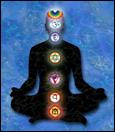
The Chakras may be viewed in two ways – either as a condensation of the FDS or as an integration of the three internal Passages (see D4). From a Western perspective, the Chakras are merely a consolidation, condensation, or simplification of the 38-step FDS into seven basic Clusters, or Stages. From an Eastern perspective, the Chakras are energy phenomena that manifest themselves simultaneously in all three internal Realms of Body, Psyche, and Spirit. At the Body level, the Chakras are experienced as seven nerve plexes located in ascending bodily regions from the base of the spine to the crown of the head. At the Psyche level, the Chakras are experienced as seven Stages of mental and emotional development. At the Spirit level, the Chakras are experienced as seven portals through which universal cosmic energy flows into our being. Thus, from an Eastern perspective, each Stage of development is simultaneously physical, psychological, and spiritual. (see D4e, Architecture of Self)
The traditions often divide life's overall journey into the "Seven Ages of a Person," where each age involves adaptation to one of the seven basic levels of consciousness (such as the seven chakras: physical; emotional-sexual; lower, middle, and higher mental; soul; and spirit), and each of the seven stages is said to take seven years. IP 17-18, page 4.
…Even if we find it useful on occasion to distinguish dozens (or even hundreds) of minute gradations in the colors of a rainbow, there is also good reason to say there are basically just six or seven major colors in most rainbows. This is what the perennial philosophy means by the "Seven Ages of a Person" or the seven main chakras or basic structures. IP 18-19, 4.
… although around two dozen basic structures can be readily identified (e.g., form, sensation, perception, exocept, impulse, image, symbol, endocept, concept, rule . . .), nonetheless they can be condensed into around seven to ten functional groupings which reflect easily recognizable stages... These functional groupings of basic structures I represent with some very general names: (1)sensorimotor, (2) phantasmic-emotional (or emotional-sexual), (3) rep-mind (short for the representational mind, similar to general preoperational thinking, or "preop"), (4) the rule/role mind (similar to concrete operational thinking, or "conop"), (5) formal-reflexive (similar to formal operational, or "formop"), (6) vision-logic, (7) psychic, (8) subtle, ) (9) causal, and (1o) nondual. IP 18-19, page 4.
…the path of shamans/yogis deals with the energy currents in the gross realm and gross bodymind (exemplified in nature mysticism), leading up to the sahasrara (i.e., the energy currents or shakti from the first to the seventh chakra, at the crown of the head). The path of saints plumbs the interior depths of the psychic and subtle realm, often beginning at the fourth or fifth chakra…the path of shamans/yogis deals with the energy currents in the gross realm and gross bodymind (exemplified in nature mysticism), leading up to the sahasrara (i.e., the energy currents or shakti from the first to the seventh chakra, at the crown of the head). The path of saints plumbs the interior depths of the psychic and subtle realm, often beginning at the fourth or fifth chakra IP Note 8:34, page 4.
I have suggested around sixteen major waves, which can be condensed into nine or ten functional groupings … but all such cartographies are simply different approaches to the many waves in the great River of Life, matter to mind to spirit, which is the most precious legacy of the ancient wisdom. IP 190, page 4.
In our life journey, the Generational Cycle is the dynastic tradition of seamanship, combat, and leadership passed down from father, to son, to grandson. Each Generation continues the tradition, but each modifies it according to their position among Generations.
In technical language, a Generation is a biological period of life, normally about 20-25 years, between the time one is born and the time one first procreates. According to Strauss and Howe,[40] dynamic cultures repeatedly pass through a Generation Cycle consisting of four characteristic Generations:
Ø
 Prophetic. Conceives a new cultural vision and a new impetus for change.
Ø Reactive. Reacts against or detaches from the dominance and excesses of the Prophetics.
Ø Civic. Fills out and implements the vision of the Prophetics.
Ø Bureaucratic. Institutionalizes and standardizes what once was the Prophetic Vision.
After the four Generations are complete, the cycle repeats all over again – but at a higher level of development. A small number of great people influence, dominate, and typify each Generation.
The Generation Cycle may be considered the cultural equivalent of the Transition Cycle (D1&2a) for individuals. It is a plausible scenario for how growth takes place at the cultural level. (see P6)
[Nothing comparable to the Generation Cycle is discussed by Wilber.]
Groups progress through a sequence of developmental Stages very similar to individuals.
Ø
Collective Passages.
Developmental Passages occur collectively in groups that range widely in size
and complexity—from two-person relationships, to families, to teams, to
workgroups, to communities, to whole societies and cultures.
[Of the various Collective Passages listed above, Wilber explicitly discusses only Culture Passages – particularly Spiral Dynamics (see below)].
Ø
 Culture Passages. Culture Passages are Collective
Passages (above), applied to cultures and societies. Culture Passages are
the internal (cultural) and external (societal) phases of development that
occur as mass populations progress through the Stages and Transitions of
cultural development. Culture Passages follow a Stage-related growth path
similar to individuals, but spread over eons of time. The Generation
Cycle (D1&2d) is one possible description of how growth takes place at the
Cultural level.
Culture Passages. Culture Passages are Collective
Passages (above), applied to cultures and societies. Culture Passages are
the internal (cultural) and external (societal) phases of development that
occur as mass populations progress through the Stages and Transitions of
cultural development. Culture Passages follow a Stage-related growth path
similar to individuals, but spread over eons of time. The Generation
Cycle (D1&2d) is one possible description of how growth takes place at the
Cultural level.
Spiral Dynamics. The Spiral Dynamics model is perhaps the most popular and influential contemporary system of Culture Passages. According to researchers Clare Graves and Don Beck, cultures have progressed in varying degrees through eight Stages of development[41] since the dawn of humanity.
… Graves proposed a profound and elegant system of human development… "Briefly, what I am proposing is that the psychology of the mature human being is an unfolding, emergent, oscillating spiraling process marked by progressive subordination of older, lower-order behavior systems to newer, higher-order systems as man's existential problems change. Each successive stage, wave, or level of existence is a state through which people pass on their way to other states of being. When the human is centralized in one state of existence… he or she has a psychology which is particular to that state. His or her feelings, motivations, ethics and values, biochemistry, degree of neurological activation, learning system, belief systems, conception of mental health, ideas as to what mental illness is and how it should be treated, conceptions of and preferences for management, education, economics, and political theory and practice are all appropriate to that state." … IP40, page 4.
A VMEME is at once a psychological structure, value system, and mode of adaptation, which can express itself in numerous different ways, from worldviews to clothing styles to governmental forms. The various vMEMEs are, in a sense, the "different worlds" available to the self as it develops along the great spiral of existence, driven by both its own internal dynamics and shifting life conditions. … … The first six levels are "subsistence levels" marked by "first-tier thinking." Then there occurs a revolutionary shift in consciousness: the emergence of "being levels" and "second-tier thinking." …
1. Beige: Archaic-Instinctual. The level of basic survival; food, water, warmth, sex, and safety have priority. Uses habits and instincts just to survive. Distinct self is barely awakened or sustained. Forms into survival bands to perpetuate life.
2. Red: Power Gods. First emergence of a self distinct from the tribe; powerful, impulsive, egocentric, heroic. Mythic spirits, dragons, beasts, and powerful people. Feudal lords protect underlings in exchange for obedience and labor. The basis of feudal empires—power and glory. The world is a jungle full of threats and predators. Conquers, outfoxes, and dominates; enjoys self to the fullest without regret or remorse.
5. Orange: Scientific Achievement. At this wave, the self "escapes" from the "herd mentality" of blue, and seeks truth and meaning in individualistic terms—hypothetico-deductive, experimental, objective, mechanistic, operational—"scientific" in the typical sense. The world is a rational and well-oiled machine with natural laws that can be learned, mastered, and manipulated for one's own purposes. Highly achievement-oriented, especially (in America) toward materialistic gains. The laws of science rule politics, the economy, and human events. The world is a chessboard on which games are played as winners gain preeminence and perks over losers. Marketplace alliances; manipulate earth's re-sources for one's strategic gains. Basis of corporate states.
6. Green: The Sensitive Self. Communitarian, human bonding, ecological sensitivity, networking. The human spirit must be freed from greed, dogma, and divisiveness; feelings and caring supersede cold rationality; cherishing of the earth, Gaia, life. Against hierarchy; establishes lateral bonding and linking. Permeable self, relational self, group inter-meshing. Emphasis on dialogue, relationships. Basis of collective communities (i.e., freely chosen affiliations based on shared sentiments). Reaches decisions through reconciliation and consensus (downside: in-terminable "processing" and incapacity to reach decisions). Refresh spirituality, bring harmony, enrich human potential. Strongly egalitarian, antihierarchy, pluralistic values, social construction of reality, diversity, multiculturalism, relativistic value systems; this worldview is often called pluralistic relativism. Subjective, nonlinear thinking; shows a greater degree of affective warmth, sensitivity, and caring, for earth and all its inhabitants.
7. Turquoise: Holistic. Universal holistic system, holons/waves of integrative energies; unites feeling with knowledge [centaur]; multiple levels interwoven into one conscious system. Universal order, but in a living, conscious fashion, not based on external rules (blue) or group bonds (green). A "grand unification" is possible, in theory and in actuality. Sometimes involves the emergence of a new spirituality as a mesh-work of all existence. Turquoise thinking uses the entire spiral; sees multiple levels of interaction; detects harmonics, the mystical forces, and the pervasive flow-states that permeate any organization.
 D3: State Growth
The States are the supremely illuminating moments in our life journey when we commune with the gods. Like Odysseus, we receive from time to time visitations, edicts, and guidance from Athena, from Hermes, from Poseidon, and from Zeus.
In technical language, the States are the higher levels of consciousness beyond ordinary experience. Ken Wilber identifies the four higher States as: Nature Mysticism (Psychic), Deity Mysticism (Subtle), Formless Mysticism (Causal), Non-Dual Mysticism. State Growth occurs as we increase our capacity to move fluidly among the higher States of consciousness.
…the path of shamans/yogis deals with the energy currents in the gross realm and gross bodymind (exemplified in nature mysticism), leading up to the sahasrara (i.e., the energy currents or shakti from the first to the seventh chakra, at the crown of the head). The path of saints plumbs the interior depths of the psychic and subtle realm, often beginning at the fourth or fifth chakra, moving into the sahasrara, and then into numerous, more "within-and-beyond" spheres of audible illuminations and haloes of light and sound (exemplified in deity mysticism), occasionally culminating in pure formless absorption. The path of sages plumbs the pure emptiness of the causal domain (exemplified in formless mysticism), and often pushes through it to completely dissolve the subject-object dualism in any form (including that between self and God), to resurrect the nondual. The path of siddhas plays with nondual mysticism, which is al-ways already accomplished in each and every gesture of this ever-present moment. IP Note 8:34, page 4.
See also IP Note 9.27, page 4.
In the authors’ view, spiritual phenomena are not merely inner projections, but an external objective reality – no less real than the chair you are now sitting in, or the sandwich you will eat at lunch. In other words, God actually exists – independent of our mental projections. Viewed as States, however, Spirit is primarily an Upper-Left Quadrant internal experience.
There is a world of difference between mythic symbols taken to be concretely and literally true Jesus really was born from a biological virgin, the earth really is resting on a Hindu serpent, Lao Tzu really was nine hundred years old when he was born—and mythic symbols imbued with metaphor and perspectivism, which only come into existence with formal and postformal consciousness. IP 25, page 4.
… The soul is the self that depends on the subtle line of cognition (which includes, as we saw, imagination, reverie, daydreams, creative visions, hypnogogic states, etheric states, visionary revelations, hypnotic states, transcendental illuminations, and numerous types of savikalpa samadhi)… IP 125-127, page 4.
A particularly controversial and ‘thorny’ issue, States may be viewed (among other things) as the highest Stages of growth (D1), as a separate Line of development (D5), as the defining Feature of a separate Realm (D4), or as an independent Dimension (D3).[42]
In a broad sense, Natural States are the four normal, non-induced States of consciousness – waking/gross, dreaming/subtle, deep sleep/causal, and nondual.
The natural states of consciousness include those identified by the perennial philosophy—namely, waking/gross, dreaming/subtle, and deep sleep/causal. IP 13, page 4.
Altered States are non-normal, often-induced States – such as meditative States, mystical experiences, drug-induced States, near-death experiences, and peak experiences.
An altered state of consciousness is a "non-normal" or a "nonordinary" state of consciousness, including everything from drug-induced states to near-death experiences to meditative states... IP 14, page 4.
Peak Experiences are temporary Altered States of exceptionally-high significance – since they give us glimpses of our highest potential as human beings. Such experiences only contribute to sustained growth when they are converted by assimilation to Permanent States or Traits.
Peak experiences can occur to individuals at almost any stage of development… the way in which those states or realms are experienced and interpreted depends to some degree on the stage of development of the person having the peak experience. IP 14, page 4.
A given peak experience (or temporary state of consciousness) is usually interpreted according to the general stage of development of the individual having the experience. This gives us … a grid of around sixteen very general types of spiritual. experience: psychic, subtle, causal, and nondual states poured into archaic, magic, mythic, and rational structures. IP 15, page 4.
 The
Realms are the planes or spheres of existence in which our journey takes
place. In technical language, Realms are the
major spheres of human experience in which growth and development can occur –
everyday Life, the Psyche, the Body, and the Spirit.[43]
Corresponding to these Realms, there are four major paths of human growth
(called Passages)—one external and three
internal – each of which contains its own series of Stages and Transitions
through which growth takes place. (see also D6b and P3d)
The
Realms are the planes or spheres of existence in which our journey takes
place. In technical language, Realms are the
major spheres of human experience in which growth and development can occur –
everyday Life, the Psyche, the Body, and the Spirit.[43]
Corresponding to these Realms, there are four major paths of human growth
(called Passages)—one external and three
internal – each of which contains its own series of Stages and Transitions
through which growth takes place. (see also D6b and P3d)
Realm Growth occurs as we grow simultaneously and differentially in all four Realms of consciousness. (See D5, Differential Growth)
…these three great realms—gross, subtle, and causal—are home to three different lines of self, which I generically call ego, soul, and Self (or frontal, deeper psychic, and Witness). …
…The ego (or frontal) is the self that adapts to the gross realm; the soul (or deeper psychic) is the self that adapts to the subtle realm; and the Self (or Witness) is the self that adapts to the causal realm. The frontal includes all of the self-stages that orient consciousness to the gross realm (the material self, the bodyself, the persona, the ego, and the centaur—all of which can be generically called "the ego")...
The soul or deeper-psychic line includes all the self-streams that adapt consciousness to the many facets of the subtle sphere. The soul is the self that depends on the subtle line of cognition (which includes, as we saw, imagination, reverie, daydreams, creative visions, hypnogogic states, etheric states, visionary revelations, hypnotic states, transcendental illuminations, and numerous types of savikalpa samadhi), and thus the soul is the self-stream that orients and integrates consciousness in the subtle domain...
the Self (or Witness) can follow its own unfolding stream The Witness is the self that depends upon the causal line of cognition (the capacity for attention, detached witnessing, equanimity in the face of gross and subtle fluctuations, etc.), and thus it is the self that orients and integrates consciousness in the causal domain. IP 125-127, page 4.
… even though gross, subtle, and causal lines (and selves) can exist alongside each other in many ways, still, with continuing evolution and integral development, the center of gravity continues to shift holarchically toward the deeper layers of the Self (ego to soul to spirit), and around these deeper waves consciousness is increasingly organized… IP 127-128, page 4.
"Highest Yoga Tantra," which, next to Dzogchen, is said to be the highest of the Buddha's teachings, possesses an unsurpassed grasp of the extraordinary interrelation between conscious states and bodily energies… According to this teaching, in order to master the mind, one must concomitantly master the body's subtle energies -- ch'i, prana, rLung, ki—and this yoga is an exquisite system of harnessing these subtle energies at every stage of development, right up to and including the enlightened state of Clear Light Emptiness. Highest Yoga Tantra outlines this overall consciousness evolution in terms of seven very clear-cut stages, each with a very striking phenomenological sign that accompanies the stage when it emerges. IP 129-134, page 4.
… as Huston Smith pointed out (Forgotten Truth), the body level of consciousness corresponds with the terrestrial realm or plane of existence; the mind level of consciousness corresponds with the intermediate realm or plane of existence; the soul level of consciousness corresponds with the celestial plane of existence (chart 2a); and the spirit level of consciousness corresponds with the infinite plane of existence... in Eye to Eye I refer to them using the terms sensibilia, intelligibilia, and transcendelia (i.e., the objects in those planes or realms). The eyes of flesh, mind, and contemplation are the epistemological levels correlated with (and disclosing) those ontological planes of sensibilia, intelligibilia, and transcendelia. IP Note 8:2, page 4.
The four Realms, with their corresponding Passages, are as follows:
Life Passages are the external phases of accomplishment or Achievement that occur as we progress through the biological Life Cycle. (see D5a for details)
[Wilber gives minimal attention to Life Passages.]
Several stage conceptions, such as Levinson's, deal with the "seasons" of horizontal translation, not stages of vertical transformation. Erikson's higher stages are a murky combination of both… IP Note 4:3, page 4.
Psyche Passages are the internal phases of mental Maturation that occur as we progress through the Stages of psychological Development. (see D5b for details)
Body Passages are the internal phases of physical Enlivenment that occur as we awaken and connect the Energy Centers of our body. (see D5c for details) Our interest here is primarily in the ‘experienced body’ – that is, the perception of body we experience from within ourselves.
…"body" can mean the biological organism as a whole, including the brain (the neocortex, the limbic system, reptilian stem, etc.) -- in other words, "body" can mean the entire Upper-Right quadrant, which I will call "the organism." I will also refer to the organism as the "Body," capital B… Thus, the brain is in the Body, which is the commonly accepted scientific view (and an accurate description of the Upper-Right quadrant).
But "body" can also mean, and for the average person does mean, the subjective feelings, emotions, and sensations of the felt body. When the typical person says "My mind is fighting my body," he means his will is fighting some bodily desire or inclination (such as sex or food). In other words, in this common usage, "body" means the lower levels of one's own interior. …I have labeled this as "body" in the Upper-Left quadrant, which simply means the feelings and emotions of the felt body (versus the Body, which means the entire objective organism). IP 177-178, page 4.
Spirit Passages are the internal phases of spiritual Enlightenment that occur as we ascend through the Stages and States of spiritual Development. (see D5d for further details)
One of the thorniest of questions is whether spirituality itself necessarily unfolds in stages. This is an extremely touchy issue. Nonetheless, as I have often suggested, this question depends in large measure on how we define "spirituality." There are at least five very different definitions, two of which seem to involve stages, and three of which do not.
(1) Spirituality involves the highest levels of any of the developmental lines. (2) Spirituality is the sum total of the highest levels of the developmental lines. (3) Spirituality is itself a separate developmental line. (4) Spirituality is an attitude (such as openness or love) that you can have at whatever stage you are at. (5) Spirituality basically involves peak experiences, not stages. IP 129-134, page 4.
The one aspect of infancy and childhood that, if it exists, might be 'genuinely spiritual is that aspect I call the "trailing clouds of glory" (from Wordsworth: "Not in entire forgetfulness ... but trailing clouds of glory do we come..."), namely, the deeper psychic (or soul) dimension that, some evidence tentatively suggests, is present from prenatal 'through the early years, but then fades as frontal (egoic) development… gets under way... This deeper psychic awareness is, according to various theories, either (1) the soul descending from the bardo realms (the realms between death and rebirth), or (2) a deeper ground or potential that is necessarily lost and buried as the analytic ego develops (but can be regained in enlightenment or full spiritual realization). IP 141-142, page 4.
One of the easiest ways to tell if a "unity experience" is gross realm (nature mysticism), subtle realm (deity mysticism), causal realm (formless mysticism), or genuine nondual consciousness (union of the form in all realms with the pure formless) is to note the nature of consciousness in dreaming and deep sleep. If the writer talks of a unity experience while awake, that is usually gross-realm nature mysticism. If that unity consciousness continues into the dream state—so that the writer talks of lucid dreaming, union with interior luminosities as well as gross exterior nature—that is usually subtle-realm deity mysticism. If that consciousness continues into the deep sleep state—so that the writer realizes a Self that is fully present in all three states of waking, dreaming, and deep sleep—that is usually causal-realm formless mysticism (turiya). If that formless Self is then discovered to be one with the form in all realms -- gross to subtle to causal—that is pure nondual consciousness (turiyatita). IP Note 7:14, page 4.
…I often explicitly refer to the planes as "realms," "spheres," or "domains," and I have named the phenomena in the three major planes of terrestrial, intermediate, and celestial as sensibilia, intelligibilia, and transcendelia (I also refer to them as the physio/biosphere, noosphere, and theosphere; although, again, those realms can be subdivided into at least a dozen levels). IP Note 8:2, page 4.
The arrangement of the internal Realms may be called the Architecture of the Self. In the evolutionary process of increasing complexity, the Realms of Self were developed sequentially – first Body, then Psyche, then Spirit. However, as we see it, each new Realm was added to the existing ‘architectural’ structure as an additional mode of functionality. That is, the seven Chakral regions – originally only physical – took on psychological and spiritual functions as humans evolved. (Literally, a case of ‘transcend and include’!) The Self, then, is much like an old building that is progressively retrofitted – first with indoor plumbing, later with electricity, then with telephone, and finally with internet.
This Multiple-Functionality, or ‘Retrofit,’ configuration means that growth takes place simultaneously and in parallel in all three Realms. That is, in our view, we grow simultaneously in the Realms of Body, Psyche, and Spirit – within each of which there are a set of corresponding and parallel Stages and Transitions. This conjoining of Realms and Stages is best summarized and visualized using the Eastern version of the Chakras (D1&2c).
…a full-spectrum therapist is an archeologist of the Self. But, as we saw, this is an archeology that unearths the future, not the past. This profound archeology digs into the within in order to find the beyond, the emergent, the newly arising, not the already buried. These ever-deeper sheaths pull us forward, not backward; they are layers of Eros, not Thanatos; they lead to tomorrow's births, not yesterday's graves.
(In this unfolding of higher potentials, should any aspect of the Self that has already emerged be repressed, lost, or alienated, then we need, therapeutically, to "regress in service of the self"—we need to return to the past, return to the more superficial and shallow layers—to the material self, the libidinal self, the early distorted scripts, and so on—and recontact those facets, release their distortions, reintegrate them in the ongoing stream of consciousness unfolding, and thus resume the voyage to the real depths undistracted by those surface commotions… IP 108-110, page 4.
 D5: Arena Growth[45]
Arenas are the various areas of life-engagement (or types of life improvement) we may participate in, in the course of our travels. Simultaneously, our journey may be an exercise to develop our seamanship, a strategy for advancing our naval career, a merchant venture promising possible profit and enrichment, a way to enhance our health and well-being, and a source of pleasure and enjoyment.
In technical language, Arenas are the various areas of our life where growth takes place.
… numerous different developmental lines (such as ego, moral, affective, interpersonal, artistic, etc.) can unfold in a relatively independent manner. IP 23, page 4.
Through the basic levels or waves in the Great Nest flow some two dozen relatively independent developmental lines or streams. These different developmental lines include morals, affects, self-identity, psychosexuality, cognition, ideas of the good, role taking, socio-emotional capacity, creativity, altruism, several lines that can be called "spiritual" (care, openness, concern, religious faith, meditative stages), joy, communicative competence, modes of space and time, death-seizure, needs, worldviews, logico-mathematical competence, kinesthetic skills, gender identity, and empathy … These lines are "relatively independent," which means that, for the most part, they can develop independently of each other, at different rates, with a different dynamic, and on a different time schedule. IP 28, page 4.
Perhaps the dominant theory in cognitive science at this moment is that of modules—the idea that the brain/mind is composed of numerous, independent, evolutionary modules, from linguistic to cognitive to moral. These modules are, in many ways, quite similar to what I mean by relatively independent developmental lines or streams... IP Note 2:1, page 4.
… "frontal" or "ego" includes all of the self-stages in the gross and gross-reflecting realm (i.e., bodyself, persona, ego, and centaur); "soul" includes psychic and subtle; and "Self" includes causal and nondual. Since I am postulating that these particular independent lines are based on the natural states of consciousness of gross, subtle, causal, and nondual, those are the four independent lines of cognition and self-stages… IP Note 9.22, page 4.
Within each Arena, there may be various Lines of development or Lines of inquiry. Each Line may be investigated by a variety of Studies. At each Stage of life, and within each Arena, we grow by encountering certain key Issues. These challenging Issues must be addressed and resolved to transition successfully to the next Stage.
Arena Growth occurs as we grow within the various Arenas of each Realm. Arena Growth is a prime example of the phenomenon of Differential Growth. That is, in different Arenas, growth takes place at differing rates – resulting in people who are more advanced in one Arena than in another. (see also D4, differential Realm Growth)
For each Realm, Arenas are characterized differently – either as spheres of action, or types of experience, or themes of development, or aspects of personal evolution. Each Realm has its own set of Arenas – the major ones being as follows:
[Not covered by Wilber.]
There are at least ten distinct Life Arenas – those areas of everyday concern typically addressed by the counseling and coaching professions:
o Individual Arenas—1) Education & Skills-Building, 2) Career & Calling, 3) Finances & Investments, 4) Health & Well-Being, 5) Recreation & Enjoyment.
o Collective Arenas—6) Relationships & Marriage, 7) Sexuality & Sensuality, 8) Family & Children, 9) Friendships & Community, 10) Society & Culture.
There are at least nine separate psychological Arenas.
o 1) Fundamental Needs, 2) Sexuality & Sensuality, 3) Affect & Emotions, 4) Ego/Experienced Self, 5) Leadership, 6) Cognition, 7) Art/ Aesthetics/ Creativity, 8) Ethics & Morality, and 9) Worldviews.
[Eight of these (all except Leadership) are explicitly covered in the text and Tables of Integral Psychology.]
We discuss each Psyche Arena in turn:
… every structure (in both levels and lines) is a system of relational exchange with the same level of organization in the world at large, resulting in a holarchy of "food"—physical food, emotional food, mental food, soul food.'
Physical needs reflect our physical relationships and exchanges with the material universe: food, water, shelter, and so on. Emotional needs reflect our relationships with other emotional beings, and consist in an exchange of emotional warmth, sexual intimacy, and caring. Mental needs reflect our exchanges with other mental creatures: in every act of verbal communication, we exchange a set of symbols with others (Monks who take vows of both celibacy and silence report that the lack of communication is much more painful than the lack of sex: these are (genuine needs and drives, based on relational exchange.) And spiritual needs reflect our need to be in relationship with a Source and Ground that gives sanction, meaning, and deliverance to our separate selves. IP 118, page 4.
I distinguish between the basic-structure needs and the self-needs. Basic-structure needs (or simply basic needs) are those that involve the constant functioning of the basic structures (insofar as they have emerged in a person's development). Basic needs include physical exchange (food, water, warmth); biological exchange (especially breath, sex, elan vital); mental exchange (communication, exchange of symbols and units of meaning), and so forth. … every basic structure (or basic wave in the Great Nest) is a system of relational exchanges with other holons in the world at a similar level of structural development, and its very life depends upon those exchanges (all agency is agency-in-communion): hence, that dependence is inwardly felt as a need.
Likewise with the self-needs, except that, where the basic needs remain in existence (due to the enduring nature of the basic structures and their functional relationships), the self-needs are mostly transitional, phase-specific, and temporary, lasting only as long as the self is at a particular level of consciousness. Maslow's needs hierarchy (except for the physiological level) is a classic self-needs hierarchy, as are the motivational aspects of Loevinger's ego development. Thus, the self moves from impulsive needs to safety needs to conformist needs to autonomous needs, and each time it does so the needs of the previous stage tend to be replaced by those of the higher stage. IP Note 9.3, page 4.
[Wilber addresses the Sexuality & Sensuality Arena primarily in his Tables. See Table 4b in Arrays.]
[Wilber addresses the Affect & Emotions Arena primarily in his Tables. See Table 4c in Arrays.]
… many people confuse the warmth and heart-expanse of postconventional awareness with the merely subjective feelings of the sensory body, and, caught in this pre/post fallacy, recommend merely bodywork for higher emotional expansion, when what is also required is postformal cognitive growth, not simply preformal cognitive immersion.… . IP120, page 4.
Consciousness starts out largely autistic and undifferentiated from the material world. It then differentiates its bodily self from the material environment and emerges as an instinctive, impulsive self, but one that is still magically and animistically involved with the environment, and still struggling for egocentric power over the environment. As the conceptual mind begins to emerge, it differentiates from the body, and thus the self adds increasingly mental capacities to its sensory ones, and hence begins to move out of the narcissistic, first-person, safety/security/power orbit and into more widely intersubjective, communal, and social circles…
As rule thinking and the capacity to take the role of others emerge, egocentric gives way to sociocentric, with its initially conformist and conventional roles, mythic-absolutist beliefs, and often authoritarian ways. A further growth of consciousness differentiates the self from its embeddedness in sociocentric and ethnocentric modes, and opens it to formal, universal, worldcentric, postconventional awareness, which is an extraordinary expansion of consciousness into modes that are beginning to become truly global…
This postconventional stance is deepened with postformal development, which, most researchers agree, moves through relativistic individualism (where a belief in pluralism tends to lead to isolated, hyper-individualism) to global holism (which moves beyond pluralism to universal integration), so that the personal self becomes a more truly integrated, autonomous self…
If consciousness continues its evolutionary spiral beyond the centaur, it can stably move into transpersonal, post-postconventional realms (psychic, subtle, causal, and nondual). IP 43-44, page 4.
[Not discussed by Wilber – although the developmental sequences of two researchers with Leadership backgrounds (Torbert and Wade) are included in his Tables.]
… when specific developmental lines are studied—such as moral development, self development, and role-taking development—it has almost always been found that cognitive development is necessary (but not sufficient) for these other developments. In other words, before you can develop morals, or a self-perspective, or some idea of the good life, you have to be able to consciously register those various elements in the first place. IP 21, page 4.
Based primarily on the fact of natural states of consciousness—that is, on the undeniable existence and availability of gross/waking, subtle/ dreaming, and deep sleep/causal states to individuals at almost every stage of their development—we can reasonably postulate that those states/realms might also have their own developmental lines. This would mean that we could trace the development of different types of cognition (gross, subtle, and causal) as they appear throughout a person's life. IP 123, page 4.
… everything from the golden rule to the bodhisattva vow is impossible to comprehend without vision-logic. You cannot sincerely vow to liberate all beings if you cannot take the perspective of all beings in the first place, and, researchers agree, that is a vision-logic capacity...
Without general vision-logic as a foundation, the higher levels (psychic, subtle, causal, and nondual) are experienced only as passing, altered states, without becoming permanent realizations, and for the simple reason that it is the nature of those higher states to be universal and global, and without a frontal development capable of carrying that global perspective (namely, vision-logic), those states cannot "fit" permanently, and without distortion, into the self. Only as vision-logic becomes a permanent capacity can the even-higher levels themselves become permanent… IP Note 9.27, page 4.
…you can analyze a given activity (such as art) on the basis of both the level it comes from and the level it aims at -- or the level producing the art and the level depicted in the art. IP 121, page 4.
… I also use "aesthetics" to mean the apprehension of forms judged to be pleasing, beautiful, sublime; the subjective judgments that are involved in judging forms to be beautiful; and the entire sphere of art, artistic production, and art criticism. Beauty is the depth of a holon, or its transparency to Spirit. Art is anything with a frame around it. IP Note 9.13, page 4.
… you will treat as yourself those with whom you identify. If you identify only with you, you will treat others narcissistically. If you identify with your friends and family, you will treat them with care. If you identify with your nation, you will treat your countrymen as compatriots. If you identify with all human beings, you will strive to treat all people fairly and compassionately, regardless of race, sex, color, or creed. If your identity expands to embrace the Kosmos, you will treat all sentient beings with respect and kindness, for they are all perfect manifestations of the same radiant Self, which is your very own Self as well. IP 116-117, page 4.
"Worldview" refers to the way the world looks at each of the basic waves in the Great Nest. When you only have sensations, perceptions, and impulses, the world is archaic. When you add the capacity for images and symbols, the world appears magical. When you add concepts, rules, and roles, the world becomes mythic. When formal-reflexive capacities emerge, the rational world comes into view. With vision-logic, the existential world stands forth. When the subtle emerges, the world becomes divine. When the causal emerges, the self becomes divine. When the nondual emerges, world and self are realized to be one Spirit. IP 118-119, page 4.
[Body Arenas are not explicitly discussed by Wilber.]
Body Arenas will most likely be drawn from the fields that employ them – body-oriented alternative medicine (chiropractic, acupuncture, Chinese medicine); experiential, body-oriented psychotherapies (Reichian, Gestalt, sensory awareness); and body-oriented spiritual practices (yoga, Tantra, Tai Chi, Qi Gong). [under development]
Wilber suggests as possible Spirit Arenas (‘Lines’): care, openness, concern, religious faith, and meditative stages. [under development]
… These different developmental lines include morals, affects, self-identity, psychosexuality, cognition, ideas of the good, role taking, socio-emotional capacity, creativity, altruism, several lines that can be called "spiritual" (care, openness, concern, religious faith, meditative stages)… IP 28, page 4.
This subtle line of cognition involves precisely all those perceptions whose study has been downplayed by Western cognitive psychologists: first and foremost, states of imagination, reverie, daydreams, creative visions, hypnogogic states, etheric states, visionary revelations, hypnotic states, transcendental illuminations, and dozens of types of savikalpa samadhi (or meditation with form). What they all have in common, even in infancy and childhood, is that they take as their referents, not the material world of sensorimotor occasions, but the interior world of images, thoughts, visions, dreams. IP 124, page 4.
An important aspect of Spirit Passages are Myths and Archetypes. Myths are epic stories that convey foundational attributes of a culture. Archetypes are Features of Myths that are expressive of common or collective human needs, instincts, or potentials. Archetypes and Myths are the products of an archaic Stage of cultural development. However, in our view, they also embody a subtle language that is valuable for describing, apprehending, accessing, and evoking many States of consciousness[46] – including the higher States. [section under development]
"Archetype" has several different, very confusing meanings in the literature. I use it for both mythic forms and, occasionally, for subtle-realm forms. The original meaning, as with Plato and Plotinus, is of subtle-realm forms (the earliest forms in involution); but Jungians began using it to mean mythic forms (some of the earliest forms in evolution), a confusion that is impossible to up-root... IP Note 8:25, page 4.
Joseph Campbell (The Portable Jung, p. xxii) has given a wonderful summary of the general Jungian approach: "Briefly summarized, the essential realizations of this pivotal work of Jung's career were, first, that since the archetypes or norms of myth are common to the human species, they are inherently expressive neither of local social circumstance nor of any individual's singular experience, but of common human needs, instincts, and potentials [again, "common" or "collective" does not necessarily mean transpersonal, any more than the fact that human beings collectively have ten toes means that if I experience my toes, I am having a transpersonal experience; the mythic archetypes are simply some of the deep features of the late preop and early conop mind, and thus they are basic forms at those levels, which are devoid of content but fleshed out by particular cultures and individuals; in other words:]; second, that in the traditions of any specific folk, local circumstance will have provided the imagery through which the archetypal themes are displayed in the supporting myths of the culture; third, that if the manner of life and thought of an individual so departs from the norms of the species that a pathological state of imbalance ensues, of neurosis or psychosis, dreams and fantasies analogous to fragmented myths will appear; and fourth, that such dreams are best interpreted, not by reference backward to repressed infantile memories (reduction to autobiography), but by comparison outward with the analogous mythic forms (amplification by mythology), so that the person may see himself depersonalized in the mirror" of the collective human condition. In other words, the aim is to differentiate from (and integrate) these mythic forms and roles. IP Note 8:27, page 4.
 The Vectors of Growth are the various sectors of experience
where growth takes place—Perspectives, Paths, Polarities, Directions, and
Cyclic Flow. There are four Perspectives from which we can view our
growth and four related Paths our growth can take. There are two Directions
our growth can proceed in, and two Polarities toward which such growth
moves. Those Directions and Polarities in turn define a Cyclic Flow of
growth, consisting of Evolution and Involution. The Cyclic Flow Model of
growth is best illustrated by the metaphor of the great Tree of Life.
The Vectors of Growth are the various sectors of experience
where growth takes place—Perspectives, Paths, Polarities, Directions, and
Cyclic Flow. There are four Perspectives from which we can view our
growth and four related Paths our growth can take. There are two Directions
our growth can proceed in, and two Polarities toward which such growth
moves. Those Directions and Polarities in turn define a Cyclic Flow of
growth, consisting of Evolution and Involution. The Cyclic Flow Model of
growth is best illustrated by the metaphor of the great Tree of Life.
The Perspectives are the four points of view from which our journey may be viewed. A sea voyage may be seen as an exciting personal adventure, as an opportunity for enhancing our wealth and position in life, as a means of spreading the beliefs and values of our home culture, and as an effort to open trade relations with remote nations. Our journey will be the most successful if it achieves all four types of objectives.
In technical language, the Perspectives are four basic points of view from which any growth experience can be viewed – internal/individual (Upper-Left); internal/external (Upper-Right); internal/collective – i.e. cultural (Lower-Left); and external/collective – i.e. societal (Lower-Right). Perspective Growth occurs as we maximize our growth by addressing all four perspectives and all four corresponding aspects of existence.
… these four classes represented the interior and the exterior of the individual and the collective... The upper half of the diagram is individual, the lower half is communal or collective; the left half is interior (subjective, consciousness), and the right half is exterior (objective, material).
Thus, the Upper-Left quadrant represents the interior of the individual, the subjective aspect of consciousness, or individual awareness, which I have represented with the cognitive line, leading up to vision-logic. … The full Upper-Left quadrant includes the entire spectrum of consciousness as it appears in any individual, from bodily sensations to mental ideas to soul and spirit… The language of this quadrant is I-language: first-person accounts of the inner stream of consciousness. This is also the home of aesthetics, or the beauty that is in the "I" of the beholder.
The Upper-Right quadrant represents the objective or exterior correlates of those interior states of consciousness. … simple cells (prokaryotes and eukaryotes) already show "irritability," or an active response to stimuli. Neuronal organisms possess sensation and perception; a reptilian brain stem adds the capacity for impulses and instinctual behavior; a limbic system adds emotions and certain rudimentary but powerful feelings; a neocortex further adds the capacities to form symbols and concepts, and so on. …The language of this quadrant is it-language: third-person or objective accounts of the scientific facts about the individual organism.
But individuals never exist alone; every being is a being-in-the-world. Individuals are always part of some collective, and there are the "in-sides" of a collective and the "outsides." These are indicated in the Lower-Left and Lower-Right quadrants, respectively. The Lower Left represents the inside of the collective, or the values, meanings, world-views, and ethics that are shared by any group of individuals. … I have represented all of these with worldviews, such as magic, mythic, and rational…
The language of this quadrant is we-language: second-person or I-thou language, which involves mutual understanding, justness, and goodness—in short, how you and I will arrange to get along together. This is the cultural quadrant.
But culture does not hang disembodied in midair. Just as individual consciousness is anchored in objective, material forms (such as the brain), so all cultural components are anchored in exterior, material, institutional forms. These social systems include material institutions, geopolitical formations, and the forces of production (ranging from for-aging to horticultural to agrarian to industrial to informational). Because these are objective phenomena, the language of this quadrant, like that of the objective individual, is it-language. IP 61a, page 4.
…all four quadrants—organism, environment, consciousness, and culture—cause and are caused by the others: they "tetra-evolve." IP 183-184, page 4.
In our journey, the Paths are the routes we take and the activities we engage in, as a result of our Perspectives. In technical language, the Paths of growth are the four fundamental modes in which we grow throughout life, as defined by the Participant and Realm involved. That is, Growth occurs in both Individual and Collective Participants (P2), and occurs in both the internal Realms (Body, Psyche, Spirit) and the external Realm (Life Passages) (D4) – as described below:
External/individual. Normally, most people focus their attention on everyday situations that arise in the course of their own Life Passages – learning to walk and talk, making friends and adjusting to school, dating and marriage, developing a career and making money, having children, preparing for retirement, and so forth. Such people follow a Life Path that is primarily External/Individual.
External/Collective. Then there are those who broaden their concerns to include Life Passage issues that arise in our Community and our Culture – saving the environment, avoiding war, reducing crime, improving social welfare, etc. Such people have added a Life Path that is External and Collective.
Internal/Individual. Beyond this, there are people who focus attention on their own well-being in the Internal Passages of Psyche, Body (experienced), and Spirit – becoming more expressive, increasing assertiveness, improving self-esteem, and so forth. Such people follow a Life Path that is primarily Internal and Individual.
Internal/Collective. And finally, there are those who include in their attention concerns about the internal well-being of their family, their community, or their culture – mutual support, group cohesiveness, a collective sense of purpose, the evolution of a more inclusive worldview, etc. Such people have added a Life Path that is Internal/Collective.
Path Growth occurs as we expand our attention and focus from just one Path to multiple Paths, and eventually encompass all four Paths. The matrix below illustrates the relationship between Paths, Participants, Realms, Perspectives, and Quadrants:
|
Path of growth |
Participant/Realm |
Primary Perspective |
Wilber Primary Quadrant |
|
Individual/ Internal |
Individual/ Body-Psyche-Spirit Passages |
Inner Personal |
Upper-Left |
|
Individual/ External |
Individual/ Life Passages |
Outer Personal |
Upper-Right |
|
Collective/ Internal |
Collective/ Body-Psyche-Spirit Passages |
Cultural |
Lower-Left |
|
Collective/ External |
Collective/ Life Passages |
Societal |
Lower-Right |
Our journey may proceed in two opposite directions and toward two opposite objectives. We may journey outward toward adventure and discovery. And later, we may journey back toward the home we first departed from. In technical language, our growth moves in two opposite Directions -- ascending and descending (or, outward and inward).
…the higher spheres are experienced as being interior to, and deeper than, the lower, which are experienced, in comparison, as superficial, shallow, and exterior. Thus, the body is experienced as being inside the physical environment; the mind is experienced as being inside the body; the soul is experienced interior to the mind, and deep within the soul is pure spirit itself, which transcends all and embraces all (thus transcending inside and outside).
…This is an archeology of depth, to be sure, but a depth that plumbs the future, not the past; that reaches into a greater tomorrow, not a dusty yesterday; that unearths the hidden treasures of involution, not the fossils of evolution. IP 102-108 page 4.
Huston Smith, in Forgotten Truth, points out that the traditions usually refer to greater levels of reality as higher, and greater levels of the self as deeper, so that the higher you go on the Great Nest of Being, the deeper you go into your own selfhood. I have just taken that approach in the Archeology of the Self... Sometimes this ascent is also felt concretely, as when, for example, kundalini energy literally moves up the spinal line. The metaphor of vertical height also works well because in many spiritual experiences, we sense that Spirit is descending from above into us (a factor emphasized in many spiritual practices, from Aurobindo's descent of the supermind to the Gnostics' descent of the holy spirit). We reach up to Spirit with Eros; Spirit reaches down to us with Agape. IP 110-111, page 4.
These two Directions of growth are defined by two opposing Polarities. Thus, in each Realm of development, we actually evolve toward two opposite states of consciousness – as outlined below:
|
Passage |
Ascending Direction |
Descending Direction |
|
Life Passages |
Upward toward Achievement |
Downward toward Fulfillment |
|
Psyche passages |
Upward toward Maturity |
Downward toward Authenticity |
|
Body passages |
Upward toward Aliveness |
Downward toward Grounding |
|
Spirit passages |
Upward toward Enlightenment |
Downward toward Compassion |
Our life journey traces the twin arcs of discovery and return. We first venture outward to unknown seas and exotic lands. Later, we return home with the treasures we have found and the wisdom we have gained.
In technical language, the Polarities and Directions of growth define a Cyclic Flow of existence—consisting of two phases called Evolution and Involution. In the ascending phase, we ‘evolve’ in all four Realms toward Achievement, Maturity, Aliveness, and Enlightenment. During the descending phase, we ‘involve’ toward Fulfillment, Authenticity, Grounding, and Compassion.
[Aurobindo’s] "integral yoga" is a concerted effort to unite and integrate the ascending (evolutionary) and descending (involutionary) currents in human beings, thus uniting otherworldly and this-worldly, transcendent and immanent, spirit and matter. IP 83-84, page 4.
Anything lower than the ego (archaic impulses, vital emotions, magic-mythic fantasies) are part of "depth psychology" (which actually means lower, primitive psychology), and anything higher than the ego (soul and spirit) are part of "height psychology." In this metaphor, evolution is the ascent of consciousness from matter to body to mind to soul to spirit, and involution is the descent of consciousness through any of those vehicles. Regression is moving backward in the line of evolution, whereas development is moving forward in that line. IP 110-111, page 4.
The World is illusory (transient, ephemeral, passing, finite, mortal), and it must be completely transcended in every way in order to find the sole reality of Spirit (Brahman). But once having completely let go of the world, and having plunged into the infinite Release of purest Spirit (unbounded, unlimited, timeless, formless reality), the finite world is then embraced and completely included in infinite Spirit, or the perfect union of manifest and unmanifest: Brahman is the world, and nondual mysticism takes it start with just that realization of One Taste. IP 154-156, page 4.
Not all processes in consciousness are "bottom up"; many are "top down"—that is, many start at my present level (or higher) and move down the great holarchy. When I have a creative vision (e.g., psychic level), I might translate that vision downward into vision-logic, or perhaps artistic expression, or even into simple images and symbols; I might execute my vision by beginning to convert it into overt behavior and thus materialize the vision: perhaps a new invention, a new piece of architecture, a new way to interact with others, writing a novel, and so on (e.g., will is a microgenetic involutionary imposing of the higher on the lower). In microgenetic evolution, processes move up to the highest that you are; in microgenetic involution, the highest you are moves down into lower processes. IP Note 8:36, page 4.
This pattern of oscillation occurs in the present moment, but is also manifested over the course of a lifetime in a pattern we call Inter-Passage Growth. (see P3d).
Growth does not just occur ‘at the top’ or ‘at the tip,’ but throughout the developmental continuum of the organism. Thus, growth is best illustrated—not by an upward spiral, a rocket-like trajectory, a ladder-like climb, or as the growing tip of a branch—but as a great oak tree that grows simultaneously and continuously in all aspects of its being. As the tree grows, it expands its massive trunk, it extends its roots ever deeper into the rich soil, and it spreads its branches upward into the sun-warmed sky.
[The Growing Tip of Evolution:]… The shaman was the growing tip of consciousness evolution (reaching at least to the psychic domain, either as a permanent structural achievement or, at the very least, as a series of altered states and shamanic voyages). … Often portrayed with haloes of light around the crown chakra (signifying the vivid awakening of the subtle realms of light and sound at and beyond the sahasrara), the saint was the great conveyor of growing-tip consciousness as it moved within and beyond nature mysticism to deity mysticism. … As the average, collective mode of consciousness evolved from mythic to mental (beginning around the sixth century BCE), the most advanced mode evolved from subtle to causal, and the sage, more than the saint, embodied this growing tip of consciousness. IP 154-156, page 4.
Thus, the Growth Continuum is most fully characterized as an oscillation or cyclic movement between Polarities. In the growth process, we embrace, actualize, and integrate both Polarities and all intervening Stages – moving fluidly up and down the developmental column in a rhythmic ebb and flow.
 D7: Actualization &
Restoration growth
D7: Actualization &
Restoration growthIn our life journey, we explore all parts our world, using all the resources available to us. In technical terms, Growth is the process of moving progressively along the Growth Continuum – exploring all 8 Dimensions, engaging all 7 Participants, making use of all 35 Processes, with the assistance of all 12 Modes of Guidance & Orchestration.
Growth can be of two types – Actualization Growth and Restoration Growth.
Actualization Growth is the normal progress of our life journey – from one port of call to the next, until we finally sight our destination, or until we complete our explorations. In technical terms, Actualization Growth (or Human Potential Growth) is the growth that takes place in basically healthy people. Actualization Growth is ‘growing forward’ – actualizing qualities for which we have an innate potential, by moving progressively to higher and higher Stages of development – in a broader and broader range of situations.
Actualization can be implemented through Guidance & Orchestration. In our journey, the navigator guides our voyage; the captain orchestrates it. In technical language, Guidance is the process of choosing and directing our activities through all the alternatives offered to us. Orchestration is the process of knitting together, coordinating, and unifying all the Dimensions, Participants, and Processes, and Modes of Together-ness that comprise the growth process. Guidance & Orchestration are often facilitated by a Counselor, Coach, Coordinator, Orchestrator, or Guide – using any of our 35 Processes (see PR1-7—limited use of PR6). Guidance & Orchestration is the primary growth mode used by Parents in the original growth process, Child-Rearing.
[For Wilber’s Actualization Processes, see Integral Life Practice Tables B1-2 in the Appendix.]
The differentiation of "I" and "we" meant that the individual I would no longer be merely subservient to the collective We (church, state, monarchy, herd mentality)… The differentiation of "I" and "it" meant that objective reality could no longer crush individual choice and taste, which, among other things, freed art from representation. The differentiation of "we" and "it" meant that science's investigation of objective truth was no longer subservient to dictates of church or state… IP 69, page 4.
Restoration Growth is getting back on track when our ship has been blown off course, or damaged by storms or battles. It’s the time when we set in for repairs before resuming our normal journey. In technical terms, Restoration Growth (or Therapeutic Growth) is the growth that takes place in people with ‘problems.’ Restoration growth is ‘ growing backward’ – revisiting past Stage/s to resolve Impasses, so that normal, forward-directed Actualization Growth can resume. (see also P5)
Restoration Growth is often facilitated with the assistance of a trained, licensed Therapist or healing professional – such as a clinical psychologist, psychiatrist, or doctor—using Conscious Development Processes (PR6/27-31) such as Body Therapies, Psychotherapy, and Psycho-biologic Techniques.
… exactly why higher stages emerge, or conversely, why developmental arrest occurs in any line, is still not well understood, although theories abound. (The most likely candidate is a combination of numerous variables: individual constitutional factors, individual upbringing, individual interior dispositions, social institutions, life circumstances, possible past life history, cultural background, cultural values, and cultural encouragement/ discouragement…) IP Note 8:4, page 4.
… ["defenses"] gives some of the major defense mechanisms that can develop at each of the basic waves. "Possible pathology" refers in a very general way to the types and levels of pathology that can occur as the self navigates each of the basic waves. "Fulcrums" refers to the major milestones in the self's development—in other words, what happens to the proximate self when its center of gravity is at a particular level of consciousness And "treatment" is a summary of the types of psychological and spiritual therapies that appear to be most helpful for the different types of pathologies that beset the different levels of consciousness... Each time the self (the proximate self) steps up to a new and higher sphere in the Great Nest, it can do so in a relatively healthy fashion—which means it smoothly differentiates and integrates the elements of that level—or in a relatively pathological fashion—which means it either fails to differentiate (and thus remains in fusion/fixation/arrest) or it fails to integrate (which results in repression, alienation, fragmentation). IP 91-92, page 4.
Each of those self-stages (or fulcrums) ideally involves both differentiation and integration (transcendence and inclusion). The self differentiates from the lower level (e.g., body), identifies with the next higher level (e.g., mind), and then integrates the conceptual mind with the feelings of the body. A failure at any of those points results in a pathology -- a malformation, crippling, or narrowing of the self in its otherwise ever-expanding journey. Thus, if the mind fails to differentiate from bodily feelings, it can be overwhelmed with painfully strong emotions (not simply feel strong emotions, but be capsized by them), histrionic mood swings are common, there is great difficulty with impulse control, and developmental arrest often occurs that that point. On the other hand, if mind and body differentiate but are not then integrated (so that differentiation goes too far into dissociation), the result is a classic neurosis, or the repression of bodily feelings by mental structures (ego, superego, harsh conscience).
Thus, the differentiation-and-integration process can go wrong at each and every self-stage (or fulcrum), and the level of the fulcrum helps determine the level of pathology. In fulcrum-1, if the self does not correctly differentiate from, and integrate its images of, the physical environment, the result can be psychosis (the individual cannot tell where his body stops and the environment begins, he hallucinates, and so on). In fulcrum-2, if the emotional bodyself has difficulty differentiating itself from others, the result can be narcissism (others are treated as extensions of the self) or borderline disorders (others are constantly invading and disrupting the self's fragile boundaries). In fulcrum-3, as we just saw, a failure to differentiate leaves a fusion with the labile emotional self, whereas a failure to integrate leads to a repression of the emotional self by the newly emerging mental-egoic self (classic psychoneurosis)... each level of self development has different types of defenses. The self, at every level, will attempt to defend itself against pain, disruption, and ultimately death, and it will do so using whatever tools are present at that level. If the self has concepts, it will use concepts; if it has rules, it will use rules; if it has vision-logic, it will use vision-logic. At the first fulcrum…, the self only has sensations, perceptions, and exocepts (which are the early forms of sensorimotor cognition), along with the very earliest of impulses and images; thus the archaic self can defend itself in only the most rudimentary ways, such as fusing with the physical environment, hallucinatory wish fulfillment (in images), and perceptual distortion. At fulcrum-2, the self has the added tools of more intense feelings, emotions, and newly emerging symbols, and thus it can defend itself in more elaborate ways, such as splitting (dividing the self and the world into "all good" and "all bad" representations), projecting its feelings and emotions onto others, and fusing itself with the emotional world of others. By the time of fulcrum-3, the self has added elaborate concepts and beginning rules, and these very powerful mental tools can be used to forcefully repress the body and its feelings, displace its desires, create reaction formations, and so on. … In short, the level of defenses, the level of self development, the level of pathology—all are facets of the same migratory unfolding across the qualitatively distinct waves in the Great Nest. IP 92-96, page 4.
In fulcrum-4 (typically ages 6-12), the rule/role mind begins to emerge and the self's center of gravity starts to identify with that wave. The self begins to take the role of others, and therefore begins to shift from egocentric/preconventional to sociocentric/conventional. If something goes wrong at this general wave, we get a "script pathology"—all of the false, misleading, and sometimes crippling scripts, stories, and myths that the self learns. Therapy (such as cognitive therapy) helps the individual to uproot these false ideas about itself and replace them with more accurate, healthy scripts. In fulcrum-5, as the self-reflexive ego emerges, and the center of gravity begins to shift from conventional/conformist to postconventional/individualistic, the self is faced with "identity versus role confusion": how is the self to discover who or what it is, once it no longer depends on society (with its conventional ethics, rules, and roles) to make decisions for it? In fulcrum-6, the panoramic view of vision-logic brings existential issues and problems to the forefront, along with the possibility of a more fully integrated bodymind (or centauric self). In fulcrum the transpersonal domains begin to come into focus, not simply as passing peak experiences, but as new and higher structures—with new and higher possible pathologies …each level of the Great Nest has a qualitatively different architecture, and thus each wave of self-development, self-pathology, and treatment likewise has a qualitatively different tone. … IP 96-98, page 4.
At the beginning of F-1, on the shallowest surface of Spirit, the self is still largely undifferentiated from the material world (as Piaget put it, "The self is here material, so to speak"); problems at this stage can therefore contribute to a disturbing lack of self-boundaries, infantile autism, and some forms of psychosis. The worldview of this stage is archaic and this archaic consciousness, if not differentiated (transcended) and integrated (resolved), can lead to primitive pathologies. The trip to the Self is sabotaged at its first step, and the repercussions are severe.
In F-2 (the separation-individuation stage), the emotional bodyself differentiates itself from the emotions and feelings of others. Problems at this stage can contribute to borderline and narcissistic conditions, where the self treats the world and others as mere extensions of itself (narcissism), or the world invades and painfully disrupts the self (border-line); both due to the fact that the world and the self are not stably differentiated. The worldview of this stage is magical—the self can magically order the world around in omnipotent fantasy, the environment is full of animistic displacements (not as a sophisticated form of panentheism, but as anthropomorphic impulse projections), and "word magic" reigns. Fixation at this magical level (and magical subpersonalities) is a large part of the cognitive repertoire of the borderline and narcissistic conditions.
With F-3, the early mental self (the early ego or persona) first begins to emerge and differentiate from the body and its impulses, feelings, and emotions, and attempts to integrate these feelings in its newly conceptual self. Failure at this crucial fulcrum (often summarized as Oedipal/Electra) can contribute to a classic neurosis: anxiety, depression, phobias, obsessive-compulsive disorders, and excessive guilt at the hands of the newly internalized superego. The conceptual self is frightened of, and overwhelmed by, the feelings of the body (especially sex and aggression), and in its misguided attempt to defend itself against these feelings, merely ends up sending them underground (as impulsive subpersonalities), where they cause even more pain and terror than when faced with awareness...
These preformal, archetypal roles are bolstered by the specific cultural roles that the child begins to learn at this stage -- the specific interactions with family, peers, and social others. As these cultural scripts are learned, various problems and distortions can arise, and these contribute to what we have generically been calling script pathology. Since the worldview of this level is mythic (mythic-membership), therapy at this level, by whatever name, often involves uprooting these myths and re-placing them with more accurate, less self-damaging scripts and roles...
Problems at this stage (F-5) often center around the incredibly difficult transition from conformist roles and prescriptive morality, to universal principles of conscience and postconventional identities: who am I, not according to mom or dad or society or the Bible, but according to my own deepest conscience? Erikson's "identity crisis" is a classic summary of many of the problems of this stage...
The pathologies that beset psychic and subtle development are numerous and profound. The first and simplest are those that result from abrupt psychic and subtle peak experiences, before they have become permanent realizations and basic waves in one's own awareness. As we have seen, a person at the archaic, magic, mythic, rational, or centauric level can "peek"-experience any of the higher states (psychic, subtle, causal, nondual). In some cases these are so disruptive that, especially in a person with F-l or F-2 deficiencies, they can trigger a psychotic break. In others, the result is a spiritual emergency. In yet others, the peak experience is a beneficial, life-altering occasion...
Beyond nonordinary states and temporary peak experiences is permanent realization, and as adaptation to the soul realms begins, any number of pathologies can develop. The self can be overwhelmed by the light, painfully lost in the love, inundated with a largess that its boundaries cannot contain. Alternatively, it can simply swell its ego to infinite proportions (especially if there are any F-2 or narcissistic-borderline residues). It can develop a split between its upper and lower realms (especially between the soul and the body). It can repress and dissociate aspects of the soul itself (producing F-7 and F-8 subpersonalities; not lower impulses trying to come up, but higher impulses trying to come down). It can remain fused with the soul when it should begin to let go of it. And the earliest, simplest pathology of all: denying the existence of one's very own soul. IP 102-108 , page 4.
[An integral psychograph] allows us to more easily spot any "stick points"—any pathologies, fractured fulcrums, developmental miscarriages, dissociated subpersonalities, alienated facets of consciousness—and, by better understanding their genesis and texture, treat them more effectively. IP 191, page 4.
The ills of modern society are really just a form of group Pathology. Restoration Growth at a group level is the collective Resolution of those pathologies.
The "bad news" of modernity was that these value spheres did not just peacefully separate, they often flew apart completely. The wonderful differentiations of modernity went too far into actual dissociation, fragmentation, alienation. The dignity became a disaster.... the modern West was the first major civilization in the history of the human race to deny substantial reality to the Great Nest of Being. IP 61, page 4.
… modernity inadvertently collapsed all interiors into exteriors (a disaster of the first magnitude). All subjective truths (from introspection to art to consciousness to beauty) and all intersubjective truths (from morals to justice to substantive values) were collapsed into exterior, empirical, sensorimotor occasions. IP 70, page 4.
Flatland is simply the belief that only the Right-Hand world is real—the world of matter/energy, empirically investigated by the human senses and their extensions (telescopes, microscopes, photographic plates, etc.). All of the interior worlds are reduced to, or explained by, objective/ exterior terms. IP 70-71, page 4.
… modernity heroically managed to differentiate the cultural value spheres (or the four quadrants)—so that, at its best, modernity was indeed all-quadrant, and that enduring contribution we can certainly honor. But then, instead of moving forward to integrate them, modernity all too often allowed that important and necessary differentiation to fall into unnecessary and pathological dissociation: art and morals and science fragmented, and this allowed an aggressive science to colonize and dominate the other spheres, so that, in "official reality," nothing was ultimately true except the truths of science. IP 72, page 4.
Growth is the process of moving along the Growth Continuum. Impediments are all the ways that growth process can go wrong. For every Dimension of the Growth Continuum, there is a corresponding Impediment. Impediments may be as simple as the challenges of everyday life (Actualization Impediments). Or, they may be deep-seated blocks or Pathologies (Restoration Impediments). In this section, only the major Impediments addressed explicitly by Wilber are quoted. The full range of potential Impediments (most not discussed by Wilber) is outlined in Appendix C.
 On our
voyage, the Impediment Self is the grumbler, the plotter, the saboteur, the mutineer,
the stowaway. The Impediment Self is the misfit who causes our journey to
go wrong. It is the hidden demon in our basement that ‘comes back to
haunt us.’ In technical language, the Impediment Self
is any aspect of identity that impedes, diverts, distorts, or sabotages the
normal growth process. The Impediment Self is discussed in section P5.
On our
voyage, the Impediment Self is the grumbler, the plotter, the saboteur, the mutineer,
the stowaway. The Impediment Self is the misfit who causes our journey to
go wrong. It is the hidden demon in our basement that ‘comes back to
haunt us.’ In technical language, the Impediment Self
is any aspect of identity that impedes, diverts, distorts, or sabotages the
normal growth process. The Impediment Self is discussed in section P5.
See also IP Note 8:23, page 4.
We may confuse primitive and advanced Stages (see D1a). We may interpret archaic, mythical Stages as transcendent – thereby diverting our authentic quest into immature behaviors (the Romantic Fallacy). Or, we may mistake transcendent mystical States for low-level Stages or pathologies—thereby denigrating the significance of transcendent States (the Inverse Romantic Fallacy).
The worldview of both late F-3 and early F-4 is mythic, which means that these early roles are often those found displayed in the mythological gods and goddesses, which represent the archetypal roles available to individuals. That is, these are simply some of the collective, concrete roles available to men and women—roles such as a strong father, a caring mother, a warrior, a trickster, the anima, animus, and so forth, which are often embodied in the concrete figures of the world's mythologies (Persephone, Demeter, Zeus, Apollo, Venus, Indra, etc.). Jungian research suggests that these archetypal mythic roles are collectively inherited; but, let us note, for the most part they are not transpersonal (a confusion common in Jungian and New Age circles). These mythic roles are simply part of the many (sub)personalities that can exist at this preformal mythic level of consciousness development; they are preformal and collective, not postformal and transpersonal. A few "high archetypes," such as the Wise Old Man, the Crone, and the mandala, are sometimes symbols of the transpersonal domains, but do not necessarily carry direct experience of those domains. IP 102-108 , page 4.
[Quoted from Rowan:] Joseph Campbell, one of the greatest proponents of the Subtle level and its importance, is also one of the great confusing people in the field, because he mixes up this [postformal Subtle] level with the [preformal] Mythic level quite habitually… IP Note 8:17, page 4.
…most of the mythic archetypes—as identified, say, by Jean Bolen in Goddesses in Everywoman and Gods in Everyman -- are simply concrete operational role personae; they are preformal, not postformal. There is nothing inherently transpersonal about them, which is why, despite the many claims to the contrary, working with these mythic roles is usually a fulcrum-4 therapy. IP Note 8:25, page 4.
… Phase-1 was Romantic (a "recaptured-goodness" model), which posited a spectrum of consciousness ranging from subconscious to self-conscious to superconscious (or id to ego to God), with the higher stages viewed as a return to, and recapture of, original but lost potentials... IP Note 9.15, page 4.
Many psychological theorists who are investigating the subtle line of development—e.g., the Jungians, Jean Bolen, James Hillman—often confuse the lower, prepersonal levels in the subtle line with the higher, transpersonal levels in that line, with unfortunate results. James Hillman, for example, has carefully explored the preformal, imaginal levels of the subtle line, but constantly confuses them with the postformal levels of the subtle line. Just because theorists are working with dreams/images/visions does not mean they are necessarily working with the higher levels of that line… IP Note 9.16, page 4.
 … these "glory" potentials
are not something that are part of the infantile stage itself—they are lingering
impressions from other, higher spheres. And therefore, what is recaptured in enlightenment
is not the infantile structure itself, but the actual higher spheres. The
Romantic notion that the infantile self is itself a primordial paradise remains
therefore deeply mistaken… IP Note 11.4, page 4.
… these "glory" potentials
are not something that are part of the infantile stage itself—they are lingering
impressions from other, higher spheres. And therefore, what is recaptured in enlightenment
is not the infantile structure itself, but the actual higher spheres. The
Romantic notion that the infantile self is itself a primordial paradise remains
therefore deeply mistaken… IP Note 11.4, page 4.
The map of our journey has numerous major coordinates and other Features – Stage-like ports of call, Transition-like sailing routes, Realms in which the journey will take place, Arenas of activity, Vectors of travel, and alternate routes in case of mishap. Coordination growth is the combining and integration of all these factors to produce a successful voyage.
In technical language, Coordination growth is the weaving together and harmonizing of all Dimensions of the Growth Continuum into a balanced, unified, consistent whole.
 The
Participants are all the voyagers who take part in our life journey. The
voyagers are the crew that maintain the ship and keep it moving in the right
direction. They are the passengers who are transported to distant
destinations. They may be the stowaways and saboteurs –intent upon
disrupting the voyage and doing it harm. In a less direct fashion, the
voyagers include even the backers who plan and finance the voyage, the dock
handlers who load and unload cargo, and the well-wishers who wave white hankies
as the vessel sets off for sea. In technical language,
the Participants are the seven aspects of identity, or Self,
that partake in the growth process.
The
Participants are all the voyagers who take part in our life journey. The
voyagers are the crew that maintain the ship and keep it moving in the right
direction. They are the passengers who are transported to distant
destinations. They may be the stowaways and saboteurs –intent upon
disrupting the voyage and doing it harm. In a less direct fashion, the
voyagers include even the backers who plan and finance the voyage, the dock
handlers who load and unload cargo, and the well-wishers who wave white hankies
as the vessel sets off for sea. In technical language,
the Participants are the seven aspects of identity, or Self,
that partake in the growth process.
…I generally use the term "ego" in three different ways, reflecting common uses in the literature: (1) the ego is the sense of self or "I-ness" at any of the personal (or frontal) stages, from the material ego to the bodyego to the rational ego; (2) the ego is more narrowly the personal self that is based on formal-rational-reflexive capacities, which I also call "the mature ego"; (3) the ego is the separate-self sense or self-contraction in general, body to mind to soul. IP Note 8:7, page 4.
The seven major Participants are: the Experienced/Observed Self, the Individual/Collective Self, the Personae, the Functional Self, the Impediment Self, the Generational Self, and the Witness[52]—as described below:
 The
Experienced/Observed Self is the hero of our journey – the captain of our ship,
the central character of our story, the adventurer who undergoes challenges and
returns triumphant.
The
Experienced/Observed Self is the hero of our journey – the captain of our ship,
the central character of our story, the adventurer who undergoes challenges and
returns triumphant.
In technical language, the Experienced Self is the observing, subjective, inside, I-Self—the Self that identifies with our current Stage of development. The Observed Self is the detached, objective, outside, Me-Self—the Self from a prior Stage of development that we have transcended, or otherwise ceased to identify with.[53]
[There are] at least two parts to this "self": one, there is some sort of observing self (an inner subject or watcher); and two, there is some sort of observed self (some objective things that you can see or know about yourself—I am a father, mother, doctor, clerk; I weigh so many pounds, have blond hair, etc.). The first is experienced as an "I," the second as a "me" (or even "mine"). I call the first the proximate self (since it is closer to "you"), and the second the distal self (since it is objective and "farther away")... The overall self, then, is an amalgam of all of these "selves" insofar as they are present in you right now: the proximate self (or "I"), the distal self (or "me"), and at the very back of your awareness, that ultimate Witness (the transcendental Self, antecedent Self, or "I-I")... the self can be "all over the place" on occasion. Within limits, the self can temporarily roam all over the spectrum of consciousness -- it can regress, or move down the holarchy of being and knowing; it can spiral, reconsolidate, and return.
…Empirical evidence has consistently demonstrated that the self's center of gravity, so to speak, tends to hover around one basic level of consciousness at any given time. This means, for example, that if you give individuals a test of ego development, about 50 percent of their answers will come from one level, and about 25 percent from the level immediately above or below it... The proximate self, then, is the navigator of the waves (and streams) in the great River of Life. It is the central source of identity, and that identity expands and deepens as the self navigates from egocentric to sociocentric to worldcentric to theocentric waves (or precon to con to postcon to post-postcon levels of overall development)—an identity that ranges from matter to id to ego to God. IP 33-37, page 4.
I describe the self in first-person as the self-sense, and in third-person as the self-system, both of which are anchored in second-person, dialectical, intersubjective occasions. IP Note 3:1,page 4.
The Experienced/Observed Self is the central Participant in the growth process, through the mechanism of the Transition Cycle (D1&2a).
In our journey, the Individual Participants are those who display their own identity, who make their own decisions, who bear the consequences of their own actions. In technical language, the Individual Participant is any aspect of Self, experienced individually.
 The
Collective Participants are those who respond and act from some level of group
consciousness. In technical language, a Collective
Participant is any aspect of Self, experienced Collectively. Collective
Participants in the growth process include every human group from two-person
relationships, to families, to teams, to workgroups, to communities, to whole
societies and cultures.
The
Collective Participants are those who respond and act from some level of group
consciousness. In technical language, a Collective
Participant is any aspect of Self, experienced Collectively. Collective
Participants in the growth process include every human group from two-person
relationships, to families, to teams, to workgroups, to communities, to whole
societies and cultures.
Human groups follow a stage-related growth sequence very comparable to that of Individuals. (see D1&2e)
Among Collective Participants, the ones most commonly studied from an Integral perspective are Cultures. At every Stage of Cultural development, Participants identify with and are shaped by their Culture. (see D1&2e)
See IP 69, page 4.
See IP 193-194, page 4.
Among Cultural Participants, the most familiar and influential are those of Spiral Dynamics (see D1&2e).
… Spiral Dynamics—and developmental studies in general—indicate that many philosophical debates are not really a matter of the better objective argument, but of the subjective level of those debating. No amount of orange scientific evidence will convince blue mythic believers; no amount of green bonding will impress orange aggressiveness; no amount of turquoise holarchy will dislodge green hostility—unless the individual is ready to develop forward through the dynamic spiral of consciousness evolution. This is why "cross-level" debates are rarely resolved, and all parties usually feel unheard and unappreciated.
… each meme—each level of consciousness and wave of existence—is, in its healthy form, an absolutely necessary and desirable element of the overall spiral, of the overall spectrum of consciousness. Even if every society on earth were established fully at the turquoise meme, every infant born in that society nonetheless starts at level 1, at beige, at sensorimotor instincts and perceptions, and must then grow and evolve through purple magic, red and blue myth, orange rationalism, green networking, and into yellow and turquoise vision-logic. IP Note 3:22, page 4.
 P3: Personae & Types
On our life journey, the Types and Personae are the distinctive ‘characters’ we find aboard ship – the forceful leader, the dutiful helper, the reclusive thinker, the cooperative mate, the jokester, the conciliator, the rebel.
In technical language, Types are categories of personality that recur in human populations with some degree of statistical regularity. The Persona (or Role) is a special variety of Type. The Persona is our ‘public face’—the set of attributes and behaviors we construct to enable the Self to play a part in the drama of existence. In other words, the Persona is the Self’s way of engaging in Life Passages.[54] The various Personae and Types within a given class are horizontally equivalent; that is, one does not grow from one Type to another.[55]
Personae & Types include Gender Types, Enneagram Roles, Birth-Order Types, and various personality categorization systems like Jungian and Myers-Briggs.
… "horizontal" typologies, such as Jungian types, the Enneagram, Myers-Briggs... For the most part, these are not vertical levels, stages, or waves of development, but rather different types of orientations possible at each of the various levels.… these "horizontal" typologies are of a fundamentally different nature than the "vertical" levels—namely, the latter are universal stages through which individuals pass in a normal course of development, whereas the former are types of personalities that may—or may not—be found at any of the stages. …[They] simply outline some of the possible orientations that may, or may not, be found at any of the stages, and thus their inclusion is based more on personal taste and usefulness than on universal evidence. IP 53, page 4.
The worldview of both late F-3 and early F-4 is mythic, which means that these early roles are often those found displayed in the mythological gods and goddesses, which represent the archetypal roles available to individuals. That is, these are simply some of the collective, concrete roles available to men and women—roles such as a strong father, a caring mother, a warrior, a trickster, the anima, animus, and so forth, which are often embodied in the concrete figures of the world's mythologies (Persephone, Demeter, Zeus, Apollo, Venus, Indra, etc.). IP 102-108 , page 4.
See also IP Note 8:25, page 4
Gender Types are the attitudes and modes of behavior that originate from one’s sexual Gender. The primary gender types are male and female. The two sexes generally have different modes of engaging with the world. Males tend to engage in Translation primarily through Agency (individual: self-preservation), while Females tend to engage through Communion (group: self-adaptation).[56] Males engage in Transformation primarily through Eros (ascent: creativity), while Females engage primarily through Agape (descent: compassion).[57]
…men and women can negotiate these same structures and stages "in a different voice" (which is usually summarized by saying men tend to translate with an emphasis on agency, women on communion, although both use both). IP 120, page 4.
…men tend to translate with an emphasis on agency, women with an emphasis on communion; men tend to transform with an emphasis on Eros, women with an emphasis on Agape … But I have also emphasized the fact that the basic structures of the Great Nest, and the various self-stages, are in themselves gender-neutral… IP Note 4:16, page 4.
[Not discussed in Wilber]
Birth-Order Types are personality profiles that derive from the order of one’s birth among siblings. The major Birth Types are First Child (independent, dominant, self-centered), Middle Child (weak identity, insecure, misfit), Youngest Child (passive, cooperative, adored).
The Enneagram is a highly-developed system for categorizing (‘typing’) Personae. An Enneagram Role, or ‘Enneagram Type,’ can be viewed as the fundamental cluster of attributes by which the Self manifests its public character. Normally, a person will manifest a Dominant Role and one or more Contributing Roles.
Various horizontal typologies—such as the Enneagram—can also be used to elucidate the types of defenses used by individuals. Each type proceeds through the various fulcrums with its own typical defense mechanisms and coping strategies. IP Note 8:28, page 4.
The Persona serves a key function in a form of development called Inter-Passage Growth. Inter-Passage Growth describes the arc the Self passes through over the course of a lifetime—from internal growth, to external, and back to internal.[59]
The three phases of Inter-Passage growth are as follows:
1. Internal Orientation (immature Essence).[60] Initially, the infant and young child is focused entirely on its internal needs, urges, and desires. Lacking an effective Persona, the child is relatively helpless regarding the challenges of everyday life.
2. External Orientation (Persona). External orientation emerges in order to equip us to confront and cope with a variety of real-life situations. As we mature, our Self develops a Persona, or Role, that allows us to ‘play a part’ (really, a whole series of Personae and a whole set of parts) in the drama of existence. Maximum external-orientation generally occurs by mid-life, when our greatest level of worldly success is attained.
3. Internal Orientation (mature Essence). Once that Persona has served its purpose, the Self moves back again toward Internal Orientation. Role dissolution takes place (often through mid-life crisis) -- breaking down the artificial Persona, and allowing the Self to return home to its authentic nature, or mature Essence.
Thus, we begin life narcissistically-focused on the internal Passages of Body, Psyche, and Spirit. Increasingly, we direct our attention to experience-rich, external Life Passages. Finally, we return to wisdom-filled, internal Passages in the latter trimester of life. The result is a peculiar ‘U-shaped’ Pattern of development—where internal growth is initiated early in life, then appears to be abandoned, then is resumed much later. (see also D4, D6d)
… subtle-cognition shows a U-development, being more present in early childhood and then temporarily waning as conop and formop come to the fore, then picking up prominence again in the postformal stages, up to the causal. IP 124, page 4.
(see D5d1, Archetypes)
 P4: The Functional Self
On our life voyage, the Functional Selves are the members of our crew described by their occupational assignments – the captain, the officer, the cook, the carpenter, the sailmaker, the gunner, the helmsman, the lookout.
In technical language, the Functional Self is the Self that represents fundamental human abilities we may utilize and identify with while performing a particular function. All told, we can experience at least ten Functional Selves (listed from lowest to highest): Autonomic/ Instinctive, Programmed, Volitional, Identity, Defensive, Emotional, Creative, Rational, Navigational, and Assimilative/ Integrative.
The Functional Selves do not undergo Stage-like development, but can themselves be viewed as Stages with which we identify.
As the central navigator through the Great Nest, the self is the locus of such important functions as identification (what to call "I"), will (or choices that are free within the constraints and limitations of its present level) defenses (which are laid down hierarchically),' metabolism (which converts states into traits),' and most important of all, integration (the self is responsible for balancing and integrating whatever elements are present).
What each of us calls an "I" (the proximate self) is both a constant function and a developmental stream. That is, the self has several functional invariants that constitute its central activity—it is the locus of identity, will, metabolism, navigation, defenses, and integration, to name the more important. And this self (with its functions) also under-goes its own development through the basic waves in the Great Nest…
Especially significant is the fact that, as the locus of integration, the self is responsible for balancing and integrating all of the levels, lines, and states in the individual. In short, the self as navigator is a juggling act of all of the elements that it will encounter on its extraordinary journey from subconscious to self-conscious to superconscious. IP 33-37, page 4.
… if by ego you mean a functional self that relates to the conventional world, then that ego is definitely retained (and often strengthened)...
… the exclusiveness of an identity with a given self (bodyego, persona, ego, centaur, soul) is dissolved or released with each higher stage of self growth, but the important functional capacities of each are retained, incorporated (holarchically), and often strengthened in succeeding stages. IP 91, page 4.
…the self has numerous crucial functions: the (proximate) self is the locus of identity (an annexing of various elements to create a self-sense); the seat of will (the self is intrinsically involved in the good); a locus of intersubjectivity (the self is intrinsically a social, dialectical self, involved in justice and care); the seat of aesthetic apprehension (the self is intrinsically involved in the beautiful); the seat of metabolism (the self metabolizes experience to build structure); a locus of cognition (the self has an intrinsic capacity to orient to the objective world); the seat of integration (the self is responsible for integrating the functions, modes, states, waves, and streams of consciousness). These are largely functional invariants… IP Note 3:9, page 4.
… the proximate self is both a constant function and a developmental stream. It is a system of various functional invariants (the locus of identity, will, metabolism, navigation, defenses, tension regulation, integration, etc.), which also undergoes its own development through the basic waves in the Great Nest (generally summarized as the nine fulcrums). As the locus of integration, the self is also responsible for balancing and integrating all of the levels, lines, and states in the individual. IP Note 9.1, page 4.
… the inchoate flux of experience -- beginning with the early stages, dominated by impulsiveness, immediate gratification, and overwhelming emotional flooding—is slowly "metabolized" or processed by the self into more stable patterns (or holistic structures) of experience and awareness... the same process is at work in converting temporary peak experiences and altered states into enduring traits and structures of consciousness—which is why I have always included "metabolism" as one of the main characteristics of the self. IP Note 10.4, page 4.
… the self metabolizes experience to build structure, and that this is the mechanism that converts temporary states into enduring traits... Piaget speaks of `interiorization' when schemes of action—meaning rules for the manipulative mastery of objects—are internally transposed and transformed into schemes of comprehension and thinking. Psychoanalysis and symbolic interactionism propose a similar transposition of interaction patterns into intrapsychic patterns of relations, one which they call `internalization.' IP Note 14.20, page 4.
 P5: The Impediment Self
On our voyage, the Impediment Self is the grumbler, the plotter, the saboteur, the mutineer, the stowaway. The Impediment Self is the misfit who causes our journey to go wrong. It is the hidden demon in our basement that ‘comes back to haunt us.’ In technical language, the Impediment Self is any aspect of Self that impedes, diverts, distorts, and sabotages growth. A prominent manifestation of the Impediment Self is the Sub-personality:
On the positive side, Sub-personalities can be benign mini-identities that manifest themselves to help up cope with challenging life situations. On the negative side, Sub-personalities are often pernicious or malevolent mini-identities spawned when the Self fails to disidentify with a past stage. Known as Shadow Selves, inner saboteurs, or Gremlins, these little demons can pop up unexpectedly to thwart, disrupt, or sabotage our growth.
… the average person often has around a dozen or more subpersonalities, variously known as parent ego state, child ego state, adult ego state, topdog, underdog, conscience, ego ideal, idealized ego, false self, authentic self, real self, harsh critic, superego, libidinous self, and so on... Each of these subpersonalities can be at a different level of development in any of its lines...
Subpersonalities, in their benign form, are simply functional self-presentations that navigate particular psychosocial situations (a father persona, a wife persona, a libidinal self, an achiever self, and so on). Subpersonalities become problematic only to the degree of their dissociation, which runs along a continuum from mild to moderate to severe... These submerged personae—with their now-dissociated and fixated set of morals, needs, worldviews, and so on—set up shop in the basement, where they sabotage further growth and development. They remain as "hidden subjects," facets of consciousness that the self can no longer disidentify with and transcend, because they are sealed off in unconscious pockets of the psyche, from which they send up symbolic derivatives in the form of painful symptoms. IP 100-102, page 4.
…each subpersonality exists as a subconscious or unconscious "I," an aspect of the proximate self that was defensively split off, but with which consciousness remains fused, embedded, or identified (as a hidden "I"), with its own wants, desires, impulses, and so on. The nature of the subpersonality is largely determined by the level at which it was dissociated (archaic, imagic, mythic, etc.). These "little subjects" are all those hidden facets of self that have not been turned into objects, let go of, disidentified with, de-embedded, and transcended, and so they hold consciousness circling in their orbit....
A dissociated subpersonality results when facets of the "I" self are split off while consciousness is still identified with them. They thus become, not unconscious objects, but unconscious subjects, with their own morals, worldviews, needs, and so on (all determined by the level at which the subpersonality was split off). This is the key, in my opinion, to distinguishing between repression and transcendence. That is, dissociation (or repression) occurs when a proximate I is turned into a distal I; whereas transcendence occurs when a proximate I is turned into a distal me. In the former, the subjective identification/attachment (or I-ness) remains but is submerged (as an unconscious subject); in the later, the subjective identification is dissolved, turning the unconscious subject into a conscious object, which can then be integrated (transcend and include, not dissociate and repress). Therapy involves converting hidden subjects to conscious objects. IP Note 8:22, page 4.
The lower-level subpersonalities are largely preverbal (archaic, uroboric, magical [UL]; reptilian/brain stem, paleomammalian/limbic system [UR]); the intermediate-level subpersonalities are verbal (mythic, roles, formal, postformal [UL]; neocortex [UR]); the higher subpersonalities are transverbal (mostly subtle [UL], theta states [UR]). Each of those impinge on consciousness in a different manner: the preverbal, often as impulses and inarticulated urges; the verbal, as vocal or subvocal narratives; the transverbal, as luminosities, higher cognitions, and transcendental affects (from bliss to cosmic agony). IP Note 8:23, page 4.
 P6: The Generational Self
In our life journey, the Generational Selves are the lineage of voyagers from one Generation to the next (father, then son, then grandson, etc.) that take part in a series of journeys. In technical terms, the Generational Self is the aspect of Collective identity that is characteristic of a particular Generation, and that participates in the Generational Cycle (D1&2d). The Generational Self may be considered the collective equivalent of the Experienced/Observed Self (P1) of the Transition Cycle (D1&2a). (see D1&2d for details)
[Not discussed by Wilber.]
 P7: The Witness
In our journey, the Witness is the omniscient author of our story. In technical language, the Witness is the all-pervasive Seer or I-I-Self. It is our Transcendent Self—our Essence, True Self, or True Nature. The Witness observes, enfolds, includes, and smiles down on the other, more limited aspects of identity. (see T12)
… at the very upper reaches of the spectrum of consciousness, your individual I—your separate self or inner subject—becomes an object of the ultimate I, which is none other than radiant Spirit and your own true Self. According to the mystics, you are one with God as ultimate Subject or pure Consciousness—a pure Emptiness that, as absolute Witness, I-I, or Seer, can never itself be seen, and yet paradoxically exists as Everything that is seen… IP 33-37, page 4.
 Every sea-going voyage needs a
ship. There are numerous kinds of water-borne vessels – rowboats, and
tugs, sloops and yawls, battleships and cargo barges, ocean liners and racing
craft. Different kinds of ships and boats have been developed for different
purposes – short hauls and long voyages, shallow sloughs or roaring cascades,
fast travel or big payloads. The Processes are the sailing vessels, and
other means of transit, that carry us along the channels, coastlines, trade
routes, and open seas of our growth.
Every sea-going voyage needs a
ship. There are numerous kinds of water-borne vessels – rowboats, and
tugs, sloops and yawls, battleships and cargo barges, ocean liners and racing
craft. Different kinds of ships and boats have been developed for different
purposes – short hauls and long voyages, shallow sloughs or roaring cascades,
fast travel or big payloads. The Processes are the sailing vessels, and
other means of transit, that carry us along the channels, coastlines, trade
routes, and open seas of our growth.
In technical language, the Processes are all the techniques, therapies, practices, programs, activities, explorations, studies, and focused experiences that move us along the Growth Continuum. Over the course of centuries, humankind has developed at least 35 different Processes of growth. These Processes fall into seven distinct Themes of emphasis – ranging from very fundamental to very sophisticated. The Process Themes are: Foundational, Physical World, Socio-Cultural, Formal Investigation, Self-Expression, Conscious Development, and Comprehensive – as described in the following seven sections:[61]
 Processes, Appendix B1-2
Foundational Processes are fundamental to all other Processes of growth. Six Processes: 1) Natural Nutrition, 2) Natural Medicine, 3) Nurturing & Bonding, 4) Relationships & Marriage, 5) Sexuality & Sensuality, and 6) Family Dynamics – as described below:
Natural Nutrition Processes provide natural, whole foods – containing all the chemical building blocks for physical and mental development, without the toxic residue. They produce heath, vigor, aliveness, responsiveness, and endurance.
Natural Medicine Processes are treatment practices that prevent illness and restore physical health - by mobilizing the body’s natural capacity to regulate and heal itself. They produce the vigor, clarity, responsiveness, and harmony that support all other Processes.
Nurturing and Bonding Processes are activities that satisfy our needs for basic emotional sustenance and intimate connection with loved ones. They promote stability, security, and self-confidence. They support the capacity for warm, open, intimate, and caring relationships later in life.
Relationships are peer relationships between relative equals – such as friends, teammates, co-workers—and especially between long-term or lifelong partners. Marriage is an agreement to remain in Relationship permanently. Relationships provide a reciprocal growth mechanism – where each party is highly invested in the growth of the other, and where each participates empathetically in the other’s growth.
Sexuality is an intimate physical Relationship, where each party experiences intense arousal and release. Sensuality is the pervasive experience of bodily pleasure in a moderate state of arousal. Both Sexuality and Sensuality provide an intense and all-consuming experience of physical aliveness, bodily pleasure, and intimate connectedness.
Family Dynamics Processes are experiences that promote connection, appreciation, and mutual support among family members. They provide a sanctuary of love and comfort, a pattern for future social relationships, and a set of role models for effective behavior.
 PR2: Physical world
Physical World Processes engage us with material reality. Four Processes: 7) Sensory Experience, 8) Physical Activity, 9) Life Experience, and 10) Natural Environment – as described below:
Sensory Processes are activities that engage our five senses in experiences with the physical and mental world. They give us a strong appreciation of, orientation to, and connection with external reality – along with the capacity to trust our own responses and perceptions.
Physical Activity Processes are activities that engage the whole body in vigorous, natural movement. They enable us to experience ourselves as present and real, and engender a sense of groundedness, self-confidence, and effectiveness.
Life Experience Processes are experiences that engage us with the challenging situations and activities of everyday life. Includes real-world exploration, trial-and-error, hard knocks, ‘benign neglect.’ Such experiences enable us to try things out, to learn by experience, to profit from our successes and mistakes. They engender groundedness, connection, confidence, and empowerment.
Natural Environment Processes are experiences that allow us to observe, study, imitate, appreciate, and make use of the world of nature. They allow us to experience and resonate with the rhythms, order, and harmony of all natural processes—and to feel comfortable and confident in the natural part of ourselves.
 [Wilber addresses
these Processes primarily in ILP, Appendix B1-2.]
[Wilber addresses
these Processes primarily in ILP, Appendix B1-2.]
Socio-cultural Processes engage us with groups of people – from pairs to whole cultures. Seven Processes: 11) Skills, 12) Habits & Programming, 13) Responsibility, 14) Enterprise & Leadership, 15) Ethics & Service, 16) Acculturation, 17) Archetype & Myth –- as described below:
Skills Processes are activities that teach us how to make something, or to do something. They promote a sense of competence, confidence, and effectiveness.
Habits & Programming Processes are activities that transform transient actions or skills into standardized, routine patterns of behavior. Includes: Repetition, routines, practice, conditioned response, internalization, self-regulation. They make mundane tasks more efficient, free the attention for more interesting and important concerns, and engender satisfaction in the ordinary activities of life.
Responsibility Processes are reciprocal activities—where we are accountable for the performance of duties or tasks, in exchange for certain privileges or benefits. They allow us to achieve full membership in a group by contributing to its maintenance and development. Responsibility gives us a sense of security, of belonging, of importance and significance.
Enterprise Processes are self-originated activities that provide goods or services in exchange for compensation – i.e. operating one’s own business. Leadership Processes prepare us to guide an enterprise or participate significantly in its operation (ex. competition, sales training, etc.). Enterprise Processes allow us to choose our own work, to regulate our own time and effort, and to take charge of our own future. They create a sense of independence, security, self-sufficiency, and empowerment.
Ethics are the principles we derive from a system of values. Service Processes are the actions we take on behalf of others, as a result of our Ethics. Ethics & Service Processes emphasize unconditional giving and sharing. They allow us to express love, appreciation, and generosity without expectation of benefit – and to give back to society for all the blessings we ourselves have received. They create a feeling of satisfaction, self-worth, and significance.
Acculturation Processes are experiences that initiate us into the practices and traditions of our own culture – or expose us to diverse traditions from other ethnic and cultural groups. Acculturation Processes encourage flexibility, multiple-perspective thinking, and emotional generosity.
 Archetype
& Myth Processes are myths, legends, or creative works that illustrate and
enact foundational and archetypal features of a culture – including heroic
characters and core values. They allow us to identify with that culture,
to emulate those heroes, and to take pride in their virtues and achievements.
Archetype
& Myth Processes are myths, legends, or creative works that illustrate and
enact foundational and archetypal features of a culture – including heroic
characters and core values. They allow us to identify with that culture,
to emulate those heroes, and to take pride in their virtues and achievements.
[Wilber addresses these primarily in the structure, logic, and vision of his writings themselves.]
Formal Investigation Processes engage our thinking and reasoning powers. Six Processes: 18) Structure & Order, 19) Explanations, 20) Technologies, 21) Logic & Reasoning, 22) Planning & Orchestrating, and 23) Sciences & Proofs –- as described below:
Structuring & Order Processes are activities that promote a sense of order, and develop the capacity to structure increasingly-complex wholes. They enable us to coordinate, interpret, and make sense out of the multiplicity and diversity around us. They engender a sense of stability, of tangible relationship, of empowerment.
Explanation Processes are activities that point out, discuss, clarify, give reasons for, or place in context any phenomenon we may encounter. Explanations range the full spectrum from casual curiosity to focused inquiry, but lack the formal rigor of Logic (#21) or Science (#23). These activities instill a sense of curiosity, a spirit of inquiry, and a conviction that the world makes sense.
Technology Processes are activities that explain, examine, demonstrate, operate, or discuss the implications of, any practical device or mechanism. They promote a sense of competence and empowerment, an expanded perspective, a mobilization of creative energy, and an optimism that one can function beyond perceived limits.
Logic & Reasoning Processes are the explicit skills of developing formally-reasoned explanations and arguments. These skills produce a profound sense of confidence, competence, and empowerment by enabling us to create unified wholes from apparently disparate information.
Planning & Orchestrating Processes are the skills of anticipating, planning, and arranging the various components of some future event. They enable us to visualize and actualize any of several alternative futures – thereby imparting a sense of perspective, a freedom from fatalism, and a confidence to act.
Scientific Processes are activities that enable us to formulate and test systematic explanations for real-world phenomena. Proofs are the means whereby we demonstrate that something is true. Includes: Systematic observation, scientific method, weight of evidence. They promote a profound conviction that the world makes sense, that we can grasp and influence it, and that we can progress and evolve far beyond perceived limits.
 PR5: Self-expression
[Wilber addresses these Processes primarily in ILP, Appendix B1-2.]
Self-expression Processes enable us to express our inward reality in outward form. Five Processes: 24) Language & Communication, 25) Recorded Experiences, 26) Humor & Fun, 27) Stories & Literature, and 28) Expressive Arts –- as described below:
Communication & Language Processes are the activities that enable us to formulate, articulate, and convey inchoate thoughts and feelings through language and other forms of communication. They create a sense of identity, clarity, and order – along with the ability to connect mentally and emotionally with others.
Recorded Experience Processes are activities that capture in permanent form the highlights and representative vignettes of quintessential life moments. They enable us to retain and re-live the high points of our lives, and to integrate fragmented strands of memory—thereby reviving, illuminating, and perpetuating those experiences and perspectives that make life precious.
Humor and Fun Processes are entertainment activities that help keep life in perspective. Humor activities point up absurdity and incongruity of life situations in an engaging way. Fun is doing things just for pleasure, with no concern for their purpose or significance. Humor and fun keep us aware of our foibles, reduce false pride, enable us to accept pleasure, and teach us not to take life too seriously.
Story Processes are story- or literature-based illustrations of instructive life situations. Along with their literary value, they provide powerful role models, illuminating perspectives, effective strategies, and inspiring themes that we can emulate in our own lives.
Expressive Arts Processes are activities that express our inner world of thought, emotions, and fantasy through tangible, observable media. They help us to connect with our inner nature, to reclaim alienated parts of ourselves (our shadow side), to convey our inner self to others, and to communicate perceptions, insights, and convictions that are beyond words.
 PR6: Conscious development
[Wilber applies these Processes to Actualization Growth (ILP, Appendix B1-2) and to Restoration Growth (Pathologies and Treatments, Appendix B3.)]
Conscious Development Processes are Processes explicitly designed to promote growth, resolve problems, and facilitate enlightenment. Five Processes: 29) Body Therapies, 30) Introspection & Self-Awareness, 31) Psychotherapies, 32) Psycho-Biologic Techniques, and 33) Spiritual Practices –- as described below:
Body Therapy Processes use sophisticated body techniques to promote physical, psychological, and spiritual transformation. They mobilize and align bodily energy patterns, dissolve physical blocks, release repressed trauma, and promote balance and wholeness. They improve grounding, perceived body image, and boundaries. They restore aliveness by opening all areas to oxygen and blood flow. They alleviate of physical discomfort, disentangle us from old attitudes and behavior patterns, and help us recover emotional responsiveness and spontaneity.
The earliest fulcrums (F-0 and F-1) have, until recently, resisted treatment (except for medication/pacification), precisely because they are so primitive and difficult to access. However, recent avant-garde (and highly controversial) treatments, ranging from Janov's primal scream to Grof's holotropic breathwork, have claimed various sorts of success, by again "temporarily regressing" to the deep wounds, reexperiencing them in full awareness, and thus allowing consciousness to move forward in a more integrated fashion. IP 92-96, page 4.
… Sometimes this ascent is also felt concretely, as when, for example, kundalini energy literally moves up the spinal line... IP 110-111, page 4.
…many people confuse the warmth and heart-expanse of postconventional awareness with the merely subjective feelings of the sensory body, and, caught in this pre/post fallacy, recommend merely bodywork for higher emotional expansion, when what is also required is postformal cognitive growth, not simply preformal cognitive immersion. IP 120, page 4.
…In the sixties and early seventies, it seemed that body therapies, such as Rolfing, were aimed at the centaur, or a personal, postformal, bodymind integration; it has since become apparent that most of them, in themselves, deal with the preformal physical and emotional bodies. This does not mean that somatic therapy is useless; just the opposite, although it is less significant, it is more fundamental …Physical therapies of various sorts—from weight lifting to nutritional therapy to Rolfing, somatic therapy, and bodywork, insofar as they directly address the physical and feeling body (F-1 and F-2)—are all of great importance as the foundation, or first floor, of an integral therapy. But for postformal centauric integration (e.g., achieving Loevinger's autonomous and integrated stages), vision-logic also has to be engaged and strengthened, and few body therapies actually do that.
Likewise, most of the therapies that call themselves "bodymind" therapies—such as bioenergetics and focusing -- deal mostly with the predifferentiated aspects of the body/mind interface, not with the transdifferentiated or truly integrated aspects. IP Note 8:35, page 4.
(See D7b1 for the Impediments corresponding to these Treatments.)
[Included by Wilber in Expressive Arts, Psychotherapies, and Spiritual Practices, among others.]
Introspection & Self-awareness Processes are inner-directed explorations of our thoughts, imaginings, emotions, and physical feelings. They connect us with our inner world – although not necessarily to express it (#24 & 28) or to change from it (#31). They promote, self-reflection, self-knowledge, and self-appreciation -- a conscious familiarity with our inner landscape.
Psychotherapy Processes are sophisticated mind-oriented techniques that are designed to resolve mental difficulties, promote psychological well-being, and develop one’s inner potential. They can increase self-awareness, dissolve blocks, promote the developmental flow, and provide satisfaction and fulfillment.
… in each of those cases, a somewhat different treatment has been found to be most helpful. Starting with fulcrum-3 and moving down the spectrum: With typical neurosis (F-3), the treatment involves relaxing and undoing the repression barrier, recontacting the repressed or shadow feelings, and reintegrating them into the psyche, so that the ongoing flow of consciousness unfolding can more smoothly continue. These therapeutic approaches are generically called uncovering techniques because they attempt to uncover and reintegrate the shadow. This "regression in service of the ego" temporarily returns consciousness to the early trauma (or simply puts it back in touch with the alienated feelings, drives, or impulses), allows it to befriend and reintegrate the alienated feelings, and thus restores a relative harmony to the psyche. These approaches include classic psychoanalysis, aspects of Gestalt Therapy, the shadow facet of Jungian therapy, Gendlin's focusing, and aspects of ego psychology and self psychology, among others…
Moving down to the borderline level of pathology (F-2), the problem is not that a strong self represses the body, but that there isn't enough of a strong self to begin with. Techniques here are therefore called structure building: they attempt to build up the self's boundaries and fortify ego strength. There is little repressed material to "uncover," because the self has not been strong enough to repress much of anything. Rather, the aim of therapy here is to help complete the separation-individuation stage (F-2), so that the person emerges with a strong self and clearly differentiated-integrated emotional boundaries. These F-2 approaches include aspects of object relations therapy (Winnicott, Fairbairn, Guntrip), psychoanalytic ego psychology (Mahler, Blanck and Blanck, Kernberg), self psychology (Kohut, and numerous integrations of those approaches (such as those of John Gedo and James Masterson).
The earliest fulcrums (F-0 and F-1) have, until recently, resisted treatment (except for medication/pacification), precisely because they are so primitive and difficult to access. However, recent avant-garde (and highly controversial) treatments, ranging from Janov's primal scream to Grof's holotropic breathwork, have claimed various sorts of success, by again "temporarily regressing" to the deep wounds, reexperiencing them in full awareness, and thus allowing consciousness to move forward in a more integrated fashion.Most adults' center of gravity is somewhere around mythic, rational, or centauric; and they have occasionally had psychic or subtle peak experiences (which they may or may not have trouble integrating). Typical individual therapy therefore tends to involve strengthening boundaries (F-2), contacting and befriending shadow feelings (F-3), cognitive rescripting (F-4), and Socratic dialogue (F-5 and F-6), with specific issues of getting in touch with one's feelings (F-3), dealing with belongingness needs (F-4), self-esteem (F-5), and self-actualization (F-6). Sometimes these are accompanied by issues of integrating peak experiences and spiritual illuminations (psychic, subtle, causal, or nondual), which need to be carefully differentiated from pre-rational magic and mythic structures...
As we have seen, intense regressive therapies (Grof, Janov) attempt to reexperience aspects of the earliest fulcrums (pre-, peri-, and neonatal; F-0 and F-I). Psychoanalytic ego psychology and self psychology tend to deal with the next but still rather early fulcrums (especially F-2 and F-3 ). Cognitive and interpersonal therapy tend to focus on beliefs and scripts (F-4 and F-5). Humanistic-existential therapies tend to deal with all those issues and on actualizing an authentic self, existential being, bodymind integration, or centaur (F-6). And transpersonal therapies, while addressing all of those personal fulcrums, also include various approaches to the higher spiritual domains
… awareness in and of itself is curative. Every therapeutic school we have mentioned attempts, in its own way, to allow consciousness to encounter (or reencounter) facets of experience that were previously alienated, malformed, distorted, or ignored. This is curative for a basic reason: by experiencing these facets fully, consciousness can genuinely acknowledge these elements and thereby let go of them: see them as an object, and thus differentiate from them, de-embed from them, transcend them—and then integrate them into a more en-compassing, compassionate embrace...
… the grand morphogenetic migration from matter through body through mind through soul through spirit, facets of consciousness can be split off, distorted, or neglected at any of those waves -- facets of the body can be repressed, elements of the mind can be distorted, aspects of the soul can be denied, the call of spirit can be ignored. In each case, those alienated facets remain as "stick points" or lesions in awareness, split off or avoided—a fragmentation that produces pathology, with the type of pathology depending in large part on the level of the fragmentation. Contacting (or recontacting) those facets, meeting them with awareness, and thus experiencing them fully, allows consciousness to differentiate (transcend) and integrate (include) their important voices in the overall flow of evolutionary unfolding. IP 98-100, page 4.
…the earlier defenses (F-l to F-3) are based largely on psychoanalytic ego psychology, object relations, and self psychology (e.g., Anna Freud, Margaret Mahler, Otto Kernberg, D. Winnicott, W. Fairbairn, S. Arieti, Heinz Kohut, Blanck and Blanck, George Vaillant, M. H. Stone, J. Gedo, James Masterson). The intermediate defenses (F-4 to F-6), on transactional analysis, cognitive therapy, attribution theory, construct theory, role theory, and symbolic interactionism (e.g., E. Berne, A. Beck, George Kelly, Selman, Mead). The higher defenses (F-7 to F-9) are culled from the existential and contemplative traditions (e.g., Jaspers, Boss, Binswanger, May, Bugental, Yalom; kundalini yoga, Kashmir Shaivism, Sufism, St. John of the Cross, the Victorine mystics, the Rhineland mystics, Dzogchen, Highest Yoga Tantra, etc.). IP Note 8:13, page 4.
(See D7b1 for the Impediments corresponding to these Treatments.)
[Very cutting-edge, so very little public awareness. Not discussed by Wilber.]
Psychobiologic Processes are techniques and programs that use Natural Medicine Processes (#1) to achieve psychological (as well as physiological) balance and well-being. They address inherited and acquired body chemistry conditions that are at the root of many problems that might appear psychological. The diametric opposite of the symptom-suppressing, psycho-active drug therapies of mainstream medicine (tranquilizers, Ritalin, etc.).
Spiritual Processes are techniques and programs that use structured spiritual practices to achieve higher States of consciousness, and/or a connection with the Divine. They provide a regular, systematic method for grounding oneself in enduring values, rising above daily concerns, experiencing profound contentment, and connecting with universal forces.
…authentic spirituality does involve practice. This is not to deny that for many people beliefs are important, faith is important, religious mythology is important. It is simply to add that, as the testimony of the world's great yogis, saints, and sages has made quite clear, authentic spirituality can also involve direct experience of a living Reality, disclosed immediately and intimately in the heart and consciousness of individuals, and fostered by diligent, sincere, prolonged spiritual practice. …
Therefore, don't just think differently, practice diligently. My own recommendation is for any type of "integral transformative practice" … but any sort of authentic spiritual practice will do. A qualified teacher, with whom you feel comfortable, is a must. IP 136, page 4.
 Comprehensive Processes combine and
integrate many growth Processes. Two Processes: 34) Holistic Experiences
and 35) Integral Programs –- as described below:
Comprehensive Processes combine and
integrate many growth Processes. Two Processes: 34) Holistic Experiences
and 35) Integral Programs –- as described below:
[Where the Programs of ILP or Integral Institute lack an adequate mode of ‘Together-ness,’ they are more Holistic than Integral.]
Holistic Processes are comprehensive activities or situations that offer the experience of numerous diverse-but-related Processes. They provide opportunities for undistracted immersion in these Processes over an extended period of time. Holistic Processes produce an appreciation of life’s abundance, a recognition of life’s enormous possibilities, and a glimpse of the potential unity of all human experience.
[The offerings of Integral Institute represent Wilber’s model Integral program.]
Integral Processes are comprehensive programs that integrate – often with the assistance of a skilled Coordinator—a wide array of Processes, Dimensions, Participants, and Guidance into a unified program of personal development. Whereas Holistic (#34) is a kind of smorgasbord, Integral is a unified meal—containing all the essential nutrients, prepared by a skilled chef, and served by an attentive staff. Integral offers an immersion experience where all the Processes and Dimensions are experienced as part of one ongoing flow of development. Integral Processes produce a profound sense of unity and order, a deep authenticity and groundedness, and a comprehensive appreciation of life’s meaning and purpose.
… the subjective events in individual consciousness (UL) are intimately interrelated with objective events and mechanisms in the organism (UR), such as events in the brain stem, the limbic system, the neocortex, brainwave patterns (alpha, beta, theta, and delta states), hemispheric synchronization, neurotransmitter levels and imbalances, and so on... Likewise, we need to look specifically at the larger cultural currents (Lower Left) and social structures (Lower Right) that are inseparable from individual consciousness development. What good does it do to adjust and integrate the self in a culture that is itself sick? What does it mean to be a well-adjusted Nazi? Is that mental health? Or is a maladjusted person in a Nazi society the only one who is sane? IP 112-113, page 4.
…although overall development still shows an unmistakable morphogenetic drift to deeper domains (ego to soul to spirit), the therapist can be alert to ways to recognize and strengthen the soul and spirit as they increasingly make their appearance, not simply after the ego, but within it and alongside it. Integral and transpersonal therapy works concurrently with the frontal, soul, and spirit, as they each unfold alongside each other, carrying their own truths, insights, and possible pathologies…
… even though gross, subtle, and causal lines (and selves) can exist alongside each other in many ways, still, with continuing evolution and integral development, the center of gravity continues to shift holarchically toward the deeper layers of the Self (ego to soul to spirit), and around these deeper waves consciousness is increasingly organized. IP 127-128, page 4.
In technical language, ‘Togetherness’ is the process of Guidance and Orchestration that integrates and coordinates all the Domains to produce a successful growth experience. Guidance is the process of choosing and directing our activities through all the alternatives offered in the life journey. Orchestration is the process of knitting together, coordinating, and unifying all the Dimensions, Participants, and Processes, and Orchestrators that comprise the growth process.
Guides and Orchestrators are the role models, leaders, teachers, counselors, coordinators, integrators, ‘mentors,’ and instructive life situations that facilitate Together-ness. Guides and Orchestrators are of three kinds – those provided by our group and culture (5 types), those we chose ourselves (5 types), and those we develop inside ourselves (2 types). Over the course of a lifetime, we will have the greatest success in our growth when we make use of all 12 types. The 12 major modes of Guidance/Orchestration are as follows:[62]
Collective and Societal Guidance/Orchestration (‘Collective Guidance’) is the guidance in the growth process provided by the circumstances we are born into and culture we grow up in. The five Modes of Collective Guidance are: Parents, Society/Culture, Holistic Growth Situations, Growth Centers, and Authorities – as follows:
 T1: Parent/s
[Very limited discussion in Wilber, except as implicit in Pathologies.]
Parents are the original, the most influential, and (ideally) most beneficial Guides of our growth journey. Our Parents have potentially the greatest understanding of our needs, the greatest opportunity to have an impact on us, the greatest authority over our lives, the greatest identification with our concerns, and the greatest motivation to help us grow. Parenting (in its optimal form) can be viewed as ‘nature’s way’ to provide every person with an Integral Life Guide.
 T2: Community & Culture
[Implicit in Wilber’s extensive discussions of Socio-Cultural Evolution.]
As we mature and move out into the stream of life, we receive guidance from the examples of those around us. Our community and culture provide us with a set of role models, a series of lessons on living life, a process of behavioral reinforcement, and a ready-made system of values to conduct our activities by.
 T3: Holistic Growth Situations
[Not discussed in Wilber, other than by way of Integral Institute. (next section)]
A Holistic Growth Situation is a cluster of experiences that offers many opportunities for growth in a single integrated activity. For children, such situations include backyard gardening, building projects, amateur theater productions, group sports, and family backpacking. Later in life, the repertoire of such situations may expand to include liberal-arts college life, self-sufficient travel, and stimulating work environments.
Holistic Growth Situations have several Features in common. They each have an over-arching theme or purpose. They each cover a broad range of Processes, Dimensions, and Participants. They are all deeply experiential. They’re all readily adaptable to an Integral approach. By combining numerous interrelated growth experiences into one comprehensive activity, Holistic Growth Situations leverage our time and effort to produce deep and lasting change.
 T4: Growth Centers
[Integral Institute is Wilber’s conception of the ideal Growth Center.]
A Growth Center is a Holistic Growth Situation where people gather together with the explicit intention of developing a particular aspect of growth. Over the course of centuries, at least five types of Growth Centers have developed: the monastery (or modern Meditation Center), the school or university (currently, the creative grade school and the liberal arts college), the health retreat (at present degenerated into beauty spas and fat farms), intentional communities (from Pilgrims, to Amish, to counter-culture communes), and the Growth Center per se ( Esalen-like Growth Centers). A Growth Center is particularly effective at guiding growth, since it controls and orchestrates every aspect of the growth environment – thus directing each life activity toward the desired form of development.
The one Growth Center experience common to almost everyone is the school. A creative grade school or high school offers not only academics – but also a myriad of activities and relationships for building character, social skills, and non-academic abilities.
[Wilber’s whole body of work is a compilation and synthesis of the work of innumerable Authorities.]
 An Authority is a person whose
exceptional knowledge and wisdom (often preserved and disseminated through
books, art forms, and other media) serves as a ground
for establishing validity and truth. Authorities whose
wisdom assists in the growth process may include philosophers, self-help gurus,
novelists, artists, and filmmakers – anyone whose work pertains to, sheds light
on, or contributes to our growth. Because their work is often of high
quality, and is readily accessible in
permanent form, such people are particularly valuable in the
growth process.
An Authority is a person whose
exceptional knowledge and wisdom (often preserved and disseminated through
books, art forms, and other media) serves as a ground
for establishing validity and truth. Authorities whose
wisdom assists in the growth process may include philosophers, self-help gurus,
novelists, artists, and filmmakers – anyone whose work pertains to, sheds light
on, or contributes to our growth. Because their work is often of high
quality, and is readily accessible in
permanent form, such people are particularly valuable in the
growth process.
As life progresses, we begin to choose our own Guides – with guidance becoming more individualized and more specific as we mature.
 [Wilber’s
Grace and Grit is a moving testimonial to the power of this type of
Guidance.]
[Wilber’s
Grace and Grit is a moving testimonial to the power of this type of
Guidance.]
A long-term partner or spouse is a special person we choose to share our journey through life. As the relationship progresses, the couple develops (optimally) a deep mutual understanding, a steadfast and compassionate commitment, and an abiding sense of trust – all of which enables them to support and guide each other’s growth over the course of a lifetime. After parenting, the long-term or life-long partner or spouse is probably the most influential, and potentially most beneficial, mode of mutual Guidance and Orchestration.

[Wilber’s approach to therapy is typified by the AQAL Journal articles in the Resources section of AQAL, the Next Generation?.]
A Therapist is a professional practitioner—such as a psychologist, psychiatrist, or counselor – who is trained to help people grow. Such assistance is especially appropriate for deep-seated Restoration Impediments.
 [Wilber emphasizes the importance of the
Practice, more than the Spiritual Guide who oversees it.]
[Wilber emphasizes the importance of the
Practice, more than the Spiritual Guide who oversees it.]
A Spiritual Guide is a counselor, pastor, or master with extensive personal experience navigating the higher realms of consciousness and guiding others to do – often through prayer, meditation, yoga, Tantra, or other spiritual practices. Such assistance is highly important for maintaining a consistent and diligent spiritual practice.
[The presence of Alex Grey (art) and Steward Davis (music) as affiliates of Integral Institute indicates Wilber’s recognition of the importance of Other Professionals in the growth process.]
 Other Growth
Professionals are expert guides such as teachers, educators, artists,
social workers, medical professionals, social activists, religious counselors,
even managers and bosses – members of any group that endeavors to help people
grow. Such people are especially valuable as advisors, because they are
often engaged in real-life experience beyond the narrow confines of psychology
or spirituality.
Other Growth
Professionals are expert guides such as teachers, educators, artists,
social workers, medical professionals, social activists, religious counselors,
even managers and bosses – members of any group that endeavors to help people
grow. Such people are especially valuable as advisors, because they are
often engaged in real-life experience beyond the narrow confines of psychology
or spirituality.
The Integral Life
Counselor (Integral Life Guide or
Whole Life Counselor) is a Growth Professional
who is intimately familiar with ADAPT model (or equivalent), and adept at
implementing it in the lives of clients. These Coordinators help us weave
‘Together’ all the diverse strands of Dimensions, Participants, Processes, and
modes of Orchestration that make up the growth  process.
By definition, such people (optimally) provide the most complete and
comprehensive personal guidance for navigating the Growth Continuum.
process.
By definition, such people (optimally) provide the most complete and
comprehensive personal guidance for navigating the Growth Continuum.
… the average adult comes to therapy with, to use a simplified version, a physical body, a libidinal/emotional body, one or more body-images, one or more personae or conventional roles, one or more ego states—with dissociations at any of those levels producing dissociated complexes and subpersonalities at those levels—and a fledgling soul and spirit awaiting a more genuine birth. A full-spectrum therapist works with the body, the shadow, the persona, the ego, the existential self, the soul and spirit, attempting to bring awareness to all of them, so that all of them may join consciousness in the extraordinary return voyage to the Self and Spirit that grounds and moves the entire display. IP 108-110, page 4.
 Internal
Guidance is the Guidance we provide for
ourselves. After absorbing and internalizing the modes of Guidance discussed
above, we become progressively more independent, more self-sufficient, more
self-regulating, more autonomous, more mature. The two Modes of Internal
Guidance are Internal Navigator and Witness – as shown below:
Internal
Guidance is the Guidance we provide for
ourselves. After absorbing and internalizing the modes of Guidance discussed
above, we become progressively more independent, more self-sufficient, more
self-regulating, more autonomous, more mature. The two Modes of Internal
Guidance are Internal Navigator and Witness – as shown below:
[Implicit in Wilber, but not specifically discussed.]
The Internal Navigator is the Guide we form within ourselves – by internalizing, absorbing, and integrating all the Dimensions, Participants, Processes, and Modes of Together-ness. Progressively, we learn to serve as our own navigator and captain – moving freely and spontaneously among all the spheres of growth with less and less assistance.
 T12: Witness
Beyond all the societal and personal Guides, beyond even the Internal Navigator, the great presence of the Witness informs, enfolds, illuminates, and extends all strands of our experience, and all facets of our growth. From an Eastern perspective, that presence may be termed Spirit. From a Western perspective, the Witness is called God.
[The Witness:] this Self is responsible for the overall integration of all the other selves, waves, and streams. It is the Self that shines through the proximate self at any stage and in any domain, and thus it is the Self that drives the transcend-and-include Eros of every unfolding. And it is the Self supreme that prevents the three realms—gross, subtle, and causal—from flying apart in the first place. IP 125-127, page 4.
 Sa: Wilber’s Personal evolution
I have, for convenience, divided my overall work into four general phases. Phase-1 was Romantic (a "recaptured-goodness" model), which posited a spectrum of consciousness ranging from subconscious to self-conscious to superconscious (or id to ego to God), with the higher stages viewed as a return to, and recapture of, original but lost potentials. Phase-2 was more specifically evolutionary or developmental (a "growth-to-goodness" model), with the spectrum of consciousness unfolding in developmental stages or levels. Phase-3 added developmental lines to those developmental levels—that is, numerous different developmental lines (such as cognitive, conative, affective, moral, psychological, spiritual, etc.) proceeding in a relatively independent manner through the basic levels of the overall spectrum of consciousness. Phase-4 added the idea of the four quadrants—the subjective (intentional), objective (behavioral), intersubjective (cultural), and interobjective (social) dimensions—of each of those levels and lines, with the result being—or at least attempting to be—a comprehensive or integral philosophy. IP Note 9.15, page 4.
… the basic structures of knowing (the levels of consciousness/selfhood) and the basic structures of being (the planes/realms of reality) are intimately connected, and unless otherwise specified, both of these are indicated by the term basic structures or basic levels of the Great Nest.… IP Note 1.1, page 4.
There are six types of structures that I have outlined: levels/lines, enduring/ transitional, and deep/surface... Enduring structures are ones that, once they emerge, remain in existence, fully functioning, but subsumed in higher structures (cognitive structures are mostly of this type). Transitional structures, on the other hand, tend to be replaced by their subsequent stages (e.g., ego stages and moral stages).
...the basic structures in the Great Nest are simultaneously levels of both knowing and being, epistemology and ontology. For reasons discussed in the text (namely, modernity rejected most ontology and allowed only epistemology), I usually refer to the basic structures as "the basic structures of consciousness" (or "the basic levels of consciousness"); but their ontological status should not be overlooked. Generally, the perennial philosophy refers to the former as levels of consciousness (or levels of selfhood), and the latter as realms or planes of existence (or levels of reality), with the understanding that they are inextricably interwoven... deep and surface are a sliding scale: deep features can be those features shared by a group, a family, a tribe, a clan, a community, a nation, all humans, all species, all beings. Thus, "deep" doesn't necessarily mean "universal"; it means "shared with others,"… IP Note 1.7, page 4.
Moreover, in ontogeny, the structures develop but the planes do not (the self develops through the already-given planes or levels of reality); however, in both Kosmic involution and evolution/phylogeny, the planes/realms also develop, or unfold from Source and enfold to Source (so we cannot say that planes show no development at all: they involve and evolve from Spirit… IP Note 8:2, page 4.
States—including normal or natural states (e.g., waking, dreaming, sleeping) and nonnormal, nonordinary, or altered states (e.g., meditation, peak experiences, religious experiences)—are all temporary, passing phenomena: they come, stay a bit, and go, even if in cycles. Structures, on the other hand, are more enduring; they are fairly permanent patterns of consciousness and behavior. Both developmental levels and developmental lines (waves and streams) are largely composed of structures of consciousness, or holistic, self-organizing patterns with a recognizable code, regime, or agency… the overall relation of these three items, in my opinion, is: broad states of consciousness, within which there exist various structures of consciousness, within which there exist various states of mind. IP Note 14.20, page 4.
In the stream of evolution, we can trace cosmogenetic, phylogenetic, ontogenetic, and microgenetic development. Cosmogenesis refers to the developments in the physiosphere, leading, via systems far from equilibrium, to the brink of life forms, whereupon phylogenetic evolution begins, within which ontogenetic evolution unfolds. It is not that any of these strictly recapitulates the others, only that the basic holons out of which each is built can only, after they have creatively emerged, be arranged in so many ways, and thus subsequent developments follow the grooves of previous selections—and hence, in broad outline, ontogeny recaps phylogeny recaps cosmogeny—each holon in each of the lines transcends and includes its predecessors...
Microgeny is the moment-to-moment unfolding of a developmental line. Generally speaking, microgeny recaps ontogeny. Thus, for example, a person at formop, who sees a tree and tells me about it, has this general microgenetic sequence: there is the sensation of the tree, which leads to perception, and an image of the tree forms; affective factors color this image (pleasant/unpleasant), and the person searches for a series of words (symbols-and concepts) with which to label the tree; these concepts arise within the cognitive space of conop and formop, and the preconscious high-speed memory scan for appropriate words occurs within the given cultural background (the language is English, say, and not Italian), driven in part by a desire for intersubjective communication and mutual understanding. All of this summates the person saying to me, "I see a tree."
That microgenetic sequence recaps a person's own ontogenetic sequence (sensation to perception to impulse to image to symbol . . .)... Overall: microgeny recaps ontogeny recaps phylogeny recaps cosmogeny: matter to sensation to perception to impulse to image to symbol to concept to rule to formop to . . . whatever level in the Great Nest that I am presently ADAPTed to. When the person turns to me and says, "I see a tree," the entire history of the Kosmos, up to that point, is enfolded in that simple utterance. IP Note 8:36, page 4.
Aurobindo's overall model of consciousness consists basically of three systems: (1) the surface/outer/frontal consciousness (typically gross state), consisting of physical, vital, and mental levels of consciousness; (2) a deeper/psychic/soul system "behind" the frontal in each of its levels (inner physical, inner vital, inner mental, and innermost psychic or soul; typically subtle state); and (3) the vertical ascending/descending systems stretching both above the mind (higher mind, illumined mind, intuitive mind, overmind, supermind; including causal/nondual) and below the mind (the subconscient and inconscient) -- all nested in Sat-Chit-Ananda, or pure nondual Spirit. IP 83-84, page 4.
[On Rudolf Steiner:] Although I have a great deal of respect for his pioneering contributions, I have not found the details of his presentations to be that useful. I believe recent orthodox research has offered better and more accurate maps of prepersonal to personal development, and I believe the meditative traditions offer more sophisticated maps of transpersonal development. IP Note 4:11, page 4.
A crippling problem with the perennial traditions (and the merely metaphysical approaches) is that they tend to discuss ontological levels (planes or axes) as if they were pregiven, independent of the perceiver of those domains, thus overlooking the substantial amount of modern and postmodern research showing that cultural backgrounds and social structures profoundly mold perceptions in all domains (i.e., the perennial philosophy did not sufficiently differentiate the four quadrants). IP Note 8:2, page 4.
 Division 3: THE WISDOM OF
WILBER
Division 3: THE WISDOM OF
WILBER
The Wisdom of Wilber is a collection of the best and most important passages from Wilber’s classic work, Integral Psychology. It is designed to provide the reader a full context for evaluating Ken Wilber’s position on each parameter of human growth. Quotations are organized by page number, and categorized by the headings to be found in the original text. Especially important sections of each quotation are highlighted in italics and transposed by cross-reference to the Fundamentals section. Footnote quotations are incorporated under the main text headings for easy reference. The section of the ADAPT Model to which the passage pertains is indicated in parentheses.
IP 1. (Ab)
IP 7. (D1)
I use all three terms -- basic levels, basic structures, and basic waves--interchangeably, as referring to essentially the same phenomenon; but each has a slightly different connotation that conveys important information. "Level" emphasizes the fact that these are qualitatively distinct levels of organization, arranged in a nested hierarchy (or holarchy) of increasing holistic embrace (each level transcending but including its predecessors…). "Structure" emphasizes the fact that these are enduring holistic patterns of being and consciousness (each is a holon, a whole that is part of other wholes). And "wave" emphasizes the fact that these levels are not rigidly separate and isolated, but, like the colors of a rainbow, infinitely shade and grade into each other, The basic structures are simply the basic colors in that rainbow. To switch metaphors, they are the waves in the great River of Life, through which its many streams run.
IP 8. (Ac)
But it should be realized from the start that these levels and sublevels presented by the perennial sages are not the product of metaphysical speculation or abstract hairsplitting philosophy. In fact, they are in almost every way the codifications of direct experiential realities, reaching from sensory experience to mental experience to spiritual experience. The "levels" in the Great Nest simply reflect the full spectrum of being and consciousness available for direct experiential disclosure, ranging from subconscious to self-conscious to superconscious. Moreover, the discovery of these waves, over the years, has been communally generated and consensually validated. The fact that wherever they appear, they are often quite similar, sometimes almost identical, simply tells us that we live in a patterned Kosmos, and these richly textured patterns can be—and were—spotted by intelligent men and women it almost every culture.
IP 10. (Ac)
In all of the charts, the correlations I have given among the various stages and theorists are very general, meant only to get us in the right ballpark (and initiate more refined and careful correlations). Still, many of these correlations have been given by the theorists themselves, and on balance I believe most of them are accurate to within plus-or-minus 1.5 stages. This is true for the higher (transpersonal) stages as well, although the situation becomes more difficult.
IP 12. (Aa)
... The higher levels in the Great Nest are potentials, not absolute givens. The lower levels—matter, body, mind—have already emerged on a large scale, so they already exist full-fledged in this manifest world. But the higher structures—psychic, subtle, causal-are not yet consciously manifest on a collective scale; they remain, for most people, potentials of the human bodymind, not fully actualized realities. What the Great Nest represents, in my opinion, is most basically a great morphogenetic field or developmental space—stretching from matter to mind to spirit—in which various potentials unfold into actuality.
IP 13 (D3a)
The major states are also of two general types: natural and altered. The natural states of consciousness include those identified by the perennial philosophy—namely, waking/gross, dreaming/subtle, and deep sleep/causal. According to the perennial philosophy, the waking state is the home of our everyday ego. But the dream state, precisely because it is a world created entirely by the psyche, gives us one type of access to states of the soul. And the deep sleep state, because it is a realm of pure formlessness, gives us one type of access to formless (or causal) spirit.
IP 14 (D3c)
An altered state of consciousness is a "non-normal" or a "nonordinary" state of consciousness, including everything from drug-induced states to near-death experiences to meditative states. In a peak experience (a temporary altered state), a person can briefly experience, while awake, any of the natural states of psychic, subtle, causal, or nondual awareness, and these often result in direct spiritual experiences (such as nature mysticism, deity mysticism, and formless mysticism)…Peak experiences can occur to individuals at almost any stage of development…Nonetheless, although the major states of gross, subtle, causal, and nondual are available to human beings at virtually any stage of growth, the way in which those states or realms are experienced and interpreted depends to some degree on the stage of development of the person having the peak experience.
IP 15 (D3c)
A given peak experience (or temporary state of consciousness) is usually interpreted according to the general stage of development of the individual having the experience. This gives us … a grid of around sixteen very general types of spiritual. experience: psychic, subtle, causal, and nondual states poured into archaic, magic, mythic, and rational structures. But all of those peak experiences, no matter how profound, are merely temporary, passing, transient states. In order for higher development to occur, those temporary states must become permanent traits.
IP 17-18 (D1&2c)
The traditions often divide life's overall journey into the "Seven Ages of a Person," where each age involves adaptation to one of the seven basic levels of consciousness (such as the seven chakras: physical; emotional-sexual; lower, middle, and higher mental; soul; and spirit), and each of the seven stages is said to take seven years. Thus, the first seven years of life involve adaptation to the physical realm (especially food, survival, safety). The second seven years involve adaptation to the emotional-sexual-feeling dimension (which culminates in sexual maturation or puberty). The third seven years of life (typically adolescence) involves the emergence of the logical mind and adaptation to its new perspectives. This brings us to around age twenty-one, where many individuals' overall development tends to become arrested. But if development continues, each seven-year period brings the possibility of a new and higher level of consciousness evolution…
IP 18-19 (D1&2c)
…Even if we find it useful on occasion to distinguish dozens (or even hundreds) of minute gradations in the colors of a rainbow, there is also good reason to say there are basically just six or seven major colors in most rainbows. This is what the perennial philosophy means by the "Seven Ages of a Person" or the seven main chakras or basic structures. For various reasons, I have found that although around two dozen basic structures can be readily identified (e.g., form, sensation, perception, exocept, impulse, image, symbol, endocept, concept, rule . . .), nonetheless they can be condensed into around seven to ten functional groupings which reflect easily recognizable stages... These functional groupings of basic structures I represent with some very general names: (1)sensorimotor, (2) phantasmic-emotional (or emotional-sexual), (3) rep-mind (short for the representational mind, similar to general preoperational thinking, or "preop"), (4) the rule/role mind (similar to concrete operational thinking, or "conop"), (5) formal-reflexive (similar to formal operational, or "formop"), (6) vision-logic, (7) psychic, (8) subtle, ) (9) causal, and (1o) nondual.
IP 21 (D5b6)
But in focusing on cognitive development, Piaget was at least highlighting the central importance of consciousness development, even if in a sometimes narrow way. That importance is underscored by the fact that, when specific developmental lines are studied—such as moral development, self development, and role-taking development—it has almost always been found that cognitive development is necessary (but not sufficient) for these other developments. In other words, before you can develop morals, or a self-perspective, or some idea of the good life, you have to be able to consciously register those various elements in the first place. Consciousness is thus necessary, but not sufficient, for these other developments.
IP 23 (D5)
The major inadequacy of Piaget's system, most scholars now agree, is that Piaget generally maintained that cognitive development (conceived as logico-mathematical competence) is the only major line of development, whereas there is now abundant evidence that numerous different developmental lines (such as ego, moral, affective, interpersonal, artistic, etc.) can unfold in a relatively independent manner.
IP 25 (D3)
IP Note 1.1 (Sb)
As Huston Smith points out in Forgotten Truth…, in the great traditions, the levels of consciousness (or levels of selfhood) are sometimes distinguished from the levels of reality (or planes of reality), and I also follow that distinction…. However, for many purposes they can be treated together, as the being and knowing aspects of each of the levels in the Great Nest. In other words, the basic structures of knowing (the levels of consciousness/selfhood) and the basic structures of being (the planes/realms of reality) are intimately connected, and unless otherwise specified, both of these are indicated by the term basic structures or basic levels of the Great Nest.
IP Note 1.7 (Sb)
Structures in the general sense are used by all schools of psychology and sociology, and not simply in the narrow sense given them by the various schools of structuralism. … I specifically define a structure as a holistic pattern, and it is roughly synonymous with "holon." …
There are six types of structures that I have outlined: levels/lines, enduring/ transitional, and deep/surface. The first set I have explained in the text (they are structures found in the basic levels and in the developmental lines). Enduring structures are ones that, once they emerge, remain in existence, fully functioning, but subsumed in higher structures (cognitive structures are mostly of this type). Transitional structures, on the other hand, tend to be replaced by their subsequent stages (e.g., ego stages and moral stages). The basic structures are mostly enduring structures; and the developmental lines consist mostly of transitional structures. All four of those types of structures have deep (universal) structures and surface (local) structures (although I now usually call these "deep features" and "surface features" to avoid confusion with Chomsky's formulations; also, deep and surface are a sliding scale: deep features can be those features shared by a group, a family, a tribe, a clan, a community, a nation, all humans, all species, all beings. Thus, "deep" doesn't necessarily mean "universal"; it means "shared with others," and research then determines how wide that group is—from a few people to genuine universals…
IP 28 (D5)
Through the basic levels or waves in the Great Nest flow some two dozen relatively independent developmental lines or streams. These different developmental lines include morals, affects, self-identity, psychosexuality, cognition, ideas of the good, role taking, socio-emotional capacity, creativity, altruism, several lines that can be called "spiritual" (care, openness, concern, religious faith, meditative stages), joy, communicative competence, modes of space and time, death-seizure, needs, worldviews, logico-mathematical competence, kinesthetic skills, gender identity, and empathy -- to name a few of the more prominent developmental lines for which we have some empirical evidence. These lines are "relatively independent," which means that, for the most part, they can develop independently of each other, at different rates, with a different dynamic, and on a different time schedule. A person can be very advanced in some lines, medium in others, low in still others—all at the same time…However, the bulk of research has continued to find that each developmental line itself tends to unfold in a sequential, holarchical fashion: higher stages in each line tend to build upon or incorporate the earlier stages, no stages can be skipped, and the stages emerge in an order that cannot be altered by environmental conditioning or social reinforcement.
IP Note 2:1 (D5)
IP 33-37 (P1, P7, P4, D1&2a)
If you get a sense of your self right now -- simply notice what it is that you call "you"—you might notice at least two parts to this "self": one, there is some sort of observing self (an inner subject or watcher); and two, there is some sort of observed self (some objective things that you can see or know about yourself—I am a father, mother, doctor, clerk; I weigh so many pounds, have blond hair, etc.). The first is experienced as an "I," the second as a "me" (or even "mine"). I call the first the proximate self (since it is closer to "you"), and the second the distal self (since it is objective and "farther away"). The both of them together—along with any other source of selfness—I call the overall self…
(And, the perennial philosophers add, at the very upper reaches of the spectrum of consciousness, your individual I—your separate self or inner subject—becomes an object of the ultimate I, which is none other than radiant Spirit and your own true Self. According to the mystics, you are one with God as ultimate Subject or pure Consciousness—a pure Emptiness that, as absolute Witness, I-I, or Seer, can never itself be seen, and yet paradoxically exists as Everything that is seen: the Spirit that transcends all—and thus can never be seen—and includes all—and thus is everything you are looking at right now.)…
The overall self, then, is an amalgam of all of these "selves" insofar as they are present in you right now: the proximate self (or "I"), the distal self (or "me"), and at the very back of your awareness, that ultimate Witness (the transcendental Self, antecedent Self, or "I-I"). All of those go into your sensation of being a self in this moment…
Modern research has consistently shown that at least one aspect of the self does undergo relatively sequential or stage-like development, and that is the proximate self… Proximate-self development is, in my view, at the very heart of the evolution of consciousness. For it is the proximate self that is the navigator through the basic waves in the Great Nest of Being…
To say that the self has identified with a particular wave in the Great Rainbow does not, however, mean that the self is rigidly stuck at that level. On the contrary, the self can be "all over the place" on occasion. Within limits, the self can temporarily roam all over the spectrum of consciousness—it can regress, or move down the holarchy of being and knowing; it can spiral, reconsolidate, and return.
…Empirical evidence has consistently demonstrated that the self's center of gravity, so to speak, tends to hover around one basic level of consciousness at any given time. This means, for example, that if you give individuals a test of ego development, about 50 percent of their answers will come from one level, and about 25 percent from the level immediately above or below it. In my view, the reason this happens is that, each time the self identifies with a particular level of consciousness, it experiences the loss of that level as a death -- literally, as a type of death-seizure, because the very life of the self is identified with that level. Letting go of that level is therefore experienced only with great difficulty. In fact, I believe that each of the major milestones of self-development is marked by a difficult life-death battle, involving the death (or the disidentifying with, or the transcendence) of each level, Each can often be quite traumatic … The only reason the self eventually accepts the death of its given level is that the life of the next higher level is even more enticing and ultimately satisfying. The self therefore disidentifies with (or de-embeds from) its present level, "dies" to an exclusive identity with that level, and identifies with (or embraces and embeds in) the life of the next higher level, until its death, too, is accepted.
What each of us calls an "I" (the proximate self) is both a constant function and a developmental stream. That is, the self has several functional invariants that constitute its central activity—it is the locus of identity, will, metabolism, navigation, defenses, and integration, to name the more important. And this self (with its functions) also under-goes its own development through the basic waves in the Great Nest…
Especially significant is the fact that, as the locus of integration, the self is responsible for balancing and integrating all of the levels, lines, and states in the individual. In short, the self as navigator is a juggling act of all of the elements that it will encounter on its extraordinary journey from subconscious to self-conscious to superconscious.
IP Note 3:1 (P1)
IP Note 3:9 (P4)
…the self has numerous crucial functions: the (proximate) self is the locus of identity (an annexing of various elements to create a self-sense); the seat of will (the self is intrinsically involved in the good); a locus of intersubjectivity (the self is intrinsically a social, dialectical self, involved in justice and care); the seat of aesthetic apprehension (the self is intrinsically involved in the beautiful); the seat of metabolism (the self metabolizes experience to build structure); a locus of cognition (the self has an intrinsic capacity to orient to the objective world); the seat of integration (the self is responsible for integrating the functions, modes, states, waves, and streams of consciousness). These are largely functional invariants, and thus few of them are listed on the charts, which focus on diachronic elements; but the self and its functions seem to be absolutely crucial in any integral psychology.
IP 40 (D1c)
Clare Graves was one of the first… to take a developmental scheme and show its extraordinary applicability in a wide range of endeavors, from business to government to education. Graves proposed a profound and elegant system of human development… "Briefly, what I am proposing is that the psychology of the mature human being is an unfolding, emergent, oscillating spiraling process marked by progressive subordination of older, lower-order behavior systems to newer, higher-order systems as man's existential problems change. Each successive stage, wave, or level of existence is a state through which people pass on their way to other states of being. When the human is centralized in one state of existence… he or she has a psychology which is particular to that state. His or her feelings, motivations, ethics and values, biochemistry, degree of neurological activation, learning system, belief systems, conception of mental health, ideas as to what mental illness is and how it should be treated, conceptions of and preferences for management, education, economics, and political theory and practice are all appropriate to that state." …
IP 43-44 (D5b4)
As rule thinking and the capacity to take the role of others emerge, egocentric gives way to sociocentric, with its initially conformist and conventional roles, mythic-absolutist beliefs, and often authoritarian ways. A further growth of consciousness differentiates the self from its embeddedness in sociocentric and ethnocentric modes, and opens it to formal, universal, worldcentric, postconventional awareness, which is an extraordinary expansion of consciousness into modes that are beginning to become truly global…
This postconventional stance is deepened with postformal development, which, most researchers agree, moves through relativistic individualism (where a belief in pluralism tends to lead to isolated, hyper-individualism) to global holism (which moves beyond pluralism to universal integration), so that the personal self becomes a more truly integrated, autonomous self…
If consciousness continues its evolutionary spiral beyond the centaur, it can stably move into transpersonal, post-postconventional realms (psychic, subtle, causal, and nondual).
IP 47-53 (D1&2e)
… Spiral Dynamics does not include states of consciousness, nor does it cover the higher, transpersonal waves of consciousness. But for the ground it covers, it gives one very useful and elegant model of the self and its journey through what Clare Graves called the "waves of existence."...
A VMEME is at once a psychological structure, value system, and mode of adaptation, which can express itself in numerous different ways, from worldviews to clothing styles to governmental forms. The various vMEMEs are, in a sense, the "different worlds" available to the self as it develops along the great spiral of existence, driven by both its own internal dynamics and shifting life conditions. And each "MEME is a holon, which transcends and includes its predecessors… .
… The first six levels are "subsistence levels" marked by "first-tier thinking." Then there occurs a revolutionary shift in consciousness: the emergence of "being levels" and "second-tier thinking." Here is a brief description of all eight waves, the percentage of the world population at each wave, and the percentage of social power held by each.
3. Beige: Archaic-Instinctual. The level of basic survival; food, water, warmth, sex, and safety have priority. Uses habits and instincts just to survive. Distinct self is barely awakened or sustained. Forms into survival bands to perpetuate life.
Where seen: First human societies, newborn infants, senile elderly, late-stage Alzheimer's victims, mentally ill street people, starving masses, shell shock. 0.1 percent of the adult population, 0 percent power.
4. Purple: Magical-Animistic. Thinking is animistic; magical spirits, good and bad, swarm the earth leaving blessings, curses, and spells that determine events. Forms into ethnic tribes. The spirits exist in ancestors and bond the tribe. Kinship and lineage establish political links. Sounds "holistic" but is actually atomistic: "there is a name for each bend in the river but no name for the river."
Where seen: Belief in voodoo-like curses, blood oaths, ancient grudges, good luck charms, family rituals, magical ethnic beliefs and superstitions; strong in Third World settings, gangs, athletic teams, and corporate "tribes." 10 percent of the population, 1 percent of the power.
5. Red: Power Gods. First emergence of a self distinct from the tribe; powerful, impulsive, egocentric, heroic. Mythic spirits, dragons, beasts, and powerful people. Feudal lords protect underlings in exchange for obedience and labor. The basis of feudal empires—power and glory. The world is a jungle full of threats and predators. Conquers, outfoxes, and dominates; enjoys self to the fullest without regret or remorse.
Where seen: The "terrible twos," rebellious youth, frontier mentalities, feudal kingdoms, epic heroes, James Bond villains, soldiers of for-tune, wild rock stars, Attila the Hun, Lord of the Flies. 20 percent of the population, 5 percent of the power.
6. Blue: Conformist Rule. Life has meaning, direction, and purpose, with outcomes determined by an all-powerful Other or Order. This righteous Order enforces a code of conduct based on absolutist and unvarying principles of "right" and "wrong." Violating the code or rules has severe, perhaps everlasting repercussions. Following the code yields re-wards for the faithful. Basis of ancient nations. Rigid social hierarchies; paternalistic; one right way and only one right way to think about everything. Law and order; impulsivity controlled through guilt; concrete-literal and fundamentalist belief; obedience to the rule of Order. Often "religious" [in the mythic-membership sense; Graves and Beck refer to it as the "saintly/absolutistic" level], but can be secular or atheistic Order or Mission.
Where seen: Puritan America, Confucianist China, Dickensian England, Singapore discipline, codes of chivalry and honor, charitable good deeds, Islamic fundamentalism, Boy and Girl Scouts, "moral majority," patriotism. 40 percent of the population, 30 percent of the power.
7. Orange: Scientific Achievement. At this wave, the self "escapes" from the "herd mentality" of blue, and seeks truth and meaning in individualistic terms—hypothetico-deductive, experimental, objective, mechanistic, operational—"scientific" in the typical sense. The world is a rational and well-oiled machine with natural laws that can be learned, mastered, and manipulated for one's own purposes. Highly achievement-oriented, especially (in America) toward materialistic gains. The laws of science rule politics, the economy, and human events. The world is a chessboard on which games are played as winners gain preeminence and perks over losers. Marketplace alliances; manipulate earth's re-sources for one's strategic gains. Basis of corporate states.
Where seen: The Enlightenment, Ayn Rand's Atlas Shrugged, Wall Street, the Riviera, emerging middle classes around the world, cosmetics industry, trophy hunting, colonialism, the Cold War, fashion industry, materialism, liberal self-interest. 30 percent of the population, 50 percent of the power.
8. Green: The Sensitive Self. Communitarian, human bonding, ecological sensitivity, networking. The human spirit must be freed from greed, dogma, and divisiveness; feelings and caring supersede cold rationality; cherishing of the earth, Gaia, life. Against hierarchy; establishes lateral bonding and linking. Permeable self, relational self, group inter-meshing. Emphasis on dialogue, relationships. Basis of collective communities (i.e., freely chosen affiliations based on shared sentiments). Reaches decisions through reconciliation and consensus (downside: in-terminable "processing" and incapacity to reach decisions). Refresh spirituality, bring harmony, enrich human potential. Strongly egalitarian, antihierarchy, pluralistic values, social construction of reality, diversity, multiculturalism, relativistic value systems; this worldview is often called pluralistic relativism. Subjective, nonlinear thinking; shows a greater degree of affective warmth, sensitivity, and caring, for earth and all its inhabitants.
Where seen: Deep ecology, postmodernism, Netherlands idealism, Rogerian counseling, Canadian health care, humanistic psychology, liberation theology, World Council of Churches, Greenpeace, animal rights, ecofeminism, postcolonialism, Foucault/Derrida, politically correct, diversity movements, human rights issues, ecopsychology. 10 percent of the population, 15 percent of the power.
With the completion of the green meme, human consciousness is poised for a quantum jump into "second-tier thinking." Clare Graves referred to this as a "momentous leap," where "a chasm of unbelievable depth of meaning is crossed." In essence, with second-tier consciousness, one can think both vertically and horizontally, using both hierarchies and heterarchies; one can, for the first time, vividly grasp the entire spectrum of interior development, and thus see that each level, each meme, each wave is crucially important for the health of the overall spiral. …
Where the green meme uses early or beginning vision-logic in order to grasp the numerous different systems and contexts that exist in different cultures, second-tier thinking goes one step further and begins to integrate those pluralistic systems into integral and holistic spirals and holarchies (Beck and Cowan themselves refer to second-tier thinking as operating with "holons"). These holarchies include both interior and exterior levels of development, in both vertical and horizontal dimensions, resulting in a multileveled, multidimensional, richly holarchical view. …
8. Yellow: Integrative. Life is a kaleidoscope of natural hierarchies [holarchies], systems, and forms. Flexibility, spontaneity, and functionality have the highest priority. Differences and pluralities can be integrated into interdependent, natural flows. Egalitarianism is complemented with natural degrees of excellence where appropriate. Knowledge and competency should supersede rank, power, status, or group. The prevailing world order is the result of the existence of different levels of reality (memes) and the inevitable patterns of movement up and down the dynamic spiral. Good governance facilitates the emergence of entities through the levels of increasing complexity (nested hierarchy).
9. Turquoise: Holistic. Universal holistic system, holons/waves of integrative energies; unites feeling with knowledge [centaur]; multiple levels interwoven into one conscious system. Universal order, but in a living, conscious fashion, not based on external rules (blue) or group bonds (green). A "grand unification" is possible, in theory and in actuality. Sometimes involves the emergence of a new spirituality as a mesh-work of all existence. Turquoise thinking uses the entire spiral; sees multiple levels of interaction; detects harmonics, the mystical forces, and the pervasive flow-states that permeate any organization.
Second-tier thinking: 1 percent of the population, 5 percent of the power. …
IP Note 3:22 (P2d)
… Spiral Dynamics—and developmental studies in general—indicate that many philosophical debates are not really a matter of the better objective argument, but of the subjective level of those debating. No amount of orange scientific evidence will convince blue mythic believers; no amount of green bonding will impress orange aggressiveness; no amount of turquoise holarchy will dislodge green hostility—unless the individual is ready to develop forward through the dynamic spiral of consciousness evolution. This is why "cross-level" debates are rarely resolved, and all parties usually feel unheard and unappreciated. This also alerts second-tier thinkers to look for ways to move the spiral, gently or by strategic rattling.
When I say, in the text, that green has often fought to prevent the emergence of second-tier thinking, I mean, of course, that all first-tier memes resist the emergence of second-tier consciousness. Scientific materialism (orange) is aggressively reductionistic toward second-tier constructs, attempting to reduce all interior stages to objectivistic neuronal fireworks. Mythic fundamentalism (blue) is often outraged at what it sees as attempts to unseat its given Order. Egocentrism (red) ignores second-tier altogether. Magic (purple) puts a hex on it.
Green accuses second-tier consciousness of being authoritarian, rigidly hierarchical, patriarchal, marginalizing, oppressive, racist, and sexist. In other words, it takes the pluralistic critique, which it developed and correctly aimed a pre-green positions (especially blue and orange, which are often guilty of all of the sins that green claims), and then incorrectly and inappropriately aims this pre-green critique at post-green developments, where it can be shown to be perhaps well-intentioned but misdirected (it generally distorts yellow and turquoise constructions, as second-tier researchers are quick to point out).
Green has been in charge of cultural studies for the past three decades. On the one hand, the pluralistic relativism of green has nobly enlarged the canon of cultural studies to include many previously marginalized peoples, ideas, and narratives. It has acted with sensitivity and care in attempting to redress social imbalances and avoid exclusionary practices. It has been responsible for basic initiatives in civil rights and environmental protection. It has developed strong and often convincing critiques of the philosophies, metaphysics, social practices, and sciences of the blue and orange memes, with their often exclusionary, patriarchal, sexist, and colonialistic agendas.
On the other hand, as effective as these critiques of pre-green stages have been, green has attempted to turn its guns on all post-green stages as well, with the most unfortunate results. In honorably fighting the rigid social hierarchies of blue, green has condemned all second-tier holarchies—which has made it very difficult, and often impossible, for green to move forward into more holistic, integral-aperspectival constructions. …
The point in all of this is that each meme—each level of consciousness and wave of existence—is, in its healthy form, an absolutely necessary and desirable element of the overall spiral, of the overall spectrum of consciousness. Even if every society on earth were established fully at the turquoise meme, every infant born in that society nonetheless starts at level 1, at beige, at sensorimotor instincts and perceptions, and must then grow and evolve through purple magic, red and blue myth, orange rationalism, green networking, and into yellow and turquoise vision-logic. All of those waves have important tasks and functions; all of them are taken up and included in subsequent waves; none of them can be bypassed; and none of them can be demeaned without grave consequences to self and society. The health of the entire spiral is the prime directive, not preferential treatment for any one level. …
IP 53 (P3)
… "horizontal" typologies, such as Jungian types, the Enneagram, Myers-Briggs... For the most part, these are not vertical levels, stages, or waves of development, but rather different types of orientations possible at each of the various levels. Some individuals find these typologies to be very useful in understanding themselves and others. But it should be understood that these "horizontal" typologies are of a fundamentally different nature than the "vertical" levels—namely, the latter are universal stages through which individuals pass in a normal course of development, whereas the former are types of personalities that may—or may not—be found at any of the stages.
[The horizontal typologies] simply outline some of the possible orientations that may, or may not, be found at any of the stages, and thus their inclusion is based more on personal taste and usefulness than on universal evidence: all individuals do not necessarily fit a particular typology, whereas all individuals do go through the basic waves of consciousness.
IP Note 4:3 (D4a)
IP Note 4:11 (Sd)
I am often asked about what I think of Steiner's writings. Although I have a great deal of respect for his pioneering contributions, I have not found the details of his presentations to be that useful. I believe recent orthodox research has offered better and more accurate maps of prepersonal to personal development, and I believe the meditative traditions offer more sophisticated maps of transpersonal development.
IP Note 4:16 (P3a)
…men tend to translate with an emphasis on agency, women with an emphasis on communion; men tend to transform with an emphasis on Eros, women with an emphasis on Agape … But I have also emphasized the fact that the basic structures of the Great Nest, and the various self-stages, are in themselves gender-neutral—they are not biased toward either sex, and the research just mentioned supports that claim. The fact that men and women might navigate the basic waves in the Great Holarchy with a different voice does not alter in the least the fact that they both face the same waves.
IP 61 (D7b2)
The "bad news" of modernity was that these value spheres did not just peacefully separate, they often flew apart completely. The wonderful differentiations of modernity went too far into actual dissociation, fragmentation, alienation. The dignity became a disaster. The growth became a cancer. As the value spheres began to dissociate, this allowed a powerful and aggressive science to begin to invade and dominate the other spheres, crowding art and morals out of any serious consideration in approaching "reality." Science became scientism—scientific materialism and scientific imperialism—which soon became the dominant "official" worldview of modernity.
It was this scientific materialism that very soon pronounced the other value spheres to be worthless, "not scientific," illusory, or worse. And for precisely that reason, it was scientific materialism that pronounced the Great Nest of Being to be nonexistent…
And so it came about that the modern West was the first major civilization in the history of the human race to deny substantial reality to the Great Nest of Being.
IP 61a (D6a)
Thus, the Upper-Left quadrant represents the interior of the individual, the subjective aspect of consciousness, or individual awareness, which I have represented with the cognitive line, leading up to vision-logic. … The full Upper-Left quadrant includes the entire spectrum of consciousness as it appears in any individual, from bodily sensations to mental ideas to soul and spirit… The language of this quadrant is I-language: first-person accounts of the inner stream of consciousness. This is also the home of aesthetics, or the beauty that is in the "I" of the beholder.
The Upper-Right quadrant represents the objective or exterior correlates of those interior states of consciousness. … simple cells (prokaryotes and eukaryotes) already show "irritability," or an active response to stimuli. Neuronal organisms possess sensation and perception; a reptilian brain stem adds the capacity for impulses and instinctual behavior; a limbic system adds emotions and certain rudimentary but powerful feelings; a neocortex further adds the capacities to form symbols and concepts, and so on. …The language of this quadrant is it-language: third-person or objective accounts of the scientific facts about the individual organism.
But individuals never exist alone; every being is a being-in-the-world. Individuals are always part of some collective, and there are the "in-sides" of a collective and the "outsides." These are indicated in the Lower-Left and Lower-Right quadrants, respectively. The Lower Left represents the inside of the collective, or the values, meanings, world-views, and ethics that are shared by any group of individuals. … I have represented all of these with worldviews, such as magic, mythic, and rational…
The language of this quadrant is we-language: second-person or I-thou language, which involves mutual understanding, justness, and goodness—in short, how you and I will arrange to get along together. This is the cultural quadrant.
But culture does not hang disembodied in midair. Just as individual consciousness is anchored in objective, material forms (such as the brain), so all cultural components are anchored in exterior, material, institutional forms. These social systems include material institutions, geopolitical formations, and the forces of production (ranging from for-aging to horticultural to agrarian to industrial to informational). Because these are objective phenomena, the language of this quadrant, like that of the objective individual, is it-language.
Since both the Upper-Right and Lower-Right quadrants are objective "its," they can be treated as one general domain, and this means that the four quadrants can be summarized as the "Big Three" of I, we, and it. Or the aesthetics of "I," the morals of "we," and the "its" of science. The Beautiful, the Good, and the True; first-person, second-person, and third-person accounts; self, culture, and nature; art, morals, and science…
In other words, the four quadrants (or simply the Big Three) are actually the underpinnings of the modern differentiation of the value spheres of art, morals, and science.
IP 69 (P2c)
The differentiation of "I" and "we" meant that the individual I would no longer be merely subservient to the collective We (church, state, monarchy, herd mentality): the universal rights of man were everywhere proclaimed, which eventually led to the liberation movements from abolition to feminism. The differentiation of "I" and "it" meant that objective reality could no longer crush individual choice and taste, which, among other things, freed art from representation. The differentiation of "we" and "it" meant that science's investigation of objective truth was no longer subservient to dictates of church or state, which contributed to the stunning discoveries in physics, medicine, biology, and technology that, within the span of a mere few centuries, would, among other things, extend average lifespan around the world a staggering several decades. Truly, the differentiation of the value spheres allowed each to make colossal advancements previously undreamed of.
IP 70 (D7b2)
…modernity inadvertently collapsed all interiors into exteriors (a disaster of the first magnitude). All subjective truths (from introspection to art to consciousness to beauty) and all intersubjective truths (from morals to justice to substantive values) were collapsed into exterior, empirical, sensorimotor occasions. Collapsed, that is, into dirt. Literally. The great nightmare of scientific materialism was upon us (Whitehead), the nightmare of one-dimensional man (Marcuse), the disqualified universe (Mumford), the colonization of art and morals by science (Habermas), the disenchantment of the world (Weber)—a nightmare I have also called flatland.
IP 70-71 (D7d)
There are two major forms of this flatland belief: subtle reductionism and gross reductionism. Subtle reductionism reduces all Left-Hand interiors to the Lower-Right quadrant; that is, reduces all "I's" and all "we's" to systems of interwoven "its" (systems theory is the classic example). Gross reductionism goes one step further and reduces all material systems to material atoms.
IP 72 (D7b2)
… modernity heroically managed to differentiate the cultural value spheres (or the four quadrants) -- so that, at its best, modernity was indeed all-quadrant, and that enduring contribution we can certainly honor. But then, instead of moving forward to integrate them, modernity all too often allowed that important and necessary differentiation to fall into unnecessary and pathological dissociation: art and morals and science fragmented, and this allowed an aggressive science to colonize and dominate the other spheres, so that, in "official reality," nothing was ultimately true except the truths of science, and the truths of science were all about frisky dirt. The entire interior and subjective realms -- including the entire Great Nest of Being and all of its levels, body to mind to soul to spirit—were all rudely collapsed into their sensorimotor correlates, which is to say, they were murdered. Strained through the mesh of the monological gaze, shredded to fit the monochrome madness, all interior and subjective states—from feeling to intuition to states of consciousness to superconscious illumination—were pronounced epiphenomena at best, hallucinations at worst, and the modern world settled back, triumphant in its conquering stance, to fashion a life of dust and dirt, shadows and surfaces, scientific facts and valueless veneers.
IP 83-84 (D6c)
Aurobindo (1872–1950) was India's greatest modern philosopher-sage, and the magnitude of his achievements is hard to convey convincingly. His "integral yoga" is a concerted effort to unite and integrate the ascending (evolutionary) and descending (involutionary) currents in human beings, thus uniting otherworldly and this-worldly, transcendent and immanent, spirit and matter...
IP Note 7:14 (D4d)
Many nature mystics, ecopsychologists, and neopagans take the gross-realm, waking-state unity with nature to be the highest unity available, but that is basically the first of four major samadhis or mystical unions.
IP 89 (Ab)
Altered states are very important, and certainly get much of the attention, but for them to contribute to development they must become structures/traits. Self-streams are crucial, but they are a subset of streams in general. Thus, in the simplest of terms, we can say that development comes down to waves, streams, and self.
IP 91 (P4)
... If by ego you mean an exclusive identification with the personal self, then that exclusiveness is mostly lost or dissolved in higher development—that "ego" is largely destroyed (and the higher stages are correctly called transegoic). But if by ego you mean a functional self that relates to the conventional world, then that ego is definitely retained (and often strengthened). Likewise, if you mean—as psychoanalysis does—that an important part of the ego is its capacity for detached witnessing, then that ego is definitely retained (and almost always strengthened)—when Jack Engler says that "Meditation increases ego strength," he is absolutely right. Also, if by ego you mean -- as ego psychology does—the psyche's capacity for integrating, then that ego is also retained and strengthened
IP 91-92 (D7b1)
As we saw, each time the center of gravity of the self moves through a basic level of the Great Nest, it goes through a fulcrum (or a milestone) of its own development: it first identifies with a new level, then disidentifies with and transcends that level, then includes and integrates that level from the next higher level Throughout this discussion I have often summarized the Great Nest as possessing nine basic levels (as functional groupings: sensorimotor, phantasmic-emotional, rep-mind, rule/role mind, formal-reflexive, vision-logic, psychic, subtle, and causal/nondual --… and therefore I outline the nine correlative fulcrums that the self goes through in a complete evolution or development through the entire Great Nest. …
Each time the self (the proximate self) steps up to a new and higher sphere in the Great Nest, it can do so in a relatively healthy fashion—which means it smoothly differentiates and integrates the elements of that level—or in a relatively pathological fashion—which means it either fails to differentiate (and thus remains in fusion/fixation/arrest) or it fails to integrate (which results in repression, alienation, fragmentation). Each level of the Great Nest has a qualitatively different architecture, and thus each fulcrum (and pathology) likewise has a qualitatively different texture.
IP 92-96 (D1, D7b1, PR6/31)
One of the major breakthroughs in depth psychology of the last several decades has been the realization that there are not just different types of psychopathology (e.g., obsessive-compulsive disorders, phobias, anxiety, depression) but also different levels of psychopathology (e.g., neurotic, borderline, and psychotic). These different levels of pathology are correlated, in part, with the three major stages of early self-development (particularly as disclosed by the pioneering research of Rene Spitz, Edith Jakobson, Margaret Mahler, and others). A developmental miscarriage at any of these stages can contribute to a corresponding level of pathology. These are not, of course, rigid and discrete levels like the floors in a building, but overlapping waves of self-development and the many things that can go wrong at each of those general waves.
Thus, the differentiation-and-integration process can go wrong at each and every self-stage (or fulcrum), and the level of the fulcrum helps determine the level of pathology. In fulcrum-1, if the self does not correctly differentiate from, and integrate its images of, the physical environment, the result can be psychosis (the individual cannot tell where his body stops and the environment begins, he hallucinates, and so on). In fulcrum-2, if the emotional bodyself has difficulty differentiating itself from others, the result can be narcissism (others are treated as extensions of the self) or borderline disorders (others are constantly invading and disrupting the self's fragile boundaries). In fulcrum-3, as we just saw, a failure to differentiate leaves a fusion with the labile emotional self, whereas a failure to integrate leads to a repression of the emotional self by the newly emerging mental-egoic self (classic psychoneurosis).
Moving down to the borderline level of pathology (F-2), the problem is not that a strong self represses the body, but that there isn't enough of a strong self to begin with. Techniques here are therefore called structure building: they attempt to build up the self's boundaries and fortify ego strength. There is little repressed material to "uncover," because the self has not been strong enough to repress much of anything. Rather, the aim of therapy here is to help complete the separation-individuation stage (F-2), so that the person emerges with a strong self and clearly differentiated-integrated emotional boundaries. These F-2 approaches include aspects of object relations therapy (Winnicott, Fairbairn, Guntrip), psychoanalytic ego psychology (Mahler, Blanck and Blanck, Kernberg), self psychology (Kohut, and numerous integrations of those approaches (such as those of John Gedo and James Masterson).
IP 96-98 (D7b1)
As we move into the intermediate and higher fulcrums, we see the same overall process: because each of the basic waves in the Great Nest has a different architecture, each level of self development has a qualitatively different level of pathology, different types of defenses, and a correspondingly different type of treatment. In fulcrum-4 (typically ages 6-12), the rule/role mind begins to emerge and the self's center of gravity starts to identify with that wave. The self begins to take the role of others, and therefore begins to shift from egocentric/preconventional to sociocentric/conventional. If something goes wrong at this general wave, we get a "script pathology"—all of the false, misleading, and sometimes crippling scripts, stories, and myths that the self learns. Therapy (such as cognitive therapy) helps the individual to uproot these false ideas about itself and replace them with more accurate, healthy scripts. In fulcrum-5, as the self-reflexive ego emerges, and the center of gravity begins to shift from conventional/conformist to postconventional/individualistic, the self is faced with "identity versus role confusion": how is the self to discover who or what it is, once it no longer depends on society (with its conventional ethics, rules, and roles) to make decisions for it? In fulcrum-6, the panoramic view of vision-logic brings existential issues and problems to the forefront, along with the possibility of a more fully integrated bodymind (or centauric self). In fulcrum the transpersonal domains begin to come into focus, not simply as passing peak experiences, but as new and higher structures—with new and higher possible pathologies …each level of the Great Nest has a qualitatively different architecture, and thus each wave of self-development, self-pathology, and treatment likewise has a qualitatively different tone. …
The nine or ten general levels of therapy that I outlined are meant to be suggestive only; they are broad guidelines as to what we can expect, based on the extensive evidence compiled by numerous different schools of developmental psychology and contemplative spirituality. There is, needless to say, a great deal of overlap between these therapies. For example, I list "script pathology" and "cognitive therapy" as being especially relevant to fulcrum-4, which is where the self identifies, for the first time, with the rule/role mind and thus can begin to take the role of others and learn the rules of its society. As we saw, if something goes wrong during this general developmental period, the result is a "script pathology," a series of distorted, demeaning, unfair ideas and scripts about oneself and others. Cognitive therapy has excelled in rooting out these maladaptive scripts and replacing them with more accurate, benign, and therefore healthy ideas and self-concepts. But to say cognitive therapy focuses on this level of consciousness development is not to say it has no benefit at other levels, for clearly it does. The idea, rather, is that the farther away we get from this level, the less relevant (but never completely useless) cognitive therapy becomes. Developments in fulcrums 1 and 2 are mostly preverbal and preconceptual, so conceptual reprogramming does not directly address these levels; and developments beyond fulcrum-6 are mostly transmental and transrational, so mental reprogramming, in and of itself, is limited in its effectiveness.
So it is not that a given therapy applies only to one level of development, but that, in focusing on one or two levels, most forms of therapy increasingly lose their effectiveness when applied to more distant realms. All too often, one particular psychotherapeutic approach (psychoanalysis, Gestalt, neurolinguistic programming, holotropic breathwork, Transactional Analysis, biological psychiatry, yoga, etc.) is used for all types of psychopathologies, often with unfortunate results. …
Also, it is generally true, as I first suggested in The Spectrum of Consciousness, that the therapies of one level will acknowledge and often use the therapies from lower levels, but they are reluctant to recognize any level higher than their own. Thus, classical psychoanalysis will recognize the importance of instinctual and emotional drives, but downplay the importance of cognitive scripts themselves. Cognitive therapists emphasize the importance of those scripts but downplay or ignore the importance of the total psychophysical organism (or centaur), which humanistic and existential therapists emphasize. And many existential therapists vehemently deny the importance or even existence of the transpersonal and transrational levels. …
IP 98-100 (PR6/31)
Is there a common thread to all these levels of treatment? A common thread to psychoanalytic, cognitive, humanistic, transpersonal? In a very general sense, yes. It is this: awareness in and of itself is curative. Every therapeutic school we have mentioned attempts, in its own way, to allow consciousness to encounter (or reencounter) facets of experience that were previously alienated, malformed, distorted, or ignored. This is curative for a basic reason: by experiencing these facets fully, consciousness can genuinely acknowledge these elements and thereby let go of them: see them as an object, and thus differentiate from them, de-embed from them, transcend them—and then integrate them into a more en-compassing, compassionate embrace.
The curative catalyst, in every case, is bringing awareness or consciousness to bear on an area of experience that is (or has been) denied, distorted, falsified, or ignored. Once that area enters (or reenters) consciousness, then it can rejoin the ongoing flow of evolutionary unfolding, instead of remaining behind, stuck in a distorted or alienated loop and sending up painful symptoms (anxiety, depression, phobias) as the only indication of its imprisonment. Encountering (or reencountering) these disturbed or ignored facets allows them to be differentiated (transcended) and integrated (included) in the ongoing waves of ever-expanding consciousness.
IP 100-102 (P5a)
… the average person often has around a dozen or more subpersonalities, variously known as parent ego state, child ego state, adult ego state, topdog, underdog, conscience, ego ideal, idealized ego, false self, authentic self, real self, harsh critic, superego, libidinous self, and so on. Most of these are experienced, in part, as different vocal or subvocal voices in one's inner dialogue. Sometimes one or more subpersonalities become almost completely dissociated, which can result, in extremes, in multiple , personality disorder. For most people, however, these various subpersonalities simply vie for attention and behavioral dominance, forming a type of subconscious society of selves that must be negotiated by the proximate self at any of its stages.
Each of these subpersonalities can be at a different level of development in any of its lines. In other words, subpersonalities can form at virtually any of the fulcrums: archaic subpersonalities (F-0, F-1), magi-cal subpersonalities (F-2, F-3), mythic subpersonalities (F-3, F-4), rational subpersonalities (F-5, F-6), and even soul subpersonalities (F-7, F-8).
Thus, considerable research suggests that not only can the various developmental lines unfold relatively independently, so can any of the various subpersonalities. For both of these reasons, a person can therefore have facets of his or her consciousness at many different levels of morals, worldviews, defenses, pathologies, needs, and so forth… For example, the child ego state is usually generated at F-2 and F-3 (with preconventional morals, magic worldview, and safety needs), which becomes perfectly obvious when a person is gripped by a child ego state (e.g., explosive temper tantrum, with egocentric demands, narcissistic worldview), which can blow through the personality, commandeer it for minutes or hours, and then pass as quickly as it came, returning the person to his or her more typical, average self (which may be otherwise quite highly evolved).…
Subpersonalities, in their benign form, are simply functional self-presentations that navigate particular psychosocial situations (a father persona, a wife persona, a libidinal self, an achiever self, and so on). Subpersonalities become problematic only to the degree of their dissociation, which runs along a continuum from mild to moderate to severe. The difficulty comes when any of these functional personalities are strongly dissociated, or split from access to the conscious self, due to repeated trauma, developmental miscarriages, recurrent stress, or selective inattention. These submerged personae—with their now-dissociated and fixated set of morals, needs, worldviews, and so on—set up shop in the basement, where they sabotage further growth and development. They remain as "hidden subjects," facets of consciousness that the self can no longer disidentify with and transcend, because they are sealed off in unconscious pockets of the psyche, from which they send up symbolic derivatives in the form of painful symptoms.
The curative catalyst, again, is to bring awareness to bear on these subpersonalities, thus objectifying them, and thus including them in a more compassionate embrace. Generally speaking, individuals will present a symptomatology where one or two subpersonalities and their pathologies are dominant (a harsh inner critic, a prone-to-failure under-dog, a low-self-esteem ego state, etc.), and thus therapy tends to focus on these more visible issues. As dominant pathologies are alleviated (and their subpersonalities integrated), less noticeable ones will often tend to emerge, sometimes forcefully, and therapeutic attention naturally gravitates to them. These subpersonalities can include both more primitive selves (archaic, magic) and any newly emerging transpersonal selves (soul, spirit).
Likewise, the various subpersonalities are often context-triggered: a person will do fine in one situation, only to have another situation trigger panic, depression, anxiety, and so on. Alleviating the dominant problem in one area will often allow less noticeable pathologies to surface, and they can then be worked through. The therapeutic ingredient -- bring awareness to bear—helps the individual become more conscious of the subpersonalities, thus converting them from "hidden subjects" into "conscious objects," where they can be reintegrated in the self and thus join the ongoing flow of consciousness evolution, instead of remaining fixated at the lower levels where they were originally dissociated. …
IP 102-108 (D6c, D7A-D1&2a, D1a, P7)
…This is an archeology of depth, to be sure, but a depth that plumbs the future, not the past; that reaches into a greater tomorrow, not a dusty yesterday; that unearths the hidden treasures of involution, not the fossils of evolution. We dig within in order to go beyond, not back.
A summary of this archeological expedition:
In F-2 (the separation-individuation stage), the emotional bodyself differentiates itself from the emotions and feelings of others. Problems at this stage can contribute to borderline and narcissistic conditions, where the self treats the world and others as mere extensions of itself (narcissism), or the world invades and painfully disrupts the self (border-line); both due to the fact that the world and the self are not stably differentiated. The worldview of this stage is magical—the self can magically order the world around in omnipotent fantasy, the environment is full of animistic displacements (not as a sophisticated form of panentheism, but as anthropomorphic impulse projections), and "word magic" reigns. Fixation at this magical level (and magical subpersonalities) is a large part of the cognitive repertoire of the borderline and narcissistic conditions.
With F-3, the early mental self (the early ego or persona) first begins to emerge and differentiate from the body and its impulses, feelings, and emotions, and attempts to integrate these feelings in its newly conceptual self. Failure at this crucial fulcrum (often summarized as Oedipal/Electra) can contribute to a classic neurosis: anxiety, depression, phobias, obsessive-compulsive disorders, and excessive guilt at the hands of the newly internalized superego. The conceptual self is frightened of, and overwhelmed by, the feelings of the body (especially sex and aggression), and in its misguided attempt to defend itself against these feelings, merely ends up sending them underground (as impulsive subpersonalities), where they cause even more pain and terror than when faced with awareness.
All of these early fulcrums (F-1 to F-3) remain heavily egocentric and preconventional (as for possible childhood spiritual experiences, see chapter 10). Fixation to their narcissistic modes keeps consciousness circling on the surface of the Self, and the journey to the Depths is derailed at some of the most superficial archeological layers.
This early mental self is at first a simple name self, then a rudimentary self-concept, but it soon expands into a full-fledged role self (or persona) with the emergence of the rule/role mind and the increasing capacity to take the role of other (F-4). The worldview of both late F-3 and early F-4 is mythic, which means that these early roles are often those found displayed in the mythological gods and goddesses, which represent the archetypal roles available to individuals. That is, these are simply some of the collective, concrete roles available to men and women—roles such as a strong father, a caring mother, a warrior, a trickster, the anima, animus, and so forth, which are often embodied in the concrete figures of the world's mythologies (Persephone, Demeter, Zeus, Apollo, Venus, Indra, etc.). Jungian research suggests that these archetypal mythic roles are collectively inherited; but, let us note, for the most part they are not transpersonal (a confusion common in Jungian and New Age circles). These mythic roles are simply part of the many (sub)personalities that can exist at this preformal mythic level of consciousness development; they are preformal and collective, not postformal and transpersonal. A few "high archetypes," such as the Wise Old Man, the Crone, and the mandala, are sometimes symbols of the transpersonal domains, but do not necessarily carry direct experience of those domains. In any event, we are here focusing on the concrete-literal mythic level itself.
These preformal, archetypal roles are bolstered by the specific cultural roles that the child begins to learn at this stage—the specific interactions with family, peers, and social others. As these cultural scripts are learned, various problems and distortions can arise, and these contribute to what we have generically been calling script pathology. Since the worldview of this level is mythic (mythic-membership), therapy at this level, by whatever name, often involves uprooting these myths and re-placing them with more accurate, less self-damaging scripts and roles. Even the Jungian approach, which sometimes overvalues mythic displays, proceeds in a similar fashion, by differentiating-and-integrating mythic motifs and thus both honoring them and transcending them
But what is really happening here? In moving from preconventional and narcissistic to conventional and mythic-membership, consciousness has profoundly deepened from egocentric to sociocentric. It has expanded from me to we, and thus plumbed new depths on its archeological journey to the Self. It is slowly abandoning the pale and primitive surfaces, becoming less narcissistic, less of the shallows, less of the surface, and diving instead into the deep, where individual selves are increasingly united in that common Self which shines throughout the entire display, and in the move from egocentric-magic to sociocentric-mythic, the heart of the all-encompassing Self is increasingly intuited.
As vision-logic begins to emerge, postconventional awareness deepens into fully universal, existential concerns: life and death, authenticity, full bodymind integration, self-actualization, global awareness, holistic embrace—all summarized as the emergence of the centaur (e.g., Loevinger's autonomous and integrated stages). In the archeological journey to the Self, the personal realm's exclusive reign is coming to an end, starting to be peeled off a radiant Spirit, and that universal radiance begins increasingly to shine through, rendering the self more and more transparent. As usual, the more we go within, the more we go beyond. In the extraordinary archeology of Spirit, the deeper the level, the wider the embrace—the within that takes you beyond. Within the world of matter is the body, but the vital body goes beyond matter in so many ways: its feelings respond while rocks do not; its perceptions recognize a world 'while insentience sleeps; its emotions move a body while dirt awaits in silence. Likewise, the mind exists within the vital body, but the mind goes beyond the body in so many ways: while the body feels its own feelings, the cognition of the mind takes the role of others, and thus expands consciousness from egocentric to sociocentric to worldcentric; the mind knits together past and future, and thus rises above the impulsiveness of the body's instincts; while the mind conceives the world of what might be and what should be, the body slumbers in its naive present.
In the archeology of the Self, deep within the personal lies the trans-personal, which takes you far beyond the personal: always within and beyond. Experienced previously only in peak experiences, or as a background intuition of immortality, wonder, and grace, the soul begins now to emerge more permanently in consciousness. Not yet infinite and all-embracing, no longer merely personal and mortal, the soul is the great intermediate conveyor between pure Spirit and individual self. The soul can embrace the gross realm in nature mysticism, or it can plumb its own depths in deity mysticism. It can confer a postmortem meaning on all of life, and deliver grace to every corner of the psyche. It offers the beginning of an unshakable witnessing and equanimity in the midst of the slings and arrows of outrageous fortune, and breathes a tender mercy on all that it encounters. It is reached by a simple technique: turn left at mind, and go within.
A sickness of the soul is sickness indeed. The pathologies that beset psychic and subtle development are numerous and profound. The first and simplest are those that result from abrupt psychic and subtle peak experiences, before they have become permanent realizations and basic waves in one's own awareness. As we have seen, a person at the archaic, magic, mythic, rational, or centauric level can "peek"-experience any of the higher states (psychic, subtle, causal, nondual). In some cases these are so disruptive that, especially in a person with F-l or F-2 deficiencies, they can trigger a psychotic break. In others, the result is a spiritual emergency. In yet others, the peak experience is a beneficial, life-altering occasion. But in all of these cases, understanding the experience depends upon understanding both the level from which the experience originates (psychic, subtle, causal, nondual) and the level at which it is experienced and interpreted (archaic, magic, mythic, rational, centauric; or, more accurately, the level of development of the self and all of the self-related lines, including morals, needs, worldviews, and so on. As we saw, a transpersonal peak experience is experienced and interpreted very differently at, for example, different moral stages, and all of these various levels and lines need to be taken into account when assessing the nature and treatment of any spiritual emergency). In other words, an integral psychograph of the individual is the best guide in this—or any other—therapeutic endeavor.
In the archeology of the Self, we are at the point where the soul has emerged from the interior depths of the mind and pointed the way to a greater tomorrow. But, like Moses, the soul can see from afar, but never 'actually enter, the Promised Land. As Teresa would say, after the butter-fly (soul) emerged from the death of the chrysalis (ego), so now the little butterfly must die. When the soul itself grows quiet, and rests from its own weariness; when the witness releases its final hold, and dissolves into its ever-present ground; when the last layer of the Self is peeled into the purest emptiness; when the final form of the self-contraction unfolds in the infinity of all space; then Spirit itself, as ever-present awareness, stands free of its own accord, never really lost, and therefore never really found. With a shock of the utterly obvious, the world continues to arise, just as it always has.
In the deepest within, the most infinite beyond. In ever-present awareness, your soul expands to embrace the entire Kosmos, so that Spirit alone remains, as the simple world of what is. The rain no longer falls on you, but within you; the sun shines from inside your heart and radiates out into the world, blessing it with grace; supernovas swirl in your consciousness, the thunder is the sound of your own exhilarated heart; the oceans and rivers are nothing but your blood pulsing to the rhythm of your soul. Infinitely ascended worlds of light dance in the interior of your brain; infinitely descended worlds of night cascade around your feet; the clouds crawl across the sky of your own unfettered mind, while the wind blows through the empty space where your self once used to be. The sound of the rain falling on the roof is the only self you can find, here in the obvious world of crystalline one taste, where inner and outer are silly fictions and self and other are obscene lies, and ever-present simplicity is the sound of one hand clapping madly for all eternity. In the greatest depth, the simplest what is, and the journey ends, as it always does, exactly where it began.
IP 108-110 (T10)
(In this unfolding of higher potentials, should any aspect of the Self that has already emerged be repressed, lost, or alienated, then we need, therapeutically, to "regress in service of the self"—we need to return to the past, return to the more superficial and shallow layers—to the material self, the libidinal self, the early distorted scripts, and so on—and recontact those facets, release their distortions, reintegrate them in the ongoing stream of consciousness unfolding, and thus resume the voyage to the real depths undistracted by those surface commotions of much sound and fury, signifying, if not nothing, then nothing much. Most "depth psychology"—Freudian, for example—is really "superficial psychology," plumbing not the depths but the shallows of the Self.)
IP 110-111 (D6c)
Huston Smith, in Forgotten Truth, points out that the traditions usually refer to greater levels of reality as higher, and greater levels of the self as deeper, so that the higher you go on the Great Nest of Being, the deeper you go into your own selfhood. I have just taken that approach in the Archeology of the Self. This is a completely valid approach, because, like all good metaphors, it takes something that we already know and applies it to something as yet unfamiliar, to help us better grasp the latter. In this case, we all know that the body is experienced as being within the physical environment, and we all know that the mind is experienced as being within the body. This metaphor of depth, of moving within, is thus a wonderful hint that the soul, too, is experienced as being within the mind, and yet also moves far beyond it, and that spirit is within and utterly beyond the soul, transcending all, embracing all. The metaphor of "layers of depth" or "sheaths of the Self" (as found in Vedanta, for example, or Teresa's seven interior castles) is a lovely metaphor, and it powerfully reminds us that what the vulgar world takes to be "deep" is often very shallow.
The metaphor of height is equally lovely. Although, as Huston reminds us, "height" is often used for levels of reality, in the final analysis levels of reality and levels of consciousness are two phrases for the same thing, and thus we can usefully speak of the ascent of consciousness, the heights of the soul and spirit, the moving beyond that is transpersonal and superconscious. This metaphor, too, is grounded in something that we know already: every time we move beyond a narrow concern to a broader perspective, we feel we have risen above the situation. There is a sense of being free, a sense of release, an increase in spaciousness, a transcendence. To move from egocentric to ethnocentric to worldcentric to theocentric is to ascend into greater and wider and higher spheres of release and embrace, transcendence and inclusion, freedom and compassion. Sometimes this ascent is also felt concretely, as when, for example, kundalini energy literally moves up the spinal line. The metaphor of vertical height also works well because in many spiritual experiences, we sense that Spirit is descending from above into us (a factor emphasized in many spiritual practices, from Aurobindo's descent of the supermind to the Gnostics' descent of the holy spirit). We reach up to Spirit with Eros; Spirit reaches down to us with Agape. These, too, are wonderful metaphors.
But we must be very careful to specify which metaphors we are using, because "depth" in each of them means something exactly opposite. With the depth or archeology metaphor, "depth" means a greater reality; with the ascent metaphor, depth means a lower reality. For example:
Working with the ascent metaphor, we can speak, as Assagioli did, of "height psychology" and "depth psychology." In this case, both "height" and "depth" are judged according to their relation to the average rational-ego. Anything lower than the ego (archaic impulses, vital emotions, magic-mythic fantasies) are part of "depth psychology" (which actually means lower, primitive psychology), and anything higher than the ego (soul and spirit) are part of "height psychology." In this metaphor, evolution is the ascent of consciousness from matter to body to mind to soul to spirit, and involution is the descent of consciousness through any of those vehicles. Regression is moving backward in the line of evolution, whereas development is moving forward in that line. (In the depth metaphor, regression is moving toward the surfaces, and development is moving toward the depths: same thing, different metaphor. )
IP 112-113 (PR7/35)
We have seen that the subjective events in individual consciousness (UL) are intimately interrelated with objective events and mechanisms in the organism (UR), such as events in the brain stem, the limbic system, the neocortex, brainwave patterns (alpha, beta, theta, and delta states), hemispheric synchronization, neurotransmitter levels and imbalances, and so on. All of those Upper-Right-quadrant factors need to be carefully included in any understanding of individual psychopathology. This includes the partial truths of biological psychiatry, which focuses on pharmacology and medicinal treatments of psychopathology (although we needn't reduce all consciousness to events in the Upper-Right quadrant).
All of those are crucial considerations. A malformation—a pathology, a "sickness"—in any quadrant will reverberate through all four quadrants, because every holon has these four facets to its being. So a society with an alienating mode of production (LR)—such as slave wages for dehumanizing labor—will reflect in low self-esteem for laborers (UL) and an out-of-whack brain chemistry (UR) that might, for example, institutionalize alcohol abuse as self-medication. Similarly, a cultural worldview that devalues women will result in a tendency to cripple individual female potential and a brain chemistry that could definitely use some Prozac.
And so on around the four-quadrant circle. Cripple one quadrant and all four tend to hemorrhage. We are fast approaching an understanding that sees individual "pathologies" as but the tip of an enormous iceberg that includes self-stages, cultural worldviews, social structures, and spiritual access to depth Individual therapy is by no means unimportant, but in many ways it is but a small slice of a dysfunctional (not yet integral) world. This is why a truly integral therapy is not only individual but cultural, social, spiritual, and political.
IP Note 8:2 (Sb, Sd, D4d)
In my view, the basic structures in the Great Nest are simultaneously levels of both knowing and being, epistemology and ontology. For reasons discussed in the text (namely, modernity rejected most ontology and allowed only epistemology), I usually refer to the basic structures as "the basic structures of consciousness" (or "the basic levels of consciousness"); but their ontological status should not be overlooked. Generally, the perennial philosophy refers to the former as levels of consciousness (or levels of selfhood), and the latter as realms or planes of existence (or levels of reality), with the understanding that they are inextricably interwoven. (See Note 1.3) Thus, as Huston Smith pointed out (Forgotten Truth), the body level of consciousness corresponds with the terrestrial realm or plane of existence; the mind level of consciousness corresponds with the intermediate realm or plane of existence; the soul level of consciousness corresponds with the celestial plane of existence (chart 2a); and the spirit level of consciousness corresponds with the infinite plane of existence. Since these are correlative structures (levels of consciousness and planes of existence), I include both of them in the idea of basic structures or basic levels of the Great Nest.
However, on occasion it is useful to distinguish them, because a given level of self can experience a different level or plane of reality. I have often made this distinction when analyzing modes of knowing … Moreover, in ontogeny, the structures develop but the planes do not (the self develops through the already-given planes or levels of reality); however, in both Kosmic involution and evolution/phylogeny, the planes/realms also develop, or unfold from Source and enfold to Source (so we cannot say that planes show no development at all: they involve and evolve from Spirit; see note 1.5 for the ways in which the planes themselves coevolve). But a given level of self, generally, can interact with different levels of reality, to various degrees, so that we need to keep these two (structures and realms) as independent variables.
Thus, for example, … consciousness can turn its attention to the material plane (using its epistemological eye of flesh), the intermediate plane (using its epistemological eye of mind), or the celestial plane (using its epistemological eye of contemplation). The material, intermediate, and celestial planes are the ontological levels; in Eye to Eye I refer to them using the terms sensibilia, intelligibilia, and transcendelia (i.e., the objects in those planes or realms). The eyes of flesh, mind, and contemplation are the epistemological levels correlated with (and disclosing) those ontological planes of sensibilia, intelligibilia, and transcendelia. (Of course, this is just using a simple three-level version of the Great Nest; if we use five levels, there are then five planes of existence and five correlative levels of consciousness, and so on. In my scheme, since I often use seven to nine general levels of consciousness, there are likewise seven to nine general realms or planes of reality.)
But notice: you can make essentially the same points using only the levels of consciousness (since being and knowing are two sides of the same levels). You can say that the mind can investigate the intermediate realm, or you can simply say the mind can investigate other minds. You can say the mind can investigate the celestial realm, or you can simply say the mind can investigate the subtle level. They are essentially saying the same thing, as long as you realize that any given level of selfhood (or consciousness) can turn its attention to any level of existence (or plane of reality). These two independent scales, in other words, can be stated as "level of consciousness investigates planes of existence"; but they can also be stated as "level of consciousness investigates other levels of consciousness," as long as we understand the correlations involved….
A crippling problem with the perennial traditions (and the merely metaphysical approaches) is that they tend to discuss ontological levels (planes or axes) as if they were pregiven, independent of the perceiver of those domains, thus overlooking the substantial amount of modern and postmodern research showing that cultural backgrounds and social structures profoundly mold perceptions in all domains (i.e., the perennial philosophy did not sufficiently differentiate the four quadrants). For all these reasons, simply talking about "planes" as completely independent ontological realities is extremely problematic—yet another reason I have tended to emphasize the epistemological facets over the merely ontological ones.
This has led some critics to claim that I completely ignore planes of existence, but that is obviously incorrect. As we just saw, I often explicitly refer to the planes as "realms," "spheres," or "domains," and I have named the phenomena in the three major planes of terrestrial, intermediate, and celestial as sensibilia, intelligibilia, and transcendelia (I also refer to them as the physio/biosphere, noosphere, and theosphere; although, again, those realms can be subdivided into at least a dozen levels). It is true that I usually focus on the structures/levels of consciousness, but I preserve these two independent scales by saying that one level can interact with other levels. …
Combined with an understanding of states of consciousness, the notions of levels of consciousness and planes of reality gives us a three-dimensional model (i.e., with three independent scales)…
IP Note 8:4 (D7b1)
IP Note 8:7 (Section P)
…I generally use the term "ego" in three different ways, reflecting common uses in the literature: (1) the ego is the sense of self or "I-ness" at any of the personal (or frontal) stages, from the material ego to the bodyego to the rational ego; (2) the ego is more narrowly the personal self that is based on formal-rational-reflexive capacities, which I also call "the mature ego"; (3) the ego is the separate-self sense or self-contraction in general, body to mind to soul. What The Atman Project called the early ego I now also call the self-concept (or the conceptual self; fulcrum-3); the middle ego (fulcrum-4) I often call the persona or the membership-self (in The Atman Project, I used "membership self" to mean the very beginning of socialization, but since that socialization does not really become paramount until the rule/role mind, I now use "membership" and "mythic-membership" to refer to the overall rule/ role mind, its worldview, and its fulcrum-4 self: a conformist role-self or persona ; and the late ego (fulcrum-5) I generally call the mature ego.
IP Note 8:13 (PR 6/31)
IP Note 8:17 (D7A-D1&2f)
[Quoted from Rowan:] Joseph Campbell, one of the greatest proponents of the Subtle level and its importance, is also one of the great confusing people in the field, because he mixes up this [postformal Subtle] level with the [preformal] Mythic level quite habitually and as if thinking that they are the same thing...
IP Note 8:22 (P5a)
Each time the proximate self identifies with a basic wave, the self exists embedded as that wave: it is a material self, then a libidinal/emotional self, then a conceptual self, then a role self, then a reflexive self, then an integrated/authentic self, then a soul self, then a spirit self, each of which holarchically transcends and includes. As each "I" self is transcended, it becomes part of the "me" self (e.g., the feeling body, which was the proximate or "I" self of F-2, becomes simply "my body"—or part of the distal self or "me" -- when the proximate self moves on).
IP Note 8:23 (P5a)
A dissociated component of any level of consciousness proceeds from a facet to a complex to a full-blown subpersonality, each layered with more complexity. This is similar to Grof's notion of COEX systems (systems of condensed experience). Any subpersonality includes one or more complexes, which themselves can be layered, going from the present level (say, F-5 or rational) back to earlier levels (mythic, magic, archaic), even back to perinatal matrices (F-0)—and further yet, some would claim, to past life experiences (however you wish to conceive that, from literally to phylogenetic residues; see A Sociable God for a further description of this layering of complexes). Likewise, some subpersonalities contain emergent qualities attempting to "come down" (from psychic, subtle, causal, or nondual domains).
IP Note 8:25 (D5d1, D7A-D1&2f)
"Archetype" has several different, very confusing meanings in the literature. I use it for both mythic forms and, occasionally, for subtle-realm forms. The original meaning, as with Plato and Plotinus, is of subtle-realm forms (the earliest forms in involution); but Jungians began using it to mean mythic forms (some of the earliest forms in evolution), a confusion that is impossible to up-root. See Eye to Eye and The Eye of Spirit for a full discussion.
Jungian therapy of this sort can occasionally issue in transpersonal awareness, simply because the process of objectifying these mythic roles often engages the Witness, and the postformal Witness—not the preformal mythic roles—is indeed transpersonal. I personally believe that Assagioli's Psychosynthesis and Hameed Ali's Diamond Approach are more effective in this particular regard, as is awareness meditation in general (vipassana, Zen, etc.).
IP Note 8:27 (D5d1)
Joseph Campbell (The Portable Jung, p. xxii) has given a wonderful summary of the general Jungian approach: "Briefly summarized, the essential realizations of this pivotal work of Jung's career were, first, that since the archetypes or norms of myth are common to the human species, they are inherently expressive neither of local social circumstance nor of any individual's singular experience, but of common human needs, instincts, and potentials [again, "common" or "collective" does not necessarily mean transpersonal, any more than the fact that human beings collectively have ten toes means that if I experience my toes, I am having a transpersonal experience; the mythic archetypes are simply some of the deep features of the late preop and early conop mind, and thus they are basic forms at those levels, which are devoid of content but fleshed out by particular cultures and individuals; in other words:]; second, that in the traditions of any specific folk, local circumstance will have provided the imagery through which the archetypal themes are displayed in the supporting myths of the culture; third, that if the manner of life and thought of an individual so departs from the norms of the species that a pathological state of imbalance ensues, of neurosis or psychosis, dreams and fantasies analogous to fragmented myths will appear; and fourth, that such dreams are best interpreted, not by reference backward to repressed infantile memories (reduction to autobiography), but by comparison outward with the analogous mythic forms (amplification by mythology), so that the person may see himself depersonalized in the mirror" of the collective human condition. In other words, the aim is to differentiate from (and integrate) these mythic forms and roles. Many Jungians directly equate these preformal mythic roles with postformal subtle structures, which is an unfortunate pre/post confusion, in my opinion (for a discussion of the meaning of "archetype" and its pre/trans confusions, see Eye to Eye and The Eye of Spirit). But the effects of mythic differentiation-and-integration remain essentially the same however it is interpreted: consciousness befriends and transcends the grip of mythic archetypes and is thus allowed to continue its journey free of their unconscious spell, a differentiation-and-integration that Jung called individuation.
IP Note 8:28 (P3c)
Various horizontal typologies—such as the Enneagram—can also be used to elucidate the types of defenses used by individuals. Each type proceeds through the various fulcrums with its own typical defense mechanisms and coping strategies. These horizontal typologies can be fruitfully combined with the vertical fulcrums…
IP Note 8:34 (D1&2c, D3c)
Again, there are many overlaps and numerous exceptions, but in very general terms, the path of shamans/yogis deals with the energy currents in the gross realm and gross bodymind (exemplified in nature mysticism), leading up to the sahasrara (i.e., the energy currents or shakti from the first to the seventh chakra, at the crown of the head). The path of saints plumbs the interior depths of the psychic and subtle realm, often beginning at the fourth or fifth chakra, moving into the sahasrara, and then into numerous, more "within-and-beyond" spheres of audible illuminations and haloes of light and sound (exemplified in deity mysticism), occasionally culminating in pure formless absorption. The path of sages plumbs the pure emptiness of the causal domain (exemplified in formless mysticism), and often pushes through it to completely dissolve the subject-object dualism in any form (including that between self and God), to resurrect the nondual. The path of siddhas plays with nondual mysticism, which is al-ways already accomplished in each and every gesture of this ever-present moment.
IP Note 8:35 (PR 6/29)
Likewise, most of the therapies that call themselves "bodymind" therapies—such as bioenergetics and focusing—deal mostly with the predifferentiated aspects of the body/mind interface, not with the transdifferentiated or truly integrated aspects. That is, these "bodymind" therapies deal with the pranic dimension of vital emotional energy, endoceptual felt meanings, and visceral psychology, as they move from the bodily dimensions to the mental dimensions (from prana-maya-kosha to mano-maya-kosha), the F-2 to F-3 range. The emphasis remains on what I am feeling, and how I can articulate these vague somatic gestalts. These therapies do not usually address the specific issues of worldcentric moral consciousness and/or transpersonal revelations (centauric and higher), although of course if these issues arise on their own most body-mind therapists will accommodate them. But the main focal point of somatic therapy remains endoceptual, not vision-logic… Nonetheless, bodywork of various sorts, as a foundation, remains fundamental to all subsequent phases of integral therapy (mind to soul to spirit), in my opinion.
IP Note 8:36 (Sc, D6d)
That microgenetic sequence recaps a person's own ontogenetic sequence (sensation to perception to impulse to image to symbol . . .). If I have only developed to conop, my microgenetic processes will stop at conop; if I have developed to the subtle, my microgenetic processes will continue into the subtle: the tree will be seen, directly perceived, not as a object out there in perspectival space, but as a radiant manifestation or spirit. Overall: microgeny recaps ontogeny recaps phylogeny recaps cosmogeny: matter to sensation to perception to impulse to image to symbol to concept to rule to formop to . . . whatever level in the Great Nest that I am presently ADAPTed to. When the person turns to me and says, "I see a tree," the entire history of the Kosmos, up to that point, is enfolded in that simple utterance.
Not all processes in consciousness are "bottom up"; many are "top down"—that is, many start at my present level (or higher) and move down the great holarchy. When I have a creative vision (e.g., psychic level), I might translate that vision downward into vision-logic, or perhaps artistic expression, or even into simple images and symbols; I might execute my vision by beginning to convert it into overt behavior and thus materialize the vision: perhaps a new invention, a new piece of architecture, a new way to interact with others, writing a novel, and so on (e.g., will is a microgenetic involutionary imposing of the higher on the lower). In microgenetic evolution, processes move up to the highest that you are; in microgenetic involution, the highest you are moves down into lower processes. Both of these are very important; and they represent a sliding scale: the more you develop, the fuller the range through which both can move, until, with nondual awakening, they can literally move throughout the Kosmos.
IP 116-117 (D5b8)
…: What is it that you call yourself? With what do you identify this self of yours? For that identity expands from egocentric to ethnocentric to worldcentric to pneumocentric—you actually feel that you are one with each of those expanding worlds—and none of that is spotted by "organism-and-environment" schemes, which recognize only identities based on exterior quantitative entities (and not interior qualitative shifts).
This expanding identity is directly reflected in moral awareness (subjective identity is reflected in intersubjective morals: not just organism and environment, but self and culture). For you will treat as yourself those with whom you identify. If you identify only with you, you will treat others narcissistically. If you identify with your friends and family, you will treat them with care. If you identify with your nation, you will treat your countrymen as compatriots. If you identify with all human beings, you will strive to treat all people fairly and compassionately, regardless of race, sex, color, or creed. If your identity expands to embrace the Kosmos, you will treat all sentient beings with respect and kindness, for they are all perfect manifestations of the same radiant Self, which is your very own Self as well. This comes to you in a direct realization of the Supreme Identity, precisely because identity can span the entire spectrum of consciousness, matter to body to mind to soul to spirit, with each expansion bringing a greater moral embrace, until the All itself is embraced with passionate equanimity…
In other words, creativity, by any other name, is built into the very fabric of the Kosmos. This creativity—Eros is one of its many names—drives the emergence of ever higher and ever wider holons, a drive that shows up, in the interior domains, as an expansion of identity (and morals and consciousness) from matter to body to mind to soul to spirit.
IP 118 (D5b1)
…needs arise due to the fact that every structure (in both levels and lines) is a system of relational exchange with the same level of organization in the world at large, resulting in a holarchy of "food"—physical food, emotional food, mental food, soul food.'
Physical needs reflect our physical relationships and exchanges with the material universe: food, water, shelter, and so on. Emotional needs reflect our relationships with other emotional beings, and consist in an exchange of emotional warmth, sexual intimacy, and caring. Mental needs reflect our exchanges with other mental creatures: in every act of verbal communication, we exchange a set of symbols with others (Monks who take vows of both celibacy and silence report that the lack of communication is much more painful than the lack of sex: these are (genuine needs and drives, based on relational exchange.) And spiritual needs reflect our need to be in relationship with a Source and Ground that gives sanction, meaning, and deliverance to our separate selves. (The unsatisfaction of those needs is described, one way or another, as hell).
IP 118-119 (D5b9)
But not in any sort of pregiven, fixed fashion. A worldview unfolds in a particular culture with its specific (and often local) surface features. In general, "worldview" refers to the Lower-Left quadrant, or all of the intersubjective practices, linguistic signs, semantic structures, contexts, and communal meanings that are generated through shared perceptions and collective values—in short, "culture." This cultural dimension (Lower Left) is distinct from (but not separable from) the social dimension (Lower Right), which involves the exterior, concrete, material, institutional forms of collective life, including modes of techno-economic production, collective social practices, architectural structures, social systems, the written and spoken media of communication (print, television, internet), geopolitical infrastructures, family systems, and so on.
IP 120 (D5b3, PR 6/29)
One of the real problems in humanistic/transpersonal circles is that many people confuse the warmth and heart-expanse of postconventional awareness with the merely subjective feelings of the sensory body, and, caught in this pre/post fallacy, recommend merely bodywork for higher emotional expansion, when what is also required is postformal cognitive growth, not simply preformal cognitive immersion. Obviously bodywork has an important and foundational role to play in growth and therapy, but the elevation of preformal sensations to postformal love has caused endless problems in the human potential movement.
IP 120 (P3a)
… the deep features of the basic waves and most of the self-related streams (morals, needs, role capacities) are gender-neutral (i.e., they are essentially the same in men and women). However, men and women can negotiate these same structures and stages "in a different voice" (which is usually summarized by saying men tend to translate with an emphasis on agency, women on communion, although both use both).
IP 121 (D5b7)
… you can analyze a given activity (such as art) on the basis of both the level it comes from and the level it aims at—or the level producing the art and the level depicted in the art. (As with any mode of consciousness, you can analyze the level of the subject of consciousness—the level of selfhood—and level of reality of the object of consciousness… For example, art produced by the mental level can take as its object something in the material, mental, or spiritual realms, and you get a quite different art in each case. The resultant artwork is thus a combined product of the structures that are producing the art and the structures that are depicted in the art (i.e., the level of self producing the art, and level of reality depicted in the art).
IP 123 (D5b6)
… we can picture not one uniform line of cognitive development, with each stage stacked on top of its predecessors like so many bricks, but several relatively independent lines of cognitive development, each developing alongside the others like columns in a beautiful mansion. Based primarily on the fact of natural states of consciousness -- that is, on the undeniable existence and availability of gross/waking, subtle/ dreaming, and deep sleep/causal states to individuals at almost every stage of their development—we can reasonably postulate that those states/realms might also have their own developmental lines. This would mean that we could trace the development of different types of cognition (gross, subtle, and causal) as they appear throughout a person's life. Instead of one appearing only after another, they would all develop simultaneously, at least in certain ways. Some examples:
The main characteristic of gross cognition is that it takes as its object the sensorimotor realm. This line of cognition would begin with sensorimotor development itself, move into concrete operational, and then both peak and begin to trail off at formal operational cognition. It tends to start trailing off at formal, and especially postformal, operations, be-cause both of those increasingly take the world of thought as an object, and thus increasingly move into subtle cognition.
IP 124 (D5d)
The main characteristic of subtle cognition is that it takes as its object the world of thought, or the mental and subtle realms altogether. This developmental line also begins in infancy (and probably in prenatal states; it is said to be the main cognitive mode in most of the bardos, as well as sleep with dreams and meditative states of savikalpa samadhi). This subtle line of cognition involves precisely all those perceptions whose study has been downplayed by Western cognitive psychologists: first and foremost, states of imagination, reverie, daydreams, creative visions, hypnogogic states, etheric states, visionary revelations, hypnotic states, transcendental illuminations, and dozens of types of savikalpa samadhi (or meditation with form). What they all have in common, even in infancy and childhood, is that they take as their referents, not the material world of sensorimotor occasions, but the interior world of images, thoughts, visions, dreams. ...
… I suspect what we will find is that subtle-cognition shows a U-development, being more present in early childhood and then temporarily waning as conop and formop come to the fore, then picking up prominence again in the postformal stages, up to the causal.
IP 125-127 (D4, T12)
We can apply the same type of modeling to the self and its development, suggesting that these three great realms—gross, subtle, and causal—are home to three different lines of self, which I generically call ego, soul, and Self (or frontal, deeper psychic, and Witness). …
…The ego (or frontal) is the self that adapts to the gross realm; the soul (or deeper psychic) is the self that adapts to the subtle realm; and the Self (or Witness) is the self that adapts to the causal realm. The frontal includes all of the self-stages that orient consciousness to the gross realm (the material self, the bodyself, the persona, the ego, and the centaur—all of which can be generically called "the ego"). The frontal is the self that depends on the line of gross cognition (sensorimotor to preop to conop to formop), and the frontal is therefore the self-stream responsible for orienting and integrating consciousness in the gross domain.
Alongside those developments, the soul (the psychic self) can follow its own trajectory, unfolding in its own holarchical stream. The soul or deeper-psychic line includes all the self-streams that adapt consciousness to the many facets of the subtle sphere. The soul is the self that depends on the subtle line of cognition (which includes, as we saw, imagination, reverie, daydreams, creative visions, hypnogogic states, etheric states, visionary revelations, hypnotic states, transcendental illuminations, and numerous types of savikalpa samadhi), and thus the soul is the self-stream that orients and integrates consciousness in the subtle domain. In chart 4b, I have indicated the U-development that the subtle sometimes seems to go through: present early in development (as "trailing clouds"), then fading out as frontal (egoic) development starts to get under way, only to reassert itself in the postformal stages.
Alongside both of those general-realm developments, the Self (or Witness) can follow its own unfolding stream The Witness is the self that depends upon the causal line of cognition (the capacity for attention, detached witnessing, equanimity in the face of gross and subtle fluctuations, etc.), and thus it is the self that orients and integrates consciousness in the causal domain. Just as important, this Self is responsible for the overall integration of all the other selves, waves, and streams. It is the Self that shines through the proximate self at any stage and in any domain, and thus it is the Self that drives the transcend-and-include Eros of every unfolding. And it is the Self supreme that prevents the three realms—gross, subtle, and causal—from flying apart in the first place. For, even though the three domains can show relatively independent development, they are still held together, and drawn together, by the radiant Self, the purest Emptiness that can impartially reflect, and therefore embrace, the entire manifest domain.
IP 127-128 (PR7/35)
When it comes to integral therapy, this means several things. First, although overall development still shows an unmistakable morphogenetic drift to deeper domains (ego to soul to spirit), the therapist can be alert to ways to recognize and strengthen the soul and spirit as they increasingly make their appearance, not simply after the ego, but within it and alongside it. Integral and transpersonal therapy works concurrently with the frontal, soul, and spirit, as they each unfold alongside each other, carrying their own truths, insights, and possible pathologies…
… even though gross, subtle, and causal lines (and selves) can exist alongside each other in many ways, still, with continuing evolution and integral development, the center of gravity continues to shift holarchically toward the deeper layers of the Self (ego to soul to spirit), and around these deeper waves consciousness is increasingly organized. Concerns of the ego, while rarely disappearing, tend to fade from immediacy; the soul comes to the foreground more often. But then it, too, eventually tends to fade, becoming thinner and more transparent, as the center of gravity shifts more and more toward spirit.
IP Note 9.1 (P4)
IP Note 9.3 (D5b1)
Likewise with the self-needs, except that, where the basic needs remain in existence (due to the enduring nature of the basic structures and their functional relationships), the self-needs are mostly transitional, phase-specific, and temporary, lasting only as long as the self is at a particular level of consciousness. Maslow's needs hierarchy (except for the physiological level) is a classic self-needs hierarchy, as are the motivational aspects of Loevinger's ego development. Thus, the self moves from impulsive needs to safety needs to conformist needs to autonomous needs, and each time it does so the needs of the previous stage tend to be replaced by those of the higher stage. At the autonomous stage, for example, one does not simultaneously have a huge set of impulsive needs -- those have been transcended (barring fixation, dissociated subpersonalities, etc.); and yet the corresponding basic structures of those lower levels (images, symbols, and concepts) remain perfectly present and fully functioning, because they are basic rungs in the ladder of existence, and not a temporary by-product of the self's climb up those rungs. Thus those basic needs are still present and functioning (the need for food, breath, symbol exchange, and so on).
Overall, then, a person's total motivations include all of the basic-structure needs that have emerged to date (e.g., food, sex, symbolic communication, God communion), plus the major present self-need (e.g., safety, belongingness, self-esteem, self-transcendence), which is generated by the proximate self's exclusive identification with a particular basic structure or level of consciousness. I have included both of these two major types of needs in the "levels of food" chart; they are both the products of the demands of relational exchange at all levels.
IP Note 9.13 (D5b7)
"Aesthetics," as I use the term in the very broadest sense, means the direct apprehension of form, in any domain. In this broad sense, it is quite similar to empiricism in the broad sense: sensory empiricism, mental empiricism, spiritual empiricism. …
More narrowly (and more traditionally), I also use "aesthetics" to mean the apprehension of forms judged to be pleasing, beautiful, sublime; the subjective judgments that are involved in judging forms to be beautiful; and the entire sphere of art, artistic production, and art criticism. Beauty is the depth of a holon, or its transparency to Spirit. Art is anything with a frame around it.
IP Note 9.15 (Sa, D7A-D1&2e)
I have, for convenience, divided my overall work into four general phases. Phase-1 was Romantic (a "recaptured-goodness" model), which posited a spectrum of consciousness ranging from subconscious to self-conscious to superconscious (or id to ego to God), with the higher stages viewed as a return to, and recapture of, original but lost potentials. Phase-2 was more specifically evolutionary or developmental (a "growth-to-goodness" model), with the spectrum of consciousness unfolding in developmental stages or levels. Phase-3 added developmental lines to those developmental levels—that is, numerous different developmental lines (such as cognitive, conative, affective, moral, psychological, spiritual, etc.) proceeding in a relatively independent manner through the basic levels of the overall spectrum of consciousness. Phase-4 added the idea of the four quadrants -- the subjective (intentional), objective (behavioral), intersubjective (cultural), and interobjective (social) dimensions—of each of those levels and lines, with the result being—or at least attempting to be—a comprehensive or integral philosophy.
IP Note 9.16 (D7A-D1&2f)
Many psychological theorists who are investigating the subtle line of development—e.g., the Jungians, Jean Bolen, James Hillman—often confuse the lower, prepersonal levels in the subtle line with the higher, transpersonal levels in that line, with unfortunate results. James Hillman, for example, has carefully explored the preformal, imaginal levels of the subtle line, but constantly confuses them with the postformal levels of the subtle line. Just because theorists are working with dreams/images/visions does not mean they are necessarily working with the higher levels of that line (such as savikalpa samadhi or transcendental illumination); they are often working with the lower, prepersonal-to-personal levels in the subtle line (which they often mistakenly call the "soul," when what they are working with is more often the typhon, etheric/astral sheath, prana-maya-kosha, images/symbols, preformal mythic fantasies, and so on).
IP Note 9.22 (D5)
In this general scheme of three major self lines (ego, soul, and Self), what I am calling "frontal" or "ego" includes all of the self-stages in the gross and gross-reflecting realm (i.e., bodyself, persona, ego, and centaur); "soul" includes psychic and subtle; and "Self" includes causal and nondual. Since I am postulating that these particular independent lines are based on the natural states of consciousness of gross, subtle, causal, and nondual, those are the four independent lines of cognition and self-stages that I am proposing. …
IP Note 9.27 (D5b6)
Because vision-logic is listed as a general wave in the Great Nest, does that mean, in overall consciousness evolution, that a general (not extreme) competence in vision-logic is required for stable growth into higher levels? Yes, I very much believe so. Why? Because everything from the golden rule to the bodhisattva vow is impossible to comprehend without vision-logic. You cannot sincerely vow to liberate all beings if you cannot take the perspective of all beings in the first place, and, researchers agree, that is a vision-logic capacity. We are not talking about an extreme development in vision-logic (such as cross-paradigmatic thinking; see IP Notes 8.4, 9.19), but simply its general capacity for post-conventional, worldcentric, multiple perspective taking. Without general vision-logic as a foundation, the higher levels (psychic, subtle, causal, and nondual) are experienced only as passing, altered states, without becoming permanent realizations, and for the simple reason that it is the nature of those higher states to be universal and global, and without a frontal development capable of carrying that global perspective (namely, vision-logic), those states cannot "fit" permanently, and without distortion, into the self. Only as vision-logic becomes a permanent capacity can the even-higher levels themselves become permanent….
Vision-logic, like any cognitive capacity, can take as its object any of the levels in any of the quadrants, resulting in drastically different perceptions. To focus first on the quadrants. When vision-logic looks at the Lower-Right quadrant, the result is dynamical systems theory in any of many forms, from cybernetics to chaos to social autopoiesis to complexity theories. What they all focus on are the networks of interobjective processes and the dynamical patterns of existence and development. When applied to the human aspects of the Lower-Right quadrant, the result is a social systems science (e.g., Parsons, Merton) that highlights the importance and influence of the material modes of social interaction, forces of production, and relations of production (exemplars include Comte, Marx, Lenski, Luhmann).
When vision-logic looks at the Upper-Right quadrant, the result is a systems view of the individual organism, which depicts consciousness as an emergent of hierarchically integrated organic and neuronal networks….
When vision-logic is applied to the Upper-Left quadrant—when vision-logic looks within at its own domain—one of several things can result. First of all, as with any basic structure, the fact that a person has access to vision-logic does not mean that the person is living from vision-logic. Just as a person can have cognitive access to formop, and yet the self can still be at moral stage 1, so a person can have access to vision-logic and still remain at any of the lower levels of self and self-line development…
It is only as the person's self—the center of gravity of the proximate self—moves from conop (where it is a conformist self or persona) to formop (where it is a postconventional self or mature ego) to postformal vision-logic (where it is a centaur, or relatively integrated, postconventional, global, autonomous, existential self)—only with that interior vertical transformation does vision-logic come to be directly applied to the person himself. His moral sense is thus postconventional and worldcentric; his needs are for self-actualization; his worldview is universal integral; and he stands on the brink of more permanent transformation into the transpersonal realms.
IP 129-134 (D4d)
(1) Spirituality involves the highest levels of any of the developmental lines. (2) Spirituality is the sum total of the highest levels of the developmental lines. (3) Spirituality is itself a separate developmental line. (4) Spirituality is an attitude (such as openness or love) that you can have at whatever stage you are at. (5) Spirituality basically involves peak experiences, not stages.
1. Spirituality involves the highest levels of any of the developmental lines. In this definition, "spirituality" basically means the transpersonal, transrational, post-postconventional levels of any of the lines, such as our highest cognitive capacities (e.g., transrational intuition), our most developed affects (e.g., transpersonal love), our highest moral aspirations (transcendental compassion for all sentient beings), our most evolved self (the transpersonal Self or supraindividual Witness)….
2. Spirituality is the sum total of the highest levels of the developmental lines. This is similar to the previous definition, but with a slightly different (yet important) twist. This definition emphasizes the fact that, even though the individual lines unfold hierarchically, the sum total of the highest stages of those lines would show no such stage-like development. Like "overall development" and "overall self" development, "overall spiritual development" would not be stage-like. …Every person's spiritual path, in other words, is radically individual and unique, even though the particular competences themselves might follow a well-defined path. …
3. Spirituality is itself a separate developmental line. Obviously in this case spiritual development would show some sort of stage-like unfolding, since a developmental line, by definition, shows development I have drawn together some two dozen theorists, East and West… who present convincing and sometimes massive evidence that at least some aspects of spirituality undergo sequential or stage-like development….
"Highest Yoga Tantra," which, next to Dzogchen, is said to be the highest of the Buddha's teachings, possesses an unsurpassed grasp of the extraordinary interrelation between conscious states and bodily energies… According to this teaching, in order to master the mind, one must concomitantly master the body's subtle energies—ch'i, prana, rLung, ki—and this yoga is an exquisite system of harnessing these subtle energies at every stage of development, right up to and including the enlightened state of Clear Light Emptiness. Highest Yoga Tantra outlines this overall consciousness evolution in terms of seven very clear-cut stages, each with a very striking phenomenological sign that accompanies the stage when it emerges. Thus, in meditation, when concentration reaches the point that the first basic structure (or skandha) is transcended, there arises in awareness a mirage-like appearance. When all five gross-realm basic structures are transcended, and subtle-realm consciousness emerges, there appears a vision like a "clear autumn moon-light." As subtle consciousness is transcended and one enters very subtle (or causal) consciousness, formless cessation appears as "the thick blackness of an autumn night," and so on…
4. Spirituality is an attitude (such as openness or love) that you can have at whatever stage you are at. This is probably the most popular and common definition. Nonetheless, it has proven very difficult to define or even state in a coherent fashion. …
5. Spirituality basically involves peak experiences. That is certainly true in many cases, and peak experiences (or altered states of consciousness) do not usually show development or stage-like unfolding. They are temporary, passing, transient. Moreover, states, unlike structures, are mostly incompatible. … if one's definition of spirituality is a peak experience, then that does not in itself involve a stage-like unfolding.
… However, to the extent these temporary states are converted to enduring traits, they become structures that show development. (… the self metabolizes temporary experience to produce holistic structure.)
IP 136 (PR 6/33)
… Whether, in the end, you believe spiritual practice involves stages or not, authentic spirituality does involve practice. This is not to deny that for many people beliefs are important, faith is important, religious mythology is important. It is simply to add that, as the testimony of the world's great yogis, saints, and sages has made quite clear, authentic spirituality can also involve direct experience of a living Reality, disclosed immediately and intimately in the heart and consciousness of individuals, and fostered by diligent, sincere, prolonged spiritual practice. …
Therefore, don't just think differently, practice diligently. My own recommendation is for any type of "integral transformative practice" … but any sort of authentic spiritual practice will do. A qualified teacher, with whom you feel comfortable, is a must. One might start by consulting the works of Father Thomas Keating, Rabbi Zalman Schachter-Shalomi, the Dalai Lama, Sri Ramana Maharshi, Bawa Muhaiyadeen, or any of the many widely acknowledged teachers in any of the great lineages.
IP Note 10.4 (P4)
… the inchoate flux of experience—beginning with the early stages, dominated by impulsiveness, immediate gratification, and overwhelming emotional flooding—is slowly "metabolized" or processed by the self into more stable patterns (or holistic structures) of experience and awareness. These holistic structures allow the self to transcend its immersion and embeddedness in a lower wave by constructing more encompassing and holistic waves. Thus, temporary experiences are metabolized to produce enduring holistic adaptations. I believe the same process is at work in converting temporary peak experiences and altered states into enduring traits and structures of consciousness—which is why I have always included "metabolism" as one of the main characteristics of the self.
IP 141-142 (D4d)
The one aspect of infancy and childhood that, if it exists, might be 'genuinely spiritual is that aspect I call the "trailing clouds of glory" (from Wordsworth: "Not in entire forgetfulness ... but trailing clouds of glory do we come..."), namely, the deeper psychic (or soul) dimension that, some evidence tentatively suggests, is present from prenatal 'through the early years, but then fades as frontal (egoic) development… gets under way. The "trailing clouds of glory" refers in general to all the deeper psychic (or soul) awareness that the individual brings to this life and which is therefore present in some sense from conception forward (however you wish to construe that—as reincarnation, or simply as deeper potentials present from the start)…
… there is a modest amount of evidence that is suggestive. It appears that this deeper psychic being is increasingly submerged and forgotten as frontal or egoic development gets under way… although if development continues into the actual psychic level (F-7), this deeper psychic being emerges (which often brings flashbacks of childhood, when this deeper psychic was "watching" from afar). But whatever this deeper psychic capacity is, it is not the resurrection of a prerational infantile structure, but the discovery of a transrational structure.
IP Note 11.4 (D7A-D1&2f)
IP 145-146 (D1c)
…. The preponderance of evidence clearly suggests that evolution occurs in both of these quadrants [social and cultural], as it certainly does in the others. But this needs to be qualified in several respects.
For example, to say that a given society is at a magical level of development does not mean that everybody in that society is at that level. It only means that the average level of consciousness is generally magical, and that, more specifically, the defining laws, principles of cultural organization, and mores of everyday reality stem predominantly from the magical worldview. But any number of people can be above or below that average in their own case. For example, some individuals in a magical culture (unlike a child at the magical structure -- and here is one of the many places that strict onto/phylo parallels break down) can be at a mythic, mental, or higher level of development. Habermas believes, for instance, that even in hunting and gathering societies, a few people developed the capacities for formal operational thinking, and I have suggested that a few went even further and developed postformal and psychic capacities (and these were, of course, the shamans).
IP 154-156 (D1c)
Up from Eden traces these cultural developments in both the average mode and the most advanced mode that typically defined a given era... The general idea is simple: when the average level of consciousness of a given culture is, say, magical, what is the highest level of consciousness generally available? We just saw that in magical times, the most highly evolved mode was generally shamanic. The shaman was the growing tip of consciousness evolution (reaching at least to the psychic domain, either as a permanent structural achievement or, at the very least, as a series of altered states and shamanic voyages). The magical/shamanic mode was the dominant form of consciousness for the largest period of humanity's stay on earth thus far, reigning from perhaps as early as 500,000 years BCE to around 10,000 BCE, with its peak period probably from around 50,000 to 7000 BCE
As the average mode evolved from magic into mythic (beginning roughly around 10,000 BCE), and nature elementals and polytheistic figments increasingly gave way to a conception of one God/dess underlying the manifold world, the figure of the saint eventually became the dominant spiritual realizer. Often portrayed with haloes of light around the crown chakra (signifying the vivid awakening of the subtle realms of light and sound at and beyond the sahasrara), the saint was the great conveyor of growing-tip consciousness as it moved within and beyond nature mysticism to deity mysticism. These interior transcendental journeys—portrayed in brilliant manner by such exemplars as Saint John of the Cross, Ramanuja, Saint Teresa, Shinran, Saint Hildegard—disclosed depths of the soul, and heights of reality, that altered the very nature of consciousness at large, and left the world profoundly altered in its very structure.
As the average, collective mode of consciousness evolved from mythic to mental (beginning around the sixth century BCE), the most advanced mode evolved from subtle to causal, and the sage, more than the saint, embodied this growing tip of consciousness. Whereas the saint experienced divine interior luminosity, grace, love, and ecstasy, the sage experienced nothing. The sage, rather, was the first to push into the purely formless realm of sheer Emptiness, the causal of unmanifest absorption -- nirvana, the cloud of unknowing, apophatic, nirvikalpa samadhi, nirodh, cessation. But far from being a literal "nothing" or stark blankness, Emptiness is the creative ground of all that is (hence "causal")—a vast Freedom and infinite Openness whose very discovery means Liberation from the world of form, suffering, sin, and samsara. Whereas, in the subtle, the soul and God find a communion or even union, in the causal, the soul and God both disappear into Godhead—the Atman that is Brahman, the Supreme Identity of the Sufi, "I and the Father are One," the separate self dissolves in Emptiness—and deity mysticism gives way to formless mysticism, the mysticism of the Abyss, the great Cloud of Unknowing, the Consciousness that is infinitely within and beyond the manifest world altogether….
The great Nondual traditions began around 200 CE, especially with such figures as Nagarjuna and Plotinus; but these traditions, particularly in their advanced forms as Tantra, began to flower in India around the eighth to the fourteenth century (coincident with the first collective or average-mode glimmers of vision-logic, exemplified in the West with Florence and the rise of Humanism, circa fourteenth century). It was during this time that Ch'an Buddhism saw its extraordinary rise in Tang and Song China (the seventh through the thirteenth centuries), and Padmasambhava brought Tantra to Tibet, which began its unparalleled flowering (especially the eighth through the eighteenth centuries).
Deep ecologists often assume that in foraging cultures, everybody shared a shamanic consciousness, whereas the genuine shaman was a very rare bird—one shaman to a tribe, usually, and only one shaman in ten a true master (if that). Romantic theorists look back to ancient Egypt, notice that some adepts were clearly alive to the serpent power (kundalini), and then assume that the whole culture was awash in enlightened beings, whereas the number of kundalini adepts in any town could probably be counted on one hand (at most). It is then all too easy to assume that evolution has gone steadily downhill from these wonderful ancient days of rampant spirituality, whereas—if we actually follow the growing tip itself—spirituality has in many ways continued to deepen profoundly over the ages.
IP 172 (IA-D1c)
Constructive postmodernism… takes up the multiple contexts freed by pluralism, and then goes one step further and weaves them together into mutually interrelated networks. (You can see this on virtually all of the charts. By whatever name, pluralistic relativism gives way to integral holism. … This integral-aperspectivism—this unity-in-diversity, this universal integralism—discloses global interconnections, nests within nests within nests, and vast holarchies of mutually enriching embrace, thus converting pluralistic heapism into integral holism.
(In the terms of Spiral Dynamics, the great strength of postmodernism is that it moved from orange scientific materialism to green pluralism, in a noble attempt to be more inclusive and sensitive to the marginalized others of rationality. But the downside of green pluralism is its subjectivism and relativism, which leaves the world splintered and fragmented. As Clare Graves himself put it, "This system sees the world relativistically. Thinking shows an almost radical, almost compulsive emphasis on seeing everything from a relativistic, subjective frame of reference." And however important these multiple contexts are for moving beyond scientific materialism, if they become an end in themselves, they simply prevent the emergence of second-tier constructions, which will actually reweave the fragments in a global-holistic embrace. It is the emergence of this second-tier thinking upon which any truly integral model will depend—and this is the path of constructive postmodernism.)
IP 177-178 (D4c)
… both "mind" and "body" have two very different meanings… To begin with, "body" can mean the biological organism as a whole, including the brain (the neocortex, the limbic system, reptilian stem, etc.) -- in other words, "body" can mean the entire Upper-Right quadrant, which I will call "the organism." I will also refer to the organism as the "Body," capital B… Thus, the brain is in the Body, which is the commonly accepted scientific view (and an accurate description of the Upper-Right quadrant).
But "body" can also mean, and for the average person does mean, the subjective feelings, emotions, and sensations of the felt body. When the typical person says "My mind is fighting my body," he means his will is fighting some bodily desire or inclination (such as sex or food). In other words, in this common usage, "body" means the lower levels of one's own interior. …I have labeled this as "body" in the Upper-Left quadrant, which simply means the feelings and emotions of the felt body (versus the Body, which means the entire objective organism).
Moving from body to mind, many scientific researchers simply identify "mind" with "brain," and they prefer to speak only of brain states, neurotransmitters, cognitive science, and so on. I will use the term "brain" to cover that meaning, which refers to the upper levels of the Upper-Right quadrant (e.g., the neocortex)...
On the other hand, when the average person says "My mind is fighting my body," he does not mean that his neocortex is fighting his limbic system. By "mind" he means the upper levels of his own interior, the upper levels of the Upper-Left quadrant (although he might not use exactly those terms)—in other words, his rational will is fighting his feelings or desires (formop is fighting the vital and sensorimotor dimensions). The mind is described in first-person phenomenal accounts and I-language, whereas the brain is described in third-person objective accounts and it-language.
IP 183-184 (D6a)
It is not enough to say that organism and environment coevolve; it is not enough to say that culture and consciousness coevolve. All four of those "tetra-evolve" together.
That is, the objective organism (the Upper-Right quadrant), with its DNA, its neuronal pathways, its brain systems, and its behavioral patterns, mutually interacts with the objective environment, ecosystems, and social realities (the Lower Right), and all of those do indeed co-evolve. Likewise, individual consciousness (Upper Left), with its intentionality, structures, and states, arises within, and mutually interacts with, the intersubjective culture (Lower Left) in which it finds itself, and which it in turn helps to create, so that these, too, coevolve. But just as important, subjective intentionality and objective behavior mutually interact (e.g., through will and response), and cultural worldviews mutually interact with social structures, as does individual consciousness and behavior. In other words, all four quadrants—organism, environment, consciousness, and culture—cause and are caused by the others: they "tetra-evolve."
IP Note 14.20 (P4)
… the self metabolizes experience to build structure, and that this is the mechanism that converts temporary states into enduring traits. …the broad similarity of this concept to that proposed by psychoanalytic ego psychology and Piagetian constructivism. Dobert et al. also note these similarities. "For all three theories, the transposition of external structures [and nonstructured actions] into internal structures is an important learning mechanism. Piaget speaks of `interiorization' when schemes of action -- meaning rules for the manipulative mastery of objects—are internally transposed and transformed into schemes of comprehension and thinking. Psychoanalysis and symbolic interactionism propose a similar transposition of interaction patterns into intrapsychic patterns of relations, one which they call `internalization.' This mechanism of internalization is connected with the further principle of achieving independence—whether from external objects, reference persons, or one's own impulses—by actively repeating what one has first passively experienced"
IP Note 14.20 (Sb)
States and Structures
Structures, in other words, are quite similar to enduring holons; and these basic structures or basic levels are essentially the basic levels in the Great Nest of Being. When these levels refer to the subject, we speak of levels of consciousness, levels of selfhood, or levels of subjectivity; when these levels refer to objects, we speak of levels of reality, realms of reality, or spheres of reality …
States of consciousness, although they have structural features, tend to be more temporary and fluid. However, it is important to recognize two general categories of states, which might be called "broad" and "narrow" (not to be confused with normal and nonnormal). Allan Combs calls these states of consciousness and states of mind, the former referring to broad patterns (such as sleeping and waking) and the latter referring to moment-to-moment "small" states (such as joy, doubt, determination, etc.). … A broad state of consciousness, such as waking, has numerous different structures of consciousness within it (e.g., the waking state includes mythic, rational, centauric, etc.), but not vice versa (e.g., you cannot be in the rational structure and then be in several different states, such as drunken or sleeping). Thus, within the broad states of consciousness, there exist various structures of consciousness.
But within those structures of consciousness, there exist various states of mind. Those structures do indeed constrain and implicitly mold all of the states of mind that occur within them (e.g., a person at concrete operational thinking will have most of his thoughts -- and states of mind—arise within that structure). Thus, the overall relation of these three items, in my opinion, is: broad states of consciousness, within which there exist various structures of consciousness, within which there exist various states of mind.
IP 190 (D1&2c, Aa)
For an integral psychology, this also means that a person's deepest drive—the major drive of which all others are derivative—is the drive to actualize the entire Great Nest through the vehicle of one's own being, so that one becomes, in full realization, a vehicle of Spirit shining radiantly into the world, as the entire world…
The more complete spiritual practices emphasize the ascending currents—taking us from body to mind to soul to spirit—as well as the descending currents—taking spiritual insights and expressing them in and through the incarnated body and blessed earth, thus integrating both the transcendental and immanent faces of Emptiness.
IP 191 (D7b1)
We called this overall picture "an integral psychograph" … This approach allows us to determine, in a very general way, the evolving streams of an individual's consciousness as those streams move into ever-deeper, ever-higher waves, body to mind to soul to spirit, pre-con to con to postcon to post-postcon. It also allows us to more easily spot any "stick points"—any pathologies, fractured fulcrums, developmental miscarriages, dissociated subpersonalities, alienated facets of consciousness—and, by better understanding their genesis and texture, treat them more effectively.
IP 193-194 (Aa)
This Eros is the same Spirit-in-action that originally threw itself outward to create a vast morphogenetic field of wondrous possibilities (known as the Great Nest). Out of itself, as matter, it began; out of itself, as life, it continued; out of itself, as mind, it began to awaken. The same Spirit-in-action differentiated itself into modes of the good and the true and the beautiful, as it continued its evolutionary play. And it is now the same Spirit-in-action, starting to become collectively conscious of itself, that has initiated an era of integral embrace—global village to communications internet to integral theories to network society—as it slowly binds together the fragments of a world that has forgotten how to care.
Division 4:
APPENDICES & TABLES
This Division consists of the following six Appendices:
Table A. ADAPT and Wilber Compared page 4
Tables B.
§
Table B1: Integral Life
Practice
– from Integral Spirituality page
4
§
Table B2: Integral Life
Practice (precursor)
– from Integral Psychology page
4
§ Table B3. Wilber’s Pathologies & Treatments page 4
Appendix C. Impediments to the Growth Process page 4
Appendix D. Glossary of Terms page 4
Appendix E. Credits page 4
Biographical background page 4
 This table is one of the key sections of
this entire study, since it substantiates our most controversial contentions.[63] The Table is designed to help the reader recognize the fine
points of Ken Wilber’s positions on human growth – and to reveal instances
where they may due for reexamination. The Table shows a point-by-point
comparison between Wilber’s position (as defined primarily by his statements in
Integral Psychology) and the ADAPT model – organized using the
Parameters of ADAPT.[64] The number of comparisons for each Domain and Impediment are
as follows:
This table is one of the key sections of
this entire study, since it substantiates our most controversial contentions.[63] The Table is designed to help the reader recognize the fine
points of Ken Wilber’s positions on human growth – and to reveal instances
where they may due for reexamination. The Table shows a point-by-point
comparison between Wilber’s position (as defined primarily by his statements in
Integral Psychology) and the ADAPT model – organized using the
Parameters of ADAPT.[64] The number of comparisons for each Domain and Impediment are
as follows:
{ ADAPT. 7 instances.
{ Dimensions. 61 instances.
{ Participants. 27 instances.
{ Processes. 20 instances.
{ Together-ness. 18 instances.
{ Impediments. 17 instances.
We observe 12 degrees of Divergence between the two models – ranging from total agreement to significantly differing conceptions. The number of instances of each is as follows:
As you read through the comparisons, note the high number of Parameters on which ADAPT and Wilber diverge – and the degree of that Divergence. Of the total 150 comparisons, our analysis indicates at least 81 comparisons where the two models have significantly differing positions (categories 3-12)—as against only 69 (categories 1 + 2) in which they are in total or substantial agreement. In our view, all 81 divergent positions are especially deserving of further examination.
Note further the large number of comparisons in which the authors have a very high Confidence in the ADAPT position. Of the 150 comparisons, the authors have a Confidence level of 90% or better on 114 of ADAPT’s positions. Of those, 58 are positions on which ADAPT and Wilber agree either explicitly or implicitly—while 56 are positions where ADAPT and Wilber diverge significantly. Therefore, there are (in the authors’ opinion) at least 56 instances where Wilber’s position is most in doubt.
The Table contains six columns:
{ Col. 1, Parameter number. The letter/number of the Parameter from the ADAPT Model of human growth.
{ Col. 2, Parameter name. The name of the Parameter from the ADAPT Model.
{ Col. 3, Type of ADAPT modification. The Type of modification made by ADAPT in Wilber’s position (from among the 12 degrees of Divergence above).
{ Col. 4, Divergence number. A number indicating the degree of Divergence (1 thru 12) between ADAPT and Wilber.
{ Col. 5, Nature of ADAPT modification. How ADAPT’s position on this Parameter differs from Wilber’s.[65]
{ Col. 6, Confidence in ADAPT position. The authors’ degree of Confidence in the validity of the authors’ ADAPT position – expressed as a percentage.[66]
|
ADAPT AND WILBER COMPARED |
|||||
|
Number |
Parameter |
Type of ADAPT modification |
Divergence number |
Nature of ADAPT modification |
Confidence in ADAPT position |
|
A |
ADAPT |
|
|
NUMBER OF INSTANCES: 7 |
|
|
ADAPT |
Expanded structure |
7 |
Compared to AQAL, ADAPT provides a substantially expanded and articulated structure for organizing and categorizing the Parameters of the Growth Dynamic. |
95% |
|
|
A |
ADAPT |
Reorganization, revision, & expansion of conception |
7 |
Within the reorganized structure, ADAPT substantially revises and expands the number and character of Features that define human growth. |
90% |
|
A |
ADAPT |
Differentiation |
6 |
Where AQAL merely names five ‘parameters,’ ADAPT differentiates the Features of the growth model into four major Domains – Dimensions, Participants, Processes, and Orchestrators (‘To-getherness’). (In our terminology, Wilber’s AQAL model consists of four Dimensions and one Participant.) |
95% |
|
Aa |
ADAPT: Purpose of Growth |
Substantial agreement, Naming |
1 |
ADAPT agrees that the Growth Continuum is the manifestation of a great morphogenetic field of development, and that mankind’s greatest drive is to actualize that Continuum through one’s own personal growth. ADAPT names that field the Growth Continuum to emphasize its function in human development. |
80% |
|
Ab |
ADAPT: Components of IOS |
Consolidation of concepts |
3 |
ADAPT renders explicit that each Parameter of Wilber’s IOS is a Dimension, a Participant, a Process, or a mode of Together-ness – i.e. that the IOS is actually a version of ADAPT. |
90% |
|
Ac |
ADAPT: Methodology & Validation |
Broadened methodology |
8 |
Wilber’s positions appear largely derived from the psychological literature, the perennial traditions, and descriptions of therapeutic practice. ADAPT adds to these further derivations from professional and personal experience—including counseling clients, teaching school, the study of imaginative literature, extensive personal growth experience, and raising children.[67] |
90% |
|
Ac |
ADAPT: Methodology |
Methodology – extended metaphor |
8 |
Wilber’s IOS uses a jumble of metaphors to convey his conceptions: Waves, Ladders, Fulcrums, etc. ADAPT adds the Life Journey as a consistent, overarching metaphorical parallel to the growth process – both to illustrate important points and as an analytical source for further insights. |
90% |
|
DIMENSIONS |
|
|
NUMBER OF INSTANCES: 61 |
|
|
|
D |
Dimensions |
Expanded conception |
7 |
The four Dimensions of AQAL are: Quadrants, Levels, Lines, and States. ADAPT expands the total Dimensions to eight – and adds several refinements of those Dimensions, including sub-Dimensions. (see D-sections below) |
90% |
|
Stage Growth |
Substantial agreement |
1 |
Both agree that Stages are periods of horizontal Translation and Assimilation – times when we are developing insights we have already received, and becoming better at activities we already know how to do. |
95% |
|
|
D1 |
Stage Growth |
Differentiation |
6 |
ADAPT differentiates Wilber’s Stages into two phases of the growth sequence – Stages and Transitions. (see D2 and D1&2) |
95% |
|
D1a |
Stages/Individual |
Substantial agreement |
1 |
Both agree that individual growth occurs by progression through a series of Stages, and substantially agree on the content of those States. |
95% |
|
Transition Growth |
Substantial agreement |
1 |
Both agree that Transitions are periods of vertical Transformation and Discovery – times when we are doing something we’ve never done before (or becoming something we’ve never been before). |
95% |
|
|
Developmental Sequence |
Rendering explicit |
2 |
ADAPT makes explicit what is implicit in Wilber’s work (especially in his Tables): Growth occurs through a series of alternating Stages and Transitions. (see D1 and D2) |
95% |
|
|
D1&2b |
Fundamental Developmental Sequence |
Rendering explicit, Naming |
2 |
ADAPT specifies the 38 Stages and Transitions of the Developmental Sequence above —rendering explicit what is implicit in Wilber’s Tables (especially the vertical coordinate displayed on each page).[68] ADAPT names that sequence the Fundamental Developmental Sequence (FDS). |
85% |
|
D1&2b |
Fundamental Developmental Sequence |
Extension of concept |
7 |
For completeness, ADAPT adds to the FDS a step before birth (Heritage) and after death (Legacy). |
90% |
|
D1&2b |
FDS: Clusters |
Substantial agreement, Renaming |
1 |
Both agree that the FDS can be condensed into 12 developmental ‘groupings.’ ADAPT renames the groupings as Clusters. |
90% |
|
D1&2a |
Dev Sequence: Transition Cycle |
Restatement of concept, Differentiation, Renaming |
5 |
ADAPT essentially agrees of Kegan’s work,[69] from which Wilber’s conception of transitions derives. For clearer differentiation, ADAPT restates Wilber’s three-phase Fulcrum[70] as a four-phase Transition Cycle. Wilber’s term ‘Fulcrum’ can be ambiguous—both a ‘Milestone’ (a stage of progress) and a ‘Round’ (a pivot point)—so ADAPT renames the process as the Transition Cycle. |
90% |
|
D1&2c |
The Chakras |
Expanded conception, Naming |
7 |
Wilber describes his ‘Fulcrums’ primarily from the Western perspective, as a consolidation of the FDS. ADAPT re-conceives the ‘Fulcrums’ as Chakras —to emphasize the Eastern conception, that sees these ‘stages’ as energy phenomena manifested simultaneously in the three internal Realms of Body, Psyche, and Spirit. (See also D4) |
70% |
|
D1&2e |
Dev Sequence/ Collective |
Expanded concept |
7 |
ADAPT expands Collective growth beyond just Cultural—to include all groups from couples, to families, to workgroups, to teams, to communities, to cultures. (see P2) |
90% |
|
D1&2e |
Dev Sequence/ Cultural |
Substantial agreement |
1 |
Both agree that Cultures follow a Stage-related path of development similar to individuals, but spread over eons of time (as derived from the work of Gebser). Both agree generally on the content of those Stages. (see P2) |
80% |
|
D1&2e |
Dev Sequence/ Cultural |
Substantial agreement |
1 |
Both agree that Spiral Dynamics is a prime example of Culture Passages – and that the Graves/Beck model is a good general description. |
80% |
|
D1&2d |
Generation Cycle |
Added Dimension |
11 |
ADAPT proposes an additional Dimension, the Generation Cycle (derived from Strauss and Howe)—as the cultural equivalent of the Transition Cycle for individuals. |
70% |
|
State Growth |
Substantial agreement |
1 |
ADAPT agrees that there are four higher States of consciousness – Psychic, Subtle, Causal, and Non-dual. |
90% |
|
|
D3 |
State Growth [under development] |
Expansion of concept |
7 |
In addition to Wilber’s five possible conceptions of Spirit,[71] ADAPT suggests two others – that Spirit may be conceived as a distinct Realm (i.e. D4), and as a distinct Dimension (i.e. D3). |
70% |
|
D3 |
State Growth |
Differing conception |
12 |
Wilber’s emphasis is on the Upper-Left experience of attaining higher consciousness. ADAPT views Spirit, not only as an Upper-Left internal experience, but as an Upper-Right objective reality. |
70% |
|
D3a |
Natural States |
Agreement |
1 |
Both agree that Natural States are the four normal or basic States of consciousness – waking/gross, dreaming/subtle, deep sleep/causal, and nondual. |
90% |
|
D3b |
Altered States |
Agreement |
1 |
Both agree that Altered States are non-normal, sometimes-induced States – such as meditative States, mystical experiences, Peak Experiences, drug-induced States, and near-death experiences. |
90% |
|
D3c |
Peak Experiences |
Agreement |
1 |
Both agree that Peak Experiences are temporary Altered States which give us a glimpse of our Human Potential. Both agree they must be converted to Permanent States (Traits) to have a lasting effect on growth. |
95% |
|
Realms |
Substantial agreement |
1 |
ADAPT agrees that internal consciousness can be divided into three ‘Realms,’ ‘Spheres,’ or ‘Domains’ – equivalent to Wilber’s ‘Sensibilia’/ ‘Physio-biosphere’, ‘Intelligibilia’/ ‘Noosphere’, and ‘Transcendentalia’/ ‘Theosphere’. |
90% |
|
|
D4 |
Realms |
Restatement -Simplification, Renaming |
5 |
ADAPT restates and simplifies the three internal Realms into Body, Psyche, and Spirit.[72] |
80% |
|
D4 |
Realms: Passages |
Making explicit, Naming |
2 |
ADAPT makes explicit that growth is the process of moving through the Stages of the Growth Continuum within in each Realm. ADAPT names those progressions Passages. |
95% |
|
D4 |
Realms: Architecture of Self |
Differing conception, Naming |
12 |
ADAPT’s conception of the Architecture of Self differs significantly from that of Wilber. Wilber employs an ‘archeological’ Stacked Model,[73] while ADAPT uses a ‘retrofitted’ Multi-Functionality Model. (see D1&2c) |
75% |
|
D4 |
Realm Growth |
Expanded application |
7 |
ADAPT emphasizes the potential for growth in all four Realms (the three internal Realms, plus Life Passages) . Wilber focuses almost exclusively on two of these – what we call Psyche and Spirit.[74] |
90% |
|
D4a |
Realms: Life Passages |
Added Realm, Naming |
11 |
ADAPT adds to the three internal Realms of Body, Psyche, and Spirit the external Realm of Life Passages. Wilber directs very little attention to experiential every-day life. (see D5a) |
95% |
|
D4a |
Realms: Life Passages |
Elevation of role or status |
10 |
ADAPT elevates Life Passages to the status of true growth – i.e. an alternating sequence of Translations and Transformations – rather than Translation alone.[75] |
95% |
|
D4b |
Realms: Psyche Passages |
Explicit categorization, Naming |
2 |
ADAPT makes explicit what is implicit in Wilber’s Tables – that the psychological ‘Lines’ may be conveniently collected into a distinct Realm we call Psyche Passages. (see D5b) |
95% |
|
D4c |
Realms: Body Passages (experienced) |
Substantial agreement |
1 |
Both agree that the body can be viewed from two perspectives—the internal, Upper-Left, Experienced Body, and the external, Upper-Right Observed Body.[76] |
95% |
|
D4c |
Realms: Body Passages (experienced) [under development] |
Added Realm, Naming |
11 |
In consonance with the Eastern conception of the Chakras (D1&2c), ADAPT proposes to add Body Passages as a separate Realm of growth. (See D5c, also PR 6/27) |
75% |
|
D4d |
Realms: Spirit Passages [under development] |
Making explicit |
2 |
A substantial proportion of Wilber’s Tables outline ‘Spiritual’ development sequences. ADAPT makes explicit that these may be collected into a distinct Realm. (but see D3, also D5d) |
80% |
|
Arenas |
Differentiation, Naming |
6 |
ADAPT differentiates Wilber’s ‘Lines’ into the nested categories of Arenas, Lines, Studies, and Issues – where Arenas represent the broadest categories of activity within a given Realm. |
90% |
|
|
D5 |
Arena Growth |
Substantial agreement, Naming |
1 |
Both agree on Differential Growth—that growth may take place at different rates in different Arenas, and that one may therefore be at different Stages of development in each. |
95% |
|
D5a |
Life Arenas |
Added set of Arenas, Naming |
11 |
Corresponding to the added Realm of Life Passages, ADAPT outlines a set of Life Arenas – using categories familiar to the counseling and coaching professions. |
95% |
|
D5b |
Psyche Arenas |
Substantial agreement, Added Arena |
1 |
ADAPT substantially agrees with the specific psychological ‘Lines’ (or, Psyche Arenas) discussed by Wilber – and adds one more, Leadership. (see D4b) |
90% |
|
D5b |
Psyche Arenas |
Substantial agreement |
1 |
Wilber and ADAPT substantially agree as to the content of each Psyche Arena. |
90% |
|
D5c |
Body Arenas (experienced) [under development] |
Added set of Arenas, Naming |
11 |
Corresponding to the proposed Realm of Body Passages, ADAPT proposes a set of Body Arenas – to be drawn from the fields such as alternative medicine, body-oriented therapies, and body-oriented spiritual practices. (see D4c) |
75% |
|
D5d |
Spirit Arenas [under development] |
Substantial agreement |
1 |
ADAPT agrees there may be several Spiritual Arenas – to be drawn from the spiritual traditions and the psychological literature. (see also D4d) |
80% |
|
D5d1 |
Spirit Arenas: Archetypes and myths |
Agreement |
1 |
ADAPT agrees that Archetypes and Myths are the product of an archaic Stage of cultural development – and that much so-called ‘archetypal’ thinking may be infected by the Pre-/Trans- Fallacy. (see also IA-D1&2e) |
90% |
|
D5d1 |
Spirit Arenas: Archetypes and myths [under development] |
Elevation of concept, Added Process |
10 |
In addition to the above, ADAPT views Archetypes and Myths as a subtle language that is essential for describing, apprehending, accessing, and evoking many States of consciousness – including the higher States. (see PR3, Process 17) |
80% |
|
D6 |
Vectors of Growth |
Consolidation of concepts, Naming |
3 |
ADAPT collects and refines various terms relating to the sectors of growth – Perspectives, Paths, Polarities, Directions, Cyclic Flow – under the single concept of Vector. |
80% |
|
Perspectives of Growth |
Agreement |
1 |
Both agree that any growth experience may be viewed from four different Perspectives, or Quadrants – Inner/Individual, Outer/Individual, Inner/Collective, and Outer/ Collective. |
95% |
|
|
D6a |
Perspectives of Growth |
Agreement |
1 |
Both agree that a complete and Integral development program must approach growth from all four Perspectives. |
95% |
|
D6b |
Paths of Growth |
Expanded conception |
7 |
In addition to the four Perspectives, ADAPT proposes four Paths of growth, the fundamental modes in which we grow. We grow both individually and collectively, in both the inner and outer Realms. |
90% |
|
D6b |
Paths of Growth |
Shift in emphasis |
9 |
Wilber focuses almost exclusively on growth in just two Paths – Psyche and Spirit. ADAPT emphasizes the comparable importance of all four Paths in any truly Integral growth program. |
90% |
|
D6c |
Polarities & Directions of Growth |
Substantial agreement |
1 |
Both agree that growth can be experienced in two Directions – both as movement upward/outward and as movement downward/inward. |
95% |
|
D6c |
Polarities & Directions of Growth |
Extension of concept, Naming |
7 |
ADAPT identifies the Polarities toward which growth in the four Realms moves: Upward toward Achievement, Maturity, Aliveness. Downward toward Fulfillment, Authenticity, Grounding, Compassion. (see also P3a) |
75% |
|
D6d |
Cyclic Flow |
Substantial agreement |
7 |
Both agree that growth cycles through twin Polarities—an ascending arc of Evolution, alternating with a descending arc of Involution.[77] |
80% |
|
D6d |
Cyclic Flow |
Expanded concept, Naming |
7 |
ADAPT identifies Wilber’s ‘U-shaped Pattern’ of lifetime development as a Cyclic Flow between Evolution and Involution. |
90% |
|
D6d |
Cyclic Flow |
Extended conception |
7 |
While Wilber focuses on the spiritual aspect of Evolution/ Involution, ADAPT applies this pattern to all four Realms. |
80% |
|
D6e |
Tree-like Growth |
Shift in conception and emphasis, Controlling metaphor |
9 |
Wilber focuses on the growth taking place in the latest Stage of development – using metaphors such as the ladder, the upward spiral, and the twig-tip. ADAPT conceives of growth as a simultaneous expansion and extension of all Stages – more like a tree that grows and expands simultaneously in its roots, its trunk, and its branches. |
90% |
|
D7 |
Actualization & Restoration Growth |
Rendering explicit, Naming |
2 |
ADAPT makes explicit that there are two distinct modalities to the growth process – Actualization for basically healthy people, and Restoration for those with ‘problems.’[78] (see Impediments section) |
90% |
|
Actualization & Restoration Growth |
Rendering explicit, Naming |
2 |
ADAPT renders explicit that growth is Actualization of one’s Human Potential. |
95% |
|
|
D7 |
Actualization & Restoration Growth |
Substantial agreement |
1 |
Both agree that Actualization is ‘growing forward’ (moving up the developmental ladder) while Restoration is ‘growing backward’ (moving back down to correct faulty steps). |
95% |
|
D7 |
Actualization & Restoration Growth |
Making explicit |
2 |
ADAPT distinguishes explicitly between the Medical Model and the Wellness Model. |
95% |
|
D7a |
Actualization Growth |
Restatement of concept, Renaming |
5 |
ADAPT restates the Actualization Growth version of the Transition Cycle as the Actualization Cycle [79]– to highlight phases critical to the normal growth process. |
90% |
|
D7a |
Actualization Growth |
Differentiation, Naming |
6 |
ADAPT differentiates between two modes of implementing Actualization – Guidance (the navigator) and Orchestration (the captain). |
90% |
|
D7a |
Actualization Growth |
Added conception |
11 |
ADAPT identifies Parenting/Child-rearing as the original application of the Actualization Cycle. |
90% |
|
D7b |
Restoration Growth |
Restatement of concept |
5 |
ADAPT restates the Restoration Growth version of the Transition Cycle as the Restoration Cycle [80]– to highlight phases critical to the therapeutic treatment process. |
90% |
|
D7 |
Impediments |
See Impediments section of this Table for further Actualization/Restoration Growth comparisons. |
|||
|
Coordination Growth |
Substantial agreement |
1 |
Both agree that the Dimensions must be integrated and coordinated for effective growth to take place |
95% |
|
|
PARTICIPANTS |
|
|
NUMBER OF INSTANCES: 27 |
|
|
|
P |
Participants |
Collection and consolidation of concepts, Added Participant |
3 |
ADAPT collects and consolidates into Participants (varieties of ‘Self’) all the entities described by Wilber that partake in the growth process (and adds P6).[81] |
90% |
|
Experienced/Observed Self |
Substantial agreement |
1 |
Both agree that the Experienced/Observed Self is the central figure in our life journey. (Wilber assigns the Experienced Self the major role.) ADAPT renames Wilber’s original terms, ‘Proximate’ and ‘Distal,’ to make them more descriptive of their functions in the growth process. |
90% |
|
|
P1 |
Experienced/Observed Self |
Substantial agreement |
1 |
Both agree that growth occurs primarily through the dialectical interplay between the Experienced and Observed Self – by the mechanism of the Transition Cycle (D1&2a). |
90% |
|
P2a |
Individual/Collective Self |
Agreement |
1 |
Both agree that we can participate in the growth process both individually and collectively. |
95% |
|
P2b |
Collective Self |
Expanded concept, Naming |
7 |
ADAPT expands the Collective Self from Culture alone[82] to include all groups from couples, the families, to work-groups, to teams, to communities, to cultures. (see D1b) |
90% |
|
P2c |
Cultural Self |
Substantial agreement, Renaming |
1 |
Both agree that there is a Cultural identity that goes through Stages of growth very similar to Individuals. |
80% |
|
Personae & Types |
Differentiation |
6 |
ADAPT differentiates between Types (simple categorizations of personalities) and Personae (identities constructed to engage in the drama of life). |
80% |
|
|
P3 |
Personae & Types |
Substantial agreement |
1 |
Both agree that Personae and Types are examples of true horizontal equivalence. That is, one does not generally grow from one Type to the next.[83] |
95% |
|
P3 |
Personae & Types |
Enlarged role and increased emphasis |
4 |
ADAPT assigns Personae & Types a more significant role in the growth process.[84] Each such Type may undergo its own version of Stage-like development (see P3a and P3c). Personae are also a central figure in Life Passages (see P3c). |
80% |
|
P3a |
Gender Types |
Substantial agreement |
1 |
Both agree that the genders go through comparable Stages of growth, but in the two ‘different voices.’ |
90% |
|
P3a |
Gender Types |
Substantial agreement |
1 |
Both agree that Translation primarily occurs in men through Agency, in women through Communion – ‘upward’ Polarity vs. ‘downward’ Polarity.’ (see also D6c, D1) |
90% |
|
P3a |
Gender Types |
Substantial agreement |
1 |
Both agree that Transformation primarily occurs in men through Eros, in women through Agape – ‘upward’ Polarity vs. ‘downward’ Polarity.’ (see also D6c, D2) |
90% |
|
P3b |
Birth Order Types |
Added concept |
11 |
ADAPT adds Birth-Order as an important class of Types. |
80% |
|
P3c |
Enneagram Roles |
Increased validity and status |
10 |
ADAPT views as credible the evidence that Enneagram Roles represent distinct and fundamental Personae – not just arbitrary personality categories. |
80% |
|
P3c |
Enneagram Roles |
Differentiation, Naming |
6 |
ADAPT distinguishes between Enneagram Roles that are Dominant and others that are Contributing. |
90% |
|
P3c |
Enneagram Roles |
Substantial agreement |
1 |
Both agree that Enneagram Roles are examples of true horizontal equivalence. That is, one does not generally grow from one Role to the next. |
95% |
|
P3c |
Enneagram Roles |
Expanded scope and role |
7 |
ADAPT views as credible the evidence that Enneagram Roles may undergo a version of Stage-like development – but in the form Restoration Growth, not Actualization Growth. |
80% |
|
P3c |
Enneagram Roles |
Elevation of status and validity |
10 |
ADAPT views the Enneagram Roles as the prime Personae we construct to engage in Life Passages. |
75% |
|
P3d |
Inter-Passage Growth |
Substantial agreement |
1 |
Both agree that growth over a lifetime often proceeds from internal to external to internal. |
90% |
|
P3d |
Inter-Passage Growth |
Expanded conception |
7 |
ADAPT expands ‘U-shaped’ growth pattern[85] Wilber observes in the spiritual Realm – and expands it into the more detailed conception of Inter-Passage growth—encompassing all four Realms. |
90% |
|
P3d |
Inter-Passage Growth |
Substantial agreement |
1 |
Both agree that Inter-Passage growth is not the ‘return to innocence’ of the Romantic Fallacy. |
90% |
|
P3d |
Inter-Passage Growth |
Elevation of status and importance |
10 |
ADAPT views Inter-Passage Growth as the fundamental life trajectory – from naïve internal, to life engagement, to experience-enriched internal. |
90% |
|
Functional Self |
Collection and consolidation of versions, Renaming |
3 |
ADAPT collects and consolidates the many versions of Wilber’s ‘Functional Invariants’ into a single list of the ten most plausible components – Autonomic/ Instinctive, Programmed, Volitional, Identity, Defensive, Emotional, Creative, Rational, Navigational, and Assimilative/ Integrative.[86] Then renames them collectively as the Functional Self, to emphasize its role as a Participant in the growth process. |
80% |
|
|
P4 |
Functional Self |
Substantial agreement |
1 |
Both agree that the Functional Self does not undergo Stage-like development – but may as the occasion arises be a Stage with which we identify. |
85% |
|
Impediment Self |
Broadened category, Naming |
7 |
ADAPT creates a broader category of pathological entities, the Impediment Self – of which Wilber’s Subpersonalities are one example. (see Impediments section) |
90% |
|
|
Generational Self |
Added Participant |
11 |
ADAPT adds to Participants the Generational Self—a type of Collective Self that identifies with a particular Generation in the Generation Cycle. (See D1&2d.) |
70% |
|
|
Witness |
Agreement |
1 |
Both agree that the Witness is the all-pervasive Seer behind all consciousness – the Transcendent Self, the True Self, our Essence. |
90% |
|
|
PROCESSES[87] |
|
|
NUMBER OF INSTANCES: 20 |
|
|
|
PR |
Processes[88] |
Methodology/ Derivation |
8 |
Wilber’s positions appear largely derived from the psychological literature, the perennial traditions, and descriptions of therapeutic practice. ADAPT adds to these further derivations from professional and personal experience —including counseling clients, teaching school, the study of imaginative literature, extensive personal growth experience, and raising children. |
90% |
|
PR |
Processes |
Shift in emphasis |
9 |
Wilber concentrates on Processes that occur in formal, intentional settings – clinics, workshops, institutions, offices of growth professionals. In addition to those, ADAPT adds many Processes that occur primarily in the course of everyday life. |
90% |
|
PR |
Processes: Actualization[89] |
Expanded array of Processes |
7 |
ADAPT posits 35 Processes of growth divided among seven Themes. For Actualization Growth, Wilber covers adequately roughly 18 of these Processes among the nine Modules of ILP. |
90% |
|
PR |
Processes: Restoration[90] |
Expanded array of Processes |
7 |
For Restoration Growth, Wilber concentrates primarily on four Processes – Expressive Arts (5/28), Body Therapies (6/29), Psychotherapies (6/31), Spiritual Practices (6/33). (see PR 5 and PR6 below). |
90% |
|
PR1/ 1-6 |
Processes: Foundational |
Added Processes and Modalities |
11 |
In ILP, Natural Nutrition (#1) is represented only in diet programs listed under the Body Module. Natural Medicine (#2) is not represented. Certain aspects of Nurturing & Bonding (#3) are covered under the Sex, Shadow, Emotions, and Relationships Modules. Relationships & Marriage (#4) is well-covered under Multiple Perspectives, Compassionate Exchange, Interpersonal, Vows & Oaths, Emotional Mindfulness, Tonglen, and all Relationships. Sexuality & Sensuality (#5) is well-represented in the Sex Module. Family Dynamics (#6) receives some coverage under the Shadow and Relationships (Integral Parenting) Modules. |
90% |
|
PR2/ 7-10 |
Processes: Physical World |
Added Processes and Modalities |
11 |
In ILP, Sensory Awareness (#7) and Physical Activity (#8) are somewhat represented in the Body and Sex Modules. Some aspects of Life Experience (#9) are covered under the Work module. Natural Environment (#10) not represented. |
90% |
|
PR3/ 11-17 |
Processes: Socio-Cultural |
Added Processes and Modalities |
11 |
In ILP, Skills, Habits, Responsibility, Enterprise & Leadership, and Ethics & Service (#s 11-15) are somewhat represented under the Work, Relationships, and Ethics Modules. Acculturation (#16) receives some representation through practices from diverse cultures in all Modules. Archetype & Myth (#17) receive some coverage under the Shadow (Dreamwork) and Spirit Modules. |
90% |
|
PR4/ 18-23 |
Processes: Formal Investigation |
Making explicit |
2 |
ADAPT makes explicit what is implicit in all Wilber’s work – that well-conceived thought (esp. an adequate conceptual model) is essential for effective growth. In ILP, all Cognitive Processes (#s 18-23) are well-represented under the Mind and Ethics Modules, and in Wilber’s systematic logic, structure, vision which undergirds all the Modules. |
90% |
|
PR5/ 24-28 |
Processes: Self-Expression |
Added Processes and Modalities |
11 |
In ILP, there is some representation for Language, Literature, and Expressive Arts Processes (#s 24, 27, 28) under the Emotions (Creative Expression & Art) and Shadow (Art & Music Therapy) Modules. |
90% |
|
PR6/ 29-33 |
Processes: Conscious Development |
Added Processes and Modalities |
11 |
In ILP, there is limited representation for Body Therapies (#29) under Body and Sex Modules. Introspection & Self-Awareness and Psychotherapies (#30-31) are well-covered under the Shadow, Emotions, Relationships, and Sex Modules. Psycho-Biologic Techniques (#32) not represented. Spiritual Practices (#33) well-covered under the Spirit, Body, and Sex Modules. |
90% |
|
PR6/29 |
Processes: Body Therapies |
Broadened applicability |
7 |
In Wilber’s Archeological Model of the Realms, Body Therapies are applicable primarily during the early Stages of development, or for people revisiting those Stages in therapy. In ADAPT’s Multi-Functional Model, bodywork is applicable to the entire span of the developmental sequence – both for healthy people (Actualization Growth) and people with ‘problems’ (Restoration Growth).[91] |
80% |
|
PR6/31 |
Processes: Psychotherapies |
Substantial agreement |
1 |
Both agree that psychotherapy is often the process of revisiting (and re-living from a healthier perspective) past experiences where malfunctions in the Transition Cycle have occurred. |
90% |
|
PR6/31 |
Processes: Psychotherapies |
Substantial agreement |
1 |
Both substantially agree on the high level of potential efficacy of the various Therapies discussed by Wilber. Both substantially agree as to Stages when each is most applicable. |
85% |
|
PR6/31 |
Processes: Psychotherapies |
Shift in emphasis |
9 |
At each Stage, ADAPT emphasizes Restoration growth techniques for relatively normal people, while Wilber tends to focus on patients with clinical pathologies. |
95% |
|
PR6/32 |
Processes: Psycho-biologic techniques |
Added Process, Naming |
11 |
ADAPT introduces a non-psychological mode of resolving Restoration Impediments. ADAPT contrasts that mode to the symptom-suppressing psychoactive drug therapies of mainstream medicine. |
85% |
|
PR6/33 |
Processes: Spiritual Practices |
Substantial Agreement |
1 |
Both substantially agree that diligent and consistent Spiritual Practice is essential for growth. |
95% |
|
PR7/ 34-35 |
Comprehensive Processes |
Substantial agreement |
1 |
Both agree in distinguishing between truly Integral Programs (#35), and Holistic Programs (#34) that are merely collections of growth experiences. |
95% |
|
PR7/35 |
Comprehensive Processes: Integral |
Rendering explicit |
1 |
ADAPT makes explicit that an Integral Program must encompass a broad array of Parameters from all four Domains – Dimensions, Processes, Participants, and Modes of Together-ness. |
95% |
|
PR7/35 |
Comprehensive Processes: Integral |
Broadened scope |
7 |
Since ADAPT covers (the authors believe) a broader, more nuanced range of Parameters, an Integral ADAPT program offers a more diverse array of strategies and a more subtle interweaving of those approaches than does ILP. |
90% |
|
PR7/ 34-35 |
Comprehensive Processes |
Expanded conception |
7 |
Taken as a whole, the ILP program is an excellent Holistic Experience (#34). By our definition, ILP is not truly Integral (#35) until woven together at a level deeper than conceptual by various modes of Guidance and Orchestration. |
90% |
|
TOGETHER-NESS |
|
|
NUMBER OF INSTANCES: 18 |
|
|
|
T |
Together-ness |
Substantial agreement |
1 |
Both agree on the key importance of integrating all the various strands of the growth process – the Dimensions, the Participants, the Processes, and the Modes of Together-ness themselves. |
95% |
|
T |
Together-ness |
Differentiation, Naming |
6 |
ADAPT differentiates Wilber’s ‘Integration’ into Guidance (the navigator) and Orchestration (the captain) – to indicate the two distinct functions of Together-ness. |
90% |
|
T |
Together-ness |
Substantial agreement |
1 |
Both agree on the importance of a counselor, Coordinator, Orchestrator, Integrator, or Guide for implementing and facilitating the growth process. |
95% |
|
T |
Together-ness |
Broadened emphasis |
7 |
ADAPT increases the emphasis on the experiential aspect of Orchestration, as an essential adjunct to the cognitive.[92] |
95% |
|
T |
Together-ness |
Added and differentiated categorization |
6 |
ADAPT differentiates between three types of Guidance & Orchestration – Collective & Societal, Individual & Personal, and Internal. |
90% |
|
T1 |
Together-ness: Parent/s |
Elevation in importance |
10 |
ADAPT emphasizes the key role of Parenting in the growth process – both Parenting as the central Process of child-raising, and Parenting as the primary prototype for adult growth Processes. Wilber makes little mention of Parenting – except implicitly as a source of certain pathologies. |
95% |
|
Together-ness: Community & Culture |
Rendering explicit |
2 |
ADAPT makes explicit that Community and Culture provide a framework for promulgating and perpetuating a particular worldview. |
95% |
|
|
Together-ness: Holistic Growth Situations |
Added Mode of Together-ness, Naming |
11 |
ADAPT adds the Holistic Growth Situation as an important form of Guidance/Orchestration. |
95% |
|
|
Together-ness: Growth Center |
Expanded applicability |
7 |
Wilber and his associates extol the offerings of his new Growth Center, Integral Institute.[93] ADAPT emphasizes the unique Features and benefits of a variety of Growth Centers. |
90% |
|
|
Together-ness: Authorities |
Rendering explicit, Naming |
2 |
ADAPT agrees with Wilber’s strong implied emphasis on the guidance of Authorities. Wilber’s entire body of work is evidence of the Guidance he has received from Authorities. Ken Wilber himself is a major Authority ADAPT advocates as a Guide. |
95% |
|
|
Together-ness: Partner/ Spouse |
Rendering explicit |
2 |
Wilber’s Grace and Grit is an eloquent testament to the crucial importance of sharing the journey of growth with a Partner. |
90% |
|
|
Together-ness: Therapist |
Shift in emphasis |
9 |
AQAL Journal articles often appear to favor traditional clinical psychology and psychiatry, broadened to include the AQAL Parameters. The authors tend to prefer non-traditional, humanistic growth Processes, which combine intuitive, experiential, body-aware therapies with traditional verbal exploration. |
90% |
|
|
Together-ness: Spiritual Master |
Substantial agreement |
1 |
Both agree that a trustworthy Spiritual guide, with no pretensions to infallibility or godhood, is essential for spiritual growth. Both agree that the Practice is more essential than the Master. |
90% |
|
|
Together-ness: Other Growth Professionals |
Rendering explicit |
2 |
Wilber’s attention to Alex Grey in art and Stuart Davis in music (among others) indicates the important role in the growth process Wilber assigns to ‘Other Growth Professionals.’ |
90% |
|
|
Together-ness: Integral Life Guide |
Substantial agreement, Renaming |
1 |
Both agree that the highest form of Internal & Personal Guidance is Integral – combining a broad array of Dimensions, Processes, Participants, and Modes of Together-ness. |
95% |
|
|
T10 |
Together-ness: Integral Life Counselor |
Broader emphasis |
4 |
Since (as the authors believe) ADAPT offers a broader and more nuanced set of growth Parameters, then an ADAPT-based Guide can provide a comparably-broader form of Guidance & Orchestration. |
90% |
|
Together-ness: Internal Navigator |
Increased emphasis, Rendering explicit, Naming |
4 |
ADAPT places greater emphasis on the internalization of various modes of Orchestration—to free one from dependence on any outside Guidance. |
95% |
|
|
Together-ness: Witness |
Substantial Agreement |
1 |
Both agree that the Witness is our ultimate source of internal Guidance & Orchestration. Wilber favors the Eastern conception of that Witness, while ADAPT tends to favor the Western. |
80% |
|
|
[The text for the Comparisons below is Appendix C, Impediments to the Growth Process.] |
|||||
|
IMPEDIMENTS[94] |
|
|
NUMBER OF INSTANCES: 17 |
|
|
|
I |
Impediments |
Substantial agreement |
1 |
Both agree that Impediments can cause the growth process to be diverted, distorted, neglected, split off, repressed, denied, ignored, avoided, etc. |
95% |
|
I |
Impediments: Actualization/ Restoration |
Differentiation, Naming |
6 |
Corresponding to the two modes of growth, ADAPT identifies two types of Impediment—Limitations (for Actualization Growth) and Impasses (for Restoration Growth). |
90% |
|
I |
Impediments: Actualization/ Restoration |
Differentiation, Naming |
6 |
Corresponding to the two types of Impediment, ADAPT identifies two types of Resolution – Actualization and Restoration. |
95% |
|
I |
Impediments: Actualization/ Restoration |
Rendering explicit |
2 |
Corresponding to the two Modes of Resolution, ADAPT makes explicit the two types of professional assistance – Counseling and Therapy. |
95% |
|
I |
Expanded conception |
7 |
ADAPT observes that there are corresponding Actualization Impediments for virtually every ADAPT Feature. |
95% |
|
|
IA |
Impediments: Actualization |
Added concept |
11 |
ADAPT identifies the source of Actualization Impediments as a Limitation in the Actualization Cycle.[95] |
90% |
|
IA |
Impediments: Actualization |
Added concept |
11 |
ADAPT identifies the condition of permanent Blighting -- for Limitations left too long without attention. |
85% |
|
IR |
Added concept, Renaming |
11 |
ADAPT restates Wilber’s concept of ‘Pathology’ as an Impasse in the Restoration Cycle.[96] |
85% |
|
|
IR |
Impediments: Sub-personality |
Substantial agreement |
1 |
Both agree that Impasses can result from pernicious Sub-Personalities that sabotage and disrupt growth. |
90% |
|
IR |
Impediments: Restoration |
Restatement of process, Renaming |
5 |
ADAPT restates Wilber’s therapeutic ‘Uncovering’ process as the four-phase Restoration Cycle. |
90% |
|
I-D |
Dimensions Impediments |
Rendering explicit |
2 |
ADAPT makes explicit that the first and most fundamental Impediment to growth is failure to acknowledge and embrace the Growth Continuum. |
95% |
|
IA-D2 |
Transition Impediments |
Substantial agreement |
1 |
Both agree that Transitions bring forth some particularly entrenched Impediments – because succumbing to change is experienced as a form of death. |
90% |
|
IA-D1&2f |
Pre-/Trans- Fallacy Impediments |
Substantial agreement, Renaming |
1 |
Both agree that the Pre-/Trans- Fallacy is an especially pervasive and pernicious Impediment. ADAPT renames Wilber’s concept as the Romantic/ Inverse Romantic Fallacy to make the concept more intuitive. |
80% |
|
IA-D3 |
States Impediments: Peak Experiences |
Substantial agreement |
1 |
Both agree that having Peak Experiences without converting them to Permanent Traits is a serious Limitation to Actualization Growth. |
90% |
|
IR-D1&2a |
Transition Cycle Impediments |
Substantial agreement |
1 |
Both agree that the major Restoration Impediment is a malfunction in the Transition Cycle. |
90% |
|
IR-D1&2a |
Transition Cycle Impediments |
Substantial agreement |
1 |
Both substantially agree that the Transition Cycle may malfunction at any of the four phases, and agree as to the nature of those malfunctions. |
90% |
|
IR-P1 |
Impediments: Subpersonalities |
Substantial agreement |
1 |
Both agree that Subpersonalities are buried scraps of non-integrated identity – which must be converted from Experienced to Observed Self for unobstructed Actualization Growth to take place. |
90% |
 Table B1:
INTEGRAL LIFE PRACTICE
Table B1:
INTEGRAL LIFE PRACTICEThis Table displays correspondences between Ken Wilber’s ILP Processes and those of ADAPT. It shows which ADAPT Processes are well-covered by ILP, and which not. As you will note, the Methodologies covered adequately by ILP represent roughly half of the 35 Processes in the ADAPT model.
Integral Life Practice (ILP) is Ken Wilber’s comprehensive program of personal development – consisting of numerous Methodologies, divided among several Modules. This Table displays the nine current Modules of ILP, with their attendant Methodologies—as presented in Integral Spirituality (2006), page 203. According to Wilber, a Module is ‘any aspect of human capacity that can be trained’ (p. 202). A Methodology is a specific growth technique. The four Core (foundational) Modules are shown on the first page, with five Auxiliary Modules shown on the second page. An Asterisk (*) indicates methodologies Wilber designates as ‘Gold Star.’
In [#brackets], we indicate by number which of ADAPT’s 35 Processes correspond most closely to a particular ILP Methodology. The Processes addressed directly and explicitly by ILP are underlined; those addressed only tangentially and incompletely are not underlined. Wilber enumerates specific Methodologies; ADAPT addresses the underlying Processes that are common to many Methodologies. For example, although Wilber lists many ‘therapies’ in his ‘Shadow’ Module, most of these are subsumed under one Process (#31) in the ADAPT Model. Thus, even though Wilber lists a great many Methodologies, those techniques cover only about 18 of ADAPT’s 35 Processes.
|
|
CORE
MODULES |
|||
|
Body |
Mind |
Spirit |
Shadow |
|
|
Sample Practices |
Weight-lifting (P) [#8] |
Reading & study |
Zen [#33] |
Gestalt therapy [#31] |
|
|
|
|
|
|
|
Aerobics (P, S) [#8] |
Belief system |
Centering prayer [#33] |
Cognitive therapy |
|
|
|
|
|
|
|
|
F.I.T. (P, S) * [?] |
Integral (AQAL) framework |
Big Mind meditation * [#33] |
3-2-1 Process [#31?] |
|
|
|
|
|
|
|
|
Diet – Atkins [#1] |
Mental training |
Kabbalah [#33] |
Dreamwork |
|
|
|
|
|
|
|
|
ILP Diet (P) * [#1, 2?] |
Taking multiple perspectives |
Compassionate exchange * |
Interpersonal |
|
|
|
|
|
|
|
|
T’ai Chi Ch’uan (S) |
Any worldview of meaning
system that works for you |
Transcendental meditation |
Psychoanalysis |
|
|
|
|
|
|
|
|
Qi Gong (S) |
|
Integral inquiry * |
Art & music therapy |
|
|
|
|
|
|
|
|
Yoga (P, S) |
|
The 1-2-3 of God * [#33?] |
|
|
|
|
|
|
|
|
|
3-Body Workout |
|
|
|
|
Table B1. INTEGRAL LIFE PRACTICE -- from Integral Spirituality (cont.)
|
|
AUXILIARY MODULES |
||||
|
Ethics |
Sex |
Work |
Emotions |
Relationships |
|
|
Sample Practices |
Codes of conduct |
Tantra |
Right livelihood |
Transforming emotions * |
Integral relationships * |
|
|
|||||
|
Professional ethics |
Integral sexual yoga * |
Professional training |
Emotional intelligence training |
Integral parenting * |
|
|
|
|
|
|
|
|
|
Social & ecological activism |
Kama Sutra |
Money management |
Bhakti yoga (devotional practices) |
Communication skills |
|
|
|
|
|
|
|
|
|
Self-discipline [#12, 11] |
Kundalini yoga |
Work as a mode of ILP * |
Emotional mindfulness practice |
Couples therapy |
|
|
|
|
|
|
|
|
|
Integral ethics * |
Sexual transformative practice |
Kama yoga |
Tonglen (compassionate exchange meditation) [#33, 4] |
Relational spiritual practice |
|
|
|
|
|
|
|
|
|
Sportsmanship |
|
Community service & volunteering |
Creative expression & art |
Right association (Sangha) |
|
|
|
|
|
|
|
|
|
Vows & oaths |
|
Work as transformation |
|
Conscious marriage |
|
* = ILP Gold Star practices.
 Table
B2. INTEGRAL LIFE PRACTICE (precursor)
Table
B2. INTEGRAL LIFE PRACTICE (precursor)This Table displays correspondences between Ken Wilber’s ILP Processes and those of ADAPT. It shows which ADAPT Processes are well-covered by ILP, and which not. As you will note, the Methodologies covered adequately by ILP represent roughly half of the 35 Processes in the ADAPT model.
Integral Life Practice (ILP) is Ken Wilber’s comprehensive program of personal development – consisting of numerous categories of Methodology, divided among various Modules or Quadrants. This Table displays the four Quadrants of Ken Wilber’s older version of Integral Life Practice, as presented in One Taste, 1999 (pp. 140-41) and Integral Psychology, 2000 (pp. 113-14). The Upper Quadrants are shown on the first page, with the Lower Quadrants shown on the second.
In [#brackets], we indicate by number which of ADAPT’s 35 Processes correspond most closely to a particular ILP Methodology. The Processes addressed directly and explicitly by ILP are underlined; those addressed only tangentially and incompletely are not underlined. The number and variety of Methodologies was increased substantially in the later Integral Spirituality version of ILP – but the number of Processes covered has remained approximately the same.
|
Upper Left Quadrant |
Upper Right Quadrant |
|
Emotional: Breath [#s 29, 31, 33, 28, 7, 8] T’ai chi, yoga, bioenergetics, circulation of prana or feeling energy, qi gong |
Physical: Diet [#s 1, 2] Pritikin, Ornish, Atkins, Eades; vitamins; hormones |
|
|
|
|
Emotional: Sex [#s 5, 4, 3, 29, 31] Tantric sexual communion, self-transcending whole-bodied sexuality |
Physical: Structural [#29, 31, 8] Weight-lifting, aerobics, hiking, Rolfing |
|
|
|
|
Mental: Therapy [#31, 30] Psychotherapy, cognitive therapy, shadow work |
Neurological: Pharmacological [#2, 29, 31] Various medications/ drugs, where appropriate |
|
|
|
|
Mental: Vision [#35, 19] Adopting a conscious philosophy of life, visualization, affirmations |
Neurological: Brain/Mind Machines [#33, 29, 31] To help induce theta and delta states of consciousness |
|
|
|
|
Spiritual: Psychic (shaman, yogi) [#33, 17] Shamanic, nature mysticism, beginning tantric |
|
|
|
|
|
Spiritual: Subtle (saint) [#33] Deity yoga/ mysticism, yidam, contemplative prayer, advanced tantric |
|
|
|
|
|
Spiritual: Causal (sage) [#33] Vipassana, self-inquiry, bare attention, centering prayer, Witnessing, formless mysticism |
|
|
|
|
|
Spiritual: Non-dual (siddha) [#33] Dzogchen, Mahamudra, Shaivism, Zen, Eckhart, non-dual mysticism |
|
Table B2: INTEGRAL
LIFE PRACTICE –
– from Integral Psychology & One Taste (cont.)
|
Lower Left Quadrant |
Lower Right Quadrant |
|
Relationships [#4, 3, 5, 13, 15, 31] With family, friends, sentient beings in general; making relationships part of one’s growth, decentering the self |
Systems [#35, 13, 15, 18, 19, 21] Exercising responsibilities to Gaia, nature, biosphere, and geopolitical infrastructures at all levels |
|
|
|
|
Community service [#15, 13, 33] Volunteer work, homeless centers, hospice, etc. |
Institutional [#13, 15, 16, 18, 21] Exercising educational, political, and civic duties to family, town, state, nation, world |
|
|
|
|
Morals [#13, 15, 19, 33] Engaging the intersubjective world of the Good, practicing compassion in relation to all sentient beings |
|
 This Table[97] summarizes Wilber’s approach
to Restoration Processes – methodologies of restoring functionality for people
who have serious ‘problems.’ This outline traces Wilber’s conception of
the potential Pathologies and corresponding Treatments for each Fulcrum of
development. Pathologies (our ‘Restoration Impediments’) are the mental
disorders that can cause the growth process to go wrong. Treatments (our
‘Resolutions,’ ‘Processes,’ and ‘Modalities’) are the techniques or therapies
designed to overcome those Pathologies. Wilber’s ‘Fulcrum’ is one entire
Transition Cycle of Stage and Transition.
This Table[97] summarizes Wilber’s approach
to Restoration Processes – methodologies of restoring functionality for people
who have serious ‘problems.’ This outline traces Wilber’s conception of
the potential Pathologies and corresponding Treatments for each Fulcrum of
development. Pathologies (our ‘Restoration Impediments’) are the mental
disorders that can cause the growth process to go wrong. Treatments (our
‘Resolutions,’ ‘Processes,’ and ‘Modalities’) are the techniques or therapies
designed to overcome those Pathologies. Wilber’s ‘Fulcrum’ is one entire
Transition Cycle of Stage and Transition.
Columns 1 & 2 give the number and name of each Step of Wilber’s Fundamental Developmental Sequence (FDS). Column 3 gives the name of each Fulcrum in the FDS {with the range of Steps covered in brackets}. Column 4 gives the definition for that Fulcrum. Columns 5 & 6 shows typical Pathologies and Mental Disorders that occur at a given Fulcrum. Column 7 describes Wilber’s recommended Treatment for each such Pathology.
To derive the most from this Table, read it from Bottom to Top – in order of increasing development.
|
[Read Table from bottom to top – in order of increasing development.] |
||||||
|
PATHOLOGIES & TREATMENT MODALITIES – Ken Wilber |
||||||
|
|
TOPIC |
Fulcrums |
Fulcrum Definitions |
Fulcrum pathologies |
Name of Mental disorder |
Recommended Treatment |
|
|
WILBER SOURCE: |
IP 92-100,102-8, 197,205 |
IP 93, 96-97 |
IP 93, 96-97 |
IP 92-98, 197 |
IP 98-100, 197 |
|
|
IP 92-100, 102-08 |
|||||
|
|
FUNDAMENTAL DEVELOPMENTAL SEQUENCE (Wilber) |
DEVELOPMENTAL SEQUENCES
|
||||
|
38 |
[Beyond consciousness/ Divine] |
[00. AFTER DEATH] {37-38} |
|
|
|
|
|
37 |
- transition - |
|
|
|
|
|
|
36 |
Non-dual: Late |
|
|
|
|
|
|
35 |
Non-dual: Middle |
|
|
|
|
|
|
35 |
Non-dual: Early |
[10.
NON-DUAL] |
|
|
|
Path of siddhas. Always/ already accomplished in present moment. Nondual mysticism. |
|
33 |
- transition - |
|
|
|
|
|
|
32 |
Causal: Late |
|
|
|
Arhat’s disease |
|
|
31 |
Causal (formless): Early |
9. CAUSAL (spirit) {31-33} |
Soul grows quiet, rests. Witness releases hold, dissolves. |
|
Failed
differentiation |
Path of sages. Pure emptiness, dissolve subject-object dualism. Formless mysticism. |
|
30 |
- transition - |
|
|
|
|
|
|
29 |
Subtle: Late |
|
|
|
Archetypal fragmentation |
|
|
28 |
Subtle (archetype): Early |
8. SUBTLE {26.5-30} |
Soul emerges permanently into csness. Intermediary between self & spirit |
|
Failed
integration |
Path of saints. Deep psychic & subtle. Audible illuminations, haloes of light & sound. Deity mysticism. |
|
27 |
- transition - |
|
|
|
|
|
|
26 |
Psychic: Late |
|
|
|
Yogic
illness |
|
|
25 |
Psychic (vision): Early |
7. PSYCHIC (soul) {23.5-26.5} |
Transpersonal domain comes into focus |
|
Split-life
goals |
Path of shamans/ yogis. Energy currents in gross realm & gross bodymind. Nature mysticism. Sahasrara. |
|
24 |
- transition - |
|
|
|
|
|
|
23 |
Vision/ logic: Late |
|
|
|
Bad faith |
|
|
22 |
Vision/logic:Middle |
|
|
|
Aborted self- actualization |
|
|
21 |
Vision/ logic: Early |
6.
INTEGRATED (centaur) {21-23.5} |
Shift to universal existential principles: life/death, authenticity, self-actualization, global awareness, bodymind integration |
|
Inauthenticity |
Existential therapy |
|
20 |
- transition - |
|
|
|
|
|
|
19 |
Formal: Late |
|
|
|
Sublimation |
|
|
18 |
Formal: Early |
5. MATURE EGO (rational reflexive) {16.5-20} |
Self-reflexive ego emerges, shift from conformist to individualist |
Identity crisis. Role confusion. Shift to self-derived universal principles |
Suppression |
Introspection |
|
17 |
- transition - |
|
|
|
|
|
|
16 |
Rule/role: Late |
|
|
|
Covert intentions |
|
|
15 |
Rule/role: Early |
4. ROLE SELF (persona) {13.5-16.5} |
Shift to roles and rules of society. Prescriptive morality. Often displayed in traits of mythic gods |
Script pathology: False, misleading scripts, stories, myths |
Duplicitous
transaction |
Script analysis |
|
14 |
- transition - |
|
|
|
Displacement |
|
|
13 |
Concept |
|
|
|
Reaction formation |
|
|
12 |
Endocept |
3. MENTAL SELF (self-concept) {10.5-13.5} |
Conceptual mind emerges, differentiates from emotional body |
Differentiation:
Fusion with emotional self. |
Isolation |
Uncovering: Relax repression barrier, uncover & recontact shadow self, reintegrate into psyche |
|
11 |
Symbol |
|
|
|
|
|
|
10 |
Image |
|
|
|
Splitting |
|
|
9 |
Impulse/ emotion |
2.
EMOTIONAL SELF |
Identity switches from fusion with material body to identity with emotional-feeling body |
Narcissism
(others as extensions of self) |
Projection |
Structure-building: Build self’s boundaries, strengthen ego. |
|
8 |
- transition - |
|
|
|
Self/object
fusion |
|
|
7 |
Exocept |
|
|
|
|
|
|
6 |
Perception |
|
|
|
Wish fulfillment |
|
|
5 |
Sensation |
|
|
|
Hallucination |
|
|
4 |
Matter: Molecular, polymer |
|
|
|
Distortion |
Medication/ pacification |
|
3 |
Matter: Atomic |
1. PHYSICAL SELF {3-7} |
Differentiates body from environment |
Can’t tell where body ends, world begins. Can’t tell fantasy from reality. |
|
|
|
2 |
Matter: Subatomic |
|
|
|
|
Intensive regressive therapies |
|
1 |
[Before matter/ Void] |
0. BEFORE CONCEPTION {1-2} |
|
|
|
|
 Impediments are all the ways the growth
process can be diverted, distorted, neglected, split off, repressed, denied,
ignored, or avoided. Actualization Impediments (also called Limitations,
Guidance Impediments, or Human Potential Impediments) are overt difficulties or
challenges faced by relatively healthy people. Restoration Impediments
(also called Impasses, Therapeutic Impediments, or Pathologies) are often
submerged or subconscious difficulties suffered by people with serious psychological
‘problems.’ Virtually every Feature of growth – every Dimension, Participant,
Process, and Mode of Together-ness—has potential Actualization Impediments
which can limit its effectiveness. On the other hand, there are
relatively few prominent types of Restoration Impediment. This Appendix
outlines the Actualization and Restoration Impediments that can occur in each parameter
of ADAPT.[98]
Impediments are all the ways the growth
process can be diverted, distorted, neglected, split off, repressed, denied,
ignored, or avoided. Actualization Impediments (also called Limitations,
Guidance Impediments, or Human Potential Impediments) are overt difficulties or
challenges faced by relatively healthy people. Restoration Impediments
(also called Impasses, Therapeutic Impediments, or Pathologies) are often
submerged or subconscious difficulties suffered by people with serious psychological
‘problems.’ Virtually every Feature of growth – every Dimension, Participant,
Process, and Mode of Together-ness—has potential Actualization Impediments
which can limit its effectiveness. On the other hand, there are
relatively few prominent types of Restoration Impediment. This Appendix
outlines the Actualization and Restoration Impediments that can occur in each parameter
of ADAPT.[98]
We may be unable (or unwilling) to acknowledge the existence or importance of the Growth Continuum. Or, we may be unwilling (or unable) to embrace and actualize the Growth Continuum.
 IA-D1: Stage impediments
 (see D1)
We can avoid, or fail to confront, the challenges that are inherent in a given Stage of development. Or, in facing those challenges, we may fail to surmount them. If severely challenged or thwarted, we may regress back to a previous Stage – or shift our efforts to another Realm or Arena entirely.
 (see D2, and also
DIT below)
(see D2, and also
DIT below)
We may have trouble relinquishing the comforts of a prior Stage. Or, we may have difficulty facing the challenges of the new Stage.
(see D1&2, and also IR-D1&2)
 IA-D1&2a: Transition Cycle
impediments
IA-D1&2a: Transition Cycle
impediments See IA-D1&2a.
 IA-D1&2d: Generation Cycle impediments.
 At a cultural level, The Generation Cycle may be disrupted by social catastrophe. Or, the Generation Cycle may lapse altogether (‘de-generate’), if the culture slips into static, non-progressive behavior – perhaps as a result of political-economic difficulties and/or loss of vision.
Each cultural Meme can exemplify its most noble and commendable qualities. Or, adherents to the Meme may cling to outmoded and inadequate values and behaviors, thereby stultifying cultural development.
In the terms of Spiral Dynamics, the great strength of postmodernism is that it moved from orange scientific materialism to green pluralism, in a noble attempt to be more inclusive and sensitive to the marginalized others of rationality. But the downside of green pluralism is its subjectivism and relativism, which leaves the world splintered and fragmented. As Clare Graves himself put it, "This system sees the world relativistically. Thinking shows an almost radical, almost compulsive emphasis on seeing everything from a relativistic, subjective frame of reference." IP 172, page 4.
We may confuse primitive and advanced Stages. (see D1a) We may interpret archaic, mythical Stages as transcendent – thereby diverting our genuine quest into immature behaviors (the Romantic Fallacy). Or, we may mistake transcendent mystical States for low-level Stages or pathologies—thereby casting under suspicion the very existence of transcendent States (the Inverse Romantic Fallacy). Together, these pernicious and pervasive Impediments are known as the Pre-/Trans- Fallacy.
 IA-D3: State impediments
 We may have trouble achieving Higher States of consciousness. (see D3) Or we may have trouble relinquishing them, once we’ve tasted their pleasures.
Alternatively, we may seek Peak Experiences and temporary Altered States through drugs, dance, sensitivity workshops, etc. – but never convert them into Permanent States or Traits.
 We may
concentrate on the Realms we do best at, and ignore the ones where we have
trouble succeeding. (see D4) We may experience Impediments in the Realms
of Life Passages, Psyche Passages, Body Passages, or Spirit Passages. We
may also experience Inter-Passage Impediments. (see PIR-P3)
We may
concentrate on the Realms we do best at, and ignore the ones where we have
trouble succeeding. (see D4) We may experience Impediments in the Realms
of Life Passages, Psyche Passages, Body Passages, or Spirit Passages. We
may also experience Inter-Passage Impediments. (see PIR-P3)
 IA-D5: Arena impediments
 We may concentrate on the Arenas we do best at, and ignore the ones where we have trouble succeeding. (see D5) Or, we may obsess about the Arenas we do poorly in, and neglect those where we have most chance of success.
 IA-D6a: Perspective impediments
We may concentrate all our attention on just one Perspective, or Quadrant, and ignore or neglect the rest. Or, we may spread our focus across all four Perspectives and Quadrants, but never explore deeply in any one of them.
We may emphasize a single Path, at the expense of the other three.
We may be all-head—over-emphasizing the exhilaration of the ascending Direction of growth. Or we may be all-feelings—over-indulging in the comforts of the descending Direction.
We may conceive of growth as an upward trajectory – where we should concentrate on the highest frontiers of our consciousness. Or, we may acknowledge the cyclic flow – but never strive toward excellence at either Polarity.
Likewise, we may explore the path of Evolution thoroughly, but be reluctant to return to our true nature through Involution. Or, we may attempt to avoid the Evolutionary challenges, and prematurely escape to Involutionary comforts.
 We may
emphasize the growing tip of our tree of growth, neglecting to expand the trunk
and extend the roots – things necessary to support that additional upper
growth. Or, we may ignore the growing tip entirely – remaining satisfied
with a tree that gradually dies from lack of development.
We may
emphasize the growing tip of our tree of growth, neglecting to expand the trunk
and extend the roots – things necessary to support that additional upper
growth. Or, we may ignore the growing tip entirely – remaining satisfied
with a tree that gradually dies from lack of development.
[This entire section is an outline of Actualization and Restoration Growth.]
 We may
exploit our strongest, most lavishly-rewarded Talents, while neglecting or
avoiding our weakest, or least-rewarded attributes. As a result, our
constitution may become over-developed in one area (say, career) – with all the
attendant stress and exhaustion to our systems – while our other capabilities
(say, emotions) may atrophy through under-use. Alternatively, we may
become content with mediocrity—never developing any of our gifts to a level
approaching their potential. (see D8)
We may
exploit our strongest, most lavishly-rewarded Talents, while neglecting or
avoiding our weakest, or least-rewarded attributes. As a result, our
constitution may become over-developed in one area (say, career) – with all the
attendant stress and exhaustion to our systems – while our other capabilities
(say, emotions) may atrophy through under-use. Alternatively, we may
become content with mediocrity—never developing any of our gifts to a level
approaching their potential. (see D8)
 IR-D1&2a: Transition Cycle
impediments.
IR-D1&2a: Transition Cycle
impediments.
Among Restoration Impediments, the most prominent are malfunctions of the Transition Cycle. (see D1&2a) Problems may develop in any of the four phases:
1. Weak bonding (vs. Identification). Our identification or bonding to the initial Stage may be weak or tenuous. Thus, we can lack a solid platform from which to move forward with confidence and strength.
2. Fixation (vs. Differentiation). We may cling to the old Stage, failing to Differentiate – remaining fixated, fused, embedded, arrested.
3. Disattachment (vs. Re-identification). We may fail to establish a solid bond or commitment to the new Stage – thereby leaving ourselves disattached, alienated, fragmented, rootless, homeless, in limbo
4. Dissociation (vs. Integration). We may dissociate ourselves from the prior Stage – avoiding, denying, repressing, or disowning the Observed Self. We may thereby force it underground, creating an Inner Saboteur, or Gremlin, with all the classic symptoms of neurosis.
 IA-P: ACTUALIZATION IMPEDIMENTS --
PARTICIPANTS
IA-P: ACTUALIZATION IMPEDIMENTS --
PARTICIPANTSEvery Participant in the growth process has a corresponding set of Actualization Impediments – some typical examples of which are shown below:
 IA-P1: Experienced/Observed Impediments
See Restoration Participant Impediments below (IR-D1&2a).
 We may
know our own mind, but never be able to function in groups. Or we may
always follow the crowd, and never be able to speak up for ourselves.
We may
know our own mind, but never be able to function in groups. Or we may
always follow the crowd, and never be able to speak up for ourselves.
 Our
culture may be enmired in a particular Stage of development. (see
also IA-D1&2e) Or, we may attempt to jump from a lower to a much
higher Stage without traversing the intervening levels.
Our
culture may be enmired in a particular Stage of development. (see
also IA-D1&2e) Or, we may attempt to jump from a lower to a much
higher Stage without traversing the intervening levels.
We may rigidly limit ourselves to a traditional male or female role, without giving voice to our dual nature. Or, we may become a bland mixture of both genders, without a strong identity in either.
We may indulge or exploit our Birth-Order position. Or, we may attempt to deny or escape from our Birth-Order characteristics.
We may fail to recognize and live in accordance with our innate Enneagram Role. Or, we may accept our Role, but fail to evolve within it.
 We may
never build an adequate Persona for dealing with the external Realm of Real
Life. (see D4 and IA-D4) Or, we may cling to that Persona, failing to
return to the internal Realms of our True Self.
We may
never build an adequate Persona for dealing with the external Realm of Real
Life. (see D4 and IA-D4) Or, we may cling to that Persona, failing to
return to the internal Realms of our True Self.
We may fail to develop some of the key Functions of Self. Or, having developed them, we may fail to apply them appropriately.
 IA-P5: Impediment Self
 [The entire Impediment section is an outline of the Impediment Self.]
 We may
attempt to attach ourselves to a Generation that is not our own. Or, we
may identify with our own Generation so rigidly that we fail to appreciate or
tolerate the other Generations that make up our society. We may be
members of an aborted Generation, and therefore confused or detached in our
Generational identity. Or, we may be born in an era, or located in a
region, where Generational identity has slid back into cyclic, non-progressive
rhythms. (see IA-D1&2d for examples)
We may
attempt to attach ourselves to a Generation that is not our own. Or, we
may identify with our own Generation so rigidly that we fail to appreciate or
tolerate the other Generations that make up our society. We may be
members of an aborted Generation, and therefore confused or detached in our
Generational identity. Or, we may be born in an era, or located in a
region, where Generational identity has slid back into cyclic, non-progressive
rhythms. (see IA-D1&2d for examples)
 IA-P7: Witness Impediments
 We may identify so thoroughly with our ego that we are totally out of touch with our True Self. Or, having experienced the ecstacies of the True Self, we may fail to develop the necessary functions of our ego.
 IR-P1: Experienced/Observed Impediments
As we found in our discussion Transition Cycle Impediments (IR-D1&2a), the Self can be distorted at any of the four phases of the Transition Cycle. The Self can be the victim of weak Bonding, Fixation, Disattachment, or Dissociation. In order to move on with the rest of our life, we may abandon that dysfunctional Self. However, it never goes away; it just goes into hiding. It remains buried deep in our psyche as a Subpersonality, or Shadow Self.
 Sub-personalities are non-integrated or distorted scraps of identity created by some
phase of a faulty Transition Cycle (D1&2a). The Sub-personalities
are, in their benign form, mini-identities that help us handle every-day life
situations. On the other hand, pernicious or malevolent Sub-personalities
are subterranean creatures sometimes spawned when the Self fails to disidentify
with a past Stage. The deprived or distorted Impediment Self must be
resurrected and dissolved—with the affected Stages re-experienced, and
perhaps ‘re-grown’—so that unimpeded Actualization Growth may resume.
(see IR-D1&2a)
Sub-personalities are non-integrated or distorted scraps of identity created by some
phase of a faulty Transition Cycle (D1&2a). The Sub-personalities
are, in their benign form, mini-identities that help us handle every-day life
situations. On the other hand, pernicious or malevolent Sub-personalities
are subterranean creatures sometimes spawned when the Self fails to disidentify
with a past Stage. The deprived or distorted Impediment Self must be
resurrected and dissolved—with the affected Stages re-experienced, and
perhaps ‘re-grown’—so that unimpeded Actualization Growth may resume.
(see IR-D1&2a)
 IA-PR1: Foundational impediments
Examples from Nurturing & Bonding (#3): Children can be neglected and deprived of care. Or, children can be smothered and over-attended.
 IA-PR2: Physical world impediments
Examples from Life Experience (#9): Children can be sheltered and over-protected. Or, children may be thrown out into the world before they are prepared to cope.
 IA-PR3: Socio-cultural impediments
Examples from Acculturation (#16): Children can be restricted to a very narrow stratum of society. Or, children may be immersed in a polyglot culture, where they never have an opportunity to establish their cultural identity.
 IA-PR4: Formal investigation impediments
Examples from Planning & Orchestrating (#21): Children can live in chaotic surroundings, where they never know what to expect of the future. Or, children can live lives where every moment is planned ahead – and there is no room for spontaneity and impulse.
 IA-PR5: Self-expression impediments
Examples from Expressive Arts (#27): Children can grow up in a sterile, blighted environment – where nothing creative or expressive ever happens. Children can be encouraged in their creativity – to the exclusion of practical concerns or objective facts.
 Examples from Introspection &
Self-Awareness (#30): Children can grow up in an environment where their
inner world is ignored, disparaged, or criticized. Or, children can live
in a world where their every feeling and response is coddled and idealized.
Examples from Introspection &
Self-Awareness (#30): Children can grow up in an environment where their
inner world is ignored, disparaged, or criticized. Or, children can live
in a world where their every feeling and response is coddled and idealized.
 IA-PR7: Comprehensive impediments
Examples from Holistic Experiences (#34): Children’s lives can be a series of random, unconnected, and meaningless occurrences. Or, Holistic Experiences can consume a child’s entire attention – leaving no time for self-structured activities and spontaneous fun.
 IA-T:
ACTUALIZATION IMPEDIMENTS – TOGETHER-NESS
IA-T:
ACTUALIZATION IMPEDIMENTS – TOGETHER-NESSEvery Guidance/Orchestration Mode in the growth process has a corresponding set of Actualization Impediments – some typical examples of which are shown below: (see also IR-T)
Just as Parents are our greatest source of growth, they are also our greatest potential source of Impediments. (see also IR-T1) Such Impediments may be of innumerable types. Parents may be neglectful, or too permissive, or even ignorant of basic modes of child-rearing. Or, they may be overly protective, or authoritarian, or opinionated and meddlesome.

 If we
remain isolated and aloof, our society may have too little opportunity to exert
its beneficial influence. Or, if we become enmeshed in that society, we
may just follow the herd, and never learn to think for ourselves. Alternatively,
we may come under the influence of corrupt or degenerate social groups –
thereby undermining our good parental upbringing.
If we
remain isolated and aloof, our society may have too little opportunity to exert
its beneficial influence. Or, if we become enmeshed in that society, we
may just follow the herd, and never learn to think for ourselves. Alternatively,
we may come under the influence of corrupt or degenerate social groups –
thereby undermining our good parental upbringing.
 IA-T3: Holistic Growth Situation Impediments
We may never be encouraged to participate in Holistic Growth Situations, like team sports or school drama. Or, our whole life may be structured around such activities – allowing little opportunity for creative play and independent exploration.
 Although
we may never visit an Esalen or a Meditation Center, virtually all of us have
extensive experience with at least one type of Growth Center – the
school. While attending a school, we may limit ourselves to academics –
thereby depriving ourselves from close friendships and engaging social
activities. Or, we may neglect our studies, and spend all our time with
friends and group activities. Alternatively, we may be enrolled at a
school that lacks good academics altogether – or has a disruptive or blighted
social environment.
Although
we may never visit an Esalen or a Meditation Center, virtually all of us have
extensive experience with at least one type of Growth Center – the
school. While attending a school, we may limit ourselves to academics –
thereby depriving ourselves from close friendships and engaging social
activities. Or, we may neglect our studies, and spend all our time with
friends and group activities. Alternatively, we may be enrolled at a
school that lacks good academics altogether – or has a disruptive or blighted
social environment.
 IA-T5: Authority Impediments
We may be so headstrong and independent that we eschew any form of Authority. Or, we may be so reliant on the Authority of others that we never develop our own convictions. Alternatively, we may follow Authorities who are misguided, or who intentionally exploit and abuse their position of leadership.
 Aside
from Parental influence, the great determinant of our growth is often our
long-term partner. Therefore, our choice of partner, and our relationship
with that person, is often a major source of Impediments. We may choose a
partner who does not understand us. Or, we may choose one so similar to
us that they have very little new to offer. We may choose a partner who
does not care for us deeply. Or, we may choose one who becomes so
enmeshed in our personality that we fuse identities. Alternatively, we
may never develop a long-term relationship at all – or the relationship may be
prematurely terminated by divorce or death.
Aside
from Parental influence, the great determinant of our growth is often our
long-term partner. Therefore, our choice of partner, and our relationship
with that person, is often a major source of Impediments. We may choose a
partner who does not understand us. Or, we may choose one so similar to
us that they have very little new to offer. We may choose a partner who
does not care for us deeply. Or, we may choose one who becomes so
enmeshed in our personality that we fuse identities. Alternatively, we
may never develop a long-term relationship at all – or the relationship may be
prematurely terminated by divorce or death.
 IA-T7: Therapist Impediments
We may choose a Therapist who is not qualified to deal with our particular set of problems. Or, we may choose a highly-qualified Therapist who is domineering, opinionated, and jealous of our attention. Alternatively, we may never turn to a Therapist at all – even when we have serious problems.
 We may
choose a Spiritual Guide who has very limited experience with authentic
spiritual States. Or, we may choose a Guide who is very advanced at
spiritual practices – but exhibits very immature, self-aggrandizing, exploitive,
or possessive behavior in his personal life. Alternatively, we may
confine our lives to material concerns – and never explore the higher realms of
our consciousness.
We may
choose a Spiritual Guide who has very limited experience with authentic
spiritual States. Or, we may choose a Guide who is very advanced at
spiritual practices – but exhibits very immature, self-aggrandizing, exploitive,
or possessive behavior in his personal life. Alternatively, we may
confine our lives to material concerns – and never explore the higher realms of
our consciousness.
 IA-T9: Growth Professional Impediments
We may choose Growth Professionals who are only proficient in their field of specialization. Alternatively, we may choose our Guides based primarily on their degrees and certifications – without adequate regard for their range of experience or their effectiveness as counselors.
 IA-T10: Integral Counselor Impediments
We may choose an Integral Counselor with only superficial knowledge of the Integral approach. Or, we may choose one who understands the Integral perspective thoroughly, but is not proficient as a counselor. Alternatively, we may limit ourselves to Therapists and Growth Professionals with very specialized approaches – never coordinating or integrating the various strands of our growth.
 IA-T11: Internal Navigator Impediments
We may drift from one Guide or Counselor to another – never developing our own convictions or our own internal guidance system. Or, we may detach ourselves from guidance prematurely – before we have internalized the valuable lessons to be learned from good counselors.
 IA-T12: Witness Impediments
We may concentrate so much on spiritual enlightenment that we neglect the potential satisfactions of everyday life. Or, we may limit ourselves to material pleasures – never tasting the joys of enlightenment.
There are relatively few types of Restoration Together-ness Impediments – but those that exist are especially pernicious and tenacious. Each such Impediment may have a variety of Resolutions – the most prominent of which include Confronting, Resurrecting, Reexperiencing, and Reintegrating (see DI).
Since Parents are involved with their children from the earliest, most impressionable years – and in the most intimate of situations – they are a major source of Restoration Impediments.
 IR-D1&2a: Transition Cycle
impediments.
IR-D1&2a: Transition Cycle
impediments.
Parents can be a major source of malfunction in the Transition Cycle (D1&2a). Through parental influence or parental involvement, a child may have weak identification with a given Stage, may cling to a past Stage, may fail to identify strongly with the subsequent Stage, or may dissociate from the prior Stage. (see IR-D1&2a for examples)
 GLOSSARY OF TERMS
 This Table displays all the key terms and concepts pertaining both to Wilber’s Integral Operating System (IOS) and the ADAPT Model of human growth.[99] Each term is defined and its first appearance in the text noted. The closest equivalent in Ken Wilber’s IOS system is indicated in the right-hand column. Further information on the nature and degree of correspondence (or Divergence) between the two versions of a given concept is shown in the Comparisons Table A and in the ILP Tables B1-2. In the main text, Glossary terms are Capitalized; the first appearance of each term is bolded.
|
Term |
Definition |
First |
Wilber equivalent |
|
|
Actualization |
The process of bringing Human Potentialities into actuality. Resolving Actualization Impediments. |
4 |
|
|
|
Actualization Cycle |
The four-Stage cycle by which Actualization can take place. Consists of Recognition, Engagement, Breakthrough, and Integration |
4 |
|
|
|
Actualization Growth |
Growth by realizing one’s Human Potential. The growth that takes place in basically healthy people, when they actualize qualities for which they have an innate potential. (See Restoration Growth. Also Impediments, Actualization) |
4 |
|
|
|
ADAP2T |
The ADAPT Model human growth. Acronym for: All Dimensions, All Participants, All Processes, Together (simplified to ADAPT). |
4 |
AQAL |
|
|
Agape |
Action through descent, compassion, love. The way women tend to engage in Transformation. (see Agency, Communion, Eros) |
4 |
Same |
|
|
Agency |
Action through ‘self-preservation.’ The way men tend to engage in Translation. (see Communion, Eros, Agape) |
4 |
Same |
|
|
AQAL |
Simplified acronym for: All Quadrants, All Levels, All Lines, All States, All Types. Also, shorthand for Wilber’s entire system of thought. |
2 |
Same |
|
|
Archetypes |
Features of myths that are expressive of common or collective human needs, instincts, or potentials. (see Myths) |
4 |
Same |
|
|
Arena growth |
Growth within particular Arenas of one’s life. May occur differentially within the various Arenas. (see Differential Growth) |
4 |
|
|
|
Arenas |
The spheres of action, the realms of experience, the themes of development, or the aspects of personal evolution within each Realm in which growth takes place (see Lines, Studies, Issues) |
4 |
Lines |
|
|
Assimilation |
The process of incorporating experience into one’s identity. Digestion, Metabolism. For instance, the process of converting temporary States into permanent Traits. |
4 |
Metabolism |
|
|
Authorities |
People whose exceptional knowledge and wisdom—often preserved through books, art forms, and other media – is recognized as a valid grounding for truth. Authorities on the growth process may include anyone whose work pertains to, sheds light on, or contributes to our growth. |
4 |
|
|
|
Birth-order Types |
Differences in personality resulting from the order of birth within one’s family – especially first, last, and middle child. |
4 |
|
|
|
Blight |
The condition of atrophy or stunting that occurs, if Limitations are allowed to persist too long. |
4 |
|
|
|
Bonding |
Our affinity or connection to others. Important factor in the Transition Cycle. |
4 |
Same |
|
|
Breakthrough |
Succeeding, winning, or prevailing. Mastering, surmounting, or otherwise resolving a challenge favorably. Phase Three of the Actualization Cycle. |
4 |
Transformation |
|
|
Chakras (Eastern) |
Energy phenomena that manifest themselves simultaneously in all three internal Realms of Body, Psyche, and Spirit. |
4 |
Same |
|
|
Chakras (Western) |
A consolidation, condensation, or simplification of the FDS into seven basic Stages. |
4 |
Same |
|
|
Child-rearing |
The activity of bringing children to maturity through Parenting. The original process of Guidance and Orchestration. |
4 |
|
|
|
Communion |
Action through ‘self-adaptation.’ The way women tend to engage in Translation. (see Agency, Eros, Agape) |
4 |
Same |
|
|
Confidence |
The authors’ degree of certainty on the validity of a particular ADAPT position – ranging from 95% to 60%. Intended to highlight which ADAPT positions are the most secure (and vice versa). (see Divergence) |
4 |
|
|
|
Confronting |
Recognizing, accepting, facing, owning up to any deep-seated problems. Phase Two of the Restoration Cycle. |
4 |
|
|
|
Coordination growth |
Knitting together and harmonizing of all Dimensions of the Growth Continuum into a balanced, unified, consistent whole. (see Together-ness) |
4 |
Integration |
|
|
Counselor, Integral Life |
A Growth Professional who weaves ‘Together’ all the diverse strands of Dimensions, Participants, Processes, and Together-ness Modes that make up the growth process. |
4 |
Full-spectrum therapist, integral therapist |
|
|
Cyclic flow |
The growth process whereby we embrace, actualize, and integrate both Polarities and all intervening Stages – moving fluidly up and down the developmental column in a rhythmic ebb and flow. Consists of the two phases of Evolution and Involution. |
4 |
|
|
|
Developmental sequence |
A growth sequence consisting of alternating Stages and Transitions. (see Fundamental Developmental Sequence) |
4 |
Stream |
|
|
Differential Growth |
The phenomenon of growing at differing rates in different Arenas or Realms – and being, as a result, more advanced in some areas than in others. |
4 |
|
|
|
Differentiation |
The process by which the Self transcends a particular Stage—by dis-identifying with it. Also, the process of splitting a concept or category (a parameter of growth, for example) into distinct components. |
4 |
Same |
|
|
Dimensions |
The eight facets or types of growth in the Growth Continuum. |
4 |
Parameters |
|
|
Directions |
The two contrary paths growth may take toward two opposite poles – conceived either as ascending and descending, or as outward and inward. |
4 |
Height/ depth. Evolution/ involution |
|
|
Disattachment |
Failing to establish a solid bond or commitment to a new Stage – thereby remaining alienated, fragmented, rootless, homeless, in limbo. Opposite of Re-identification. Stage 3 of Transition Cycle Impediments. |
4 |
Same |
|
|
Discovery |
Periods when we encounter new situations and insights we must assimilate during our next Stage of development. (see Transition) |
4 |
Transformation |
|
|
Dissociation |
Avoiding, denying, repressing, or disowning the Observed Self. Opposite of Integration. Stage 4 of Transition Cycle Impediments. |
4 |
Same |
|
|
Divergence |
The degree to which the ADAPT position on a given Parameter differs from Ken Wilber’s. 12 levels, ranging from substantial agreement to markedly differing positions. Intended to highly areas where Wilber’s position may need re-examination. (see Confidence) |
4 |
|
|
|
Domain |
Any of the four major components of growth – Dimensions, Processes, Participants, and Together-ness |
4 |
|
|
|
Engagement |
Meeting, facing, or confronting the challenge offered by a particular growth opportunity. Phase 2 of the Actualization Cycle. |
4 |
|
|
|
Enneagram |
A system for categorizing (‘typing’) Personae. (see Enneagram Role, Persona) |
4 |
Same |
|
|
Enneagram Role, Contributing |
An Enneagram Role that supports or assists the Dominant Role. |
4 |
|
|
|
Enneagram Role, Dominant |
The primary or defining Enneagram Role of one’s personality. |
4 |
|
|
|
Enneagram Roles (Types) |
The nine major personality clusters defined by the Enneagram: Reformer, Helper, Achiever, Individualist, Investigator, Loyalist, Enthusiast, Challenger, and Peacemaker.[100] The fundamental Personae by which the Self manifests its public character. |
4 |
Enneagram type |
|
|
Eros |
Action through ascent, creativity, lust. The way men tend to engage in Transformation. (see Agency, Communion, Agape) |
4 |
Same |
|
|
Essence |
One’s authentic nature or True Self. (see Inter-Passage growth) |
4 |
|
|
|
Essence, immature |
One’s authentic nature, or True Self, in an undeveloped state. (see Inter-Passage growth) |
4 |
|
|
|
Essence, mature |
One’s authentic nature, or True Self, in a fully-developed state. (see Inter-Passage growth) |
4 |
|
|
|
Evolution |
The ascending arc of our life, where we evolve toward Achievement, Aliveness, Maturity, and Enlightenment. (see Involution) |
4 |
Same |
|
|
Fallacy, Inverse Romantic |
The misconception of interpreting transcendent mystical States as low-level pathologies or primitive states. (see Pre-/Trans- Fallacy) |
4 |
Reductionist worldview, Pre-/Trans- Fallacy |
|
| Fallacy, Pre-/Trans- |
A confusion between primitive and advanced Stages – where primitive, mythical Stages are interpreted as transcendent (the Romantic Fallacy), or transcendent mystical States are viewed as low-level pathologies (the Inverse Romantic Fallacy). |
4 |
Same |
|
|
Fallacy, Romantic |
The misconception of interpreting primitive, mythical Stages as transcendent. The yearning for an earlier, more primitive, more innocent age – a return to Eden. (see Pre-/Trans- Fallacy) |
4 |
Romantic worldview, Pre-/Trans- Fallacy |
|
|
FDS |
The Fundamental Developmental Sequence. |
4 |
Correlative structure |
|
|
Feature |
Any component of the ADAPT growth model. (see Parameter, Impediment) |
4 |
|
|
|
Fixation |
Clinging to an old Stage, failing to Differentiate – remaining fixated, fused, embedded, arrested. Opposite of Differentiation. Stage 2 of Transition Cycle Impediments. |
4 |
Same |
|
|
Fundamental Developmental Sequence (FDS) |
The entire series of alternating Stages and Transitions. The FDS for internal Passages consists of 38 distinct steps. |
4 |
Correlative structure |
|
|
Generation |
A biological period of life, normally about 20-25 years, between the time one is born and the time one first procreates. |
4 |
|
|
|
Generation cycle |
A four-phase cycle that occurs repeatedly in the growth of dynamic Cultures. The phases are Prophetic, Reactive, Civic, and Bureaucratic. |
4 |
|
|
|
Generation growth |
The form of Collective Growth that occurs from one Generation to the next, and from one Generation Cycle to the next. |
4 |
|
|
|
Generation, Bureaucratic |
The Generation that institutionalizes and standardizes what once was the Prophetic Vision. Phase 4 of the Generation Cycle. |
4 |
|
|
|
Generation, Civic |
The Generation that fills out and implements the vision of the Prophetic Generation. Phase 3 of the Generation Cycle. |
4 |
|
|
|
Generation, Prophetic |
The Generation that conceives a new cultural vision and a new impetus for change. Phase 1 of the Generation Cycle. |
4 |
|
|
|
Generation, Reactive |
The Generation that reacts against or detaches from the dominance of the Prophetic Generation. Phase 2 of the Generation Cycle. |
4 |
|
|
|
Generational Self |
The aspect of Collective identity that participates in the Generation Cycle |
4 |
|
|
|
Gremlins |
See Sub-Personalities (pernicious). |
4 |
Sub-personalities |
|
|
Growth |
Actualizing all four Domains of the Growth Dynamic. Moving and progressing along the Growth Continuum. |
4, 4 |
|
|
|
Growth Center |
A Holistic Growth Situation where people gather together with the explicit intention of developing a particular aspect of growth. Five major types: the monastery, the school or university, the health retreat, intentional communities, and the Esalen-like Growth Center per se. |
4 |
|
|
|
Growth Continuum |
A field of Growth consisting of eight interwoven Dimensions. |
4 |
Morphogenetic field |
|
|
Growth Dynamic |
Collective term for all four Domains of growth. |
4 |
|
|
|
Growth Professional |
Practitioners from any profession that endeavors to help people grow – teachers, educators, social workers, social activists, religious authorities, even managers and bosses. |
4 |
|
|
|
Growth Situation, Holistic |
A cluster of experiences that offers many opportunities for growth in a single integrated activity. (see Growth Center) |
4 |
|
|
|
Growth, Human Potential |
See Actualization Growth. |
4 |
|
|
|
Guidance |
The process of choosing and directing our activities through all the alternatives offered. The function of the navigator of our life journey. See Orchestration. |
4 |
Integration |
|
|
Guidance Model |
An approach to growth for so-called ‘normal’ people, where growth is described as ‘experiences,’ ‘explorations,’ or ‘navigation’ in ‘human potential,’ ‘self-actualization,’ or ‘personal evolution.’ (see Wellness Model) |
4 |
|
|
|
Guidance, Individual |
The Guidance in the growth process we receive from Guides who we choose ourselves, and who work with us personally. |
4 |
|
|
|
Guidance, Internal |
The Guidance we provide for ourselves. After absorbing and internalizing the modes of Guidance, we become progressively more independent, more self-sufficient, more self-regulating, more autonomous, more mature. |
4 |
|
|
|
Guidance, Societal |
The Guidance in the growth process we receive from the society and culture we grow up in. |
4 |
|
|
|
Guide |
Any person (or an instructive life situation) that assists in implementing the Guidance process. One who helps knit together and integrate the various Domains and Parameters of growth. |
4 |
|
|
|
Guide, Integral Life |
See Counselor, Integral Life |
4 |
Full-spectrum therapist |
|
|
Holistic Growth Situation |
A cluster of experiences that offers many opportunities for growth in a single integrated activity. |
4 |
|
|
|
Horizontal Equivalence |
Parameters (such as Typologies) that exist at a comparable status or level of development – so that there is no development from one Parameter of a given class to the next. (For instance, there is no developmental sequence from one Enneagram Type to the next.) |
4 |
Same |
|
|
Identification |
A powerful feeling of affinity or common identity with some person, group, or aspect of Self. |
4 |
Same |
|
|
ILP |
Acronym for Integral Life Practice. |
4 |
Same |
|
|
Impasse |
A situation where the Actualization Cycle is stymied, obstructed, blocked, or stuck. Problems, hang-ups, dysfunctions. See Limitation. |
4 |
Block |
|
|
Impediment Self |
A dysfunctional component of Self created by some faulty phase of the Transition Cycle. Undermines, sabotages, diverts, or impedes Actualization Growth process. (see Sub-Personality (pernicious) |
4 |
Sub-personality |
|
|
Impediments |
All the ways the growth process can go wrong. See Limitations and Impasses. |
4 |
Pathologies |
|
|
Impediments, Actualization |
Overt difficulties or challenges faced by relatively healthy people, whereby they fail to achieve their Human Potential. Limitations. See Impediments, Restoration. |
4 |
|
|
|
Impediments, Guidance |
See Impediments, Actualization |
4 |
|
|
|
Impediments, Restoration |
Submerged or subconscious difficulties faced by people with ‘problems,’ often caused by malfunctions in the Transition Cycle. Impasses. |
4 |
Pathology |
|
|
Impediments, Therapeutic |
See Impediments, Restoration |
4 |
Pathology |
|
|
Inner Saboteur |
See Sub-Personality (pernicious). |
4 |
Sub-Personality |
|
|
Integral |
Any concept or process that includes and integrates all the Parameters of ADAPT – or some comparable Model like AQAL. |
4 |
Same (all parameters of AQAL) |
|
|
Integral Life Practice (ILP) |
Ken Wilber’s flagship program for implementing personal growth (primarily Actualization Growth) – consisting of numerous Processes divided among several Modules or Quadrants. |
4 |
Same |
|
|
Integral Operating System (IOS) |
Ken Wilber’s entire system of knowledge, adapted as a program for personal growth. |
4 |
Same |
|
|
Integration |
Assimilating a Breakthrough or positive experience into one’s personality and self-image. Phase 4 of the Actualization Cycle. |
4 |
|
|
|
Integration |
The consolidation of the new Experienced Self with the old Observed Self. Phase 4 of the Transition Cycle. Also, the process of implementing the Together-ness aspect of growth. |
4 |
Same |
|
|
Internal navigator |
The inner Guide formed by becoming conversant with all the Parameters of the growth process, and by experiencing and internalizing all the modes of Guidance. |
4 |
|
|
|
Inter-passage growth |
The trajectory the Self passes through—from internal, to external, and back to internal. (see Persona, Pre-/Trans- Fallacy) |
4 |
U-shaped pattern of development. |
|
|
Involution |
The descending arc of life, where we ‘involve’ toward Fulfillment, Grounding, Authenticity, and Compassion. (see Evolution) |
4 |
Same |
|
|
IOS |
Acronym for Wilber’s Integral Operating System. |
4 |
Same |
|
|
I-self |
See Self, Experienced. |
4 |
Same |
|
|
Issues |
The topics or themes we address at each Stage of life and within each Arena. |
4 |
|
|
|
Limitation |
Un-actualized Potential, or unrealized life opportunities, where Actualization Growth fails to take place. An Actualization Impediment. |
4 |
|
|
|
Lines |
The categories of development or investigation within each Arena. |
4 |
Same |
|
|
Medical Model |
See Therapeutic Model. |
4 |
|
|
|
Me-self |
See Self, Observed. |
4 |
Same |
|
|
Model of Self, Archeology |
Interior Architecture of Self where the Realms of Body, Psyche, and Spirit are stacked on one another, like layers of an archeological dig. Stacked Model. Advocated by Wilber. (see Model, Multiple-Functionality) |
4 |
Archeology of Self |
|
|
Model of Self, Architecture |
The arrangement of one’s internal Realms – either as Archeology or as Retrofitting. |
4 |
Architecture of Self |
|
|
Model, |
Interior Architecture of Self where the Realms of Body, Psyche, and Spirit are added as additional modes of functionality – like the retrofitting of an old building. (see Model, Archeology) Advocated by ADAPT. Also called Retrofit Model. |
4 |
|
|
|
Model, Retrofit |
See Multiple-Functionality Model |
4 |
|
|
|
Myths |
Epic stories that embody fundamental attributes of a culture. |
4 |
Same |
|
|
Navigation |
See Guidance. |
4 |
Navigation |
|
|
Orchestration |
The process of knitting together, coordinating, and unifying all the Domains that comprise the growth process. The function of the captain of our life journey. (see Together-ness and Guidance) |
4 |
Integration |
|
|
Orientation, external |
A focus on the outward activities and Features of life |
4 |
|
|
|
Orientation, internal |
A focus on the inward activities and Features of life. – including the internal Realms of Psyche, Body, and Spirit Passages. |
4 |
|
|
|
Parameter |
Any component of the growth model, either a Feature or an Impediment. |
4 |
Same |
|
|
Parenting |
See Child-Rearing. |
4 |
|
|
|
Participant |
Any of the seven elements of identity that takes part in the growth process. See Self System. |
4 |
Self |
|
|
Participant, Individual |
A Participant in the growth process, experienced individually. (see Collective Participants) |
4 |
|
|
|
Participants, Collective |
A Participant in the growth process, experienced collectively. Every human group from two-person relationships, to families, to workgroups, to communities, to cultures. (see Individual Participants) |
4 |
|
|
|
Passages |
The four major sequences of human growth corresponding to the four Realms. |
4 |
|
|
|
Passages, Body |
The internal phases of physical Enlivenment that occur as we awaken and connect the Energy Centers of our body. (see Realms) |
4 |
|
|
|
Passages, Culture |
The sequence of growth followed by whole cultures. Similar to Passages for individuals, but spread over eons of time. |
4 |
|
|
|
Passages, Life |
The external phases of accomplishment or Achievement that occur as we progress through the biological Life Cycle. |
4 |
Horizontal translation |
|
|
Passages, Psyche |
The internal phases of mental Maturation that occur as we progress through the Stages of psychological Development. |
4 |
Vertical transformation |
|
|
Passages, Spirit |
The internal phases of spiritual Awakening that occur as we ascend through the Stages and States of spiritual Development. |
4 |
Vertical transformation |
|
|
Path Growth |
Growth that emphasizes all four Paths in our growth process. |
4 |
|
|
|
Pathology |
See Restoration Impediment. |
4 |
Same |
|
|
Paths |
The four fundamental modes in which we grow, as defined by the Participant and Realm involved. That is, growth occurs in both Individual and Collective Participants (P2) – and occurs in both the Internal Realms (Body, Psyche, Spirit) and the external Realm (Life Passages) (D4). |
4 |
|
|
|
Peak experience |
A temporary, heightened State of consciousness that gives us a glimpse of our Human Potential. A type of Altered State. (see Trait) |
4 |
Same |
|
|
Persona |
Our ‘public face’—the set of attributes and behaviors we construct to allow the Self to play a part in the drama of existence. A variety of Type. |
4 |
Membership-Self, Rule/Role region |
|
|
Perspectives |
The four fundamental points of view from which any growth experience can be viewed – internal/individual (upper-left); internal/external (upper-right); internal/collective – i.e. cultural (lower-left); and external/collective – i.e. societal (lower-right). |
4 |
Quadrants |
|
|
Perspectives Growth |
The process of growth whereby we consider, attend to, and develop all four Perspectives. |
4 |
|
|
|
Place-Based Learning |
Learning that arises not primarily from studying books and other media – but from a rich environment that is structured to yield many interrelated lessons. See Holistic Growth Situation. |
4 |
|
|
|
Polarities |
The two ends of a Path of Growth – highest and lowest, or outermost and innermost. See Directions of Growth, Evolution and Involution. More generally, the fundamental opposites of the universe – male and female, mind and body, spirit and flesh, symbol and meaning, yang and yin, etc. Related by attraction or oscillation. |
4 |
|
|
|
Process |
Any of the 35 categories of techniques, therapies, practices, programs, activities, explorations, studies, and focused experiences that move us along the Growth Continuum. |
4 |
Module, Methodology |
|
|
Quadrants |
See Perspectives. |
4 |
Same |
|
|
Realm Growth |
Growth that occurs within all four Realms. |
4 |
|
|
|
Realms |
The four major spheres of human experience in which growth and development can occur – Life, Psyche, Body, and Spirit. |
4 |
Realms, planes, domains, spheres, and axes |
|
|
Recognition |
Becoming aware that a significant opportunity for growth exists. Phase 1 of the Actualization Cycle. |
4 |
|
|
|
Re-experiencing |
Reliving a past traumatic situation – revisiting it, bringing it to life, re-experiencing it through memory. Phase 3 of the Restoration Cycle. |
4 |
|
|
|
Re-identification |
The Self begins to identify with the subsequent Stage of development. Phase 3 of the Transition Cycle. |
4 |
|
|
|
Re-integrating |
Viewing a traumatic situation from a healthier, more mature perspective – reinterpreting it, placing it in context, replacing it with a healthier version of the original experience. Phase 4 of the Restoration Cycle. |
4 |
|
|
|
Resolution |
Overcoming, surmounting, prevailing, mastering, or otherwise creating a positive outcome for any Impediment. |
4 |
Treatment |
|
|
Restoration Cycle |
A four-phase cycle by which Restoration Growth can take place. Consists of: Resurrecting, Confronting, Re-experiencing, and Re-integrating. |
4 |
Fulcrum |
|
|
Restoration Growth |
The growth that takes place in resolving ‘problems’—so that normal growth may resume. Often takes place through a four-phase Restoration Cycle. (See Actualization Growth) |
4 |
Therapy |
|
|
Resurrecting |
Becoming aware of the situation that created the Impediment – uncovering it, recollecting it, bringing it to the surface. Phase 1 of the Restoration Cycle. |
4 |
|
|
|
Role |
See Persona. |
4 |
Persona, Type |
|
|
Self |
The Individual Participant in the growth process. |
4 |
Same |
|
|
Self System |
Collective term for the seven Participants in the growth process. |
4 |
|
|
|
Self, Experienced |
The I-Self. The observing, subjective, inside Self that identifies with our current Stage of development. (see Self, Observed) |
4 |
Proximate Self, self-sense |
|
|
Self, Functional |
One of the ten (or so) Selves that represent fundamental human abilities we may identify with while performing a particular function. Includes: Autonomic/ Instinctive, Programmed, Volitional, Identity, Defensive, Emotional, Creative, Rational, Navigational, and Assimilative/ Integrative. |
4 |
Functional invariants |
|
|
Self, Immediate |
The Experienced and Observed Selves together. (see Self, Overall) |
4 |
Overall Self |
|
|
Self, Observed |
The Me-Self. The detached, objective, outside Self. The Self from a prior Stage of development that we have transcended, or ceased to identify with. (see Self, Experienced) |
4 |
Distal Self, self-system |
|
|
Self, Overall |
The Immediate Self, plus the Witness. |
4 |
|
|
|
Shadow Self |
See Sub-Personality (pernicious). |
4 |
Sub-Personality |
|
|
Spiral Dynamics |
The most popular and influential contemporary system of Culture Passages. |
4 |
Same |
|
|
Spiritual guide |
A counselor, pastor, or master with the skills and experience to assist in navigating the higher realms of consciousness. |
4 |
Same |
|
|
Stacked model |
See Model of Self, Archeology. |
4 |
|
|
|
Stage |
A level of development, maturity, enlivenment, or enlightenment through which we pass as we grow. (see Transition) |
4 |
Stage, level, wave, sphere, nest, holistic pattern |
|
|
Stage growth |
Growth that occurs as we meet and master the challenges presented by a particular Stage of development. |
4 |
Navigation |
|
|
States |
The four levels of spiritual experience: Nature mysticism (psychic), deity mysticism (subtle), formless mysticism (causal), and non-dual mysticism. More generally, any internal condition of consciousness. |
4 |
Same |
|
|
States, Altered |
"Non-normal" or a "nonordinary" states of consciousness—including everything from drug-induced states, to near-death experiences, to meditative states. (see Natural States) |
4 |
Same |
|
|
States, Natural |
The four normal or natural States of consciousness – waking/gross, dreaming/subtle, deep sleep/causal, and nondual. (see Altered States) |
4 |
Same |
|
|
States, Permanent |
Sustained, lasting States of mind. Traits. (see Peak Experiences.) |
4 |
Same |
|
|
Studies |
Scholarly investigations along a given Line and within a particular Arena. |
4 |
|
|
|
Sub-personalities |
Positive: Benign mini-identities that manifest themselves in response to particular life situations. Negative: Pernicious or malevolent mini-identities spawned when the Self fails to disidentify with a past stage. (also called Shadow Selves, inner saboteurs, Gremlins) |
4 |
Same |
|
|
Therapeutic Growth |
See Restoration Growth, Therapy. |
4 |
Therapy |
|
|
Therapeutic Model |
An approach to growth for people with ‘problems’—where growth processes are described as ‘therapies’ or ‘treatments’ of ‘neuroses,’ ‘pathologies,’ or ‘mental illness’. (see Medical Model) |
4 |
|
|
|
Therapist |
A professionally-qualified practitioner —such as a psychologist, psychiatrist, or counselor – who is trained in helping people through Restoration Impediments. |
4 |
Same |
|
|
Therapy |
The process of helping people through Restoration Impediments. |
4 |
Same |
|
|
Together-ness |
The process of combining all Domains of growth into balanced, harmonious whole. (see Guidance and Orchestration) |
4 |
Integration |
|
|
Traits |
Permanent Features of one’s character or identity. (see Peak Experiences) |
4 |
Same |
|
|
Transformation |
Times when we are becoming something we have never been before. (see Discovery, Translation) |
4 |
Same |
|
|
Transition |
A quantum leap that takes us from one Stage to the next. (see Stages) |
4 |
Translation |
|
|
Transition cycle |
The four-phase process through which Transition takes place. We first Identify with a given Stage, then Differentiate ourselves from that Stage, then Identify with the next subsequent Stage, and finally Integrate the new Identification with the old. |
4 |
Fulcrum, milestone, round |
|
|
Translation |
Times when we are becoming better at activities we already know how to do. (see Transformation) |
4 |
Same |
|
|
Tree-like Growth |
Metaphor comparing growth to a great oak tree that simultaneously and continuously expands its trunk, extends its roots, and spreads its branches. In contrast to the metaphors of upward spiral, rocket-like trajectory, ladder-like climb, or the growing tip of a branch. |
4 |
Ladder, spiral, growing tip |
|
|
Type |
An identifiable cluster of personality characteristics that occur in a statistically-significant number of individuals. (see Persona) |
4 |
Same |
|
|
Vectors |
The various sectors of experience where growth takes place – including Perspectives, Paths, Polarities, Directions, and Cyclic Flow. |
4 |
|
|
|
Wellness Model |
See Guidance Model. |
4 |
|
|
|
Whole Life Counselor |
See Integral Life Counselor. |
4 |
Integral therapist, four-quadrant therapist, full-spectrum therapist |
|
|
Witness |
The all-pervasive Seer or I-I-Self. Our Essence, True Self, Transcendent Self, or True Nature. |
4 |
Same. Ultimate subject, pure consciousness, antecedent self, emptiness |
|
Thanks is gratefully given for permission to publish the following images.
Title page. Integral Operating System, www.soundstrue.com.
Preface. A Brief History of Everything, www.Shambala.com.
PREPARING FOR WILBER
Overview.
Voyages of Captain Cook,
http/imagecache2.allposters.com.
Old Map of the Americas, www.murrayhudson.com.
How to Study Ken Wilber. Wilber Aura, www.zaadz.com.
Ken Wilber Reconsidered. Being Ken, www.IntegralWiki.net.
Overview of ADAPT. Odysseus’ Ship, www.mythencyclopedia.com.
THE FUNDAMENTALS OF WILBER
Dimensions. Old Map of the World.
{ Stage growth. DNA Jellyfish, www.genomenewsnetwork.org.
{ Transition growth. Bay Bridge at Night, www.Thomashawk.com.
{
Developmental
sequence.
Butterfly Life Cycle, www.butterflyutopia.com.
Spiral DNA, www.berkeley.edu.
Chakra Lotus.
Norman
Rockwell, Freedom From Want, www.ArtArchive.com.
{ Spiral Dynamics. Spiral of Cultural Evolution, www.spiraldynamics.com
{ States growth. Sleeping Babe, www.SophieLuxjoyhog.com.
{ Realm growth. RealmKeepers, www.Photobucket.com
{ Arena growth. Gladiator, Dreamworks Studios
{ Vector and direction growth. Red Arrows in Formation, Bluelinecruises.co.uk
{ Actualization/Restoration growth. Personalities, www.WebRing.com.
{ Coordination growth. Gymnast, www.Photosport.com.
Participants. Star Trek Crew, www.Britfilms.tv
{ Experienced/Observed Self. Himself Observed.
{ Individual/Collective Self. Whitewater, Oxeyes.org.uk.
{ Personae & Types. Laurel and Hardy, Way Out West, Hal Roach Studios.
{ Functional Self. Workforce.
{ Impediment Self. Aristophanes Warrior, www.mettawee.org.jpg
{ Witness. Guiding Spirit, www.eso-garden.com.
Processes. Sailing Ship, www.newnetherland.org.
{ Foundational. Fetus12wks, Lennart Nilsen.
{ Physical world. Frog, DeviantArt.com.
{ Socio-cultural. GirlsDanceCircle, Denmark Dance.
{ Formal investigation. Mind Theater, podspider.com.
{ Self-expression. Van Gogh Self-portrait, Rijksmuseum.nl.
{ Conscious development. WeddingKids, FreeArt.net.
{ Comprehensive. Star Wheel, KiRaNiAya.
Together-ness. Wilber and Dog, http.home.wxs.nl.
{ Parents. Dad & Son Flying, www.wpclipart.com.
{ Society/Culture. Happy Family, www.users.waitrose.com.
{ Holistic Growth Situations. Waldorf Garden, www.samfordschool.com.
{ Growth Centers. Potala Palace, www.daveoasis.com.
{ Authorities. Moses and the Commandments, www.flholocaustmuseum.org
{ Partner/Spouse. The Quiet Man, Republic Studios, 1952.
{ Therapist. Freud Psychedelic, telering.at.
{ Spiritual Guide. Dalai Lama, www.greencats.com.
{ Growth Professionals. Goodbye, Mr. Chips, MGM Studios, 1969. www.screenarchives.com.
{ Integral Life Guide. The Integral Multiplex. integralinstitute.org.
{ Internal navigator. Compass with Old Map, www.esa.int.
{ Systems of Reality. Hitchhiker’s Guide to the Galaxy, Del Ray Publishing.
THE WISDOM OF WILBER. Integral Psychology (Slavic), www.Shambala.com.
APPENDICES:
{ ADAPT & Wilber Compared. Being Ken, www.IntegralWiki.net.
{
ILP/Wilber
Processes Tables.
Wilber in Tanktop, http/in.integralinstitute.org.
Integral Life Practice, www.FrozenTruth
{ Wilber’s Pathologies & Treatments. Lightening, www.capella-observatory.com-images-SolarSystem-NearSky-Lightning
{ Impediments. Great Wall, www.lehsd.k12.nj.us.
{ Glossary. Mag Glass, www.Nyu.edu
{ Biography. Lotus Flowers, www.FalunGong.org.

 HUGH
MARTIN is listed in Who’s Who in America and
Who’s Who in the World. He has appeared on numerous talk shows, led seminars
at many colleges and corporations, and spoken at numerous professional conferences
and colloquia. Mr. Martin is president of the FINRA-registered securities
brokerage firm, Hugh Martin Securities, and of the SEC-registered investment
advisory firm, Hugh Martin & Co. Hugh is also president and
co-founder of the life planning and counseling firm, Whole Life Counseling.
HUGH
MARTIN is listed in Who’s Who in America and
Who’s Who in the World. He has appeared on numerous talk shows, led seminars
at many colleges and corporations, and spoken at numerous professional conferences
and colloquia. Mr. Martin is president of the FINRA-registered securities
brokerage firm, Hugh Martin Securities, and of the SEC-registered investment
advisory firm, Hugh Martin & Co. Hugh is also president and
co-founder of the life planning and counseling firm, Whole Life Counseling.
AMALIA KAYE MARTIN (‘Kaye’) is a ‘clairvoyant’ life coach, gifted natural medicine practitioner, and a creative early education specialist. Kaye is a dedicated homemaker, a devoted m[101]other, a certified natural foods chef, an instructor in nutrition and natural medicine at Baumann College, and a dynamic community organizer.
HUGH AND KAYE. Hugh and Kaye are best qualified as integral practitioners and theorists because they have lead integral lives. Both have richly diverse backgrounds in a multitude of fields:
Ø Personal transformation: Esalen, Group Process, Gestalt, Reichian, Bioenergetics, Rolfing, yoga, various religious and spiritual traditions.
Ø Natural medicine and health: Homeopathy, chiropractic, acupuncture, organic nutrition, vibrational medicine. Terminal cancer survivor (Hugh). Expert practitioner in nutrition and natural medicine (Kaye)
Ø Artistic and creative expression: Nature photographer, documentary videographer, poet, painter/sculptor (Hugh). Batik artist, home decorator (Kaye).
Ø Education: Ghetto school teacher, college literature instructor, financial seminar leader, early-reading curriculum developer (Hugh). Nutrition/natural medicine instructor, elementary school specialty teacher, home-school network developer and coordinator (Kaye).
Ø Societal change: Civil rights, environmental issues, sustainability/permaculture.
Ø Natural and cultural environments: Backpacking, mountain biking, exotic travel, home exchanging.
Ø Academics: Hugh—Swarthmore College (B.A.), University of Pennsylvania (M.A.), Indiana University (doctoral), UC Berkeley (credential), Coaches Training Institute (CTI), member of Mensa. Kaye—Cal State Northridge (B.A.), Baumann College (natural medicine), Coaches Training Institute (CTI).
Ø Marriage and family. Thirty years of happy, occasionally turbulent, marriage. Five highly-independent, multi-gifted kids with close family ties.
WHOLE LIFE COUNSELING. Hugh and Kaye are the founders and co-directors of the life
planning and counseling firm, Whole Life Counseling. Whole Life
Counseling is a comprehensive program for personal and professional growth,
which empowers clients to achieve success and fulfillment in 12 key arenas of
life—education, career, marriage, family, community, culture, health,
finances, emotions, sexuality, recreation, and spirituality. For more
information, please contact the authors at WholeLifeCounseling@Gmail.com.
[1] Wilber’s abbreviated acronym for his five-parameter growth model: All Quadrants, All Levels, All Lines, All States, All Types.
[2] Pronounced A’-Dapt. For convenience, we simplify the acronym to ADAPT throughout this article.
[3] See IP, Note 3.9.
[4] Each topic will be explored in much greater detail in the Fundamentals Division and in Comparisons Table. For a much more extended explanation of the ADAPT Model and its parameters, please refer to our keystone article, AQAL, The Next Generation?. For further explanation of key terms, please consult our Glossary of Terms.
For terms discussed in this section, footnotes indicate the closest Wilber equivalent (which may be similar, but not necessarily identical).
[5] Collectively, we call these four Domains the Growth Dynamic.
[6] For a more detailed explanation of the Dimensions of Growth, see our companion article The Human Growth Continuum. (In the current version of our Model, the number of Dimensions has been reduced from nine to eight.)
[7] Wilber’s ‘Levels.’
[8] Wilber’s ‘Transformation’ (as opposed to ‘Translation’)
[9] Wilber’s series of ‘Fulcrums.’
[10] Wilber’s ‘States.’
[11] Wilber’s ‘Realms.’
[12] Wilber’s ‘Lines.’
[13] Wilber’s ‘Quadrants.’
[14] Wilber’s ‘Evolution/Involution.’
[15] Wilber’s ‘Pathologies’ and ‘Therapies.’
[16] Wilber’s ‘Integration.’
[17] Wilber’s ‘Proximate/Distal Self.’
[18] Wilber’s ‘Self.’
[19] The participants in Wilber’s ‘Socio-Cultural Evolution.’
[20] Wilber’s ‘Types.’
[21] Wilber’s ‘Functional Invariants.’
[22] Wilber’s ‘Sub-personalities.’
[23] Nothing comparable discussed in Wilber.
[24] Wilber’s ‘Witness.’
[25] Wilber’s ‘Methodologies’ or ‘Modules.’ See Tables B1-2 in the Appendix.
For a more detailed explanation of the Processes of Growth, see our companion article The Processes of Human Development. (In the current version of our Model, the number of Processes has been increased from 33 to 35.)
[26] Wilber’s ‘Integration.’
[27] Wilber’s featured example is ‘Integral Institute.’
[28] Wilber’s ‘Full Spectrum Therapist.’
[29] Wilber’s ‘Witness.’
[30] The comparisons in this section are offered – not as a way to ‘prove Wilber wrong,’ or to the tout the superiority of ADAPT – but as a way to highlight areas where Wilber’s positions may deserve further examination.
Please note some important caveats and qualifications: 1) Refinement, not replacement. Our purpose here is to reconsider, elucidate, refine, revise, expand, and update Wilber’s admirable work – not to challenge, contest, bash, denigrate, debunk, replace, or supercede it. 2) Personal growth only. ADAPT is a model of personal growth, while AQAL is a much more general model of the structure of reality. Our comparisons pertain only to Wilber’s application of the AQAL model to human growth. 3) Incomplete information. Comparisons are tentative, subject to more detailed information, especially regarding the Processes offered through Integral Life Practice and Integral Institute. 4) Simplified and abbreviated. For the sake of brevity and clarity, many points of comparison are simplified and schematized. For more detailed treatments of various topics, please refer to our publications in the Resources section of AQAL, the Next Generation?. 5) Collaborative effort. The ADAPT model presented here, along with the comparisons to the AQAL model, represent a working hypothesis intended to initiate dialog, not to proclaim a definitive conclusion. Any valid revision of Wilber’s model will ultimately require the collaborative efforts of many authorities on the Integral worldview.
[31] This confusion has lead, in the authors’ estimation, to an over-emphasis on those five parameters (and neglect of the rest) in the field’s major journal (The AQAL Journal) and the field’s major conference (JFK University’s Integral Theory Conference).
[32] For even more examples, see each section of the Fundamentals Division – as well as the ADAPT section of Division 1.
[33] Three versions of these Tables, emphasizing differing parameters, may be found in our companion article, AQAL, the Next Generation?.
[34] Columns 3-4 of Table A.
[35] Right-hand column of Table A.
[36] In the MS Word version: Hyperlink to the Comparisons Table (Appendix A) by clicking the topic name. Hyperlink to Impediments (Appendix C) by clicking the topic letter/number. Hyperlink to the pertinent Wisdom passage (Division 3) by clicking the italicized text or the page number.
[37] Collectively, we call these four Domains the Growth Dynamic.
[38] Embedding terminology from Kegan (1992). (See IP, p. 42-43.)
[39] Wilber’s most extended FDS is embodied in the vertical axis of all Wilber Tables from IP. See for example Appendix B3, the Pathologies Table in this study.
[40] Strauss and Howe, Generations (1991), and sequels. See Resources. Strauss & Howe’s characterization of each Generation has been re-named and re-framed to correspond to the thesis of this study. Their Cycle of Generations has been re-conceived as a cultural growth process that progresses from one Cycle to the next.
[41] See Spiral Dynamics, Resources section, AQAL, the Next Generation?. In their simplest form, the eight Stages of development are as follows (est. period of ascendance in parentheses): Survival band/ Instinctive (~200,000 BC); Tribe/ Magical-animistic (~50,000 BC); Strong-man/ Power-gods (~20,000 BC); Authority/ Absolutist-religious (~4000 BC); Strategic enterprise/ Individualistic-achiever (~1500 AD); Social network/ Relativistic (~1950 AD); Systematic process/ integrative (also ~1950 AD); Holistic organism/ global (~2000+ AD?).
[42] For Wilber’s alternative views of spirituality, see D4d and IP 129-134, page 4.
[43] Wilber focuses his attention primarily on three internal Realms. ADAPT’s three internal Realms bear similarities to Wilber’s, but are not intended to be identical.
[44] In Wilber’s alternative Archeology Model, growth takes place progressively from Body, to Psyche, to Spirit – and then can be unearthed sequentially, like layers in an archeological dig. For an extended explanation, see Footnote 73 in the Comparisons section.
[45] Corresponds most closely to Wilber’s ‘Lines.'
[46] Throughout this study, for instance, note how an archaic Myth like The Journey can be used to illustrate the full spectrum of Integral development.
[47] Wilber portrays these Perspectives as Quadrants of a diagram showing the four aspects of existence. The sectors of that diagram (Upper-Left, Upper-Right, and so forth) are indicated in parenthesis. We replace the term Quadrant with Perspective, because it is more descriptive of the function that is performed.
[48] Wilber concentrates on two Paths – those that involve the Psyche and the Spirit.
[49] Wilber excerpts in this section pertain both to Restoration Growth and the corresponding Impediments (Appendix C) that necessitate that growth.
[50] Wilber describes a particular variety of Impediment Self called the ‘sub-personality.’
[51] Wilber refers collectively to the two types of Romantic Fallacy as the Pre-Trans- Fallacy.
[52] Collectively, we call all these Participants the Self System.
[53] The Experienced and Observed Selves together constitute what we call the Immediate Self. The Immediate Self and Witness together comprise what we call the Overall Self.
[54] From our broader perspective, the Persona is not Stage-specific, but can be manifested at any Stage of development to deal with life circumstances.
[55] However, there are two ways Types may undergo Stage-like development: 1) They may influence the character of development that does take place. (For example, men and women tend to develop ‘in a different voice.’); 2) Individuals of a particular Type may grow from a less-healthy to a more-healthy version of that Type. (See, for example, see Riso & Hudson’s nine levels of health for each Type in The Wisdom of the Enneagram, footnote 58.)
[56] See Tenet 2 of Wilber’s Twenty Tenets, BHE, p. 313.
[57] See SES, pp. 338-39.
[58] Enneagram Roles are generally classified using the following numbers: #1) Reformer = Principled, idealistic crusader; #2) Helper = Caring, self-sacrificing supporter; #3) Achiever = Ambitious, adaptive competitor; #4) Individualist = Romantic, introspective artist; #5) Investigator = Intense, cerebral analyst; #6) Loyalist = Committed, security-oriented team-player; #7) Enthusiast = Busy, social bon-vivant; #8) Challenger = Powerful, dominating leader; #9) Peacemaker = Good-natured, easy-going conciliator. (Derived in part from Wisdom of the Enneagram. See Resources, AQAL, the Next Generation?.)
The Enneagram Roles are examples of true horizontal equivalence – since each of the nine Roles exist on the same hierarchical level. That is, we do not grow from one Role to the next. However, the Roles themselves can undergo Stage-like development. (For instance, see the nine levels of health for each Role in Wisdom of the Enneagram, pp. 106, 134, 161, 188, 216, 242, 270, 296, and 323.) Such ‘development,’ however, is in the form of getting healthier (Restoration Growth), rather than actually evolving (Actualization Growth).
[59] Wilber rightly criticizes the Pre-/Trans- Fallacy – the notion that spiritual Enlightenment is equivalent to a return to an idealized, womblike Eden of early childhood. In our Model, the Self returns to an internal state that is radically matured from its original condition.
[60] For a discussion of the Enneagram from the perspective of Essence, see Almaas, Facets of Unity in Resources section, AQAL, the Next Generation?.
[61] In this section, only Processes discussed explicitly in the main text of Integral Psychology are quoted. Wilber mentions many other Processes in his outline of ILP – which we include in Tables B1 and B2 of Appendix B. In those Tables, we indicate which of ADAPT’s 35 Processes correspond most closely to a particular ILP Methodology. Wilber enumerates Specific Methodologies; ADAPT addresses the underlying Processes that are common to many Methodologies. Therefore, although Wilber lists many ‘therapies’ in his ‘Shadow’ Module, most of these are subsumed under one Process (#31) in the ADAPT Model. As those Tables show, the Methodologies covered adequately by ILP represent roughly half of the 35 Processes in the ADAPT model. See Appendix A, the Comparisons Table, for a more detailed evaluation of ILP’s Processes.
For a detailed explication of the ADAPT Processes, see our companion article, The Processes of Human Development.
[62] In this section, only Modes of Togetherness explicitly discussed in the main text of Integral Psychology are cited. Wilber implies other Modes in his outline of ILP (Appendices B 1-2) and his other writings. Many of these are covered in the Togetherness section of the Comparisons Table, Appendix A. For more details on Togetherness, see our companion article, AQAL, the Next Generation?.
[63] Please note some important caveats and qualifications: 1) Refinement, not replacement. Our purpose here is to reconsider, elucidate, refine, revise, expand, and update Wilber’s admirable work – not to challenge, contest, bash, denigrate, debunk, replace, or supercede it. 2) Personal growth only. ADAPT is a model of personal growth, while AQAL is a much more general model of the structure of reality. Our comparisons pertain only to Wilber’s application of the AQAL model to human growth. 3) Incomplete information. Comparisons are tentative, subject to more detailed information, especially regarding the Processes offered through Integral Life Practice and Integral Institute. 4) Simplified and abbreviated. For the sake of brevity and clarity, many points of comparison are simplified and schematized. For more detailed treatments of various topics, please refer to our publications in the Resources section of AQAL, the Next Generation?. 5) Collaborative effort. The ADAPT model presented here, along with the comparisons to the AQAL model, represent a working hypothesis intended to initiate dialog, not to proclaim a definitive conclusion. Any valid revision of Wilber’s model will ultimately require the collaborative efforts of many authorities on the Integral worldview.
[64] For more details on a given parameter, consult the corresponding topic in the Fundamentals section. Unless stated otherwise, the Comparisons refer to Wilber’s broader Integral Operating System, rather than his more abbreviated AQAL.
[65] For simplicity, we merely describe the differences between the two positions, without any attempt to defend or justify either one. Comments are necessarily abbreviated and simplified. For details, see our articles listed in the Resources section of AQAL, the Next Generation?.
[66] This percentage helps the reader assess how much weight or credibility to give to any proposed modification. For example, if we propose a substantial revision in Feature A, and at the same time have substantial Confidence in ADAPT’s position on that Feature, that revision may deserve especially high attention. The highest Confidence level we assign to any position is 95%, since one can rarely be ‘sure’ of anything.
[67] For details, see Biographical Background in Appendix.
[68] Note, for example, Columns 1-2 of Table B3 in the Appendix. Refer also to all Wilber Tables in our article Arrays of Light—especially Table 1A, the Fundamental Developmental Sequence, as well as the Fundamental Developmental Sequence section in the Introduction to those Tables (page 5).
[69] See Robert Kegan, Resources section, AQAL, the Next Generation?.
[70] Wilber’s ‘Fulcrum’ consists of three phases: differentiation, identification, and integration (IP, p. 93. See also IP, pp. 35-36, 92-108, and BHE, p. 131.).
[71] According to Wilber, there are five common definitions of ‘spirituality’: “(1) Spirituality involves the highest levels of any of the developmental lines. (2) Spirituality is the sum total of the highest levels of the developmental lines. (3) Spirituality is itself a separate developmental line. (4) Spirituality is an attitude (such as openness or love) that you can have at whatever stage you are at. (5) Spirituality basically involves peak experiences, not stages.” (IP, p. 129-35) We substitute the word States for Wilber’s ‘Spirituality.’
[72] ADAPT may not incorporate in Realms all implications of Wilber’s three ‘spheres.’
[73] Wilber portrays our interior architecture as an ‘Archeology’ -- where the Realms of Body, Psyche, and Spirit are stacked on one another, like layers of an archeological dig. (See for example: IP, The Archeology of Spirit, pp. 89-114.) The authors portray our interior architecture as a ‘Retrofit,’ where each new Realm is integrated as an additional layer of functionality. This distinction alters the whole strategy of personal growth or therapeutic treatment. With a layered or Stacked Model (Wilber’s) the Realms of Body, Mind, and Spirit are dealt with sequentially – because they succeed one another on the developmental ladder. With a Multiple-Functionality Model (ADAPT), all three Realms are addressed simultaneously at every Stage of development—because they are structurally inseparable.
[74] The huge assemblage of Wilber’s Tables in our study Arrays of Light contains only two sparsely-populated Tables for Life Passages and Body Passages. All the remaining Tables focus on psychological, spiritual, and socio-cultural development. In Arrays, compare the number of Studies in Tables 3 (Life Development) and 5 (Physical Development) with the great collection of investigations in Table groups 4 (Psychological Development), 6 (Spiritual Stages and States), and 2 (Spectrum of Consciousness).
[75] Wilber largely ignores external Life Passages, relegating that Realm to the status of ‘horizontal translation.’ Regarding Yale professor Daniel Levinson’s influential The Seasons of a Man’s Life, for example, he comments, “Several stage conceptions, such as Levinson’s, deal with the ‘seasons’ of horizontal translation, not stages of vertical transformation” (IP 227). Neither Levinson nor his prolific popularizer, Gail Sheehey, rate even an index reference in Integral Psychology.
[76] Wilber tends to assign the body to the Upper-Right Quadrant. See for instance Wilber’s comments on Michael Murphy’s The Future of the Body (SES, p. 579): “Murphy almost single-handedly has been representing the great importance of the Upper-Right quadrant in human transformation…” [underline ours] We would characterize Esalen’s attitude toward the body (not necessarily Murphy’s) as predominantly Upper-Left.
[77] ADAPT may not incorporate in this all the implications of Wilber’s formulation. The cycle of Evolution and Involution is a highly-complex and esoteric subject covered at length in Wilber’s earlier works – especially The Atman Project (185-203), Up From Eden (299-313), and Eye of the Spirit (55-6, 62-3).
[78] Wilber differentiates between the two forms of growth, not by explicitly naming them, but by assigning them to different sections of his studies. In Integral Psychology, for example, Restoration Growth is addressed on pp. 91-110 and Table 1A – while a Program for Actualization growth (primarily) is outlined on pp. 113-14 (although at this point still called ‘integral therapy’). For examples of Wilber’s two conceptions, see Appendix B3 (Restoration) and Appendix B1-2 (primarily Actualization) in this study.
[79] The Actualization Cycle is a version of the Transition Cycle, consisting of four phases: Recognition, Engagement, Breakthrough, and Integration. See AQAL, the Next Generation?, page 25, for details.
[80] The Restoration Cycle is a version of the Transition Cycle, consisting of four phases: Resurrecting, Confronting, Re-experiencing, and Re-integrating. See AQAL, the Next Generation?, page 26, for details.
[81] References to each type of Participant can be found in various sections of IP: Proximate/Distal, pp. 333-36; Witness, pp. 126-27; Personae, Enneagram Roles, and other Types, pp. 53-54; Gender, pp. 120-21; Functional Self, pp. 37-7, 226; Sub-Personalities, pp. 100-02. Generational identity is not covered by Wilber, but is detailed in Strauss & Howe, Generations (see Resources), and sequels.
[82] In discussing Collective Participants, Wilber’s emphasis is almost exclusively on Cultures. See IP 145-49, 154-55.
[83] As Wilber points out (IP 53-4), the Enneagram Roles are examples of true horizontal equivalence – since each of the nine Roles exist on the same hierarchical level.
[84] From our perspective, a Persona is not Stage-specific, but can be manifested at any Stage of development to deal with real-life circumstances. Wilber uses Persona in a more restricted sense, to refer specifically to the Membership-Self (conformist Role-Self) or to the Rule/Role region of his ‘correlative structures’ (steps 12-18 in the FDS). (see IP 91, 126, 240-41, and 198 self-sense column)
[85] Wilber particularly notes this phenomenon as it pertains to the spiritual Realm (IP 126, 141-42, 266) – but it also pertains to the other three Passages as well.
[86] Wilber’s ‘Functional Invariants’ of the Self comprises a similar list of up to ten entities: metabolism, tension regulation, defenses, will, intersubjectivity, identity (or identification), cognition, aesthetic apprehensions, navigation, and integration. (IP 36-37, 226).
[87] For caveats regarding the incompleteness of our information on ILP and Wilber’s Processes, see the Constructive Comparisons section of AQAL, the Next Generation?, page 50.
[88] For a detailed description of all 33 [now 35] Processes, with numerous examples of their occurrence in everyday life, see our companion article, The Processes of Human Development.
[89] For detailed comparisons of Wilber’s Modules and Methodologies to the Actualization Processes of ADAPT shown below, see Tables B1-2 in the Appendix. In those Tables, we indicate which of ADAPT’s 35 Processes correspond most closely to a particular ILP Methodology. Wilber enumerates specific Methodologies; ADAPT addresses the underlying Processes that are common to many Methodologies. Thus, although Wilber lists many ‘therapies’ in his ‘Shadow’ Module, most of these are subsumed under one Process (#31) in the ADAPT Model. As those Tables show, the Methodologies covered adequately by ILP represent roughly half of the 35 Processes in the ADAPT model.
[90] For a detailed outline of all the Restoration Processes discussed below, see Table B3 in the Appendix, Wilber’s Pathologies and Treatments.
[91] For a comparison of the Archeological and Retrofit Models, see section D4e, the Architecture of Self, page 4—as well as footnote 73 in the Comparisons table.
[92] Wilber’s model integrates human experience beautifully at a conceptual level. However, at a deep experiential level, Wilber gives little indication how disparate growth experiences will be woven into a balanced, harmonious, deeply unified whole. His outline of ILP suggests that the exercises themselves may provide some degree of unification. Beyond this, three articles in Wilber’s AQAL Journal suggest that therapists from Integral Psychology Center and Integral Psychiatry Centers (both divisions of Integral Institute), and perhaps spiritual teachers from Integral Spiritual Center, might serve this function. Both Short (pp. 110 and 125) and Ingersoll (pp. 132, 133, 142) specifically extol the services of these II organizations. Ingersoll is a co-director of II’s Integral Psychology Center. See Articles in the Resources section, AQAL, the Next Generation?.
[93] Integral Spirituality sometimes reads almost like marketing brochure for Integral Institute (II). The services of II and its divisions are extolled at least 18 times in the text, and web addresses are offered at least 9 times. Likewise, some AQAL Journal articles read like pitches for II’s therapy and counseling services. II and its divisions do have some great offerings, and they deserve to be promoted vigorously. However, any book or scholarly journal that purports objectivity should suggest alternative venues besides their own.
[94] For a description and excerpts on various Impediments addressed by Wilber, see Section D7, Actualization & Restoration Growth and Section P5, the Impediment Self. For a detailed exposition of all potential Impediments, see Appendix C, Impediments to the Growth Process. For Impediment concepts not discussed adequately in this study, see AQAL, the Next Generation?.
Comparing Impediments between ADAPT and Wilber. Comparisons between ADAPT and Wilber generally carry over from the ADAPT section of main text to the Impediments in the Appendix. That is, where ADAPT and Wilber agree regarding a particular Feature, they also agree on the corresponding Impediment. By the same token, where ADAPT and Wilber diverge in their interpretation of a given Feature, they diverge in the same way regarding the corresponding Impediment. Likewise, where a particular ADAPT Feature is not mentioned in Wilber, the Impediment to that Feature is not mentioned either. To avoid unnecessary repetition, we list in this section only Impediments where comparisons between ADAPT and Wilber differ from the normal correspondence in some notable way. Also, we make comparisons only for Impediments explicitly addressed by Wilber, or where Wilber has clear implicit intent.
[95] For a description of the Actualization Cycle, see footnote 79.
[96] For a description of the Restoration Cycle, see footnote 80.
[97] Table condensed from Arrays of Light, Table 8: Processes of Growth and Transformation. That Table in drawn in turn from Table 1A in Integral Psychology, page 197.
[98] This Appendix covers all potential Impediments, whether they are discussed by Wilber or not. Impediments that are given special attention by Wilber are quoted in Section D7, Impediments & Resolutions and Section P5, the Impediment Self.
For a more detailed explanation of Impediments, including specific examples of each type, see AQAL, the Next Generation?, Section I.
[99] For further explanations of many of these terms, see our companion article, AQAL, The Next Generation?
[100] Riso and Hudson version. See Resources section, AQAL, the Next Generation?.