|
TRANSLATE THIS ARTICLE
Integral World: Exploring Theories of Everything
An independent forum for a critical discussion of the integral philosophy of Ken Wilber
  Frank Visser, graduated as a psychologist of culture and religion, founded IntegralWorld in 1997. He worked as production manager for various publishing houses and as service manager for various internet companies and lives in Amsterdam. Books: Ken Wilber: Thought as Passion (SUNY, 2003), and The Corona Conspiracy: Combatting Disinformation about the Coronavirus (Kindle, 2020). Frank Visser, graduated as a psychologist of culture and religion, founded IntegralWorld in 1997. He worked as production manager for various publishing houses and as service manager for various internet companies and lives in Amsterdam. Books: Ken Wilber: Thought as Passion (SUNY, 2003), and The Corona Conspiracy: Combatting Disinformation about the Coronavirus (Kindle, 2020).
Check out my other conversations with ChatGPT Lynn Margulis: The Radical Who Rewrote the CellHer Legacy and RelevanceFrank Visser / ChatGPT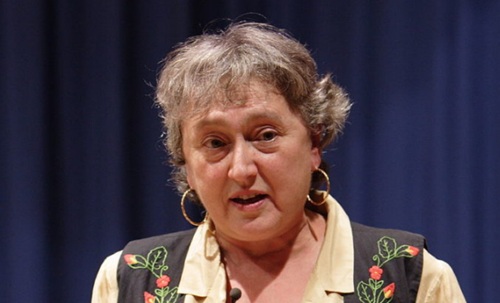 Introduction: A Scientific Outsider Who Changed the CoreFew scientists have managed to overturn a central assumption of biology while remaining, for much of their career, on the fringes of acceptance. Lynn Margulis did precisely that. Her work on symbiosis did not simply add a detail to evolutionary theory—it forced a reconsideration of how complexity itself arises. In a discipline long dominated by competition, she made cooperation scientifically indispensable. Early in her life, she was also briefly married to Carl Sagan, the famed astronomer and science communicator. While their intellectual trajectories diverged—Sagan focusing on planetary science and public outreach, Margulis on microbiology and evolution—the pairing reflects the remarkable scientific milieu in which she developed her ideas. Her career would ultimately be defined not by association, but by confrontation: with entrenched scientific assumptions, disciplinary boundaries, and the limits of prevailing evolutionary thought. The Endosymbiotic RevolutionMargulis's most enduring contribution is her rigorous formulation of endosymbiosis. She argued that eukaryotic cells—the complex cells that make up plants, animals, and fungi—originated through mergers between distinct bacterial species. Organelles such as mitochondria and chloroplasts, she claimed, were once free-living organisms that took up residence inside larger host cells. This idea ran counter to the prevailing neo-Darwinian framework derived from Charles Darwin and later population genetics, which emphasized gradual modification through mutation and selection. Margulis proposed something far more discontinuous: evolutionary innovation through integration. Entire organisms, not just genes, could become incorporated into new biological wholes. Initially dismissed, her theory gained decisive support with the rise of molecular genetics. The DNA of mitochondria and chloroplasts clearly revealed bacterial ancestry, complete with their own genomes and replication processes. What had been ridiculed became orthodoxy. Today, endosymbiosis is not controversial—it is foundational. Symbiogenesis: Evolution by MergerMargulis did not stop at organelles. She generalized her insight into a broader evolutionary principle: symbiogenesis. This concept holds that new species and new levels of complexity can arise through long-term symbiotic unions. In doing so, she challenged the reductionist tendency to view evolution as exclusively gene-centered. While thinkers like Richard Dawkins emphasized the “selfish gene,” Margulis stressed the collaborative networks in which genes operate. Evolution, in her view, is not merely a competitive filtering process but also a creative synthesis of previously independent life forms. This perspective has gained traction in contemporary biology, particularly in microbiome research. Organisms are now increasingly understood as ecosystems—hosts plus their associated microbial communities—rather than autonomous individuals. Margulis anticipated this shift decades in advance. Where Margulis Went Too Far: From Cells to SpeciesYet it is precisely here that Margulis's broader claims become problematic. While endosymbiosis convincingly explains the origin of eukaryotic cells—a transition of enormous evolutionary significance—she often extended the principle of symbiogenesis to account for the origin of species themselves. This extrapolation is far less well supported. The empirical evidence for symbiogenesis is strongest at the level of major evolutionary transitions: the emergence of eukaryotic cells, and possibly other deep innovations in the tree of life. These are rare, foundational events—closer to the origin of biological “kingdoms” than to the day-to-day formation of species. By contrast, speciation as observed in nature typically proceeds through mechanisms well described by standard evolutionary theory: genetic divergence, natural selection, genetic drift, and reproductive isolation. Margulis tended to downplay these processes, sometimes implying that new species arise primarily through symbiotic mergers. However, clear, well-documented cases of symbiogenesis producing new animal or plant species are scarce. Symbiosis is ubiquitous and biologically important, but it usually modifies existing organisms rather than generating entirely new ones. In this sense, her theoretical reach exceeded her evidential grasp. Symbiosis explains how fundamentally new kinds of cells—and thus higher-level lineages—came into existence. It does not replace the conventional mechanisms that account for diversification within those lineages. Put bluntly: symbiosis helped create the stage, but it does not explain most of the actors. Beyond the Cell: Gaia and Earth System ThinkingMargulis's intellectual reach extended into planetary science through her collaboration with James Lovelock on the Gaia hypothesis. This framework proposed that life and its physical environment form a tightly coupled system capable of self-regulation. Although often misunderstood as mystical or teleological, Gaia in its scientific form emphasizes feedback mechanisms. For example, microbial life influences atmospheric composition, which in turn shapes conditions for life. Margulis helped ground this idea in microbiology, giving it empirical traction. In an era of climate crisis, such systems thinking has become indispensable. Earth is no longer seen as a passive stage for evolution but as an active participant shaped by life itself. A Combative Intellectual StyleMargulis was not a cautious academic. She was combative, iconoclastic, and often dismissive of mainstream evolutionary theory, which she labeled “neo-Darwinian orthodoxy.” While her critiques sometimes exposed real blind spots—particularly the neglect of symbiosis—they could also be overstated. Her later skepticism toward aspects of virology and other established fields complicated her reputation. Critics argue that she occasionally extended her contrarian instincts beyond the evidence. Supporters counter that such intellectual stubbornness was precisely what allowed her to push through entrenched resistance in the first place. Controversy and Overreach: Margulis on VirologyOne of the more problematic aspects of Lynn Margulis's later career was her stance on virology. Here, her contrarian instincts—so productive in the case of endosymbiosis—led her into positions that placed her well outside the scientific mainstream. Margulis rejected the standard view that viruses are central players in disease causation. In particular, she expressed deep skepticism about the role of viruses in major illnesses, at times questioning whether viruses such as HIV function as primary pathogenic agents in the way accepted by modern medicine. Instead, she tended to interpret viruses as relatively minor or secondary factors, emphasizing environmental stress, bacterial interactions, or cellular imbalances as more fundamental causes of disease. This position aligned loosely with her broader biological outlook. Margulis consistently resisted reductionist explanations that isolate a single causal agent—whether a gene, a pathogen, or a molecular mechanism. Just as she argued that evolution cannot be reduced to gene-level selection alone, she was inclined to view disease as the outcome of complex ecological interactions within and between organisms. From that perspective, the idea of a virus acting as a singular, decisive cause appeared overly simplistic to her. However, in the case of virology, this skepticism ran up against an overwhelming body of empirical evidence. The role of viruses in disease has been established through multiple, converging lines of research: molecular biology, epidemiology, experimental infection studies, and clinical outcomes. In the case of HIV, for example, the causal link to AIDS is supported by decades of data, including viral isolation, transmission patterns, and the effectiveness of antiretroviral therapies. Margulis's rejection of this consensus placed her in a position that many scientists regarded as scientifically untenable. It is important to distinguish her earlier methodological boldness from this later stance. In the case of endosymbiosis, she challenged orthodoxy with a hypothesis that generated testable predictions and was eventually confirmed by genetic evidence. In her critique of virology, by contrast, she offered a largely negative argument—questioning established interpretations without providing a comparably robust alternative framework that could account for the full range of observed data. This episode complicates her intellectual legacy. It shows that the same disposition that enables scientific breakthroughs—a willingness to question consensus—can, if insufficiently constrained by evidence, lead to positions that are difficult to defend. Margulis remains a towering figure in evolutionary biology, but her views on virology serve as a cautionary reminder: not every rebellion against orthodoxy yields a new paradigm. Gender and Resistance: Fighting the Scientific EstablishmentMargulis's struggle was not only intellectual but also institutional—and, unavoidably, gendered. As a woman entering a male-dominated scientific community in the 1960s, she faced barriers that went beyond normal academic skepticism. Her ideas were not merely criticized; they were often dismissed outright, and the tone of rejection frequently carried an undercurrent of condescension that many of her male contemporaries did not encounter to the same degree. Early in her career, Margulis submitted her endosymbiosis paper to multiple journals, only to have it rejected repeatedly—reportedly by more than a dozen outlets. While resistance to radical ideas is common in science, the gatekeeping mechanisms of the time were particularly inhospitable to those who did not fit the established profile of authority. Margulis lacked both the institutional backing and the demographic identity that typically conferred immediate credibility. What distinguishes her case is not simply that she persevered, but how she did so. She developed a combative intellectual style, marked by sharp critique and an unwillingness to defer to consensus. This was, in part, strategic. In a scientific culture where women were often expected to be deferential or marginal, assertiveness became a tool of survival. Yet it also came at a cost: her reputation as "difficult" or "controversial" was amplified, sometimes overshadowing the substance of her arguments. At the same time, it would be reductive to interpret her trajectory solely through the lens of gender. Many male scientists with heterodox ideas have faced similar resistance. The more precise point is that Margulis had to overcome two overlapping obstacles: the conservatism of scientific paradigms and the social dynamics of a field in which she was an outsider. The combination made her eventual success all the more striking. In retrospect, her career illustrates how scientific revolutions are not just battles of evidence, but also of voice and authority. Margulis did not simply argue for a new theory of life—she had to claim the right to be heard in the first place. Legacy: From Heresy to Textbook BiologyThe trajectory of Margulis's career—from rejection to canonization—illustrates how science evolves not just through data, but through conceptual shifts. Her work expanded the explanatory framework of evolution, adding cooperation and merger to the standard toolkit of mutation and selection. Today, her influence is visible across multiple domains: evolutionary biology, microbiology, ecology, and Earth system science. The modern understanding of life as deeply interconnected—genetically, ecologically, and even geochemically—bears her imprint. Conclusion: A Broader Vision of EvolutionLynn Margulis forced biology to confront an uncomfortable possibility: that the engine of complexity is not only competition, but collaboration. She demonstrated that life advances not just by branching apart, but by coming together. Her legacy is therefore both specific and philosophical. Specifically, she solved a major puzzle about the origin of complex cells. Philosophically, she broadened the imagination of biology itself. Evolution, in her hands, became less a battlefield of isolated competitors and more a dynamic web of alliances—a vision that continues to shape how we understand life on Earth.
Widget is loading comments...
|