|
TRANSLATE THIS ARTICLE
Integral World: Exploring Theories of Everything
An independent forum for a critical discussion of the integral philosophy of Ken Wilber
  Frank Visser, graduated as a psychologist of culture and religion, founded IntegralWorld in 1997. He worked as production manager for various publishing houses and as service manager for various internet companies and lives in Amsterdam. Books: Ken Wilber: Thought as Passion (SUNY, 2003), and The Corona Conspiracy: Combatting Disinformation about the Coronavirus (Kindle, 2020). Frank Visser, graduated as a psychologist of culture and religion, founded IntegralWorld in 1997. He worked as production manager for various publishing houses and as service manager for various internet companies and lives in Amsterdam. Books: Ken Wilber: Thought as Passion (SUNY, 2003), and The Corona Conspiracy: Combatting Disinformation about the Coronavirus (Kindle, 2020).
Check out my other conversations with ChatGPT Ken Wilber's Problematic Relationship to ScienceWhen Spiritual Vision Overreaches Evolutionary BiologyFrank Visser / ChatGPT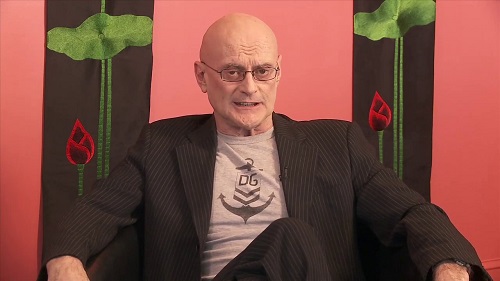
Wilber: “The only theory that can actually explain the mysteries of evolution.”
There is something deeply attractive about the idea that evolution is not just a blind process, but a meaningful, creative unfolding of the cosmos. Few contemporary thinkers have embraced this vision more fully than Ken Wilber. In his integral philosophy, evolution is not merely biological—it is spiritual, directional, even purposeful. It is a grand vision. But does it stand up to scrutiny? To make his case, Wilber advances three key claims about science and evolution. Each of them, on closer inspection, turns out to be problematic.[1] The First Claim: Science Cannot Explain Major TransformationsWilber frequently argues that conventional evolutionary theory fails to explain the emergence of major innovations in the history of life—what he sees as leaps in complexity that cannot be accounted for by standard mechanisms. At first glance, this sounds plausible. Evolution is, after all, a story full of dramatic transitions: from molecules to cells, from simple organisms to complex multicellular life, from animal cognition to human self-awareness. But to conclude from this that science fails is a step too far. Modern evolutionary biology does not claim to have solved every detail of these transitions. But it has developed a rich framework—incorporating genetics, developmental biology, systems theory, and evolutionary dynamics—that increasingly illuminates how complexity arises. These explanations may be incomplete, but they are not absent. Wilber's critique, then, depends on overstating the gaps in scientific knowledge—turning open questions into decisive failures. The Second Claim: Science Points to Cosmic CreativityWilber's second move is more subtle. He suggests that certain developments within science—particularly in complexity theory and systems thinking—hint at a universe that is inherently creative, even directional. Here, science is not rejected but recruited. Yet this recruitment is selective. While some scientific ideas do emphasize emergence and self-organization, they do not imply purpose, intention, or spiritual direction. They describe processes, not meanings. To move from “the universe produces complexity” to “the universe is spiritually creative” is not a scientific conclusion. It is a philosophical—or metaphysical—interpretation layered onto scientific findings. Wilber presents this interpretation as if it were supported by science itself. In reality, it goes well beyond what the science warrants. The Third Claim: Only Integral Theory Can Explain EvolutionWilber's most ambitious claim is also his most problematic: that his own framework is uniquely capable of explaining the “mysteries” of evolution. This is no longer a critique of science or an interpretation of it. It is a declaration of explanatory supremacy. And it raises an obvious question: by what standard? In science, theories compete. They are tested, compared, refined, and sometimes discarded. Claims of superiority must be backed by evidence, predictive power, and coherence with existing knowledge. Wilber's theory, however, operates largely outside this process. It does not engage evolutionary biology on its own terms, nor does it offer testable alternatives. Instead, it reframes the problem in such a way that only a spiritually informed perspective can “solve” it. But a theory that defines itself as the only possible solution risks insulating itself from evaluation altogether. The Real Issue: How Science Is UsedTaken together, these three claims reveal a deeper pattern. The issue is not that Wilber introduces spirituality into discussions of evolution. The issue is how he engages with science. Two shortcomings stand out. First, there is a lack of sustained openness to criticism. Challenges to his interpretation of evolution are rarely taken as opportunities for refinement. Instead, they tend to be bypassed or reframed. Second, there is a lack of close engagement with the scientific field itself. Evolutionary biology is a complex and rapidly developing discipline. To critique it meaningfully requires detailed familiarity with its theories, methods, and ongoing debates. Without that grounding, sweeping conclusions are likely to misfire. Toward a More Credible IntegrationNone of this means that an integration of evolution and spirituality is impossible. But if such an integration is to be credible, it must proceed differently. It must respect the integrity of scientific explanations, even when they are incomplete. It must distinguish clearly between empirical findings and metaphysical interpretations. And it must remain open to criticism—not as a threat, but as a necessary condition of intellectual progress. Above all, it must abandon the temptation of final answers. Conclusion: From Vision to DisciplineWilber's vision of a spiritually animated cosmos is bold and imaginative. But imagination is not enough. When it comes to evolution, the standards are clear: claims must be grounded, arguments must be precise, and theories must be open to challenge. Without these, even the most inspiring vision risks becoming unconvincing. Or, put more simply: the problem is not that Wilber reaches too high— but that, in doing so, he loses touch with the ground beneath his feet. NOTES[1] This is a popular rewrite of the thesis of an academic paper: Frank Visser, "Ken Wilber's Problematic Relationship to Sciece", Integral Review, vol. 16, nr. 2, August 2020.
Comment Form is loading comments...
|