|
TRANSLATE THIS ARTICLE
Integral World: Exploring Theories of Everything
An independent forum for a critical discussion of the integral philosophy of Ken Wilber
  Frank Visser, graduated as a psychologist of culture and religion, founded IntegralWorld in 1997. He worked as production manager for various publishing houses and as service manager for various internet companies and lives in Amsterdam. Books: Ken Wilber: Thought as Passion (SUNY, 2003), and The Corona Conspiracy: Combatting Disinformation about the Coronavirus (Kindle, 2020). Frank Visser, graduated as a psychologist of culture and religion, founded IntegralWorld in 1997. He worked as production manager for various publishing houses and as service manager for various internet companies and lives in Amsterdam. Books: Ken Wilber: Thought as Passion (SUNY, 2003), and The Corona Conspiracy: Combatting Disinformation about the Coronavirus (Kindle, 2020).
Check out my other conversations with ChatGPT Beyond the TunnelWhat Near-Death Research Does - and Does Not - ShowFrank Visser / ChatGPT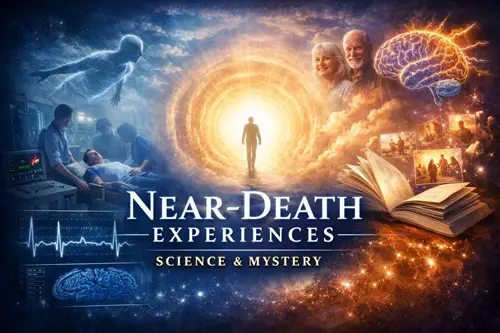 IntroductionFew phenomena sit as uncomfortably at the crossroads of science and spirituality as the near-death experience. Reported by cardiac arrest survivors, trauma patients, and individuals on the brink of clinical death, NDEs combine vivid perceptual episodes with profound existential impact. For some, they offer reassurance that consciousness transcends the body; for others, they represent one of the last great explanatory challenges for neuroscience. The debate is not merely about unusual experiences under extreme physiological stress. It is about the nature of mind, the limits of reductionism, and the ontological commitments we are prepared to make when confronted with mystery. What follows is a comprehensive examination of the phenomenon itself, the major explanatory models proposed, the influential popularizers who have shaped public understanding, and where current research leaves us today. 1. What Is a Near-Death Experience?A near-death experience (NDE) refers to a constellation of subjective, vivid, and often transformative experiences that occur in situations of extreme physiological stress — most commonly during cardiac arrest, severe trauma, or other imminently life-threatening events. Reported phenomenology includes: • A sense of detaching from the body or out-of-body experience (OBE) • Feeling of peace and detachment from pain • Passing through a tunnel toward a bright light • Encountering deceased loved ones or spiritual beings • A panoramic life review These core elements recur across cultures and times, though the symbolic content tends to vary with personal background and religious beliefs. NDEs occur fairly often in clinical settings: roughly 15-18 % of cardiac arrest survivors report them, and around 4 % of the general population in some surveys report an NDE at some point. 2. The Phenomenology and Aftereffects of NDEsNDEs aren't mere “interesting experiences.” Empirical research demonstrates that many people undergo profound psychological and worldview changes afterward. Studies find: • Roughly 70 % of NDE survivors report lasting changes in spiritual or religious beliefs and a reduced fear of death. • Some experience ongoing difficulties reintegrating into everyday life, including social isolation and relationship strains. • Others describe persistent shifts in priorities, empathy, and meaning. These long-term effects suggest that NDEs are psychologically impactful and not easily dismissed as brief hallucinations. 3. Scientific Explanations Proposed for NDEsThere's no consensus in the scientific community on one definitive explanation, but a wide range of hypotheses has been proposed. These explanations generally fall into neurobiological, psychological, cultural, and more speculative categories. A. Neurobiological ModelsMany scientists attempt to explain NDEs as brain-based phenomena that emerge from abnormal states of neural activity during extreme physiological stress. Cerebral Hypoxia and Anoxia Oxygen deprivation during cardiac arrest or trauma is theorized to produce visual and perceptual distortions, including tunnel-like imagery. Carbon Dioxide and Ion Imbalances Elevated CO2 (hypercarbia) and metabolic disruptions may trigger hallucination-like experiences. Temporal Lobe and Limbic System Activity Dysfunction or heightened activation in emotion-related brain regions could account for feelings of peace, unity, or out-of-body sensations. REM Sleep Intrusion and Seizure-Like Activity Some researchers propose that NDEs reflect REM intrusions (dream-like events overlapping wakefulness) or brief seizure-like activity near death. Gamma Wave Surges at End of Life Studies in humans and animals show that synchronized gamma oscillations may occur in dying brains, potentially facilitating vivid experiential states. These dying-brain hypotheses are grounded in neuroscience but are not collectively accepted as sufficient to explain all elements of NDE phenomenology. B. Psychological and Phenomenological AccountsBeyond specific neural events, psychology frames NDEs as meaning-making responses to extreme threat — the mind's attempt to organize or interpret overwhelming sensory events. • Cultural and religious background shapes the content and interpretation of NDEs. • Personal narratives often fit broader symbolic frameworks familiar to the experiencer. Psychological models emphasize interpretation, expectation, and narrative construction. C. Parapsychological and Non-Materialist ClaimsA minority of researchers argue that NDEs suggest consciousness independent of brain activity. Key claims include: • Reports of veridical perception (accurate descriptions of events while the brain was supposedly inactive) • Accounts from blind or anesthetized individuals describing visuals that should be neurologically impossible. Proponents argue these imply consciousness might not be reducible to measurable brain states. However, these interpretations are highly controversial and not accepted as established by mainstream neuroscience. 4. Methodological Challenges in NDE ResearchCurrent research faces substantial challenges: • Measurement scales vary, leading to inconsistent classification of what counts as an NDE. • Most studies rely on retrospective self-reports, which are subject to memory biases and narrative reshaping. • Hard empirical evidence demonstrating conscious experiences during verified brain inactivity remains scant. A recent Nature Reviews Neurology review (2025) attempts to build a integrative neuroscientific model, but it underscores that no single theory currently explains all phenomenology. 5. Where We Stand in 2026: Summary of Current ResearchConverging evidence paints a nuanced picture: • NDEs are phenomenologically robust: many survivors report consistent features across cultures and situations. • Neurobiological and physiological mechanisms can plausibly account for many features, but they don't yet explain all aspects — particularly veridical perception claims and the subjective richness of experiences. • Psychological and cultural factors shape interpretation but don't fully account for the core perceptual features. • A minority of researchers argue for non-local or consciousness-independent models, but such views are not established in the broader scientific community.[1] In sum, the phenomenon itself is real and robustly documented, but its ultimate explanation remains unsettled. Leading scientists agree that more rigorous, prospective research — ideally capturing neural and experiential data during the dying process — is needed. Current models are incomplete but point toward an interplay of physiological, psychological, and contextual factors. 6. Future Directions for ResearchTo advance understanding of NDEs, scientific efforts are focusing on: • Prospective cardiac arrest studies (e.g., AWARE II) tracking awareness and neural activity during resuscitation. • Improved neuroimaging and electrophysiological monitoring near death. • Cross-cultural, longitudinal studies examining how NDEs shape long-term psychological and existential outcomes. • More precise categorization tools to reduce variance in NDE research scales. 7. Influential Popular Authors and Public IntellectualsBeyond clinical and laboratory research, near-death experiences have been widely shaped in public consciousness by a small group of influential authors. Their works range from careful documentation to overtly metaphysical interpretation. While not all are equally regarded within academic neuroscience, they have profoundly influenced how NDEs are culturally framed. Raymond MoodyThe modern NDE movement largely begins with Raymond Moody and his 1975 bestseller Life After Life. Moody coined the term “near-death experience” and identified recurring features such as tunnels, lights, life reviews, and encounters with beings. His methodology relied primarily on qualitative interviews rather than controlled medical studies. Moody did not claim scientific proof of an afterlife but strongly suggested that NDEs challenge materialist accounts of consciousness. His work set the template for decades of discussion, both scholarly and popular. Bruce GreysonBruce Greyson represents a more academically rigorous strand of NDE research. A psychiatrist and long-time professor at the University of Virginia, he developed the widely used Greyson NDE Scale, an attempt to operationalize and quantify the experience. Greyson's 2021 book After presents NDEs as data that strain reductive neuroscience but stops short of definitive metaphysical conclusions. He occupies a middle ground: critical of simplistic brain-only explanations, yet still working within empirical research paradigms. Pim van LommelDutch cardiologist Pim van Lommel gained international recognition following his 2001 The Lancet study of cardiac arrest survivors reporting NDEs. His later book Consciousness Beyond Life argues that consciousness may be “non-local,” analogizing it to a field rather than a brain-produced phenomenon.[1] Van Lommel is particularly influential in European discussions, including in the Netherlands. His interpretation goes further than most mainstream neuroscientists are willing to accept, explicitly challenging the assumption that consciousness is generated by neural activity. Sam ParniaSam Parnia approaches NDEs from a resuscitation science perspective. As director of the AWARE (AWAreness during REsuscitation) studies, he investigates awareness during cardiac arrest using prospective hospital-based designs. Parnia tends to frame NDEs not as proof of an afterlife but as evidence that consciousness may persist longer during clinical death than previously assumed. His work remains cautious and methodologically oriented, though often cited by those favoring survivalist interpretations. Eben AlexanderPerhaps the most controversial popularizer is Eben Alexander, whose memoir Proof of Heaven (2012) recounts his own coma experience. As a neurosurgeon, Alexander's claim that his experience occurred while his cortex was “shut down” was widely interpreted as insider testimony against materialism. However, critics argue that the timing and neurological details of his case do not conclusively demonstrate absence of brain function. His work has been highly influential among religious and spiritual audiences but is regarded skeptically in much of academic neuroscience. Assessment of Their InfluenceThese authors collectively shaped the contemporary discourse in three major ways: • Standardization of the Phenomenology (Moody, Greyson) • Challenge to Brain-Only Models (van Lommel, Greyson, Alexander) • Clinical Investigation of Awareness During Resuscitation (Parnia) However, their interpretations span a spectrum: • From cautious empirical inquiry (Greyson, Parnia), • To field-like or non-local consciousness hypotheses (van Lommel), • To overtly afterlife-affirming narratives (Alexander). Within mainstream neuroscience, survivalist interpretations remain controversial. Yet it would be inaccurate to dismiss these figures as fringe: several are credentialed physicians and researchers who have published in peer-reviewed venues. Where This Leaves the FieldPopular authors have ensured that NDEs remain part of public and philosophical debate about consciousness. They have broadened awareness but also polarized interpretation. As of 2026, the scientific community recognizes NDEs as a legitimate subject of study, but no consensus exists that they demonstrate survival of consciousness beyond brain function. The evidentiary bar for such a claim remains extremely high. If useful, I can next provide a critical comparison between survivalist and neurobiological interpretations in terms of explanatory scope, parsimony, and falsifiability. ConclusionNear-death experiences remain one of the most intriguing interdisciplinary phenomena at the intersection of neuroscience, psychology, and philosophy. Current research affirms their prevalence and psychological impact, offers multiple physiological and neurocognitive explanations, yet does not wholly reduce them to known brain processes. The phenomenon invites both rigorous scientific inquiry and careful philosophical reflection on consciousness, death, and human experience. Epilogue: The Ontological Price of an AfterlifeNear-death experiences are often presented—gently or boldly—as suggestive evidence that consciousness survives bodily death. The move is usually modest at first: perhaps awareness continues briefly; perhaps the mind is not entirely reducible to neural processes; perhaps death is not the absolute terminus materialism assumes. But even a brief post-mortem survival hypothesis carries an ontological price that is rarely made explicit. To posit an afterlife—even a temporary one—requires far more than a moment of disembodied awareness. It presupposes, at minimum: 1. A bearer of consciousness independent of the brain — something like a soul, subtle body, or non-local field structure capable of sustaining memory and identity. 2. A domain or dimension in which this bearer exists — a structured environment not reducible to known physical spacetime. 3. A mechanism of transition — some lawful process by which consciousness disengages from neurobiology. 4. Continuity of personal identity — preserving autobiographical memory, moral agency, and perspective. 5. Often, though not always, a framework of moral or teleological order — especially when life reviews or encounters with luminous beings are interpreted as judgment or guidance. In other words, survivalism is not a single hypothesis. It is a package ontology. By contrast, neurobiological models require only this: that complex and poorly understood brain states can generate extraordinary subjective experiences under extreme stress. These models may be incomplete, but they operate within an already established ontological framework — physical organisms governed by biological and neurochemical processes. The principle at stake here is explanatory economy. The survival hypothesis multiplies entities and domains: souls, subtle bodies, trans-physical realms, moral architectures. Each of these requires independent justification. None are directly observed in controlled conditions. The evidentiary burden therefore rises proportionally. This does not mean that survival is impossible. It means that the bar for acceptance is correspondingly high. The history of science repeatedly shows that when confronted with anomalous experiences, the eventual explanation—if one is found—almost always expands our understanding of natural processes rather than overturning the entire ontological structure of reality. Lightning did not require Zeus. Disease did not require demons. Optical illusions did not require astral doubles. Near-death experiences may ultimately illuminate previously unknown dynamics of the dying brain, memory consolidation, or consciousness under metabolic crisis. They may even refine our philosophical understanding of mind. But to treat them as evidence for a populated metaphysical cosmos is to make a leap from phenomenology to metaphysics that far exceeds the data. If anything, the NDE debate functions as a diagnostic tool: it reveals how quickly humans move from mystery to ontology. And here lies the final complication: if humans survive death, what about animals, plants, bacteria? Would each require its own subtle body or afterlife realm? The ontological commitments multiply exponentially, and the afterlife begins to look far less economical—and far less credible—than the simple, parsimonious account offered by neuroscience. NOTES[1] This is the theme of Dan Brown's latest book, The Secret of Secrets, see: Frank Visser, "The Brain As Receiver?, Why Dan Brown's Nonlocal Consciousness Theory Fails", www.integralworld.net, October 2025.
Widget is loading comments...
|