|
TRANSLATE THIS ARTICLE
Integral World: Exploring Theories of Everything
An independent forum for a critical discussion of the integral philosophy of Ken Wilber
  Frank Visser, graduated as a psychologist of culture and religion, founded IntegralWorld in 1997. He worked as production manager for various publishing houses and as service manager for various internet companies and lives in Amsterdam. Books: Ken Wilber: Thought as Passion (SUNY, 2003), and The Corona Conspiracy: Combatting Disinformation about the Coronavirus (Kindle, 2020). Frank Visser, graduated as a psychologist of culture and religion, founded IntegralWorld in 1997. He worked as production manager for various publishing houses and as service manager for various internet companies and lives in Amsterdam. Books: Ken Wilber: Thought as Passion (SUNY, 2003), and The Corona Conspiracy: Combatting Disinformation about the Coronavirus (Kindle, 2020).
Check out my other conversations with ChatGPT The Enchanted Cosmos vs. the Mechanical VoidA Skeptical Take on David Bentley Hart's Critique of ReductionismFrank Visser / Grok
Do We Exist in the Mind of God? - David Bentley Hart
Summary of the ConversationThe video is an episode of Alex O'Connor's podcast "Within Reason," featuring philosopher and theologian David Bentley Hart discussing themes from his book All Things Are Full of Gods. The dialogue, structured as a conversation rather than a formal debate, explores why scientific reductionism (the attempt to explain all phenomena, including consciousness, through mechanistic, material processes) fails. Hart argues that nature is inherently imbued with intentionality and consciousness, drawing on pre-modern intuitions like Thales' claim that "all things are full of gods." Key points include: Historical Context: Hart traces the rise of mechanistic science in the 17th century (e.g., via Bacon and Descartes) as a methodological shift that excluded formal and final causes (purpose and form) from explanations, reducing nature to mindless machinery. This led to dualism (mind separate from matter) but eventually to materialist reductions of mind. Critique of Scientific Method: Science's "third-person perspective" is illusory, as it's derived from aggregated first-person experiences. Attempting to explain consciousness mechanistically creates absurdities like infinite regresses (e.g., Daniel Dennett's intentional stance). Analogies like flying a plane via instruments (without seeing the world directly) illustrate how science mistakes models for reality. Materialism and Consciousness: Materialist views (eliminativism, supervenience, emergence) fail because consciousness isn't reducible to physical processes. Emergence, where complex systems produce novel properties (e.g., mind from brain), is dismissed as "magical" without explanatory power. Hart favors a panpsychist-like view where mind is primordial, not emergent. Panpsychism and Unity: Hart defends a form of idealism/panpsychism where consciousness is fundamental, not composed of "particles" of mind. He uses examples like hive minds in bees to show collective intentionality. The brain isn't the source of consciousness but a modality shaped by mind. Individual Selves and Afterlife: Selves arise from a unified ground of mind, not mechanical combination. On death, Hart speculates (drawing on personal experiences and theology) that the core "I am" persists, though the ego may transform, shedding transient aspects. He doesn't claim philosophy proves immortality but finds it consistent with his views. The discussion is interspersed with analogies (e.g., quantum mechanics' "shut up and calculate" approach), references to thinkers (Aristotle, Kant, Dennett), and light humor. O'Connor probes as a skeptic, steel-manning materialism while Hart critiques it. The video ends on an optimistic note about potential post-death existence. Skeptical ReviewThis conversation is intellectually stimulating and well-articulated, with Hart's erudite style and O'Connor's probing questions making for engaging philosophy. However, as a skeptical review, I'll highlight logical weaknesses, unsubstantiated claims, potential biases, and areas where the arguments falter under scrutiny. My aim is to be fair but critical, drawing on evidence-based reasoning without deference to authority or tradition. StrengthsClarity and Depth: Hart effectively historicizes the scientific method's limitations, showing how it evolved from a tool for induction to a metaphysical dogma. His critiques of emergence (calling it "magical thinking") and the third-person illusion are provocative and echo philosophers like Thomas Nagel ("view from nowhere") or David Chalmers (hard problem of consciousness). Balanced Dialogue: O'Connor avoids gotcha tactics, allowing Hart to elaborate while gently challenging materialist assumptions. This format suits exploratory topics like panpsychism. Relevance: In an era of AI and neuroscience hype, questioning reductionism is timely. Hart's bee hive analogy illustrates collective agency without resorting to mysticism. Weaknesses and Criticisms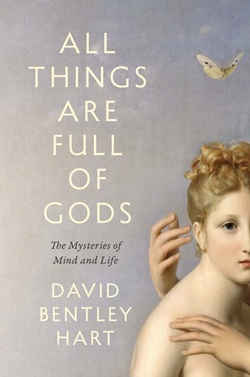
Begging the Question on Mind's Primacy: Hart assumes mind/consciousness is "primordial" and fundamental, inverting materialism by claiming matter is a "modality of mind." But this is circular: He critiques materialism for lacking evidence of how mind emerges from matter, yet offers no empirical evidence for mind preceding matter. It's an assertion based on intuition ("better rational intuition" from ancient views), not falsifiable claims. Why privilege pre-modern "intuitions" (e.g., gods in nature) over modern evidence from neuroscience, where brain damage reliably alters consciousness (e.g., Phineas Gage's personality shift post-injury)? Hart dismisses this as correlation, not causation, but that's special pleading—demanding materialism prove emergence while his idealism gets a pass on mechanism. Dismissal of Emergence as "Magical": Hart ridicules emergence (e.g., consciousness from neural complexity) as unexplained "magic," but this is a strawman. Emergence is observed in non-magical systems: Wetness from H2O molecules, flocking behavior in birds from simple rules, or even life from chemistry (abiogenesis research shows self-replicating molecules forming under prebiotic conditions). Integrated Information Theory (IIT), which Hart briefly critiques, provides testable predictions about consciousness in systems like brains or AI. Hart's alternative—mind as a unified ground "pouring through a prism"—sounds equally "magical" without predictive power. If emergence is invalid because it's not fully explained yet, why isn't panpsychism (mind in rocks or electrons?) held to the same standard? Panpsychism faces the "combination problem": How do micro-minds combine into unified selves? Hart waves this away with metaphors but no specifics. Historical Cherry-Picking and Romanticization: Hart idealizes pre-17th-century views (e.g., Aristotle's four causes, animistic spirits) as "insightful," blaming modernity for a "destructive" mechanistic worldview tied to capitalism and exploitation. This is selective: Pre-modern intuitions also led to geocentrism, alchemy, and witch hunts—failures corrected by scientific method. The method's successes (e.g., vaccines, quantum computing) far outweigh its philosophical "absurdities." Hart admits science's practical value but downplays it, creating a false dichotomy: Method isn't metaphysics, as he claims; scientists like Sean Carroll explicitly treat it as provisional. Moreover, Hart's nod to quantum interpretations (preferring Copenhagen over Everett) ignores how quantum mechanics supports materialist views (e.g., decoherence explaining measurement without needing consciousness). Anecdotal and Theological Slipperiness on Afterlife: The discussion veers into speculation on death, where Hart cites "personal experiences" (unspecified, beyond a car accident) and theology for soul immortality. This is unfalsifiable and anecdotal—near-death experiences are explainable via brain chemistry (e.g., DMT release, oxygen deprivation). His distinction between "ego" (transient) and "I am" (primordial) is vague, drawing on traditions like Hinduism (atman vs. jiva) without resolving contradictions. Philosophy, he concedes, can't prove immortality, yet he posits it as "consistent." This feels like motivated reasoning: As a theologian, Hart's biases toward theism (e.g., universalism) color his philosophy, making the book (admittedly "self-indulgent") seem like apologetics disguised as metaphysics. Lack of Empirical Engagement: For a critique of "scientific reductionism," there's minimal engagement with science. No discussion of neuroimaging (fMRI showing consciousness correlates), evolutionary psychology (consciousness as adaptive), or psychedelics (altering self via brain chemistry). Hart's panpsychism aligns with fringe views (e.g., Philip Goff, whom O'Connor references), but mainstream philosophers like Dennett (whom Hart critiques posthumously) offer robust alternatives: Consciousness as a "user illusion" from evolved computations. Hart calls this "insane," but it's testable via AI simulations—something his view can't match. Potential Biases and Broader Implications: Hart's eloquence (poetic language, references to classics) can mask weak arguments, appealing to those disillusioned with materialism but not convincing skeptics. The pinned comment promotes Huel (a sponsor), and comments praise Hart effusively ("GOAT," "dream come true"), suggesting an echo chamber. Politically, his anti-capitalist asides (modernity as exploitative) are unsubstantiated—science enabled progress like reduced child mortality, not just destruction. If "all things are full of gods," it risks pseudoscience (e.g., justifying anti-vax views via "natural intentionality"). Overall, this is thoughtful philosophy but philosophically lopsided: Hart's idealism is intriguing as a thought experiment but fails as a superior alternative to materialism due to evidential gaps and reliance on intuition over data. It highlights the hard problem of consciousness without solving it, leaving materialism's explanatory successes (predicting behavior via brain states) intact. For balance, I'd recommend contrasting views from Dennett's Consciousness Explained or Carroll's The Big Picture. If you're into this, it's worth watching for the rhetoric alone—but approach with skepticism.
Comment Form is loading comments...
|