|
TRANSLATE THIS ARTICLE
Integral World: Exploring Theories of Everything
An independent forum for a critical discussion of the integral philosophy of Ken Wilber
  Frank Visser, graduated as a psychologist of culture and religion, founded IntegralWorld in 1997. He worked as production manager for various publishing houses and as service manager for various internet companies and lives in Amsterdam. Books: Ken Wilber: Thought as Passion (SUNY, 2003), and The Corona Conspiracy: Combatting Disinformation about the Coronavirus (Kindle, 2020). Frank Visser, graduated as a psychologist of culture and religion, founded IntegralWorld in 1997. He worked as production manager for various publishing houses and as service manager for various internet companies and lives in Amsterdam. Books: Ken Wilber: Thought as Passion (SUNY, 2003), and The Corona Conspiracy: Combatting Disinformation about the Coronavirus (Kindle, 2020).
Check out my other conversations with ChatGPT The Legacy of Kary MullisScientific Genius, Personal Eccentricity, and the Misuse of AuthorityFrank Visser / ChatGPT
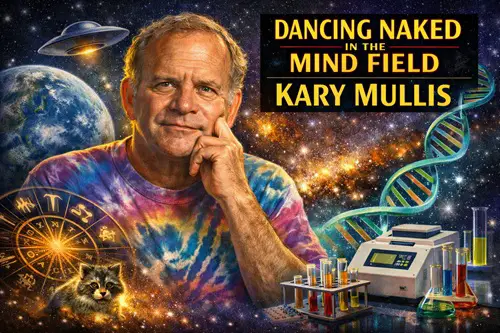 Kary Mullis occupies a singular and often misunderstood position in modern scientific culture. As the co-inventor of the polymerase chain reaction (PCR), he enabled one of the most powerful techniques in molecular biology, fundamentally transforming genetics, medicine, forensic science, and evolutionary research. For this achievement, Mullis shared the 1993 Nobel Prize in Chemistry. Yet his public legacy is complicated by an outspoken embrace of heterodox—and at times frankly fringe—beliefs, which were later selectively mobilized by COVID-19 contrarians to serve agendas far removed from serious scientific critique. The tension between Mullis's undeniable technical brilliance and his personal eccentricities offers a cautionary case study in how scientific authority can be distorted when invention, expertise, and worldview are conflated. PCR: A Tool, Not a WorldviewMullis's invention of PCR in the mid-1980s at Cetus Corporation was a genuine breakthrough. By allowing specific DNA sequences to be amplified from vanishingly small samples, PCR shifted biology toward a new level of experimental precision. Its impact is difficult to overstate: modern diagnostics, genomics, ancestry testing, and molecular epidemiology are unthinkable without it. However, PCR is a methodological instrument, not an interpretive theory. It detects genetic material; it does not, by itself, determine disease causality, infectiousness, or clinical severity. These limitations are neither hidden nor controversial within biomedical science. Like any powerful tool, PCR's reliability depends on protocols, thresholds, and interpretive frameworks developed collectively by the scientific community over time. This distinction would later be ignored by those who sought to weaponize Mullis's name against PCR-based COVID testing. The Cultivated Iconoclast: Astrology, Time Reversal, and Anti-Consensus ThinkingMullis actively cultivated the persona of the rebellious outsider, delighting in his distance from academic orthodoxy. In his autobiography, Dancing Naked in the Mind Field (1998), he presents himself as a free-ranging intellect unburdened by institutional conformity. The book is revealing not only for its anecdotes about PCR's invention, but also for its unapologetic endorsement of ideas far outside mainstream science. Among these were Mullis's belief in astrology, which he claimed to take seriously despite its well-established lack of empirical support. He also speculated about time reversal and retrocausality, entertaining the possibility that future events might influence the past—ideas presented more as personal intuitions than as testable scientific hypotheses. Alongside these views were accounts of encounters with a glowing raccoon-like entity, reflections on psychedelics, and dismissive remarks about large-scale scientific consensus, particularly in fields such as climate science and epidemiology. These positions were not incidental. They formed part of Mullis's broader anti-institutional stance: a deep suspicion of collective authority paired with confidence in individual intuition. While such attitudes can sometimes foster creativity, they can just as easily dissolve the boundary between disciplined speculation and idiosyncratic belief. Posthumous Recruitment: Mullis and COVID ContrarianismDuring the COVID-19 pandemic, Mullis—who died in 2019—was repeatedly invoked by critics of public health policy. Quotes attributed to him circulated widely, suggesting that PCR “cannot diagnose disease” or was never intended for clinical use. These claims were used to argue that COVID case counts were meaningless or fabricated. What was omitted in these appeals was context. Mullis's comments reflected general truths about PCR's limitations, not a refutation of its diagnostic utility when properly applied. Nor did Mullis engage with the extensive clinical validation, quality control measures, and epidemiological frameworks that governed PCR testing decades after his original invention. More troublingly, Mullis's broader record—his belief in astrology, openness to time reversal, and rejection of consensus science—was quietly ignored by those who presented him as a decisive authority. His skepticism was selectively elevated, while his more eccentric commitments were treated as irrelevant or conveniently forgotten. Authority Misunderstood: Genius Is Not OmniscienceThe Mullis episode exposes a persistent confusion in public discourse: the idea that inventorship confers universal epistemic authority. Mullis was a brilliant chemist and innovator, but this did not make him a final arbiter of virology, public health policy, or statistical epidemiology. Ironically, PCR's success is a triumph of institutional science. Its reliability rests not on Mullis's personality or beliefs, but on decades of replication, refinement, standardization, and collective oversight. To invoke Mullis against this accumulated practice is to misunderstand how science functions as a social and methodological enterprise. Conclusion: A Brilliant Mind, Not a Scientific OracleKary Mullis should be remembered for what he genuinely achieved: a transformative molecular technique that reshaped biology. His autobiography offers a candid, sometimes entertaining, but often unsettling portrait of a mind that blurred the line between creative insight and contrarian indulgence. The misuse of Mullis during the COVID-19 pandemic was not a vindication of scientific skepticism, but an illustration of how anti-institutional sentiment can hijack isolated voices to undermine collective knowledge. Respecting Mullis's contribution does not require endorsing his astrology, his speculations about time reversal, or his dismissal of scientific consensus. The real lesson is not that science is fragile because geniuses are eccentric—but that science works precisely because it does not depend on genius alone.
Widget is loading comments...
|