|
TRANSLATE THIS ARTICLE
Integral World: Exploring Theories of Everything
An independent forum for a critical discussion of the integral philosophy of Ken Wilber
  Frank Visser, graduated as a psychologist of culture and religion, founded IntegralWorld in 1997. He worked as production manager for various publishing houses and as service manager for various internet companies and lives in Amsterdam. Books: Ken Wilber: Thought as Passion (SUNY, 2003), and The Corona Conspiracy: Combatting Disinformation about the Coronavirus (Kindle, 2020). Frank Visser, graduated as a psychologist of culture and religion, founded IntegralWorld in 1997. He worked as production manager for various publishing houses and as service manager for various internet companies and lives in Amsterdam. Books: Ken Wilber: Thought as Passion (SUNY, 2003), and The Corona Conspiracy: Combatting Disinformation about the Coronavirus (Kindle, 2020).
Check out my other conversations with ChatGPT Why Michael Levin Engages “Suspect” ThinkersAnd Why That MattersFrank Visser / ChatGPT
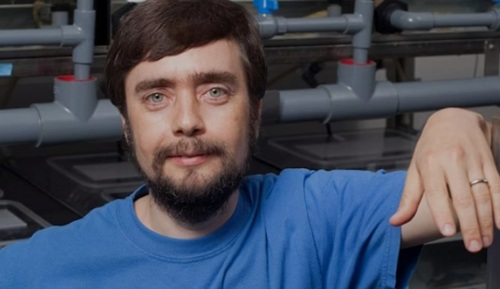 Michael Levin occupies an unusual position in contemporary science. As a mainstream developmental biologist working on bioelectricity, morphogenesis, and basal cognition, his empirical credentials are impeccable. Yet his work persistently brushes up against questions that science has long preferred to sidestep: agency, goal-directedness, meaning, even something that looks suspiciously like purpose in living systems. It is therefore no accident that Levin occasionally finds himself in dialogue with figures many scientists would rather ignore—Bernardo Kastrup, Rupert Sheldrake, panpsychist philosophers, and other denizens of the conceptual borderlands. To some observers, this raises eyebrows. Why would a serious scientist lend oxygen to thinkers often dismissed as metaphysical, speculative, or worse? The answer is subtle—and revealing. The Problem Is Real, Even If the Answers Aren'tLevin's tolerance for “suspect” thinkers does not stem from sympathy for their metaphysics. It stems from his conviction that they are pointing to real problems, even if they offer dubious solutions. Sheldrake's morphic resonance, for example, is not compelling as a scientific theory. But the question it gestures toward—how biological form is so robustly coordinated across space and time—is a genuine explanatory challenge. Levin's own work on bioelectric patterning provides a rigorously testable alternative, without invoking mysterious fields. Likewise with Kastrup. Levin does not flirt with analytic idealism, but he understands why idealism is attractive: reductive materialism has done a poor job accounting for cognition, agency, and value. Engaging Kastrup allows Levin to say, in effect, “Yes, the critique of reductionism lands—but no, consciousness is not thereby elevated to a cosmic substance.” In each case, Levin separates the question from the answer. That distinction is precisely what many metaphysical systems—Integral Theory included—tend to blur. Boundary Management, Not Boundary CrossingWhat Levin is really doing in these debates is boundary management. His work is frequently cited by idealists, panpsychists, and spiritual theorists as evidence that science is finally “catching up” with their worldview. Levin knows this, and he resists it—not by retreating into mechanistic dogma, but by insisting on methodological discipline. His preferred move is pluralism without ontological inflation. Different explanatory languages—mechanistic, cybernetic, cognitive—can all be legitimate at different scales, without any one of them being declared fundamental. Agency becomes a modeling choice, not a metaphysical primitive. Teleology becomes a system-level description, not a cosmic force. Meaning is something organisms enact, not something the universe secretly harbors. This is why Levin can be polite toward Sheldrake and willing to debate Kastrup, while still rejecting their conclusions. Engagement, for him, is a way of containing metaphysical overreach, not endorsing it. Why He Avoids the Truly CrankyEqually telling is who Levin does not debate. You will not find him seriously engaging quantum mystics, unified-field gurus, or New Age cosmologists whose claims are unfalsifiable by design. His openness has limits. There must be a real explanatory tension with orthodox biology, and there must be some conceivable path back to experiment, intervention, or formal modeling. This sharply distinguishes Levin from figures like Ken Wilber, who habitually import speculative science to prop up metaphysical narratives. Wilber uses science rhetorically, as validation. Levin uses philosophy diagnostically, as a way to identify where scientific frameworks are still inadequate. The difference is decisive. Strategic Openness in a Risky ZoneThere is also a strategic dimension to Levin's posture. Revolutionary empirical work often emerges from conceptual discomfort, not from theoretical complacency. By refusing to mock or dismiss heterodox thinkers out of hand, Levin signals that science need not fear its own unanswered questions. But by refusing to sacralize those questions into metaphysical doctrines, he preserves the hard-won norms of scientific practice. In that sense, Levin walks a tightrope. Too much openness, and science dissolves into spirituality. Too much closure, and it calcifies into dogma. His debates with “suspect” thinkers are not flirtations with the fringe; they are attempts to keep that balance intact. A Familiar PatternFor those long critical of Integral Theory, the pattern should feel familiar. Interesting scientific questions—about evolution, mind, emergence—are repeatedly hijacked by overconfident metaphysical answers. Levin is navigating the same terrain, but with far greater care. He acknowledges the depth of the problems without pretending that metaphysics has already solved them. That, ultimately, is why he debates Kastrup, why he is not overly harsh on Sheldrake, and why he remains firmly within the scientific fold. He is not expanding science into spirituality. He is defending science's right to remain intellectually unfinished. And in an era where premature metaphysical closure comes from all sides, that may be the most radical position of all.
Michael Levin | Bernardo Kastrup #1: Consciousness, Cellular Intelligence, Boundaries of Self
Widget is loading comments...
|