|
TRANSLATE THIS ARTICLE
Integral World: Exploring Theories of Everything
An independent forum for a critical discussion of the integral philosophy of Ken Wilber
  Frank Visser, graduated as a psychologist of culture and religion, founded IntegralWorld in 1997. He worked as production manager for various publishing houses and as service manager for various internet companies and lives in Amsterdam. Books: Ken Wilber: Thought as Passion (SUNY, 2003), and The Corona Conspiracy: Combatting Disinformation about the Coronavirus (Kindle, 2020). Frank Visser, graduated as a psychologist of culture and religion, founded IntegralWorld in 1997. He worked as production manager for various publishing houses and as service manager for various internet companies and lives in Amsterdam. Books: Ken Wilber: Thought as Passion (SUNY, 2003), and The Corona Conspiracy: Combatting Disinformation about the Coronavirus (Kindle, 2020).
Check out my other conversations with ChatGPT Whispers from the Quantum EdgeEvaluating Dean Radin's Quest to Unravel the Mind's Invisible ThreadsFrank Visser / Grok
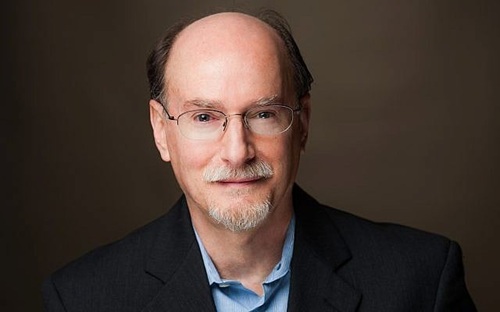 Imagine this: You're staring at a double-slit experiment, that cornerstone of quantum mechanics where particles behave like waves until observed, collapsing into tidy points of certainty. Now, what if your gaze—your conscious intent—could nudge those particles off their probabilistic path, not by a sledgehammer, but by a feather's whisper? This isn't the plot of a sci-fi thriller; it's the provocative territory staked out by Dean Radin, the electrical engineer turned parapsychology provocateur whose life's work dares to ask: Can the human mind bend reality in ways science has long dismissed as delusion? Born on a leap day in 1952, Radin started his intellectual odyssey far from the fringes. Armed with degrees in electrical engineering from the University of Massachusetts Amherst and a PhD in educational psychology from the University of Illinois at Urbana-Champaign, he cut his teeth at Bell Labs and Princeton, tinkering with the nuts and bolts of technology. By the 1980s, he'd pivoted to the University of Edinburgh and SRI International, where the allure of the anomalous—those pesky "psi" phenomena like telepathy, precognition, and psychokinesis—hooked him like a siren's call. Today, as Chief Scientist at the Institute of Noetic Sciences (IONS) and a multiple-time president of the Parapsychological Association, Radin embodies the tenacious spirit of a scientist who refuses to let the material world define the limits of consciousness. His career isn't a straight line but a Möbius strip, looping engineering precision back into the ethereal, challenging us to question whether the mind is just a brain byproduct or a cosmic conductor. At the heart of Radin's oeuvre lies a arsenal of experiments and meta-analyses that aggregate hundreds of studies, painting psi not as parlor tricks but as subtle statistical anomalies ripe for scrutiny. His 1997 bestseller, The Conscious Universe, was a gauntlet thrown at mainstream science, compiling evidence from over 800 experiments to argue that psychic effects, though faint (often odds against chance hovering around 1 in 10,000), are as reproducible as aspirin for headaches. Fast-forward to Entangled Minds (2006), where he draws parallels to quantum entanglement, suggesting minds might "link" across space like spooky particles defying Einstein's speed limit. And in Supernormal (2013), Radin ventures into yogic siddhis—superpowers like mind-over-matter—bolstered by lab data on meditators influencing random number generators. Radin's recent output, undimmed by decades in the arena, keeps the fire stoked. In 2023 alone, he co-authored papers probing "anomalous entropic effects" in systems tied to collective consciousness, hinting that global events might ripple through physical entropy like a crowd's roar bending stadium lights. A 2024 study with collaborators explored intentionally treated water's impact on glioblastoma cell migration, blending biofield therapy with cellular biology in ways that echo homeopathy's bolder cousins. By 2025, he's replicating "excess correlation" in isolated water beakers' pH levels and testing observer effects on quantum interference, directly probing the von Neumann-Wigner hypothesis that consciousness collapses wave functions. These aren't dusty thought experiments; they're hands-on, often involving double-blind protocols, EEG monitoring, and big data from apps crowdsourcing precognitive hunches. Radin's strength shines in his meta-analytic rigor: pooling disparate labs to tease signal from noise, much like epidemiologists hunt rare disease clusters. His 2021 double-slit photon entanglement work, for instance, reported observer-dependent shifts with p-values under 0.001, fueling debates on whether intent truly tickles quanta. Yet, for every cheer from the noetic chorus, there's a skeptic sharpening their scalpel. Radin's critics—and they're legion, from physicists like Victor Stenger to psychologists like Ray Hyman—accuse him of statistical sleight-of-hand that turns whispers into roars. In Supernormal, his meta-analyses on precognition and telepathy boast eye-popping odds (trillions to one), but detractors point to "heterogeneity": wildly varying study quality, with z-scores swinging from abysmal negatives to godlike positives. Remove the top and bottom 10% outliers, as meta-analysts Honorton and Ferrari did in a seminal 1989 review, and the effect size halves, shrinking from tantalizing to tepid. Front-loading favorable data is another rap: Radin spotlights dramatic hits while soft-pedaling misses, and his graphs often omit error bars, making wobbly lines look like laser beams. Broader indictments label his quantum invocations as "woo-woo physics"—a misappropriation where entanglement metaphors mask mundane explanations like sensory leakage or confirmation bias. Chris French, in dissecting The Conscious Universe, lambasts Radin for glossing over fraud histories (think Fox sisters' rapping tables) and botched file-drawer corrections, where unpublished null results are waved away too cavalierly. Even Brian Josephson, the Nobel-winning quantum maverick who endorses Radin, can't shield him from the charge: Parapsychology, say critics, thrives in methodological twilight, where p-hacking and subjective weighting turn "overwhelming evidence" into a house of cards. So, is Radin a visionary or a vector for pseudoscience? The truth, as in any boundary-pushing science, dances in the gray. His work's greatest merit is its dogged empiricism: In an era of AI hype and multiverse musings, Radin demands we test the untouchable, replicating experiments across labs and cultures. His collaborations—with neuroscientists on gene expression in psychics or biologists on "treated" water—bridge silos, injecting psi into transpersonal psychology and even genomics. Critics rightly flag the pitfalls, but dismissing him wholesale echoes Galileo's tormentors, mistaking anomaly for impossibility. After all, quantum weirdness itself was once "paranormal." Radin's legacy? A mirror held to science's soul, forcing us to confront our taboos. In 2025, as consciousness studies explode—from integrated information theory to psychedelic trials—his threads of mind-matter entanglement weave into the fabric. He hasn't "proven" psi (nor does he claim to; effects remain too elusive for that), but he's elevated it from séance smoke to spreadsheet scrutiny. For skeptics, he's a cautionary tale of stats gone astray; for seekers, a beacon illuminating the mind's untapped symphony. Ultimately, evaluating Radin isn't about settling scores—it's about embracing the thrill of the unknown, where every null result is a step toward revelation, and every whisper might just echo eternity. In the grand experiment of human inquiry, Dean Radin reminds us: The most extraordinary power may be our willingness to look.
Widget is loading comments...
|