|
TRANSLATE THIS ARTICLE
Integral World: Exploring Theories of Everything
An independent forum for a critical discussion of the integral philosophy of Ken Wilber
  Frank Visser, graduated as a psychologist of culture and religion, founded IntegralWorld in 1997. He worked as production manager for various publishing houses and as service manager for various internet companies and lives in Amsterdam. Books: Ken Wilber: Thought as Passion (SUNY, 2003), and The Corona Conspiracy: Combatting Disinformation about the Coronavirus (Kindle, 2020). Frank Visser, graduated as a psychologist of culture and religion, founded IntegralWorld in 1997. He worked as production manager for various publishing houses and as service manager for various internet companies and lives in Amsterdam. Books: Ken Wilber: Thought as Passion (SUNY, 2003), and The Corona Conspiracy: Combatting Disinformation about the Coronavirus (Kindle, 2020).
Check out my other conversations with ChatGPT
THE FIVE AGES OF THE UNIVERSE:
The Five Ages of the Universe, And the Philosophy of Cosmic Optimism Azarian's Mismatch: The Limits of the Evolutionary Romance Azarian vs. Wilber: Secular Emergence and Spiritual Teleology Why the Universe Doesn't Care About Our Spiritual Narratives Satirical Epilogue — “A Toast at the End of Everything” Why the Universe Doesn't Care About Our Spiritual NarrativesA Scientific Rebuttal to Teleological Cosmic EvolutionFrank Visser / ChatGPT
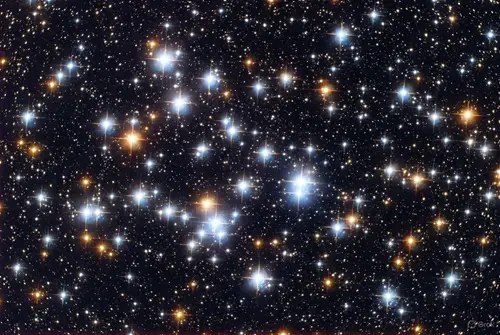 Human beings have always wanted the universe to mean something. From ancient cosmologies to modern spiritual frameworks, there is a recurring impulse to interpret existence not as an accident, but as a purposeful unfolding. In contemporary discourse, this impulse takes a new form: teleological cosmic evolution—the idea that the universe is not just expanding and cooling, but developing, progressing, maturing. Ken Wilber's Integral Theory is the most visible philosophical embodiment of this impulse; Bobby Azarian's thermodynamic-evolutionary storytelling represents a secularized cousin of the same longing. Both assert that the universe trends toward complexity, consciousness, and intelligence. Both see humanity as part of a meaningful evolutionary arc rather than a temporary chemical curiosity. But the universe, as far as science can tell, does not share our aspirations. This essay argues that cosmic evolution requires no purpose, no goal, no hidden teleology—and that narratives projecting intention onto cosmic history arise from psychological need rather than physical reality. 1. Complexity Is Not the Direction of the Universe—It Is a Local ExceptionCosmic evolutionists often point to a pattern: quarks → atoms → stars → chemistry → life → intelligence. This looks like ascent—a staircase from simplicity to brilliance. But this pattern is not cosmic-scale directionality. It is:
The universe as a whole trends not toward complexity but toward:
The Five Ages of the Universe framework makes this explicit: complexity is a passing anomaly made possible by concentrated energy sources—primarily stars—which will not persist indefinitely. Wilber treats complexity as the cosmic trajectory. Azarian treats complexity as thermodynamically encouraged. Physics treats complexity as a brief flare in an overwhelmingly entropic process. 2. Teleology Is an Artifact of Narrative PsychologyHumans are natural pattern-seekers. When faced with a temporal sequence, we assume intention: dawn → day → sunset → night But physics does not care about meaning. Processes occur because they must under given conditions—not because they should. Teleology ("the universe wants to awaken") is not found in nature. It is imported into nature by minds evolved to detect purpose whether or not it exists. Wilber calls this Spirit as Eros. Azarian, more cautiously, calls it the direction of complexity driven by entropy mathematics. Science calls it: Anthropic bias mistaken for design. 3. Intelligence Cannot Rescue the Universe From ThermodynamicsWilber imagines consciousness transcending matter. Azarian imagines intelligence harnessing physics to prolong complexity. Both flirt with the idea that mind has a cosmological role. But the Second Law of Thermodynamics is not an adversary to be negotiated with. Intelligence is not exempt from physics—it is made of physics. Even hypothetical ultra-advanced civilizations cannot:
Intelligence is not the culmination of the universe. It is an energy-dissipation mechanism, temporary and fragile. A candle flame—not the meaning of the fire. 4. Spiritual Narratives Confuse Explanation With JustificationMuch of teleological thought arises from a subtle shift: How did complexity arise? → explanatory question Why does complexity exist? → meaning question What is complexity for? → purpose question Science can answer the first. It can tentatively address the second (emergence requires certain conditions). But the third is not a scientific question at all—it is an existential projection. To ask what the universe is for is like asking what gravity hopes to achieve. 5. The Universe Is Not a Story—We AreCosmos has no plot arc. Stars form and collapse; particles scatter; entropy rises. Nothing in cosmology suggests an intended ending—not heat death, not transcendence, not enlightenment. Narrative arises not from the universe but from a species within it—a species evolutionarily shaped to impose pattern, order, and purpose onto a world that operates just fine without them. The universe doesn't care about consciousness. It doesn't care about complexity. It doesn't care about values, awakening, enlightenment—or extinction. But we do. And that difference is the whole point. Conclusion: Meaning Without MetaphysicsRejecting cosmic teleology does not plunge us into nihilism. It simply frees meaning from metaphysical inflation. If complexity disappears in the remote future, its importance is not diminished. If consciousness is temporary, its value is not erased. Meaning does not need eternity. It needs experience. The universe is not a story of Spirit awakening or intelligence ascending. It is a vast neutral canvas on which one improbable species briefly builds knowledge, art, ethics, memory, and understanding—before dissolving back into the silence from which it emerged. There is no cosmic guarantee of purpose. But there is purpose in recognizing that none was guaranteed.
Widget is loading comments...
|