|
TRANSLATE THIS ARTICLE
Integral World: Exploring Theories of Everything
An independent forum for a critical discussion of the integral philosophy of Ken Wilber
  Frank Visser, graduated as a psychologist of culture and religion, founded IntegralWorld in 1997. He worked as production manager for various publishing houses and as service manager for various internet companies and lives in Amsterdam. Books: Ken Wilber: Thought as Passion (SUNY, 2003), and The Corona Conspiracy: Combatting Disinformation about the Coronavirus (Kindle, 2020). Frank Visser, graduated as a psychologist of culture and religion, founded IntegralWorld in 1997. He worked as production manager for various publishing houses and as service manager for various internet companies and lives in Amsterdam. Books: Ken Wilber: Thought as Passion (SUNY, 2003), and The Corona Conspiracy: Combatting Disinformation about the Coronavirus (Kindle, 2020).
Check out my other conversations with ChatGPT
THE FIVE AGES OF THE UNIVERSE:
The Five Ages of the Universe, And the Philosophy of Cosmic Optimism Azarian's Mismatch: The Limits of the Evolutionary Romance Azarian vs. Wilber: Secular Emergence and Spiritual Teleology Why the Universe Doesn't Care About Our Spiritual Narratives Satirical Epilogue — “A Toast at the End of Everything” Azarian's MismatchComplexity, Entropy, and the Limits of the Evolutionary RomanceFrank Visser / ChatGPT
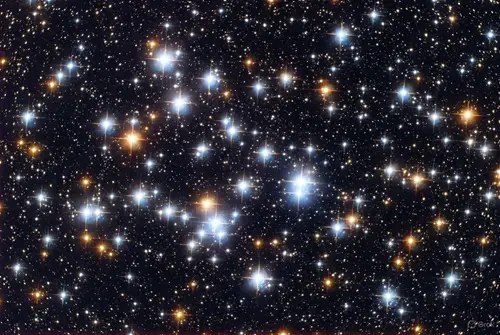 Bobby Azarian's The Romance of Reality is, in many ways, the most sophisticated secular expression of a sentiment long carried by the more metaphysical traditions of cosmic evolution: that the universe is not merely expanding and cooling, but also self-organizing, progressing, and groping toward increasingly higher levels of complexity, intelligence, and ultimately meaning. Unlike Ken Wilber, Azarian does not invoke metaphysical Spirit, subtle energies, or yogic epistemologies; he wants to remain firmly within the boundaries of naturalistic science. Yet at key points, his narrative begins to lean so heavily on metaphysical optimism that it risks drifting beyond the constraints of the very thermodynamic framework it claims to respect. His argument is elegant and compelling: the universe produces complexity not in spite of entropy, but because entropy requires structure to form as a mechanism for its own maximization. Life, mind, and civilization, in this view, are thermodynamic funnels through which disorder increases globally while complexity increases locally. This is a powerful explanatory framework—one increasingly acknowledged in the science of far-from-equilibrium systems. But when we evaluate Azarian's thesis against the long-term thermodynamic trajectory of the universe—as outlined by the Adams-Laughlin Five Ages Model—an unavoidable tension emerges. His narrative is brilliantly explanatory within the Stelliferous Era (roughly 107-1014 years after the Big Bang), but it strains when extrapolated across cosmic deep time. The mismatch occurs along three axes. 1. The Thermodynamic Timescale vs. The Narrative TimescaleAzarian implicitly treats the rise of complexity as a cosmic trend, akin to a universal developmental trajectory. But this interpretation collapses when framed within the five-era cosmological horizon:
In other words, the emergence of complexity may not be a trend, but a brief thermodynamic loophole. The universe's capacity to generate complexity is not infinite—it is bounded by fuel availability, entropy increase, and cosmological expansion. Nothing in Azarian's model explains how complexity continues when:
In the Five Ages framework, complexity is not the direction of the universe, but an interlude. A flourish—not a destiny. 2. The Misread Role of the Second Law of ThermodynamicsAzarian's most provocative claim is that entropy itself drives complexity—an idea derived from Prigogine, Schrödinger, and Kauffman. Locally, this is true: dissipative systems (stars, organisms, ecosystems, economies) arise because they efficiently degrade energy gradients. But Azarian sometimes treats this mechanism as teleonomic rather than purely physical. The thermodynamic story is: Energy gradients → self-organization → increasing local complexity → faster dissipation → increasing global entropy. Azarian extrapolates: Therefore complexity will keep increasing indefinitely. But entropy does not require increasing complexity—only the existence of efficient energy gradients. Once gradients vanish, complexity becomes thermodynamically unnecessary. Entropy is satisfied long before intelligence becomes cosmic in scale. 3. The Implicit Faith in Cosmic IntelligenceAzarian hints—sometimes explicitly, sometimes atmospherically—that intelligence may eventually influence cosmic evolution, perhaps extending life or even counteracting thermodynamic decline. While he carefully avoids mysticism, the narrative shares structural lineage with:
The difficulty is that no known physical mechanism allows intelligence to reverse entropy on universal scales—only locally and temporarily. Even hypothetical advanced civilizations eventually face: The exhaustion of baryonic matter, Increasing cosmic expansion (accelerated by dark energy), Information erasure via heat death or vacuum decay. Azarian never fully confronts the probability that intelligence is thermodynamically doomed not because it fails, but because the cosmos does not structurally support permanence. His optimism depends on unknown future physics—a speculative necessity he shares (ironically) with Wilber and other teleological evolutionists. The Core Mismatch in One LineAzarian treats complexity as a universal trajectory, but cosmology treats it as a finite thermodynamic episode. Where Azarian's Contribution Still MattersDespite this mismatch, Azarian's work is intellectually valuable. He:
His narrative is therefore best understood not as a prediction of cosmic destiny, but as an explanation of why complexity exists now, in this brief luminous interval before the universe returns to asymptotic quiet. Conclusion: A Romantic Epoch, Not a Cosmic DirectionAzarian wants the universe to be a story—one in which matter awakens into mind, and mind perhaps eventually shapes reality at cosmic scale. It is an irresistible narrative; many thinkers before him have sought versions of it. But the physics of deep time remains indifferent. The universe may not be climbing toward greater intelligence—it may simply be burning through gradients, efficiently and briefly, before descending into final thermodynamic stillness. In that framing, intelligence is not destiny. It is weather. A transient pattern in the cooling of a once-fiery cosmos.
Widget is loading comments...
|