|
TRANSLATE THIS ARTICLE
Integral World: Exploring Theories of Everything
An independent forum for a critical discussion of the integral philosophy of Ken Wilber
  Frank Visser, graduated as a psychologist of culture and religion, founded IntegralWorld in 1997. He worked as production manager for various publishing houses and as service manager for various internet companies and lives in Amsterdam. Books: Ken Wilber: Thought as Passion (SUNY, 2003), and The Corona Conspiracy: Combatting Disinformation about the Coronavirus (Kindle, 2020).
Check out my other conversations with ChatGPT The Heat Death of the UniverseIs Cosmic Doom Really Inevitable?Frank Visser / ChatGPT
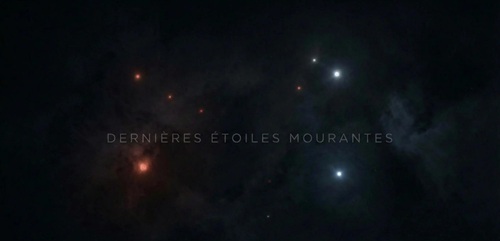
The last dying stars...
The ultimate fate of everythingFew scientific ideas are as unsettling as the heat death of the universe. Stars will eventually burn out, galaxies will become increasingly isolated, black holes will evaporate, and the universe will approach a condition in which no significant physical processes can extract useful energy from their surroundings. The grand cosmic drama, which began with the Big Bang, will slowly fade into an almost unimaginable state of darkness, coldness and inactivity. This is the heat death scenario: not the destruction of the universe, but the exhaustion of its capacity to do anything interesting. It is an extraordinary prospect. The universe that produced galaxies, stars, planets, life, consciousness and perhaps civilizations lasting millions of years may ultimately become a place without observers, events or meaningful distinctions between past and future. Yet there is an important qualification. Although heat death is frequently presented as the inevitable destiny of the cosmos, it is not an experimentally established prediction in the same sense as the expansion of the universe or the existence of cosmic microwave background radiation. It is an extrapolation from established physical principles, combined with assumptions about the universe's long-term behaviour. The distinction matters. Heat death is a serious scientific possibility, perhaps even the leading conventional scenario, but its inevitability is a more complicated proposition. 1. From thermodynamics to cosmic destinyThe intellectual origins of heat death lie in nineteenth-century thermodynamics. In particular, they are associated with the second law of thermodynamics, which states that the entropy of an isolated system cannot decrease in an ordinary thermodynamic process. Entropy is often loosely described as disorder, but that metaphor can be misleading. More precisely, entropy measures the number of microscopic configurations compatible with a system's macroscopic state. Higher entropy generally means that energy has become less available to perform useful work. A hot object placed in a cold environment gradually transfers heat to its surroundings. Temperature differences diminish, and the possibility of extracting useful energy from the difference disappears. The process is statistically overwhelmingly favoured, even though microscopic fluctuations can occasionally produce local decreases in entropy. In the nineteenth century, physicists began applying this principle to the universe as a whole. If the universe is an isolated physical system, and if entropy continually increases, might it eventually reach a state of maximum entropy? The implication was disturbing. All temperature differences would disappear, all usable energy gradients would be exhausted, and the universe would approach thermodynamic equilibrium. The expression heat death captures an important paradox: the universe would not necessarily be physically destroyed. Rather, it would lose the capacity to sustain the processes that make its contents interesting. The idea also introduced a profound tension into our understanding of time. The fundamental equations of much of physics work equally well in the forward and backward directions, yet thermodynamics gives time a preferred direction. The universe has a thermodynamic arrow of time, associated with the increase of entropy. Heat death represents the hypothetical endpoint of that arrow. 2. Why the universe is not already in equilibriumThere is an apparent contradiction. If the universe is subject to the second law, why has it not already reached maximum entropy? The answer lies partly in the extraordinary initial conditions of the universe. The early universe was extremely hot and dense, but it was also remarkably smooth. This is important because gravity changes the thermodynamic picture considerably. For ordinary matter and radiation, a smooth distribution may look like a state of high entropy. But when gravity is involved, a smooth distribution is generally a state of comparatively low gravitational entropy. Gravity encourages matter to clump together, eventually producing stars, galaxies and black holes. Black holes, in particular, possess enormous entropy. Their entropy is proportional to the area of their event horizons, rather than their volume. A universe containing black holes can therefore have vastly more entropy than one containing matter distributed smoothly. This means that the formation of galaxies and stars does not contradict the second law. Local structures can become more organised while the total entropy of the universe increases. Indeed, life itself depends on such energy gradients. Earth receives relatively concentrated energy from the Sun and radiates energy back into space at a lower temperature. Biological organisation is possible because the planet participates in a larger process of energy transformation and entropy production. There is no thermodynamic violation in the emergence of increasingly complex structures. What matters is the overall entropy balance. This is an important corrective to popular accounts that portray evolution, life and cosmic development as somehow moving against the second law. They do not. They are temporary possibilities made available by the universe's enormous supply of free energy and its initially low-entropy conditions. 3. The cosmic timeline: an extraordinarily long farewellIf heat death occurs, it will not happen tomorrow, or even in a timescale remotely comparable to the age of the universe. The universe is currently approximately 13.8 billion years old. Yet many of the processes associated with its eventual thermodynamic exhaustion operate on timescales so enormous that ordinary numerical intuition becomes almost useless. The broad sequence is expected to unfold in several stages.[1] The Stelliferous Era. This is the age of stars. It is the period in which we currently live, with nuclear fusion providing the energy that powers stars and makes planetary environments possible. Star formation will gradually decline as galaxies exhaust their supplies of cold gas. The smallest red dwarf stars may continue shining for trillions of years. The Degenerate Era. Eventually, ordinary star formation will largely cease. White dwarfs, neutron stars, brown dwarfs and other stellar remnants will dominate the surviving matter. Some white dwarfs may cool over immensely long periods, while gravitational interactions and collisions will continue to alter the remaining stellar populations. The Black Hole Era. On still longer timescales, black holes become the dominant repositories of mass and entropy. But even black holes are not necessarily eternal. According to Stephen Hawking's theoretical prediction, black holes emit radiation and gradually lose mass. Their evaporation times depend very strongly on their mass. For a stellar-mass black hole, the timescale is around 1067 years; for a supermassive black hole, it can be vastly longer. The Dark Era. Once black holes have evaporated, the universe may consist primarily of extremely dilute radiation and whatever stable particles survive. Temperatures approach absolute zero, while the expansion of space continues to separate the remaining contents. These stages are not a detailed timetable guaranteed by observation. Some depend on unresolved questions, including whether protons decay, whether dark energy remains constant, and what happens to matter and information in the ultimate quantum-gravitational description of black holes. Nevertheless, they illustrate the extraordinary temporal perspective involved. The history of human civilisation, the existence of life on Earth and even the entire stellar history of the universe occupy a virtually negligible interval in this cosmic chronology. 4. Dark energy: the decisive complicationThe modern discussion of heat death is inseparable from one of the greatest discoveries in twentieth-century cosmology: the expansion of the universe is accelerating. In 1998, observations of distant Type Ia supernovae revealed that cosmic expansion is not slowing down under the influence of gravity, as many cosmologists had expected. Instead, it is accelerating. The phenomenon is attributed to dark energy, a still poorly understood component of the universe. The simplest explanation is Einstein's cosmological constant, conventionally represented by the Greek letter lambda (Λ). In the standard ΛCDM cosmological model, dark energy behaves like an intrinsic energy density of space itself. If this explanation is correct, the consequences for the distant future are profound. Galaxies that are not gravitationally bound to our own Local Group will increasingly recede beyond our observable horizon. The observable universe will become progressively emptier. Eventually, an observer in a distant galaxy might find that almost all evidence of the wider cosmic history has disappeared from view. The universe would not necessarily stop expanding. On the contrary, its expansion would continue indefinitely. This is precisely the scenario in which heat death becomes particularly plausible. An expanding universe with a persistent cosmological constant tends towards a condition resembling de Sitter space, characterised by an event horizon and an extremely low background temperature. There is, however, a distinction between saying that this is what our current cosmological model predicts and saying that we know this is what the universe will do forever. We do not yet understand the physical nature of dark energy. It could be a genuine cosmological constant, a changing dynamical field, or something that requires a revision of our present theories. Recent observational discussions of possible evolving dark energy make this uncertainty particularly relevant, although they have not established that the standard model is wrong. If dark energy changes sufficiently over time, the ultimate fate of the universe could change with it. 5. Is heat death really inevitable?Here we encounter the central philosophical and scientific problem. The argument for heat death rests on several assumptions: that the second law remains applicable at cosmological scales; that the universe continues expanding indefinitely; that dark energy does not undergo a fundamental transformation; and that no unknown physical process intervenes to alter the long-term evolution. These are reasonable working assumptions, but they are not all equally secure. Consider several alternative scenarios. The Big Crunch If the expansion of the universe were eventually reversed, cosmic expansion might give way to contraction. Galaxies would approach one another, temperatures could rise dramatically, and the universe might end in a Big Crunch. This possibility was once taken seriously as a potential alternative to heat death. However, the observed accelerated expansion makes a conventional recollapse increasingly difficult to reconcile with the simplest cosmological models. It cannot be ruled out under every conceivable modification of dark energy or gravity, but it is no longer the leading expectation. The Big Rip Another possibility arises if dark energy possesses sufficiently unusual properties. If its effective energy density increases as the universe expands, the acceleration could become progressively stronger. In certain models, this would eventually overwhelm gravitationally bound systems, then galaxies, planetary systems and even atomic structures. The result would be a Big Rip: not the gradual exhaustion of cosmic energy gradients, but the physical disintegration of structures through runaway expansion. This is a speculative possibility, not a prediction of standard ΛCDM cosmology. Vacuum decay An even more unsettling possibility concerns the stability of the vacuum itself. According to quantum field theory, what we call empty space may not represent the absolute lowest-energy state possible. If our universe occupies a metastable vacuum, it could theoretically undergo a transition to a lower-energy state. Such a transition might produce a bubble of a new vacuum state expanding at close to the speed of light, fundamentally altering the physical laws and properties of matter within its boundaries. The Standard Model of particle physics suggests that our present vacuum may indeed be metastable, although the precise implications are uncertain and the relevant timescales, if the calculation applies, are extraordinarily long. This is not another version of heat death. It is a reminder that the universe's future may depend on physical instabilities that are not captured by simple thermodynamic extrapolations. Cyclic and bouncing universes Some cosmological models propose that the universe undergoes successive periods of expansion and contraction, or that a contracting phase transitions into a new expanding phase through a cosmic bounce. Such proposals challenge the idea of a single, terminal cosmic history. However, cyclic models face a difficult thermodynamic question: what happens to entropy from one cycle to the next? Unless a mechanism is provided for dealing with accumulated entropy, repeated cycles do not simply restore the universe to its original condition. The second law remains a formidable obstacle. Consequently, cyclic cosmologies are interesting research proposals, not established alternatives to the standard picture. 6. The strange thermodynamics of an expanding universeThere is another reason to be cautious about simplistic descriptions of heat death. In ordinary thermodynamics, heat death means reaching maximum entropy in an isolated system. But applying this idea to an expanding universe is not straightforward. What does maximum entropy mean for a universe that may be spatially infinite and whose volume continues increasing? In an infinite universe, the total entropy may itself be infinite. There is no obvious finite maximum against which we can measure progress. Moreover, gravity, black holes, cosmological horizons and quantum fields introduce complications that have no simple equivalent in a laboratory gas. The de Sitter horizon illustrates the problem. If the universe approaches a cosmological-constant-dominated state, an observer encounters a horizon beyond which information cannot reach them. That horizon has an associated entropy and temperature. The temperature is extraordinarily small, but not strictly zero. In principle, an observer in such a universe would encounter an extremely cold thermal environment. This raises an interesting question: is the final state really a condition of absolute inactivity? Not necessarily. Quantum fluctuations and extremely rare statistical events may remain possible. The universe might approach an asymptotic equilibrium without ever reaching a perfectly static endpoint in a simple classical sense. In other words, heat death is better understood as the progressive loss of accessible free energy than as a cosmic switch being turned off. 7. The Boltzmann problem: could order emerge again?One of the more intriguing consequences of statistical mechanics concerns the possibility of spontaneous fluctuations. If a system spends an extraordinarily long time near thermal equilibrium, sufficiently improbable fluctuations are not necessarily impossible. Given enough time, a local region might temporarily develop a more organised configuration. The nineteenth-century physicist Ludwig Boltzmann famously explored the possibility that our observable universe might itself be an extraordinarily rare fluctuation out of a much larger equilibrium state. This idea produces some uncomfortable questions. If fluctuations can generate temporary observers, could there eventually be isolated conscious entities arising spontaneously in an otherwise lifeless universe? These hypothetical entities are known as Boltzmann brains. The problem is not merely science fiction. Boltzmann-brain scenarios have become a technical concern in certain cosmological models because they raise questions about how probabilities and observers should be understood in an eternally expanding universe. If a cosmological theory predicts vastly more spontaneously fluctuating observers than observers emerging through ordinary cosmic evolution, that may count against the theory. The broader lesson is that an indefinitely long cosmic future does not necessarily imply that absolutely nothing ever happens again. It may instead imply that meaningful, sustained structures become fantastically improbable. But probability is not destiny, and rare fluctuations should not be confused with a plausible mechanism for restarting cosmic evolution. 8. Does evolution contradict heat death?This question deserves particular attention because it touches on a persistent misunderstanding in discussions of cosmic evolution. The universe has produced an astonishing succession of increasingly complex structures: elementary particles, atoms, stars, galaxies, planets, organic molecules, living organisms and reflective consciousness. Some philosophical and spiritual interpretations regard this history as evidence of a universal tendency towards increasing complexity, creativity or consciousness. Ken Wilber's notion of Eros, for example, attributes a directional tendency towards greater complexity and higher forms of organisation to the universe. Other thinkers appeal to cosmic evolution, emergent creativity or a universal developmental impulse. But does the increasing complexity of evolutionary history challenge the thermodynamic expectation of heat death? Not in itself. There is no contradiction between the local emergence of complexity and the global increase of entropy. Complex structures can emerge and persist precisely because energy is flowing through them. The Earth is not an isolated system, and neither are living organisms. The Sun supplies energy, the Earth radiates heat into space, and biological organisms maintain their organisation by consuming free energy and exporting entropy to their surroundings. Evolution is therefore not a rebellion against thermodynamics. It is one of the processes made possible by thermodynamic disequilibrium. Nor does the second law require complexity to increase. There is no universal thermodynamic imperative that says matter must evolve towards life, intelligence or consciousness. Complexity can emerge under particular conditions, but it can also disappear. The history of life on Earth illustrates both possibilities. Evolution has generated extraordinary innovations, but it has also produced extinctions, failed experiments and long periods of relatively stable ecological organisation. Cosmic evolution is not necessarily a march towards greater complexity. It is a contingent history unfolding within physical constraints. This distinction is important when evaluating claims that the universe possesses an inherent developmental purpose. The fact that complex structures have emerged does not demonstrate that the universe is destined to produce them, much less that it is striving towards some ultimate spiritual achievement. Heat death is a useful counterweight to overly optimistic interpretations of cosmic evolution. It reminds us that complexity is conditional, energy-dependent and potentially temporary. 9. The philosophical discomfort of a purposeless endingHeat death has consequences that extend beyond cosmology. It confronts us with a particularly uncomfortable question: if everything eventually disappears, what is the ultimate significance of anything that happens in the meantime? Religions have traditionally offered various answers. The universe may be moving towards divine fulfilment, a final reconciliation, a new creation or an eternal spiritual reality. Certain philosophical systems similarly propose that cosmic evolution has an inherent direction or purpose. Scientific cosmology offers no comparable reassurance. The second law of thermodynamics does not care whether a civilisation produces great art, develops sophisticated sciences, achieves moral progress or discovers the meaning of existence. All such achievements depend on physical processes, and physical processes depend on available energy. This does not mean that human activities are meaningless. It means that meaning should not be confused with cosmic permanence. A symphony does not become worthless because it eventually ends. A scientific discovery does not lose its significance because the civilisation that made it will eventually disappear. Nor does the transience of life invalidate the experiences, relationships and achievements that constitute it. There is also a distinction between the absence of an ultimate cosmic purpose and the absence of purposes within the universe. The latter does not follow from the former. Indeed, the possibility that consciousness and meaning are temporary achievements of natural evolution may make them more remarkable, not less. The universe does not have to be eternal for its inhabitants to have reasons to value their existence. 10. Is the heat death scenario scientifically falsifiable?An important question is whether heat death is a scientific prediction in the usual sense or something closer to a philosophical extrapolation. The answer is that it contains both elements. The second law of thermodynamics is extraordinarily well established. The expansion of the universe is observed. The existence of dark energy is supported by multiple cosmological observations. Hawking radiation follows from the combination of quantum field theory and curved spacetime, although it has not yet been directly observed from an astrophysical black hole. Taken together, these developments provide a serious scientific foundation for the heat death scenario. But the extrapolation into the far future introduces uncertainties. We do not know whether dark energy is truly constant. We do not know whether protons are stable over indefinitely long periods. We do not possess a complete quantum theory of gravity. We do not fully understand the relationship between entropy, information and cosmological horizons. And we certainly cannot experimentally investigate a universe trillions upon trillions of years into its future. The heat death scenario is therefore conditional. It follows from a particular combination of physical laws, initial conditions and assumptions about the persistence of those laws. That is not a weakness unique to cosmology. Science routinely makes predictions beyond the range of direct observation. The important requirement is that the assumptions are explicit and that the conclusions remain open to revision. We should distinguish three propositions:
Confusing these three propositions turns a powerful scientific scenario into an unwarranted certainty. 11. The universe may have no final chapter that we can meaningfully describeThere is a further conceptual difficulty. We tend to imagine the universe's history as a story with a beginning, a middle and an end. The Big Bang supplies the beginning, cosmic evolution provides the middle, and heat death appears to supply the ending. But perhaps this narrative structure is misleading. The universe may not possess a final moment in the ordinary sense. If expansion continues indefinitely, there may be no dramatic concluding event, no final explosion and no cosmic curtain call. Instead, physical processes may become increasingly rare and extended in time. The difference between an eventful universe and an empty one may become progressively less meaningful. In that sense, heat death is not necessarily an event that happens to the universe. It is an asymptotic condition towards which the universe evolves. This distinction also raises the question of what we mean by time itself. If there are eventually no observers, no clocks and no significant physical processes, does time continue to have the same operational meaning? The mathematical description may allow an indefinitely extended future, but the physical significance of that future becomes increasingly obscure. Perhaps the ultimate cosmic mystery is not simply what happens after the last star disappears, but whether our familiar concepts of existence, time and physical activity remain adequate for describing such a remote condition. Conclusion: A sobering possibility, not a cosmic certaintyThe heat death of the universe remains one of the most compelling predictions of modern physical cosmology. It emerges from the second law of thermodynamics, finds a natural setting in the accelerating expansion of the universe and offers a coherent account of how the available energy for sustaining complex structures may eventually be exhausted. But it is important not to confuse a highly plausible extrapolation with an established inevitability. The ultimate fate of the universe depends on questions that remain unresolved: the nature of dark energy, the stability of the vacuum, the long-term behaviour of matter and the relationship between gravity, quantum mechanics and entropy. Alternative cosmic futures, including recollapse, runaway expansion and vacuum transitions, remain theoretically conceivable, even if they are not equally supported by current evidence. There is also a deeper lesson for those who interpret cosmic evolution as an inherently progressive process. The emergence of complexity does not establish a universal drive towards ever-higher organisation. The universe has produced remarkable structures, but it has done so under temporary conditions of thermodynamic disequilibrium. Life, intelligence and consciousness may be extraordinary achievements of cosmic history without being its predetermined destination. Perhaps the most intellectually honest position is therefore neither cosmic pessimism nor cosmic optimism. It is scientific modesty. We inhabit a universe whose history has made our existence possible, but whose future may eventually make the conditions for existence as we know it impossible. Whether that future is precisely the heat death described by conventional cosmology remains an open question. The universe does not owe us an eternal future, a final purpose or a happy ending. And perhaps that is precisely why its present history deserves our attention. An editorial afterthought: Heat death also provides an interesting test for contemporary theories of cosmic evolution, including those that invoke Eros, universal creativity or an inherent tendency towards greater complexity. Any such theory needs to explain not merely why complexity occasionally emerges, but why it should be expected to persist against the thermodynamic constraints of the universe. Otherwise, cosmic evolution risks becoming a story of progress that quietly ignores its own physical conditions. NOTES[1] See my series of essays on The Five Ages of the Universe: And the Philosophy of Cosmic Optimism, November 2025, and "Is the Universe Really Winding Up?", August 2014.
Widget is loading comments...
|