|
TRANSLATE THIS ARTICLE
Integral World: Exploring Theories of Everything
An independent forum for a critical discussion of the integral philosophy of Ken Wilber
  Frank Visser, graduated as a psychologist of culture and religion, founded IntegralWorld in 1997. He worked as production manager for various publishing houses and as service manager for various internet companies and lives in Amsterdam. Books: Ken Wilber: Thought as Passion (SUNY, 2003), and The Corona Conspiracy: Combatting Disinformation about the Coronavirus (Kindle, 2020).
Check out my other conversations with ChatGPT Osho's EnlightenmentA Dramatic Experience, a Grand Interpretation, and an Unproven ClaimFrank Visser / ChatGPT
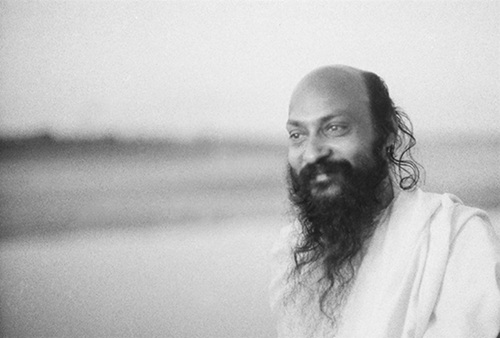 Just before twenty-first March, 1953, seven days before, I stopped working on myself. A moment comes when you see the whole futility of effort. You have done all that you can do and nothing is happening. You have done all that is humanly possible. Then what else can you do? In sheer helplessness one drops all search. (Osho, The Discipline of Transcendence, Vol 2, Ch 11)[1]. The Night That Changed EverythingOn 21 March 1953, according to his own retrospective accounts, the young Osho—then known as Rajneesh Chandra Mohan Jain—underwent an experience that he would later describe as enlightenment. He was twenty-one years old. The setting was Jabalpur, India, and the decisive moment supposedly came after a period of intense inner searching, meditation, and, finally, the abandonment of deliberate spiritual effort. Sitting beneath a tree in a garden, he experienced an overwhelming transformation of consciousness. Ordinary reality seemed to recede; everything became extraordinarily vivid, luminous, and alive. His familiar sense of being a separate individual appeared to dissolve into something immeasurably larger. The story has the ingredients of a spiritual classic: the long preparation, the sudden breakthrough, the disappearance of the seeker, and the discovery that what had been sought was never really absent. It is an arresting narrative, and its imagery has considerable evocative power. But the critical question is not whether Osho's account is compelling. It is what kind of experience he underwent, what conclusions can legitimately be drawn from it, and whether his subsequent interpretation deserves the authority he claimed for it. These are three different questions, and they should not be confused. The Phenomenology of EnlightenmentThe first thing worth taking seriously is the experience itself, at least as Osho remembered and described it. His account contains recognizable features of intense mystical or altered states of consciousness: a transformation of the ordinary perception of the world, a diminished sense of personal identity, an overwhelming feeling of reality, and the conviction that something fundamental has been disclosed. Such experiences are not unique to Osho, nor are they confined to Indian spiritual traditions. Comparable reports appear in Buddhist meditation, Christian mysticism, Sufi literature, psychedelic research, and contemporary accounts of spontaneous mystical experiences. People sometimes report that the boundary between self and world has disappeared, that time has ceased to matter, or that ordinary things have acquired an extraordinary immediacy. The world may appear more real than ever, even while the familiar structure of reality seems to have collapsed. There is no good reason to dismiss all such reports as fabricated or meaningless. Human consciousness is capable of undergoing remarkable transformations, and a first-person account can be valuable evidence of what an individual believes they experienced. Yet the experience and its interpretation remain distinct. The feeling that one has encountered ultimate reality is itself an experience. Whether one has actually encountered ultimate reality is a further question. This distinction is essential to a critical reading of Osho. His description may tell us something important about the possibilities of human consciousness. It does not, by itself, establish that he discovered the ultimate nature of existence. When Everything Becomes Real by Becoming UnrealOne of the most evocative paradoxes in Osho's account is the suggestion that the world became so tremendously real that everything previously regarded as real became unreal. The formulation captures a recognizable feature of transformative experience: familiar objects and everyday concerns can suddenly seem superficial, while the immediate presence of existence becomes overwhelming. But what exactly does this paradox mean? It could describe a change in attention. The person who ordinarily moves through the world distracted by memories, plans, worries, and self-consciousness may suddenly experience the immediate environment with extraordinary vividness. A tree is no longer merely an object to be identified; it becomes an event of perception, astonishingly present. The usual mental commentary falls silent, and the world appears fresh. Alternatively, the statement could express a change in the sense of self. If the ordinary distinction between the observer and the observed becomes less pronounced, experience may seem to occur without a separate subject standing apart from it. This can be liberating, particularly if the usual sense of self has been associated with anxiety, conflict, or incessant mental chatter. Neither interpretation requires the conclusion that the universe has disclosed its ultimate metaphysical nature. A profound change in how reality is experienced does not necessarily amount to a discovery about what reality is independently of experience. There is also a third possibility: the language is partly rhetorical. Mystical literature has long relied on paradox to communicate experiences that resist ordinary description. The world is unreal and yet real; the self disappears and yet awareness remains; nothing is attained, yet everything is transformed. Such formulations may express the felt quality of an experience without resolving the conceptual problems they create. Osho's language is powerful precisely because it invites several interpretations. Its evocative quality should not be mistaken for explanatory precision. The Seeker Disappears: But What Has Been Discovered?A central element of Osho's narrative is that the search itself eventually becomes an obstacle. He describes a reversal in which striving for enlightenment gives way to its apparent arrival when the striving stops. The ladder, the effort, and the very desire to reach the goal are retrospectively presented as impediments. This is an old and philosophically interesting idea. Deliberate effort can become counterproductive when applied to states that depend on spontaneity. Trying desperately to fall asleep can keep one awake; monitoring every movement can interfere with fluent performance; demanding that happiness arrive immediately can make one miserable. In meditation, excessive striving can similarly reinforce the restless, self-monitoring activity that the practice is intended to quiet. There is therefore a plausible psychological insight here: the pursuit of a particular mental state can become an obstacle to experiencing it. But Osho's narrative also creates a problem. If the goal appears only when the search ends, how do we distinguish genuine insight from an experience that merely feels like the successful culmination of a search? And if the search was unnecessary, what was the significance of the preceding years of spiritual effort? One can answer that the search prepared the ground and that relinquishing it allowed a different mode of consciousness to emerge. That is a coherent possibility. Yet it is not the only explanation. Exhaustion, expectation, emotional release, spontaneous neurological changes, or the interaction of several psychological factors might also help explain why an unusual experience occurred at that particular time. We should not replace Osho's spiritual certainty with an equally unwarranted neurological certainty. We do not possess enough independent evidence to identify the precise mechanism of his experience. The important point is that the experience does not uniquely validate the spiritual explanation attached to it. There is an additional irony. A spiritual teacher who proclaims that seeking is futile can become the object of an intense new search. Disciples may spend years attempting to reproduce the master's effortless awakening, following instructions, attending retreats, and measuring their progress against an ideal of non-striving. The message that there is nothing to attain can itself become a highly effective method of keeping people engaged in the pursuit of attainment. The seeker may disappear in the story, but the spiritual marketplace can continue indefinitely. Was It Enlightenment, or an Experience of Enlightenment?The word enlightenment carries a heavy burden. Depending on the tradition, it can mean liberation from suffering, the cessation of craving, the realization of nonduality, the recognition of Buddha-nature, the direct apprehension of ultimate reality, or the dissolution of ignorance. These meanings overlap, but they are not identical. Osho's account emphasizes an overwhelming transformation of consciousness and a sense of release from the ordinary self. That is compatible with certain descriptions of mystical awakening. It does not automatically establish that he achieved every form of liberation traditionally associated with enlightenment. A sudden experience and a durable transformation are different things. A person can undergo an extraordinary episode of unity, bliss, or self-transcendence and subsequently return to familiar patterns of anxiety, desire, anger, ambition, and self-deception. Conversely, someone may develop greater equanimity, compassion, and freedom from destructive habits without ever undergoing a spectacular mystical event. How, then, should enlightenment be assessed? At a minimum, we would need to distinguish the intensity of an experience from its lasting consequences. Did it produce a sustained reduction in egocentric preoccupation? Did it lead to greater emotional maturity, intellectual humility, and ethical reliability? Did the person's subsequent conduct demonstrate the freedom from attachment and self-deception that the claim implies? These questions do not provide a simple scientific test for enlightenment. Human character is complex, and ethical behavior is not reducible to a checklist. Nor should spiritual traditions be forced into a single universal definition. But asking about lasting consequences is more informative than treating the dramatic quality of a remembered experience as sufficient proof. In Osho's case, the account of 1953 cannot settle the matter. It tells us what he later said had happened to him. It cannot independently demonstrate the enduring psychological and ethical transformation that the term enlightenment might imply. The Problem of Retrospective CertaintyThere is another limitation that deserves attention: the account is retrospective. The story of the night of 21 March 1953 was not recorded by an independent observer at the moment it occurred. We encounter it through Osho's later recollections and the spiritual framework in which he presented his life. This does not mean that the event was invented. Retrospective accounts can be sincere and broadly accurate. But autobiographical memory is reconstructive. Experiences are remembered through later concepts, subsequent beliefs, repeated storytelling, and the meanings that people eventually attach to their past. A powerful experience in early adulthood may become the organizing event of an entire life story. With each retelling, its significance can become clearer to the narrator, while its details are fitted more tightly into a coherent narrative. What initially felt confusing may later be described as inevitable. What was once an inexplicable experience may become the decisive moment in a predetermined spiritual destiny. Religious biographies are particularly susceptible to this process because they often follow established narrative patterns: the awakening, the death of the old self, the revelation of a new truth, and the emergence of a teacher. Such patterns need not make a story false. They do, however, make it difficult to separate the original event from the interpretive structure that develops around it. Osho's enlightenment narrative therefore deserves to be read both as a report of an experience and as an act of retrospective self-interpretation. These are not the same thing. From Private Experience to Universal TruthThe most consequential leap occurs when an individual's experience is taken to reveal the nature of reality for everyone. Osho's account invites a universal interpretation: the ordinary ego is illusory, the divisions of conventional consciousness are superficial, and enlightenment discloses a more fundamental condition of existence. Such conclusions may be philosophically defensible in some form, but they require arguments beyond the experience itself. Consider the problem of interpretation. A Buddhist meditator may experience the dissolution of self and understand it through the doctrine of non-self. A Hindu mystic may interpret a similar experience as the realization of Atman or Brahman. A Christian contemplative may understand it as union with God. A secular person may describe a comparable state as the temporary dissolution of the self-model or the loosening of habitual cognitive boundaries. The experiences may share important phenomenological features. Their interpretations, however, can differ radically. This does not prove that every interpretation is equally good. Some may fit the reported experience better than others, and philosophical reasoning can help evaluate their implications. But the existence of competing interpretations means that the experience alone cannot decide among them. Osho's confidence in his own interpretation must therefore be distinguished from the evidential strength of that interpretation. Sincerity is not proof, intensity is not proof, and a feeling of absolute certainty is not proof. Human beings can be utterly convinced of propositions that turn out to be mistaken. A private experience may provide compelling personal grounds for a new outlook on life. It cannot automatically function as public evidence for a metaphysical doctrine. The Teacher and the Authority of AwakeningOsho's enlightenment story also played a role in the larger narrative of his authority as a spiritual teacher. The person who claims to have transcended ordinary consciousness occupies a special position: he is presented not merely as someone who has thought deeply about existence, but as someone who has directly seen what others have failed to see. That claim can be psychologically powerful. If the teacher has genuinely awakened, questioning his conclusions may appear to be evidence of the questioner's own spiritual immaturity. Doubt can be reclassified as ego; disagreement as resistance; criticism as an inability to understand a higher state of consciousness. This is not a criticism unique to Osho. It is a structural danger wherever spiritual authority rests on supposedly privileged access to a truth unavailable to ordinary people. The problem becomes particularly serious when claims of realization are used to insulate a teacher's statements or behavior from scrutiny. Osho's own later career, including the controversies surrounding his movement in the United States, makes it especially important to separate the claimed experience of 1953 from the question of how he subsequently exercised authority. His early experience, even if accepted as entirely sincere, could not serve as a blanket endorsement of his later judgments, actions, or teachings. A person can undergo a profound transformation of consciousness without becoming infallible. Insight in one domain does not guarantee wisdom in every other domain. Nor does a mystical experience automatically confer moral maturity, sound political judgment, or immunity from self-interest. The more absolute the claim to spiritual authority, the more important it becomes to preserve the right to independent evaluation. A Naturalistic Interpretation Without ReductionismCan we take Osho's account seriously without accepting its strongest metaphysical implications? Certainly. A naturalistic approach would begin with the fact that consciousness is not fixed. Our ordinary sense of self, our perception of the external world, and our experience of time are shaped by complex interactions among attention, memory, emotion, bodily processes, and neural activity. Under certain conditions, these familiar patterns can change dramatically. Meditation, intense concentration, sleep deprivation, emotional upheaval, psychoactive substances, and spontaneous neurological events can all be associated with unusual experiences, though their mechanisms and effects differ. Some experiences bring fear or disorientation; others bring bliss, unity, or a powerful sense of meaning. The existence of such states is not in itself evidence for a supernatural reality. But naturalism need not dismiss them as mere illusions. The word mere does too much work here. An experience can be generated by ordinary biological processes and still be psychologically transformative. Music is not less moving because it involves sound waves and neural responses. Love is not meaningless because it has biological and social dimensions. The natural origins of an experience do not determine its personal significance. Likewise, the fact that a mystical experience has psychological or neurological correlates would not, by itself, disprove every philosophical interpretation associated with it. The relevant question is whether those interpretations offer additional explanatory or evidential value. Osho's experience might be understood as a profound alteration in the organization of consciousness, one that temporarily transformed his relationship to himself and the world. This account remains open to investigation and does not require a commitment to the existence of an eternal self, a cosmic consciousness, or an ultimate spiritual dimension. It also acknowledges an important limitation: we cannot retrospectively diagnose Osho or establish the exact cause of his experience from a literary account alone. Naturalistic interpretation is strongest when it explains what the evidence supports without pretending to know more than it does. What Remains Valuable?After these criticisms, something important remains. Osho's account expresses the possibility that the ordinary, self-centered mode of experiencing the world is not the only one available to human beings. Our habitual consciousness can be so dominated by concerns about the past, the future, personal status, and the maintenance of identity that the immediacy of existence becomes almost invisible. A temporary release from these concerns may disclose dimensions of experience that everyday consciousness tends to overlook. The world can appear astonishingly vivid. The boundary between observer and observed may become less rigid. The compulsive need to control experience may weaken. For some people, these changes have lasting positive effects. Osho's criticism of spiritual striving also deserves a qualified defense. A relentless attempt to manufacture a special state of consciousness can become another expression of the very self-preoccupation one hopes to transcend. Meditation can become a competition, serenity a performance, and enlightenment a spiritual status symbol. The pursuit of egolessness can become an especially refined form of ego. There is a genuine paradox here: the desire to escape oneself can strengthen one's fixation on oneself. But this insight does not require us to conclude that effort is always futile, that enlightenment is an already completed cosmic fact, or that Osho's experience disclosed the ultimate truth. It requires only the more modest observation that some forms of psychological change emerge when compulsive control relaxes. The insight is valuable even if the grand metaphysical narrative remains unproven. Conclusion: An Experience Is Not a Certificate of TruthOsho's account of 21 March 1953 is an evocative document of reported mystical experience. Its imagery conveys a dramatic shift in consciousness: the disappearance of familiar boundaries, the extraordinary vividness of the world, and the sense that the search for something ultimate had suddenly come to an end. A critical assessment should neither ridicule this account nor accept its interpretation uncritically. There is no compelling reason to assume that Osho fabricated his experience. There is equally no compelling reason to treat his retrospective description as independent proof that he attained an objectively defined state of enlightenment or discovered the metaphysical structure of reality. Three conclusions should remain separate. First, Osho reported a profound experience. Second, he interpreted that experience as enlightenment. Third, he presented his realization within a larger spiritual worldview. The first is a biographical claim, the second an interpretive claim, and the third a philosophical and metaphysical claim. Each requires a different kind of assessment. The crucial mistake would be to let the emotional power of the first settle the truth of the other two. Perhaps Osho discovered a new way of inhabiting his own consciousness. Perhaps the experience changed his life in ways that ordinary language can only imperfectly convey. Perhaps his account captures something genuinely important about the limitations of self-centered awareness. All these possibilities deserve consideration. But the experience cannot authenticate itself merely by feeling absolute. Nor can a person's certainty about having awakened establish that the world is ultimately as that person now believes it to be. The most defensible lesson of Osho's story may therefore be less grand than the one he drew from it. Human consciousness is capable of extraordinary transformations, and those transformations can profoundly alter how reality appears to us. Yet the more compelling an experience becomes, the more carefully we should distinguish what was experienced from what is inferred. Enlightenment may begin with the disappearance of the seeker. Critical inquiry begins when we ask what, exactly, has been found. NOTES[1] See for the full autobiographical report: OshoNews, "A date with death and god: March 21, 1953", Discourses, March 21, 2016.
Widget is loading comments...
|