|
TRANSLATE THIS ARTICLE
Integral World: Exploring Theories of Everything
An independent forum for a critical discussion of the integral philosophy of Ken Wilber
  Frank Visser, graduated as a psychologist of culture and religion, founded IntegralWorld in 1997. He worked as production manager for various publishing houses and as service manager for various internet companies and lives in Amsterdam. Books: Ken Wilber: Thought as Passion (SUNY, 2003), and The Corona Conspiracy: Combatting Disinformation about the Coronavirus (Kindle, 2020). Frank Visser, graduated as a psychologist of culture and religion, founded IntegralWorld in 1997. He worked as production manager for various publishing houses and as service manager for various internet companies and lives in Amsterdam. Books: Ken Wilber: Thought as Passion (SUNY, 2003), and The Corona Conspiracy: Combatting Disinformation about the Coronavirus (Kindle, 2020).
Check out my other conversations with ChatGPT Metametaphysics: The Philosophy of Philosophical SpeculationTuomas Tahko, David Chalmers, and the Problem of Knowing What Reality IsFrank Visser / ChatGPT
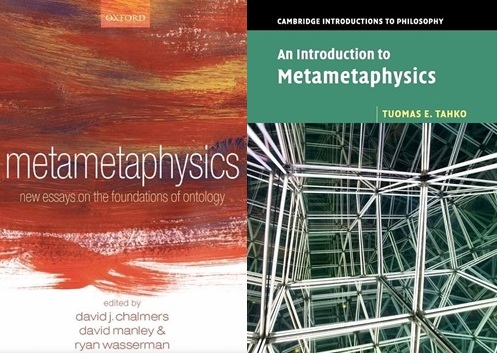 Introduction: When Metaphysics Needs a Metaphysics of Its OwnMetaphysics has traditionally asked some of the most ambitious questions in philosophy. What exists? What is ultimately real? Is reality fundamentally material, mental, or something else? Are objects independent entities, or are they constituted by more basic processes and relations? Does the universe possess an underlying structure that can be discovered by reason? Metametaphysics takes a step back and asks a more uncomfortable question: what entitles metaphysicians to believe that their questions have determinate answers, and how could they possibly know those answers? This is the central concern of a field associated with philosophers such as Tuomas E. Tahko and David Chalmers. The publication of Metametaphysics: New Essays on the Foundations of Ontology in 2009 helped establish the subject as a recognizable area of contemporary analytic philosophy. Tahko's An Introduction to Metametaphysics subsequently provided a systematic introduction to its questions and methods. The enterprise is both necessary and potentially self-undermining. It is necessary because philosophers should examine the assumptions, methods, and evidential standards of their own discipline. It is potentially self-undermining because the tools used to evaluate metaphysics—conceptual analysis, logical argument, modal intuition, and theories of meaning—are themselves philosophical tools whose authority requires justification. Metametaphysics therefore confronts a genuine problem. But does it solve that problem, or merely create another level of philosophical discourse in which the original uncertainties are redescribed in more sophisticated terminology? My argument is that metametaphysics makes a valuable contribution when it clarifies the conditions under which metaphysical claims can be meaningful, justified, and answerable to evidence. It becomes less convincing when it treats disputes over existence, fundamentality, or the structure of reality as though they could be settled primarily through linguistic analysis or intuitions about hypothetical possibilities. The discipline's greatest contribution may ultimately be its critical function: making metaphysics more accountable for what it claims to know. 1. The new discipline and its old questionsThe first qualification is important: metametaphysics is not entirely new. Its systematic emergence as a recognizable research area is relatively recent, but its central questions reach back to Aristotle, Kant, the logical positivists, and the disputes between Rudolf Carnap and W. V. O. Quine. Tahko himself emphasizes this historical continuity. What is new is the organization of these questions into a distinct research program, with its own terminology, literature, and methodological debates. The field encompasses several related but separable problems: - Ontology: What exists? - Metaontology: What do we mean when we ask what exists? - Metaphysical epistemology: How could we know metaphysical truths? - Metaphysical methodology: What methods justify metaphysical conclusions? - Naturalized metaphysics: How should metaphysical inquiry relate to the natural sciences? Tahko's account includes questions about grounding, fundamentality, modal knowledge, thought experiments, and the relationship between metaphysics and science. This is a worthwhile agenda. Philosophers should not be exempt from the obligation to justify their methods simply because they work with abstract concepts rather than laboratory instruments. Nevertheless, the emergence of a new subdiscipline raises an awkward possibility. Could the multiplication of philosophical specialties sometimes serve to preserve a practice that has difficulty demonstrating its progress? When metaphysics generates disagreement, one can investigate the disagreement at a higher level. When that investigation generates further disagreement, another level of analysis becomes available. There is no necessary end to this process. We can ask whether a metaphysical claim is justified, whether the standards of justification are justified, whether our theory of justification is adequate, and whether the concepts employed in that theory are themselves defensible. This regress is not a refutation of metametaphysics. Scientific disciplines also investigate their own methods. But it does establish a requirement: a higher level of description must do more than rename the difficulties encountered at a lower level. It should help us distinguish successful inquiry from unsuccessful speculation. 2. David Chalmers: Are ontological disputes real disputes?The 2009 anthology edited by Chalmers, David Manley, and Ryan Wasserman provides a useful starting point. Its contributors disagree about whether ontological questions have determinate answers, whether apparently substantive disputes are sometimes merely verbal, and what kind of realism metaphysics can defend. One particularly important issue is the possibility that philosophers disagree because they use the same words differently. Consider the question: Do tables really exist? A realist might answer that tables exist because there are stable, composite objects in the world. A mereological nihilist might insist that only fundamental particles or other basic entities exist, and that tables are merely convenient ways of speaking about arrangements of those entities. But are they actually disagreeing about reality, or are they using different standards for what counts as an object? This is the problem of quantifier variance, associated particularly with Eli Hirsch and discussed in the wider metaontological debate. On this approach, different concepts of existence or different uses of the existential quantifier may permit apparently contradictory descriptions of the same world. The suggestion is attractive because it can dissolve some seemingly intractable philosophical disputes. If two parties agree about every observable fact, every physical process, and every practical consequence, but disagree only over whether a table qualifies as a genuine object, perhaps their disagreement is partly terminological. Yet there is a danger here: not every disagreement that involves language is merely a disagreement about language. Scientific discoveries frequently require us to revise our concepts. The identification of water with H2O, for example, was not merely a decision to use the word water differently. It established an empirical relationship between an ordinary substance and its chemical constitution. Likewise, the claim that a table is composed of interacting physical components can be investigated independently of the vocabulary used to describe it. The relevant distinction is between disagreements that can be resolved by clarifying definitions and disagreements that concern the structure of the world. Some disputes may be verbal; others remain substantive after all the terminology has been clarified. There is also a deeper difficulty for ontological deflationism. If competing ontological frameworks are equally adequate descriptions of reality, what determines their adequacy? Predictive success? Explanatory power? Simplicity? Compatibility with established science? Practical usefulness? These standards are not interchangeable. A framework that is convenient for everyday speech may be less suitable for fundamental physics. A framework that is mathematically elegant may nevertheless lack empirical support. Consequently, the mere possibility of multiple descriptions does not establish that there is no fact of the matter. It establishes that we must distinguish the world from the different conceptual schemes through which we describe it. Chalmers's work is valuable precisely because it takes these questions seriously. The criticism is not that he has demonstrated that ontological questions are meaningless, but that the debate needs a stronger account of when conceptual variation genuinely dissolves a dispute and when it merely obscures a substantive one. 3. Tahko and the problem of metaphysical knowledgeTahko's approach is broader and, in an important respect, more constructive. Rather than concentrating exclusively on existence and quantification, he asks how metaphysical knowledge is possible and how metaphysical inquiry should proceed. He defends metaphysical realism and argues that at least some a priori reasoning is indispensable to the discipline. He also gives considerable attention to the relationship between metaphysics and the natural sciences. These are exactly the right questions. The difficulty lies in answering them. Metaphysicians often employ conceptual analysis, thought experiments, modal intuitions, and deductions from supposedly necessary truths. Such methods can be powerful. Mathematics, logic, and theoretical science all depend on forms of reasoning that are not reducible to direct observation. But there is a crucial distinction between establishing what follows from a set of assumptions and establishing that those assumptions accurately describe reality. Suppose a philosopher argues that a certain entity must exist because its existence follows from the nature of reality. The argument may be logically valid. But its conclusion is only as secure as its premises and the interpretation of the necessity involved. Three questions must be kept separate: 1. Is the argument logically valid? 2. Are its premises justified? 3. Does the conclusion provide knowledge about the mind-independent world? The first is a question of logic. The second is a question of epistemology. The third requires an account of how our reasoning connects with reality. Philosophical arguments can sometimes answer all three questions. But validity alone cannot do so. The same problem arises with claims about metaphysical necessity. A proposition may seem impossible to deny without contradiction, yet that impression might reflect the limits of our concepts rather than a necessary feature of the universe. Conversely, some genuine necessities may be difficult for us to recognize because our intuitions are unreliable or our conceptual resources inadequate. Tahko is right that metaphysics cannot simply abandon a priori reasoning. But the indispensability of reasoning does not establish the reliability of every particular metaphysical intuition. The relevant question is therefore not whether metaphysics uses reason. All serious inquiry does. It is whether metaphysical reasoning has reliable procedures for distinguishing discoveries about reality from consequences of the conceptual framework with which the philosopher began. 4. The problem of modal intuition: Can we think our way into another possible world?One of the most revealing tests of metametaphysical methodology concerns modal epistemology: our purported knowledge of what is possible and necessary. Tahko explicitly identifies modal epistemology as central to metaphysical inquiry. He also discusses philosophical zombies—hypothetical beings physically identical to human beings but lacking conscious experience—and the role of conceivability in arguments about possibility. The issue is especially significant because philosophers often move from a claim about what we can coherently imagine to a claim about what reality could actually be like. Consider the following argument: 1. We can conceive of a world physically identical to ours in which consciousness is absent. 2. If such a world is conceivable, it is metaphysically possible. 3. If it is metaphysically possible, consciousness is not identical to physical processes. 4. Therefore, physicalism is false. The argument is controversial at several stages. Conceivability may be evidence for possibility, but it is not automatically a reliable guide to metaphysical possibility. We can imagine scenarios that turn out to be physically impossible, and we can fail to recognize necessities that are established by scientific discovery. The familiar example of water and H2O illustrates the difficulty. Before the chemical identification of water, someone might have imagined a substance that looked and behaved like water but had a different underlying constitution. Yet once we understand the relevant chemical facts, the possibility of such a substance being water in the ordinary chemical sense becomes a different question from whether a superficially indistinguishable liquid could exist. The lesson is not that all possibilities are determined by chemistry. It is that our intuitions about possibility can be revised by knowledge of the world. The zombie argument faces a related challenge. Even if we can describe a world in which physical processes occur without consciousness, we have not yet established that such a world is genuinely possible. Our description might omit an essential feature of consciousness, or the apparent conceivability might arise from a limitation in our understanding of the relationship between physical descriptions and subjective experience. Conversely, simply declaring zombies impossible does not refute the argument. Both sides owe us an account of why their modal judgments deserve confidence. This is where metametaphysics should be most demanding. It should investigate the reliability of modal reasoning rather than merely catalogue the intuitions that philosophers happen to possess. A possible world is not an alternative reality that we have inspected. It is a representational device used to reason about possibility. Whether the representation corresponds to a genuine metaphysical possibility is precisely what requires justification. The same caution applies to arguments for the existence of God that move from conceivability to possibility and then from possibility to necessary existence. A modal argument may be formally valid while depending on premises that remain deeply disputed. The ability to formulate a possibility is not evidence enough that the universe permits it. Metametaphysics earns its keep when it makes that distinction explicit. 5. Grounding and fundamentality: A new vocabulary for old questions?Another major development in contemporary metaphysics is the emphasis on grounding and fundamentality. Grounding is commonly understood as a relation of metaphysical dependence or explanation: one fact obtains in virtue of another. Fundamentality concerns what is basic or ungrounded, rather than dependent on something more fundamental. These notions have become prominent in contemporary metaphysics. For example, a philosopher might argue that facts about biological organisms are grounded in facts about chemistry, which are in turn grounded in facts about physics. Alternatively, someone might maintain that social facts depend on individual and collective human activities without being reducible to descriptions of individual psychology. These are potentially important questions. Scientific explanations routinely investigate how phenomena at one level depend on processes at another. The relationships between molecular chemistry, cellular biology, organisms, and ecosystems are not merely academic puzzles. They are central to understanding the natural world. But metaphysical grounding is not simply another name for scientific explanation. A scientific explanation normally specifies mechanisms, causal relationships, mathematical dependencies, or other structures that can be investigated and assessed. A metaphysical grounding claim may instead assert a more general relation of dependence, without specifying a mechanism or a clear procedure for determining whether the relation holds. Suppose we say that a biological organism is grounded in its molecular constituents. What exactly does that mean? Does it mean that the organism is composed of molecules? That its behavior can be predicted from molecular interactions? That biological facts supervene on molecular facts? That molecular processes causally sustain the organism? Or that biological facts are metaphysically nothing over and above molecular facts? These are different claims. They may be related, but none follows automatically from the others. The danger is that grounding can become a universal explanatory solvent. Whenever a philosopher wishes to assert that one level of reality depends on another, the grounding relation can be invoked. Yet naming a relation does not establish that the relation exists, explain its operation, or demonstrate that the proposed hierarchy is correct. There is also a question of whether reality must possess a single, absolute level of fundamentality. Contemporary physics, biology, and the social sciences investigate different kinds of structures at different scales. The fact that lower-level processes constrain higher-level phenomena does not automatically establish that higher-level descriptions are unreal or explanatorily dispensable. A molecular account of a living cell does not eliminate the need for concepts such as metabolism, reproduction, and cellular organization. Likewise, a physical account of human behavior does not automatically make psychological or social explanations redundant. A defensible metaphysics of levels should therefore explain the relations between levels without simply declaring one level real and the others derivative. The critical question is whether grounding provides new explanatory content or merely redescribes dependencies that the sciences already investigate. Sometimes it may do the former. But where the relation is left underspecified, the terminology risks creating an illusion of explanatory depth. 6. Metametaphysics and the natural sciencesThis brings us to what may be the most important issue in the entire debate: the relationship between metaphysics and empirical science. The challenge is not new. In Every Thing Must Go: Metaphysics Naturalized (2007), James Ladyman and Don Ross argued that metaphysics aspiring to produce objective knowledge must take contemporary science seriously rather than relying primarily on intuition, common sense, or simplified pictures of nature. Their position is controversial, and it should not be accepted without qualification. Scientific theories do not always determine a unique metaphysical interpretation, and philosophers can help clarify the assumptions and implications of scientific models. Nevertheless, their challenge identifies a genuine weakness in any metaphysical program that claims to describe reality while remaining largely insulated from empirical discoveries. Consider the difference between two approaches. The first begins with intuitions about what objects, causes, minds, or fundamental entities must be like, then constructs a philosophical system around those intuitions. The second begins with our best-supported scientific accounts of nature, examines what they establish, identifies their unresolved conceptual problems, and develops metaphysical interpretations that remain accountable to the evidence. Neither approach is guaranteed to succeed. Scientific findings can be misinterpreted, and scientific theories themselves depend on philosophical assumptions. But the second approach has a crucial advantage: it provides an external constraint on speculation. Metametaphysics should strengthen that constraint, not weaken it. For example, if a metaphysician claims that reality consists fundamentally of discrete, self-sufficient objects, contemporary physics may complicate the picture. If someone argues that causation must always consist of one object mechanically acting on another, scientific developments may challenge that assumption. Conversely, scientific discoveries may support realist commitments that were previously difficult to defend. The point is not that physics answers every metaphysical question. It is that claims about the actual structure of the universe should be informed by the best available knowledge of that universe. Tahko recognizes this relationship and devotes attention to the demarcation between metaphysics and science. Yet an important tension remains. If metaphysics must rely on a priori reasoning, as Tahko argues, how do we distinguish indispensable conceptual reasoning from speculative assumptions that merely appear self-evident? One useful criterion is whether the reasoning contributes something that empirical science alone cannot provide. Clarifying the meaning of a scientific claim, exposing a contradiction, identifying hidden assumptions, or comparing the explanatory commitments of competing theories can all be legitimate philosophical contributions. By contrast, declaring that nature must possess a particular structure because it seems conceptually necessary is much less persuasive when the claim has no clear connection to scientific evidence. A productive division of labor is possible: science investigates the world through empirical and mathematical methods; philosophy clarifies concepts, assumptions, explanatory structures, and implications. Neither activity needs to be reduced to the other. But metaphysical claims about reality should not receive a privileged exemption from evidential scrutiny. 7. The danger of professionalizing uncertaintyThere is a broader institutional issue worth considering. Metametaphysics has acquired textbooks, specialized terminology, research programs, and an expanding literature. That is not inherently a problem. The development of specialized disciplines can produce genuine intellectual progress. Nevertheless, professionalization can sometimes encourage the proliferation of increasingly fine-grained distinctions without a corresponding increase in knowledge. A debate about what exists generates a debate about the meaning of existence. That generates a debate about whether different meanings of existence are equally legitimate. The latter then generates a debate about the standards by which legitimacy should be assessed. Each stage may be intellectually sophisticated. But sophistication is not the same as progress. The test is whether the additional distinctions help us answer questions that were previously unresolved, or whether they merely make the disagreements more elaborate. Chalmers and his co-editors assembled a collection that includes substantially different positions on ontology, realism, language, grounding, and answerability. Its diversity is a strength because it makes the disagreements visible. But the existence of a rich debate does not establish that the debate is converging on truth. A field can become more sophisticated in its descriptions of disagreement while remaining uncertain about the underlying questions. This is not unique to philosophy. Scientific disciplines also experience theoretical stalemates, competing interpretations, and periods of conceptual confusion. The difference is that mature empirical sciences generally possess experimental, observational, or predictive procedures that can eventually constrain at least some disagreements. Metametaphysics should therefore ask what would count as progress in metaphysics. Would progress consist of greater conceptual clarity? More consistent theories? Better integration with science? Stronger explanatory power? Agreement among informed researchers? Some combination of these? There is no reason to demand that every philosophical problem have a laboratory solution. But a discipline that cannot specify even the kinds of considerations that would favor one position over another risks turning intellectual disagreement into a permanent professional activity. The crucial question is not whether metaphysicians disagree. It is whether their disagreements are being made more answerable to reasons and evidence. 8. Is metaphysics ultimately a conceptual activity or a discovery about reality?At this point, the central issue can be stated more sharply. Metaphysics sometimes investigates the implications of concepts. Sometimes it investigates the structure of theories. Sometimes it attempts to discover facts about reality that are not immediately accessible to observation. These activities should not be conflated. A conceptual analysis can establish that a proposition follows from a particular definition. A logical argument can establish that certain propositions are inconsistent. A scientific theory can establish, subject to its evidential support, that certain processes occur in nature. But an argument about concepts does not automatically establish an ontological fact. Nor does the logical coherence of a metaphysical system establish its truth. This distinction becomes especially important when metaphysics ventures into claims about ultimate reality, necessary existence, or the fundamental structure of the universe. Such claims are often formulated at a level of abstraction that makes their empirical implications difficult to identify. A useful metametaphysical investigation should therefore ask four questions of any ambitious metaphysical theory. First, what exactly is being claimed? The theory must be sufficiently precise to distinguish its assertions from metaphor, redefinition, or suggestive imagery. Second, what justifies the claim? Is the argument deductive, conceptual, empirical, abductive, or some combination of these? Third, what alternatives are available? A theory cannot establish its superiority merely by showing that it is internally coherent. Fourth, what would count against it? If no possible evidence, argument, or discovery could undermine a claim, we need to ask whether it is genuinely informative about the world or whether it functions primarily as a conceptual commitment. This final question requires care. Not every meaningful proposition is empirically falsifiable in the manner of a scientific hypothesis. Logical truths and mathematical theorems, for example, are not tested in the same way as hypotheses about planetary motion. Nevertheless, their standards of justification are not arbitrary. The lesson is not to impose one universal method on all intellectual activity. It is to demand that each kind of claim be evaluated according to standards appropriate to what it purports to establish. 9. A more modest and productive metametaphysicsWhat, then, should a defensible metametaphysics look like? It should begin with methodological pluralism, but not with the assumption that all methods are equally reliable or that all ontological frameworks are equally adequate. Conceptual analysis is indispensable when terms are ambiguous. Logic is indispensable when arguments are at issue. Modal reasoning can help explore the implications of theories. Scientific findings are essential when claims concern the actual natural world. Historical analysis can reveal how apparently self-evident assumptions emerged from particular intellectual traditions. The challenge is to integrate these methods without allowing one to do work that belongs to another. Metametaphysics should also distinguish between different kinds of metaphysical question. Some are largely linguistic; some concern the structure of scientific theories; some concern the interpretation of evidence; and some may remain genuinely open because our current knowledge is insufficient. This classification would help prevent philosophers from treating every unresolved question as a deep ontological mystery. It would also prevent the opposite mistake: dismissing every difficult metaphysical problem as a verbal dispute. Finally, metametaphysics should take seriously the possibility that some questions cannot presently be answered—or may not admit of a unique answer under the concepts available to us. Intellectual restraint is not intellectual defeat. Recognizing the limits of a method can be a major achievement. Tahko's insistence that methodological scrutiny is vital to metaphysics is therefore well founded. His defense of realism and his engagement with science provide a more constructive orientation than an approach that treats metaphysical disputes as merely linguistic. But realism itself must be earned. The fact that metaphysical questions concern reality does not guarantee that our preferred methods provide access to it. Conclusion: A useful discipline, provided it knows its limitsMetametaphysics addresses a legitimate and important problem. Philosophers should not simply assume that their discipline produces knowledge. They should investigate the meaning of its questions, the reliability of its methods, and the conditions under which its conclusions deserve acceptance. The work of Chalmers and his collaborators demonstrates the variety of positions available in contemporary debates about ontology. Tahko's systematic treatment broadens the discussion to include modal epistemology, grounding, fundamentality, and the relationship between metaphysics and science. Yet the discipline faces a danger familiar from the history of philosophy: the temptation to mistake conceptual ingenuity for knowledge of reality. Clarifying the meaning of existence does not settle what exists. Establishing the logical coherence of a possible world does not establish its metaphysical possibility. Naming a relation of grounding does not explain how one level of reality depends on another. And defending the necessity of metaphysical inquiry does not establish the truth of any particular metaphysical system. The most valuable contribution of metametaphysics is therefore not to provide metaphysics with another layer of terminology or to certify its traditional ambitions. It is to make metaphysical inquiry more discriminating about what it can legitimately claim. A mature discipline should be willing to abandon questions that turn out to be verbal, revise assumptions that conflict with established knowledge, and acknowledge uncertainty where its methods fail to deliver an answer. Metametaphysics will justify its existence not by demonstrating that metaphysics can always reach beyond science, but by helping us distinguish the questions that can be answered through philosophical reasoning from those that require empirical investigation—and those for which neither approach yet provides a satisfactory solution. The final test is straightforward: does a metaphysical theory tell us something justified about reality, or does it merely tell us how a philosopher has chosen to conceptualize it? That is the question metametaphysics should keep asking, including of itself. Appendix: Metametaphysics and IAM's Project of ArchdisciplinarityFrom Metaphysics to Metatheory—and Beyond?The emergence of metametaphysics provides a useful philosophical perspective from which to evaluate the archdisciplinarity project of the Institute for Applied Metatheory (IAM). Both enterprises are concerned with questions that transcend the boundaries of individual disciplines. But they differ in their primary ambitions. Metametaphysics examines the foundations, methods, and legitimacy of metaphysical inquiry; IAM seeks to integrate knowledge and ways of knowing into a more comprehensive metatheoretical framework. IAM's intellectual program, particularly Sean Esbjörn-Hargens's Complex Integral Realism (CIR), brings together Ken Wilber's Integral Theory, Edgar Morin's Complex Thought, and Roy Bhaskar's Critical Realism. The ambition is not merely interdisciplinary collaboration but a more encompassing framework for understanding the relationships between perspectives, levels of reality, complexity, and knowledge. The connection with metametaphysics is immediate. Before we can integrate different disciplines into a coherent framework, we need to ask what kind of integration is possible, what assumptions the participating disciplines make about reality, and whether their differences can genuinely be reconciled. Archdisciplinarity needs a metametaphysics: an account of the ontological and epistemological commitments that make its integrative ambitions defensible. But this requirement also exposes a potential weakness in IAM's project. Does a framework that integrates multiple perspectives thereby achieve a more adequate understanding of reality? Or does it merely provide a more elaborate map of competing interpretations? 1. Integration is not the same as ontological reconciliationThe central problem is that disciplines do not differ only in their vocabulary or perspective. They may make incompatible claims about what exists, what causes what, and what counts as a satisfactory explanation. Physics, biology, psychology, and sociology employ different explanatory strategies, but their relationships are not necessarily harmonious. Biological explanations depend on physical processes, yet biological organization introduces questions that cannot always be answered effectively at the level of fundamental physics alone. Psychological and social explanations introduce further complexities. An integrative framework can clarify these relationships. It can identify complementary levels of analysis, expose hidden assumptions, and explain why different methods are appropriate to different problems. However, it cannot assume that every apparent conflict is simply a partial truth awaiting inclusion in a larger synthesis. Consider the relationship between scientific naturalism and Wilber's account of Spirit-in-action. A naturalistic evolutionary explanation appeals to mechanisms such as variation, selection, self-organization, and the emergence of complex systems. Wilber's interpretation may place these processes within a larger metaphysical narrative of Eros, increasing complexity, and the manifestation of Spirit. These accounts are not automatically complementary. The scientific explanation and the metaphysical interpretation make different kinds of claims and require different forms of justification. An archdisciplinary framework can place them side by side, distinguish their assumptions, and investigate whether the metaphysical interpretation adds explanatory value. But it cannot establish that both are true merely by assigning them different perspectives or levels. This is where metametaphysics becomes essential. It asks whether an integrative synthesis resolves a genuine incompatibility or merely relocates it to a higher level of abstraction. 2. The problem of meta-theoretical authorityIAM's ambition raises a second question: what justifies the authority of the integrating framework itself? If one discipline claims to describe the world, its claims can be assessed against relevant evidence and explanatory standards. If a metatheory claims to organize the contributions of several disciplines, it must additionally justify its criteria for selecting, classifying, and integrating those contributions. Why these disciplines rather than others? Why this particular hierarchy of levels? Why these categories of knowledge? And what would count as evidence that the proposed architecture is mistaken? These are not merely practical questions about the design of an intellectual framework. They concern the epistemic legitimacy of the framework's claims. Wilber's Integral Theory, for example, distinguishes four major perspectives—the familiar quadrants—and places developmental models within a larger architecture. This can be a useful heuristic for preventing one-sided explanations. But the usefulness of a four-quadrant classification does not demonstrate that reality itself is exhaustively structured according to that scheme. Likewise, CIR's synthesis of Wilber, Morin, and Bhaskar may illuminate important connections among perspective-taking, complexity, and the stratification of reality. Yet the synthesis inherits the unresolved questions associated with each of its components. Bhaskar's critical realism, for example, offers an account of ontological depth and causal mechanisms. Morin emphasizes complexity, interdependence, and the limits of reductionism. Wilber contributes a broad architecture of perspectives and developmental interpretations. Bringing these approaches together does not automatically establish that their ontological commitments are mutually compatible. The metatheory must demonstrate that compatibility rather than presuppose it. Otherwise, archdisciplinarity risks becoming a form of meta-theoretical privilege: the assumption that the framework capable of describing the most perspectives must itself occupy a superior epistemic position. Comprehensiveness is a property of a map. Truth is a property we attribute to claims about what the map represents. The former does not guarantee the latter. 3. Archdisciplinarity and the problem of metaphysical inflationThe third issue concerns the transition from integrating knowledge to interpreting the universe as a whole. There is an important difference between developing a framework that helps disciplines communicate and advancing a metaphysical narrative about the direction or ultimate meaning of reality. The first is a methodological ambition. The second is an ontological and often cosmological commitment. An integrative approach might establish that evolutionary processes have generated increasingly complex forms of organization in particular domains. It might investigate the emergence of cognition, language, culture, and reflexive self-understanding. These are legitimate subjects for empirical and theoretical research. But the claim that these developments express a universal tendency toward greater consciousness, spiritual realization, or an ultimate evolutionary destination requires additional argument. The existence of increasing complexity in some evolutionary histories does not establish a universal trajectory. Evolution also involves extinction, simplification, ecological disruption, and contingent change. Nor does the emergence of human meaning-making demonstrate that meaning is an intrinsic purpose of the cosmos. This distinction is particularly important when Integral Theory is incorporated into a broader synthesis. A developmental map can describe changes in human capacities, institutions, or worldviews without establishing that the universe itself is progressing toward a metaphysical goal. Archdisciplinarity must therefore distinguish three claims: - Empirical: certain forms of complexity or cognitive capacity have emerged through evolutionary processes. - Interpretive: these developments can be understood through particular developmental or systems-theoretical frameworks. - Metaphysical: the developments express a universal direction, purpose, or spiritual principle inherent in reality. The first claim requires empirical support. The second requires comparative explanatory justification. The third requires an additional metaphysical argument. No amount of integration automatically supplies that missing argument. 4. What metametaphysics can contribute to IAMMetametaphysics could strengthen IAM's project by requiring its integrative claims to satisfy several methodological conditions. First, IAM should distinguish conceptual integration from ontological integration. Showing that two theories can be represented within one framework does not demonstrate that their claims about reality are compatible. Second, it should distinguish levels of explanation from levels of being. A useful classification of physical, biological, psychological, and social phenomena does not by itself establish a corresponding metaphysical hierarchy. Third, it should establish criteria for evaluating competing contributions. Not every perspective is equally reliable, and not every interpretation deserves equal weight. Empirical evidence, logical consistency, explanatory power, and conceptual clarity must retain their discriminating functions. Fourth, it should identify the conditions under which its own framework would need revision. If every criticism can be interpreted as the partial perspective of a critic who has failed to appreciate the larger synthesis, the metatheory becomes effectively self-protecting. Finally, IAM should distinguish the practical success of its methods from the truth of its broader worldview. A framework may help researchers collaborate, organize information, and formulate better questions without establishing that its complete philosophical architecture is correct. These conditions would not diminish archdisciplinarity. They would make it more credible by preventing its integrative ambition from outrunning its evidence. 5. A reflexive test: Can IAM integrate criticism of IAM?There is one final test, and perhaps the most revealing one. A metatheory should be able to apply its own critical standards to itself. If it argues that every discipline has limitations, it must also acknowledge that the integrating framework has limitations. If it insists that knowledge is perspective-dependent, it must explain why its own perspective is not exempt from that condition. And if it claims to integrate competing worldviews, it must be able to accommodate the possibility that some of their central claims are simply wrong. This is not the same as treating every criticism as equally valid. It is the opposite: a serious integrative project must preserve the possibility of discriminating between better and worse arguments. For IAM, the relevant question is not whether critics can be assigned a place within an all-encompassing framework. Almost any position can be classified retrospectively within a sufficiently flexible taxonomy. The question is whether the framework can respond to criticism by changing its claims, abandoning inadequate assumptions, and improving its methods. This is where the concerns of metametaphysics converge with a broader critique of the meta-theory trap: the tendency to mistake the ability to map intellectual differences for the ability to resolve them. A framework that continually expands to accommodate new perspectives may become more comprehensive while remaining no more accurate. Indeed, the flexibility that allows it to incorporate everything can also make it difficult to determine what would count against it. The remedy is not to abandon integration. It is to make integration answerable to standards that the integrative framework does not itself control. Conclusion: Archdisciplinarity needs epistemic accountabilityMetametaphysics and IAM's archdisciplinarity project share a legitimate ambition: to examine the assumptions that shape knowledge rather than treating disciplinary boundaries and inherited philosophical commitments as unquestionable. But their relationship should be critical rather than merely complementary. Metametaphysics reminds IAM that questions about existence, fundamentality, causation, and the relationship between mind and world cannot be settled by constructing an increasingly comprehensive conceptual architecture. They require arguments that distinguish methodological usefulness from ontological truth. IAM, in turn, can contribute to metametaphysics by investigating how metaphysical assumptions operate across disciplines and how competing explanatory frameworks might be compared without reducing them to a single method or vocabulary. The most productive outcome would not be a final synthesis that claims to contain every legitimate perspective. It would be a reflexive framework that identifies connections, preserves meaningful disagreements, distinguishes empirical findings from metaphysical interpretations, and remains open to correction. Archdisciplinarity should be judged not by how much it can integrate, but by how well it distinguishes what can be integrated, what remains incompatible, and what is not yet justified. That is the metametaphysical challenge IAM must meet if it wishes to become more than an ambitious architecture of knowledge.
Widget is loading comments...
|