|
TRANSLATE THIS ARTICLE
Integral World: Exploring Theories of Everything
An independent forum for a critical discussion of the integral philosophy of Ken Wilber
  Frank Visser, graduated as a psychologist of culture and religion, founded IntegralWorld in 1997. He worked as production manager for various publishing houses and as service manager for various internet companies and lives in Amsterdam. Books: Ken Wilber: Thought as Passion (SUNY, 2003), and The Corona Conspiracy: Combatting Disinformation about the Coronavirus (Kindle, 2020). Frank Visser, graduated as a psychologist of culture and religion, founded IntegralWorld in 1997. He worked as production manager for various publishing houses and as service manager for various internet companies and lives in Amsterdam. Books: Ken Wilber: Thought as Passion (SUNY, 2003), and The Corona Conspiracy: Combatting Disinformation about the Coronavirus (Kindle, 2020).
Check out my other conversations with ChatGPT Is Death the Price We Pay for Multicellularity?How cellular cooperation, aging, and sexual reproduction transformed the evolution of lifeFrank Visser / ChatGPT
 Death seems so universal that we may be tempted to regard it as an inevitable property of life itself. Yet the living world offers a striking contrast. Many single-celled organisms, including bacteria, reproduce by dividing into two daughter cells, apparently continuing a lineage indefinitely. Animals, by contrast, are born, grow, age, and die. Most of us experience life as a brief interval between two absences. Does this mean that death is the price life paid for becoming more complex? Did multicellularity make individual death inevitable, and did sexual reproduction reinforce this arrangement? The answer is fascinating because it is both yes and no. The evolution of complex organisms created new ways for death to occur, new reasons why aging could evolve, and new distinctions between the survival of an individual and the persistence of a lineage. But death, aging, multicellularity, and sex are not the same phenomenon, and their evolutionary relationships are more complicated than a simple trade-off between complexity and immortality. 1. Are bacteria immortal?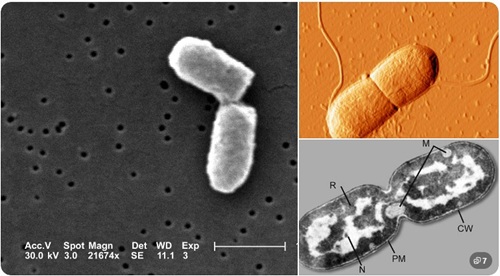 Bacteria are often described as immortal because they reproduce through binary fission. A bacterial cell grows, replicates its DNA, and divides into two daughter cells. Unlike an animal giving birth, the bacterium does not ordinarily produce offspring while leaving behind a separate, permanently aging parent. Instead, the original cell divides, and its cellular material is distributed between its descendants. Where, then, is the original bacterium? In a sense, it has become two bacteria. There is no obvious moment at which one individual must be declared the parent and the other the offspring. The continuity of the lineage is much clearer than the continuity of any particular individual cell. This is the first important distinction: the potential immortality of a lineage is not the same as the immortality of an individual organism. Under favorable conditions, a bacterial lineage can continue for extraordinarily long periods, provided that it reproduces successfully and avoids extinction. But individual bacteria can still die from starvation, toxins, temperature changes, viral infection, or other environmental hazards. They can also accumulate damage and experience declining physiological performance. Nor is bacterial division always perfectly symmetrical. Some bacteria distribute old cellular structures, damaged proteins, and other components unevenly between daughter cells. In certain species, one daughter can inherit more of the older cellular material and show reduced performance. Bacterial aging, in other words, is not absent; it simply takes a different form from the familiar aging of animals. Calling bacteria immortal is therefore useful only in a qualified sense. Their mode of reproduction permits indefinite lineage continuation without requiring a separate, aging parent to be left behind at each division. It does not guarantee that any particular cell will survive indefinitely. The distinction becomes crucial when we consider how multicellular organisms evolved. 2. The great transition: from independent cells to multicellular bodies
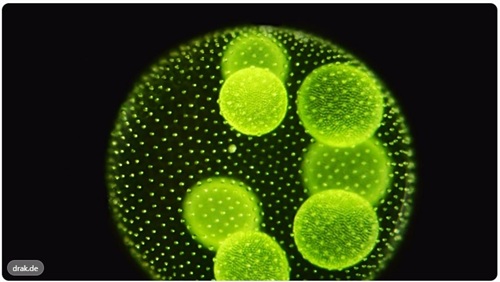 Multicellularity evolved independently on numerous occasions. It is not a single evolutionary invention but a recurring solution to the challenges and opportunities of life. In some lineages, cells remained attached after division; in others, cells aggregated. Over evolutionary time, these arrangements could develop into integrated organisms whose cells communicated, cooperated, and performed specialized functions. The advantages were considerable. A multicellular organism could become larger, exploit resources unavailable to individual cells, develop protective outer layers, and divide labor among different kinds of cells. Some cells could specialize in movement, others in digestion, others in defense, and still others in reproduction. But this transition introduced a fundamental problem. Once cells become parts of a larger organism, what happens when their individual interests conflict with the interests of the whole? A cell that divides rapidly at the expense of neighboring cells may be successful from its own immediate perspective but destructive to the organism. Cancer illustrates this conflict. Cancer cells exploit the body's resources, multiply, and evade the controls that ordinarily coordinate cellular behavior. Their success as competing cell lineages can contribute to the death of the organism on which they depend. Multicellular evolution therefore required more than simply keeping cells together. It required mechanisms of cooperation, communication, and control. Cells had to be prevented from pursuing unlimited individual reproduction at the expense of the collective. One of the most important consequences was a division of reproductive labor. In many complex organisms, most cells form the soma, the body that maintains the organism, while a specialized lineage of germ cells transmits genetic information to future generations. This distinction changes the evolutionary meaning of death. The body can be mortal while the genetic lineage it helps reproduce continues. The organism becomes a temporary vehicle for a much longer process of biological reproduction. That is not the whole story, however. Some multicellular organisms reproduce asexually, and some can regenerate entire bodies from fragments. Others possess extraordinary longevity. Multicellularity does not automatically require a fixed lifespan or make aging inevitable. What it does make possible is a particularly important separation between the longevity of the reproductive lineage and the longevity of the body. 3. The germline and the soma: two different evolutionary destiniesConsider a human being. Almost all the cells in the body will eventually die. Skin cells are shed, intestinal cells are replaced, and many other cells undergo repair or renewal. Some cell populations can persist for decades, but the organism as a whole eventually ceases to function. Yet the genetic information carried by the germline can pass from one generation to the next. Sperm and egg cells contribute genetic material to a fertilized egg, from which a new organism develops. The resulting individual can eventually produce another generation. In this sense, biological continuity is achieved through successive organisms rather than through the indefinite survival of a single body.
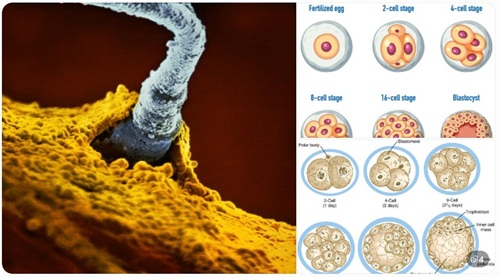 The germline is sometimes described as potentially immortal. This does not mean that a particular egg or sperm survives forever, nor that germ cells are immune to mutations, damage, or death. Rather, the lineage of cells that produces gametes can, under suitable conditions, continue through successive generations. The soma has a different evolutionary role. It develops, acquires resources, protects the reproductive cells, interacts with the environment, and supports successful reproduction. Its continued existence is valuable insofar as it contributes to the organism's survival and reproductive success. This arrangement suggests a provocative interpretation: evolution did not necessarily eliminate immortality when multicellularity emerged. It relocated biological continuity from the whole organism to a specialized reproductive lineage. But why should the body age at all? Why not maintain the soma indefinitely, just as the germline maintains its continuity? In principle, longer life and better repair can evolve. Some organisms maintain their bodies remarkably well, and some animals show little evidence of the familiar pattern of steadily increasing mortality with age. Certain clonal plants can also persist for extraordinarily long periods. The obstacle is not a universal biological rule that every complex organism must die at a predetermined age. Instead, it involves the costs of maintenance, the limits of repair, the effects of environmental hazards, and the way natural selection operates. 4. Why does aging evolve?Natural selection does not design organisms for maximum longevity. It favors inherited traits that tend to improve reproductive success in particular environments. This distinction helps explain why aging is so widespread. Imagine a mutation that improves an animal's ability to repair its tissues, but requires substantial energy that could otherwise be used for growth or reproduction. If the additional repair produces a sufficiently large reproductive advantage, the mutation may spread. If its benefits are small relative to its costs, it may not. Now imagine a different mutation that improves early-life reproduction but causes physiological problems later in life. Natural selection may favor this mutation if its early benefits outweigh its late costs. This is the central insight of the theory of antagonistic pleiotropy, associated with evolutionary biologist George C. Williams. A single genetic variant can have beneficial effects at one stage of life and harmful effects at another. Natural selection can favor the variant even when it contributes to aging. A complementary explanation is the disposable soma theory, developed by Thomas Kirkwood. Organisms have limited resources, and evolution often favors an allocation that balances body maintenance against growth and reproduction. Perfect repair may be biologically possible in some respects, but maintaining every tissue against every source of damage can be prohibitively costly. Neither theory implies that aging is deliberately programmed to make room for the next generation. That common interpretation is misleading. Aging can emerge because repair is imperfect, because damaging effects accumulate, and because natural selection generally becomes less effective at eliminating harmful effects that occur late in life. The importance of age also depends on ecology. An organism facing a high risk of being killed by predators, starvation, or infection may gain less evolutionary benefit from investing heavily in survival many years into the future. An organism that is well protected and can reproduce repeatedly may benefit more from sustained maintenance. The result is a diversity of lifespans and aging patterns. Evolution has not discovered one universally optimal balance between reproduction and survival. Multicellularity makes the soma-germline distinction especially clear, but the underlying evolutionary logic is broader: maintenance, reproduction, and survival compete for resources, and selection favors strategies that work under particular conditions rather than strategies that maximize lifespan in the abstract. 5. Where does sexual reproduction enter the picture?Sexual reproduction adds another layer to the story. In its familiar form, it involves the fusion of gametes, usually from two parents, to produce offspring with a new combination of genetic material. It is not the same thing as multicellularity, and the two did not arise as a single evolutionary package. Many single-celled organisms reproduce sexually or exchange genetic material. Conversely, many multicellular organisms can reproduce asexually. Sexual reproduction and multicellularity are therefore separable evolutionary innovations. Nevertheless, they became closely associated in many lineages, and their relationship has profound consequences for genetic continuity, adaptation, and the evolution of aging. Sex creates genetic variationIn many sexually reproducing organisms, meiosis and fertilization reshuffle genetic material. Offspring inherit combinations of genetic variants that differ from those of either parent. This variation can help populations respond to changing environments. If parasites adapt to common host genotypes, for example, genetic diversity may help some offspring resist infection. Sex can also bring beneficial mutations together and help separate them from harmful ones, although the evolutionary advantages of sex depend on circumstances and remain a subject of research. Sexual reproduction is costly, however. Producing gametes, finding mates, and engaging in reproductive behavior can require substantial resources. In many species, individuals transmit only part of their genetic material to each offspring, and some individuals may produce no offspring at all. So why did sex evolve and persist despite these costs? There is no single explanation that applies to every lineage. The benefits of genetic recombination, adaptation to changing environments, and interactions with parasites are among the leading explanations. The essential point for our question is that sex provides a way for genetic information to persist through new combinations, not through the eternal survival of the organisms carrying it. Sex does not itself cause deathIt is tempting to connect sexual reproduction directly to mortality: organisms reproduce sexually, produce offspring, and then die. But this confuses a common life-history pattern with a necessary causal relationship. Some organisms reproduce once and then die. Pacific salmon are a familiar example, as are many annual plants and some insects. Their life histories involve a large investment in reproduction followed by death, often because of physiological changes associated with reproduction. Other organisms reproduce repeatedly over many years. Humans, elephants, and many birds can produce offspring across extended periods of adulthood. Sexual reproduction therefore does not require an organism to die after reproducing, nor does the act of reproduction necessarily exhaust the organism. The relationship depends on the species' physiology and evolutionary history. Indeed, the persistence of sexual reproduction in long-lived organisms shows that genetic recombination and extended somatic survival are perfectly compatible. 6. Does sex help explain why organisms age?Here the connection becomes more subtle. Sexual reproduction can contribute to the evolutionary conditions under which aging develops, but it is not a sufficient explanation on its own. The crucial issue is the relationship between reproduction, genetic inheritance, and the effectiveness of natural selection at different ages. In many sexually reproducing animals, mutations that cause harm late in life are less strongly eliminated by natural selection than mutations that prevent successful reproduction early in life. An individual who dies before reproducing leaves no descendants; a genetic variant that causes infertility at a young age is likely to be strongly selected against. By contrast, a variant that causes a modest decline in health late in life may have much smaller effects on the number of descendants an individual leaves. This asymmetry helps explain why aging can persist despite its costs. Sexual reproduction also makes possible a familiar division between somatic cells and germ cells. In animals, germ cells carry genetic information into the next generation, while the soma generally does not. This division helps explain why the reproductive lineage can continue even though individual bodies age and die. Yet we should not conclude that sex created the germline-soma distinction from nothing. The evolutionary histories of cell specialization and reproductive cycles are diverse, and the relevant mechanisms differ among organisms. Nor does the existence of a germline automatically mean that every organism must develop age-related deterioration. The more defensible conclusion is that sexual reproduction and multicellularity can work together to create a life history in which genetic continuity depends on successive bodies, while natural selection permits imperfect maintenance of each body. 7. Programmed cell death: when dying keeps an organism alive
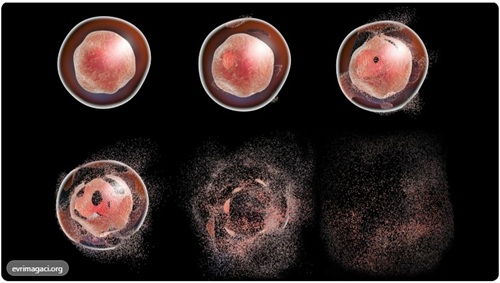 There is another, more immediate connection between multicellularity and death. Complex organisms depend not only on the survival of their cells but also on the elimination of cells when they are no longer needed or become dangerous. This process is called programmed cell death, especially in its well-studied form known as apoptosis. During development, cells are sometimes removed to shape tissues and organs. The separation of fingers and toes, for example, involves the elimination of cells between developing digits. The immune system also uses cell death to regulate populations of immune cells, while damaged or potentially cancerous cells may be eliminated through several protective mechanisms. At the level of an individual cell, death may appear to be a failure. At the level of the organism, it can be essential for healthy development and survival. This reveals a striking feature of multicellular life: death is not merely something that happens to an organism from outside. The organism's own functioning depends on the controlled death of some of its constituent cells. But we must distinguish programmed cell death from the aging and death of the entire organism. Apoptosis is a regulated cellular process that can benefit the living body. Organismal death is the loss of the integrated functioning of the organism as a whole. Aging, meanwhile, is the progressive deterioration that increases vulnerability to disease and death. These processes are related, but they are not interchangeable. It would therefore be wrong to say that individual organisms must die because their cells have evolved to die. Many cells die without killing the organism, and organisms can die from causes unrelated to aging. Equally, the existence of cellular mechanisms that promote death does not demonstrate that evolution selected organismal death as a general benefit to the species. The more compelling insight is that multicellularity creates a new level of organization at which the survival of the whole can depend on regulating the lives and deaths of its parts. 8. Why doesn't evolution simply favor immortality?If death ends an organism's future opportunities to reproduce, why hasn't natural selection eliminated it? The question assumes that immortality would always be advantageous and that natural selection can readily produce it. Neither assumption is justified. First, no organism exists in isolation from its environment. Even a body capable of repairing most internal damage would remain vulnerable to accidents, predators, infections, environmental catastrophes, and other external hazards. Indefinite survival in a changing world is a formidable challenge. Second, biological maintenance is costly. Repairing DNA, replacing damaged proteins, preventing cancer, maintaining stem cells, and preserving tissue function all require resources and effective regulatory systems. Improving one process may compromise another. Third, natural selection does not look ahead to an organism's distant future. It favors heritable traits according to their consequences for reproductive success in the conditions under which selection operates. A mutation that modestly improves early reproduction but reduces late-life survival may spread, even when the resulting aging seems wasteful from the organism's perspective. Finally, evolution has no obligation to maximize the duration of an individual's experience. A lineage can persist for millions of years through successive generations, even though every organism in that lineage eventually dies. This is why the persistence of life and the mortality of individuals are not contradictory. They refer to different levels of biological organization. There are, however, important exceptions to familiar patterns of aging. Some animals exhibit negligible senescence under certain measures, meaning that age does not produce the usual steady increase in mortality or decline in reproduction. Some organisms can regenerate extensively, and some clonal lineages can persist for very long periods. Such cases demonstrate that aging is evolutionarily variable rather than governed by one universal timetable. They do not establish that an organism can be made absolutely immortal. They show that the costs and constraints of maintenance differ across life histories, and that evolution has produced more than one solution. 9. Is death a price, a by-product, or an evolutionary necessity?We can now return to the central question. Is death the price we pay for multicellularity? In one sense, the answer is yes. Multicellular organization creates a division between a reproductive lineage and a body whose continued existence is not indefinitely maintained. It makes possible complex life histories in which the organism develops, reproduces, ages, and dies while its lineage continues. It also creates the need for cellular cooperation and the regulation of cell survival. But this is not the same as saying that multicellularity inevitably causes death. Multicellular organisms vary enormously in their lifespan, regenerative capacity, reproductive strategies, and patterns of aging. The evolution of multicellularity opened up new possibilities; it did not impose one universal fate. Is sexual reproduction responsible? Again, only partly. Sex reshuffles genetic material and contributes to the evolutionary dynamics of aging, while sexual organisms often maintain genetic continuity through a germline. But sex does not require aging, and asexual organisms can also experience senescence. Perhaps the deepest lesson is that evolution operates at several levels simultaneously. Cells compete and cooperate; organisms survive and reproduce; populations adapt; and lineages persist or disappear. What counts as success at one level need not be success at another. A cancer cell can prosper while its host dies. A parent can die while its offspring thrive. An individual can leave no descendants, while the wider species continues. Natural selection does not need to arrange these outcomes for the benefit of life as a whole. They emerge from the differential survival and reproduction of biological entities in particular environments. Death, in this account, is neither a cosmic punishment nor a necessary sacrifice demanded by an overarching purpose. It is a collection of biological outcomes arising from damage, physiology, ecological hazards, evolutionary trade-offs, and the organization of living systems. Conclusion: The immortality of life is not the immortality of the livingBacteria offer an illuminating starting point because their reproduction makes the continuity of a lineage especially visible. A dividing bacterium does not ordinarily leave behind a distinct parent body that ages while its offspring begin independent lives. Yet bacteria can experience aging and death, and their apparent immortality is conditional rather than absolute. Multicellularity transformed the situation. Cells became parts of integrated organisms, specialized in different tasks, and increasingly dependent on cooperation. In many lineages, a division emerged between the soma, which sustains the organism, and the germline, which transmits genetic information. The body could be temporary while the lineage continued. Sexual reproduction added genetic recombination, producing new combinations of inherited variation and shaping the evolutionary dynamics of reproduction and aging. It did not make death inevitable, but it became part of the reproductive life cycle of many complex organisms. The result is a distinction that can easily be overlooked: life can continue without any individual life continuing forever. Evolution has not solved the problem of death by making every organism immortal. It has produced forms of continuity that do not depend on the immortality of individual organisms. The lineage persists through reproduction, even as its members appear, flourish, and disappear. From this perspective, death is not simply the price paid for becoming complex. It is one of the outcomes made possible by the evolution of complex organization, shaped by the costs of maintaining bodies, the demands of reproduction, and the limits of survival in a changing world. Life's remarkable achievement is not that it has escaped mortality. It is that, through reproduction, it has continued across generations despite it.
Widget is loading comments...
|