|
TRANSLATE THIS ARTICLE
Integral World: Exploring Theories of Everything
An independent forum for a critical discussion of the integral philosophy of Ken Wilber
  Frank Visser, graduated as a psychologist of culture and religion, founded IntegralWorld in 1997. He worked as production manager for various publishing houses and as service manager for various internet companies and lives in Amsterdam. Books: Ken Wilber: Thought as Passion (SUNY, 2003), and The Corona Conspiracy: Combatting Disinformation about the Coronavirus (Kindle, 2020). Frank Visser, graduated as a psychologist of culture and religion, founded IntegralWorld in 1997. He worked as production manager for various publishing houses and as service manager for various internet companies and lives in Amsterdam. Books: Ken Wilber: Thought as Passion (SUNY, 2003), and The Corona Conspiracy: Combatting Disinformation about the Coronavirus (Kindle, 2020).
Check out my other conversations with ChatGPT David Long's Quadrants ReviewContext and EvaluationFrank Visser / Grok
NRP Fundamentals | Part 3: Quadrants (Deep Dive)
David Long's “NRP Fundamentals | Part 3: Quadrants (Deep Dive)” is a clear, pedagogical video that introduces the Non-Reductionist Philosophy (NRP) understanding of quadrants as part of a broader set of meta-tools for holistic, anti-reductionist thinking. It positions quadrants within a larger family of analytical methods while presenting significant methodological upgrades that distinguish NRP from other meta-theoretic approaches. Summary of the Video's Core ContentLong begins with Divisions of Four–a general cognitive tool involving duality within duality (crossing two related binaries). This tool has appeared across history and disciplines (e.g., Transactional Analysis life positions, game theory matrices) for generating useful 2x2 frameworks, categorizations, cycles, or perspectives. He then presents quadrants as one specific application of this tool, used to analyze the four ontological zones of reality: Individual-Interior (“I”) Individual-Exterior (“It”) Collective-Interior (“We”) Collective-Exterior (“Its”) The video emphasizes practical application over abstraction. Quadrants serve as an ontological framework for ensuring comprehensive analysis rather than a mere checklist of perspectives. Key NRP Upgrades highlighted include: Divisions of Four as a Foundational ToolBy teaching Divisions of Four first, Long gives viewers a versatile thinking instrument applicable to many domains (perspectives, decision matrices, developmental patterns, etc.), not just ontology. This contextualizes quadrants as one powerful but non-unique use of the method, expanding their utility while avoiding over-identification with any single historical application. Quadratic Zoom & ScaleThis methodological upgrade treats quadrants as navigable ontological zones with real levels of organization rather than a flat checklist. It counters common reductionist errors–such as mistaking analysis at one scale or in one sub-domain for full coverage of a quadrant–by encouraging deliberate zooming in (to mechanisms and structures) and out (to broader nested contexts). The video demonstrates this through the NRP Macro Map, which systematically applies quadrants across multiple scales of the entire philosophy, showing internal coherence and providing a model for application in other fields. Primacy and Nested Quadratic HolonsThese address how the four zones relate to one another and how they should be prioritized depending on the specific philosophical project (ontology, epistemology, morality, therapy, governance, etc.). Rather than treating quadrants as equally important perspectives in every context, NRP organizes them into nested holonic systems with context-dependent relationships and priorities. This turns quadrants into a genuine reasoning tool for assembling insights effectively, not just identifying pieces. Additional distinctions include rejection of ontological tetra-arising (in favor of an Emergent Naturalist view where domains emerge at different levels of organization, and not all entities possess interiority) and the introduction of tetra-validation as an epistemological method. Tetra-validation prioritizes the strongest evidence source for a claim while checking expected correlations in other zones for corroboration, improving reliability especially for interior claims. The presentation is part of the NRP Fundamentals series and encourages viewers to adopt these as “operating system” upgrades for clearer, more non-reductionist thinking across domains. StrengthsClarity and Pedagogy: Excellent progression from the general (Divisions of Four) to the specific (quadrants + NRP upgrades). Concrete examples and structured explanation make it accessible while offering depth. Long emphasizes application, turning abstract meta-theory into practical tools. Methodological Advances: The upgrades meaningfully address limitations in checklist-style approaches. Quadratic Zoom & Scale and Primacy/Nested Quadratic Holons provide stronger safeguards against conflation and partial analysis. The Macro Map demonstration shows the framework applied rigorously to itself, which strengthens credibility. Anti-Reductionist Focus: By distinguishing tools, scales, and priorities, and grounding in Emergent Naturalism, NRP positions quadrants as part of a coherent, navigable ontology rather than perspectives alone. This has broad potential for philosophy, science, education, organizational design, and personal/collective integration. Stand-Alone Presentation: The video teaches NRP concepts directly on their own terms, suitable for new audiences without requiring prior study of other frameworks. Weaknesses and CritiquesDensity for Newcomers: While clear, the combination of general tools, ontological zones, methodological upgrades, and macro mapping can feel substantial in one sitting. The video assumes some openness to meta-theoretic thinking; absolute beginners may benefit from earlier parts of the fundamentals series. Scope Trade-offs: Strong on its core upgrades, the video (as Part 3) does not deeply defend broader developmental models or respond to external philosophical critiques (e.g., concerns about grand narratives). These are reasonable choices for a fundamentals installment but may leave some questions for later content. Visual and Mapping Limits: The current Non-Reductionist maps are information-rich and purposeful. Like any 2D (or even multi-layered) representation, they remain models of a more complex reality. Nesting and zooming help, but users must still apply them flexibly to avoid forcing phenomena into boxes. The power lies in iterative, context-sensitive use. Positioning and Appeal: NRP presents itself as a distinct, competing meta-theory grounded in Emergent Naturalism, not a continuation of prior projects. It sets high standards for integration and explicitly stands apart. This clarity of identity is refreshing but may initially challenge audiences accustomed to blending approaches. The claim of offering the most complete presentation of quadrants is bold and should be evaluated by comparing content and methodological rigor; it is not mere promotion but an invitation to assess the framework's scope. Overall AssessmentThis is a strong video (solid 8/10) that effectively introduces NRP's distinctive approach to quadrants and meta-theory. Its greatest value lies in the methodological upgrades–Divisions of Four, Quadratic Zoom & Scale, and Primacy with Nested Quadratic Holons–which transform quadrants from a heuristic into a more precise navigational and reasoning system. These contributions deserve careful engagement on their own merits as part of a standalone Emergent Naturalist meta-theory. Who it's for: Anyone interested in systems thinking, personal and collective integration, philosophy, leadership, or practical meta-tools for reducing blind spots and improving analysis/decision-making. The Fundamentals series is best watched in sequence for maximum benefit, as it builds the framework directly. Potential Impact: If adopted, these tools can promote more contextual, scale-aware, and priority-sensitive thinking–valuable for complex problem-solving while supporting NRP's goal of healthy, non-reductionist integration. As with any map, its usefulness depends on skillful, flexible application rather than rigid adherence. The video succeeds as an educational deep-dive into NRP's current understanding and invites further exploration of the philosophy on its own terms. This revised review prioritizes the current NRP framework and the specific contributions of the video while minimizing historical detours. It aims for accurate representation as a distinct meta-theory. Feedback from David Long was instrumental in shaping these updates for better fidelity to the project's self-understanding.
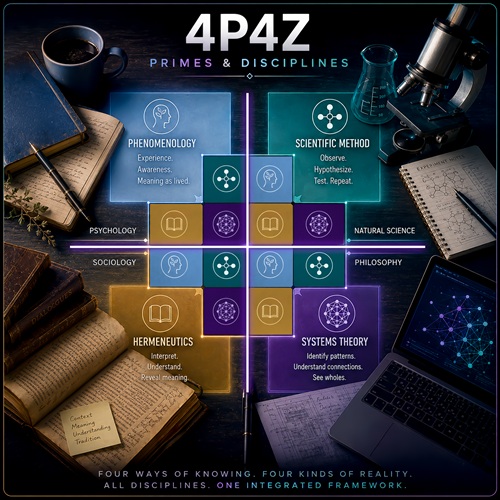 Explore tetra-validation methodologyTetra-validation (also called cross-quadrant validation) is a key epistemological methodology in David Long's Non-Reductionist Philosophy (NRP). It provides a structured way to validate knowledge claims by leveraging the four ontological zones (quadrants) while accounting for their different strengths, limitations, and appropriate methods of inquiry. Core Idea and ProcessTetra-validation works as follows: Identify the Primary Quadrant/Zone for the Claim – Determine which ontological domain the main evidence or truth claim belongs to (Individual-Interior “I”, Individual-Exterior “It”, Collective-Interior “We”, or Collective-Exterior “Its”). Different questions have different primary sources of evidence. Gather Primary Evidence – Use the most suitable methodology for that zone (tied into the broader 4P4Z framework: Four Prime methodologies – phenomenology for interiors, scientific method for exteriors, etc. – applied across zones). Check for Correlating Evidence in the Other Quadrants – Examine whether expected supporting or correlating data appears in the remaining zones. This cross-check strengthens (or challenges) the claim. Assess and Prioritize – Reliable exterior evidence (objective, measurable) often takes priority where available, especially when corroborating or contradicting interior claims, which are more prone to bias, distortion, memory issues, or self-deception. Not all quadrants contribute equally to every question; primacy and context matter. This is not a flat “include all four equally” checklist (a critique NRP levels at some other approaches). It is a targeted, hierarchical, and contextual validation process that reduces conflation and partial analysis. Why It Matters (Especially for Interior Claims)Interior data (subjective experience, feelings, interpretations, cultural meanings) is valuable but less reliable on its own due to well-known psychological and social distortions. Tetra-validation encourages: Prioritizing stronger exterior anchors when possible. Seeking expected correlations (e.g., if someone claims a profound personal insight or cultural value, check for behavioral, systemic, or shared evidence). Building more robust conclusions through multi-zone coherence rather than isolated perspectives. It supports NRP's Emergent Naturalist stance by avoiding over-projection of interiority onto entities or levels where it may not apply, while still honoring subjective and cultural realities. Relation to Other NRP Tools4P4Z (Four Primes in Four Zones): Provides the methodological backbone–mapping prime ways of knowing (e.g., phenomenology, hermeneutics, scientific method, systems theory) appropriately to zones. Tetra-validation operationalizes this for practical inquiry. Quadratic Zoom & Scale: Validation occurs at appropriate levels of analysis (macro, intermediate, micro, nano); claims must be contextualized by scale. Primacy & Nested Quadratic Holons: Determines which zone or relationship has priority for a given project or question, guiding where primary evidence should be sought. Divisions of Four: Broader thinking tool of which quadrants are one application. Together, these prevent common reductionist errors, such as mistaking a strong interior experience for universal truth without external or collective corroboration, or over-relying on systems data while ignoring lived meaning. StrengthsBias Reduction and Reliability – Systematic cross-checking makes conclusions more robust, especially in fields heavy on interpretation (psychology, philosophy, spirituality, morality, governance). Practical Utility – Applicable across disciplines: therapy (check personal reports against behavior and relationships), science (corroborate models with cultural/systemic impacts), leadership (validate strategies across individual and collective levels). Epistemic Humility with Rigor – Acknowledges different evidence strengths without descending into relativism or naive equal weighting. Potential Limitations and CritiquesComplexity – Requires skill and discipline to apply consistently; newcomers may find it cognitively demanding alongside other NRP tools. Implementation Challenges – Determining “expected correlations” or primary zones can involve judgment calls, potentially introducing new interpretive biases. Empirical Status – As part of an emerging meta-theory, it benefits from further real-world testing and refinement. Critics note that multi-perspective validation methods in general can face issues of incommensurability between domains. Tetra-validation exemplifies NRP's emphasis on non-reductionist rigor: honoring irreducible domains while providing concrete methods to integrate them coherently. It is best understood in the context of the full framework (especially the Quadrants video and related fundamentals content). For visuals and deeper examples, David Long's NRP resources, maps, and videos are the primary sources. This methodology represents a thoughtful attempt to move beyond simplistic pluralism toward structured, evidence-sensitive multi-domain reasoning.
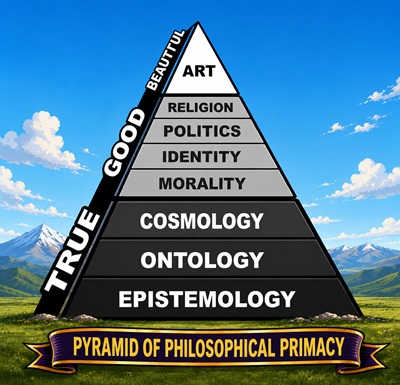 Explore David Long's Non-Reductionist PhilosophyNon-Reductionist Philosophy (NRP) is a standalone, next-generation meta-theory developed by David Long. It aims to integrate knowledge across all domains of reality–science, philosophy, psychology, culture, systems, and personal development–without collapsing any into others (hence "non-reductionist"). It positions itself as a grounded, rational alternative to frameworks like Ken Wilber's Integral Theory or metamodernism, emphasizing coherence, emergent naturalism, epistemic rigor, and practical application for personal and collective transformation. Core Purpose and WorldviewNRP seeks to be a "meta-theory of everything" for philosophy: a comprehensive map and set of tools for understanding reality in its irreducible complexity. It affirms that reality has multiple distinct but interrelated dimensions that cannot be fully reduced to one another (e.g., subjective experience cannot be collapsed into brain chemistry, nor culture into individual psychology). Key grounding principles include: Emergent Naturalism (or Sacred Naturalism): Higher-order phenomena (consciousness, meaning, value) genuinely emerge from lower levels but are not reducible to them. It is post-theistic, rational, and science-compatible while honoring depth, reverence, and symbolic meaning without supernatural claims. Avoidance of common pitfalls: Materialist reductionism (everything is just atoms), idealist/spiritual reductionism (consciousness is fundamental), relativism (all views equal), or dogmatic integration. Main Elements of the FrameworkNRP builds on (and upgrades) familiar meta-theoretic components, often visualized in a single, dense but usable poster-sized map (V2 as of recent updates, open to refinement): Quadrants – Four irreducible ontological zones (Individual Interior “I”, Individual Exterior “It”, Collective Interior “We”, Collective Exterior “Its”). These are domains of reality, not just perspectives. Levels (Stages) – Developmental stages of personal and cultural meaning-making, refined with distinctions like Implicit vs. Explicit Integration (e.g., breaking "yellow" into more precise levels). Grounded more in dialectical/ emergent processes than mystical narratives. Lines – Multiple developmental capacities (cognition, morality, interpersonal, etc.). States – Temporary modes of consciousness, interpreted through developmental structure (updated models emphasize affect, regulation, etc., beyond just waking/ meditative states). Types – Enduring patterns (personality, temperament). Modes & Roles – Newer addition: conscious skills, postures, attention, willpower, and contextual roles for skillful action. Key Methodological UpgradesThese distinguish NRP and address limitations in prior approaches: Divisions of Four – A general cognitive tool (duality within duality) of which quadrants are one ontological application. Expands usefulness beyond any single map. Quadratic Zoom & Scale – Fractal application across levels (macro to nano). Prevents category errors by analyzing at the appropriate scale and nesting contexts. Demonstrated via the NRP Macro Map, which systematically applies the framework to itself. Primacy & Nested Quadratic Holons (NQH) – Context-dependent prioritization and organization of quadrants/ elements for specific projects (ontology, morality, therapy, governance). Replaces flat "equal emphasis" with relational hierarchies tailored to the goal. 4P4Z (Four Primes in Four Zones) – Epistemological backbone mapping prime methodologies (phenomenology, scientific method, hermeneutics, systems theory) to zones. Supports coherent inquiry across domains. Tetra-Validation (Cross-Quadrant Validation) – Validate claims by checking primary evidence in the relevant zone plus expected correlations in others. Especially useful for strengthening (or challenging) interior claims with exterior data. Reasonable Limits of Knowledge – Distinguishes known, conditionally unknowable, and permanently unknowable to promote epistemic humility without skepticism. Additional supporting concepts include Semantic Compatibilism (different languages reveal different truths), Discriminating Wisdom, and tools for healthy community/leadership integration. Origins and Relationship to Other FrameworksDavid Long developed early versions independently (e.g., Divisions of Four, archetypal models) before engaging Integral Theory in the 2010s. He contributed refinements (maps, quadrant logic, primacy ideas) but ultimately broke away due to Integral's perceived issues: mystical idealism, resistance to critique, community dynamics, and underdeveloped areas (e.g., systems/governance). NRP is presented as a distinct, competing meta-theory, not "Integral 2.0" or a refinement. It teaches its elements fresh on their own terms, grounded in Emergent Naturalism rather than Eastern idealism. It stands alone with its own standards, community processes, and leadership pathways (e.g., Steward Leadership). Strengths (as Claimed/Steelmanned)Coherence and Anti-Reductionism – Rigorous tools for multi-domain analysis without flattening reality. Practical Orientation – Emphasis on application in life practice, organizations, governance, and culture-building. Open to iterative refinement via community feedback. Grounded Rationality – Science-friendly, humble epistemology, and rejection of superstition while preserving meaning and development. Comprehensiveness – One-page map that scales from fundamentals to advanced application; Fundamentals video series as entry point. Critiques and ChallengesComplexity – The full system is dense; effective use requires developmental capacity and practice. Empirical/Academic Status – As a relatively new framework, it has limited independent peer-reviewed validation. Developmental models and claims invite ongoing testing against psychology and cross-cultural research. Positioning – Strong self-differentiation from Integral can be clarifying but may polarize or overlook valuable overlaps. Implementation – Building healthy community/leadership structures around it is an active project; like any meta-theory, real-world outcomes depend on practitioners. How to EngageFundamentals Series on the Non-Reductionist Philosophy YouTube channel (start with Part 3: Quadrants for a deep dive). Download the poster map from links on nonreductionism.org. Community: Patreon, Discord, Facebook group, Reddit (r/NonReductionism). Website: nonreductionism.org for principles, articles, and resources. NRP is an ambitious, evolving project that prioritizes clarity, integrity, and actionable wisdom in a fragmented world. It invites serious engagement on its own terms while remaining open to principled critique and refinement. For the most accurate and up-to-date understanding, primary sources from David Long and the NRP community are essential.
Widget is loading comments...
|