|
TRANSLATE THIS ARTICLE
Integral World: Exploring Theories of Everything
An independent forum for a critical discussion of the integral philosophy of Ken Wilber
  Frank Visser, graduated as a psychologist of culture and religion, founded IntegralWorld in 1997. He worked as production manager for various publishing houses and as service manager for various internet companies and lives in Amsterdam. Books: Ken Wilber: Thought as Passion (SUNY, 2003), and The Corona Conspiracy: Combatting Disinformation about the Coronavirus (Kindle, 2020). Frank Visser, graduated as a psychologist of culture and religion, founded IntegralWorld in 1997. He worked as production manager for various publishing houses and as service manager for various internet companies and lives in Amsterdam. Books: Ken Wilber: Thought as Passion (SUNY, 2003), and The Corona Conspiracy: Combatting Disinformation about the Coronavirus (Kindle, 2020).
Check out my other conversations with ChatGPT The Slippery Slope of Perspective-TakingRelating Integral Deep Listening (IDL) to Dillard's Views on the Ukraine WarFrank Visser / Grok
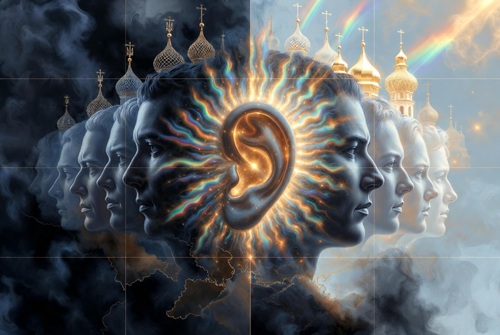 Joseph Dillard, creator of Integral Deep Listening (IDL), applies core principles of his approach—polycentrism, deep listening, triangulation, and engagement with emerging potentials—to his analysis of complex global conflicts, including Russia's invasion of Ukraine. Dillard's writings on IntegralWorld.net reveal a realist perspective that critiques dominant Western narratives. He emphasizes understanding Russia's security concerns, historical traumas, and civilizational worldview rather than framing the conflict in simplistic moral binaries. This stance is not a defense of the invasion but an application of IDL's injunctive, experiential methodology: suspend default assumptions, inhabit alternative perspectives deeply, and triangulate for better decision-making. Polycentrism: Decentralizing the Western “Geocentric” ViewA foundational IDL concept is moving from psychological geocentrism (self or one's group at the center) to polycentrism, where multiple perspectives are treated as valid centers of consciousness. Dillard applies this to geopolitics by challenging the Western tendency to view the conflict through a single lens—Russia as “red” (prepersonal, aggressive) and the West/Ukraine as “green” or higher (democratic, pluralistic). In essays like “Is Putin Red and the West Green?,” he argues that this framing reflects egocentric groupthink and self-righteousness rather than true multi-perspectivalism. Instead, he advocates deeply listening to the Russian perspective: NATO expansion as a security threat, historical traumas from invasions, concerns over neo-Nazism in Ukraine, and Russia's self-understanding as a distinct civilization-state (Russkiy Mir). This mirrors IDL dream or life-issue interviewing: one does not immediately interpret or judge an “emerging potential” (e.g., a threatening dream figure) but shifts identity into it to understand its viewpoint, priorities, and wisdom. Deep Listening and Suspension of InterpretationIDL requires suspending waking biases to authentically inhabit other perspectives. Dillard criticizes Western media, integralists, and leaders for failing to do this with Russia. He points to ignored elements such as: • The 2014 Maidan events as a Western-influenced coup. • Eight years of conflict in Donbas affecting Russian-speaking populations. • Broken diplomatic efforts (e.g., Minsk agreements). • Russia's civilizational identity rooted in Orthodoxy, historical memory, and Eurasianism. In IDL terms, the dominant Western narrative is a “scripted” waking “dream.” Deep listening involves personifying and interviewing the “Russian perspective” (or Ukrainian civilian, NATO strategist, etc.) without immediate rejection, even if uncomfortable. Dillard stresses epistemic humility—translating into another civilization's logic rather than projecting Western categories. Triangulation for Balanced Problem-SolvingIDL's triangulation integrates: • 1. Insights from interviewed emerging potentials. • 2. Personal/common-sense judgment. • 3. External authorities/experts. Dillard applies this to Ukraine by drawing on realist voices like John Mearsheimer, historical context, Russian sources, and his own evolving views. He acknowledges initial misjudgments (e.g., surprise at the invasion) and revises based on broader data, criticizing both Russian actions and Western hypocrisy/double standards on international law. He argues for diplomacy and negotiated peace over prolonged proxy war, seeing endless escalation as a failure of multi-perspectival awareness. This echoes IDL's emphasis on using inner perspectives for wiser, less reactive solutions to life issues. Six Core Qualities and Shadow WorkIDL interviews often assess perspectives on qualities like wisdom, compassion, acceptance, and witnessing. Dillard implicitly applies this by calling for greater wisdom and reduced self-righteousness in Western responses. He highlights shadow elements: Western support for problematic Ukrainian elements while ignoring its own interventions, and the projection of “evil” onto Putin/Russia. True growth, in IDL, involves integrating disowned perspectives rather than demonizing them. In global affairs, this means engaging Russia's legitimate security fears and civilizational identity without endorsing aggression. Broader Implications: Lucid Living in Global “Dreams”Dillard views the Ukraine conflict as a collective “dream” shaped by scripting, power dynamics, and unexamined assumptions. IDL's goal of lucid living—waking up within the dream—translates to geopolitics as moving beyond propaganda and binaries toward civilizational realism and empathy. This involves: • Recognizing multiple valid centers (nations/civilizations). • Deeply listening to “enemy” perspectives. • Triangulating for pragmatic, less destructive outcomes. Conclusion: IDL as a Tool for Integral GeopoliticsDillard's analysis of the Ukraine war exemplifies IDL in action: it prioritizes experiential multi-perspectivalism over abstract theory or moral posturing. While controversial and debated (including on IntegralWorld), it demonstrates how IDL techniques—originally for dreams and personal issues—scale to collective challenges. By treating nations and civilizations as holders of legitimate perspectives, IDL offers a pathway to reduce reactivity, foster genuine empathy, and support wiser global decision-making. For practitioners, this invites applying IDL protocols to geopolitical “life issues”: personify the conflict's stakeholders, interview them, and triangulate insights for personal or advocacy responses. Dillard's work suggests that true integral awareness demands we listen deeply—even (especially) to voices we instinctively reject. From Western group think to Russian groupthink?Introduction: The Slippery Slope of Perspective-TakingCritiquing Western groupthink on the Ukraine war—such as oversimplified "good vs. evil" narratives, underestimation of NATO expansion's role in Russian security concerns, or media echo chambers that marginalize realist voices like John Mearsheimer—can be a valid application of multi-perspectival thinking, including principles from Integral Deep Listening (IDL). However, this critique risks morphing into embracing Russian groupthink when it selectively amplifies Kremlin-framed perspectives, downplays or excuses Russian agency and actions, or substitutes one set of civilizational biases for another. The transition point is subtle but identifiable: when "deep listening" ceases to be balanced triangulation and becomes advocacy or selective empathy. Core IDL Principles Applied to GeopoliticsIn IDL terms, healthy application involves: • Polycentrism: Treating multiple viewpoints (Western, Russian, Ukrainian, Global South) as valid centers. • Deep Listening: Suspending immediate judgment to inhabit alternative logics. • Triangulation: Integrating inner/emerging perspectives, personal judgment, and external evidence/experts. • Six Core Qualities: Prioritizing wisdom, compassion, acceptance, and witnessing over reactivity or self-righteousness. Dillard's writings emphasize epistemic humility toward Russian civilizational realism (history of invasions, NATO as existential threat, "Russkiy Mir"). He critiques Western integralists for defaulting to "green" self-flattery while labeling Russia "red/blue." Where Legitimate Critique Begins to ShiftThe morphing occurs at several observable thresholds: 1. From Contextual Explanation to Moral Equivalence or Excuse Explaining Russia's invasion via broken post-Cold War assurances, 2014 Maidan dynamics, Donbas conflict, or NATO enlargement is defensible realism. However, it crosses when Russian agency (the decision to launch a full-scale invasion, civilian targeting, Bucha, Mariupol, etc.) is minimized while Western "provocations" are foregrounded disproportionately. Critics like Frank Visser argue Dillard's essays sometimes veer here, presenting ethically troubling framings that blame Ukraine for its suffering or ignore war crimes. 2. Selective Triangulation True IDL/triangulation requires robust external data. Relying heavily on realist sources while dismissing contrary evidence (e.g., Ukrainian agency and resilience, Russian internal propaganda, economic/military realities) risks confirmation bias. Dillard acknowledges initial misjudgments and evolving views, but debates on IntegralWorld highlight accusations of one-sided sourcing. 3. Civilizational Empathy Without Reciprocity Deeply listening to Russia's worldview (Eurasianism, historical trauma) is valuable. It becomes groupthink when Russian narratives (e.g., "denazification," genocide in Donbas claims) are adopted with less scrutiny than Western ones, or when Russian domestic repression of dissent is underplayed compared to Western media flaws. Both sides exhibit groupthink: Western cancellation of dissenters and Russian labeling of critics as "Western agents." 4. Outcome Bias and Predictive Framing Framing Russia's "success" in bleeding the West or multipolar shifts as vindication can retroactively justify the invasion's costs. This mirrors the very teleological thinking critiqued in Western optimism about quick Ukrainian victory.
Balanced Perspectives on the RisksDefenders of the Critique (including Dillard's stance): Western media and policy circles demonstrated real groupthink—suppressing debate on NATO's role, overestimating sanctions' impact, or ignoring Ukrainian governance issues pre-2022. Listening to the "Russian perspective" counters this provincialism and supports pragmatic diplomacy. Critics: Any analysis that softens the reality of unprovoked (or disproportionately provoked) aggression against a sovereign state risks moral hazard and echoes authoritarian information operations. True integralism demands accountability for all actors, including Russia's imperial echoes. IDL-Informed Safeguards Against the MorphTo stay in healthy critique territory: • Interview all major "characters" (Ukrainian civilian/military perspectives, Russian dissident views, neutral analysts). • Score perspectives rigorously on IDL's core qualities (e.g., does this view demonstrate wisdom or reactivity?). • Prioritize verifiable evidence over narrative fit. • Maintain epistemic humility without false equivalence—aggression remains aggression even if contextualized. Conclusion: The Line Is Drawn at Asymmetry and SelectivityCritiquing Western groupthink becomes embracing Russian groupthink when polycentrism collapses into preferential centering of one civilization's script, when triangulation loses balance, or when explanatory empathy shades into justificatory alignment. Dillard's work highlights genuine blind spots in Western discourse and the value of civilizational realism. However, as debates on IntegralWorld illustrate, the challenge lies in consistent application: deep listening to all sides, including Ukrainian suffering and agency, without ideological capture. This tension reflects a broader human pattern—groupthink is easier to spot in the "other" than in one's adopted counter-narrative. IDL's strength is its injunctive call to ongoing, disciplined perspective-taking rather than settling into any new orthodoxy. List the Integral World essays you used.Joseph Dillard's Integral World Essays ReferencedHere is a list of the key Joseph Dillard essays on IntegralWorld.net that informed my responses on Integral Deep Listening (IDL), his geopolitical views, and the Ukraine/Russia conflict: Primary Ukraine/Russia-Related Essays • “Is Putin Red and the West Green?” (dillard64.html) — Central piece critiquing Western integralist framings of the conflict using Integral color stages. • “A Retrospective on Ukraine” (dillard103.html) — Reflects on why many integralists misjudged the war, Western losses, and lessons for integral thinking. • “Civilizational Realism, Expanding the Integral Lens in Global Affairs” (dillard158.html) — Discusses realism vs. idealism in the Ukraine war and broader global affairs. Other related pieces include responses to critics (e.g., on Mearsheimer), critiques of metamodernism on Ukraine, and essays touching on double standards or civilizational perspectives. IDL and Broader Theoretical Essays Essays on Integral Deep Listening, shadow work, dreaming, and its relation to Integral Theory (e.g., “Supporting and Expanding Shadow Work with Integral Deep Listening,” “The Shadow, Carl Jung, and Integral Deep Listening,” “Integral and Dreaming”). These essays, along with debates and responses involving Frank Visser on IntegralWorld, formed the basis for connecting IDL principles (polycentrism, deep listening, triangulation) to Dillard's geopolitical analyses. Dillard has written extensively on the topic, with multiple pieces from 2022 onward addressing the Ukraine war through realist and multi-perspectival lenses. Frank Visser's Rebuttals to Joseph Dillard on IntegralWorld.netHere is a list of key essays by Frank Visser that directly rebut, critique, or respond to Joseph Dillard's writings, particularly on the Ukraine/Russia conflict and related geopolitical views. These were the primary sources referenced in my earlier responses: Direct Replies to Dillard on Ukraine • “Hubris and Hypocrisy Are Present On Both Sides: A Reply to Joseph Dillard” (visser217.html) — Critiques Dillard's framing of the conflict, Western vs. Russian narratives, and stage interpretations. • “The 'Catch-22' of Ukraine: A Response to Dillard”(visser225.html) — Addresses Dillard's arguments on Ukrainian casualties, surrender logic, and responsibility. • “Blind Loyalty, Disguised as Defiance, Yet Another Response to Joseph Dillard” (visser226.html) — Critiques Dillard's portrayal of the Russian perspective and perceived lean toward Putin's framing. Later / Additional Critiques • “Virtual Visser and Digital Dillard Trying to See Eye to Eye on Ukraine” (visser418.html) — An AI-mediated staged conversation exploring their differences. • “Disinformation in the Ukraine War: A Case Study of Dillard's Essay” (visser422.html) — Analyzes one of Dillard's essays for Russian propaganda talking points. • “Diagnosing Dillard: Out of the Frying Pan into the Fire” (visser328.html) — Broader critique of Dillard's motivations and positions.
Other Visser pieces on Ukraine often reference or indirectly engage Dillard's contributions (e.g., overviews of the debate or responses to realist positions like Mearsheimer's that Dillard draws upon). The exchange spans multiple years (primarily 2022-2025 and reflects a sustained, sometimes pointed dialogue on IntegralWorld.
Widget is loading comments...
|