|
TRANSLATE THIS ARTICLE
Integral World: Exploring Theories of Everything
An independent forum for a critical discussion of the integral philosophy of Ken Wilber
  Frank Visser, graduated as a psychologist of culture and religion, founded IntegralWorld in 1997. He worked as production manager for various publishing houses and as service manager for various internet companies and lives in Amsterdam. Books: Ken Wilber: Thought as Passion (SUNY, 2003), and The Corona Conspiracy: Combatting Disinformation about the Coronavirus (Kindle, 2020). Frank Visser, graduated as a psychologist of culture and religion, founded IntegralWorld in 1997. He worked as production manager for various publishing houses and as service manager for various internet companies and lives in Amsterdam. Books: Ken Wilber: Thought as Passion (SUNY, 2003), and The Corona Conspiracy: Combatting Disinformation about the Coronavirus (Kindle, 2020).
Check out my other conversations with ChatGPT
Silenced No MoreA Critical Examination of the Civil Commission's Report on Sexual Violence on October 7Frank Visser / Grok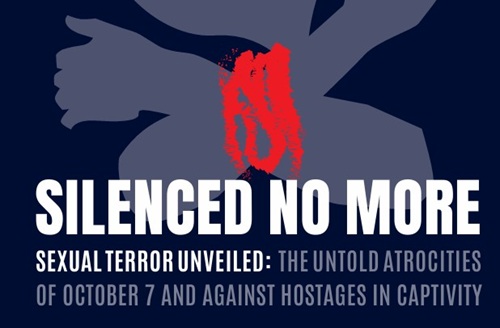 IntroductionOn May 12, 2026, the Civil Commission on October 7th Crimes by Hamas Against Women and Children released its landmark 298-page report, Silenced No More: Sexual Terror Unveiled—The Untold Atrocities of October 7 and Against Hostages in Captivity. Led by Dr. Cochav Elkayam-Levy, a 2024 Israel Prize laureate and expert in international law, the report compiles extensive evidence of systematic sexual and gender-based violence (SGBV) during the Hamas-led attacks and subsequent hostage crisis. This essay summarizes the report's core content and offers a critical review of its methodology, findings, legal analysis, and broader implications. Summary of the ReportStructure and MethodologyThe report is structured with a preface, forewords from prominent figures (including former Israeli Supreme Court President Aharon Barak and Prof. Irwin Cotler), an executive summary, key findings, legal conclusions, recommendations, and detailed chapters on evidence. It draws on a vast archive: over 430 testimonies, 1,800 hours of visual material analysis, 10,000 photographs, open-source intelligence (OSINT), and site visits. The Commission emphasizes a survivor-centered, ethical approach with strict protocols for handling sensitive material, including confidentiality and a "do no harm" principle. It cross-references public sources while building its own database focused on patterns of abuse across multiple sites and phases (attack, abduction, captivity). Key FindingsThe central thesis is that SGBV was not incidental but systematic, widespread, and deliberate—an integral tool of terror by Hamas and affiliated groups. Evidence points to recurring tactics including rape, sexual torture, mutilation, forced nudity, and humiliation. These acts targeted women primarily but also affected men, children, and families. Notable patterns include:
• Kinocidal violence: Acts designed to destroy family units by forcing relatives to witness or participate in abuses against one another. • Multisite occurrence across the "Gaza Envelope" (kibbutzim, Nova festival, roads). • Continuation in Gaza tunnels and captivity, with ongoing sexual slavery and abuse reported by hostages. • Use of digital tools: Live-streaming atrocities to amplify psychological terror.
The report documents these as part of a broader strategy to terrorize Israeli society. Legal ConclusionsThe Commission concludes that the acts constitute:
• War crimes • Crimes against humanity • Genocidal acts (under the Genocide Convention, via infliction of severe harm and measures to prevent group reproduction/survival) • Torture
It calls for prosecutions and holds digital platforms partially responsible for amplification. RecommendationsThese include actions for Israel (enhanced victim support, better documentation protocols) and the international community (recognition, accountability mechanisms, countering denial). Critical ReviewStrengthsThe report's greatest strength is its evidentiary rigor. By creating an independent civil archive amid perceived institutional shortcomings, it fills a critical gap. The emphasis on patterns—rather than isolated incidents—strengthens the case for systematic intent, a key threshold in international criminal law. Forewords from respected legal scholars lend credibility, and the survivor-centered ethics address common criticisms of trauma exploitation. In a context of widespread denialism or minimization ("no evidence of systematic rape"), the sheer volume of triangulated evidence (testimonies + visuals + forensics) makes outright dismissal difficult. It contributes meaningfully to historical memory and justice efforts, echoing post-Holocaust documentation imperatives. Weaknesses and LimitationsPotential Bias: As a civil initiative founded in response to the attacks and focused exclusively on Israeli victims, it naturally centers one side. While the crimes are horrific and well-documented elsewhere (e.g., UN reports), a fully adversarial process with defense input would be ideal for court standards—though impractical here. Access and Verification Challenges: Much material remains confidential for victim privacy. Reliance on OSINT and public sources invites scrutiny over chain-of-custody, though the Commission's archival methods (EDRM standards) mitigate this. Graphic details risk desensitization or accusations of sensationalism, even if factually necessary. Timing and Context: Released over two years after the events, it enters a polarized information environment. Some critics may dismiss it as advocacy rather than neutral scholarship, despite its legal framing. The "kinocide" concept is innovative but may face challenges in established international jurisprudence, which traditionally focuses on ethnic/religious groups rather than familial bonds. Broader Critique: The report highlights failures in global response—initial media hesitation, UN delays, and activist denial. This is justified given the evidence, but risks framing the issue in zero-sum terms. Sexual violence occurs in many conflicts; exceptional documentation here reflects Hamas's deliberate spectacle (bodycams, livestreams) rather than unique moral failing elsewhere. True universality demands consistent application of standards. ImplicationsThe report underscores how sexual violence serves as a low-cost, high-impact weapon in asymmetric warfare and online propaganda. It challenges international institutions to treat gender-based atrocities with the same gravity as other war crimes. For Israel, it reinforces the need for robust victim advocacy and legal preparedness. Critically, it demonstrates the power of civil society documentation when states or global bodies falter. However, documentation alone does not guarantee justice; political will remains the bottleneck. ConclusionSilenced No More is a monumental, if imperfect, act of witness. It compiles harrowing evidence into a coherent narrative of strategic sexual terror, demanding recognition and accountability. While subject to legitimate methodological and perspectival critiques inherent to conflict documentation, its core findings align with multiple independent verifications and resist easy refutation. In an era of contested truths and digital erasure, such reports preserve humanity's memory against denial. They compel us not only to confront evil but to build mechanisms ensuring "never again" applies universally—to all victims of sexual violence in war. The Commission's work honors the dead and living by insisting their suffering not be silenced. Electronic Intifada's Coverage of October 7 Sexual Violence AllegationsOverview of Electronic Intifada's StanceElectronic Intifada (EI), a prominent pro-Palestinian news and commentary site founded in 2001, has consistently framed allegations of systematic or "mass" sexual violence by Hamas on October 7, 2023, as Israeli atrocity propaganda designed to incite genocide in Gaza and justify military operations. They label claims of widespread rape a "hoax" or "fraud," arguing they lack credible evidence, rely on discredited witnesses, and serve propaganda purposes. This position aligns with their broader editorial perspective, which views Israeli narratives critically while highlighting Palestinian suffering. Response to the New York Times "Screams Without Words"EI responded aggressively to the NYT's December 28, 2023, article. In early January 2024, Ali Abunimah published a detailed critique titled "NY Times 'investigation' of mass rape by Hamas falls apart." Key points in their analysis:
• Accused the NYT of relying on second-hand accounts, ZAKA volunteers (whom they view as unreliable), and unverified testimonies. • Highlighted alleged inconsistencies in witness statements (e.g., Raz Cohen) and questioned co-author Anat Schwartz's background. • Claimed the article lacked direct victim testimonies or forensic proof of systematic rape. • Portrayed it as part of a coordinated propaganda effort amid Israel's isolation at the ICJ.
EI celebrated subsequent scrutiny (e.g., from The Intercept) as validation that the NYT story was collapsing. They continued referencing it as a "fraudulent" piece in later articles. Coverage of the Civil Commission Report ("Silenced No More")In response to the May 2026 Civil Commission report (the focus of earlier essays), EI published "Israel's 7 October rape hoax gets a 300-page reboot" (May 14, 2026).
• Described the 298-page report as a repackaged collection of old, debunked claims, anonymous allegations, and speculation rather than new evidence. • Attacked Dr. Cochav Elkayam-Levy and the Commission as previously discredited (citing earlier Israeli media critiques of the initiative as non-existent or fraudulent in its early stages). • Argued it recycled witnesses like Rami Davidian (exposed as unreliable) and relied on ZAKA sources. • Dismissed mainstream media promotion of the report as uncritical amplification of propaganda.
EI had earlier covered Elkayam-Levy's work negatively, calling her commission a "fraud" in March 2024. Broader Patterns in EI CoverageEI's reporting since late 2023 includes:
• Early Debunking: A December 2023 livestream/video titled "Debunking Israel's 'mass rape' propaganda," arguing no specific victims were identified and no forensic evidence existed. • Ongoing Series: Multiple articles tracking "no rape victims found" admissions by Israeli officials, witness retractions, and UN reports (which they say were laundered but still insufficient). • Counter-Narratives: Frequent pieces on alleged Israeli sexual violence against Palestinians, positioning October 7 claims as deflection. • Witness Critiques: Detailed takedowns of figures like Rami Davidian and others promoted in Sheryl Sandberg's Screams Before Silence documentary.
They emphasize the absence of named living victims who publicly alleged rape, lack of videos (despite Hamas bodycams), and evolving/inconsistent early claims. Critical Assessment of EI's ApproachStrengths:
• EI was among the first to scrutinize specific weaknesses in high-profile reports (NYT sourcing, certain witnesses), some of which drew later mainstream or independent scrutiny. • They highlight important journalistic issues like reliance on potentially biased first responders and the challenges of evidence in chaotic attack scenes.
Weaknesses and Bias:
• Their wholesale "hoax" framing minimizes or dismisses patterns documented across multiple sources (testimonies, forensics, visuals, hostage accounts), treating the entire body of evidence as fabricated despite accumulating corroboration. • Ideological alignment leads to selective skepticism: rigorous toward Israeli claims, less so toward counter-claims or Hamas's documented use of sexual humiliation in propaganda. • They often equate initial exaggerated or false details (common in early fog-of-war reporting) with the complete invalidation of broader patterns, a logical overreach.
ConclusionElectronic Intifada has produced extensive, detailed coverage aimed at dismantling allegations of systematic sexual violence on October 7. Their response to the NYT and the 2026 Civil Commission report fits a consistent editorial line: these are propaganda tools in service of Israel's actions in Gaza. While raising valid questions about specific sources and journalistic standards, their output reflects strong advocacy rather than neutral investigation, contributing to polarized discourse on the issue. This mirrors The Grayzone's approach but with a sharper focus on Palestinian perspectives and counter-accusations. Navigating Conflicting Narratives on October 7 Sexual ViolenceThe Core TensionAs a concerned citizen seeking truth amid polarized information, you face a classic conflict: detailed, accumulating evidence of sexual and gender-based violence (SGBV) from Israeli commissions, the UN, forensics, and open-source material versus aggressive debunking from outlets like The Grayzone and Electronic Intifada labeling it a "mass rape hoax." The premise that the 2026 Civil Commission report Silenced No More contains no factual errors anchors one side. Counter-claims often target early media exaggerations or specific witnesses rather than the full evidentiary body. What the Evidence Shows (2024-2026 Consensus)Multiple independent and official sources converge on key points:
UN Findings (Pramila Patten, March 2024): "Reasonable grounds to believe" that rape and gang rape occurred in at least three locations (Nova festival area, Road 232, Kibbutz Re'im). Patterns of naked/partially naked bodies with hands tied and multiple gunshot wounds (often to head/genitals) were noted as circumstantial indicators. "Clear and convincing" evidence for sexual violence, including rape and sexualized torture, against hostages in Gaza, possibly ongoing. Civil Commission Report (May 2026): Most comprehensive archive to date (430+ testimonies, 10,000+ photos/videos, 1,800+ hours analysis). Identifies 13 recurring patterns of SGBV (rape, gang rape, mutilation, forced nudity, kinocide-style family humiliation, etc.) as systematic and deliberate across attack sites and captivity. Triangulated via survivor/witness accounts, visuals, forensics, and hostage testimonies. Mainstream outlets (NYT, CNN, BBC, Le Monde) treated it as a significant evidentiary milestone. Broader Corroboration: ICC arrest warrant applications (pre-death of targets) included rape as war crimes/crimes against humanity. Hostage accounts (e.g., released women) and open-source videos (bodycam/livestreams by perpetrators) add layers. Challenges exist: many victims murdered, bodies burned/mutilated, initial forensics rushed for identification/religious burial.
Sexual violence occurred and was weaponized to varying degrees—not every claim was perfect, but the pattern holds under scrutiny. Where Debunkers Have a Point—and Where They OverreachGrayzone and Electronic Intifada performed useful early scrutiny:
• Highlighted flaws in the December 2023 NYT "Screams Without Words" (e.g., over-reliance on certain ZAKA volunteers, inconsistencies in specific testimonies like Gal Abdush, reporter background issues). • Noted the absence of many publicly identified living rape survivors coming forward (many killed; trauma/stigma silences others). • Pointed to forensic gaps due to chaos post-attack.
Overreach: Framing the entire phenomenon as a fabricated "hoax" or propaganda ignores the UN's independent verification, the Civil Commission's scale, hostage evidence, and visual patterns. They often equate initial fog-of-war inaccuracies (common in mass atrocities) with total invalidation. This mirrors denial patterns seen in other conflicts but applied selectively here. Practical Advice for the Concerned Citizen
Prioritize Primary Sources and Patterns Over Headlines: Read the UN Patten report and Civil Commission executive summary directly. Look for triangulation (testimonies + visuals + forensics) rather than single dramatic claims. Acknowledge Real Evidentiary Limits: Full forensic proof is inherently difficult in this scenario (burned bodies, no access to Gaza tunnels for investigation, perpetrator control of narratives). This doesn't mean nothing happened—it means precise quantification is elusive. "Reasonable grounds" and "clear and convincing" standards (UN language) are meaningful in international law. Watch for Ideological Filters: Outlets like EI and Grayzone apply rigorous skepticism to Israeli claims while showing less scrutiny of Hamas tactics (documented use of sexual humiliation in propaganda). Mainstream Western media sometimes amplified early claims too quickly but later reported accumulating evidence more cautiously. Apply Consistent Standards: Sexual violence in war is under-documented everywhere due to shame, destruction, and politics. Dismissing this case entirely while accepting similar patterns elsewhere risks selective outrage. Conversely, weaponizing verified atrocities to justify unrelated policies is also wrong. Demand Better Documentation Universally: Push for full investigations (including access issues in Gaza) and accountability for all sides. Support survivor-centered archives regardless of victim identity.
Bottom LineThe concerned citizen should conclude that sexual violence, including rape and gang rape, was committed by Hamas and affiliates on October 7 and against hostages—not as isolated acts but as part of a terror strategy. It was widespread enough for UN confirmation and detailed pattern analysis in the Civil Commission report. Specific early stories were flawed or exaggerated, giving debunkers ammunition, but the broader reality survives scrutiny. Denialism often serves political narratives rather than evidence. Seek primary documents, triangulated data, and intellectual honesty amid the noise—this preserves truth without descending into tribalism.
Comment Form is loading comments...
|