|
TRANSLATE THIS ARTICLE
Integral World: Exploring Theories of Everything
An independent forum for a critical discussion of the integral philosophy of Ken Wilber
  Frank Visser, graduated as a psychologist of culture and religion, founded IntegralWorld in 1997. He worked as production manager for various publishing houses and as service manager for various internet companies and lives in Amsterdam. Books: Ken Wilber: Thought as Passion (SUNY, 2003), and The Corona Conspiracy: Combatting Disinformation about the Coronavirus (Kindle, 2020). Frank Visser, graduated as a psychologist of culture and religion, founded IntegralWorld in 1997. He worked as production manager for various publishing houses and as service manager for various internet companies and lives in Amsterdam. Books: Ken Wilber: Thought as Passion (SUNY, 2003), and The Corona Conspiracy: Combatting Disinformation about the Coronavirus (Kindle, 2020).
Check out my other conversations with ChatGPT The Atman Project RevisitedA Critical ReviewFrank Visser / ChatGPT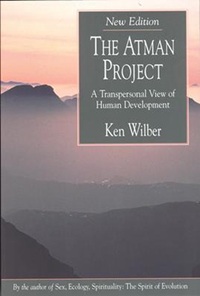
Ken Wilber's The Atman Project is often regarded as one of his early masterpieces—a bold attempt to integrate Western developmental psychology with Eastern mysticism into a single, sweeping model of human growth. Written in the late 1970s, it represents Wilber at his most ambitious and systematic, laying out what would later become the backbone of his “spectrum of consciousness.” Yet precisely where the book is most daring—its metaphysical unification—it is also most vulnerable. This is a work of remarkable scope and intellectual energy. It is also a work that rests on a set of highly questionable assumptions, both empirical and philosophical. The Core Thesis: Development as a Spiritual QuestWilber's central claim is deceptively simple. All human development, he argues, is ultimately driven by a hidden spiritual impulse—the “Atman project.” Every desire, every psychological movement, is, at root, an attempt to recover a lost unity with the Absolute. In this framework, infancy begins in a state of undifferentiated unity, though Wilber is careful to label this as pre-personal rather than genuinely spiritual. From there, the individual develops into egoic differentiation, only to potentially transcend that ego in a higher, transpersonal realization. Development thus becomes a metaphysical drama: from unconscious unity, through alienation, toward conscious reunion. This tripartite structure—prepersonal, personal, transpersonal—is one of Wilber's most enduring contributions. It allows him to criticize both reductionism and Romanticism, insisting that neither the dismissal of higher states nor the glorification of regression does justice to the complexity of development. Yet the elegance of the model conceals a deeper issue: it presupposes the metaphysical reality it claims to demonstrate. The Pre/Trans Fallacy: A Genuine InsightOne of the book's most compelling contributions is Wilber's critique of what he later termed the “pre/trans fallacy.” He argues, convincingly, that early infantile states of undifferentiated unity should not be confused with advanced spiritual realization, even if both appear non-dual on the surface. This insight directly challenges Jungian and Romantic tendencies to idealize regression as enlightenment. Wilber makes it clear that the infant is not enlightened, that mystical unity is not a return to infancy, and that development is not a nostalgic cycle but a structural transformation. This distinction remains one of Wilber's most valuable contributions and continues to shape discussions in transpersonal psychology. It is a rare moment in the book where conceptual clarity aligns with psychological plausibility. The Grand Synthesis—and Its Methodological WeaknessWilber's ambition to unify diverse psychological and spiritual traditions is undeniable. Drawing on figures such as Jean Piaget, Sigmund Freud, and Lawrence Kohlberg, alongside Buddhist and Vedantic frameworks, he constructs a single developmental ladder that stretches from infancy to enlightenment. Yet this synthesis is largely analogical rather than empirical. Structural similarities between different systems are treated as evidence of a shared underlying reality. Cognitive stages become equated with spiritual realizations, psychoanalytic drives are reframed as distorted spiritual impulses, and symbolic correspondences are elevated to ontological claims. What emerges is not a scientifically grounded integration, but a form of conceptual alignment driven by pattern recognition. The coherence is impressive, but it is achieved by smoothing over methodological differences rather than resolving them. The Atman Hypothesis: Explanation or Projection?At the center of the book lies its most controversial claim: that all human motivation is ultimately a disguised search for Spirit. Every desire, in this view, is a substitute for the Absolute; every drive is a fragment of a deeper spiritual longing. This idea is powerful, but it is also methodologically problematic. It is essentially unfalsifiable. No possible evidence could disprove it, because any behavior can be reinterpreted as a form of spiritual seeking. This places the theory closer to theology than to psychology. Moreover, it violates the principle of explanatory economy. Instead of accounting for human behavior through evolutionary, social, and cognitive mechanisms, Wilber reduces everything to a single metaphysical drive. The result is a kind of spiritual reductionism that mirrors the materialist reductionism he criticizes. Development or Mythology?At several points, Wilber's account slips from developmental theory into mythic narrative. His notion of involution—Spirit descending into matter—followed by evolution—Spirit returning to itself—reads less like a scientific model and more like a cosmological story. This tendency becomes especially clear in passages that invite the reader to “remember” their identity with the cosmos or to recognize themselves as the ground of all being. Such language may be evocative, but it blurs the boundary between analysis and proclamation. The result is an uneasy hybrid: part psychology, part metaphysics, part spiritual exhortation. For some readers, this synthesis will feel profound; for others, it will appear as a category mistake. The Problem of EvidenceWilber defends his framework by appealing to a wide range of sources, including contemplative traditions, which he treats as forms of phenomenological evidence. But mystical reports are culturally shaped, interpretively loaded, and methodologically diverse. To treat them as straightforward data points in a universal developmental model is highly problematic. Modern psychology requires operational clarity, replicability, and methodological rigor—criteria that Wilber's approach does not meet. His evidence base is eclectic and selectively interpreted, reinforcing the impression that the model precedes the data rather than emerging from it. Style and AppealDespite these criticisms, the appeal of The Atman Project is undeniable. Wilber writes with clarity and conviction, and his ability to synthesize disparate domains into a single narrative is intellectually compelling. For readers dissatisfied with reductionist accounts of mind, the book offers a meaningful and expansive alternative. It presents human development as purposeful, directional, and spiritually significant. But this appeal comes at a cost. The coherence of the system is achieved not through empirical validation, but through conceptual compression. What feels like integration may, on closer inspection, be a form of simplification. Final AssessmentThe Atman Project is best read not as a scientific theory of development, but as a metaphysical reinterpretation of psychology. Its strengths lie in its conceptual innovations and its ambitious scope, particularly its clarification of the pre/trans distinction. Its weaknesses lie in its method. The reliance on analogical reasoning, the unfalsifiable nature of its central hypothesis, and the blending of myth and psychology all undermine its claims to explanatory rigor. Wilber does not so much explain development as redescribe it within a spiritual framework. For readers already sympathetic to that framework, the book will feel illuminating. For those seeking empirical grounding, it will appear as an elaborate projection. In the end, The Atman Project stands as a revealing document of Wilber's early thought: brilliant, provocative, and deeply problematic in equal measure.
Widget is loading comments...
|