|
TRANSLATE THIS ARTICLE
Integral World: Exploring Theories of Everything
An independent forum for a critical discussion of the integral philosophy of Ken Wilber
  Frank Visser, graduated as a psychologist of culture and religion, founded IntegralWorld in 1997. He worked as production manager for various publishing houses and as service manager for various internet companies and lives in Amsterdam. Books: Ken Wilber: Thought as Passion (SUNY, 2003), and The Corona Conspiracy: Combatting Disinformation about the Coronavirus (Kindle, 2020). Frank Visser, graduated as a psychologist of culture and religion, founded IntegralWorld in 1997. He worked as production manager for various publishing houses and as service manager for various internet companies and lives in Amsterdam. Books: Ken Wilber: Thought as Passion (SUNY, 2003), and The Corona Conspiracy: Combatting Disinformation about the Coronavirus (Kindle, 2020).
Check out my other conversations with ChatGPT Rudolf Steiner and His Enduring RelevanceBetween Spiritual Science and Cultural PracticeFrank Visser / ChatGPT
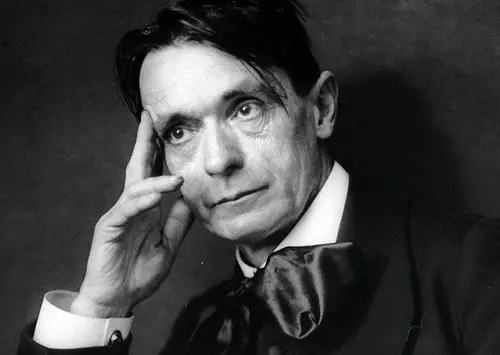
Introduction: A Thinker Between WorldsRudolf Steiner occupies an unusual position in modern intellectual history. He is simultaneously regarded as a serious post-Kantian epistemologist, an esoteric spiritual teacher, and the originator of a wide-ranging cultural movement known as Anthroposophy. His relevance today does not hinge on whether one accepts his metaphysical claims, but on how his ideas continue to shape education, agriculture, medicine, and the arts in tangible ways. From Philosophy to Spiritual Science Steiner�s early intellectual work was grounded in German Idealism, particularly in his interpretations of Goethe and Kant. In this phase, he developed a theory of knowledge in which thinking is not merely passive reception of sensory data but an active participation in reality itself. This positions him in proximity to later phenomenological and constructivist traditions, even though his framework is ultimately more metaphysically expansive. The crucial transition in Steiner�s intellectual life was his development of Anthroposophy. Here, he moved from philosophical analysis to the claim that disciplined inner development can yield access to higher forms of cognition. These include detailed descriptions of spiritual hierarchies, reincarnation, and cosmic evolutionary stages. This shift fundamentally defines both his influence and the controversy surrounding him. Anthroposophy and the Claim of Higher CognitionAnthroposophy presents itself as a �spiritual science,� meaning a systematic extension of cognition beyond the empirical domain. Steiner argued that human consciousness can be refined to directly perceive spiritual realities in a way analogous to scientific observation in the physical world. From a contemporary standpoint, this claim is difficult to reconcile with intersubjective verification standards that define modern science. His method depends heavily on disciplined subjective experience, which cannot be externally validated in the conventional sense. This epistemological tension remains one of the central criticisms of his system. Educational Legacy: Waldorf PedagogyOne of Steiner�s most durable contributions is the Waldorf education system. These schools emphasize developmental stages, artistic integration, imaginative learning, and holistic child development. In contrast to highly standardized and test-oriented educational models, Waldorf pedagogy prioritizes experiential and creative engagement. Regardless of one�s stance on Steiner�s metaphysics, many educators acknowledge that he identified a real limitation in modern schooling: its tendency to privilege abstract cognition over imagination and affective development. Critics, however, argue that elements of the system remain implicitly shaped by Anthroposophical developmental doctrines. Biodynamic Agriculture and Ecological ThinkingSteiner�s biodynamic agriculture extends organic farming into a cosmological framework involving lunar rhythms, soil vitality, and specific preparatory substances. From a scientific perspective, its causal explanations are not generally accepted within agronomy. Nevertheless, biodynamics has had a measurable influence on the broader organic and ecological agriculture movement. Its emphasis on soil health, farm individuality, and ecological integration has contributed to practices now widely recognized as environmentally beneficial, even when its metaphysical justifications are set aside. Artistic and Architectural InfluenceSteiner also left a significant mark on architecture and the arts. The Goetheanum in Switzerland stands as a physical embodiment of Anthroposophical principles translated into architectural form. His work in eurythmy and education-related arts reflects an attempt to integrate movement, expression, and cognition into a unified cultural practice. Even critics who reject his spiritual system often acknowledge that Steiner treated artistic form as epistemically meaningful rather than purely decorative or subjective. Epistemological Critique and Structural Limitations Despite his cultural influence, Steiner�s system faces persistent philosophical challenges. His reliance on clairvoyant cognition introduces a methodological gap between his claims and the standards of verification used in science and academic philosophy. This creates a structural tension: Steiner seeks to extend knowledge beyond material reductionism while simultaneously claiming scientific rigor for methods that are not publicly reproducible. From a philosophy of science perspective, this remains his most significant limitation. Conclusion: A Cultural System BuilderRudolf Steiner�s relevance today is best understood in terms of cultural impact rather than doctrinal acceptance. His ideas continue to shape education, agriculture, and the arts, even among those who reject his metaphysical framework. He can be interpreted neither simply as a mystic nor as a failed scientist, but as a comprehensive system builder who attempted to integrate epistemology, ethics, and spiritual imagination into a unified vision of modern life. Whether this synthesis is seen as visionary or overextended depends on one�s tolerance for forms of knowledge that extend beyond empirical verification. Addendum: Intellectual and Cultural Figures Influenced by SteinerSteiner�s influence extends far beyond the institutional boundaries of Anthroposophy itself. It has functioned less as a closed doctrine and more as a diffuse cultural reservoir that has shaped individuals across education, philosophy, the arts, science-adjacent ecological movements, and alternative medicine. In education, the most visible legacy is the global network of Waldorf schools, but the influence is not limited to institutional replication. Numerous educators outside the formal Steiner system have adopted elements of his developmental psychology, particularly the emphasis on imagination, rhythm, and artistic integration in early and middle childhood education. In practice, this has seeped into broader progressive education debates about experiential learning and child-centered pedagogy. In the arts and architecture, Steiner�s imprint can be seen in the work of designers and architects associated with organic and expressionist traditions. The Goetheanum itself became a reference point for experimental architecture, influencing practitioners interested in non-Euclidean, sculptural, and spiritually inflected design languages. Even where Steiner is not explicitly cited, the idea that form can embody developmental or spiritual principles has parallels in later 20th-century architectural experimentation. In agriculture, biodynamic farming has influenced a generation of organic and regenerative agriculture practitioners. While many farmers and agronomists reject Steiner�s esoteric explanations, they often adopt biodynamic techniques selectively, particularly those related to soil vitality, composting practices, and ecological integration at the farm level. This selective uptake illustrates a broader pattern: practical elements survive independently of cosmological justification. In philosophy and cultural theory, Steiner has exerted a subtler influence. Thinkers interested in post-materialist epistemologies, holistic science, and participatory ontology occasionally reference him as a precursor, even if critically. His attempt to expand cognition beyond representational models places him in a conceptual lineage that intersects, however loosely, with phenomenology, process philosophy, and certain strands of systems thinking. Finally, Steiner�s broader cultural influence is visible in the many individuals who have passed through Anthroposophical institutions without remaining doctrinally committed. Doctors trained in Anthroposophical medicine, teachers in Waldorf schools, and farmers in biodynamic contexts often develop hybrid intellectual positions: pragmatic in method, but shaped by Steiner�s holistic sensibility. In this sense, Steiner�s influence is best understood as atmospheric rather than doctrinal�a set of organizing intuitions about wholeness, development, and meaning that continue to circulate in modified form long after their original metaphysical framework is set aside.
Comment Form is loading comments...
|