|
TRANSLATE THIS ARTICLE
Integral World: Exploring Theories of Everything
An independent forum for a critical discussion of the integral philosophy of Ken Wilber
  Frank Visser, graduated as a psychologist of culture and religion, founded IntegralWorld in 1997. He worked as production manager for various publishing houses and as service manager for various internet companies and lives in Amsterdam. Books: Ken Wilber: Thought as Passion (SUNY, 2003), and The Corona Conspiracy: Combatting Disinformation about the Coronavirus (Kindle, 2020). Frank Visser, graduated as a psychologist of culture and religion, founded IntegralWorld in 1997. He worked as production manager for various publishing houses and as service manager for various internet companies and lives in Amsterdam. Books: Ken Wilber: Thought as Passion (SUNY, 2003), and The Corona Conspiracy: Combatting Disinformation about the Coronavirus (Kindle, 2020).
Check out my other conversations with ChatGPT Annie BesantThe Paradox of Progressive EsotericismFrank Visser / ChatGPT
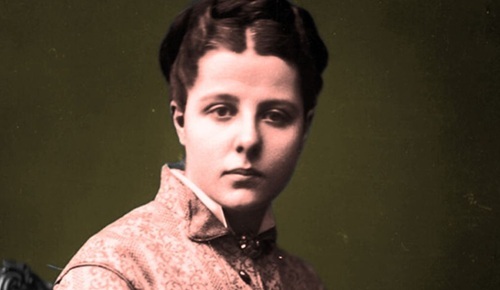 From Secular Radicalism to Social ReformThe early career of Annie Besant places her squarely within the tradition of 19th-century freethought and reform. Alongside figures such as Charles Bradlaugh, she championed causes that were controversial to the point of scandal: secularism, workers' rights, and access to birth control. Her involvement in the Knowlton pamphlet trial marked her as a public intellectual willing to confront both legal and religious authority. In this phase, Besant embodies the Enlightenment ideal of reason as a tool for social emancipation. The Turn to Theosophy: Re-Enchanting the WorldBesant's conversion to Theosophy under the influence of Helena Petrovna Blavatsky represents a decisive and puzzling shift. Theosophy offered a grand synthesis of religion, science, and mysticism, complete with hidden masters, subtle planes, and a teleological view of evolution. As a leading figure—and later president—of the The Theosophical Society, Besant elaborated and institutionalized these ideas on a global scale. From a modern critical standpoint, this transition raises enduring questions. How does a committed rationalist come to endorse clairvoyant investigations and speculative cosmologies? One plausible answer lies in the intellectual climate of her time: a period when science itself was uncovering invisible forces, thereby blurring the boundary between empiricism and speculation. Theosophy exploited this ambiguity, extending scientific metaphors into metaphysical territory without the constraints of empirical verification. A Diagnostic Figure for Modern SpiritualityBesant's relevance today lies partly in what she reveals about recurring patterns in intellectual life. Her trajectory—from secular critique to spiritual synthesis—mirrors a broader cultural oscillation between disenchantment and re-enchantment. This pattern persists in contemporary movements that seek to reconcile scientific authority with spiritual meaning. In this sense, Besant can be seen as a prototype of a still-familiar mindset: one that resists both reductionist materialism and traditional religion, yet often constructs elaborate alternative metaphysics in their place. The enduring appeal of such syntheses suggests that the psychological and cultural need for meaning frequently outstrips the available epistemic discipline. Political Engagement and Indian NationalismUnlike many esoteric thinkers, Besant did not confine herself to metaphysical speculation. Her work in India, particularly her leadership in the Indian National Congress, demonstrates a sustained engagement with concrete political realities. She became a prominent advocate for Indian self-rule, helping to internationalize the cause of independence. This political dimension complicates any straightforward dismissal of her as merely a purveyor of esotericism. Besant's activism had real-world consequences, contributing to the broader anti-colonial movement. At the same time, her spiritual worldview—structured around hierarchies of development and evolution—raises questions about the subtle ways metaphysical beliefs can shape political attitudes, sometimes reinforcing paternalistic assumptions even within emancipatory projects. The Krishnamurti Episode: Authority and Its CollapseOne of the most revealing episodes in Besant's career was her promotion of Jiddu Krishnamurti as a coming “World Teacher.” This project, developed in collaboration with Charles Webster Leadbeater, sought to provide a unifying spiritual figure for humanity. The eventual dissolution of this effort—when Krishnamurti rejected the role and disbanded the organization built around him—serves as a powerful case study in the dangers of imposed spiritual authority. It highlights the tension between hierarchical, revelation-based systems and the modern emphasis on individual autonomy and critical inquiry. In retrospect, the episode underscores the fragility of grand metaphysical narratives when confronted with personal independence. Legacy and Intellectual AfterlifeHistorically, Besant occupies a unique position at the intersection of reformist politics, esoteric spirituality, and proto-global thought. Her influence extended beyond her immediate context, shaping later developments within Theosophy and related movements. For contemporary critics, her legacy is particularly instructive. She helped establish a mode of discourse that blends scientific terminology with metaphysical speculation—a pattern later echoed in figures such as Ken Wilber. This style of thought continues to attract adherents, suggesting that the aspiration to integrate science and spirituality remains as potent—and as problematic—as ever. Conclusion: Inspiration and CautionAnnie Besant endures as both an inspiring and cautionary figure. She exemplifies intellectual courage, social commitment, and a willingness to cross disciplinary and cultural boundaries. At the same time, her embrace of elaborate esoteric systems illustrates how the search for meaning can drift into speculative excess. Her relevance today lies precisely in this duality. She forces us to confront a persistent dilemma: how to pursue a meaningful synthesis of knowledge without sacrificing critical rigor. In that unresolved tension, Besant remains unmistakably modern. Appendix: Annie Besant and the Psychological Science of Her TimeAn often underappreciated aspect of Annie Besant is her acute sensitivity to the emerging field of psychology in the late 19th and early 20th centuries. This was a formative period in which psychology was beginning to differentiate itself from philosophy and physiology, with figures such as William James and Sigmund Freud exploring the structure of consciousness, religious experience, and the unconscious. Besant showed a keen awareness of these developments, particularly in her treatment of consciousness as layered and dynamic. Her descriptions of “planes” and “bodies” can be read, in part, as an attempt to map subjective experience in a systematic way—an effort parallel to, though far less empirically grounded than, contemporary psychological models. Where early psychologists spoke of subconscious processes or altered states, Besant translated these into the language of astral and mental planes. This interpretive move is crucial. It suggests that Theosophy was not merely a relic of pre-scientific thinking, but also an attempt—however flawed—to assimilate and extend the new science of mind. Besant recognized that human experience could not be reduced to surface-level rationality; she intuited depth, conflict, and transformation within the psyche. In that sense, she aligned herself with a broader intellectual shift toward interiority. However, the limitations of her approach are equally evident. By embedding psychological insights within an elaborate metaphysical framework, she effectively insulated them from empirical scrutiny. Experiences that might have been investigated as cognitive or neurological phenomena were instead reified into objective features of a hidden cosmos. This move replaced methodological uncertainty with ontological certainty—a transition that short-circuited the self-correcting mechanisms of science. Even so, Besant's engagement with psychological themes remains historically significant. She stands as an intermediary figure who recognized the importance of inner experience at a time when it was only beginning to be studied systematically. Her work illustrates both the promise and the peril of early attempts to theorize consciousness: the promise of acknowledging its depth, and the peril of over-interpreting it through speculative metaphysics. In contemporary terms, Besant's psychological legacy invites a nuanced assessment. She neither anticipated modern psychology in a rigorous sense nor remained untouched by it. Instead, she occupied a liminal space where scientific curiosity and metaphysical imagination intersected—an unstable but revealing position that continues to echo in present-day discussions of consciousness and spirituality.
Widget is loading comments...
|