|
TRANSLATE THIS ARTICLE
Integral World: Exploring Theories of Everything
An independent forum for a critical discussion of the integral philosophy of Ken Wilber
  Frank Visser, graduated as a psychologist of culture and religion, founded IntegralWorld in 1997. He worked as production manager for various publishing houses and as service manager for various internet companies and lives in Amsterdam. Books: Ken Wilber: Thought as Passion (SUNY, 2003), and The Corona Conspiracy: Combatting Disinformation about the Coronavirus (Kindle, 2020). Frank Visser, graduated as a psychologist of culture and religion, founded IntegralWorld in 1997. He worked as production manager for various publishing houses and as service manager for various internet companies and lives in Amsterdam. Books: Ken Wilber: Thought as Passion (SUNY, 2003), and The Corona Conspiracy: Combatting Disinformation about the Coronavirus (Kindle, 2020).
Check out my other conversations with ChatGPT The Occult Architect of Modern EsotericismThe Relevance of Charles Webster LeadbeaterFrank Visser / ChatGPT
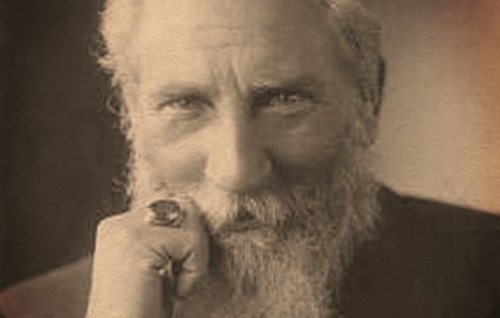 The name of Charles Webster Leadbeater (1854-1934) occupies a peculiar position in the history of modern spirituality. Once a central authority within the Theosophical Society, he is now more often remembered for controversy than for intellectual contribution. Yet dismissing Leadbeater outright would obscure his substantial role in shaping the vocabulary, imagery, and structure of contemporary esotericism. His relevance lies less in the truth of his claims than in their enduring cultural and ideological impact. Systematizing the InvisibleLeadbeater's primary contribution was to give detailed, quasi-empirical descriptions of invisible realms. Building on the foundations laid by Helena Petrovna Blavatsky, he transformed Theosophy from a dense and often cryptic synthesis of Eastern and Western traditions into something more accessible and, crucially, more visualizable. His works—such as The Astral Plane and Man Visible and Invisible—offered readers a structured cosmos populated by planes, bodies, and energies. This systematization proved enormously influential. Later esoteric and New Age movements adopted his layered cosmology almost wholesale. Concepts such as the “astral body,” “etheric double,” and “subtle planes” became staples of spiritual discourse, often detached from their Theosophical origins. In this sense, Leadbeater functioned as a translator of esoteric abstraction into a kind of spiritual pseudo-science. Clairvoyance as MethodA defining feature of Leadbeater's work was his reliance on clairvoyance as a mode of investigation. He claimed to observe atoms, auras, and past lives directly, presenting his findings with the confidence of a natural scientist. In books like Occult Chemistry (co-authored with Annie Besant), he described subatomic structures decades before modern physics had fully articulated them—though with results that bear little resemblance to established science. From a contemporary standpoint, this methodological stance is deeply problematic. Clairvoyance lacks reproducibility, falsifiability, and intersubjective verification—the core criteria of scientific inquiry. Yet its rhetorical power should not be underestimated. By framing mystical insight as observation, Leadbeater helped legitimize a mode of thinking that persists in various forms today, particularly in movements that seek to reconcile spirituality with science without adhering to scientific rigor. Inventing Spiritual HierarchiesLeadbeater also played a pivotal role in elaborating spiritual hierarchies and evolutionary schemas. His teachings on Masters, initiations, and the progression of the soul contributed to a highly stratified vision of spiritual development. This vision would later influence figures such as Alice Bailey and, indirectly, Ken Wilber, whose own developmental models echo Theosophical stage theories, albeit in more philosophically sophisticated terms. This hierarchical framework has proven both attractive and problematic. On the one hand, it offers a sense of direction and purpose—spiritual evolution as a grand narrative. On the other, it risks reinforcing elitism and unverifiable claims of higher knowledge. Leadbeater's influence here is thus double-edged: he provided a compelling map, but one that invites dogmatism and self-aggrandizement. The Krishnamurti EpisodePerhaps the most historically consequential episode involving Leadbeater was his “discovery” of Jiddu Krishnamurti, whom he proclaimed to be the vehicle for a coming World Teacher. Together with Besant, he helped groom Krishnamurti for this role within the Order of the Star in the East. The eventual collapse of this project—culminating in Krishnamurti's famous dissolution of the Order in 1929—stands as a dramatic repudiation of the very framework Leadbeater helped construct. Krishnamurti rejected all spiritual authority, hierarchy, and systematization, effectively dismantling the Theosophical edifice from within. Ironically, Leadbeater's greatest “success” became a powerful critique of his own worldview. Controversy and CredibilityNo assessment of Leadbeater's relevance can ignore the controversies surrounding him, particularly allegations of inappropriate conduct with young boys, which led to his temporary expulsion from the Theosophical Society. Although he was later reinstated, these episodes cast a long shadow over his legacy. From a modern perspective, these issues raise serious questions about authority and trust within spiritual movements. Leadbeater exemplifies the dangers of charismatic leadership combined with unverifiable claims to higher knowledge. His case serves as an early warning about the ethical vulnerabilities inherent in guru-disciple dynamics—a theme that remains highly relevant today. Enduring Influence in New Age CultureDespite—or perhaps because of—these controversies, Leadbeater's ideas have permeated contemporary spirituality. The New Age movement, with its emphasis on auras, chakras, past lives, and spiritual evolution, owes a significant debt to Theosophical pioneers like him. Even when his name is absent, his conceptual framework often remains intact. This diffusion illustrates a broader cultural phenomenon: ideas can outlive their originators, shedding context and critique along the way. Leadbeater's detailed but unverifiable descriptions of unseen realities have become part of the ambient background of modern spirituality, rarely questioned at their source. Conclusion: A Cautionary RelevanceThe relevance of Charles Webster Leadbeater lies not in the empirical validity of his claims but in his role as a formative architect of modern esoteric thought. He systematized the invisible, legitimized clairvoyance as inquiry, and constructed influential models of spiritual hierarchy. At the same time, his life and work expose the epistemological and ethical pitfalls of such endeavors. For contemporary readers—especially those engaged in critical examinations of spiritual and integral frameworks—Leadbeater serves as both a source and a caution. He reminds us how easily imaginative speculation can harden into doctrine, and how urgently such doctrines require scrutiny. Appendix: Does the Astral Plane Exist?The notion of the “astral plane,” as elaborated by Charles Webster Leadbeater, occupies a central place in Theosophical cosmology. It is described as a non-physical realm interpenetrating the material world, accessible through dreams, clairvoyance, or post-mortem existence. The question of its existence, however, depends fundamentally on what standards of evidence and ontology one is willing to accept. From the standpoint of empirical science, the astral plane does not exist. There is no measurable, detectable, or instrumentally verifiable domain corresponding to Leadbeater's detailed descriptions. Modern physics, despite its exploration of exotic entities such as quantum fields and higher-dimensional models, provides no support for a layered universe of “subtle planes” inhabited by quasi-material forms. Nor has neuroscience uncovered any mechanism by which consciousness could literally travel to or perceive such realms. Experiences often interpreted as “astral projection” are more parsimoniously explained as internally generated phenomena—lucid dreams, hypnagogic hallucinations, or dissociative states. This aligns with the principle of explanatory economy: when a phenomenon can be accounted for by known psychological and neurological processes, there is no need to posit an additional ontological layer. In this sense, the astral plane fails Occam's Razor. It multiplies entities beyond necessity. Yet the persistence of the concept suggests that its significance is not primarily empirical but experiential and symbolic. Reports of out-of-body experiences, near-death episodes, and vivid dreamscapes are cross-cultural and psychologically compelling. For those who undergo them, the sense of reality can be overwhelming. The astral plane, in this light, functions as an interpretive framework—a culturally shaped narrative that organizes and gives meaning to unusual states of consciousness. Here, a more nuanced position becomes possible. One may reject the astral plane as an objectively existing realm while acknowledging the reality of the experiences that gave rise to it. These experiences are not “illusory” in the trivial sense; they are genuine mental events with specific phenomenological characteristics. What is contested is their ontological interpretation. The problem arises when subjective reports are reified into objective geography. Leadbeater's writings move decisively in this direction: he does not merely describe experiences but maps a world, complete with inhabitants, laws, and evolutionary functions. This transformation—from phenomenology to cosmology—is precisely where critical scrutiny is required. Without independent verification, such mappings remain speculative at best and misleading at worst. It is also worth noting that the astral plane hypothesis has shown no progressive refinement in response to scientific advances. Unlike scientific theories, which evolve through falsification and revision, the Theosophical model has remained largely static, insulated from empirical challenge. This lack of methodological feedback further undermines its credibility as a description of reality. In conclusion, the astral plane, as conceived by Leadbeater and his contemporaries, does not meet the criteria for objective existence within a scientific framework. It is better understood as a historically influential construct—an imaginative extension of inner experience into a structured outer realm. Its enduring appeal lies in its capacity to render the invisible vivid and the unknown intelligible, but this appeal should not be mistaken for evidence.
Comment Form is loading comments...
|