|
TRANSLATE THIS ARTICLE
Integral World: Exploring Theories of Everything
An independent forum for a critical discussion of the integral philosophy of Ken Wilber
 Ray Harris is a frequent contributor to this website. He has written articles on 9/11, boomeritis, the Iraq war and Third Way politics. Since 2007 he took to writing his novels Navaratri, Wild Child and Eden. Harris lives in Ballarat, Victoria, Australia.
Progressive Politics:
Defending Progressive Politics Colonialism and development Liberal democracy or kleptocracy Defending Progressive PoliticsRay HarrisIn many of my recent essays I've used the term regressive left to criticise certain political campaigns and political factions. What I have not done is explain in detail what I mean by progressive politics. I have offered my moral baseline in past essays but I have not explored what that means in practice. In this essay I want to establish a set of principles that I will apply in a series of future essays exploring integral politics. I have two currently in mind: 1) An exploration of the paradox of colonialism and development. 2) The future of politics as a choice between liberal democracy and kleptocracy. The moral baseline is that every individual should be able to reach their highest potential. We are not there yet. And we may never quite get there. But we should at least be making steady progress toward that goal. The limitations.There are four areas of limitation that I can define. Whilst they share some similarities with Wilber's four quadrants, they are not derived from his system. 1. Natural abilityHumans display a broad range of inherent abilities that either constrain or enable specific capacities or talents. The most obvious example are the range of physiques found in competitive sports, with each type having distinct advantages and disadvantages in particular disciplines.
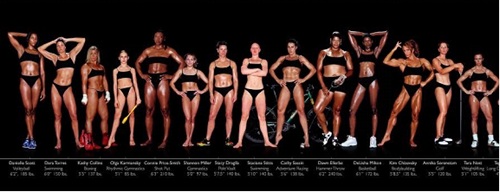 There is also a large range in cognitive capacity, from individuals with an intellectual disability to the top 'genius' range. Genetic variations also explain interests and talents in specific areas such as music, the visual and literary arts, taste, smell, sensory motor, creative imagination, logic and reason, etc. Some people are born tone deaf, others with perfect pitch; some with refined taste, others with little taste; and so on. We reach our full potential when we are able to discover, explore and express our inherent capacities. This leads to individual and societal well being. 2. StructuralThe many external factors. Maslow's hierarchy of needs is a good guide. Obviously if a person cannot meet their basic survival needs they cannot devote any time to reaching their full potential. For example, Australian Aborigines lived a subsistence lifestyle and had few material possessions. They did not develop the range of musical instruments found in other cultures and so had few ways to express inherent musical talent. Structural factors include relative wealth/status within a given society. This extends to the development of specialised trades and skills and institutions for training and education. Skilled individuals mastered and invented techniques, which in turn realised more potential. The shift to city-states - civilisation - saw an explosion in further specialisation and the development of capacities not linked to immediate survival. One of the key progressive achievements has been some form of universal, free education, alongside other social welfare programs. Another is some form of legislative protection from discrimination. 3. CulturalThe various beliefs, taboos, prohibitions, superstitions, ideologies and practices that define a culture. These can encourage or constrain human potential. The most obvious contemporary example is the Taliban's restriction on girls' education. Another is the Hindu caste system. Another are the various racial hierarchies. And still another are the many ways cultures censor expression or behaviour they disapprove of. If this section seems to be somewhat brief it is because a full examination of the many restrictions would take far too long. However, it is possible to summarise the main ideological barrier as a belief in the inherent superiority or inferiority of people based on class, ethnicity, religion, gender or sexuality, which leads to policies to enforce these beliefs. The most obvious example is the belief in a racial hierarchy designed to privilege the dominant ethnic group. 4. PsychologicalThis ranges from serious disorders such as psychopathy to the array of everyday neurosis: self-doubt, performance anxiety, lack of motivation, distraction (ADHD), etc. The disciplines of psychiatry and psychology are designed to help manage these limitations. There are entire industries built on sports, business and personal motivation. Progress within my lifetimeThe best way to examine how these factors interact is through well documented examples. It would be difficult to cover every example in a short essay, so I'll focus on three areas of significant progress that I have witnessed in my lifetime in Australia: Women's equality, Gay rights and Disabled rights. Women's equalityI'm not a fan of sport. I don't generally follow teams or my own nation in international competition. I admire individual achievement. However, I do make an exception for women's football, especially the Matildas, the Australian national team. I played high school football and at that time there was little opportunity for girls to play. Since then every major Australian code has established a professional women's competition: Australian Rules, Rugby and Association Football. I am particularly moved when I see young boys idolising their female football heroes such as Sam Kerr or Mary Fowler. This is not to suggest that women have achieved full equality. There are still many areas where women face barriers, most notably in politics, corporate management and specific careers. There is clearly more to be done. But there has been steady progress. The current governing party, Labor, has achieved parity in parliament with women representing 56% of the federal caucus. Gay rightsWhen I was born homosexuality was a criminal offence. Today homosexuality is widely accepted and same sex marriage has been legal for eight years. Public figures no longer need to hide their sexuality. Penny Wong, Australia's Minister for Foreign Affairs, is openly gay, as is the Matilda's leading striker, Sam Kerr. Of course, not everyone is happy about this, but anti-homosexual conservatives are in the minority and there are no plans to reverse progressive legislation. The religious conservatives warned that the sky would fall in. It didn't.

Foreign Minister Penny Wong and wife, Sophie Allouache welcome their second child.
Disability rightsPerhaps the greatest contributing factor allowing those with a physical disability to reach their full potential is advanced technology. There has been amazing progress in prosthetics, hearing and visual aids, and especially computer technology. People with profound disability can now communicate and participate in many areas of life previously denied to them. One area of note is the development of specialised sports along with specially designed equipment such as racing wheelchairs.

Madison De Rozario, Australian Paralympic gold medallist
Legislative reform has removed areas of discrimination. All new buildings must allow for disability access: ramps and lifts for wheelchairs, touch signs for the blind and so on. Australian banknotes now have tactile markers to denote denominations. More significantly, Australia has created a world first disability welfare scheme, the National Disability Insurance Scheme, to provide financial support so people can afford the necessary forms of assistance. Progress can be objectively measuredIt's not a matter of opinion. We know the status of women's rights in each country. We know which countries have legalised same sex marriage and which countries still criminalise homosexuality. And we know how each nation has progressed in disability rights. Using this data we can determine just how progressive specific countries are, those that resist progressive reform, and those that have actually regressed. I've already mentioned the example of the Taliban. The regressive leftBeing progressive and being a member of the left is not the same. There are plenty of examples where the traditional socialist/communist left have supported regressive policies. The prime example is Stalinist Russia, which rejected some of the progressive policies of the early Bolshevik movement. Using my three examples. Stalin's views on women were mixed. He saw them as a vital part of the work force (as part of the Leninist fetishisation of the proletariat). At the same time he encouraged women to get married and have children. Earlier reforms on divorce and abortion were wound back. And most curiously, Stalin banned women playing football. All sporting activity was militarised and directed towards official Olympic disciplines to demonstrate the physical superiority of Soviet citizens.
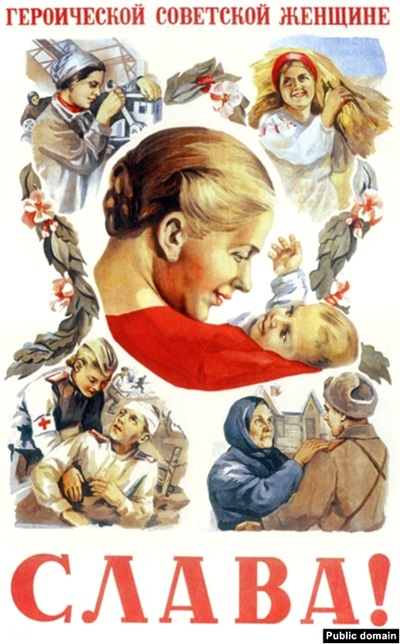
Female stereotypes in Soviet Propaganda
In 1934 Stalin re-criminalised homosexuality, declaring it a bourgeois degeneracy. Under the developmental psychologist, Lev Vygotsky, the early Soviet Union pursued progressive policies towards the disabled. Vygotsky declared that: “At any given moment, a child is full of unrealized potentials, and these offer a wealth of creative resources on which a handicapped child, or any child, may and must build.” Under Stalin, the disabled became a burden and their rights were denied. In 1931 special education for the disabled was abolished and in 1936 the work of Vygotsky was officially denounced. The disabled were hidden away, often in appalling and cruel conditions. Competing prioritiesAs I have said elsewhere, I am from the left and I am fully aware of the debates over competing priorities. There was a famous 1975 Women and Politics Conference held in Canberra in which Aboriginal activists denounced women's liberation for being a white movement, echoing the debate in the US between the Black Power movement and Second Wave Feminism. The same tensions arose with the rise of the Gay Rights movement between socialists, capitalist gays and some separatist lesbians. A tension that still exists today between some Trans activists and TERFs (Trans Exclusionary Radical Feminists). These debates mystify the average working class, socialist trade unionist whose priority is challenging the capitalist class. More than a few working class men are traditionalist, misogynist, racist and homophobic. Making progress in one area, say wage equity, does not imply making progress in other areas. IntersectionalityIt's a nice idea, unfortunately even those who argue that progress for one must mean progress for all still prioritise their favoured agenda over others. There is a still a hierarchy of causes. Turns out being an ally in one cause, doesn't mean you are an ally in others. The modern example of this contradiction is Gays for Palestine where some naive sections of the Queer community do not know that the majority of Palestinians condemn homosexuality and that it is Israel that has a vibrant queer community. The solidarity is not reciprocal. The great contradiction - the anti-Western leftAs I said above progress can be objectively measured and using those measures it is clear that it is Western nations that are the most progressive. This is a legacy of the Enlightenment and the expansion of human rights. The first country to grant women the vote was New Zealand in 1893. The first country to legalise same sex marriage was the Netherlands in 2000. The first country to ban discrimination on the grounds of disability was the US in 1990 with the passing of the Americans with Disabilities Act. The Nordic countries, alongside Canada, Australia and New Zealand almost exclusively sit in the top 10 countries in terms of progressive policies. The US generally sits lower down, often in the top 20 or 30. Given this, why are so many on the left anti-Western? The main cause is false identification and false causation. The socialist left believe that capitalism is the primary cause of social injustice and must therefore be overthrown. Despite capitalism being widely accepted in the East and Global South, the term Western is considered synonymous with capitalism. The glaring contradiction here, as I have mentioned many times, is that socialism and Marxism are also the product of the Western Enlightenment. The other false identification is a hangover from the Cold War and the contest between capitalist America and communist Russia. The term Western became synonymous with US imperialism/capitalism. This conflation ignores the important differences between capitalist countries. Here the US is regarded as the principal bad actor in global affairs and any ally of the US is treated with suspicion. It doesn't matter how progressive a country may be, it is automatically on the wrong side if it is a US ally. Using the same logic any regime that is attacked by the US deserves automatic sympathy no matter how repressive the regime is. I recall a well known socialist telling me that he would prefer that Iraq become an Iranian style theocracy than a US puppet state, even if that was at the cost of women's rights. These distinctions are now redundant because the major communist powers of Russia and China have adopted some form of capitalism. Russia has abandoned communism altogether to become proto-fascist and China has adopted a modified form of state controlled capitalism. Both countries rate poorly in terms of progressive reform. As do the other nominally communist countries of Cuba, Laos, North Korea and Vietnam (Cuba is the most progressive). The other factor at play is a glass half-empty cynicism. Activists criticise the West for being too slow to institute progressive reform. It is judged by its failures, not its successes. A good example is slavery. The West is still criticised for its part in the Atlantic slave trade, but not acknowledged for the progressive movement that eventually banned it. How do the BRICS nations rate on progressive reform?Many on the anti-Western left look to the BRICS nations as an alternative. Unfortunately, the BRICS nations do not compare well on progressive reform. They are not the worst, but they are hardly exemplars. For comparison the Nordic five score above 90% in the Social Progress Index, but the BRICS five sit in the middle, with Brazil scoring the highest at 71% and India the lowest at 53%.
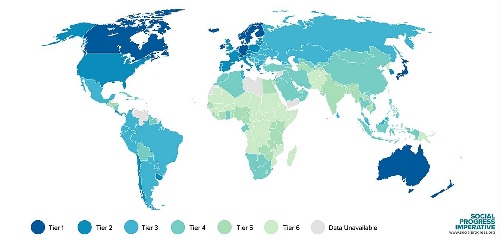
Mapping social progress
It's not all about economic developmentAt this point some might raise the reasonable objection that the Nordic countries are developed economies and therefore have a number of advantages developing nations do not. This is valid in areas that require financial investment, such as building schools, hospitals and funding welfare programs. It is irrelevant where the major factor is ideology, especially religious ideology. Granting women equality and legalising same sex marriage do not require financial investment. It is an issue of simple social acceptance. Afghanistan is a poor country, but it was just as poor when it allowed girls access to education. The Taliban's decision to restrict access is purely ideological. Does ideology serve people or do people serve ideology?There are several belief systems that demand people suppress their inherent potential in the name of some ideologically defined greater good. The most obvious are the various religious systems that impose rigid roles for men, women and children as part of an imagined divine order - a divine order that coincidentally privileges the elite. Political ideologies also dictate appropriate behaviour. The communist countries underwent violent purges designed to impose ideological conformity. Both the left and right use the tactics of deplatforming, cancelling and shaming to silence nonconformist views. Collectivism versus IndividualismOne of the more curious complaints made by Putin against the generic West is that it is too individualistic. What he really means is that the West tolerates dissent and difference. A good example of this is that liberal democracies have tolerated the existence of groups radically opposed to liberal democracy, including pro-Russian communist parties. In contrast communist countries were largely intolerant of any group that deviated from the ideologically accepted position. Collectivism usually means conformism. The reality is that individuals naturally choose to collaborate with others. The idea of the lone, creative genius is a myth. Talented individuals live in communities that nurture and enable their talent. There would have been no Confucius without the system of education and government bureaucracy. No Shakespeare without a vibrant theatrical culture in Elizabethan England. And no Stephen Hawking without all the mathematicians and physicists that preceded him, the institutions that supported him, the technology that allowed him to communicate and the medical and care system that allowed him to live.

Stephen Hawking
Societies thrive when individuals realise their potentialAs I was writing this the Australian Broadcasting Corporation televised the Young Performers Awards, an annual competition to recognise young classical talent. There are similar awards for up and coming musicians in several genres: popular, country, jazz. But it is not confined to music competitions. There are awards across multiple fields and trades. The aim is to discover and nurture talent. The benefits of civilisation are cumulative and enrich everyone. Consider the invention of weaving to make cloth, material even the poorest have access to. The multiple innovations and discoveries that make life bearable only came about because societies created the circumstances that allowed talented individuals to express that talent. The technology that now allows even the severely disabled to lead fulfilled lives was created by people free to invent. Societies that suppress human talent can become stagnant and boring - one could even say depressed. This was the fate of many of those countries controlled by the Soviet Union. When the Berlin Wall collapsed there was a burst of creativity in Eastern Berlin. The threat of the newIt shouldn't need to be said because it is rather obvious. Some people are inherently conservative and they don't like change. However, a society that encourages people to reach their full potential needs to manage the change that comes when those 'realised' people challenge the status quo. Talented people are naturally innovative and creative. This can be disruptive. History is full of accounts of conflict caused by innovation challenging tradition, some of which has resulted in the persecution of the innovators. Consider the trial of Galileo. The Qing dynasty notoriously attempted to turn its back on scientific and industrial modernisation. This lead to enormous frustration amongst the young intellectuals who demanded change. This came in two forms. Those who embraced liberal democracy and those who embraced communism. Japan had also attempted to turn its back on growing European influence during the Edo period. This policy was reversed during the Meiji Restoration, which then saw a period of rapid modernisation. This creates a dialectical tension. If change is too rapid there is a conservative backlash. If conservatives fail to change there is a progressive backlash. The tendency in the 'West', despite periods of reversal, has been a steady acceptance of progressive policies. What's next?As I said at the beginning, this essay is designed to establish my definition of progressive - or integral - politics. It is the beginning of a series of essays applying that definition to contemporary issues. The next essay will examine the controversy around colonialism and development.
Comment Form is loading comments...
|