
AQAL, THE NEXT GENERATION?
How ADAPT Points the
Way Toward a Major Revision
Of Ken Wilber’s Model of Human Development
PART 1: THE ADAPT MODEL
Hugh & Amalia Kaye Martin
P.O. Box 1736
Sebastopol, CA 95473
(707) 874-9799/ -9699
MartinHughCo@Gmail.com
MartinAKaye@Gmail.com
Copyright Hugh Martin & Co. December 2007
 PREFACE
ADAPT – The Next Generation of AQAL and ILP?
Is AQAL the best foundation for an Integral program of personal growth? This article proposes an alternative model called ADAP2T (All Dimensions, All Processes, All Participants, Together) that is more clear, more balanced, more differentiated, and more complete.
Are there four essential Dimensions, as in AQAL[1] – or really at least eight, as in ADAPT? Is there just one key Participant, as in AQAL – or at least seven, as in ADAPT? Are there nine basic Process categories, as in ILP[2] – or really at least 33, as in ADAPT? Is there just one form of Orchestration, or at least 12? Are both AQAL and ILP sufficiently complete and articulated to be of optimal use as tools for personal growth? And are they sufficiently integrated and coordinated to deserve the title Integral?
Ken Wilber is the Big Kahuna of Integral Theory. Everything Integral that we have today, we owe to him. However, as Ken once mused. . . When they lay me in the ground, the words I’d like engraved on my tombstone are, ‘He was right, but partial.’[3] As this article suggests, Ken may not have to wait for death to achieve his wish.[4] Wilber, AQAL, and ILP are each right, but partial. Their positions in the field of personal growth are outstanding and impressive – but seriously limited, and significantly partial. Perhaps it’s time to give Wilber’s venerable and revered AQAL (and its ILP derivative) a new face-lift? Maybe we’re ready for Integral Operating System, The Next Generation?
Our purpose here is to reconsider, elucidate, refine, revise, expand and update Wilber’s admirable work – not to challenge, contest, bash, denigrate, debunk, replace, or supercede it.[5] Wilber is a Titan on whose shoulders all our efforts stand.
HUGH & KAYE MARTIN
 HUGH MARTIN.
Hugh Martin is listed in Who’s Who in the World. He has appeared on numerous
talk shows, led seminars at many colleges and corporations, and spoken at
numerous professional conferences and colloquia. Mr. Martin is president of
the NASD-registered securities brokerage firm, Hugh Martin Securities, and of
the SEC-registered investment advisory firm, Hugh Martin & Co.
HUGH MARTIN.
Hugh Martin is listed in Who’s Who in the World. He has appeared on numerous
talk shows, led seminars at many colleges and corporations, and spoken at
numerous professional conferences and colloquia. Mr. Martin is president of
the NASD-registered securities brokerage firm, Hugh Martin Securities, and of
the SEC-registered investment advisory firm, Hugh Martin & Co.
AMALIA KAYE MARTIN. Amalia Kaye Martin (‘Kaye’) is a gifted natural medicine practitioner and instructor, and children’s educator. Kaye is a dedicated homemaker, full-time mother, ‘clairvoyant’ life counselor, certified natural foods chef, and dynamic community organizer.
HUGH AND KAYE MARTIN. Hugh and Kaye are primarily qualified as Integral theorists and practitioners because they have led Integral lives. Both Hugh and Kaye have extensive experience in personal transformation, natural medicine and health, early and advanced education, societal change, natural and cultural environments, and high-level academics. (See the last section of the Appendix, Biographical Background, for details.)
Hugh and Kaye have been married for over 30 years. They have five highly-independent, multi-gifted children with close family ties.
 WHOLE LIFE ADVISORY. Hugh and Kaye Martin are the
founders and co-directors of the life planning and counseling firm Whole Life
Advisory. Whole Life Advisory is a comprehensive program for personal and
professional growth, which empowers clients to achieve success and fulfillment
in 12 key arenas of life -- education, career, marriage, family, community, emotions,
sexuality, finances, health, recreation, nature, and spirituality. For more
information, please contact the authors at
WHOLE LIFE ADVISORY. Hugh and Kaye Martin are the
founders and co-directors of the life planning and counseling firm Whole Life
Advisory. Whole Life Advisory is a comprehensive program for personal and
professional growth, which empowers clients to achieve success and fulfillment
in 12 key arenas of life -- education, career, marriage, family, community, emotions,
sexuality, finances, health, recreation, nature, and spirituality. For more
information, please contact the authors at
MartinHughCo@Gmail.com.
|
(For greatest ease of navigation,
stitch these two Parts back together after downloading.)[6]
Download this article as an MS Word document:
Download Part 1: The ADAPT Model (4 MB)
Download Part 2: Re-examining Ken Wilber (3 MB)
Permission to download this article is granted, but as
a courtesy,
please notify us by email when you
have done so.
View our companion articles:
The Human Growth Continuum (the Dimensions of Growth),
The Processes
of Human Development,
Arrays of Light (Wilber’s
Tables from Integral Psychology)
AQAL, The Next Generation?
Part 1: The ADAPT Model
TABLE OF CONTENTS
PREFACE...................................................................................................................................... 2
ADAPT – The Next Generation of AQAL and ILP?.................................................................................................. 2
HUGH & KAYE MARTIN............................................................................................................ 3
Division 1: INTRODUCTION...................................................................................................... 8
OVERVIEW...................................................................................................................................................................... 8
HOW TO READ THIS STUDY................................................................................................................................... 11
Division 2: OVERVIEW OF ADAPT........................................................................................ 13
Section D: THE DIMENSIONS OF THE GROWTH CONTINUUM.................................................................... 13
{ D1: Stage growth................................................................................................................................... 14
{ D2: Transition growth.......................................................................................................................... 14
{ D1/2: The Developmental Sequence of Stages and Transitions................................................... 15
{ D3: State Growth................................................................................................................................... 17
{ D4: Realm growth.................................................................................................................................. 18
{ D5: Arena growth.................................................................................................................................. 19
{ D6: Vector and direction growth......................................................................................................... 21
{ D7: Actualization & Restoration growth........................................................................................... 24
{ D8: Coordination Growth..................................................................................................................... 26
Section PR: THE PROCESSES OF GROWTH...................................................................................................... 28
{ PR1: Foundational................................................................................................................................. 28
{ PR2: Physical world.............................................................................................................................. 28
{ PR3: Socio-cultural................................................................................................................................ 29
{ PR4: Formal investigation.................................................................................................................... 29
{ PR5: Self-expression............................................................................................................................. 29
{ PR6: Conscious development............................................................................................................. 30
{ PR7: Comprehensive............................................................................................................................. 30
Section P: THE PARTICIPANTS IN THE GROWTH PROCESS....................................................................... 31
{ P1: The Experienced/Observed Self................................................................................................... 31
{ P2: The Individual/Collective Self...................................................................................................... 31
{ P3: Personae & Types.......................................................................................................................... 32
{ P4: The Functional Self........................................................................................................................ 35
{ P5: The Impediment Self....................................................................................................................... 35
{ P6: The Generational Self..................................................................................................................... 35
{ P7: The Witness.................................................................................................................................... 36
Section T: ‘TOGETHER-NESS’ (Guidance & Orchestration of the Growth Process)................................... 37
COLLECTIVE & SOCIETAL GUIDANCE/ORCHESTRATION............................................................... 37
{ T1: Parent/s............................................................................................................................................ 37
{ T2: Society/Culture............................................................................................................................... 38
{ T3: Holistic Growth Situations............................................................................................................ 38
{ T4: Growth Centers............................................................................................................................... 38
{ T5: Authorities...................................................................................................................................... 39
PERSONAL AND INDIVIDUAL GUIDANCE/ORCHESTRATION....................................................... 39
{ T6: Partner/Spouse............................................................................................................................... 39
{ T7: Therapist.......................................................................................................................................... 40
{ T8: Spiritual Guide................................................................................................................................. 40
{ T9: Other Growth Professionals.......................................................................................................... 40
{ T10: Integral Life Guide........................................................................................................................ 40
INTERNAL GUIDANCE/ORCHESTRATION............................................................................................ 41
{ T11: Internal Navigator........................................................................................................................ 41
{ T12: Witness.......................................................................................................................................... 41
Section A: ADAPT: NAVIGATING THE GROWTH CONTINUUM.................................................................... 42
Section I: IMPEDIMENTS AND RESOLUTIONS.................................................................................................. 43
{ IA: Limitations in the Actualization Cycle........................................................................................ 44
{ IR: Impasses in the Actualization Cycle............................................................................................ 44
{ IRR: Resolutions for Impasses............................................................................................................ 45
Division 4: APPENDICES.......................................................................................................... 46
Appendix C: IMPEDIMENTS TO THE GROWTH PROCESS............................................................................. 48
Section I-D: DIMENSIONS IMPEDIMENTS........................................................................................................... 48
I-D: IMPEDIMENTS -- DIMENSIONS........................................................................................................ 48
IA-D: ACTUALIZATION IMPEDIMENTS -- DIMENSIONS................................................................. 48
{ IA-D1: Stage impediments................................................................................................................... 48
{ IA-D2: Transition impediments........................................................................................................... 49
{ IA-D1/2: Stage/transition impediments............................................................................................. 49
{ IA-D3: State impediments.................................................................................................................... 50
{ IA-D4: Realm impediments.................................................................................................................. 50
{ IA-D5: Arena impediments.................................................................................................................. 50
{ IA-D6: Vector & direction impediments............................................................................................ 51
{ IA-D8: Coordination impediments...................................................................................................... 52
IR-D: RESTORATION IMPEDIMENTS -- DIMENSIONS....................................................................... 52
{ IR-D1/2: Stage/transition impediments.............................................................................................. 52
Section I-PR: PROCESSES IMPEDIMENTS......................................................................................................... 54
IA-PR: ACTUALIZATION IMPEDIMENTS -- PROCESSES.................................................................. 54
{ IA-PR1: Foundational impediments................................................................................................... 54
{ IA-PR2: Physical world impediments................................................................................................. 54
{ IA-PR3: Socio-cultural impediments.................................................................................................. 54
{ IA-PR4: Formal investigation impediments....................................................................................... 54
{ IA-PR5: Self-expression impediments................................................................................................ 55
{ IA-PR6: Conscious development impediments................................................................................ 55
{ IA-PR7: Comprehensive impediments............................................................................................... 55
Section I-P: PARTICIPANT IMPEDIMENTS......................................................................................................... 56
IA-P: ACTUALIZATION IMPEDIMENTS -- PARTICIPANTS............................................................. 56
{ IA-P1: Experienced/Observed Impediments..................................................................................... 56
{ IA-P2: Individual/Collective Impediments........................................................................................ 56
{ IA-P3: Persona/Type Impediments.................................................................................................... 56
{ IA-P4: Functional Impediments.......................................................................................................... 57
{ IA-P6: Generational Impediments....................................................................................................... 57
{ IA-P7: Witness Impediments.............................................................................................................. 58
IR-P: RESTORATION IMPEDIMENTS -- PARTICIPANTS.................................................................... 58
{ IR-P1: Experienced/Observed Impediments...................................................................................... 58
Section I-T: TOGETHER-NESS IMPEDIMENTS................................................................................................... 59
IA-T: ACTUALIZATION IMPEDIMENTS – TOGETHER-NESS........................................................... 59
{ IA-T1: Parental Impediments............................................................................................................... 59
{ IA-T2: Societal/Cultural impediments................................................................................................ 59
{ IA-T3: Holistic Growth Situation Impediments................................................................................ 59
{ IA-T4: Growth Center Impediments................................................................................................... 60
{ IA-T5: Authority Impediments........................................................................................................... 60
{ IA-T6: Partner Impediments................................................................................................................ 60
{ IA-T7: Therapist Impediments............................................................................................................ 61
{ IA-T8: Spiritual Guide Impediments................................................................................................... 61
{ IA-T9: Growth Professional Impediments......................................................................................... 61
{ IA-T10: Integral Counselor Impediments.......................................................................................... 62
{ IA-T11: Internal Navigator Impediments........................................................................................... 62
{ IA-T12: Witness Impediments............................................................................................................ 62
IR-T: RESTORATION IMPEDIMENTS -- TOGETHER-NESS................................................................. 63
{ IR-T1: Parental Impediments............................................................................................................... 63
Appendix D: RESOURCES FOR STUDY.................................................................................................................. 65
Articles by Hugh & Kaye Martin................................................................................................................ 65
Ken Wilber...................................................................................................................................................... 66
Integral Studies............................................................................................................................................... 67
Integral Articles.............................................................................................................................................. 67
DIMENSIONS................................................................................................................................................. 68
Life Passages.................................................................................................................................................. 68
Psyche Passages............................................................................................................................................ 68
Body Passages............................................................................................................................................... 68
Spirit Passages................................................................................................................................................ 68
Culture Passages............................................................................................................................................ 69
Internal Passages & Chakras........................................................................................................................ 69
PARTICIPANTS............................................................................................................................................. 69
PROCESSES & ORCHESTRATION............................................................................................................ 69
Overviews........................................................................................................................................................ 69
Sociological analysis..................................................................................................................................... 70
Surveys and compendia of therapies.......................................................................................................... 70
Specific Processes or Themes...................................................................................................................... 70
Self-help........................................................................................................................................................... 71
Informal histories............................................................................................................................................ 71
Personal journeys........................................................................................................................................... 71
Schools............................................................................................................................................................ 72
Growth centers................................................................................................................................................ 72
Appendix E: GLOSSARY OF TERMS..................................................................................................................... 73
Appendix F: THE ODYSSEY of HOMER.................................................................................................................. 85
Appendix G: CREDITS................................................................................................................................................. 87
HUGH AND KAYE MARTIN Biographical Information........................................................................................ 89
|
AQAL, THE NEXT GENERATION?
How ADAPT Points the
Way Toward a Major Revision
Of Ken Wilber’s Model of Human Development
Division 1: INTRODUCTION
OVERVIEW
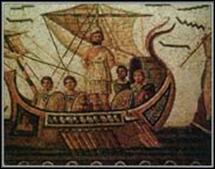 When sailing to some
distant port, we need four things – a map, a ship, some voyagers, and a
navigator. Likewise, for an effective program of personal growth that will
carry us through the journey of life, we need four Domains -- Dimensions
(of the Growth Continuum), Processes (of growth), Participants (in the growth
process), and ‘Together-ness’ (Orchestration of all four Domains). When all
four Domains are complete and combined, they form an Integral Program we call ADAP2T (pronounced A’-Dapt)[7]
– All Dimensions, All Processes, All Participants, Together.
When sailing to some
distant port, we need four things – a map, a ship, some voyagers, and a
navigator. Likewise, for an effective program of personal growth that will
carry us through the journey of life, we need four Domains -- Dimensions
(of the Growth Continuum), Processes (of growth), Participants (in the growth
process), and ‘Together-ness’ (Orchestration of all four Domains). When all
four Domains are complete and combined, they form an Integral Program we call ADAP2T (pronounced A’-Dapt)[7]
– All Dimensions, All Processes, All Participants, Together.
In this study, we describe the major Features of ADAPT – giving examples showing how each Parameter manifests itself in real life. Then, we describe the potential Impediments that can disrupt each Parameter of growth – along with possible Resolutions. Detailed examples of each Impediment are shown in Appendix C.
Next, we show how ADAPT may be used to develop a revised model of human growth. After explaining why an accurate model is essential, and emphasizing our constructive intent, we show how comparisons between ADAPT and Wilber can highlight areas where AQAL may need re-examining, and perhaps revision. We conclude by outlining a series of steps for creating a revised and updated model of human development.
Parameter-by-Parameter comparisons between ADAPT and Wilber will be found in Appendix A. Of 140 different comparisons, we find that Wilber’s position needs re-examination in at least 73 instances. Of those 73, at least 50 Wilber positions may particularly be in need of revision.
The article consists of four Divisions -- some divided into several sections:
{ Division 1: INTRODUCTION
Ø Overview. This Overview that you are now reading.
Ø How to Read This Study. Suggestions on how to get the most out of reading this article.
{ Division 2. OUTLINE OF ADAPT. A description and overview of our proposed model of human growth, ADAPT -- what it consists of, how it works, and how it is manifested in real life.
Ø Section D: The Dimensions of the Growth Continuum. The eight Features, or Dimensions, that define human growth.
Ø Section PR: The Processes of Growth. The 33 basic methodologies, or Processes of growth, and their seven Themes of emphasis.
Ø Section P: The Participants in Growth. The seven aspects of identity, or Participants, that partake in the growth process.
Ø Section T: The Together-ness of Growth. The 12 types of ‘Togetherness’ (Orchestration/ Guidance) – by which we weave together the diverse strands of life experience.
Ø Section A: ADAPT -- Navigating the Growth Continuum. How Dimensions, Processes, Participants, and Together-ness can be combined to build a truly Integral growth program.
Ø Section I: Impediments and Resolutions. All the Impediments that can cause the growth process can go wrong – and the Resolutions that can fix these Impediments. (Specific examples of each Impediment are found in Appendix C.)
{ DIVISION 3. TOWARD A NEW MODEL OF HUMAN GROWTH. Why Ken Wilber’s model of human development may be due for careful re-examination. How we can begin the revision process.
Ø Where Models Go Wrong. How deficiencies or distortions in Dimensions, Processes, Participants, and Together-ness can limit the effectiveness of the growth process.
Ø Constructive Comparisons. The constructive and cooperative intent of our critique of Wilber, AQAL, and ILP.
Ø Re-examining Ken Wilber (‘Re-examining’). A comparison of ADAPT’s positions on human growth to those of Ken Wilber – intended to shed light on Wilber’s perspective and to highlight areas in which Wilber’s model may need re-examination, refinement, or revision. (Parameter-by-Parameter comparisons will be found in Tables A1-3 of the Appendix.)
Ø Creating a Revised Model of Human Growth. A step-by-step program for creating a revised and updated model of human growth -- using AQAL and ADAPT as a foundation.
{ Division 4. APPENDICES. Important information you need to understand ADAPT, or any other model of human development. The Appendices (and footnotes) are intended not just as background material, but as important extensions of the main article – to be referred to and read as references occur in the text.
Ø Tables A1-3: ADAPT and Wilber Compared (‘Comparisons Tables’).
These three Tables are among the most important sections of this entire study. Here we show which Wilber positions may be in need of modification, and why.
The three Tables that make point-by-point comparisons between ADAPT’s position on each Parameter of human growth, and that of Ken Wilber. Each Table contains the same comparisons, but organized differently for ease of study. The first Table is organized by Domain, the second by Divergence between the two positions, the third by our degree of Confidence in the validity of ADAPT’s position.
Ø Tables B1-3: Wilber’s Processes. Three Tables that display the Processes as conceived by Wilber. The first two show, from a Actualization Growth perspective, how Wilber’s ILP methodologies correspond to ADAPT’s 33 Processes. The third shows, from a Restoration Growth perspective, how Wilber’s Pathologies and Treatments correspond to his Fulcrums.
Ø Appendix C: Impediments to the Growth Process. A detailed listing of some typical potential Impediments that correspond to each Feature – with examples from real life.
Ø Appendix D: Resources for Study (‘Resources’). Books and other resources useful for understanding and investigating ADAPT – as well as the comparable models of Ken Wilber, AQAL, ILP, and Integral Institute.
Ø Appendix E: Glossary of Terms (‘Glossary’). Definitions of important terms, with the corresponding term from Wilber’s system, where available. In the main text, the first major occurrence of each term is Bolded, and other occurrences are Capitalized.
Ø Appendix F: Homer’s The Odyssey. A brief synopsis of Homer’s classic work, to help the reader understand some of our illustrative examples.
Ø Appendix G: Credits. Acknowledgment of sources for quotes and graphics.
Ø Biographical Background. Background and qualifications of the authors, Hugh and Kaye Martin.
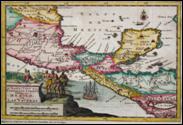
 HOW TO READ THIS
STUDY
HOW TO READ THIS
STUDY
This article will repay careful study. For it to be of most value to you, we suggest the following sequence of study:
{ Download the MS Word version. To navigate easily around this study, download the MS Word version (see link before Table of Contents). In that version, you can hyperlink quickly between corresponding topics of each section -- and also notate you comments and emendations directly into the text. Stitch the two Parts together, using the instructions at the download link. [Permission to download is granted, but please email us that you have done so.]
{ Read the ADAPT section (in Division 2). Here we give an overview of the entire ADAPT model. Read over this section fairly quickly to get the major points and the general thrust.
{ Read Impediments and Resolutions section (end of Division 2). Here we explain how each Feature of growth has corresponding potential Impediments (ways the growth process can go wrong). We divide those Impediments between those that can be resolved by Guidance, and those that require Therapy.
{ Read Impediments Appendix (Appendix C). In the Impediments Appendix, we give detailed examples of the many of the ways the growth process can go wrong. Read the ADAPT section again – this time pausing at each Feature to the read examples of the corresponding Impediment/s in the Appendix. [In the MS Word version, click the letter/number of the ADAPT Feature to jump to the corresponding Impediments section.]
{ Read the Constructive Comparisons section (in Division 3). Here, before beginning the comparisons between ADAPT and Wilber, we explain the limitations and qualifications on those comparisons.
{ Read the Re-examining Ken Wilber section (in Division 3). Here, we show how the many Divergences between ADAPT and Wilber highlight places where Wilber’s positions may need re-examination.
{ Read ADAPT and Wilber Compared Table (Table A1). Read the ADAPT and Impediments sections again – this time pausing at each Feature and Impediment to read the corresponding comparisons between ADAPT and Wilber in Table A1. At each entry, ask yourself a set of questions: Does the comparison accurately characterize the two positions? Which position appears more valid? Is there a third position that is more plausible? [In the MS Word version, click the name of the ADAPT or Impediments Parameter to jump to the corresponding comparison.]
{ Read the Building the Next Integral Operating System section (in Division 3). Here, we outline a series of steps you can take to participate in the creation of a revised model of human development. Follow those steps carefully to integrate everything you have read up until now.
{ Read the evidence. When available, read our companion study, The Fundamental Ken Wilber [scheduled for publication January 2008]. Here, we quote passages from Wilber’s writings to illustrate Wilber’s position on each Parameter.
{ Draw your conclusions. Summarize what you have discovered. From your own perspective, what model of human development makes the most sense? What model is the most usable? How might you apply these insights to your own profession – and to your own life? If you have downloaded the MS Word version, please send us the file with your comments and emendations.
|
Division 2:
OVERVIEW OF ADAPT
 When sailing to some distant port, we need four things – a
map, a ship, a set of voyagers, and a navigator. Likewise, in devising an
effective program of personal growth, we need four Domains
-- Dimensions (of the Growth Continuum), Processes (of growth), Participants
(in the growth process), and ‘Together-ness’ (Orchestration of all four
Domains). When all four Domains are complete and combined, they form an
Integral Program we call ADAP2T
– All Dimensions, All Processes, All Participants, Together.[8]
When sailing to some distant port, we need four things – a
map, a ship, a set of voyagers, and a navigator. Likewise, in devising an
effective program of personal growth, we need four Domains
-- Dimensions (of the Growth Continuum), Processes (of growth), Participants
(in the growth process), and ‘Together-ness’ (Orchestration of all four
Domains). When all four Domains are complete and combined, they form an
Integral Program we call ADAP2T
– All Dimensions, All Processes, All Participants, Together.[8]
This section gives a brief overview[9] of each of those Domains. We first discuss each of the Dimensions, then each of the Processes, then each of the Participants, then each Mode of ‘Together-ness’– and finally, we put them all together in our ADAPT model. To conclude this section, we discuss all the Impediments to growth, along with the main Resolutions to those Impediments. For illustration, we use the metaphor of the nautical journey – drawing, where appropriate, on the adventures of Odysseus from Homer’s The Odyssey.[10]
Section D:
THE DIMENSIONS OF THE GROWTH CONTINUUM
 A map shows what
routes we can take and what destinations we can head for in any voyage. Each
map has coordinates that show our position and indicate what we will find in
different locations. The basic coordinates are latitude and longitude – but a
more sophisticated map might include topography, climate, vegetation, ethnic
populations, and so forth.
A map shows what
routes we can take and what destinations we can head for in any voyage. Each
map has coordinates that show our position and indicate what we will find in
different locations. The basic coordinates are latitude and longitude – but a
more sophisticated map might include topography, climate, vegetation, ethnic
populations, and so forth.
Our map can be a small map, showing the streets and by-ways of our local region. It can be a broader-range map, showing whole states, or countries, or continents. It can be just as broad, but even more detailed – showing the tallest mountains and the deepest canyons, the dry arid regions, the tropical jungles, the teeming cities seething with people. We will be examining the very broadest and most detailed map in the field of human growth. We call that map the Growth Continuum.
Growth is the journey we take across the turbulent seas and exotic lands of life. The Growth Continuum is a map of all the routes and destinations our journey of growth can take. The Dimensions are the coordinates that define different Features of our map. For Odysseus, Growth is the entire series of adventures he engages in throughout the course of The Iliad and The Odyssey. Odysseus’ Growth Continuum is the entire set of islands, kingdoms, open seas, and subterranean depths he visits in the progress of his journey.
In technical language, Growth is the process of moving and progressing along the Growth Continuum. The Growth Continuum is a field of eight Dimensions, which describes the various ways human growth can take place. The Dimensions are the Features that define different elements of that growth. The eight Dimensions of the Growth Continuum are: Stages, Transitions, States, Realms, Arenas, Vectors, Actualization/Restoration, and Coordination -- as described below:
{
 D1: Stage growth
Stages are the ports of call in our life’s journey. They are the places where we stop off, take on fresh supplies, transact some business, deal with hostile natives, and then re-embark on our journey. Like Odysseus, we must outmaneuver the Cyclops, or extricate ourselves from the seductive wiles of Circe, before we can continue on our travels.
In technical language, Stages are the levels of development, maturity, enlivenment, or enlightenment through which we pass as we grow. Stages are generally periods of horizontal Translation – times when we are expanding and becoming better at activities we already know how to do. Likewise, they are periods of Assimilation – where we digest and metabolize the Discoveries of the previous Transition, turning them into established Traits. Stages occur at both the Individual and Collective Levels (including Cultural). (see P2)
Stage Growth occurs as we progress within each Stage of human development. Here, we meet and master the challenges presented by a particular Stage.
Ø Ex: “As a toddler, I’m getting better and better at walking.”
{  D2: Transition growth
Transitions are the routes of passage our ship will take between one port of call and the next. They are ventures of exceptional risk and uncertainty – where we may lose our way, or encounter unexpected obstacles and dangers. Like Odysseus, our ship may be blown off course, thrashed with storms by some wrathful god, tempted by Sirens, or sent careening between two grim choices like the man-devouring Scylla and the boiling vortex of Charybdis.
In technical language, Transitions are the quantum leaps that take us from one Stage to the next. Transitions are generally periods of vertical Transformation – times when we are becoming something we’ve never been before. Likewise, they are periods of Discovery – periods when we encounter situations and insights we will assimilate during our next Stage of development.
Transition Growth occurs as we Transition from one Stage to the next. Here, we leave the familiar comfort of past (often-surmounted) challenges, and venture into the unknown territory of strange and daunting new challenges.
{ D1/2: The Developmental Sequence of Stages and Transitions
The developmental sequence is our entire life journey – from open sea, to port of call, to open sea again, until our ship reaches its final destination. Like Odysseus, we must sail from one island to the next, encountering many harrowing dangers and tempting diversions, before we finally touch land in our home country.
In technical language, the basic Developmental Sequence is a series of alternating Stages and Transitions – of Translation, followed by Transformation, followed by Translation, and so forth.
Ø
 D1/2a: The Transition cycle
Transition occurs through a four-phase process we call the Transition Cycle:
1. Identification (‘embedding’[11]). Initially, the Self identifies with a particular Stage of development (manifests the initial Experienced Self -- see P1)
§ Ex: “I am a baby.”
2. Differentiation (‘dis-embedding’). Next, the Self transcends that Stage by dis-identifying with it (manifests the Observed Self).
§ Ex: “I am no longer the baby I was.”
3. Re-identification (‘re-embedding’). Then, the Self begins to identify with the subsequent Stage of development (manifests a new Experienced Self).
§ Ex: “I am now a toddler.”
4. Integration. Finally, the Self consolidates the new identification -- integrating the new Experienced Self with the old Observed Self.
§ Ex: “I’m a toddler with good feelings about the baby I used to be.”
Ø
 D1/2b: Fundamental Developmental Sequence
For the internal Passages of Psyche, Body, and Spirit (see D4), the entire series of alternating Stages and Transitions may be called the Fundamental Developmental Sequence (FDS). All told, the FDS for internal Passages may be viewed as consisting of 38 distinct steps. (see Table B3) For the sake of clarity and simplicity, these steps are consolidated into 12 developmental Clusters, – consisting of 12 Stages, separated by 11 Transitions. Within those 12 Clusters, the seven central Stages are known in Eastern philosophy as the Chakras.
Ø
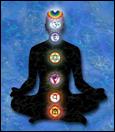 D1/2c: The Chakras
The Chakras may be viewed in two ways – both as a condensation of the FDS and as an integration of the three internal Passages (see D4). From a Western perspective, the Chakras are merely a consolidation, condensation, or simplification of the FDS into seven basic Clusters, or Stages. From an Eastern perspective, the Chakras are energy phenomena that manifest themselves simultaneously in all three internal Realms of Body, Psyche, and Spirit. At the Body level, the Chakras are experienced as seven nerve plexes located in ascending bodily regions from the base of the spine to the crown of the head. At the Psyche level, the Chakras are experienced as seven Stages of mental and emotional development. At the Spirit level, the Chakras are experienced as seven portals through which universal cosmic energy flows into our being. Thus, from an Eastern perspective, each Stage of development is simultaneously physical, psychological, and spiritual. (see D4, Architecture of Self)
§
 Ex: “When my chiropractor gives me a sacral adjustment
(base of spine), I experience increased physical stability (body), emotional
grounding (psyche), and spiritual compassion (spirit). When he gives me an
atlas/axis adjustment (top of neck), I experience improved eyesight (body),
mental clarity (psyche), and spiritual exaltation (spirit).”
Ex: “When my chiropractor gives me a sacral adjustment
(base of spine), I experience increased physical stability (body), emotional
grounding (psyche), and spiritual compassion (spirit). When he gives me an
atlas/axis adjustment (top of neck), I experience improved eyesight (body),
mental clarity (psyche), and spiritual exaltation (spirit).”
Ø D1/2d: The Generation Cycle
In our journey, the Generational Cycle is the dynastic tradition of seamanship, combat, and leadership passed down from father, to son, to grandson. Each Generation continues the tradition, but each modifies it according to their position among Generations.
In technical language, a Generation is a biological period of life, normally about 20-25 years, between the time one is born and the time one first procreates. According to Strauss and Howe,[12] dynamic cultures repeatedly pass through a Generation Cycle consisting of four characteristic Generations:
{ Prophetic. Conceives a new cultural vision and a new impetus for change.
{ Reactive. Reacts against or detaches from the dominance of the Prophetics.
{ Civic. Fills out and implements the vision of the Prophetics.
{ Bureaucratic. Institutionalizes and standardizes what once was the Prophetic Vision.
After the four Generations are complete, the cycle repeats all over again – but at a higher level of development. A small number of great people influence, dominate, and typify each Generation.
§ Ex: “Between the Civil War and the 1950’s, America passed through four Generations: Franklin Roosevelt and Frank Lloyd Wright (Prophetics), Hemingway and Bogart (Reactives), Disney and John Wayne (Civics), Walter Mondale and the Four Freshmen (Bureaucratics). In the 1960’s, a whole new Cycle began with the Beatles and Bill Gates (Prophetics).”
The Generation Cycle may be considered the cultural equivalent of the Transition Cycle (D1/2a) for individuals. It is a plausible scenario for how growth takes place at the cultural level.
Ø D1/2e: Collective Stages
Groups go through a sequence of developmental Stages very similar to individuals. Groups range in size and complexity from two-person relationships, to families, to teams, to workgroups, to communities, to whole societies and cultures.
§ Culture Passages
Culture Passages are the internal (cultural) and external (societal) phases of development that occur as mass populations progress through the Stages and Transitions of cultural development. Culture Passages follow a Stage-related growth path similar to individuals, but spread over eons of time. The Generation Cycle (D1/2d) is one possible description of how growth takes place at the Cultural level.
§ Spiral Dynamics
The Spiral Dynamics model is perhaps the most popular and influential contemporary system of Culture Passages. According to researchers Clare Graves and Don Beck, cultures have progressed in varying degrees through eight Stages of development[13] since the dawn of humanity.
Ø Ex: “The vanguard of our culture is now progressing out of the multi-national, Wall Street, assembly-line mentality -- and into the autonomous entrepreneurship of Silicon Valley, or into the communalistic ecological sensitivity of the ‘green’ era.”
{  D3: State Growth
The States are the supremely illuminating moments in our journey when we commune with the gods. Like Odysseus, we receive from time to time visitations, edicts, and guidance from Athena, from Hermes, from Poseidon, and from Zeus.
In technical language, the States are the higher levels of consciousness experienced by mystics and translucents. Ken Wilber identifies the four higher States as: Nature Mysticism (Psychic), Deity Mysticism (Subtle), Formless Mysticism (Causal), Non-Dual Mysticism. In a broader sense, Natural States are the four normal, non-induced States of consciousness – waking/gross, dreaming/subtle, deep sleep/causal, and nondual. Altered States are non-normal, often-induced States – such as meditative States, mystical experiences, drug-induced States, and near-death experiences. Peak Experiences are temporary Altered States of exceptionally-high significance. Such experiences only contribute to sustained growth when they are converted by assimilation to Permanent States or Traits.
A particularly controversial and ‘thorny’ issue, States may be viewed (among other things) as the highest Stages of growth (D1), as a separate Line of development (D5), as the defining feature of a separate Realm (D4), or as an independent Dimension (D3).
State Growth occurs as we increase our capacity to move fluidly among the higher States of consciousness.
{  D4: Realm growth
The Realms are the planes or spheres of existence in which our journey takes place. Like Odysseus, our journey may take us from everyday reality, through a series of magical islands, down into the underworld of the dead, into contact with the divine world of the gods, and then back to everyday, material reality again.
In technical language, Realms are the major spheres of human experience in which growth and development can occur – everyday Life, the Psyche, the Body, and the Spirit. Corresponding to these Realms, there are four major paths of human growth (called Passages) -- one external and three internal – each of which contains their own series of Stages and Transitions through which growth takes place. (see also P3d)
Realm Growth occurs as we grow simultaneously and differentially in all four Realms of consciousness. (See D5, Differential Growth) The Realms, with their corresponding Passages, are as follows:
Ø D4a: Life Passages
Life Passages are the external phases of accomplishment or Achievement that occur as we progress through the biological Life Cycle.
Ø D4b: Psyche Passages
Psyche Passages are the internal phases of mental Maturation that occur as we progress through the Stages of psychological Development.
Ø D4c: Body Passages (experienced)[14]
Body Passages are the internal phases of physical Enlivenment that occur as we awaken and connect the Energy Centers of our body.
Ø D4d: Spirit Passages
Spirit Passages are the internal phases of spiritual Enlightenment that occur as we ascend through the Stages and States of spiritual Development.
§ Ex: “As Christians and Jews, we honor the Spirit Passages of life with seven sacraments – ranging from baptism, communion, and confirmation to marriage, confession, and ordination – and finally to Extreme Unction at death.”[15]
The arrangement of the internal Realms may be called the Architecture of the Self. In the evolutionary process of increasing complexity, the Realms of Self were developed sequentially – first Body, then Psyche, then Spirit. However, as we see it, each new Realm was added to the existing ‘architectural’ structure as an additional mode of functionality. That is, the seven Chakral regions – originally only physical – took on psychological and spiritual functions as humans evolved. (Literally, a case of ‘transcend and include’!) The Self, then, is much like an old building that has been retrofitted – first with indoor plumbing, later with electricity, then with telephone, and finally with internet.
This Multiple-Functionality, or ‘Retrofit,’ configuration means that growth takes place simultaneously and in parallel in all three Realms. That is, in our view, we grow simultaneously in the Realms of Body, Psyche, and Spirit – within each of which there are a set of corresponding and parallel Stages and Transitions. This conjoining of Realms and Stages is best summarized and visualized using the Eastern version of the Chakras (D2d).
Ø Ex: “When my partner and I do Tantra, we feel a surge of Kundalini from the base of our spine to the crown of our head. We experience all seven Chakras in each of three ways -- through physical arousal, emotional bonding, and spiritual communion.”
{ D5: Arena growth
 Arenas are the various
types of life improvement we may engage in, in the course of our travels.
Simultaneously, our journey may be a way to develop our seamanship, a means of
advancing our naval career, a merchant venture promising possible profit and enrichment,
a way to enhance our health and well-being, and a source of pleasure and enjoyment.
Arenas are the various
types of life improvement we may engage in, in the course of our travels.
Simultaneously, our journey may be a way to develop our seamanship, a means of
advancing our naval career, a merchant venture promising possible profit and enrichment,
a way to enhance our health and well-being, and a source of pleasure and enjoyment.
In technical language, Arenas are the various areas of our life where growth takes place.
§ Ex: “I live my everyday life in approximately ten Arenas – ranging from my career, to my finances, to my health, to my marriage.”
Within each Arena, there may be various Lines of development or Lines of inquiry.
§ Ex: “The Ethics & Morality Arena of Spirit Passages has two Lines – one for moral principles (values), the other for moral perspective (inclusiveness).”
Each Line may be investigated by a variety of Studies.[16]
§ Ex: “Wilber’s Ego/Self Line includes Studies by Sullivan, Erikson, Graves, and Kegan.”
At each Stage of life, and within each Arena, we grow by encountering certain key Issues. These challenging Issues must be addressed and resolved to transition successfully to the next Stage.
§ Ex: “In the Life Passages Realm, a major Issue for Young Adults is becoming economically and emotionally self-sufficient.”
§ Ex: “In the relationships Arena, I used to experiment and ‘play the field’ as an unattached teenager. Now that I’m a Young Adult, the Issue of finding a lifetime partner is becoming important to me.”
Arena Growth occurs as we grow within the various Arenas of each Realm. Arena Growth is a prime example of the phenomenon of Differential Growth. That is, in different Arenas, growth takes place at differing rates – resulting in people who are more advanced in one Arena than in another:
§ Ex: “I’m growing fine in the Career Arena – but need to catch up in the Relationship Arena.”
For each Realm, Arenas are characterized differently – either as spheres of action, or types of experience, or themes of development, or aspects of personal evolution. Each Realm has its own set of Arenas – the major ones being as follows:
Ø D5a: Life Arenas
The counseling and coaching professions often explicitly address at least ten Life Arenas:
§ Individual Arenas -- 1) Education & Skills-Building, 2) Career & Calling, 3) Finances & Investments, 4) Health & Well-Being, 5) Recreation & Enjoyment.
§ Collective Arenas -- 6) Relationships & Marriage, 7) Sexuality & Sensuality, 8) Family & Children, 9) Friendships & Community, 10) Society & Culture.
Ø D5b: Psyche Arenas
The psychological Studies from the Tables of Ken Wilber’s Integral Psychology break down into nine separate Arenas:
§ 1) Fundamental Needs, 2) Sexuality & Sensuality, 3) Affect & Emotions, 4) Ego/Experienced Self, 5) Leadership, 6) Cognition, 7) Art/ Aesthetics/ Creativity, 8) Ethics & Morality, and 9) Worldviews.
Ø D5c: Body Arenas (experienced)
[under development]
These Arenas will most likely be drawn from the fields that employ them – alternative medicine (chiropractic, acupuncture, Chinese medicine); experiential, body-oriented therapies (Reichian, Gestalt, sensory awareness); and body-oriented spiritual practices (yoga, Tantra).
Ø D5d: Spirit Arenas
[under development]
Wilber suggests as possible Spirit Arenas (‘Lines’): care, openness, concern, religious faith, and meditative stages.
An important aspect of Spirit Passages are Myths and Archetytpes. Myths are epic stories that convey foundational attributes of a culture. Archetypes are features of Myths that are expressive of common or collective human needs, instincts, or potentials. Archetypes and Myths are the products of an archaic Stage of cultural development. However, in our view, they also embody a subtle language that is potentially useful for describing, apprehending, accessing, and evoking many States of consciousness[17] – including the higher States.
{
 D6: Vector and
direction growth
D6: Vector and
direction growth
We grow in four Quadrants and in four Vectors – but also in both Directions along those Vectors. Our growth is a cyclic flow between Polarities that goes through twin arcs of Evolution and Involution over the course of a lifetime.
Ø D6a: Quadrants of growth
The Quadrants are the four perspectives from which our journey may be viewed. Our journey may be seen as an exciting personal adventure (UL), as an opportunity for enhancing our wealth and position in life (UR), as a means of spreading the beliefs and values of our home culture (LL), and as an effort to open trade relations with remote nations (LR). Our voyage will be the most successful if it achieves all four types of objectives.
In technical language, the Quadrants are four basic perspectives, or aspects of existence, from which any growth experience can be viewed – internal/individual (upper-left), internal/external (upper-right), internal/collective – i.e. cultural (lower-left); and external/collective – i.e. societal (lower-right). Quadrant Growth occurs as we maximize our growth by addressing all four perspectives.
Ø D6b: Vectors of growth
The Vectors are the four paths our journey may take. Like Odysseus, we may take a journey individually, or as part of a crew of intrepid sailors. We may journey through internal worlds (magic islands, dead spirits, gods) and external worlds (our return to home and family in Ithaca).
In technical language, Vectors are four fundamental paths of growth. That is, growth occurs in both Individual and Collective Participants (P2) – and occurs in both the Internal Realms (Body, Psyche, Spirit) and the external Realm (Life Passages) (D4). Vector Growth occurs by fully exploring all four paths in our growth process.
The matrix below illustrates the relationship between Quadrants and Vectors:
|
Participants/Passages |
Vectors of growth |
Perspectives |
Wilber Quadrants |
|
Individual/ Body-Psyche-Spirit Passages |
Individual/ internal |
Inner Personal |
Upper-left |
|
Individual/ Life Passages |
Individual/ external |
Outer Personal |
Upper-right |
|
Collective/ Body-Psyche-Spirit Passages |
Collective/ internal |
Cultural |
Lower-left |
|
Collective/ Life Passages |
Collective/ external |
Societal |
Lower-right |
Ø D6c: Directions of growth/Polarities
Our life journey proceeds simultaneously in two Directions. Like Odysseus, we venture outward to explore islands of magic and enchantment, then inward to experience the cave of the Cyclops – upward to commune with the gods, then downward to plumb the depths of the underworld.
In technical language, growth proceeds in two opposite Directions – ascending and descending (or, outward and inward). Thus, in each Realm of development, we actually evolve toward two opposite states of consciousness, or Polarities:
|
Passage |
Ascending vector |
Descending vector |
|
Life Passages |
Upward toward Achievement |
Downward toward Fulfillment |
|
Body passages |
Upward toward Aliveness |
Downward toward Grounding |
|
Psyche passages |
Upward toward Maturity |
Downward toward Authenticity |
|
Spirit passages |
Upward toward Enlightenment |
Downward toward Compassion |
§ Ex: “As I grow up, I develop psychologically in two very different, but complementary ways. I become more mature mentally and emotionally. At the same time, I slough off false identities, and become progressively more authentic.”
Ø D6d: Cyclic flow
The Growth Continuum, then, is best characterized -- not as an upward spiral, a rocket-like trajectory, or a ladder-like climb -- but as an oscillation or cyclic movement between Polarities. In the growth process, we embrace, actualize, and integrate both Polarities and all intervening Stages – moving fluidly up and down the developmental column in a rhythmic ebb and flow.
§ Ex: “We grow like a great oak tree – spreading its branches, extending its roots, and expanding its trunk – as the cyclic flow of nutrients invigorates each part.”
Ø D6e: Evolution/Involution.
Our life journey traces the twin arcs of Evolution and Involution. We first venture outward to unknown seas and exotic lands. Later, we return home with the treasures we have found and the knowledge we have gained. Like Odysseus, we have our Iliad of fame, glory, and conquest – followed by our Odyssey of returning home to reclaim our birthright.
In technical language, the full course of our existence follows a cyclic pattern, consisting of two great arcs we call Evolution and Involution. In the ascending, generally-earlier arc of our life, we evolve in all four Realms toward Achievement, Aliveness, Maturity, and Enlightenment. During the descending, generally-later arc of life, we ‘involve’ toward Fulfillment, Grounding, Authenticity, and Compassion.
This aspect of Evolution/Involution may also be called Inter-Passage Growth (see P3d).
{
 D7: Actualization &
Restoration growth
D7: Actualization &
Restoration growth
In our life journey, Growth is the process of exploring all parts our world, using all the resources available to us. Actualization Growth is the normal progress of our journey – from one port of call to the next, until we finally sight our destination, or until we complete our explorations. Restoration Growth is getting back on track when our ship has been blown off course, or damaged by storms or battles. It’s the time when we set in for repairs before resuming our normal journey.
In technical terms, Growth is the process of moving progressively along the Growth Continuum – exploring all 8 Dimensions, engaging all 7 Participants, making use of all 33 Processes, with the assistance of all 12 Modes of Guidance & Orchestration. We call this process Actualization of our Human Potential – or Actualization, for short. Growth can be of two types – Actualization Growth and Restoration Growth.[18]
o D7a: Actualization Growth
Actualization Growth (or Human Potential growth) is the growth that takes place in basically healthy people. Actualization Growth is ‘growing forward’ – actualizing qualities for which we have an innate potential, by moving progressively to higher and higher Stages of development – in a broader and broader range of situations.
§ Ex: “As I grow, my mind becomes clearer, my emotions flow more freely, my body feels more alive, my capacity for deep reflection increases – and all the while, success comes to me more easily.”
Actualization often occurs through a four-phase process we call the Actualization Cycle (really, a version of the Transition Cycle):
1. Recognition. We become aware that a significant opportunity for growth exists.
§ Ex: “ If I can land this job, it will raise me from flunky to manager status.”
2. Engagement. We make a conscious effort to meet, face, or confront the challenge offered by that growth opportunity.
§ Ex: “Even though I’m scared stiff, and the competition is huge, I’ll go all out to land this job. I’ll prepare in any way I can to maximize my chances.”
3. Breakthrough. We succeed, win, or prevail. We master, surmount, or otherwise resolve the challenge favorably.
§ Ex: During the interview, I won him over with my enthusiasm, my responsible demeanor, and my well-rehearsed knowledge of his industry.”
4. Integration. We assimilate the Breakthrough into our personality and self-image.
§ Ex: “Now that I’ve succeeded in this interview, my self-confidence has increased. I find it easier to meet young ladies and to speak up when I have an opinion.”
Actualization can be implemented through Guidance & Orchestration. Guidance is the process of choosing and directing our activities through all the alternatives offered in the life journey.
§ Ex: “When my friend offered me dope, I had to decide whether to have fun for the moment, or keep my life on track for future happiness.”
Orchestration is the process of knitting together, coordinating, and unifying all the Dimensions, Participants, and Processes, and Modes of Together-ness that comprise the growth process.
§ Ex: “I need to balance and coordinate all the activities that keep my life going – my studies, my after-school job, my social life, and my connection with family. I’m happiest when they all work together.”
Guidance & Orchestration often facilitated by a Counselor, Coach, Coordinator, Orchestrator, or Guide – using any of our 33 Processes (see PR1-7 -- limited use of PR6). Guidance & Orchestration is the primary growth mode used by Parents in the original growth process, Child-Rearing.
o D7b: Restoration Growth
Restoration Growth[19] (or Therapeutic Growth) is the growth that takes place in people with ‘problems.’ Restoration growth is ‘ growing backward’ – revisiting past Stage/s to resolve Impasses, so that normal, forward-directed growth can resume.
§ Ex: “Before I could open up my feelings, I needed to release some deep emotional blocks that kept me distant and aloof.”
Restoration often occurs through its own four-phase process called the Restoration Cycle (another version of the Transition Cycle):
1. Resurrecting. We become aware of the situation that created an Impasse – uncover it, recollect it, bring it to the surface.
§ Ex: “Through dreamwork, bodywork, and talk therapy, I’ve gradually become aware of a brief but traumatic abandonment episode in my early childhood.”
2. Confronting. We recognize, accept, face, own up to any deep-seated problems – and make the conscious decision to deal with them.
§ Ex: “With the support of my partner and my therapist, I’ve summoned up the courage to go back and deal directly with my fears.”
3. Re-experiencing. We relive that situation – revisit it, bring it to life, experience it through memory.
§ Ex: “In a series of sessions, I went back into that painful experience – reliving it again and again, releasing my anguish through anger and tears, until the sting finally began to fade.
4. Re-integrating. We come to view the situation from a healthier, more mature perspective – reinterpret it, unhook from it, place it in context. Often, we try to replace that memory with a healthier, ‘relived’ version of the same experience.
§ Ex: “Now that I have access to its source, my Shadow Self is dissolving, and my deep sense of alienation has begun to fade. To offset that early trauma, I now try to live in close communion with others.”
Restoration Growth often facilitated with the assistance of a trained, licensed therapist or healing professional – such as a clinical psychologist, psychiatrist, or doctor -- using Conscious Development Processes (#6/27-31) such as Body Therapies, Psychotherapy, and Psycho-biologic Techniques.
Both Actualization Growth and Restoration Growth can occur at both the Individual and Collective Levels (see P2).
Actualization and Restoration (along with Limitations and Impasses) are discussed at length in the Impediments and Resolutions section, page 43. Examples of each Impediment that pertains to Actualization and Restoration are outlined in Appendix C.
{
 D8: Coordination Growth
The map of our journey has numerous major coordinates and other Features – Stage-like ports of call, Transition-like sailing routes, Realms in which the journey will take place, Arenas of activity, Vectors and Directions of travel, and alternate routes in case of mishap. Coordination growth is the combining and integration of all these factors to produce a successful voyage.
In technical language, Coordination growth is the weaving together and harmonizing of all Dimensions of the Growth Continuum into a balanced, unified, consistent whole.
Ø Ex: “It’s important to me to balance my material achievements with physical vigor and psychological maturity.”
Coordination Growth is the Dimensions aspect of Together-ness (Guidance/ Orchestration). (see also P4, esp. Assimilation/ Integration, and the Orchestrators of Section T)
Through luck, diligence, trial-and-error, and inspired intuition, we coordinate and weave together the diverse strands of our development – the challenging Stages we confront, the harrowing Transitions we pass through, the entrancing States we explore, the colorful Realms we inhabit, the busy Arenas where we conduct our life, the Vectors and Directions we travel, the Impediments we ultimately hope to overcome. The multi-dimensioned fabric that results is our life.
 Section
PR:
Section
PR:
THE PROCESSES OF GROWTH
Every sea-going voyage needs a ship. There are numerous kinds of water-borne vessels – rowboats, and tugs, sloops and yawls, battleships and cargo barges, ocean liners and racing craft. Different kinds of ships and boats have been developed for different purposes – short hauls and long voyages, shallow sloughs or roaring cascades, fast travel or big payloads.
The Processes are the sailing vessels, and other means of transit, that carry us along the channels, coastlines, trade routes, and open seas of our growth. For Odysseus, the main vehicle is his trusty sailing ship. But other, more subtle ‘vehicles’ that facilitate his journey include: the clever trickery that enables him to escape from Cyclops’ cave, the miraculous potion that neutralizes Circe’s wiles, the ghoulish rituals that allow him to enter the World of the Dead, the prayers and offerings that invoke the blessings of the gods.
In technical language, the Processes are all the methods and techniques that move us along the Growth Continuum. Over the course of centuries, humankind has developed at least 33 different Processes[20] of growth. These Processes fall into seven distinct Themes of emphasis – ranging from very fundamental to very sophisticated. The Process Themes are: Foundational, Physical World, Socio-Cultural, Formal Investigation, Self-Expression, Conscious Development, and Comprehensive – as described below:
{  PR1: Foundational
{ Processes that are fundamental to all other Processes of growth. Four Processes: 1) Natural Nutrition, 2) Natural Medicine, 3) Nurturing & Bonding, and 4) Family Dynamics.
{ Examples from Nurturing & Bonding (#1):
Ø Younger children: “We always keep our babies physically close – using baby slings, kiddie backpacks, and frequent on-demand holding.”
Ø Older children: “We take our kids with us everywhere – to restaurants, plays, concerts, shopping, weekend outings, vacations. They rarely behave badly, because they always feel welcome and accepted.”
Ø Adults: “As they grow up, our kids always strive for a stable, intimate, long-term relationship with one lifetime partner.”
{
 PR2: Physical world
{ Processes that engage us with material reality. Four Processes: 5) Sensory Experience, 6) Physical Activity, 7) Life Experience, and 8) Natural Environment.
{ Examples from Life Experience (#7):
Ø Younger children: “Except where necessary for safety, we avoid anything confining -- cribs, playpens, high chairs – so Baby can roam and explore at will.”
Ø Older children: “When life challenges come up, we let our son handle them himself – getting his car fixed, collecting a debt, baking cinnamon rolls on Mother’s Day.”
Ø Adults: “We consciously involve ourselves in unfamiliar situations, so we don’t get stuck in a rut. We like meeting people outside our social circle, hiking off the trail, and traveling to exotic locations.”
{
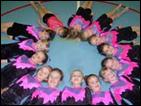 PR3: Socio-cultural
{ Processes that engage us with groups of people – from pairs to whole cultures. Six Processes: 9) Skills, 10) Habits & Programming, 11) Responsibility, 12) Enterprise, 13) Service, and 14) Acculturation.
{ Examples from Acculturation (#14):
Ø Younger children: “When traveling, we like to visit local ethnic churches – Mexican, black, Hawaiian --because their faith is so natural and spontaneous.”
Ø Older children: “After high school graduation, my older son toured Europe on a shoe-string -– using money he’d earned himself during the school year.”
Ø Adults: “When our youngest was only one year old, we exchanged homes with a family in France – living in their home, making friends with their neighbors, and driving their camper van to remote corners of the country.”
{
 PR4: Formal
investigation
PR4: Formal
investigation
{ Processes that engage our thinking and reasoning powers. Six Processes: 15) Structure & Order, 16) Explanations, 17) Technologies, 18) Logic & Reasoning, 19) Planning & Orchestrating, and 20) Sciences & Proofs.
{ Examples from Planning & Orchestrating (#19):
Ø Younger children: “Before we enrolled my little girl in her first school, we rehearsed her first day with her. We showed her the classroom, introduced her to her teacher, explained what to expect, and promised to pick her up afterward.”
Ø Older children: “Our teenager has to plan out all his chores and homework, so he’ll be free on the weekend for band practice and a sleep-over.”
Ø
 Adults: “Before we travel to the Northeast, we’ll plan how
to hit all the sights – historic battlefields, Cape Cod plays, Penobscot Bay
islands – without exhausting ourselves, and still staying within budget.”
Adults: “Before we travel to the Northeast, we’ll plan how
to hit all the sights – historic battlefields, Cape Cod plays, Penobscot Bay
islands – without exhausting ourselves, and still staying within budget.”
{ PR5: Self-expression
{ Processes that enable us to express our inward reality in outward form. Six Processes: 21) Language & Communication, 22) Recorded Experiences, 23) Humor & Fun, 24) Stories & Literature, and 25) Expressive Arts, and 26) Archetype & Myth.
{ Examples from Expressive Arts (#25):
Ø Younger children: “Eensy, beensy spider crawls up the water spout. The girls’ little fingers trace the ups and downs of a tiny insect beset by bad weather.”
Ø Older children: “When our middle daughter swung over the stage on a thin cable crying ‘I can fly!’, she really was Peter Pan.”
Ø Adults: “When my wife directs the school play, she coaxes and cajoles a great interpretation out of each young performer. Her work of art is the transformation that takes place in children themselves.”
{
 PR6: Conscious
development
PR6: Conscious
development
{ Processes explicitly designed to promote growth, resolve problems, and facilitate enlightenment. Five Processes: 27) Body Therapies, 28) Introspection, 29) Psychotherapies, 30) Psycho-Biologic Techniques, and 31) Spiritual Practices.
{ Examples from Introspection (#28):
Ø Younger children: “When the kids at school made fun of our daughter’s braces, she shared her feelings with Mom. Mom gave her sympathy and comfort, as well as a clearer perspective on why some kids act insensitive.”
Ø Older children: “Every night, our older son works in his big, leather-bound diary. He emerges from his room purged and content.”
Ø Adults: “Our older daughter shares her tumultuous dreams of battles and panicky flight with Mom. Mon understands, because she herself has lived through such dreams, and come out whole.”
{
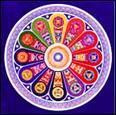 PR7: Comprehensive
{ Processes that combine and integrate many growth Processes. Two Processes: 32) Holistic Experiences and 33) Integral Programs.
{ Examples from Holistic Activities (#32):
Ø Younger children: “When our little girl attends Ranch Camp, she’s immersed in a whole world that addresses her physical, emotional, spiritual, and life needs.”
Ø Older children: “When our son attended a liberal arts college, academics was just part of becoming educated as a whole person.”
Ø Adults: “At her month-long Esalen retreat, our older daughter is experiencing everything from group process, to yoga, to African dance – all the while earning her keep by harvesting veggies from the lush, organic garden.”
Within each general Process, numerous Modalities have emerged -- particular approaches through which growth may be implemented. Each Modality may be applied using specific methods, or Techniques.
Section P:
THE PARTICIPANTS IN THE GROWTH
PROCESS
 The Participants are
all the voyagers who take part in our life journey. The voyagers are the crew
that maintain the ship and keep it moving in the right direction. They are the
passengers who are transported to distant destinations. They are even the
stowaways and saboteurs –intent upon disrupting the voyage and doing it harm.
In a less direct fashion, voyagers include the backers who plan and finance the
voyage, the dock handlers who load and unload cargo, even the well-wishers who
wave white hankies as the vessel sets off for sea.
The Participants are
all the voyagers who take part in our life journey. The voyagers are the crew
that maintain the ship and keep it moving in the right direction. They are the
passengers who are transported to distant destinations. They are even the
stowaways and saboteurs –intent upon disrupting the voyage and doing it harm.
In a less direct fashion, voyagers include the backers who plan and finance the
voyage, the dock handlers who load and unload cargo, even the well-wishers who
wave white hankies as the vessel sets off for sea.
In technical language, the Participants are the seven aspects of identity, or Self, that partake in the growth process. The seven major Participants (or Selves) are: the Experienced/Observed, the Individual/Collective, the Personae, the Functional, the Impediment, the Generational, and the Witness[21] [22] -- as described below:
{ P1: The Experienced/Observed Self
 The
Experienced/Observed Self is the hero of our journey – the captain of our ship,
the central character of our story, the adventurer who undergoes challenges and
hardships, our Odysseus.
The
Experienced/Observed Self is the hero of our journey – the captain of our ship,
the central character of our story, the adventurer who undergoes challenges and
hardships, our Odysseus.
In technical language, the Experienced Self is the observing, subjective, inside, I-Self -- the Self that identifies with our current Stage of development. The Observed Self is the detached, objective, outside, Me-Self -- the Self from a prior Stage of development that we have transcended, or otherwise ceased to identify with.[23]
Ø Ex: “I’m a cool, hip, savvy teenager. I used to be a fat, awkward, confused grade-school kid.”
The Experienced/Observed Self is the central Participant in the growth process, through the mechanism of the Transition Cycle (D1/2a).
{
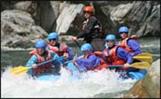 P2: The Individual/Collective
Self
P2: The Individual/Collective
Self
In our journey, the Individual Participants are those who display their own identity, who make their own decisions, who bear the consequences of their own actions – like Odysseus, or his wife Penelope, or his son Telemachus. The Collective Participants are those who respond and act from some level of group consciousness – like the impetuous crewmen of Odysseus’ ship, or the collection of evil suitors who attempt to usurp his kingdom.
In technical language, the Individual Participant is any aspect of Self, experienced individually.
§ Ex: “As a Loyalist Enneagram type, I take pride in following orders carefully and pleasing my boss.”
A Collective Participant is any aspect of Self, experienced Collectively.
§ Ex: “As a Loyalist Enneagram type, I belong to that great group of public servants who keep the wheels of society turning.”
Ø P2a: Collective Participants
Collective Participants in the growth process include every human group from two-person relationships, to families, to teams, to workgroups, to communities, to whole societies and cultures. (see D1/2e)
§ Ex: “I’m a group kind of gal. Sometimes my identity is entwined with my husband, sometimes with the family, sometimes with my workgroup, and sometimes with the community.”
Human groups follow a stage-related growth sequence very comparable to that of Individuals.
Ø P2b: Cultures
Among Collective Participants, the ones most commonly studied from an Integral perspective are Cultures. At every Stage of Cultural development, Participants identify with and are shaped by their Culture. (see D1/2e)
§ Ex: “I’m just a farm boy living a country life not much different from olden times. But after I go to college, and go to work for a big city corporation, I’ll become part of the modern age.”
{  P3: Personae & Types
On our journey, the Types and Personae are the distinctive ‘characters’ we find aboard ship – the forceful leader, the dutiful helper, the reclusive thinker, the cooperative mate, the jokester, the conciliator, the rebel.
In technical language, Types are categories of personality that recur in human populations with some degree of consistency. The Persona (or Role) is a special variety of Type. The Persona is our ‘public face’ -- the set of attributes and behaviors we construct to enable the Self to play a part in the drama of existence. In other words, the Persona is the Self’s way of engaging in Life Passages.[24] Personae & Types include Gender Types, Enneagram Roles, Birth-Order Types, and various personality categorization systems like Jungian and Myers-Briggs. Even though the various Personae and Types within a given class are ‘horizontally’ equivalent, some may undergo Stage-like development.
Ø P3a: Gender Types
Gender Types are the attitudes and modes of behavior that originate from one’s sexual Gender. The primary gender types are male and female. The two sexes generally have different modes of engaging with the world. Generally speaking, Males engage in Translation primarily through Agency (self-preservation), while Females engage primarily through Communion (self-adaptation).[25]
§ Ex: “We’re a liberated couple, but the two of us still handle issues differently. My husband tends to work independently to get things done. I work with others to obtain the best solution for everyone.”
Males engage in Transformation primarily through Eros (ascent, creativity), while Females engage primarily through Agape (descent, compassion).[26]
§ Ex: “When my husband changes, he’s driven primarily by inspiration. When I change, I’m moved primarily by concern for those dear to me.”
Ø P3b: Birth-Order Types
Birth-Order Types are personality profiles that derive from the order of one’s birth among siblings. The major Birth Types are First Child (independent, dominant, self-centered), Middle Child (weak identity, insecure, misfit), Youngest Child (passive, cooperative, adored).
§ Ex: “As the eldest son, I usually get my way. My young sister usually goes along with me, and I love her for it. My middle brother is very accomplished, but is frustrated by all the recognition I get.”
Ø P3c: Enneagram Roles
The Enneagram is a particular system for categorizing (‘typing’) Personae. An Enneagram Roles, [27] or ‘Enneagram Type,’ can be viewed as the fundamental cluster of attributes by which the Self manifests its public character. Normally, a person will manifest a Dominant Role and one or more Contributing Roles.
§ Ex: “I’m predominantly a principled, idealistic Reformer – but I’m supported in that Role by strong characteristics as an ambitious Achiever and a meticulous Investigator.”
Ø P3d: Inter-Passage Growth
The Persona serves a key function in a form of development called Inter-Passage Growth. Inter-Passage Growth describes the arc the Self passes through over the course of a lifetime -- from internal growth, to external, and back to internal.[28]
Ø Ex: “ I began life as a dreamy, clueless kid. Over the years, I learned to cope and make my way in the world. Now I’m ready to turn my attention again toward internal awareness – but with heightened insight and wisdom.”
The three phases of Inter-Passage growth are as follows:
1. Internal Orientation (immature Essence).[29] Initially, the infant and young child is focused entirely on its internal needs, urges, and desires. Lacking an effective Persona, the child is relatively helpless regarding the challenges of everyday life.
§ Ex: “In my early years, I feasted on the physical pleasures and emotional delights of life – but had little ability to take care of myself.”
2. External Orientation (Persona). External orientation emerges in order to equip us to confront and cope with a variety of real-life situations. As we mature, our Self develops a Persona, or Role, that allows us to ‘play a part’ (really, a whole series of Personae and a whole set of parts) in the drama of existence. Maximum external-orientation generally occurs by mid-life, when our greatest level of worldly success is attained.
§ Ex: “As I matured, my attention turned increasingly toward external concerns – first school grades and social popularity, then career success, then power and prestige.”
3. Internal Orientation (mature Essence). Once that Persona has served its purpose, the Self moves back again toward Internal Orientation. Role dissolution takes place (often through mid-life crisis) -- breaking down the artificial Persona, and allowing the Self to return home to its authentic nature, or mature Essence.
§ Ex: “Now that I’ve achieved success in my career and raised some outstanding kids, my attention is turning inward again – especially toward psychological fulfillment and the ultimate significance of my life.”
Thus, we begin life narcissistically-focused on the internal Passages of Body, Psyche, and Spirit. Increasingly, we direct our attention to experience-rich, external Life Passages. Finally, we return to wisdom-filled, internal Passages in the latter trimester of life. The result is a peculiar U-shaped Pattern of development -- where internal growth is initiated early in life, then apparently abandoned, then resumed much later. (see also D4)
{
 P4: The Functional Self
On our voyage, the Functional Selves are the members of the crew described by their occupational assignments – the captain, the officer, the cook, the carpenter, the sailmaker, the gunner, the helmsman, the lookout.
In technical language, the Functional Self is the Self that represents fundamental human abilities we may utilize and identify with while performing a particular function. All told, we can experience at least ten Functional Selves (listed from lowest to highest): Autonomic/ Instinctive, Programmed, Volitional, Identity, Defensive, Emotional, Creative, Rational, Navigational, and Assimilative/ Integrative.
Ø Ex: “I seem to have different identities at different times, depending on which situation I’m engaged in. Sometimes I’m my will, sometimes I’m my emotions, sometimes I’m my thinking brain. Sometimes I’m only a programmed robot following conditioned routines -- and sometimes I feel like the grand observer and orchestrator of all these identities.”
The Functional Selves do not undergo Stage-like development, but can themselves be considered Stages with which we identify.
{
 P5: The Impediment Self
On our voyage, the Impediment Self is the grumbler, the plotter, the saboteur, the mutineer, the stowaway. The Impediment Self is the misfit who causes our journey to go wrong. It is the hidden demon in our basement that ‘comes back to haunt us.’ For Odysseus, the Impediment Self is the jealous crewman who unlooses the bag of adverse winds; the vengeful god Poseidon, angered by the blinding of his son Cyclops; the rapacious suitors, brought up without fathers to guide them.[30]
In technical language, the Impediment Self is any disattached, distorted scrap of identity produced by Impediments to the growth process.
Ø Ex: “Normally, I’m a loving, caring, supportive wife – who always keeps the household running smoothly, with everyone satisfied and content. Then at times, some minor comment will send me into a seething rage I can’t explain.”
 The Impediments that
pertain to the various Participants are discussed in the Impediments &
Resolutions section and in Appendix C.
The Impediments that
pertain to the various Participants are discussed in the Impediments &
Resolutions section and in Appendix C.
{ P6: The Generational Self
In our story, the Generational Selves are the lineage of voyagers from one Generation to the next that take part in a series of journeys. Crafty Odysseus (Gen 3, Civic), harkens back to the heroes of old (Gen 1, Prophetic), defends his ineffectual father (Gen 2, Reactive), and inspires his dutiful son (Gen 4, Bureaucratic).
In technical terms, the Generational Self is the aspect of Collective identity that participates in the Generational Cycle (D1/2d) – just as the Experienced/ Observed Self (P1) is the aspect of Individual identity that participates in the Transition Cycle (D1/2a).
Ø Ex: “I identify with all those of my GI Generation who, like me, risked their lives in World War II to make the world safe for democracy. I revere the great patriarchs like Churchill and Roosevelt, whose vision inspired us to make great sacrifices.”
{ P7: The Witness
 In our journey, the
Witness is the all-seeing, all-knowing observer of our journey – the gods
above, the author of our story, Homer himself.
In our journey, the
Witness is the all-seeing, all-knowing observer of our journey – the gods
above, the author of our story, Homer himself.
In technical language, the Witness is the all-pervasive Seer or I-I-Self. It is our Transcendent Self -- our Essence, True Self, or True Nature. The Witness observes, enfolds, includes, and smiles down on the other, more limited aspects of identity.
Section T:
‘TOGETHER-NESS’
(Guidance & Orchestration of the Growth Process)
 In our journey, ‘Together-ness’ is the process of guiding
and orchestrating our journey. Guidance is the job of the Navigator – the
process of keeping our ship and our voyage on course. Orchestration is the job
is the Captain – the process of coordinating all elements of our voyage to
produce a smooth-running, successful journey. Guides and Orchestrators are the
alert steersmen, the clever navigational aids, the solicitous guides, and the
instructive life situations that help coordinate and direct our life journey.
For Odysseus, the main Guide is his divine counselor and companion, the goddess
Athena, who appears in time of need. But there are other Guides and
Orchestrators as well -- the wailing prophecies of Tiresias in the land of the
dead, the thoughtful assistance of aged Mentor to Odysseus’ son Telemachus, and
the instructive examples of harmonious kingdoms like Pylos, Sparta, and Phaecia.
In our journey, ‘Together-ness’ is the process of guiding
and orchestrating our journey. Guidance is the job of the Navigator – the
process of keeping our ship and our voyage on course. Orchestration is the job
is the Captain – the process of coordinating all elements of our voyage to
produce a smooth-running, successful journey. Guides and Orchestrators are the
alert steersmen, the clever navigational aids, the solicitous guides, and the
instructive life situations that help coordinate and direct our life journey.
For Odysseus, the main Guide is his divine counselor and companion, the goddess
Athena, who appears in time of need. But there are other Guides and
Orchestrators as well -- the wailing prophecies of Tiresias in the land of the
dead, the thoughtful assistance of aged Mentor to Odysseus’ son Telemachus, and
the instructive examples of harmonious kingdoms like Pylos, Sparta, and Phaecia.
In technical language, ‘Togetherness’ is the process of Guidance and Orchestration that integrates and coordinates all the Domains to produce a successful growth experience. Guidance is the process of choosing and directing our activities through all the alternatives offered in the life journey.
Ø Ex: “When my son has money to spend, he must decide between the immediate pleasure of a fat, juicy pizza – or the long-term satisfaction of a car that will get him to school and social events.”
Orchestration is the process of knitting together, coordinating, and unifying all the Dimensions, Participants, and Processes, and Orchestrators that comprise the growth process.
Ø Ex: “To keep my family running smoothly, I must put hot food on the table, see that everyone gets to school or work, take care of errands and bills, face the challenges of my own job – and still make private time for nourishing my soul.”
Guides and Orchestrators are the role models, leaders, teachers, counselors, coordinators, integrators, ‘mentors,’ and instructive life situations that facilitate Together-ness. Guides and Orchestrators are of three kinds – those provided by our society and culture (5 types), those we chose ourselves (5 types), and those we develop inside ourselves (2 types). Over the course of a lifetime, we will have the most opportunity for growth when we make use of all 12 types. The 12 major modes of Guidance/Orchestration are as follows:
COLLECTIVE & SOCIETAL GUIDANCE/ORCHESTRATION
Collective and Societal Guidance/Orchestration (‘Collective Guidance’) is the guidance in the growth process provided by the society and culture we grow up in. The five Modes of Collective Guidance are: Parents, Society/Culture, Holistic Growth Situations, Growth Centers, and Authorities – as follows:
{
 T1: Parent/s
Parents are the original, the most influential, and (ideally) most beneficial Guides of our growth journey. Our Parents have potentially the greatest understanding of our needs, the greatest opportunity to have an impact on us, the greatest authority over our lives, the greatest identification with our concerns, and the greatest motivation to help us grow. Parenting (in its optimal form) can be seen as ‘nature’s way’ to provide every person with an Integral Life Guide.
Ø Ex: “My Dad was there for me at every major life Transition. His experience and wisdom always helped guide me along the way.”
{ T2: Society/Culture
As we mature and move out into the stream of life, we receive guidance from the examples of those around us. Our society and culture provides us with a set of role models, a series of lessons on living life, a process of behavioral reinforcement, and a ready-made system of values to conduct our activities by.
Ø Ex: “When I go out on the playground, I learn to make friends and to protect myself from those that might harm me. I learn teamwork and cooperation – but also holding my own when I don’t want to be pushed.”
{
 T3:
Holistic Growth Situations
T3:
Holistic Growth Situations
A Holistic Growth Situation is a cluster of experiences that offers many opportunities for growth in a single integrated activity. For children, such situations include backyard gardening, building projects, amateur theater productions, and family backpacking. Later in life, the repertoire of such situations may expand to include liberal-arts college life, self-sufficient travel, and stimulating work environments.
Holistic Growth Situations have several features in common. They each have an over-arching theme or purpose. They each cover a broad range of Processes, Dimensions, and Participants. They are all deeply experiential. They’re all readily adaptable to an Integral approach. By combining numerous interrelated growth experiences into one comprehensive activity, Holistic Growth Situations leverage our time and effort to produce deep and lasting change.
Ø Ex: “When we work together in the family garden, we learn practical skills of growing things – but also biological science, good work habits, and division of effort. Along the way, we have time for some lighthearted play and lots of internal reflection.”
An increasingly popular type of Holistic Growth Situation is called Place-Based Learning. In this approach, learning arises not just from studying books and other media – but from a rich environment that is structured to produce many interrelated lessons.
Ø Ex: “At school, we first study our biology book to get the concepts. But then we go outdoors to observe what we’ve learned in the real world around us.”
{
 T4: Growth Centers
A Growth Center is a Holistic Growth Situation where people gather together with the explicit intention of developing a particular aspect of growth. Over the course of centuries, at least five types of Growth Centers have developed: the monastery (or modern Meditation Center), the school or university (currently, the creative grade school and the liberal arts college), the health retreat (at present degenerated into beauty spas and fat farms), intentional communities (from Pilgrims, to Amish, to counter-culture communes), and the Growth Center per se ( Esalen-like Growth Centers). A Growth Center is particularly effective at guiding growth since it controls and orchestrates every aspect of the growth environment – thus directing each life activity toward the desired form of development.
The one Growth Center experience common to almost everyone is the school. A creative grade school or high school offers not only academics – but a myriad of activities and relationships for building character, social skills, and non-academic abilities.
Ø Ex: “I attend a very creative elementary school. All our academic subjects use hands-on experience to convey abstract concepts. The extra-curricular activities -- like art, drama, computers, sports, nature study, and big-city field trips – all emphasize individual involvement and personal creativity. They believe in growing the whole person.”
{
 T5: Authorities
Authorities are people whose exceptional knowledge and wisdom is preserved and disseminated through books, art forms, and other media. Authorities on the growth process may include philosophers, self-help gurus, novelists, artists, and filmmakers – anyone whose work pertains to, sheds light on, or contributes to our growth. Because their work is often of high quality, and is readily available, such people are particularly valuable in the growth process.
Ø Ex: “I didn’t get much from home or school. But when I discovered Thoreau, a whole world opened up for me.”
PERSONAL AND INDIVIDUAL GUIDANCE/ORCHESTRATION
Personal and Individual Guidance is the guidance in the growth process we receive from Guides who we choose ourselves, and who work personally with us. The five Modes of Individual Guidance are: Partner/Spouse, Therapist, Spiritual Guide, Other Growth Professionals, and Integral Life Guide – as follows:
{
 T6: Partner/Spouse
A long-term partner or spouse is a special person we choose to share our journey through life. As the relationship progresses, the couple develops (optimally) a deep mutual understanding, a steadfast and compassionate commitment, and an abiding sense of trust – all of which enables them to support and guide each other’s growth over the course of a lifetime. After parenting, the long-term or life-long partner or spouse is probably the most influential, and potentially most beneficial, mode of mutual Guidance and Orchestration.
Ø Ex: “In Jane Austen’s Price and Prejudice, Lizzie works through her aloof pride, and D’Arcy confronts his snobbish prejudice. When they finally resolve their character flaws, they’re ready for a happy marriage.”
{
 T7: Therapist
A Therapist is a professional practitioner -- such as a psychologist, psychiatrist, or counselor – who is trained to help people grow. Such assistance is especially appropriate for deep-seated Restoration Impediments.
Ø Ex: “My counselor has helped me work through some painful hidden memories that had distorted my view of the world.”
{
 T8: Spiritual Guide
A Spiritual Guide is a counselor, pastor, or master with extensive personal experience navigating the higher realms of consciousness – often through prayer, meditation, yoga, Tantra, or other spiritual practices. Such assistance is highly important for maintaining a consistent and diligent spiritual practice.
Ø Ex: “I’m much more consistent and effective in my meditation and contemplation now that I attend the Zen Center twice a week.”
{ T9: Other Growth Professionals
 Other Growth Professionals are practitioners such as
teachers, educators, social workers, medical professionals, social activists,
religious counselors, even managers and bosses – members of any profession that
endeavors to help people grow. Such people are especially valuable as
advisors, because they often have real-life experience beyond the narrow
confines of psychology or spirituality. In some cases, their contribution to
growth will be limited to knowledge and skills they can impart from their own
field of expertise. In other cases, however, they may be just as effective (or
more effective) at promoting growth as the best professional Therapists (T7) or
Spiritual Guides (T8).
Other Growth Professionals are practitioners such as
teachers, educators, social workers, medical professionals, social activists,
religious counselors, even managers and bosses – members of any profession that
endeavors to help people grow. Such people are especially valuable as
advisors, because they often have real-life experience beyond the narrow
confines of psychology or spirituality. In some cases, their contribution to
growth will be limited to knowledge and skills they can impart from their own
field of expertise. In other cases, however, they may be just as effective (or
more effective) at promoting growth as the best professional Therapists (T7) or
Spiritual Guides (T8).
Ø “When my college literature professor first introduced me to Moby Dick, I began to recognize that reality functions at multiple levels.”
{ T10: Integral Life Guide
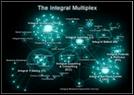 The Integral
Life Guide (or, Whole Life Counselor)
is a Growth Professional who is intimately familiar with ADAPT model (or some equivalent), and
fully capable of applying it. These Coordinators help us weave ‘Together’ all
the diverse strands of Dimensions, Participants, Processes that make up the
growth process. Often they will draw on all the other forms of Together-ness
discussed in this section. By definition, such people (optimally) provide the
most complete and comprehensive program for navigating the Growth Continuum.
The Integral
Life Guide (or, Whole Life Counselor)
is a Growth Professional who is intimately familiar with ADAPT model (or some equivalent), and
fully capable of applying it. These Coordinators help us weave ‘Together’ all
the diverse strands of Dimensions, Participants, Processes that make up the
growth process. Often they will draw on all the other forms of Together-ness
discussed in this section. By definition, such people (optimally) provide the
most complete and comprehensive program for navigating the Growth Continuum.
Ø Ex: “My Integral Counselor deals equally with the three Internal Passages of Body, Psyche, and Spirit. That focus is balanced with comparable attention to the everyday concerns of Life Passages. When it’s going well, all four Realms weave together into a seamless whole.”
INTERNAL GUIDANCE/ORCHESTRATION
Internal Guidance is the Guidance we provide for ourselves. After absorbing and internalizing the modes of Guidance discussed above, we become progressively more independent, more self-sufficient, more self-regulating, more autonomous, more mature. The two Modes of Internal Guidance are Internal Navigator and Witness – as shown below:
{
 T11: Internal
Navigator
T11: Internal
Navigator
The Internal Navigator is the Guide we form within ourselves – by internalizing all the Dimensions, Participants, Processes, and Modes of Together-ness. Progressively, we learn to serve as our own navigator – to move freely and spontaneously among all the spheres of growth with less and less assistance.
Ø Ex: “Over the years, I’ve thoroughly explored many of the Dimensions, Processes, and Participants – using various forms of Guidance and Orchestration. By this point, I’ve internalized all those external Guides, and am increasingly able to navigate my own course.”
{
 T12: Witness
Beyond all the societal and personal Guides, beyond even the Internal Navigator, the great presence of the Witness informs, enfolds, illuminates, and extends all strands of our experience, and all facets of our growth. From an Eastern perspective, that presence may be termed Spirit. From a Western perspective, the Witness is called God.
Ø Ex: “When I enter the higher States of consciousness, I see my whole life as a piece – and the right answers seem so simple.”
Section A:
ADAPT: NAVIGATING THE GROWTH
CONTINUUM
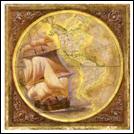 A lifetime of voyages
to remote and exotic parts of the globe requires an overarching perspective, a
Master Plan for exploration. Such a Master Plan subsumes all voyages and
explorations under a comprehensive set of concepts, policies, or objectives. In
earlier times, objectives might have included establishing trade routes and
inter-national relationships, evangelizing primitive peoples, conquering
foreign nations and establishing tributary states, founding settlements and
colonies, and locating new sources for minerals or luxury goods. Or, the
objectives might have been pure exploration and investigation – discovering new
lands, charting oceans and coastlines, or finding new plant and animal species.
A lifetime of voyages
to remote and exotic parts of the globe requires an overarching perspective, a
Master Plan for exploration. Such a Master Plan subsumes all voyages and
explorations under a comprehensive set of concepts, policies, or objectives. In
earlier times, objectives might have included establishing trade routes and
inter-national relationships, evangelizing primitive peoples, conquering
foreign nations and establishing tributary states, founding settlements and
colonies, and locating new sources for minerals or luxury goods. Or, the
objectives might have been pure exploration and investigation – discovering new
lands, charting oceans and coastlines, or finding new plant and animal species.
ADAPT is the Master Plan for our journey through life. The Growth Continuum is like a map of the world – with the Dimensions as coordinates defining trade routes and ports of call to exotic destinations like Ceylon, or Madagascar, or the Bahamas, or the Outer Hebrides. The Processes of Growth are the steamships and sailing vessels that carry us to our destinations. The Participants are the crew, the passengers, and even the stow-aways on those voyages. The Guide is the navigator who helps chart our passage. We ourselves are the captains of our own ship, and bear final responsibility for our ultimate destination.
An accurate map, a sound ship, a entourage of eager voyagers, a skilled navigator – these are the four elements of a successful voyage. In the same way, the Dimensions, the Processes, the Participants, and Together-ness are the essential components of an effective growth program. A truly Integral growth program combines all of these – woven together in a seamless, dynamic whole. The Integral model of human growth is thus best summarized by the acronym ‘ADAP2T’ (pronounced A’-Dapt):
{ AD = All Dimensions. All 8 Dimensions of the Growth Continuum.
{ AP = All Processes. All 33 Processes of Human Growth.
{ AP = All Participants. All 7 Participants in the growth process.
T = Together. The Dimensions, Processes, and Participants not experienced as diffuse, disjointed entities – but coordinated together at a deep, experiential level using all 12 Modes of Orchestration.
Section I:
IMPEDIMENTS AND RESOLUTIONS
[A detailed summary of many of the major Impediments to growth will be found in Appendix C.]
 Impediments are all the ways our journey can go wrong.
Our journey can encounter two levels of Impediments – Limitations and Impasses.
Impediments are all the ways our journey can go wrong.
Our journey can encounter two levels of Impediments – Limitations and Impasses.
Limitations are all the obstacles, delays, and diversions that may impede our journey from its true course. For Odysseus, the Limitations Impediments are all the factors that keep him from returning home. They are the adverse winds that blow his ship off course, the connivings of his rebellious crew, the mind-numbing stupor of the Lotus Eaters, the huge stones thrown by angry Laetrygonian giants attempting to sink his ship, the enticing songs of the Sirens, and the treacherous channel between the blood-thirsty Scylla and the yawning vortex of Charybdis.
Impasses are the even more serious obstacles to our journey – obstacles that produce damage, injury, enchantment, captivity, or death. For Odysseus, the Impasse Impediments are imprisonment in the grisly cave of man-devouring Cyclops, the bewitching enchantments of Circe that turn his crew into animals, the soul-searing descent into the Underworld, the captivating charms of Calypso’s cave, the blasphemous crime of slaughtering the Sun God’s cattle, the storms of vengeful Poseidon that finally sink his ship and destroy his crew.
In our journey, each Impediment has its own corresponding Resolution. For Odysseus, the Resolutions include Odysseus’ clever stratagem to escape from Cyclops’ cave, the potion brought by Hermes to neutralize Circe’s charms, the cords that bind Odysseus to the mast so he won’t succumb to the Siren’s beguiling call, the healing hospitality of the Phaecians who nurse Odysseus back to health after his shipwreck, the Great Bow that slaughters the rapacious suitors, Athena’s pact of peace that placates the gods and heals civil strife.
In technical language, Impediments are all the ways the growth process can be diverted, distorted, neglected, split off, repressed, denied, ignored, or avoided. Actualization Impediments (also called Limitations, Guidance Impediments, or Human Potential Impediments) are overt difficulties or challenges faced by relatively healthy people. Restoration Impediments (also called Impasses, Therapeutic Impediments, or Pathologies) are submerged or subconscious difficulties suffered by people with ‘problems.’ Virtually every Feature of growth – every Dimension, Participant, Process, and Mode of Together-ness -- has potential Actualization Impediments which can limit its effectiveness. On the other hand, there are relatively few types of Restoration Impediment.
Resolutions are all the ways we overcome Impediments. Although there are a wide variety of Impediments, they may all be overcome through a limited number of Resolutions. For Actualization Impediments, the primary mode of Resolution is (as might be expected) Actualization. For Restoration Impediments, the primary mode of Resolution is Restoration.
In this section we describe Actualization Impediments and Restoration Impediments in detail – along with their corresponding Resolutions. Please refer also to Appendix C, where extensive examples of each type of Impediment will be found.
{ IA: Limitations in the Actualization Cycle
As discussed in the Actualization and Restoration section (D7), growth is the process of Actualizing our Human Potential in all four Domains – Dimensions, Processes, Participants, and Modes of Together-ness. Actualization can be limited or restricted if regions of our Human Potential remain unexplored, vacant, deficient, diverted, stultified, or distorted. Where Actualization fails to take place, we’re left with Un-actualized Potential, or Unrealized Opportunities – what we call Limitations. Just as Actualization takes place in a four-phase cycle, Limitations can occur at any of the four phases:
1. Recognition. We may fail to notice or attach sufficient importance to a significant opportunity for growth.
Ø Ex: “ When my girlfriend asked for more commitment, I didn’t realize how much my response would affect our relationship.”
2. Engagement. We may choose to avoid the opportunity, or engage only tepidly in it.
Ø Ex: “I realized how much commitment meant to her, but I was afraid to take the leap. Instead, I tried to placate her with half-hearted promises.”
3. Breakthrough. We may try to meet the challenge offered by the growth opportunity, but fail to do so.
Ø Ex: When we moved in together, we found we really didn’t have much in common – and couldn’t stand each other’s hang-ups.”
4. Integration. We may have a breakthrough growth experience, but never integrate it into our identity – or we may integrate it improperly.
Ø Ex: “Since developing a relationship proved to be so much fun, I decided to embark on a whole series of relationships. I’m in love with romance!”
The human personality is amazingly resilient and pliable. However, if such Limitations persist long enough, they become frozen, ossified, or petrified. Our identity is then atrophied or stunted – what we call Blighted. So long as the personality is not too Blighted, these Limitations can be counteracted by Guidance and Orchestration. Guidance & Orchestration can be facilitated by a Counselor, Coach, Coordinator, Orchestrator, or Guide – using any of our 33 Processes (limited use of Self-Conscious Development).
{ IR: Impasses in the Actualization Cycle
Beyond the normal Limitations in the Actualization process, there may be circumstances in which the Actualization Cycle is stymied, obstructed, blocked, or stuck. We call such situations Pathologies, Restoration Impediments, or Impasses. Impasses often originate in the earliest Stages of life – when the child is least defended and has the fewest tools for correct interpretation. Impasses can be created during any of the four phases of the Actualization Cycle, or through a combination of all four phases:
1. Recognition. At an early age, we may not have the discernment to recognize a growth opportunity – or may easily misinterpret it.
Ø Ex: “ When the birth constrictions started (while I was in the womb), the pressure felt so violent it seemed like I was being assaulted.”
2. Engagement. We may not have sufficient volition to decide on a course of action, and may be swept along by circumstances.
Ø Ex: “As I moved up the birth canal, I struggled for space and breath, while all the time feeling squashed and smothered.”
3. Breakthrough. We may not be able to handle the challenge – or may find it so traumatic we never want to face it again.
Ø Ex: “I actually couldn’t get through the birth canal, so they ended up performing a cesarean to get me out. I never want to go through anything like that again.”
4. Integration. In our immature state, we may drastically misinterpret the traumatic situation, or exaggerate its significance, or draw mistaken conclusions.
Ø Ex: “After that horrendous birth experience, they laid me on a cold operating table, and then put me away in a noisy nursery without my mom. Is that what I can expect from life?”
Painful or traumatic memories are often submerged deep within the subconscious – where we vainly attempt to isolate or expunge them. They often manifest themselves indirectly through pernicious and malevolent Sub-Personalities (Shadow Selves or Gremlins). These Sub-Personalities are mini-identities whose worldview was formed by these traumatic experiences, and who therefore have a very distorted view of life. The Sub-Personalities are those little voices inside that tell us that we’re no good, or that everyone’s against us, or that things will never work out. They therefore function as hidden saboteurs of healthy growth. Thus, they are the source of very formidable Impasses.
{ IRR: Resolutions for Impasses
Since Impasses are so deeply buried and so intransigent, they are generally not amenable to the Guidance form of Resolution. They require a comparatively intensive process of treatment called Therapy. Therapy is the process of restoring the Actualization Cycle to functionality, so that normal growth may resume again. Therapy often has its own four-phase process -- what we call the Restoration Cycle – consisting of Resurrecting, Confronting, Reexperiencing, and Reintegrating. (see D7 for explanation and examples)
Such Resolutions are often facilitated with the assistance of a trained, licensed therapist or healing professional – such as a clinical psychologist, psychiatrist, or doctor -- using Conscious Development Processes (#6/27-31) such as Body Therapies, Psychotherapy, and Psycho-biologic Techniques.
Division 4:
APPENDICES
This Division consists of the following eight Appendices:
à Appendix A
§
Table A1: ADAPT and Wilber Compared
– categorized by Domains page
Error! Bookmark not defined.
§
Table A2: ADAPT and Wilber Compared
– categorized by Divergences page
Error! Bookmark not defined.
§
Table A3: ADAPT and Wilber Compared
– categorized by degree of Confidence page Error!
Bookmark not defined.
à Appendix B
§
Table B1: Integral Life Practice
– from Integral Spirituality page
48
§
Table B2: Integral Life Practice
(precursor)
– from Integral Psychology page
Error! Bookmark not defined.
§
Table B3: Pathologies &
Resolution Modalities
-- Ken Wilber page
Error! Bookmark not defined.
à Appendix C: Impediments to the Growth Process page 48
à Appendix D: Resources for study page 73
à Appendix E: Glossary of terms page 73
à Appendix F: Homer’s The Odyssey page 85
à Appendix G: Credits page 87
à Biographical background page 89
Appendix C:
IMPEDIMENTS TO THE GROWTH
PROCESS
Impediments are all the ways the growth process can go wrong. Impediments can cause the growth process to be diverted, distorted, neglected, split off, repressed, denied, ignored, or avoided.
 Actualization Impediments (Limitations, Guidance Impediments,
or Human Potential Impediments) are overt difficulties or challenges faced by
relatively healthy people. Actualization Impediments can be resolved by a
fairly straightforward process of Actualization – which may include
Recognition, Engagement, Breakthrough, and Integration (see Impediments &
Resolutions section). Such Resolutions are often provided by a Counselor,
Coach, Coordinator, Orchestrator, or Guide – using any of our 33 Processes
(limited use of Self-Conscious Development). Guidance is the primary growth
mode used in the original growth process, Child-Rearing.
Actualization Impediments (Limitations, Guidance Impediments,
or Human Potential Impediments) are overt difficulties or challenges faced by
relatively healthy people. Actualization Impediments can be resolved by a
fairly straightforward process of Actualization – which may include
Recognition, Engagement, Breakthrough, and Integration (see Impediments &
Resolutions section). Such Resolutions are often provided by a Counselor,
Coach, Coordinator, Orchestrator, or Guide – using any of our 33 Processes
(limited use of Self-Conscious Development). Guidance is the primary growth
mode used in the original growth process, Child-Rearing.
Restoration Impediments (Impasses, Therapeutic Impediments, or Pathologies) are submerged or subconscious difficulties faced by people with ‘problems.’ Restoration Impediments can be resolved by a comparatively intensive process of Therapy – which may include Resurrecting, Confronting, Reexperiencing, and Reintegrating (see Impediments & Resolutions section). Such Resolutions are generally provided by a trained, licensed therapist or healing professional – such as a clinical psychologist, psychiatrist, or doctor -- using Self-Conscious Development Processes such as Body Therapies, Psychotherapy, and Psycho-biologic Techniques.
Virtually every Feature of growth – every Dimension, Participant, Process, and Mode of Together-ness -- has potential Actualization Impediments which can limit its effectiveness. Compared to Actualization Impediments, there are relatively few types of Restoration Impediment.
Section I-D:
DIMENSIONS IMPEDIMENTS
I-D: IMPEDIMENTS -- DIMENSIONS
We may be unable (or unwilling) to acknowledge the existence or importance of the Growth Continuum.
Ø Ex: “We’re pretty much born a certain way. We spend our lives just trying to make the best of it.”
Or, we may be unwilling (or unable) to embrace and actualize the Growth Continuum.
Ø Ex: “I’m better off staying the way I am. Better a devil you know than a devil you don’t.”
IA-D: ACTUALIZATION IMPEDIMENTS -- DIMENSIONS
{ IA-D1: Stage impediments
(see D1)
We can avoid, or fail to confront, the challenges that are inherent in a given Stage of development.
Ø Ex: “As a young adult, I’ve been putting off seeking a challenging job.”
Or, in facing those challenges, we may fail to surmount them.
Ø Ex: “As a young adult, I found a job I liked, but got fired for irresponsibility.”
If severely challenged or thwarted, we may regress back to a previous Stage – or shift our efforts to another Realm or Arena entirely.
Ø Ex: “I’m thinking of going back to school, so my parents will take care of me.”
{  IA-D2: Transition impediments
(see D2, and also DIT below)
We may have trouble relinquishing the comforts of a prior Stage.
Ø Ex: “As a Mid-lifer in Transition, I’m reluctant to give up the perks of wealth and success – if I should try to pursue my true calling.”
Or, we may have difficulty facing the challenges of the new Stage.
Ø Ex: “As a Mid-lifer, it’s too painful to resurrect all those long-buried dreams, failed aspirations, and missed opportunities of my youth.”
{ IA-D1/2: Stage/transition impediments
(see D1/2)
o
 IA-D1/2a: Transition Cycle impediments
See IA-D1/2a.
o IA-D1/2d: Generation Cycle impediments.
At a cultural level, The Generation Cycle may be disrupted by social catastrophe.
§
 Ex: “The Generation Cycle in 18th Century
America was aborted – when so many hopeful, loyal, patriotic Civics were wiped
out in the Civil War.”
Ex: “The Generation Cycle in 18th Century
America was aborted – when so many hopeful, loyal, patriotic Civics were wiped
out in the Civil War.”
Or, the Generation Cycle may lapse altogether (‘de-generate’), if the culture slips into static, non-progressive behavior – perhaps as a result of political-economic difficulties and/or loss of vision.
§ Ex: “The Golden Age of Israel progressed from Samuel (Prophetic), to Saul (Reactive), to David (Civic), to Solomon (Bureaucratic) – but then rapidly fragmented and deteriorated as a result of Solomon’s excesses.”
Ø IA-D1/2f: Romantic Fallacy impediments
We may confuse primitive and advanced Stages. (see D1a) We may interpret archaic, mythical Stages as transcendent – thereby diverting our genuine quest into immature behaviors (the Romantic Fallacy).
§ Ex: “I’m quitting my job, and going back to the land – so I can get in touch with my deeper self.”
Or, we may mistake transcendent mystical States for low-level Stages or pathologies -- thereby casting under suspicion the very existence of transcendent States (the Inverse Romantic Fallacy).
§ Ex: “All those mystics and yogis are just nut cases that haven’t been diagnosed yet.”
Together, these pernicious and pervasive Impediments are known as the Pre-/Trans- Fallacy.
{  IA-D3: State impediments
We may have trouble achieving Higher States of consciousness. (see D3)
Ø Ex: “When I try to meditate, I become fidgety and distracted – so I never fall into a really deep State of consciousness.”
Or we may have trouble relinquishing them, once we’ve tasted their pleasures.
Ø Ex: “I get so high on meditation, I lose connection with my job and my social life.”
Alternatively, we may seek Peak Experiences and temporary Altered States through drugs, dance, group psychotherapy, etc. – but never convert them into Permanent States or Traits:
Ø Ex: “An Esalen group encounter is a better high than pot – but the joy seems to fade too quickly once I leave.”
{ IA-D4: Realm impediments
 We may concentrate on
the Realms we do best at, and ignore the ones where we have trouble succeeding.
(see D4)
We may concentrate on
the Realms we do best at, and ignore the ones where we have trouble succeeding.
(see D4)
Ø Ex: “I tend to avoid the practical issues in the Realm of Real Life. I prefer to live my life in the Realms of Psyche and Spirit.”
We may experience Impediments in the Realm of Life Passages:
Ø Ex: “Many boys who experience their greatest success and popularity in high school go through life as big, overgrown kids.”
We may experience Impediments in the Realm of Psyche Passages:
Ø Ex: “Some business people remain ruthless and selfish throughout their entire lives – as if they never outgrow their fear of annihilation.”
We may experience Impediments in the Realm of Body Passages:
Ø Ex: “When anxiety blocks my solar plexus, my energy flow gets constricted halfway between my feet and my head.”
We may experience Impediments in the Realm of Spirit Passages:
Ø Ex: “Religious rituals are just empty charades designed to bilk gullible believers.”
We may also experience Inter-Passage Impediments. (see PIR-P3)
{  IA-D5:
Arena impediments
IA-D5:
Arena impediments
We may concentrate on the Arenas we do best at, and ignore the ones where we have trouble succeeding. (see D5)
Ø Ex: “In the Psyche Arenas, I’m great at feelings and relationships, but I avoid thinking and expressing opinions, because I’m afraid of embarrassing myself.”
Or, we may obsess about the Arenas we do poorly in, and neglect those where we have most chance of success.
Ø Ex: “In the Life Arenas, I’m so obsessed about succeeding in my career that I’m neglecting the one thing that’s gone well for me – my relationship.”
{  IA-D6:
Vector & direction impediments
IA-D6:
Vector & direction impediments
Ø IA-D6a: Quadrant impediments
We may concentrate all our attention on just one Quadrant or Vector, and ignore or neglect the rest.
§ Ex: “I’m trying to overcome my depression with mood drugs (UR) – but I have trouble admitting the effect of my demeaning job (LL), the cut-throat culture we live in (LR), and the sterile home environment I grew up in (UL).”
Or, we may spread our focus across all four Quadrants and Vectors, but never explore deeply in any one of them.
§ Ex: “I’ve considered all the factors that could be causing my depression – but I don’t feel much motivation to do anything about it.”
Ø IA-D6b: Vector impediments
We may emphasize a single Vector, at the expense of the other three.
§ Ex: “I’m concerned with the betterment of mankind through social change, so I ignore the personal needs and desires of both myself and my family.”
Ø IA-D6c: Direction/Polarity impediments
We may be all-head -- over-emphasizing the exhilaration of the ascending Direction of growth.
§ Ex: “As an enlightened meditator, I am filled with compassion for humanity, but don’t actually care much for individuals.”
§ Ex: “As a gifted thinker, I can solve differential equations in my head, but have trouble tying my shoelaces.”
Or we may be all-feelings -- over-indulging in the comforts of the descending Direction.
§ Ex: “I feel so deeply for my kids, that I give them everything they want. I never think how that might stunt their initiative later in life.”
Ø IA-D6d: Cyclic Flow impediments
We may conceive of growth as an upward trajectory – where we should concentrate on the highest frontiers of our consciousness
§ Ex: “Now that I’ve passed through my physical and mental phases, I concentrate most of my attention on meditation.”
Or, we may acknowledge the cyclic flow – but never strive toward excellence at either Polarity:
§ Ex: “In my gardening and nature walks, I stay in touch with the cyclic flow of nature. I have no need for grand achievements, or even deep emotions.”
Ø IA-D6e: Evolution/Involution impediments
We may explore the path of Evolution thoroughly, but be reluctant to return to our true nature through Involution.
§ Ex: “I get so high on my own enlightenment that I seldom feel concern for others.”
Or, we may attempt to avoid the Evolutionary challenges, and prematurely escape to Involutionary comforts.
§ Ex: “I’ve never tried to make much of myself – because I was just too content sitting at mom’s kitchen table.”
{  IA-D8:
Coordination impediments
IA-D8:
Coordination impediments
We may exploit our strongest, most lavishly-rewarded Talents, while neglecting or avoiding our weakest, or least-rewarded attributes. As a result, our constitution may become over-developed in one area (say, career) – with all the attendant stress and exhaustion to our systems – while our other capabilities (say, emotions) may atrophy through under-use.
Ø Ex: “I have lots of psychological self-knowledge, and a pretty solid spiritual path, but I can’t find a satisfying job or maintain a long-term relationship.”
Alternatively, we may become content with mediocrity -- never developing any of our gifts to a level approaching their potential. (see D8)
Ø Ex: “I could have become a successful concert pianist, but because of my inheritance, I never had to try my hardest at anything.”
IR-D: RESTORATION IMPEDIMENTS -- DIMENSIONS
{ IR-D1/2: Stage/transition impediments
o
 IR-D1/2a: Transition Cycle impediments.
Among Restoration Impediments, the most prominent are malfunctions of the Transition Cycle. (see D1/2a) Problems may develop in any of the four phases:
1.
Weak bonding (vs. Identification). Our
identification or bonding to the initial Stage may be weak or tenuous. Thus,
we can lack a solid platform from which to move forward with confidence and
strength.
Ex: “Because I was not well-nurtured, I’m an insecure baby.”
2.
Fixation (vs. Differentiation). We may cling to the old
Stage, failing to Differentiate – remaining fixated, fused, embedded,
arrested.
Ex: “Because I fear change, I won’t give up my babyhood.”
3.
Disattachment (vs. Re-identification). We may fail to
establish a solid bond or commitment to the new Stage – thereby leaving
ourselves disattached, alienated, fragmented, rootless, homeless, in limbo.
Ex: “I’m no longer a baby, but I can’t cope with the challenges of becoming a
toddler.”
4.
Dissociation (vs. Integration). We may dissociate ourselves
from the prior Stage – avoiding, denying, repressing, or disowning the Observed
Self. We may thereby force it underground, creating an inner saboteur, or
Gremlin, with all the classic symptoms of neurosis.
Ex: “I’m a toddler, but want to forget how unpleasant it was being a baby.”
Section I-PR:
PROCESSES IMPEDIMENTS
IA-PR: ACTUALIZATION IMPEDIMENTS -- PROCESSES
{
 IA-PR1: Foundational impediments
{ Examples from Nurturing & Bonding (#3).
{ Children can be neglected and deprived of care.
Ø Ex: “Leave baby in the crib when he cries. Picking him up will just encourage him.”
Or, children can be smothered and over-attended.
Ø Ex: “When my little girl can’t understand her homework, I give her the answers – so she won’t feel dumb.”
{
 IA-PR2: Physical world impediments
{ Examples from Life Experience (#7).
{ Children can be sheltered and over-protected.
Ø Ex: “I pay for everything, because I don’t want my kids to struggle like I did.”
Or, children may be thrown out into the world before they are prepared to cope.
Ø Ex: “I take my little boy with me to see violent action films, because I want him to know what life’s really like.”
{
 IA-PR3: Socio-cultural impediments
{ Examples from Acculturation (#14).
{ Children can be restricted to a very narrow stratum of society.
Ø Ex: “We only expose our children to the best people.”
Or, children may be immersed in a polyglot culture, where they never have an opportunity to establish their cultural identity.
Ø Ex: “Our children benefited from attending integrated schools. But the schools were so PC, she never learned the special achievements of her own ethnic group.”
{
 IA-PR4: Formal investigation
impediments
IA-PR4: Formal investigation
impediments
{ Examples from Planning & Orchestrating (#19).
{ Children can live in chaotic surroundings, where they never know what to expect of the future.
Ø Ex: “Our family bounces like a pinball from one crisis to the next.”
Or, children can live lives where every moment is planned ahead – and there is no room for spontaneity and impulse.
Ø Ex: “When our son began that high-achiever grade school, we bought him a little Yale sweatshirt – so he’d know what’s in store for him.”
{
IA- PR5: Self-expression impediments
{ Examples from Expressive Arts (#25).
{ Children can grow up in a sterile, blighted environment – where nothing creative or expressive ever happens.
Ø Ex: “The only pictures in our house are on the wide-screen TV – where we watch four hours of sitcoms every night.”
Children can be encouraged in their creativity – to the exclusion of practical concerns or objective facts.
Ø Ex: “Our son only cares for his music. Why should he bother with math – or even with manners and etiquette?”
{
IA- PR6: Conscious development
impediments
PR6: Conscious development
impediments
{ Examples from Introspection (#28).
{ Children can grow up in an environment where their inner world is ignored, disparaged, or criticized.
Ø Ex: “Feelings are for sissies. Keep them to yourself, if you don’t want to be embarrassed.”
Or, children can live in a world where their every feeling and reaction is coddled and idealized.
Ø Ex: “When our little boy throws a tantrum, we try to placate him. It’s his way of telling us we’re not doing enough for him.”
{
IA- PR7: Comprehensive impediments
{ Examples from Holistic Experiences (#32).
{ Children’s lives can be a series of random, unconnected, and meaningless occurrences.
Ø Ex: “We’ve got our own lives to live. Our children will have to shift for themselves.”
Or, Holistic Experiences can consume a child’s entire attention – leaving no time for self-structured activities and spontaneous fun.
Ø Ex: “We plan every moment of our child’s day, with after-school clubs and weekend team sports – so none of her precious time will be wasted.”
 Section
I-P:
Section
I-P:
PARTICIPANT IMPEDIMENTS
IA-P: ACTUALIZATION IMPEDIMENTS -- PARTICIPANTS
Every Participant in the growth process has a corresponding set of Actualization Impediments – some typical examples of which are shown below:
{ IA-P1: Experienced/Observed Impediments
See Restoration Participant Impediments below (IR-D1/2a).
{
 IA-P2: Individual/Collective Impediments
We may know our own mind, but never be able to function in groups.
§ Ex: “I’ve always been a maverick, who did things in his own time in his own way. I never did well in team activities.”
Or we may always follow the crowd, and never be able to speak up for ourselves.
§ Ex: “I don’t seem to know what I want, unless I ask someone else’s opinion.”
Ø IA-P2a: Collective Impediments
Ø IA-P2b: Culture Impediments
Our culture may be enmired in a particular Stage of development. (see also IA-D1/2e)
§ Ex: “As a Greenie, I will suffer contempt and ostracism if I begin focusing on my own internal growth – rather than the health of the planet.”
Or, we may attempt to jump from a lower to a much higher Stage without traversing the intervening levels.
§ Ex: “When we replaced strongman Saddam, we thought we could move Iraq from a warlord culture straight into democratic capitalism.”
{
 IA-P3: Persona/Type Impediments
Ø IA-P3a: Gender Impediments
We may rigidly limit ourselves to a traditional male or female role, without giving voice to our dual nature.
§ Ex: “As a real man, I see no need to wallow in my emotions.”
Or, we may become a bland mixture of both genders, without a strong identity in either.
§ Ex: “As a New Male, I’m reluctant to assert my opinions – for fear I might offend some oppressed minority.”
Ø IA-P3b: Birth-Order Impediments
We may indulge or exploit our Birth-Order position.
§ Ex: “Since I was born Number One, I have the right to all the attention and obedience.”
Or, we may attempt to deny or escape from our Birth-Order characteristics.
§ Ex: “I shrink from my role as first-born, and always let my younger sister take the lead.”
Ø IA-P3c: Enneagram Impediments
We may fail to recognize and live in accordance with our innate Enneagram Role.
Ø Ex: “I’m embarrassed at being an ambitious, competitive Achiever, and have always longed to be an idealistic Reformer.”
Or, we may accept our Role, but fail to evolve within it.
Ø Ex: “I’m a principled, crusading Reformer, but I always alienate others because I’m rigid, hostile, and judgmental.”
Ø IA-P3d: Inter-Passage Impediments
We may never build an adequate Persona for dealing with the external Realm of Real Life. (see D4 and IA-D4)
Ø Ex: “My Mom always remained a little girl, and just let Dad take care of everything practical for her.”
Or, we may cling to that Persona, failing to return to the internal Realms of our True Self.
Ø Ex: “My Dad became very successful, he never found out what he really wanted from life.”
{
 IA-P4: Functional Impediments
We may fail to develop some of the key Functions of Self.
Ø Ex: “When I was young, I was never programmed with proper habits. Now that I’m older, the simplest routines of cleanliness and order require conscious effort.”
Or, having developed them, we may fail to apply them appropriately.
Ø Ex: “I have well-developed Defensive abilities – but I tend to create defenses when there is actually no threat against me.”
{
 IA-P6: Generational Impediments
We may attempt to attach ourselves to a Generation that is not our own.
Ø Ex: “Even though I’m an X-Gen kid, I’ve always identified with Dylan and the Beatles. I feel like I was born out of time.”
Or, we may identify with our own Generation so rigidly that we fail to appreciate or tolerate the other Generations that make up our society.
Ø Ex: “As a Bureaucratic, I’ve always followed order and done my duty. I can’t understand why the younger Generation is so rebellious and obsessed with ‘finding themselves.’”
We may be members of an aborted Generation, and therefore confused or detached in our Generational identity. Or, we may be born in an era, or located in a region, where Generational identity has slid back into cyclic, non-progressive rhythms. (see IA-D1/2d for examples)
{
 IA-P7: Witness Impediments
We may identify so thoroughly with our ego that we are totally out of touch with our True Self.
Ø Ex: “I’ve got a decent job, a healthy family, and Monday Night Football. What else is there?”
Or, having experienced the ecstacies of the True Self, we may fail to develop the necessary functions of our ego.
Ø Ex: “I wish I could live on a mountaintop and contemplate eternity all the time. There’s no point to everyday life, if it’s all an illusion.”
IR-P: RESTORATION IMPEDIMENTS -- PARTICIPANTS
{
 IR-P1: Experienced/Observed
Impediments
IR-P1: Experienced/Observed
Impediments
o IR-D1/2a: Transition Cycle impediments.
As we found in our discussion Transition Cycle Impediments (IR-D1/2a), the Self can be distorted at any of the four phases of the Transition Cycle. The Self can be the victim of weak Bonding, Fixation, Disattachment, or Dissociation. In order to move on with the rest of our life, we may abandon that dysfunctional Self. However, it never goes away; it just goes into hiding. It remains buried deep in our psyche as a Subpersonality, or Shadow Self.
 Sub-personalities are non-integrated or distorted
scraps of identity created by some phase of a faulty Transition Cycle (D1/2a).
The Sub-personalities are, in their benign form, mini-identities that help us
handle every-day life situations. Benign Sub-personalities might include the
persuasive public-speaker, the persistent researcher, the hard-nosed
negotiator, the affable jokester, and so forth.
Sub-personalities are non-integrated or distorted
scraps of identity created by some phase of a faulty Transition Cycle (D1/2a).
The Sub-personalities are, in their benign form, mini-identities that help us
handle every-day life situations. Benign Sub-personalities might include the
persuasive public-speaker, the persistent researcher, the hard-nosed
negotiator, the affable jokester, and so forth.
Ø Ex: “I’m normally a quiet, retiring person. But when I get up in front of an audience, I’m suddenly transformed into a mesmerizing public speaker.”
On the other hand, pernicious or malevolent Sub-personalities are subterranean creatures sometimes spawned when the Self fails to disidentify with a past Stage. Pathological Sub-personalities -- sometimes called inner saboteurs, shadow-selves, or Gremlins – might include the harsh inner critic, the devious underdog, the neglected child, etc. These Gremlins may ‘set up shop in [our] basement, where they sabotage further growth and development.’ [31]
Ø Ex: “Every time I try out for a job, my Inner Critic tells me I’ll never measure up – so I blow the interview.”
The deprived or distorted Impediment Self must be resurrected and dissolved -- with the affected Stages re-experienced, and perhaps ‘re-grown’ -- so that unimpeded Actualization Growth may resume. (see IR-D1/2a)
 Section
I-T:
Section
I-T:
TOGETHER-NESS IMPEDIMENTS
IA-T: ACTUALIZATION IMPEDIMENTS – TOGETHER-NESS
Every Guidance/Orchestration Mode in the growth process has a corresponding set of Actualization Impediments – some typical examples of which are shown below:
{
 IA-T1: Parental Impediments
Just as Parents are our greatest source of growth, they are also our greatest potential source of Impediments. (see also IR-T1) Such Impediments may be of innumerable types. Parents may be neglectful, or too permissive, or even ignorant of basic modes of child-rearing.
Ø Ex: “My parents gave me a comfortable home, but they never offered much guidance on what to expect from life.”
Or, they may be overly protective, or authoritarian, or opinionated and meddlesome.
Ø Ex: “My parents always used me as a laboratory for trying out their new ideas on child-rearing.”
{
 IA-T2: Societal/Cultural impediments
If we remain isolated and aloof, our society may have too little opportunity to exert its beneficial influence.
Ø Ex: “I never made friends easily, and spent much of my childhood playing by myself.”
Or, if we become enmeshed in that society, we may just follow the herd, and never learn to think for ourselves.
Ø Ex: “When I was young, I joined every social group I could think of – teams, clubs, cliques. I was real popular, but never got in touch with my own preferences.’
Alternatively, we may come under the influence of corrupt or degenerate social groups – thereby undermining our good parental upbringing.
Ø Ex: “When I got to high school, I started running with a really bad crowd. I’m still repairing the damage I did to myself.”
{
 IA-T3: Holistic Growth Situation Impediments
We may never be encouraged to participate in Holistic Growth Situations, like team sports or school drama.
Ø Ex: “I always wish I’d been encouraged to try out for school plays. I’d have learned to open up, to express myself more, and to work better in groups.”
Or, our whole life may be structured around such activities – allowing little opportunity for creative play and independent exploration.
Ø Ex: “ We’ve spent so much time with school sports, school drama, student government, and organizing dances that our private life has just about vanished.”
{
 IA-T4: Growth Center Impediments
Although we may never visit an Esalen or a Meditation Center, virtually all of us have extensive experience with at least one type of Growth Center – the school. While attending a school, we may limit ourselves to academics – thereby depriving ourselves from close friendships and engaging social activities.
Ø Ex: “In high school, I was an outstanding student – but missed out on team sports, school plays, and some really interesting service projects.”
Or, we may neglect our studies, and spend all our time with friends and group activities.
Ø Ex: “When I went to college, the halter was off, and I ran wild. With all the parties and fun, my school work suffered, and I flunked out.”
Alternatively, we may be enrolled at a school that lacks good academics altogether – or has a disruptive or blighted social environment.
Ø Ex: “My classroom is so chaotic, the teacher has to spend all her time keeping loud kids under control – so we never learn anything.”
{
 IA-T5: Authority Impediments
We may be so headstrong and independent that we eschew any form of Authority.
Ø Ex: “I think for myself. What do a bunch of dead, while males have to teach me?”
Or, we may be so reliant on the Authority of others that we never develop our own opinions.
Ø Ex: “Our doctrine teaches us to follow unquestioningly – so I just try to follow its dictates.”
Alternatively, we may follow Authorities who are misguided, or who intentionally exploit and abuse their position of leadership.
Ø Ex: “I always followed the teachings of Rajneesh – until I realized he was just accumulating money for his next Rolls Royce.”
{
 IA-T6: Partner Impediments
Aside from Parental influence, the great determinant of our growth is often our long-term partner. Therefore, our choice of partner, and our relationship with that person, is often a major source of Impediments. We may choose a partner who does not understand us. Or, we may choose one so similar to us that they have very little new to offer.
Ø Ex: “My wife and I are so different that we have nothing in common. My best friend and his wife are like peas in a pod – but they never change much.”
We may choose a partner who does not care for us deeply. Or, we may choose one who becomes so enmeshed in our personality that we fuse identities.
Ø Ex: “My husband married me for my looks, but doesn’t really love me for my insides. My sister and her husband get so entangled in their infatuation for one another, they seldom know their own identities.”
Alternatively, we may never develop a long-term relationship at all – or the relationship may be prematurely terminated by divorce or death.
Ø Ex: “I never did find the right girl -- and by now I’m pretty much accustomed to bachelorhood.”
{
 IA-T7: Therapist Impediments
We may choose a Therapist who is not qualified to deal with our particular set of problems.
Ø Ex: “My therapist didn’t know how to heal our relationship, so he just let us fight – hoping we would work our way through it.”
Or, we may choose a highly-qualified Therapist who is domineering, opinionated, and jealous of our attention.
Ø Ex: “I’ve been seeing a really good therapist – but he interprets every question or objection as a sign of disloyalty.”
Alternatively, we may never turn to a Therapist at all – even when we have serious problems.
Ø Ex: “I don’t really have any serious problems – and even if I did, I’m not letting any nosy shrink get inside my head.”
{
 IA-T8: Spiritual Guide Impediments
We may choose a Spiritual Guide who has very limited experience with authentic spiritual States.
Ø Ex: “My yoga class is really just stretching exercises and a social hour.”
Or, we may choose a Guide who is very advanced at spiritual practices – but exhibits very immature, self-aggrandizing, exploitive, or possessive behavior in his personal life.
Ø Ex: “Jimmy Swaggart had a genuine message from above – but he dragged God’s name through the mud with his sexual escapades.”
Alternatively, we may confine our lives to material concerns – and never explore the higher realms of our consciousness.
Ø Ex: “As long as I’m rich, successful, and healthy, I really don’t need a preacher or a guru to tell me what to do.”
{
 IA-T9: Growth Professional Impediments
We may choose Growth Professionals who are only proficient in their field of specialization.
Ø Ex: “My doctor knows a lot about common illnesses – but almost nothing about preventive medicine, or about improving health by a change in lifestyle.”
Alternatively, we may choose our Guides based primarily on their degrees and certifications – without adequate regard for their range of experience or their effectiveness as counselors.
Ø Ex: “I’m only interested in real doctors with real medical degrees – even though everything they’ve tried just seems to make my condition worse.”
{
 IA-T10: Integral Counselor Impediments
We may choose an Integral Counselor with only superficial knowledge of the Integral approach.
Ø Ex: “My coach recites buzzwords like Integral, or Spiral Dynamics, or Gestalt – but is just using them as a sales pitch for some really simplistic counseling.”
Or, we may choose one who understands the Integral perspective thoroughly, but is not proficient as a counselor.
Ø Ex: “My counselor knows AQAL backwards and forwards, but has no real gift for relating to people.”
Alternatively, we may limit ourselves to Therapists and Growth Professionals with very specialized approaches – never coordinating or integrating the various strands of our growth.
Ø “I take literature classes at the JC, yoga sessions at the club, see a family therapist for our relationship, and meditate as the local ashram. I keep busy playing one approach against another, but I never really have to grow.”
{
 IA-T11: Internal Navigator Impediments
We may drift from one Guide or Counselor to another – never developing our own convictions or our own internal guidance system.
Ø Ex: “As the mood strikes me, I’ve drifted from one therapy or spiritual practice to another – abandoning each program when it gets too uncomfortable or too challenging.”
Or, we may detach ourselves from guidance prematurely – before we have internalized the valuable lessons to be learned from good counselors.
Ø Ex: “I tried therapy once, and it didn’t work. From now on, I’m taking care of my own problems.”
{
 IA-T12: Witness Impediments
We may concentrate so much on spiritual enlightenment that we neglect the potential satisfactions of everyday life.
Ø Ex: “I get so much satisfaction from the cosmic perspective of meditation, that I’ve lost interest in the particulars of everyday life.”
Or, we may limit ourselves to material pleasures – never tasting the joys of enlightenment.
Ø Ex: “I get my kicks from beating my buddies at golf, and betting on the ponies. What else is there to do on a Sunday afternoon?”
IR-T: RESTORATION IMPEDIMENTS -- TOGETHER-NESS
There are relatively few types of Restoration Together-ness Impediments – but those that exist are especially pernicious and tenacious. Each such Impediment may have a variety of Resolutions – the most prominent of which include Confronting, Resurrecting, Reexperiencing, and Reintegrating (see DI).
{ IR-T1: Parental Impediments
Since Parents are involved with their children from the earliest, most impressionable years – and in the most intimate of situations – they are a major source of Restoration Impediments.
Ø  IR-D1/2a:
Transition Cycle impediments.
IR-D1/2a:
Transition Cycle impediments.
Parents can be a major source of malfunction in the Transition Cycle (D1/2a). Through parental influence or parental involvement, a child may have weak identification with a given Stage, may cling to a past Stage, may fail to identify strongly with the subsequent Stage, or may dissociate from the prior Stage. (see IR-D1/2a for examples)
Appendix D:
RESOURCES FOR STUDY
 There is a
growing body of literature describing and explaining every aspect of the AQAL
and ADAPT models. Some of the best such resources
in shown below. Items within categories listed roughly in order of importance
to this study. Abbreviations used in the text are shown in [brackets].
Additional ADAPT categories to which an entry applies are
shown in (parentheses).
There is a
growing body of literature describing and explaining every aspect of the AQAL
and ADAPT models. Some of the best such resources
in shown below. Items within categories listed roughly in order of importance
to this study. Abbreviations used in the text are shown in [brackets].
Additional ADAPT categories to which an entry applies are
shown in (parentheses).
Articles by Hugh & Kaye Martin
Published articles:
{ Arrays of Light: Ken Wilber's Tables of Correspondence [Arrays]. IntegralWorld.net, February 2007.
{ The Human Growth Continuum: The Nine Dimensions of Personal Development [Dimensions]. IntegralWorld.net, May 2007.
{ The Processes of Human Development [Processes]: The 33 Fundamental Methods by which People Grow. IntegralWorld.net, May 2007.
{ AQAL, The Next Generation?: How ADAPT Points the Way to a Major Revision of Ken Wilber’s Model of Human Development [NextGen], December 2007.
The ADAPT Quartet:
{ Exploring the Growth Continuum: The Eight Dimensions of Personal Development [Dimensions 2]. IntegralWorld.net. [75% complete, January 2008]. (See prior version above.)
{ Ships to Exotic Ports of Call: The 33 Fundamental Processes by Which People Grow [Processes 2]. [75% complete, January 2008]. (See prior version above.)
{ Voyagers on the Sea of Time: The Seven Major Participants in the Human Growth Process [Participants]. [25% complete, January 2008].
{ Guides to the Great Beyond: The 12 Modes of Orchestration that Weave the Strands of Our Growth. [25% complete, January 2008]
Other articles in preparation:
{ The Fundamental Ken Wilber (Integral Psychology) [Fundamental Wilber IP]: A Topical Anthology. [90% complete January 2008].
{ The Fundamental Ken Wilber (covering all other Wilber works pertaining to human growth) [Fundamental Wilber]: A Topical Anthology [25% complete January 2008]. (See prior version above. See also list of Wilber works pertaining to human growth, below.)
{ The Processes According to Esalen [Esalen]. [80% complete January 2008].
{ Voices from the Family Constellation: The Processes in Real Life [Real Life]. [60% complete, January 2008].
Ken Wilber
One of the most insightful and comprehensive thinkers of our time. Hip and accessible. A major inspiration for this study.
Ten of Wilber’s books focus extensively on the subject of human growth.
{
Integral Spirituality [IS]: A Startling New Role of
Religion in the Modern World. Boston, MA (2006): Shambala Publications.
Formulates a theory of spirituality that honors the truths of modernity and
postmodernity, while incorporating the essential insights of the great
religions.
{
Integral Psychology [IP] – Consciousness, Spirit,
Psychology, Therapy. Boston, MA (1999, 2000): Shambala Publications.
Wilber’s major published work on psychology.
{
One Taste: The Journals of Ken Wilber [OT]. Boston, MA
(1999): Shambala Publications.
Intriguing glimpses into Wilber’s personal life through his journals.
{
A Brief History of Everything [BHE]. Boston, MA (1996):
Shambala Publications.
The best casual introduction to Wilber’s system of thought.
{
Sex, Ecology, Spirituality: The Spirit of Evolution [SES].
Boston, MA (1995): Shambala Publications.
The beginnings of a Wilber magnum opus.
{
Wilber, Ken 1995. The Eye of Spirit [ES]: An Integral
Vision for a World Gone Slightly Mad. Boston, MA: Shambala Publications.
Applies Wilber’s Spectrum of Consciousness model to diverse and important
fields – psychology, spirituality, anthropology, cultural studies, art &
literary theory, ecology, feminism, and planetary transformation.
{
Transformations of Consciousness [TC]: Conventional and
Contemplative Perspectives on Development, with Jack Engler and Daniel P. Brown.
Boston, MA (1986): Shambala Publications.
Wilber sections are duplicated and expanded in IP.
{
Up From Eden [UE]: A Transpersonal View of Human
Evolution. Garden City, NY (1981): Anchor Press/Doubleday.
Important application of the growth process to Culture Passages. Companion to AP.
{
The Atman Project [AP]: A Transpersonal View of Human
Development. Wheaton, IL (1980): A Quest Book/Theosophical Publishing House.
Important study of the individual search for identity. Companion to UE.
{
No Boundary [NB]: Eastern and Western Approaches to
Personal Growth. Los Angeles, CA (1979): Center Publications.
Early study of the growth process.
Other valuable Wilber resources:
{
Wilber, Ken 2006. Integral Life Practice Starter Kit. Louisville,
CO: Sounds True Publications.
Structured, easy-to-follow introduction to the major modules of ILP – consisting
of 5 DVDs, 2 CDs, and 3 booklets. Expensive for what you get, but much cheaper
than a series of Integral Institute workshops.
{
Integral Institute [II]. [32] 866-603-9456. www.IntegralInstitute.org.
The Place to go for official, endorsed-by-Wilber Integral programs of all
sorts. Basic membership level allows access to Integral Naked recorded
interviews, Integral Spiritual Center, Holons Newsletter, I-I Forums, and AQAL
Journal.
Integral Studies
{
Visser, Frank 2003. Ken Wilber – Thought as Passion [TP].
Albany, NY: SUNY Press.
Excellent and readable guide to Wilber’s life and work.
{
Reynolds, Brad 2004. Embracing Reality [ER] – The
Integral Vision of Ken Wilber. New York, NY: Tarcher/ Penguin.
Thorough and faithful summaries of Wilber’s works.
{
Reynolds, Brad 2006. Where’s Wilber At? [WWA] – Ken
Wilber’s Integral Vision in the New Millenium. St. Paul, MN: Paragon
House.
Further explorations of Wilber’s major concepts, and a report on
developments in the Integral movement.
Integral Articles
Articles from Wilber’s AQAL journal which pertain to ADAPT’s Parameters. See www.integralinstitute.org.
Volume 1; Issue 2:
{ Elliot Ingersol, “An Introduction To Integral Psychology” (pp. 131-143).
{ Suzanne Cook-Greuter, “20th Century Background For Integral Psychology” (pp. 144-184).
{ Bert Parlee, “Integral Psychology: An Introduction” (pp. 185 - 200).
{ Paul Landraites, “Jane: An Integral Psychotherapeutic Case Study” (pp. 201 - 236).
Volume 2; Issue 1:
{ David Zeither, “Integral Psychology: Clinical Applications” (pp. 60 - 73).
{ David Zeither, “An AQAL Case Study Of Short-Term Psychotherapy As Transformation” (pp. 74 - 96).
DIMENSIONS
Life Passages
{
Levinson, Daniel J. 1978. The Seasons of a Man’s Life. New
York, NY: Alfred A Knopf. (Life, Culture, Participants)
The reigning queen of Life Passage studies.
{
Sheehy, Gail 1995. New Passages – Mapping Your Life Across Time.
New York, NY: Random House. (Life, Culture, Participants)
Landmark study and source for Sheehy’s studies of Life Passages.
Psyche Passages
{
Erikson, Erik 1950. Childhood and Society. New York, NY:
Norton. (Life, Psyche, Culture)
Classic psychoanalytic study on the development of character.
{
Maslow, Abraham H. 1968. Toward a Psychology of Being. New
York, NY: Wiley (Life, Psyche)
Famous and influential exploration of the hierarchy of human needs. (Psyche,
Life)
{
Piaget, Jean and Barbel Inhelder 1958. The Growth of Logical
Thinking from Childhood to Adolescence: An Essay on the Construction of Formal
Operational Structures. New York, NY: Basic Books.
The classic research on the development of logical intelligence. (Psyche –
Cognitive)
Body Passages
{
Easley, Norman 2006. Naturopathic Medicine. Santa Rosa,
CA: Unpublished manuscript. (Chakras, Body)
The most thoroughly-investigated study of the connection between bodily
processes and psycho-spiritual health.
Spirit Passages
{ Wilber, Ken (2006). Integral Spirituality. See above.
{
Myss, Caroline 1996. Anatomy of the Spirit: The Seven Stages of
Power and Healing. New York, NY: Harmony Books. (Spirit, Psyche)
Sensitive exploration of the spiritual energy centers from the perspective of
Christian sacraments and the Hebrew Kaballah.
Culture Passages
{
Beck, Don Edward & Christopher C. Cowan 1996. Spiral
Dynamics – Mastering Values, Leadership, and Change. Malden, MA: Blackwell
Publishing. (Culture)
Sophisticated and illuminating explication of Culture Passages and
developmental levels in general.
{
Howe, Neil and William Strauss 1991. Generations – The History
of America’s Future, 1584 to 2069. New York, NY: Wm. Morrow. (Culture, Generations)
Masterwork on the four-stage cycle by which cultures evolve.
Internal Passages & Chakras
{
Judith, Anodea 1996. Eastern Body, Western Mind – Psychology and
the Chakra System. Berkeley, CA: Celestial Arts. (Internal Passages, Chakras,
Participants)
Comprehensive and insightful exposition of the Chakras at all three levels.
PARTICIPANTS
{
Riso, Don Richard & Russ Hudson 1999. The Wisdom of the Enneagram
– The Complete Guide to Psychological and Spiritual Growth for the Nine
Personality Types. New York, NY: Bantam Books. (Roles, Enneagram)
Clearest discussion of the Enneagram types and their potential for personal
evolution.
{
Almaas, A.H. (1998). Facets of Unity – the Enneagram of Holy
Ideas. Berkeley, CA: Diamond Books. (Roles, Enneagram, Spirit)
Profound exploration of Enneagram Types as fixations which disconnect us from
higher spiritual truths.
{
Kegan, Robert 1982. The Evolving Self – Problem and Process in
Human Development. Cambridge, MA: Harvard University Press (Self).
Landmark work on human development from a Western academic perspective.
{
Rowan, John 1990. Subpersonalities – the People Inside Us. New
York, NY: Routledge. (Subpersonalities, Impediments)
Intriguing study of the characters and demons that populate our interiors.
{ Leman, Kevin (1985, 2004). The Birth Order Book: Why You Are the Way You Are. Grand Rapids, MI: Revell Books. (Birth-Order Types)
PROCESSES & ORCHESTRATION
Overviews
{
Murphy, Michael 1992. The Future of the Body – Explorations into
the Further Evolution of Human Nature. Los Angeles, CA: Jeremy Tarcher. (Body,
Processes).
Scientifically sophisticated survey and investigation of a huge range of
Processes and Modalities. By the co-founder of Esalen. Murphy and Wilber have
been close friends and major influences on each of other, especially regarding
Processes.
Sociological analysis
{
Ray, Paul H. and Sherry Ruth Anderson 2000. The Cultural
Creatives – How 50 Million People Are Changing the World. New York, NY: Harmony/Random
House.
Valuable survey of the exciting transformation at work in today’s culture. Includes
chapter on the human potential movement (pp. 169-204). (Psyche, Culture)
{
Ardagh, Arjuna 2005, The Translucent Revolution – How People Just
Like You Are Waking Up and Changing the World. Novato, CA: New World Library.
Excellent survey of the spiritual transformation that is accompanying our
culture’s psychological changes. Companion to Ray’s work.
Surveys and compendia of therapies
{
Corsini, Raymond J. and Danny Wedding 2007. Current
Psychotherapies. Wadsworth Publishing.
Excellent introductions to a wide selection of the over-400 psychotherapies
popular today. Companion book of case histories.
{
Corsini, Raymond J. 2001. Handbook of Innovative Therapy.
Wiley.
Textbook and manual covering a large variety of innovative and esoteric
therapies: natural high, provocative therapist, covert conditioning,
mindbody communication, imaginal cognition, deep psychobiology, eidetic
therapy, provocative therapy, intensive marathon, primal therapy, etc.
{
Schneider, Kirk J., James F. T. Bugental , and J. Fraser Pierson,
eds. 2002. The Handbook of Humanistic Psychology: Leading Edges in Theory,
Research, and Practice. Sage Publications.
Essays and studies on therapies, philosophies, and research that do justice to
the highest reaches of human achievement and potential: personal
construct psychotherapy, transpersonal psychology, credulous approach,
peace psychology, organizational development theory, inner
experiencing, constructivist therapy, Abraham Maslow, Rollo May, etc.
{
Corey, Gerald 2005. Theory & Practice of Counseling &
Psychotherapy (7th ed.). Thompson: Brooks/Cole.
Introduces students to the major theories of counseling (psychoanalytic,
Adlerian, existential, person-centered, Gestalt, reality, behavior,
cognitive-behavior, family systems, feminist, and postmodern approaches, etc.)
and demonstrates how each theory can be applied to one particular case.
{
Gurman, Alan S. and Stanley B. Messer 2003. Essential
Psychotherapies (2nd ed.)
Overview of core approaches to treating individual and relational disorders.
Brings order and reason to the literally hundreds of specific techniques
espoused in the literature.
Specific Processes or Themes
{ Body therapies:
{
Juhan, Dean 1987/1998. Job’s Body – A Handbook for Bodywork.
Barrytown, NY: Barrytown, Ltd.
Detailed theoretical and practical explanations of numerous bodywork modalities.
Self-help
{
Leonard, George B. and Michael Murphy 1995. The Life We Are
Given.
Introduction to Integral Transformative Practice (ITP) -- a balanced and comprehensive
long-term program for personal transformation. Murphy’s ITP and Wilber’s ILP
have mutually influenced each other.
{
Walsh, Roger and Frances Vaughn 1999. Essential Spirituality: The
7 Central Practices to Awaken Heart and Mind. Wiley.
Derives seven common practices from the world's major religions to
create out a guidebook for contemporary spirituality.
{
Walsh, Roger and Frances Vaughn 1981, 1993. Paths Beyond Ego.
Tarcher.
Examines some of the major ideas, practices, goals, and experiences that
underlie the spiritual traditions and the discipline of transpersonal
psychology.
{
Corey, Gerald and Marianne S. Corey 2005. I Never Knew I Had a
Choice: Explorations in Personal Growth (8th ed.). Wadsworth Publishing.
Personal guidance for those seeking to grow.
Informal histories
{
Anderson, Walter Truett 1983. The Upstart Spring: Esalen and the
Human Potential Movement: The First Twenty Years Addison Wesley.
A charming, gossipy multiple biography of the curious gurus who spawned
Esalen. The best book to capture the flavor of the Esalen experience –
particularly in its early days.
{
Kripal, Jeffrey J. 2007. Esalen: America and the Religion of No
Religion. University of Chicago Press.
Extensive historical account of Esalen Institute. Emphasizes its theories and
socio-religious implications, rather than experiential Processes.
Personal journeys
{
Schwartz, Tony 1995. What Really Matters: Searching for Wisdom in
America. Bantam.
This story of the author’s four-year, human-potential odyssey through many
Processes of psychology and spirit. Includes chapter on Wilber.
{
Klein, Aaron and Cynthia 1979. Mind Trips: The Story of the
Consciousness-Raising Movements. Doubleday.
The story behind a number of popular growth or enlightenment movements: Transcendental
Meditation, Kung Fu, Yoga, Hare Krishna, Martial Arts, Est, Esalen, Zen, Arica.
Schools
{ Colleges and graduate programs which teach Processes through alternative psychology and/or spiritual studies.
{ John F. Kennedy University, Pleasant Hill, California. 94523-4817. 800-696-5358, 925-969-3300. www.Jfku.edu. Offers important Integral Studies program.
{ Fielding Graduate Institute, 2112 Santa Barbara Street, Santa Barbara, CA 93105. 800-340-1099, 805-687-1099. www.Fielding.edu. Offer valuable Integral Coaching program.
{ California Institute for Integral Studies (CIIS), 1453 Mission Street, San Francisco, CA 94103. 415-575-6100. www.CIIS.edu.
{ Naropa University, 2130 Arapahoe Ave., Boulder CO 80302. 303-444-0202. www.naropa.edu
{ Institute for Transpersonal Psychology (ITP), 1069 East Meadow Circle, Palo Alto, CA, 94303. 650-493-4430. www.Itp.edu.
{ Saybrook Graduate School. 747 Front Street, 3rd Floor, San Francisco, CA 94111-1920. 800-825-4480. www.Saybrook.edu.
Growth centers
{ Places to experience a wide variety of Processes in idyllic settings.
{
Esalen Institute, 55000 Highway One, Big Sur, CA. 831-667-3000.
www.Esalen.org.
The grande dame of all human potential centers, and still reigning queen.
{ Omega Institute, 150 Lake Drive, Rhinebeck, NY 12572. 845-266-4444. www.Eomega.org
{ Hollyhock, Cortez Island, British Columbia, Canada. 800-933-6339. www.Hollyhock.ca.
{ Breitenbush Hot Springs PO Box 578 Detroit, OR 97342. 503-854-3320. www.Breitenbush.com.
{ The Findhorn Foundation (and University), The Park, Findhorn Bay, Moray IV36 3TZ, Scotland, UK. +44 (0)1309 691620. www.Findhorn.org.
Meditation centers
{ A particular type of Growth Center, which concentrates on spiritual practices – the modern version of a monastery.
{ Spirit Rock Meditation Center, P.O. Box 169, Woodacre, CA 94973. 415-488-0164. www.SpiritRock.org.
{ Tassajara Zen Mountain Center, 39171 Tassajara Road, Carmel Valley, CA 93924. 415-865-1899. www.sfzc.org/Tassajara.
{ Green Gulch Farm Zen Center, 1601 Shoreline Highway, Muir Beach, CA 94965. 415-383-3134. www.sfzc/ggf.
Appendix E:
 GLOSSARY OF TERMS
This Table displays all the key terms and concepts pertaining to the ADAPT model of human growth. Each term is defined and its first appearance in the text noted. The closest equivalent in Ken Wilber’s AQAL system is indicated in column 4. Further information on the nature and degree of correspondence (or Divergence) is shown in the footnotes of the ADAPT section and Tables A1-3. In the main text, these terms are Capitalized; the first appearance of each term is bolded.
|
Term |
Definition |
First |
Wilber equivalent |
|
|
Actualization |
The process of bringing Human Potentialities into actuality. Resolving Actualization Impediments. |
24 |
|
|
|
Actualization Cycle |
The four-Stage cycle by which Actualization can take place. Consists of Recognition, Engagement, Breakthrough, Integration, |
24 |
|
|
|
Divergence |
The degree to which the ADAPT position on a given Parameter differs from Ken Wilber’s. 12 levels, ranging from substantial agreement to markedly differing positions. Intended to highly areas where Wilber’s position may need re-examination. (see Confidence) |
1 |
|
|
|
Confidence |
The authors’ degree of certainty in the validity of the ADAPT position – ranging from 95% to 60%. Intended to highlight which ADAPT positions are the most secure (and vice versa). (see Divergence) |
1 |
|
|
|
Actualization Growth |
Growth by realizing one’s Human Potential. The growth that takes place in basically healthy people, when they actualize qualities for which they have an innate potential. (See Restoration Growth. Also Impediments, Actualization) |
24 |
|
|
|
ADAP2T |
Acronym for: All Dimensions, All Participants, All Processes, Together (simplified to ADAPT). |
Error! Bookmark not defined. |
AQAL |
|
|
Agape |
Action through descent, compassion, love. The way women engage in Transformation. (see Agency, Communion, Eros) |
33 |
Same |
|
|
Agency |
Action through ‘self-preservation.’ The way men engage in Translation. (see Communion, Eros, Agape) |
33 |
Same |
|
|
AQAL |
Simplified acronym for: All Quadrants, All Levels, All Lines, All States, All Types. Also, shorthand for Wilber’s entire system of thought. |
2 |
Same |
|
|
Archetypes |
Features of myths that are expressive of common or collective human needs, instincts, or potentials. (see Myths) |
21 |
Same |
|
|
Arena growth |
Growth within particular Arenas of one’s life. May occur differentially within the various Arenas. (see Differential Growth) |
20 |
|
|
|
Arenas |
The spheres of action, the realms of experience, the themes of development, or the aspects of personal evolution within each Realm in which growth takes place (see Lines, Studies, Issues) |
20 |
Lines |
|
|
Assimilation |
The process of incorporating experience into one’s identity. Digestion, Metabolism. For instance, the process of converting temporary States into permanent Traits. |
14 |
Metabolism |
|
|
Authorities |
People of exceptional knowledge and wisdom -- often preserved through books, art forms, and other media. Authorities on the growth process may include anyone whose work pertains to, sheds light on, or contributes to our growth. |
39 |
|
|
|
Birth-order Types |
Differences in personality resulting from the order of birth within one’s family – especially first, last, and middle child. |
Error! Bookmark not defined. |
|
|
|
Blight |
The condition of atrophy or stunting that occurs, if Limitations are allowed to persist too long. |
44 |
|
|
|
Bonding |
Our affinity or connection to others. Important factor in the Transition Cycle. |
52 |
Same |
|
|
Breakthrough |
Succeeding, winning, or prevailing. Mastering, surmounting, or otherwise resolving the challenge favorably. Phase Three of the Actualization Cycle. |
24 |
Transformation |
|
|
Chakras (Eastern) |
Energy phenomena that manifest themselves simultaneously in all three internal Realms of Body, Psyche, and Spirit. |
16 |
Same |
|
|
Chakras (Western) |
A consolidation, condensation, or simplification of the FDS into seven basic Stages. |
16 |
Same |
|
|
Child-rearing |
The activity of bringing children to maturity through Parenting -- a process of Guidance and Orchestration. |
25 |
|
|
|
Communion |
Action through ‘self-adaptation.’ The way women engage in Translation. (see Agency, Eros, Agape) |
33 |
Same |
|
|
Confronting |
Recognizing, accepting, facing, owning up to any deep-seated problems. Phase Two of the Restoration Cycle. |
25 |
|
|
|
Coordination growth |
Knitting together and harmonizing of all Dimensions of the Growth Continuum into a balanced, unified, consistent whole. (see Together-ness) |
26 |
Integration |
|
|
Cyclic flow |
The growth process whereby we embrace, actualize, and integrate both Polarities and all intervening Stages – moving fluidly up and down the developmental column in a rhythmic ebb and flow |
Error! Bookmark not defined. |
|
|
|
Developmental sequence |
A growth sequence consisting of alternating Stages and Transitions. (see Fundamental Developmental Sequence) |
15 |
Stream |
|
|
Differential Growth |
The phenomenon of growing at differing rates in different Arenas or Realms – and being, as a result, more advanced in some areas than in others. |
20 |
|
|
|
Differentiation |
The process by which the Self transcends a particular Stage -- by dis-identifying with it. Also, the process of splitting a concept or category into distinct components. |
15 |
Same |
|
|
Dimensions |
The eight facets or types of growth in the Growth Continuum. |
14 |
Parameters |
|
|
Directions |
The contrary paths or tracks growth may take – both ascending and descending, outward and inward. |
22 |
Height/ depth. Evolution/ involution |
|
|
Disattachment |
Failing to establish a solid bond or commitment to a new Stage – thereby remaining alienated, fragmented, rootless, homeless, in limbo. Opposite of Re-identification. Stage 3 of Transition Cycle Impediments. |
52 |
Same |
|
|
Discovery |
Periods when we encounter new situations and insights we must assimilate during our next Stage of development. (see Transition) |
14 |
Transformation |
|
|
Dissociation |
Avoiding, denying, repressing, or disowning the Observed Self. Opposite of Integration. Stage 4 of Transition Cycle Impediments. |
53 |
Same |
|
|
Domain |
Any of the four major components of growth – Dimensions, Processes, Participants, and Together-ness |
13 |
|
|
|
Engagement |
Meeting, facing, or confronting the challenge offered by a particular growth opportunity. Phase 2 of the Actualization Cycle. |
24 |
|
|
|
Enneagram |
A system for categorizing (‘typing’) Personae. (see Enneagram Role) |
33 |
Same |
|
|
Enneagram Role, Contributing |
An Enneagram Role that supports or assists the Dominant Role. |
33 |
|
|
|
Enneagram Role, Dominant |
The primary or defining Enneagram Role of one’s personality. |
33 |
|
|
|
Enneagram Roles (Types) |
The nine major personality clusters defined by the Enneagram: Reformer, Helper, Achiever, Individualist, Investigator, Loyalist, Enthusiast, Challenger, and Peacemaker.[33] The fundamental Personae by which the Self manifests its public character. |
33 |
Enneagram type |
|
|
Eros |
Action through ascent, creativity, lust. The way men engage in Transformation. (see Agency, Communion, Agape) |
33 |
Same |
|
|
Essence |
One’s authentic nature or True Self. (see Inter-Passage growth) |
34 |
|
|
|
Essence, immature |
One’s authentic nature or True Self, in an undeveloped state. (see Inter-Passage growth) |
34 |
|
|
|
Essence, mature |
One’s authentic nature or True Self, in a fully-developed state. (see Inter-Passage growth) |
34 |
|
|
|
Evolution |
The ascending arc of our life, where we evolve toward Achievement, Aliveness, Maturity, and Enlightenment. (see Involution) |
23 |
Same |
|
|
Fallacy, Inverse Romantic |
The misconception of interpreting transcendent mystical States as low-level pathologies or primitive states. (see Pre-/Trans- Fallacy) |
49 |
Pre-/Trans- Fallacy |
|
| Fallacy, Pre-/Trans- |
A confusion between primitive and advanced Stages – where primitive, mythical Stages are interpreted as transcendent, or transcendent mystical States are viewed as low-level pathologies. Either the Romantic Fallacy or the Inverse Romantic Fallacy. |
49 |
Same |
|
|
Fallacy, Romantic |
The misconception of interpreting primitive, mythical Stages as transcendent. The yearning for an earlier, more primitive, more innocent age – a return to Eden. (see Pre-/Trans- Fallacy) |
49 |
Romantic worldview, Pre-/Trans- Fallacy |
|
|
FDS |
The Fundamental Developmental Sequence |
15 |
Correlative structure |
|
|
Feature |
Any component of the ADAPT growth model. (see Parameter, Impediment) |
1 |
|
|
|
Fixation |
Clinging to an old Stage, failing to Differentiate – remaining fixated, fused, embedded, arrested. Opposite of Differentiation. Stage 2 of Transition Cycle Impediments. |
52 |
Same |
|
|
Fundamental Developmental Sequence (FDS) |
The entire series of alternating Stages and Transitions. The FDS for internal Passages consists of 38 distinct steps. |
15 |
Correlative structure |
|
|
Generation |
A biological period of life, normally about 20-25 years, between the time one is born and the time one first procreates. |
16 |
|
|
|
Generation cycle |
A four-phase cycle that occurs repeatedly in the growth of dynamic Cultures. The phases are Prophetic, Reactive, Civic, and Bureaucratic. |
16 |
|
|
|
Generation growth |
The form of Collective Growth that occurs from one Generation to the next, and from one Generation Cycle to the next. |
16 |
|
|
|
Generation, Bureaucratic |
The Generation that institutionalizes and standardizes what once was the Prophetic Vision. Phase 4 of the Generation Cycle. |
16 |
|
|
|
Generation, Civic |
The Generation that fills out and implements the vision of the Prophetic Generation. Phase 3 of the Generation Cycle. |
16 |
|
|
|
Generation, Prophetic |
The Generation that conceives a new cultural vision and a new impetus for change. Phase 1 of the Generation Cycle. |
16 |
|
|
|
Generation, Reactive |
The Generation that reacts against or detaches from the dominance of the Prophetic Generation. Phase 2 of the Generation Cycle. |
16 |
|
|
|
Generational self |
The aspect of Collective identity that participates in the Generation Cycle |
36 |
|
|
|
Gremlins |
See Sub-Personalities (pernicious). |
45 |
Sub-personalities |
|
|
Growth |
Actualizing all four Domains of the Growth Dynamic. Moving and progressing along the Growth Continuum. |
14 |
|
|
|
Growth Center |
A Holistic Growth Situation where people of exceptional interests or abilities regarding a particular aspect of growth gather together for personal development. |
38 |
|
|
|
Growth Continuum |
A field of Growth consisting of eight interwoven Dimensions. |
14 |
Morphogenetic field |
|
|
Growth Dynamic |
Collective term for all four Domains of growth. |
13 |
|
|
|
Growth Professional |
Practitioners from any profession that endeavors to help people grow – teachers, educators, social workers, social activists, religious authorities, even managers and bosses. |
40 |
|
|
|
Growth Situation, Holistic |
A cluster of experiences that offers many opportunities for growth in a single integrated activity. (see Growth Center) |
38 |
|
|
|
Growth, Human Potential |
See Actualization Growth. |
24 |
|
|
|
Guidance |
The process of choosing and directing our activities through all the alternatives offered in the life journey. See Orchestration. |
25 |
Integration |
|
|
Guidance Model |
An approach to growth for so-called ‘normal’ people, where growth is described as ‘experiences,’ ‘explorations,’ or ‘navigation’ in ‘human potential,’ ‘self-actualization,’ or ‘personal evolution.’ (see Wellness Model) |
24 |
|
|
|
Guidance, Individual |
The guidance in the growth process we receive from Guides who we choose ourselves, and who work with us personally. |
39 |
|
|
|
Guidance, Internal |
The Guidance we provide for ourselves. After absorbing and internalizing the modes of Guidance, we become progressively more independent, more self-sufficient, more self-regulating, more autonomous, more mature. |
41 |
|
|
|
Guidance, Societal |
The guidance in the growth process we receive from the society and culture we grow up in. |
37 |
|
|
|
Guide |
Any person (or an instructive life situation) that assists in implementing the Guidance process. One who helps knit together and integrate the various Domains and Parameters of growth. |
37 |
|
|
|
Guide, Integral Life |
A Growth Professional who weaves ‘Together’ all the diverse strands of Dimensions, Participants, Processes, and Together-ness Modes that make up the growth process. |
40 |
|
|
|
Identification |
A powerful feeling of affinity or common identity with some person, group, or aspect of Self. |
15 |
Same |
|
|
ILP |
See Integral Life Practice. |
2 |
Same |
|
|
Impasse |
Situations where the Actualization Cycle is stymied, obstructed, blocked, or stuck. Problems, hang-ups, dysfunctions. See Limitation. |
44 |
Block |
|
|
Impediment Self |
A non-integrated or distorted scrap of identity created by some phase of a faulty Transition Cycle. (see Sub-Personality (pernicious)) |
35 |
Sub-personality |
|
|
Impediments |
All the ways the growth process can go wrong. See Limitations and Impasses. |
43 |
Pathologies |
|
|
Impediments, Actualization |
Overt difficulties or challenges faced by relatively healthy people, where they fail to achieve their Human Potential. Limitations. See Impediments, Restoration. |
43 |
|
|
|
Impediments, Guidance |
See Impediments, Actualization |
43 |
|
|
|
Impediments, Restoration |
Submerged or subconscious difficulties faced by people with ‘problems,’ often caused by malfunctions in the Transition Cycle. Impasses. |
43 |
Pathology |
|
|
Impediments, Therapeutic |
See Impediments, Restoration |
43 |
Pathology |
|
|
Inner Saboteur |
See Sub-Personality (pernicious). |
45 |
Sub-Personality |
|
|
Integral |
Any concept or process that includes and integrates all the Parameters of ADAPT |
2 |
Same (all parameters of AQAL) |
|
|
Integral Life Practice (ILP) |
Ken Wilber’s flagship program for implementing personal growth (primarily Actualization Growth). |
2 |
Same |
|
|
Integral Operating System (IOS) |
Ken Wilber’s entire system of knowledge, adapted as a program for personal growth. |
Error! Bookmark not defined. |
Same |
|
|
Integration |
Assimilating a Breakthrough or positive experience into one’s personality and self-image. Phase 4 of the Actualization Cycle. |
25 |
|
|
|
Integration |
The consolidation of the new Experienced Self with the old Observed Self. Phase 4 of the Transition Cycle. |
15 |
Same |
|
|
Internal navigator |
The inner Guide formed by becoming familiar with all the Parameters of the growth process, and by experiencing and internalizing all the modes of Guidance. |
41 |
|
|
|
Inter-passage growth |
The trajectory the Self passes through -- from internal, to external, and back to internal. (see Persona, Pre-/Trans- Fallacy) |
34 |
U-shaped pattern of development. |
|
|
Involution |
The descending arc of life, where we ‘involve’ toward Fulfillment, Grounding, Authenticity, and Compassion. (see Evolution) |
23 |
Same |
|
|
IOS |
See Integral Operating System. |
Error! Bookmark not defined. |
Same |
|
|
I-self |
See Self, Experienced. |
31 |
Same |
|
|
Issues |
The topics or themes we address at each Stage of life and within each Arena. |
20 |
|
|
|
Limitation |
Un-actualized Potential, or unrealized life opportunities, where Actualization fails to take place. Actualization Impediment. |
44 |
|
|
|
Lines |
The categories of development or investigation within each Arena. |
20 |
Same |
|
|
Medical Model |
See Therapeutic Model. |
24 |
|
|
|
Me-self |
See Self, Observed. |
31 |
Same |
|
|
Model of Self, Architecture |
The arrangement of one’s internal Realms – either as Archeology or as Retrofitting. |
19 |
Architecture of Self |
|
|
Model, |
Interior Architecture of Self where the Realms of Body, Psyche, and Spirit are added as additional modes of functionality – like the retrofitting of an old building. (see Model, Archeology) Also called Retrofit Model. |
19 |
|
|
|
Model, Archeology |
Interior Architecture of Self where the Realms of Body, Psyche, and Spirit are stacked on one another, like layers of an archeological dig. Stacked Model. (see Multiple-Functionality Model) |
Error! Bookmark not defined. |
Archeology of Self |
|
|
Model, Retrofit |
See Multiple-Functionality Model |
19 |
|
|
|
Myths |
Epic stories that embody fundamental attributes of a culture. |
21 |
Same |
|
|
Navigation |
See Guidance. |
24 |
Navigation |
|
|
Orchestration |
The process of knitting together, coordinating, and unifying all the Domains that comprise the growth process. (see Together-ness and Guidance) |
15 |
Integration |
|
|
Orientation, external |
A focus on the outward activities and features of life. |
34 |
|
|
|
Orientation, internal |
A focus on the inward activities and features of life. |
34 |
|
|
|
Parameter |
Any component of the growth model, either a Feature or an Impediment. |
1 |
Same |
|
|
Parenting |
See Child-Rearing. |
25 |
|
|
|
Participant |
Any of the seven elements of identity that takes part in the growth process. See Self System. |
31 |
Self |
|
|
Participant, Individual |
A Participant in the growth process, experienced individually. (see Collective Participants) |
31 |
|
|
|
Participants, Collective |
Every human group from two-person relationships, to families, to workgroups, to communities, to cultures. A Participant in the growth process, experienced collectively. (see Individual Participants) |
31 |
|
|
|
Passages |
The four major sequences of human growth corresponding to the four Realms. |
18 |
|
|
|
Passages, Body |
The internal phases of physical Enlivenment that occur as we awaken and connect the Energy Centers of our body. (see Realms) |
19 |
|
|
|
Passages, Culture |
The sequence of growth followed by whole cultures. Similar to individuals, but spread over eons of time. |
17 |
|
|
|
Passages, Life |
The external phases of accomplishment or Achievement that occur as we progress through the biological Life Cycle. |
18 |
Horizontal translation |
|
|
Passages, Psyche |
The internal phases of mental Maturation that occur as we progress through the Stages of psychological Development. |
18 |
Vertical transformation |
|
|
Passages, Spirit |
The internal phases of spiritual Awakening that occur as we ascend through the Stages and States of spiritual Development. |
19 |
Vertical transformation |
|
|
Pathology |
See Restoration Impediment. |
43 |
Same |
|
|
Peak experience |
A temporary Altered State. (see Trait) |
18 |
Same |
|
|
Persona |
Our ‘public face’ -- the set of attributes and behaviors we construct to allow the Self to play a part in the drama of existence. A variety of Type. |
32 |
Membership-Self, Rule/Role region |
|
|
Place-Based Learning |
Learning that arises not primarily from studying books and other media – but from a rich environment that is structured to yield many interrelated lessons. |
38 |
|
|
|
Polarities |
The fundamental opposites of the universe – male and female, mind and body, spirit and flesh, symbol and meaning, yang and yin, etc. Related by attraction or oscillation. |
22 |
|
|
|
Process |
Any of the 33 categories of techniques, therapies, practices, programs, activities, explorations, studies, and focused experiences that move us along the Growth Continuum. |
28 |
Methodology |
|
|
Quadrant Growth |
The process of growth whereby we consider, attend to, and develop all four Quadrant perspectives. |
22 |
|
|
|
Quadrants |
The four basic perspectives from which any growth experience can be interpreted – internal/individual (upper-left), internal/external (upper-right), internal/collective – i.e. cultural (lower-left); and external/collective – i.e. societal (lower-right). |
22 |
Same |
|
|
Realm growth |
Growth that occurs within any of the four Realms. |
18 |
|
|
|
Realms |
The four major spheres of human experience in which growth and development can occur – Life, Psyche, Body, and Spirit. |
18 |
Realms, planes, domains, spheres, and axes |
|
|
Recognition |
Becoming aware that a significant opportunity for growth exists. Phase 1 of the Actualization Cycle. |
24 |
|
|
|
Re-experiencing |
Reliving a past traumatic situation – revisiting it, bringing it to life, re-experiencing it through memory. Phase 3 of the Restoration Cycle. |
26 |
|
|
|
Re-identification |
The Self begins to identify with the subsequent Stage of development. Phase 3 of the Transition Cycle. |
15 |
|
|
|
Re-integrating |
Viewing a traumatic situation from a healthier, more mature perspective – reinterpreting it, placing it in context, replacing it with a healthier version of the original experience. Phase 4 of the Restoration Cycle. |
26 |
|
|
|
Resolution |
Overcoming, surmounting, prevailing, mastering, or otherwise creating a positive outcome for any Impediment. |
43 |
Treatment |
|
|
Restoration Cycle |
A four-phase cycle by which Restoration Growth can take place. Consists of: Resurrection, Confronting, Reexperiencing, and Reintegrating. |
25 |
Fulcrum |
|
|
Restoration Growth |
The growth that takes place in resolving ‘problems’ -- so that normal growth may resume. Often takes place through a four-phase Restoration Cycle. (See Actualization Growth) |
28 |
Therapy |
|
|
Resurrecting |
Becoming aware of the situation that created the Impediment – uncovering it, recollecting it, bringing it to the surface. Phase 1 of the Restoration Cycle. |
25 |
|
|
|
Role |
See Persona. |
32 |
Persona, Type |
|
|
Self |
The Individual Participant in the growth process. |
31 |
Same |
|
|
Self System |
Collective term for the seven Participants in the growth process. |
31 |
|
|
|
Self, Experienced |
The I-Self. The observing, subjective, inside Self that identifies with our current Stage of development. (see Self, Observed) |
31 |
Proximate Self, self-sense |
|
|
Self, Functional |
One of the ten (or so) Selves that represent fundamental human abilities we may identify with while performing a particular function. Includes: Autonomic/ Instinctive, Programmed, Volitional, Identity, Defensive, Emotional, Creative, Rational, Navigational, and Assimilative/ Integrative. |
35 |
Functional invariants |
|
|
Self, Immediate |
The Experienced and Observed Selves together. (see Self, Overall) |
31 |
Overall Self |
|
|
Self, Observed |
The Me-Self. The detached, objective, outside Self. The Self from a prior Stage of development that we have transcended, or ceased to identify with. (see Self, Experienced) |
31 |
Distal Self, self-system |
|
|
Self, Overall |
The Immediate Self, plus the Witness. |
31 |
|
|
|
Shadow Self |
See Sub-Personality (pernicious). |
45 |
Sub-Personality |
|
|
Spiral Dynamics |
The most popular and influential contemporary system of Culture Passages. |
17 |
Same |
|
|
Spiritual guide |
A counselor, pastor, or master with the skills and experience to assist in navigating the higher realms of consciousness. |
40 |
Same |
|
|
Stacked model |
See Model, Archeology. |
Error! Bookmark not defined. |
|
|
|
Stage |
A level of development, maturity, enlivenment, or enlightenment through which we pass as we grow. (see Transition) |
14 |
Stage, level, wave, sphere, nest, holistic pattern |
|
|
Stage growth |
Growth that occurs as we meet and master the challenges presented by a particular Stage of development. |
14 |
Navigation |
|
|
States |
The four levels of spiritual experience: Nature mysticism (psychic), deity mysticism (subtle), formless mysticism (causal), and non-dual mysticism. Also, any internal condition of consciousness. |
17 |
Same |
|
|
States, Altered |
"Non-normal" or a "nonordinary" states of consciousness -- including everything from drug-induced states, to near-death experiences, to meditative states. (see Natural States) |
18 |
Same |
|
|
States, Natural |
The four normal or natural States of consciousness – waking/gross, dreaming/subtle, deep sleep/causal, and nondual. (see Altered States) |
18 |
Same |
|
|
States, Permanent |
Sustained, lasting States of mind. Traits. (see Peak Experiences.) |
18 |
Same |
|
|
Studies |
Scholarly investigations along a given Line and within a particular Arena. |
20 |
|
|
|
Sub-personalities |
Positive: Benign mini-identities that manifest themselves in response to particular life situations. Negative: Pernicious or malevolent mini-identities spawned when the Self fails to disidentify with a past stage. (also called Shadow Selves, inner saboteurs, Gremlins) |
45 |
Same |
|
|
Therapeutic Growth |
See Restoration Growth, Therapy. |
28 |
Therapy |
|
|
Therapeutic Model |
An approach to growth for people with ‘problems’ -- where growth processes are described as ‘therapies’ or ‘treatments’ of ‘neuroses,’ ‘pathologies,’ or ‘mental illness’. (see Medical Model) |
24 |
|
|
|
Therapist |
A professionally-qualified practitioner -- such as a psychologist, psychiatrist, or counselor – who is trained in helping people through Restoration Impediments. |
40 |
Same |
|
|
Therapy |
The process of helping people through Restoration Impediments. |
45 |
Same |
|
|
Together-ness |
The process of combining all Domains of growth into balanced, harmonious whole. (see Guidance and Orchestration) |
37 |
Integration |
|
|
Traits |
Permanent features of one’s character or identity. (see Peak Experiences) |
14 |
Same |
|
|
Transformation |
Times when we are becoming something we have never been before. (see Discovery, Translation) |
14 |
Same |
|
|
Transition |
A quantum leap that takes us from one Stage to the next. (see Stages) |
14 |
Translation |
|
|
Transition cycle |
The four-phase process through which Transition takes place. We first Identify with a given Stage, then Differentiate ourselves from that Stage, then Identify with the next subsequent Stage, and finally Integrate the new Identification with the old. |
15 |
Fulcrum, milestone, round |
|
|
Translation |
Times when we are becoming better at activities we already know how to do. (see Transformation) |
14 |
Same |
|
|
Type |
An identifiable cluster of personality characteristics that occur in numerous individuals. (see Persona) |
32 |
Same |
|
|
Vector Growth |
Growth that emphasizes all four paths (Vectors) in our growth process. |
22 |
|
|
|
Vectors |
The four fundamental paths of growth: Growth that combines Individual and Collective Participants with Internal and External Realms. |
22 |
|
|
|
Wellness Model |
See Guidance Model. |
24 |
|
|
|
Whole Life Counselor |
See Integral Life Guide. |
40 |
Integral therapist, four-quadrant therapist |
|
|
Witness |
The all-pervasive Seer or I-I-Self. Our Essence, True Self, Transcendent Self, or True Nature. |
36 |
Same. Ultimate subject, pure consciousness, antecedent self, emptiness |
|
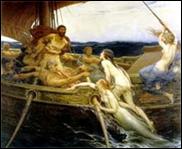 Appendix F:
THE ODYSSEY of HOMER
The Odyssey of Homer is widely-recognized as the greatest literary metaphor for man’s journey through life. Like many epics, The Odyssey represents the Integral vision of its time. Although circumstances and interpretations have changed dramatically, the basic Domains and Parameters of the Integral visions have not. Thus, The Odyssey contains a remarkably complete array of the same Dimensions, Participants, Processes, and Modes of Together-ness found in ADAPT. For this reason, The Odyssey is an ideal source for vivid illustrations of ADAPT concepts.
The following brief synopsis of The Odyssey is drawn from CliffNotes.com. Characters or situations that are referred to, or pertain to, our ADAPT discussion are bolded or [bracketed].
After an invocation to the Muse of poetry, the epic begins in medias res (“in the middle of things”). [Life Passages:] Odysseus has been gone from Ithaca for about 20 years—the first ten spent fighting the Trojan War , the last ten trying to get home. Meanwhile, Odysseus’ wife, Penelope, tries to fend off over 100 suitors who have invaded the royal palace, seeking her hand in marriage (and a chance of ruling Ithaca), and indulging in great amounts of food and wine at the hosts’ expense. Telemachus, son of Odysseus and Penelope, is just coming of age (he is approximately 21) and is at a loss as to what to do about the suitors. Mother and son yearn for Odysseus’ return.
The first four books deal with Telemachus’ struggle (in fact, Odysseus does not appear in the epic until Book 5). [Life Passages:] A secondary plot in The Odyssey is Telemachus’ coming of age, his own quest, which scholars sometimes refer to as the “Telemacheia.” The goddess Athena appears to the young prince in disguise and advises him to gather an assembly of the island’s leaders to protest the invasion of the suitors. Soon after, he is to visit King Nestor of Pylos and King Menelaus of Sparta, old comrades of his father’s, to gather from them any new of Odysseus. At the assembly, the two leading suitors —the aggressive Antinous and the smooth-talking Eurymachus—confront the prince. They accuse Penelope of delaying too long in her choice of a new husband. Telemachus speaks well but accomplishes little at the assembly because the suitors are from some of the strongest families in the area and are impatient with Penelope’s delays.
As Telemachus secretly sets off for Pylos and Sparta, the suitors plot to assassinate him. At Pylos, Telemachus learns little of his father but is encouraged to visit Sparta where King Menelaus reports that Odysseus is alive but held captive by the goddess nymph Calypso.
Homer leaves the story of Telemachus as the suitors are about to ambush his ship on its return to Ithaca. [Transition to Psyche Passages:] At Athena’s urging, the gods have decided to free Odysseus from Calypso. Hermes, the messenger god, delivers the order to Odysseus’ captor. Odysseus has spent seven years with the goddess, sleeping with her at night and pining for his home and family during the day. Calypso is a beautiful, lustful nymph who wants to marry Odysseus and grant him immortality, but he longs for Penelope and Ithaca. Reluctantly, Calypso sends Odysseus on his way. Poseidon, the sea god, spots the wayfarer and, seeking revenge because Odysseus blinded Poseidon’s son Cyclops, shipwrecks Odysseus on Phaeacia, which is ruled by King Alcinous. The Phaeacians, civilized and hospitable people, welcome the stranger and encourage him to tell of his adventures.
Through Odysseus’ narration, the reader goes back 10 years and hears his tale. Known as “The Wanderings of Odysseus,” this section is the most famous of the epic. [Psyche/Spirit Passages:] At the end of the Trojan War, Odysseus and his men sail first to the land of the Cicones. The Greeks succeed in raiding the central city but linger too long and are routed by a reserve force. Hoping to sail directly home, the flotilla instead encounters a severe storm, brought on by Athena, that blows them far off course to the land of the Lotus-eaters. These are not hostile people, but eating the lotus plant removes memory and ambition; Odysseus is barely able to pull his men away and resume the journey. Curiosity compels Odysseus to explore the land of the Cyclops, a race of uncivilized, cannibalistic, one-eyed giants. One of them, Polyphemus (also known simply as “Cyclops”), traps Odysseus’ scouting party in his cave. To escape, Odysseus blinds the one-eyed monster, incurring the wrath of the giant’s father, Poseidon. Aeolus, the wind god, is initially a friendly host. He captures all adverse winds and bags them for Odysseus, who is thus able to sail within sight of Ithaca. Unfortunately, his men suspect that the bag holds treasure and open it while Odysseus sleeps. The troublesome winds blow the party back to Aeolus, who wants no more to do with them, speculating that they must be cursed by the gods. The next hosts, the cannibalistic Laestrygonians, sink all the ships but Odysseus’ in a surprise attack. The remaining Greeks reach Aeaea, home of the beautiful enchantress Circe, who turns several of them into pigs. With advice from Hermes, Odysseus cleverly defeats Circe and becomes her lover. [Body Passages/ Therapeutic Growth] She lifts the spell from his men and aids in the group’s eventual departure a year later, advising Odysseus that he must sail to the Land of the Dead. There, he receives various Greek heroes, a visit from his own mother, and an important prophecy from the seer Tiresias. Odysseus resumes his journey. Barely surviving the temptations of the Sirens’ songs and an attack by a six-headed monster named Scylla, Odysseus and his crew arrive at the island of the Sungod Helios. Despite severe warnings not to, the men feast on the cattle of the Sungod during Odysseus’ brief absence. Zeus is outraged and destroys the ship as the Greeks depart, killing all but Odysseus, who is washed ashore at Calypso’s island, where he stays until released seven years later.
[Transition to Life Passages:] The story of his adventures finished, Odysseus receives the admiration and gifts of the Phaeacians who follow their tradition of returning wayfaring strangers to their homelands by sailing him to Ithaca.
[Life Passages:] Meanwhile, Athena helps Telemachus avoid the suitors’ ambush and arranges for him to meet his father at their pig farm not far from the palace. Reunited with his son and with the assistance of Athena and his faithful swineherd Eumaeus, Odysseus returns to his home palace disguised as a beggar. For the time, he resists striking back at the suitors who insult and assault him. Penelope seems at least suspicious that he is her husband, but it is Eurycleia, a loyal nurse who cared for Odysseus when he was a child, who has no doubt of his identity as she discovers an old scar on his leg when she bathes him. Penelope arranges a contest, vowing to wed any man who can string the great bow of Odysseus and shoot an arrow through a dozen axes as he used to do. The suitors all fail; only Odysseus himself can perform the feat. With deft planning and more help from Athena, he and Telemachus and two faithful herdsmen slaughter the suitors. Odysseus and Penelope are reunited, as are Odysseus and his aging father, Laertes.
[Integration of Psyche, Spirit, & Life Passages:] Athena makes peace with the suitors’ vengeful friends and families, avoiding civil war. Odysseus is home at last.
Appendix
G:
CREDITS
Thanks is gratefully given for permission to publish the following images.
Title page. Integral Operating System, www.soundstrue.com.
Preface. A Brief History of Everything, www.Shambala.com.
Overview. Odysseus’ Ship, www.mythencyclopedia.com.
Old Map Central America, www.putmap.com.
How to Read This Study. Wilber Aura, www.zaadz.com.
Overview of ADAPT. Voyages of Captain Cook, http/imagecache2.allposters.com
Dimensions. Old
Map of the World.
{ Stage growth. DNA Jellyfish, www.genomenewsnetwork.org.
{ Transition growth. Bay Bridge at Night, www.Thomashawk.com.
{
Developmental
sequence. Butterfly
Life Cycle, www.butterflyutopia.com.
Spiral
DNA,
www.berkeley.edu.
Chakra
Lotus.
Norman Rockwell, Freedom
From Want, www.ArtArchive.com.
{ States growth. Sleeping Babe, www.SophieLuxjoyhog.com.
{ Realm growth. RealmKeepers, www.Photobucket.com
{ Arena growth. Gladiator, Dreamworks Studios
{ Vector and direction growth. Red Arrows in Formation, Bluelinecruises.co.uk
{ Actualization/Restoration growth. Personalities, www.WebRing.com.
{ Coordination growth. Gymnast, www.Photosport.com.
Processes. Sailing Ship, www.newnetherland.org.
{ Foundational. Fetus12wks, Lennart Nilsen.
{ Physical world. Frog, DeviantArt.com.
{ Socio-cultural. GirlsDanceCircle, Denmark Dance.
{ Formal investigation. Mind Theater, podspider.com.
{ Self-expression. Van Gogh Self-portrait, Rijksmuseum.nl.
{ Conscious development. WeddingKids, FreeArt.net.
{ Comprehensive. Star Wheel, KiRaNiAya.
Participants. Star Trek Crew, www.Britfilms.tv
{ Experienced/Observed Self. Himself Observed.
{ Individual/Collective Self. Whitewater, Oxeyes.org.uk.
{ Personae & Types. Laurel and Hardy, Way Out West, Hal Roach Studios.
{ Functional Self. Workforce.
{ Impediment Self. Aristophanes Warrior, www.mettawee.org.jpg
{ Witness. Guiding Spirit, www.eso-garden.com.
Together-ness. Wilber and Dog, http.home.wxs.nl.
{ Parents. Dad & Son Flying, www.wpclipart.com.
{ Society/Culture. Happy Family, www.users.waitrose.com.
{ Holistic Growth Situations. Waldorf Garden, www.samfordschool.com.
{ Growth Centers. Potala Palace, www.daveoasis.com.
{ Authorities. Moses and the Commandments, www.flholocaustmuseum.org
{ Partner/Spouse. The Quiet Man, Republic Studios, 1952.
{ Therapist. Freud Psychedelic, telering.at.
{ Spiritual Guide. Dalai Lama, www.greencats.com.
{ Growth Professionals. Goodbye, Mr. Chips, MGM Studios, 1969. www.screenarchives.com.
{ Integral Life Guide. The Integral Multiplex. integralinstitute.org.
{ Internal navigator. Compass with Old Map, www.esa.int.
Impediments
& Resolutions. Great Wall, www.lehsd.k12.nj.us.
Chess
Move,
artfiles.com.
Toward a New Model.
{ How Journeys Go Wrong. Old Map of the Americas, www.murrayhudson.com.
{ Constructive comparisons. The Simple Feeling of Being, www.Shambala.com.
{
Re-examining
Ken Wilber. Being
Ken, www.IntegralWiki.net.
Atlas the Titan, poesiadelmomento.com.
{
Building the
Next IOS. Hitchhiker’s
Guide to the Galaxy,
Del Ray Publishing.
Escape With Us, www.sorenlarsen.co.nz.
Appendices:
{
ILP/Wilber
Processes Tables. Wilber
in Tanktop, http/in.integralinstitute.org.
Integral Life Practice, www.FrozenTruth
Integral Psychology (Slavic), www.Shambala.com.
{ Resources. Big Book, www.Sterin.com
{ Glossary. Mag Glass, www.Nyu.edu
{ Odyssey. Odysseus and the Sirens, www.mythencyclopedia.com.
{ Biography. Lotus Flowers, www.FalunGong.org.
HUGH AND KAYE MARTIN
Biographical Information

 HUGH MARTIN
is listed in Who’s Who in the World. He has appeared on numerous talk
shows, led seminars at many colleges and corporations, and spoken at numerous
professional conferences and colloquia. Mr. Martin is president of the
NASD-registered securities brokerage firm, Hugh Martin Securities, and of
the SEC-registered investment advisory firm, Hugh Martin & Co. Hugh
is also president and co-founder of the life planning and counseling firm,
Whole Life Advisory.
HUGH MARTIN
is listed in Who’s Who in the World. He has appeared on numerous talk
shows, led seminars at many colleges and corporations, and spoken at numerous
professional conferences and colloquia. Mr. Martin is president of the
NASD-registered securities brokerage firm, Hugh Martin Securities, and of
the SEC-registered investment advisory firm, Hugh Martin & Co. Hugh
is also president and co-founder of the life planning and counseling firm,
Whole Life Advisory.
AMALIA KAYE MARTIN (‘Kaye’) is a gifted natural medicine practitioner and an instructor in nutrition and natural medicine at Baumann College, and a creative elementary school teacher. Kaye is a dedicated homemaker, a devoted mother, perceptive life coach, certified natural foods chef, and dynamic community organizer.
HUGH AND KAYE. Hugh and Kaye are best qualified as integral practitioners and theorists because they have lead integral lives. Both have richly diverse backgrounds in a multitude of fields:
Ø Personal transformation: Esalen, Group Process, Gestalt, Reichian, Bioenergetics, Rolfing, yoga, various religious and spiritual traditions.
Ø Natural medicine and health: Homeopathy, chiropractic, acupuncture, organic nutrition, vibrational medicine. Terminal cancer survivor (Hugh). Expert practitioner in nutrition and natural medicine (Kaye)
Ø Artistic and creative expression: Nature photographer, documentary videographer, poet, painter/sculptor (Hugh). Batik artist, home decorator (Kaye).
Ø Education: Ghetto school teacher, college literature instructor, financial seminar leader, early-reading curriculum developer (Hugh). Nutrition/natural medicine instructor, home-school network developer and coordinator (Kaye).
Ø Societal change: Civil rights, environmental issues, sustainability/permaculture.
Ø Natural and cultural environments: Backpacking, mountain biking, exotic travel, home exchanging.
Ø Academics: Hugh -- Swarthmore College (B.A.), University of Pennsylvania (M.A.), Indiana University (doctoral), UC Berkeley (credential), Coaches Training Institute (CTI), member of Mensa. Kaye -- Cal State Northridge (B.A.), Baumann College (natural medicine), Coaches Training Institute (CTI).
Ø Marriage and family. Thirty years of happy, occasionally turbulent, marriage. Five highly-independent, multi-gifted kids with close family ties.
 WHOLE LIFE
ADVISORY. Hugh and Kaye are the founders and co-directors of the life
planning and counseling firm, Whole Life Advisory. Whole Life Advisory
is a comprehensive program for personal and professional growth, which
empowers clients to achieve success and fulfillment in 12 key arenas of
life -- education, career, marriage, family, community, emotions, sexuality,
finances, health, recreation, nature, and spirituality. For more
information, please contact the authors at MartinHughCo@Gmail.com.
WHOLE LIFE
ADVISORY. Hugh and Kaye are the founders and co-directors of the life
planning and counseling firm, Whole Life Advisory. Whole Life Advisory
is a comprehensive program for personal and professional growth, which
empowers clients to achieve success and fulfillment in 12 key arenas of
life -- education, career, marriage, family, community, emotions, sexuality,
finances, health, recreation, nature, and spirituality. For more
information, please contact the authors at MartinHughCo@Gmail.com.