|
TRANSLATE THIS ARTICLE
Integral World: Exploring Theories of Everything
An independent forum for a critical discussion of the integral philosophy of Ken Wilber
  Frank Visser, graduated as a psychologist of culture and religion, founded IntegralWorld in 1997. He worked as production manager for various publishing houses and as service manager for various internet companies and lives in Amsterdam. Books: Ken Wilber: Thought as Passion (SUNY, 2003), and The Corona Conspiracy: Combatting Disinformation about the Coronavirus (Kindle, 2020).
Check out my other conversations with ChatGPT Principles and PowerThe Uncomfortable Marriage of Morality and Realpolitik in Contemporary GeopoliticsFrank Visser / ChatGPT
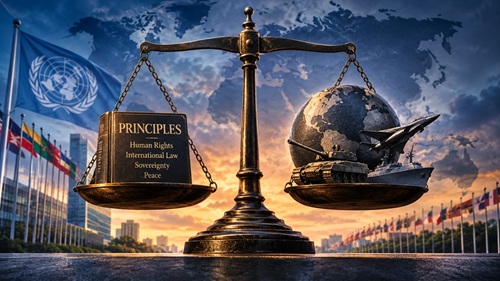 Introduction: The world according to principles—and the world according to powerInternational politics has always been caught between two competing logics. One is the logic of principles: sovereignty, territorial integrity, human rights, democracy, international law, self-determination and the peaceful resolution of conflicts. The other is the logic of power: military strength, economic leverage, strategic alliances, access to resources, technological superiority and the pursuit of national interests. In an ideal world, these two logics would reinforce one another. Powerful nations would defend international law, weaker nations would enjoy protection against aggression, and diplomatic agreements would be respected because they rested on mutually accepted rules. In the real world, however, the relationship is considerably more complicated. Principles are universal in their language, but power is unequal in its distribution. International law formally applies to small and large countries alike, but the ability to enforce it depends heavily on the political and military capabilities of individual states. A country may be entirely justified in appealing to international law and yet find itself unable to secure compliance. Conversely, a powerful country may violate international norms while calculating that the consequences will be manageable. This tension is not an accidental defect of contemporary international relations. It is one of their defining characteristics. The central question, therefore, is not whether geopolitics should be governed by principles or by power. Both are unavoidable. The more important question is how principles can constrain power without becoming instruments of power themselves—and how political realism can acknowledge strategic necessities without degenerating into an apology for aggression, domination or cynicism. 1. The legacy of political realismThe tension between principles and power has a long intellectual history. One of its most influential formulations is political realism, associated with thinkers such as Thucydides, Niccolò Machiavelli and, in modern international relations, Hans Morgenthau. Political realism begins with an uncomfortable observation: states do not operate in a world governed by a universally accepted sovereign authority. Unlike individuals within a functioning national legal system, countries cannot routinely appeal to a world government capable of enforcing decisions against powerful offenders. The United Nations was created partly to overcome this problem. Its Charter establishes principles of sovereign equality, territorial integrity and the prohibition of aggressive war. Yet the Security Council itself reflects the distribution of power at the end of the Second World War. Its five permanent members possess veto powers that can prevent collective action even when serious violations of international peace and security are alleged. This creates a fundamental contradiction. The international system proclaims equality among states while institutionalizing inequality among its most powerful members. Realists regard this not simply as hypocrisy but as an unavoidable feature of international politics. They argue that governments have a primary responsibility to protect their own populations, maintain national security and preserve their strategic independence. A government that ignores military realities in pursuit of moral ideals may expose its citizens to dangers that could have been anticipated. There is considerable truth in this argument. Principles without the capacity to defend them can become empty declarations. A country that cannot defend its sovereignty may discover that its internationally recognized rights offer little practical protection against an aggressor. But realism has its own danger. If national interest becomes the ultimate justification for every action, almost anything can be defended: territorial expansion, military intervention, economic coercion, political intimidation and the suppression of smaller nations. The problem is that realism can explain why powerful states behave as they do without necessarily establishing that their behaviour is justified. We must therefore distinguish between understanding power and endorsing its exercise. 2. The liberal international order: an unfinished experimentFollowing the Second World War, an ambitious attempt was made to establish a more principled international system. The United Nations, the Universal Declaration of Human Rights, the Geneva Conventions and subsequent international legal institutions represented the conviction that relations between states should be governed by more than military strength. The postwar order was never entirely universal or impartial. Colonialism continued, superpower interventions occurred, and both Washington and Moscow frequently subordinated international principles to strategic objectives. Nevertheless, the institutional framework established an important precedent: aggression, genocide, war crimes and violations of fundamental human rights could be judged against standards that transcended national sovereignty. After the Cold War, many Western policymakers believed that liberal democracy, economic interdependence and international institutions would gradually expand their influence. The language of a rules-based international order became central to Western foreign policy. However, there was an unresolved problem. The United States and its allies were simultaneously the principal architects, defenders and beneficiaries of this order. They often expected other countries to accept rules that they themselves interpreted flexibly when vital strategic interests were involved. This produced a credibility problem that has become increasingly difficult to ignore. The distinction between international law and the broader expression "rules-based international order" is particularly important. International law consists of identifiable legal obligations, treaties, customary rules and institutional procedures. The rules-based order is a broader political expression that can encompass these obligations but may also refer to expectations and arrangements that are not universally agreed upon. When powerful governments invoke the rules-based order selectively, critics can reasonably ask whether they are defending universal principles or merely defending an international arrangement favourable to themselves. This question has become central to contemporary geopolitical debates. 3. Ukraine: sovereignty against imperial ambition
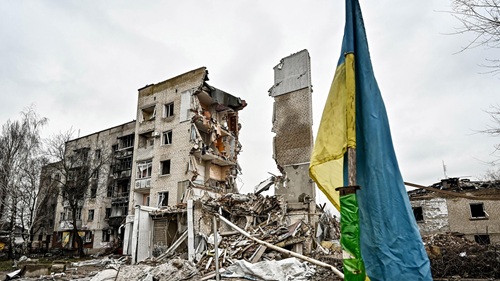 The Russian invasion of Ukraine in February 2022 provides one of the clearest contemporary examples of the confrontation between principles and power. The fundamental principle at stake is straightforward: a sovereign country has the right to determine its own political future, including its international alliances, without being subjected to military invasion by a neighbouring power. Russia's arguments about NATO expansion, historical connections, Russian-speaking populations and its own security concerns belong to the realm of geopolitical explanation. They may help us understand the Kremlin's perceptions and strategic calculations. They do not, however, establish a legal entitlement to invade Ukraine or determine its political future by force. This distinction is essential. Understanding the security concerns of a state does not mean accepting every action undertaken in their name. Ukraine's resistance illustrates another important relationship between principles and power: the defence of international norms often requires material capabilities. Without Ukrainian military resistance and substantial international assistance, the principle of national self-determination might have been reduced to a diplomatic aspiration. Yet the conflict also reveals the limitations of international institutions. Russia's permanent membership of the UN Security Council has made collective enforcement particularly difficult. The international community can condemn aggression, impose sanctions and support the victim of aggression, but it cannot easily compel a nuclear-armed state to reverse its actions. The lesson is not that international law is irrelevant. Rather, it is that legal principles require political coalitions, economic resources and credible defensive capabilities if they are to have practical consequences. There is also a danger in allowing geopolitical explanations to obscure the agency of smaller countries. Ukraine is not merely a geographical buffer between Russia and the West. It is a political community whose citizens have their own preferences, interests and historical experiences. A genuinely principled foreign policy must take those preferences seriously. 4. Gaza: the credibility crisis of universal principles
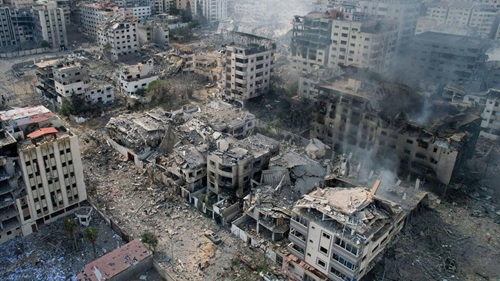 The war in Gaza has exposed a different but closely related contradiction. Western governments have repeatedly emphasized the importance of international humanitarian law, civilian protection and accountability for violations of international norms. Yet their responses to the destruction in Gaza, the humanitarian catastrophe and the conduct of Israeli military operations have differed considerably from their response to Russia's invasion of Ukraine. The historical circumstances of the two conflicts are obviously different. Israel has legitimate security concerns, including the protection of its population against attacks by Hamas. The atrocities committed by Hamas on October 7, 2023, cannot be minimized or excused. But the right of a state to defend itself does not mean that every military operation undertaken in its name is lawful. International humanitarian law requires distinction between combatants and civilians, proportionality in attacks and the taking of feasible precautions to minimize civilian harm. These obligations apply irrespective of the identity of the belligerent. The central issue is therefore not whether Israel has security interests. It unquestionably does. The issue is whether those interests justify particular military actions and whether international legal standards are applied consistently. When Western governments defend international law in Ukraine but appear more hesitant or selective when Israel is involved, their credibility suffers. This has consequences extending far beyond the Middle East. Governments in Africa, Asia and Latin America may conclude that Western appeals to universal values are conditional upon political alignment. Such perceptions provide authoritarian governments with convenient rhetorical ammunition. They can point to Western inconsistencies to dismiss criticism of their own conduct. There is a paradox here: selective enforcement of international principles does not strengthen the position of the countries receiving preferential treatment. It weakens the entire normative system on which their long-term security also depends. 5. The United States: leadership or exceptionalism?The United States occupies a particularly complicated position in this debate. For decades, American power has supported important elements of the postwar international order. Its military alliances, economic resources, technological leadership and diplomatic influence have helped sustain institutions and arrangements that many countries have benefited from. But American foreign policy has also repeatedly demonstrated the tension between universal principles and national exceptionalism. The 2003 invasion of Iraq remains an important example. The Bush administration presented the intervention in terms of security, democracy and the removal of a dangerous regime. The war was not authorized by a new, explicit Security Council resolution permitting the invasion, and its legal justification was widely contested. The subsequent occupation demonstrated the enormous distance between military victory and the creation of a stable political order. More recently, the increasingly transactional and coercive approach of the second Trump administration has raised further questions about the future of American international leadership. Threats involving economic pressure, territorial interests and the use of force against other countries have created uncertainty among allies as well as adversaries. The deeper problem is that international leadership cannot rest on military and economic superiority alone. A country may compel others to comply with its demands, but compulsion is not the same as legitimacy. Leadership requires a degree of trust that others will benefit from the rules being defended, rather than simply being expected to obey the strongest actor. American power is therefore both an asset and a responsibility. When used to support broadly applicable principles, it can help stabilize international relations. When used to demand exceptions for itself, it contributes to the erosion of the very order it claims to defend. 6. China and the return of great-power competition
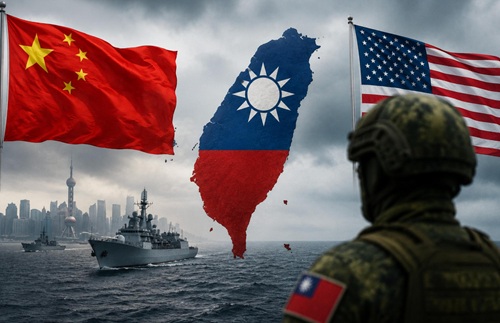 The rise of China introduces another dimension to the relationship between principles and power. China presents itself as an advocate of sovereignty, non-interference and a multipolar international order. These positions appeal to countries that have historically experienced Western colonialism, intervention or economic domination. There is a legitimate argument behind this appeal. The international system should not be organized around the assumption that Western political preferences are universally binding. Countries have different histories, institutions and development priorities. National sovereignty deserves respect regardless of a country's ideological orientation. However, the Chinese position also has tensions of its own. China's insistence on sovereignty must be considered alongside its territorial claims, pressure on Taiwan, activities in the South China Sea and economic leverage over other countries. The principle of non-interference becomes less convincing when a major power seeks to determine the political or strategic choices of its neighbours. Taiwan is particularly revealing. Beijing regards reunification as a fundamental national objective, while Taiwan has developed its own democratic political institutions and a population with diverse views about its future. The geopolitical stakes are enormous because of Taiwan's strategic location and its importance to advanced semiconductor manufacturing. Yet these strategic considerations should not obscure the political interests and preferences of the people directly concerned. The United States, meanwhile, supports Taiwan's ability to defend itself while maintaining a carefully calibrated policy regarding its international status. Its own strategic calculations are inseparable from its professed commitment to regional stability. Here again, neither side can be understood simply through its stated principles. Both are operating within a broader struggle over regional power, technological leadership and the future distribution of global influence. 7. Economic power: coercion without warMilitary power is only one dimension of geopolitics. Economic power has become an increasingly important instrument of international competition. Sanctions, tariffs, export controls, investment restrictions, financial exclusion and the control of strategic supply chains can all be used to influence the behaviour of other states. These measures are sometimes justified as alternatives to military force. Economic sanctions against an aggressor, for example, may be preferable to direct military confrontation. Export controls may be intended to prevent sensitive technologies from being used for military purposes. Nevertheless, economic coercion raises its own ethical and political questions. Who determines which restrictions are legitimate? How much suffering among ordinary citizens is acceptable in pursuit of political objectives? When do defensive economic measures become instruments of domination? And how should countries respond when access to essential technologies, energy supplies or financial systems becomes conditional upon political compliance? The growing rivalry between the United States and China illustrates this transformation. Competition over semiconductors, artificial intelligence, critical minerals, telecommunications and advanced manufacturing is no longer simply commercial. It is increasingly understood as a matter of national security. The World Economic Forum's 2026 Global Risks Report identifies geoeconomic confrontation as the leading perceived source of a material global crisis in the near term. It also describes the weakening of multilateralism and the increasing fragmentation of global economic relations. This development has an important implication: power politics is no longer confined to military alliances and territorial disputes. It is embedded in the infrastructure of globalization itself. Economic interdependence, once widely regarded as a stabilizing force, can also become a source of vulnerability. Countries increasingly seek to reduce dependence on potential adversaries, even at the cost of economic efficiency. The result is a world in which trade, technology and finance are becoming instruments of strategic competition. 8. The Global South and the politics of double standardsOne of the most important consequences of the current geopolitical transformation is the changing attitude of countries outside the traditional Western power structure. Many governments in the Global South reject the idea that they must choose between Washington, Beijing and Moscow. They prefer to maintain diplomatic and economic relations with multiple centres of power. This is sometimes described as strategic autonomy or multi-alignment. Their position is not necessarily a rejection of international principles. It can also reflect a desire to avoid becoming subordinate to any particular geopolitical bloc. Historical experience matters here. Many countries have experienced colonial domination, foreign intervention and unequal economic relationships. They are understandably suspicious of claims that powerful nations are acting purely out of concern for universal values. At the same time, historical grievances should not become an excuse for ignoring contemporary aggression or authoritarian abuses. There is no contradiction in criticizing Western hypocrisy while also criticizing Russian imperialism, Chinese coercion or abuses committed by governments in the Global South. Indeed, genuine universalism requires precisely this consistency. A particularly revealing study by Harvard Law School's Program on International Law and Armed Conflict examined more than 900 statements by UN member and observer states concerning alleged international-law double standards between 2000 and late 2024. The sheer frequency of these accusations demonstrates how central the issue has become in international political discourse. The important question is not whether every accusation of hypocrisy is justified. Some are opportunistic and some are demonstrably selective themselves. The question is whether the international community has sufficiently credible mechanisms for distinguishing legitimate criticism from geopolitical propaganda. 9. The danger of moral relativismThere is a particularly dangerous response to the apparent hypocrisy of powerful states: moral relativism. According to this position, international principles are merely ideological instruments used by dominant countries to advance their interests. Since every country pursues power, appeals to morality and international law are supposedly little more than political decoration. This argument contains an element of truth. Governments do instrumentalize moral language, and the selective application of principles is a persistent feature of international politics. But the conclusion does not follow. The fact that principles are sometimes abused does not mean that the principles themselves are worthless. The fact that governments invoke human rights selectively does not mean that human rights should be abandoned. The fact that international law is difficult to enforce does not mean that aggression and war crimes become morally equivalent to lawful conduct. We should distinguish between the validity of a principle and the motives of those who invoke it. Consider the principle of national self-determination. It can be invoked hypocritically by one government while remaining entirely legitimate in another situation. Its validity does not depend on the political purity of its advocates. The same applies to human rights, territorial sovereignty and the protection of civilians. Without such standards, international politics risks becoming a competition in which the strongest state determines not only what happens but also what counts as legitimate. That would not be realism in any intellectually defensible sense. It would be the normalization of domination. 10. The danger of moral idealismThe opposite mistake is to believe that international politics can be transformed simply by appealing to universal values. Moral idealism becomes dangerous when it ignores the realities of power, conflicting interests and unintended consequences. A government may sincerely support democracy while pursuing an intervention that destroys the institutions necessary for democratic development. It may support peace while adopting policies that make compromise politically impossible. It may defend human rights while overlooking the strategic consequences of its actions. There is also a temptation to divide the world into morally pure allies and irredeemably evil adversaries. Such thinking makes it difficult to recognize legitimate security concerns on the other side, distinguish between different forms of misconduct or negotiate workable settlements. A principled foreign policy must therefore be more than a declaration of good intentions. It needs strategic competence, historical understanding, proportionality and a willingness to consider the likely consequences of political decisions. This is where realism can make a valuable contribution to moral reasoning. It reminds us that good intentions do not automatically produce good outcomes. But realism must also be constrained by principles. Otherwise, the pursuit of security can become an unlimited justification for the exercise of power. 11. The European dilemma: principles without sufficient power?
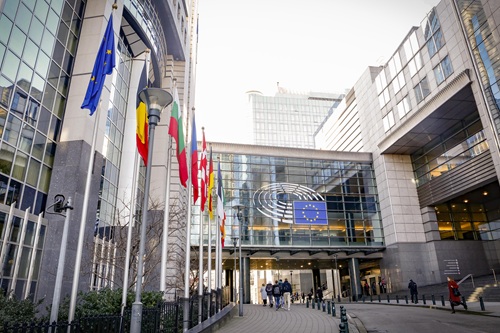 Europe occupies an especially interesting position in this debate. The European Union was built on the conviction that economic cooperation, democratic institutions, legal agreements and shared political interests could overcome the destructive nationalism that had repeatedly devastated the continent. In this respect, the EU represents one of the most ambitious experiments in replacing traditional power politics with institutional cooperation. Yet the return of war to Europe has exposed the limitations of this approach. Russia's invasion of Ukraine demonstrated that economic interdependence does not necessarily prevent military aggression. Europe's dependence on external energy supplies and its reliance on American military capabilities also revealed vulnerabilities that had been underestimated. European governments increasingly recognize that defending international principles requires military preparedness, economic resilience and technological independence. This presents a fundamental dilemma. Europe wants to defend a rules-based international order, but it must also develop the power necessary to defend that order when others disregard it. There is nothing inherently contradictory about this. Military strength can serve peaceful purposes when it provides credible deterrence against aggression. The more difficult question is whether Europe can develop a coherent foreign policy while remaining divided over national interests, strategic priorities and relations with the United States. A Europe that speaks eloquently about international law but cannot protect its own security will struggle to influence the emerging world order. Conversely, a Europe that abandons its legal and humanitarian commitments in pursuit of geopolitical relevance would lose much of what makes its international role distinctive. The challenge is to combine strategic autonomy with normative consistency. 12. Multipolarity: a more democratic world or a more dangerous one?The emerging international system is increasingly described as multipolar. The United States no longer enjoys the same degree of uncontested dominance that characterized the immediate post-Cold War period. China has become a major economic and military power, India is expanding its international influence, and regional powers such as Turkey, Saudi Arabia, Brazil and Indonesia are pursuing more independent strategies. This redistribution of power has potentially positive consequences. It can reduce the ability of a single country or bloc to dictate international arrangements. It can give smaller and middle-sized countries more diplomatic options. It can also encourage international institutions to become more representative of the actual distribution of global influence. But multipolarity does not automatically produce a more just international system. A world with several competing centres of power may simply replace one hierarchy with several regional hierarchies. Smaller countries might find themselves caught between competing spheres of influence, each with its own demands and expectations. There is also a danger that the erosion of international institutions will produce a world of competing bilateral arrangements in which the stronger party routinely determines the terms. The 2026 Global Peace Index describes the current period as one of growing geopolitical fragmentation, with 61 active state-based conflicts reported worldwide. IEP The essential distinction is between multipolarity and multilateralism. Multipolarity describes the distribution of power. Multilateralism describes the willingness of countries to cooperate through shared institutions and rules. A multipolar world can be highly cooperative, but it can also be intensely competitive. The number of powerful actors tells us little about the quality of their relationships. What matters is whether those actors recognize that certain problems cannot be solved through unilateral action. Climate change, pandemics, nuclear proliferation, artificial intelligence and global economic instability all require international cooperation. No single country, however powerful, can manage these challenges alone. The future of geopolitics therefore depends not only on who possesses power but also on whether powerful states can agree to limit its exercise. 13. Can principles constrain power?This brings us to the central philosophical question. If international law has no world government capable of enforcing it consistently, and if powerful countries can sometimes escape accountability, why should states respect international principles at all? There are several answers. First, international rules reduce uncertainty. Countries benefit from knowing that borders, treaties, diplomatic agreements and commercial arrangements will generally be respected. Even powerful states benefit from predictable rules because they themselves depend on international cooperation. Second, legitimacy is a form of political power. Governments that are regarded as trustworthy can build alliances more easily, attract economic partners and obtain diplomatic support. A state that relies exclusively on coercion may achieve short-term compliance but accumulate long-term resentment. Third, violations of international norms can generate resistance. Aggression may strengthen the determination of threatened countries to cooperate, arm themselves and seek alternative alliances. The aggressor may consequently find itself in a less favourable strategic position than before. Russia's invasion of Ukraine illustrates this unintended consequence: an attempt to prevent Ukraine's closer integration with the West contributed to a stronger Western security response and the accession of Finland and Sweden to NATO. Fourth, international principles provide weaker countries with a common language of resistance. They may not possess the military resources to confront a great power directly, but they can appeal to international institutions, mobilize diplomatic support and challenge the legitimacy of coercive actions. These mechanisms are imperfect. None guarantees justice. But they demonstrate that principles are not simply decorative additions to international politics. They can shape interests, constrain choices and influence the distribution of power itself. The relationship is therefore reciprocal: power sustains institutions, but institutions can also shape how power is exercised. 14. Towards a more consistent international ethicWhat would a more credible relationship between principles and power look like? It would begin with consistency. The prohibition against aggressive war must apply to Russia, the United States, China and every other state. The protection of civilians must apply in Ukraine, Gaza, Sudan and elsewhere. Sovereignty cannot be defended in one case and dismissed in another merely because the political circumstances are inconvenient. Consistency does not mean pretending that all conflicts are identical. Historical circumstances, legal contexts and the responsibilities of different actors must be examined carefully. But differences in circumstances should not become excuses for abandoning universal standards. Second, governments must distinguish between legitimate security interests and unlimited claims to strategic entitlement. Every country has security concerns, but no country has an unlimited right to determine the political future of its neighbours. Third, international institutions need reform. The UN Security Council's structure reflects a geopolitical reality that is increasingly distant from the contemporary distribution of global power. Its veto system also allows permanent members to obstruct collective responses to situations involving their own interests. Reform will be difficult because the existing arrangements are protected by the very powers that would have to agree to change them. Nevertheless, the legitimacy of international institutions depends partly on their ability to represent the world they claim to govern. Fourth, middle powers should play a more active role. Countries such as Canada, Australia, Japan, South Korea, Brazil, Indonesia and members of the European Union have considerable diplomatic, economic and technological resources. By cooperating across traditional geopolitical divisions, they could help defend international norms without simply reproducing the strategic priorities of the great powers. Finally, there must be greater intellectual honesty in foreign policy debates. Governments and commentators should be willing to acknowledge the weaknesses of their own alliances, the legitimate concerns of adversaries and the unintended consequences of their preferred policies. Principled foreign policy does not require moral perfection. It requires the willingness to apply the same standards to friends and opponents. Conclusion: Neither morality without power nor power without moralityThe tension between principles and power is not going to disappear. It is built into the structure of international relations, where sovereign states pursue their interests in the absence of a universally enforceable political authority. But recognizing this reality does not require surrendering to it. Political realism is right to remind us that international principles cannot defend themselves. Military capabilities, economic resources, diplomatic alliances and strategic calculations remain essential elements of international politics. Moral idealism, however, is right to insist that the possession of power does not automatically confer legitimacy. The ability to impose one's will is not the same as having the right to do so. The real danger lies in the two extremes: a naive idealism that ignores geopolitical realities and a cynical realism that treats every exercise of power as justified by national interest. The international order needs both strategic competence and normative restraint. Perhaps the most important lesson of contemporary geopolitics is that principles are most valuable precisely when they are inconvenient. Defending the sovereignty of an ally is relatively easy when doing so serves one's strategic interests. Defending the same principle when it conflicts with those interests is the real test of political consistency. The same applies to human rights, civilian protection, territorial integrity and international justice. A world in which principles are applied only when convenient is not a principled world at all. It is simply a world in which power has learned to speak the language of morality. Conversely, a world in which power is constrained by genuinely universal principles would not eliminate geopolitical competition, but it could make that competition less destructive and more predictable. The ultimate challenge is therefore not to abolish power politics, but to civilize it. That may sound like an ambitious ideal. But abandoning the attempt would mean accepting that international relations are ultimately governed by the oldest and least attractive political principle of all: the strongest gets to decide what is right. Appendix: Five distinctions worth remembering
The crucial distinction is that these concepts are related but not interchangeable. Power can produce compliance without legitimacy; international law can establish obligations without guaranteeing enforcement; and moral principles can remain valid even when powerful governments violate them. An intellectually serious geopolitics must keep all five dimensions in view. Research background: The contemporary analysis draws on the 2026 Global Risks Report, the 2026 Global Peace Index, recent research on international-law double standards and current assessments of great-power competition.
Comment Form is loading comments...
|