|
TRANSLATE THIS ARTICLE
Integral World: Exploring Theories of Everything
An independent forum for a critical discussion of the integral philosophy of Ken Wilber
 Ray Harris is a frequent contributor to this website. He has written articles on 9/11, boomeritis, the Iraq war and Third Way politics. Since 2007 he took to writing his novels Navaratri, Wild Child and Eden. Harris lives in Ballarat, Victoria, Australia. Is the West a Strategic Threat to Russia?Ray HarrisA series of recent essays from Joseph Dillard, Frank Visser and myself have debated the causes of the current Russo-Ukrainian war. At the heart of the debate is the argument that NATO expansion posed a strategic threat to Russia. The father of the offensive realist school of international relations theory, John Mearsheimer, made this claim explicit in the title of his 2014 essay: Why the Ukraine Crisis is the West's Fault. Dillard has tended to rely on the opinion of a group of academics, commentators and bloggers who place the blame on an alleged US strategy to contain and 'westernise' Russia. I would argue that the election of Trump has demonstrated that this was never a consistent bi-partisan foreign policy objective but rather the policy of the now defunct neocon faction of the Republican Party, particularly those who had migrated from Eastern Europe. It seems that much of the current criticism of US policy is simply relitigating past policy, often with an angry, betrayed tone. This is evidenced with reminders of past failed US policy in Afghanistan, Iraq and elsewhere. But the world has changed. Time to move on. What is a 'strategic' threat?I've been following the debate surrounding the war since 2014 and I've noticed a distinct tendency on all sides to conflate a strategic threat with a direct territorial threat. They are not the same. A strategic threat is as the name indicates, a threat to a strategy, whatever that strategy may be. The example is the long held ambition of the Chinese Communist Party to unite the Chinese people under its rule. It had a partial success when the British handed over control of Hong Kong. The remaining piece of the puzzle is Taiwan. As a small island Taiwan does not represent a territorial threat to the mainland, even with the support of stronger allies. Has there ever been any evidence that the Taiwanese had planned to invade? The only threat that Taiwan poses is its rejection of the CCP's policy of unification. Needless to say, the strategic ambitions of the CCP pose both a strategic and territorial threat to Taiwan. The Taiwanese have consistently voted to maintain their status as a sovereign nation. The CCP has responded with a build up of offensive military capability and constant testing of Taiwan's defences. The Taiwanese believe an attack is imminent. Is NATO a territorial threat to Russia?The short answer is no. NATO has had multiple opportunities to build offensive capabilities in countries bordering the Russian homeland and has not done so. Sometimes I wish people would just look at a map. In 2004 the Baltic states of Lithuania, Latvia and Estonia became NATO members. Had NATO been an offensive pact the logical thing to do would be to establish NATO bases and missile facilities in those countries. This did not happen.
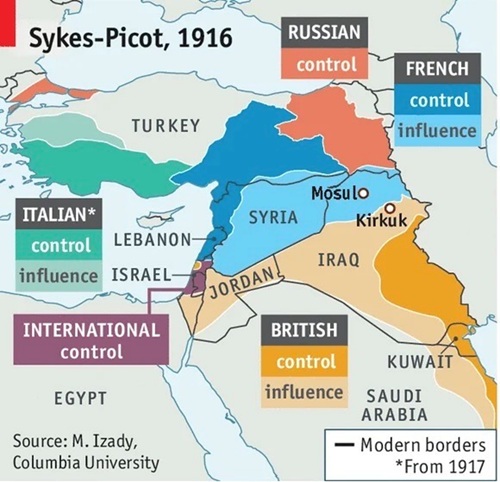
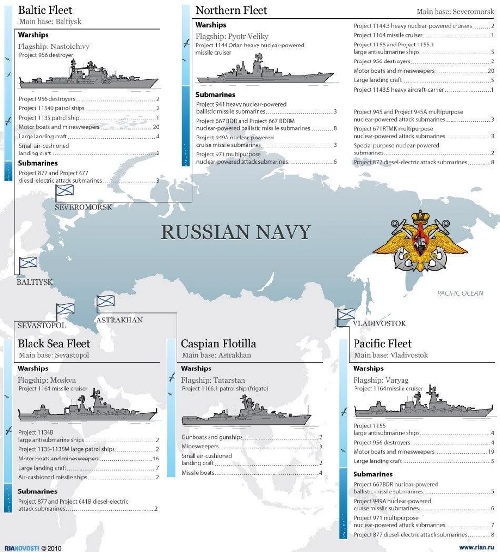 Lithuania and Poland surround the Russian enclave of Kaliningrad, a major port and home to Russia's Baltic fleet. The distance between Narva in Estonia and St Petersburg, Russia's second largest city, major trading port and naval centre, is just 140 kilometres, well within the reach of short-range ballistic missiles. Place a compass point in Moscow and draw an arc with a distance of 900 kilometres, the distance to Ukraine. The arc will pass through the Baltic states demonstrating that Ukraine is actually no closer to Moscow. Now that Finland has joined NATO, Russia's Northern Fleet based in Severomorsk, just 200 kilometres from the Finnish border, is now within the reach of short-range missiles. And Estonia, alongside Sweden and Finland, now control the Gulf of Finland with the capacity to block any shipping in or out of St Petersburg. These represent a real strategic threat, yet Russia did not invade the Baltic states, they invaded Ukraine. Why? Sevastopol and the Black Sea Fleet.Control of the Black Sea has long been a strategic ambition of Russia. As Orthodox Christians there had been a hope that Russians could take Constantinople from the Turks. In a twist of history this might have happened after WW1 - if it had not been for the Bolshevik Revolution. Much has been said about the Sykes-Picot plan to seperate the Ottoman Empire into Italian, French and British spheres of influence. What is less understood is that Imperial Russia had been included, giving it control of Western Anatolia, the Turkish Straits, and most importantly, Constantinople/ Istanbul.
 But what evidence is there that an independent Ukraine ever posed a threat to Sevastopol or the Black Sea Fleet? Here I want to remind the reader that Ukraine had removed its nuclear missiles in exchange for a security guarantee as per the Budapest Memorandum. And despite being invited to join NATO, the Ukrainian parliament, in recognition of Russian security concerns, voted to change the constitution to make Ukraine officially neutral. When Russia annexed Crimea Ukraine was not seeking NATO membership. The irony is that because of Russia's invasion, Ukraine reversed its position and successfully forced Russia to shift its Black Sea Fleet from Sevastopol on the Crimean peninsula to Novorossiysk - a tactical retreat. Note: The Black Sea is ringed by the NATO members of Türkiye, Greece, Bulgaria and Romania. Under the 1936 Montreux convention, Türkiye has the right to control access to the Black Sea. It has only used this power twice: during WW2 to block German access and recently in 2022 to block both Russian and Ukrainian naval ships as response to the Ukrainian conflict. This does apply to commercial shipping. Turning an imagined strategic threat into a strategic failurePeter the Great went to war with Sweden to establish a major port at St Petersburg, thus gaining access to the Baltic Sea and northern trade routes. Catherine the Great successfully challenged the Ottoman Empire, annexed the Crimean peninsula and established the port at Sevastopol. The Russian invasion of Ukraine has placed its western, northern and southern ports under enormous strategic pressure. The enclave of Kaliningrad is surrounded by Poland and Lithuania. St Petersburg is hemmed in by Estonia, Finland and Sweden. The Northern Fleet at Severomorsk is within close range to Finland. The Black Sea Fleet has been forced to retreat from Sevastopol and Türkiye has restricted its ability to sail in or out. This is a clear strategic failure. What was the strategy?As I said above, there are a group of academics, bloggers and commentators who argue that the US is the primary bad actor in international relations. They look at past policies and extrapolate that because the US military industrial complex in league with major corporations and the CIA - the Deep State - have interfered in the internal affairs of other nations and sponsored illegal invasions and insurgent movements, that it is necessarily involved in every such case. This can all too often shift to the paranoid worldview of conspiracy theorists. What this view ignores is the role of other nations and their military industrial/secret service complexes in the exact same activity, especially the Russian KGB/FSB and GRU involvement in coups and insurgencies. This was especially true during the Cold War. Wherever the CIA was active, so too was the KGB. It is no secret that Vladimir Putin began his career as a KGB agent stationed in Dresden, East Germany, where he was actively involved in operations to undermine West Germany, including providing material support to extremist groups such as the Red Army Faction.
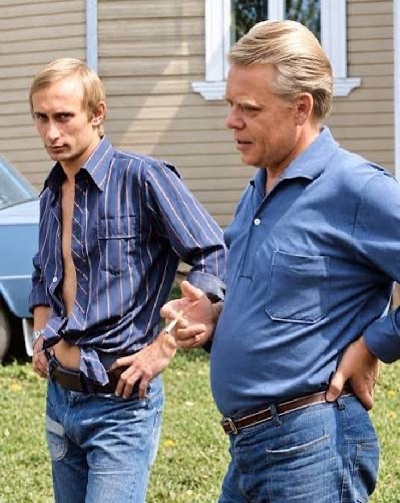
Putin with his KGB mentor, Yuri Sergeyevich, 1979
The fact that a former KGB operative rose through the ranks to become an autocrat suggests that in Russia the 'Deep State' has become the state. Putin has made his ambitions clear. Even Mearsheimer acknowledges this in his 2014 essay: “According to the prevailing wisdom in the West, the Ukraine crisis can be blamed almost entirely on Russian aggression. Russian President Vladimir Putin, the argument goes, annexed Crimea out of a long-standing desire to resuscitate the Soviet empire, and he may eventually go after the rest of Ukraine, as well as other countries in eastern Europe. In this view, the ouster of Ukrainian President Viktor Yanukovych in February 2014 merely provided a pretext for Putin's decision to order Russian forces to seize part of Ukraine.” Given that the essay was written in 2014, Mearsheimer was not to know that Putin would indeed 'go after the rest of Ukraine'. He also could not have known of the future statements Putin would make, especially his 2021 speech 'On the Historical Unity of Russians and Ukrainians'. In that speech Putin made his position very clear. “I am confident that true sovereignty of Ukraine is possible only in partnership with Russia. Our spiritual, human and civilizational ties formed for centuries and have their origins in the same sources, they have been hardened by common trials, achievements and victories. Our kinship has been transmitted from generation to generation. It is in the hearts and the memory of people living in modern Russia and Ukraine, in the blood ties that unite millions of our families. Together we have always been and will be many times stronger and more successful. For we are one people.” However, after reading Putin's speech, Mearsheimer did not modify his position on the cause of the war. In his 2024 essay 'Who Caused the Ukraine War?' he doubled down, dismissing Putin's own words as “opaque”. This is pure apologetics. The evidence lies in Russia's actions. The strategic intent of the invasion was to pressure Kyiv to capitulate and force it to 'remain in partnership with Russia'. Mearsheimer creates a straw man by arguing that Russia had no intention of conquering all of Ukraine. I agree, I don't think that was the plan at all. The plan was to make a quick strike towards Kyiv in order to topple the government and establish, as it had done in the Crimean, Donetsk and Luhansk oblasts, a pro-Russian government. The conventional army would leave Ukrainian territory, but the Russian Deep State would be deeply embedded within Ukrainian society - as it was during the Soviet era and as it is in Belarus and other neighbouring states. This strategy was an abject failure. Russia completely misread the Ukrainian's desire to be rid of them. The strategy has changedPutin expected a quick victory. He didn't get it. He is now stuck. He cannot afford to be seen to lose the war. Not only would it be a personal embarrassment and a blow to his autocratic pride, it would be a severe blow to Russia's national pride. I have always been reluctant to predict, unlike Mearsheimer, who has long predicted Russia's immanent victory, how or when this war will end. It might not end, but rather shift to a hostile stalemate like Georgia. I have also been very cautious about commenting on the current situation on the battlefield because I do not trust the accuracy of most reports. However, I believe it is possible to form an accurate view after a few months of confirming data. It is clear that the Russian army has been stopped and is unable to progress. Indeed, it seems that Ukraine has been able to retake, and more importantly hold, some territory. This has come at an enormous cost to Russia in terms of blood, machinery and treasure. As is always the case estimates vary according to the source. Russia will intentionally underestimate the numbers and Ukraine will tend to inflate the figures. Whatever the case, the Russian causality rate is exceptionally high. The Wikipedia entry provides a comprehensive analysis using multiple sources. As I write this it gives a casualty range from Feb 2022 to June 2026 of 1,274,000 to 2 million. Five years of war, two million casualties and no end in sight. Evidence that the ground war has stalled is supported by Russia's increasing reliance on bombing Ukraine into submission. Despite Russian denials, this includes the deliberate targeting of civilians in order to terrorise and demoralise. However, this seems to have only resulted in increased Ukrainian determination and hatred of Russia. If we use the analogy of coercive control then we have entered the phase of murderous rage. Ukraine has refused to submit and must now be beaten into submission. Putin will need to come away from this war with a victory of some sort. This seems to include retaining control of occupied territory. However, this changes the narrative from preventing NATO expansion to a crude land grab. If this is the outcome what happens to Mearsheimer's claim that this is the West's fault? The point of no return.It may still be the case that Ukraine will surrender. But what will Russia have gained if it does? Will the population receive them with kisses and flowers? Or will this war be remembered as an atrocity like the Holodomor, the Soviet generated famine that killed millions? How does Russia govern a country with a population that despises them if not through severe Soviet style repression? And what will the cost be to the Russian economy of rebuilding? Prime farm land has been heavily mined and industrial infrastructure smashed. More importantly, what will be the impact of traumatised soldiers returning to Russia? As much as they may try to suppress public commentary, soldiers will share stories of brutality at the hands of their seniors. What will be the demographic impact of so many men unfit for work, especially in regional areas? This has been a strategic disaster for RussiaIf the aim was to prevent NATO expansion then it has been a spectacular own goal. NATO has expanded and become stronger. If the aim was to unify the Ukrainian and Russian people then it has only served to drive a wedge between them. If the aim was to capture the valuable agricultural and industrial regions of eastern Ukraine then it has done so with the destruction of that land. If the aim was to reassert Russia's position as a great power, then it has done so by proving it is a threat to global security. Appendix: Finland's current President, Alexander StubbUnlike Mearsheimer, who is solely an ivory tower academic with no first-hand experience, Alexander Stubb has a direct, working experience of Putin and other key Russian policy makers, such as Medvedev and Lavrov. Stubb was Finland's Minister of Foreign Affairs (2008-2011), Minister for European Affairs and Foreign Trade (2011-2014), Prime Minister (2014-2015) and Minister of Finance (2015-2016). He resigned from politics to take up a private position with the European Investment Bank. From 2020-2024 he became the director and professor of the School of Transnational Governance at the European University Institute based in Florence, Italy. He recently returned to Finland to take up the office of President of Finland. This is an impressive resume by anyone's account. It also placed him at the centre of the events surrounding the Russian-Ukraine war. While he was with the School of Transnational Governance he produced a series of video lectures titled 'Understanding the War'. In episode 8 he addressed Mearsheimer's analysis, directly contradicting his central argument. Unlike Mearsheimer, Stubb has met Putin several times and negotiated with Russia on several critical issues, including the peace settlement with Georgia and more recently brokering a peace deal between Russia and Ukraine. He makes it clear that Putin is motivated by his own ambition and a belief in an imperialist, expansionist Russia. This makes Russia the strategic threat, not NATO.
Why Mearsheimer is wrong about Russia and the war in Ukraine. Five arguments from Alexander Stubb.
Comment Form is loading comments...
|