|
TRANSLATE THIS ARTICLE
Integral World: Exploring Theories of Everything
An independent forum for a critical discussion of the integral philosophy of Ken Wilber
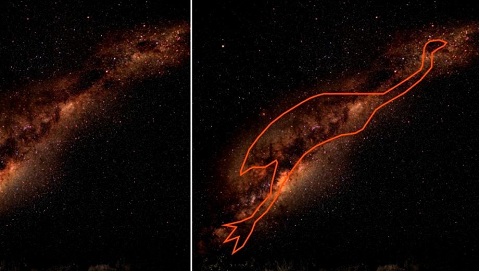
 Ray Harris is a frequent contributor to this website. He has written articles on 9/11, boomeritis, the Iraq war and Third Way politics. Since 2007 he took to writing his novels Navaratri, Wild Child and Eden. Harris lives in Ballarat, Victoria, Australia. Ray Harris is a frequent contributor to this website. He has written articles on 9/11, boomeritis, the Iraq war and Third Way politics. Since 2007 he took to writing his novels Navaratri, Wild Child and Eden. Harris lives in Ballarat, Victoria, Australia.Eros in an absurdly large kosmosRay Harris“Eros is an inherent drive—an actual force—present in the universe itself. It's as real a force as gravity, electromagnetism, and the strong and weak nuclear forces.” (1) One of the most enduring debates in Integral philosophy, at least on Integral World, has been the debate over Wilber's concepts of Eros and Agape, with Frank Visser writing a number of essays critical of Wilber's assertion that biological evolution is a manifestation of Eros. In a recent essay he quotes Wilber: “You either postulate a supernatural source of which there are two types. One is a Platonic given and one is basically theological—a God or intelligent design—or you postulate Spirit as immanent—of course it's transcendent but also immanent—and it shows up as a self-organizing, self-transcending drive within evolution itself. And then evolution is Spirit's own unfolding.” (2) But there is another field in which Wilber's concept of Eros faces a serious challenge: cosmology. Our vivid imaginationsIn an attempt to rescue Aboriginal culture from further decline some activists have attempted to recreate an Aboriginal astronomy. Like all human cultures, the Aborigines studied the night sky and found patterns that informed them about seasons and orientation. And like all other cultures, they named constellations and invented a rich mythology to explain what they saw. One such myth, whilst not found amongst all Aboriginal tribes, is the that of a Dark Emu imagined to form part of the Milky Way.
 Our tendency to project images and attribute meaning is called apophenia and whilst this is a near universal trait, there is enormous variation in the stories themselves. A group of people can look at clouds and see different shapes. In this sense each civilisational complex has created its own celestial mythology. The Chinese system is based on the north celestial pole as the centre of a celestial kingdom. The Egyptians believed the sky was a goddess called Nut, the earth a god called Geb who were kept seperate by the god of air, Shu. A common theme in these systems is a belief in supernatural beings - a complex hierarchy of lesser and greater benevolent and malevolent gods, demigods and magical beings. Integral theory accepts Gebser's explanation that these complex cosmologies are the result of magical and mythical stage thinking. The rational stageMany mythical cosmologies have disappeared completely. No one seriously believes in Valhalla or the old Norse gods, though some may reenact certain rituals for fun. Same applies to the ancient Sumerian or Egyptian cosmologies. But there are others that have remained stubbornly persistent. For the purposes of this essay I'll focus on two because they have had the most impact on Wilber's concept of Eros/Agape. 1. The Greco-Abrahamic. This is a synthesis of several earlier Middle-Eastern cosmologies influenced by the Greco-Roman world. 2. The larger Hindu world, in particular the Tantric traditions, both Hindu and Buddhist (Advaita Tantra and Vajrayana). Both of these systems were developed before the invention of telescopy and were therefore limited by what could be observed by the naked eye. Both have struggled to adapt to the findings of modern cosmology, with each having adherents holding onto pre-modern, Bronze Age beliefs. In the case of the Abrahamic traditions a clinging to a literal reading of Genesis and a belief that the entire cosmos is less than 10,000 years old, with some at the extremes believing the Earth is flat and that the universe does not exist. In the case of the Tantric traditions, a literal belief in a cyclic universe that is limited to mahayugas of 4,320,000 human years at most (representing a symbolic 120,000 divine years) and a fatalistic system of karma and reincarnation. Both collapse under the weight of the latest findings in cosmology. Advances in telescopyThe first telescope was constructed in the Netherlands by spectacle maker Hans Lippershey in 1608. A year later the Italian astronomer Galileo used a simple model to study the night sky, observing three moons around Jupiter. As telescopy improved, human understanding of the nature of the cosmos expanded. Three more planets were added to our solar system: Uranus in 1781, Neptune in 1846 and Pluto in 1930. But perhaps the most significant was Edwin Hubble's discovery that the Andromeda nebula was in fact an entirely seperate galaxy. Until that time astronomers assumed that our galaxy, the Milky Way, was the entirety of the universe. Further advances expanded our understanding of the size of the Milky Way. To date it is estimated to be 13.6 billion years old, 100,000 light years across, 10-30,000 light years deep at the centre and to contain somewhere between 100-400 billion stars. Now, before I continue, I want to return to the size of the universe as understood by the philosophers and theologians who developed Greco-Abrahamic and Tantric metaphysics, particularly humanity's purpose in those systems. The many notions of salvation and enlightenment simply have no need of a galaxy that contains hundreds of billions of stars. Why would a creator manifest a galaxy that was so extravagantly excessive? What does it mean to free oneself from the cycle of samsara in a galaxy that is billions of years old and will likely last for trillions more? 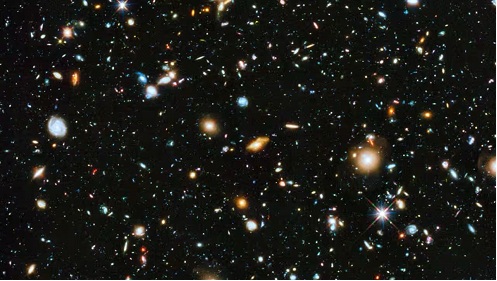 But here is the real cruncher, something most people struggle to comprehend because the numbers are so large. The observable universe contains a further two trillion galaxies consisting of an estimated one septillion stars. As telescopy improves this number can only increase. The unobservable universe.When we look up at a night sky unaffected by light pollution we are only seeing around 0.00003% of the stars in the Milky Way and certainly much, much less of the universe. Due to the limitations imposed by the speed of light, even the most refined telescopes can only detect light that has reached us here on earth. Given that the age of the universe is reckoned to be 13.8 billion years, and accounting for expansion, that gives us an observable universe with a diameter of 93 billion light years. Cosmologists theorise that galaxies exist outside this observable bubble; some believe the universe may be infinite. We are now moving into the realm of theoretical cosmology and to mind boggling possibilities that include multiple universes. I say mind boggling because even those at the highest level of cognitive development struggle to comprehend the nature of the cosmos. Anthropocentrism.The Greco-Abrahamic traditions placed humans at the centre of creation. We are made in God's image, we are the only creatures to have souls and we were created to realise God's plan. The Tantric view is somewhat more expansive. Humans are just one manifestation of sentience, there are realms that contain other beings. One theory of reincarnation believes that every living creature has a soul. Despite this, there is a general consensus that a human incarnation is the best way to attain enlightenment. The Vedic caste system believes that only high caste brahmin males can achieve liberation, women and the lower castes must earn the karmic merit to be born a brahmin male. Wilber's theory of Eros simply repeats the anthropocentrism of these pre-modern worldviews. The ultimate goal of Eros is human transcendence. “The force that produced galaxies from the Big Bang, gorillas from dirt, and global worldcentric concern from egocentric narcissism is the same force that will drive us to higher and higher stages of our own growth, development, and evolution.” (3) But how does this make sense in an observable universe of trillions of galaxies when a single galaxy is far in excess of that needed for a few humans to reach their highest potential? Is there life on Mars?For Wilber's concept of Eros to make any sense life has to be abundant in this absurdly excessive cosmos. Wilber wrote his first book The Spectrum of Consciousness in 1973. 22 years later in 1995 the first exoplanet was detected orbiting 51 Pegasi, a yellow dwarf star 51 light years from Earth. Named Dimidium it is a hot gas giant with an orbit of 4.2 earth days. Since then a further 6,298 exoplanets have been confirmed across 4,709 planetary systems. None show any signs of life. So far. With the deployment of future telescopes, especially the Nancy Grace Roman (August, 2026) we can expect to detect many more exoplanets, especially given that cosmologists believe that the majority of stars have at least one. Despite this the chance that we will discover a planet with complex life remains incredibly slim. The chance that we will encounter advanced life remains even slimmer. And the chance that we will be able to converse with an advanced species to determine if they have the same spiritual experiences we do, or any spiritual experiences at all, is negligible. The Drake equation.The first meeting of the SETI (Search for Extra Terrestrial Intelligence) movement was held in 1961. Intended only as a guide to discussion, astrophysicist Frank Drake developed an equation to assess the probability of discovering intelligent life in our galaxy. It is still in use today. 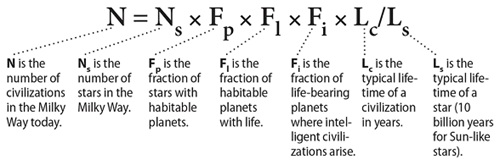 For the purpose of this discussion I want to highlight just three of the factors. 1. The number of planets that can support life. As I mentioned above we have so far detected 4,079 planetary systems. These discoveries have radically changed our understanding of planetary mechanics. Based on our solar system it was assumed that planets close to a star would be hot, rocky planets, gas giants would form in the middle and ice planets further out. The discovery of Dimidium, a hot gas giant close to its sun, challenged those assumptions. Turns out there is a greater variety in how planetary systems form than first thought. To support life a candidate planet must orbit in the habitable zone, where water can exist in its liquid state. It must rotate and not be tidally locked to allow the even distribution of light from its sun. It must have a magnetosphere to protect the surface from cosmic radiation. Some suggest that it must have a moon (or moons) to cause tidal movement as well as plate tectonics to stimulate key chemical processes. Whilst several planets have been located in the habitable zone, many are tidally locked. We are yet to detect a planet that meets all the necessary conditions. This immediately calls Wilber's concept of Eros into question. It seems that the overwhelming majority of planetary systems are not designed to support life. They do not transcend and include. They remain evolutionary dead ends. 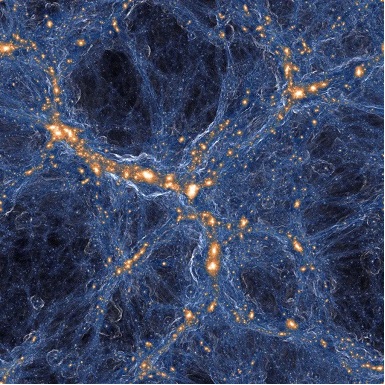 2. The likelihood that a planet in a habitable zone will develop advanced life. Our planet formed around a billion years before life appeared. It took another 4.5 billion years of complex life to generate just one advanced species. Over that time it has experienced five mass extinction events. The earliest homo sapiens skeleton has been dated to 300,000 years ago. Our species remained at Gebser's archaic stage for most of that time. The first proto-city, Çatalhöyük, appearing around 9000 years ago. The Buddha articulated the concept of enlightenment around 2500 years ago. This means that whilst an exoplanet may develop life, even abundant and complex life, it may not produce an advanced species. It may remain at its equivalent of our Mesozoic Era - a static period teeming with life lasting around 180 million years - without producing an advanced species. 3. The likelihood that we will be able to communicate with an advanced species. This is essential if we are to confirm that other advanced species experience enlightenment, the culmination of Wilber's Eros. The SETI process has so far failed to detect any signals from any advanced species. This has been called the Great Silence. It is also known as the Fermi paradox: if there are billions of stars in our Galaxy there must be millions of habitable planets and many advanced civilisations, so where are they? This paradox has generated a great deal of speculation and several proposed solutions. The first is that advanced life is extremely rare. I would suggest that the main barrier is technology. It is difficult to detect signals from distant stars, and interstellar travel is improbable. The limitations are distance, the speed of light and the lifespan of the civilisation. Suppose an advanced civilisation developed on a planet a thousand light years away during our Mesozoic era. They transmitted detectable signals for a period of three hundred years (we have been doing so for less than a hundred) but stopped because their civilisation collapsed. Those signals would have formed a wave three hundred light years long, but our planet lacked the technology to detect them and so they passed us by. There could be many such waves passing through our galaxy undetected. But here's the paradox. Suppose the timing is right and we detect the first signals in the wave and we send a signal back. It would take another thousand years to get there, arriving long after their civilisation had collapsed. This means that for any effective communication to take place, civilisations must be contemporaneous and reasonably close in light years. At this point some may object that advanced civilisations will develop faster than light communication and interstellar travel, but that is the stuff of science fiction. I am sceptical that humans will ever set foot on Mars, let alone establish a permanent base on the Moon (the current Artemis program may very well suffer the fate of its brother Apollo program - a lack of political will leading to budget cuts). 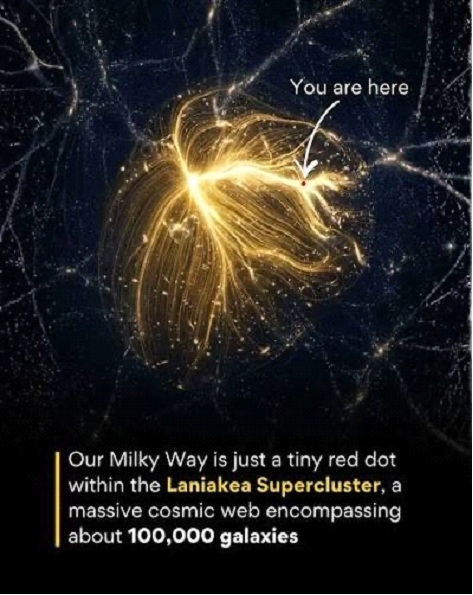 Advanced civilisations probably have existed and likely will exist, just not at the same time. One of the darker solutions to the Fermi paradox, one based on the trajectory of our own civilisation, is that advanced cultures inevitably destroy themselves through conflict and resource depletion. They appear and disappear in the metaphorical blink of an eye. Note: Wilber's measure of advanced life is not to reach the technological capacity to transmit into space, but the ability to achieve enlightenment. In which case it is important to note that the Buddha achieved enlightenment roughly 2,400 years before the first radio transmission. There may be civilisations with advanced spiritual understanding who do not go on to develop advanced technology. How might we know they exist? Alpha and OmegaWe don't know why or how the universe began and we don't know how it will end or even that it will. Cosmology is an active discipline, adjusting its theoretical parameters as new data arrives. It is moving so fast that anything that is written becomes out of date within a few years. For instance, cosmologists no longer use the term the Big Bang, rather they refer to the period of cosmic inflation. Any theory about how the universe began, whether conceived by Bronze Age philosopher priests or contemporary specialists has to deal with two paradoxes: either something came from nothing or something has always existed. The belief in a creator doesn't resolve the issue, it just sidesteps it. Was the creator created or has it always existed? The scientific consensus is that something has always existed and that it is dynamic. One theoretical possibility is that the universe undergoes cycles of expansion and contraction lasting trillions of years. Another possibility is that the universe will slowly run down and enter a deep cold phase. Estimates of the life of the universe vary from 100 trillion years to an incomprehensible 1078 (quinvigintillion) years. And no, I haven't forgotten that spacetime itself was created during the period of expansion, creating yet another paradox. Despite this Wilber insists the Kosmos has direction: “…evolution continues until there is only Unity, ultimate in all directions, whereupon the force of evolution is exhausted, and there is perfect release in Radiance…” (4) Eros and enlightenment.At the beginning of this essay I talked about our vivid imaginations - apophenia. We are a story telling species, our minds are fascinated by myths, fairy tales, ghost stories and complex works of fiction in the form of literature, theatre and the visual arts. Some of the issues I have raised have been a major theme in the science fiction/fantasy genre. It seems that Wilber has gotten caught up in the anthropomorphic fantasy that the Kosmos was created for us, an infant species on a minute grain of sand on one beach out of thousands of beaches and deserts. A bit narcissistic don't you think? But what does this mean in regard to human development and the experience of enlightenment? Not much. It remains demonstrably valid. I can attest to this myself. I followed a recognised spiritual path for many years based on Kashmir Shaivism and I experienced a full range of spiritual states, including nondual realisation (samadhi, the clear light). In other words, I have performed the experiment. I have also studied Jung and experienced the process of individuation and the psychological impact of the archetypes. In fact Jungian psychology provides an answer to the question regarding our vivid imaginations. It is an inherent part of our species's psychology. Eros lies within us, not within some supposed divine teleology, however conceived. We project it onto the Kosmos. Notes.
Widget is loading comments...
|