|
TRANSLATE THIS ARTICLE
Integral World: Exploring Theories of Everything
An independent forum for a critical discussion of the integral philosophy of Ken Wilber
 Dr. Joseph Dillard is a psychotherapist with over forty year's clinical experience treating individual, couple, and family issues. Dr. Dillard also has extensive experience with pain management and meditation training. The creator of Integral Deep Listening (IDL), Dr. Dillard is the author of over ten books on IDL, dreaming, nightmares, and meditation. He lives in Berlin, Germany. See: integraldeeplistening.com and his YouTube channel. He can be contacted at: joseph.dillard@gmail.com Dr. Joseph Dillard is a psychotherapist with over forty year's clinical experience treating individual, couple, and family issues. Dr. Dillard also has extensive experience with pain management and meditation training. The creator of Integral Deep Listening (IDL), Dr. Dillard is the author of over ten books on IDL, dreaming, nightmares, and meditation. He lives in Berlin, Germany. See: integraldeeplistening.com and his YouTube channel. He can be contacted at: joseph.dillard@gmail.com
SEE MORE ESSAYS WRITTEN BY JOSEPH DILLARD Is Liberal Democracy Dying?And if so What is its Effect on Integral Theory?Joseph Dillard
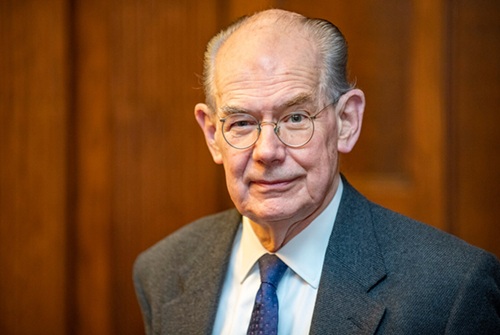
Mearsheimer's overarching claim is that liberalism contains the seeds of its own destruction.
John Mearsheimer, a leading realist in international relations theory, has increasingly argued that liberal democracies, particularly the U.S. and Western Europe, are experiencing internal decay due to self-inflicted wounds stemming from the contradictions and excesses of liberal ideology. Below is a synthesis of his arguments, especially as articulated in his essays and lectures, such as, “The Great Delusion: Liberal Dreams and International Realities”, and interviews, such as “Liberal Delusions: How NATO destroyed Ukraine” (with Glen Diesen). The quotes below are from Mearsheimer. The hyperindividualism of democratic liberalism has eroded social cohesion“If all that matters is the individual, then there is little ground for shared sacrifice or unity.” Classical liberalism emphasizes individual rights and autonomy. However, modern liberalism has elevated individualism to an extreme, undermining shared identity and solidarity. Mearsheimer argues that societies cannot survive without a strong collective identity which is typically national or ethnic, but liberalism is hostile to such communal bonds, especially when they appear exclusionary. This leads to tribalism, identity politics, and cultural fragmentation. Cosmopolitanism vs. Nationalism“Liberalism encourages the erasure of borders, but nationalism is deeply rooted in human nature.” Liberalism tends to favor universalism and cosmopolitan values, such as human rights for all and open borders, which clash with nationalist principles essential for a stable political order. Mearsheimer contends that a nation-state requires a strong sense of national identity, which liberal cosmopolitanism erodes. This results in immigration debates, rising populism, and backlash against perceived elite cosmopolitanism. The Tyranny of Minorities“The liberal project has shifted from protecting minorities to empowering them in ways that threaten the majority.” Mearsheimer argues that liberalism's commitment to protecting minorities has, in practice, created a form of majoritarian resentment. By pushing aggressively for the rights of increasingly narrow identity groups, liberal elites alienate the majority, fueling populist revolts. Failure of Liberal Hegemony Abroad“Liberal democracies are becoming illiberal under the banner of protecting liberalism.” Post-Cold War liberal democracies, especially the U.S., have pursued liberal hegemony, spreading democracy and liberal values globally. According to Mearsheimer, this backfired. Iraq, Afghanistan, and Libya interventions failed while NATO expansion, which Russia viewed as an existential threat, led to the Ukraine war. Due to these international defeats, U.S. credibility declined globally. These failures weakened faith in liberal elites and discredited liberalism as a global model. Loss of Institutional Trust“The liberal project abroad has bred illiberalism at home.” Liberal elites in academia, media, and government are seen as out of touch and undemocratic, often suppressing dissent through political correctness, censorship, or technocratic control. The backlash includes the rise of populist leaders like Trump, declining trust in institutions, and attacks on “the establishment.” Inequality and Economic DisillusionmentAccording to Mearsheimer, globalization and the neoliberal policies championed by liberal democracies have widened inequality, hollowed out the middle class, and fostered resentment. The system benefits cosmopolitan elites while marginalizing ordinary citizens, undermining faith in democratic capitalism. Mearsheimer's overarching claim is that liberalism contains the seeds of its own destruction. When liberal democracies emphasize individual autonomy over collective identity, universalism over nationalism, minority rights over majority cohesion, and global intervention over restraint, they generate self-inflicted wounds that undermine political stability and legitimacy, setting the stage for internal collapse or authoritarian resurgence. Mearsheimer believes liberalism is collapsing under its own contradictions, and that this collapse is both domestic fragmentation and an international backlash to hegemony, “The tragedy of liberalism is that in trying to perfect itself, it sows the seeds of its own undoing.” Implications of Mearsheimer's Analysis for Integral AQALHow does Wilber's Integral AQAL support the assumption that liberal democracy is the best of current forms of government? What are the implications for Integral Theory if liberal democracy collapses? Wilber's AQAL model (All Quadrants, All Levels, Lines, States, and Types) integrates developmental psychology, systems theory, and spirituality. From this framework, liberal democracy is seen as the most evolved form of governance so far, especially from the perspective of developmental depth and complexity. In the upper Left “I” quadrant of consciousness and intention, liberal democracy is viewed, from an AQAL perspective, as protecting freedom of thought, conscience, and spiritual development. AQAL sees this as crucial for individuals to explore higher stages of consciousness. Freedom of expression allows diverse perspectives and stages of development to coexist. In the Upper Right “It” quadrant of behavior and empiricism, AQAL views liberal democracy as enabling scientific progress and individual autonomy by the rule of law and empirical validation. Liberal democracies support health, education, and personal empowerment, aligning with high development in cognitive, moral, and emotional lines. In the Lower Left “We” quadrant of shared meanings, values, and culture, AQAL views liberal democracies as promoting pluralism, inclusion, and dialogue, all of which allow cultures to evolve beyond ethnocentric and mythic worldviews toward worldcentric, and integral values. AQAL identifies late personal postmodernism as a necessary developmental stage, even if it's messy, on the way to Integral, Second Tier culture. In the Lower Right “Its” quadrant of objective relationships and systems, AQAL sees liberal democracies as institutionalizing checks and balances, legal equality, and market economies, reflecting complex systemic coordination. These are more evolved than tribal, feudal, or authoritarian systems, which are viewed as pre-modern. In “Up from Eden,” “A Brief History of Everything,” and “Trump and a Post-Truth World,” Wilber makes it clear that: “Liberal democracy, combined with capitalism and modern science, represents the greatest leap in human freedom, prosperity, and knowledge in history—up to the Green stage of development.” So Wilber implicitly and explicitly supports liberal democracy as the current best container for individual and collective development. If Liberal Democracy Collapses…If liberal democracy were to collapse, either through authoritarian regression, techno-feudalism, or postmodern disintegration, it would raise serious challenges for Integral Theory. Regression in Collective AltitudeSocietal collapse into traditional or authoritarian systems would likely suppress freedom of thought, reduce pluralism, and re-entrench tribal/ethnocentric values. This would stall or reverse the progression to Integral consciousness in the collective LL and LR quadrants. Loss of the “Holding Environment”The developmental psychology of Vygotsky and Kegan suggests humans evolve best in safe but challenging social environments. Liberal democracies provide the “holding environment” needed for individuals to grow through mid-personal, late personal, and beyond. Without it, developmental ceilings may lower en masse, with fewer people accessing higher-stage capacities. Integral Theory Risks Becoming Utopian or ElitistIf liberal democratic contexts vanish, Integral may become an idealistic enclave or “ivory tower” philosophy with little real-world traction. This would exacerbate the criticism that Integral Theory is too theoretical, elite, or detached from material conditions. Spiral Dynamics Alignment Breaks DownSpiral Dynamics, which influenced Wilber's model, views societal development as a dynamic spiral toward more complex worldviews. Liberal democracy is the late personal platform from which Integral developmental levels can emerge. Collapse would interrupt or even sever this pathway, requiring a reimagining of post-late personal development in new, possibly authoritarian or post-capitalist, forms. Need for Post-Liberal Integral StructuresIf liberal democracy fails, Integral Theory must address how to preserve developmental space under non-liberal conditions. Could Integral governance arise from non-democratic systems, such as benevolent technocracy, decentralized networks, or post-capitalist communes. Liberal democracy—while flawed—is seen within Integral Theory as the most developmentally supportive political system so far. This is because it sees liberal democracy as offering maximum freedom for self-expression and interior development, space for pluralistic and worldcentric cultural evolution, and institutions complex enough to handle higher-order coordination What system does Mearsheimer think is most likely to replace a collapsed liberal democratic order? While Mearsheimer does not explicitly state what such a system is likely to be, we can infer a few key points about what he sees as likely successors or replacements: Return to Nationalism and RealpolitikMearsheimer argues that liberal democracy is under threat because of liberal overreach, particularly the attempt to export liberalism abroad through regime change and the erosion of national identity at home. Nationalism is, in his view, the strongest ideological competitor to liberalism and more deeply rooted in human psychology. As liberal democracies weaken, nationalist and authoritarian populist movements tend to rise. He sees this trend as already well underway in the U.S., Europe, and elsewhere. Mearsheimer predicts a shift toward illiberal nationalist democracies or authoritarian systems but does not necessarily advocate for them. Authoritarianism as a fallback or inevitabilityMearsheimer sees the erosion of liberal norms and polarization as likely leading to a breakdown in institutional functionality. In that vacuum, strongman-style leadership or executive overreach may become more common. Democratic institutions may remain in name only, while illiberal governance increases. Mearsheimer believes authoritarianism may emerge by default, not by design. At the international level, Mearsheimer emphasizes a realist, multipolar order. Great powers, such as the U.S., China, and Russia will compete based on interests, not values. The U.S. will be forced to act more like a traditional realist state, eschewing liberal idealism in favor of power politics. The liberal international order is likely to give way to a pragmatic, interest-driven order, not a coherent new ideology. Mearsheimer does not lay out a blueprint for a new political philosophy, advocate for technocracy, socialism, or post-liberal alternatives like communitarianism or integralism. He is critical, not constructive. His goal is to warn about liberalism's trajectory, not design its replacement. What supporters of liberal democracy, Wilber, and Mearsheimer ignore or minimize is the extent to which some competitive systems labeled nationalistic or authoritarian have internalized aspects of liberal democracy that are adapted to their societies and cultures. For example, both China and Russia have thriving democratic institutions, although Western media and state agents work hard to present an authoritarian picture to Westerners and others. Also, in terms of standard of living, China surpasses the U.S. in PPP (purchasing power parity) and is projected to surpass the U.S, in GNP by 2030. Both Chinese and Russians demonstrate high trust in their governments, regardless of how they are portrayed in the West. In terms of provision of social services, education, public safety, infrastructure, and scientific research, both China and Russia are on par with or surpass the U.S. in multiple areas. What we can conclude is that if liberal democracy in the West collapses it is highly likely that many institutions and improvements associated with it will continue under the auspices of whatever systems take its place.
Widget is loading comments...
|