|
TRANSLATE THIS ARTICLE
Integral World: Exploring Theories of Everything
An independent forum for a critical discussion of the integral philosophy of Ken Wilber
 Dr. Joseph Dillard is a psychotherapist with over forty year's clinical experience treating individual, couple, and family issues. Dr. Dillard also has extensive experience with pain management and meditation training. The creator of Integral Deep Listening (IDL), Dr. Dillard is the author of over ten books on IDL, dreaming, nightmares, and meditation. He lives in Berlin, Germany. See: integraldeeplistening.com and his YouTube channel. He can be contacted at: joseph.dillard@gmail.com Dr. Joseph Dillard is a psychotherapist with over forty year's clinical experience treating individual, couple, and family issues. Dr. Dillard also has extensive experience with pain management and meditation training. The creator of Integral Deep Listening (IDL), Dr. Dillard is the author of over ten books on IDL, dreaming, nightmares, and meditation. He lives in Berlin, Germany. See: integraldeeplistening.com and his YouTube channel. He can be contacted at: joseph.dillard@gmail.com
SEE MORE ESSAYS WRITTEN BY JOSEPH DILLARD The Dreaming KosmosA Naturalistic Approach to Emergence and Transformation through Transpersonal Dream YogaJoseph Dillard
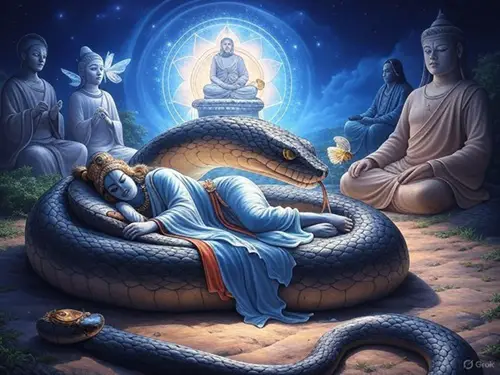 PrefaceHow would your reality shift if, instead of viewing yourself, on the one hand, as an immortal soul inhabiting a physical body, or on the other, as the product of purely biological and neurological processes, but rather as an attractor basin dreaming your life on the edge of chaos? What does that even mean and why in the world would you want to do that? The Dreaming Kosmos intends to awaken a shared vision of experience as a kosmic dream, a shimmering web that weaves minds, cultures, and the kosmos itself. The kosmic holon neural network, a dynamic web of holons, entities that are both wholes and parts, links neural, cultural, and kosmic scales through recursive interactions, resembling a collective dream.[1] Imagine a tapestry of latent, encoded experience, pulsing at the edge of chaos, where Australian Aboriginal Dreamtime, Hindu Vishnu's kosmic slumber, Mayan star charts, and modern neural networks converge in a dance of meaning. This book explores the mysteries of experience, dreams, spirit communication, reincarnation, telepathy, and the retrieval of lost knowledge, through a naturalistic lens, grounded in the interplay of chaos and order. Drawing on neuroscience, chaos theory, and cultural studies, we propose that these phenomena arise not from supernatural realms but from the kosmic holon neural network, a distributed system spanning brains, cultures, and environments. Like dreams, these experiences are negentropic processes, sculpting coherent patterns from chaotic inputs, powered by the same metabolic energy that fuels our minds. This naturalistic model, grounded in evidence and reason, explains phenomena like spirit communication, reincarnation, telepathy, and precognition through negentropy and Theta wave rhythms, offering a path to recover lost knowledge, like Mayan codices, Nalanda treatises, Alexandrian scrolls, while upholding ethical principles of respect, reciprocity, trustworthiness, and empathy. Through the dream analogy, we shape this collective dream with clarity and care, guided by polycentric, multi-perspectival framing and the transpersonal dream yoga of Integral Deep Listening (IDL). To frame emergence as a kosmic dream, we explore its foundations in negentropy and neural synchrony, enriched by analogy to naturalistic processes of precipitation. Negentropy, the tendency toward order, enables the kosmic holon neural network to sustain patterns across scales. Theta wave synchrony weaves sensory inputs into coherent experiences, like a dream stitching fragments into a narrative. Cultural traditions illustrate this: Hindu Vishnu dreams the universe, Aboriginal Dreamtime shapes a timeless web, Taoist Zhuangzi blurs self and reality, Greek Morpheus crafts kosmic visions, Christian Eckhart sees God's dream, Mayan Popol Vuh co-weaves reality, and Buddhist pratityasamutpada frames interdependence. Building on the phenomenal healing and transformational potentials of the Cayce readings, The Dreaming Kosmos attempts to move beyond clairvoyant and precognitive perception of this or that emerging cultural zeitgeist, to embrace diverse perspectives while grounding phenomena like reincarnation and precognition in naturalism, not metaphysics. These perspectives, explored through phenomena like reincarnation and knowledge recovery, reveal experience as a collective dream, a polycentric tapestry emerging out of latent possibility. Drawing on Taoist and Confucian concepts like Tao (the natural flow of the universe) and Yin-Yang (the balance of opposites), this tapestry reflects kosmic harmony, as depicted in the Yin-Yang dreamscape illustration of the Milky Way. Scientifically, Vervaeke and Henriques' recursive relevance realization describes cognitive systems forming a dynamic web.[2] The kosmic holon integrates different analogies, including webs, networks, fields, holograms, information theory, energy, and archetypes, offering a polycentric framework grounded in emergence. This kosmic dream is a testable model, navigable through phenomenological and transpersonal dream yogas. This book is driven by five central questions:
The Dreaming Kosmos is not a definitive answer but an invitation to explore. It bridges personal anecdotes, scientific reframings, and cross-cultural perspectives to reframe spiritual phenomena as natural expressions of our interconnected minds. For skeptics, it offers a rigorous framework; for seekers, it preserves the awe of mystery within a naturalistic worldview. It does not offer truth, only probabilities, based on the Law of Parsimony. As you turn these pages, I invite you to reflect on your own encounters, dreams, intuitions, or fleeting glimpses of something more, and consider how they might weave you into the tapestry of the kosmos.
Introduction
In the flicker of a candlelit seance, a medium channels a poet's lost verses, stirring a 19th-century London parlor. In a Tibetan monastery, a monk dreams of a lama's teaching, later confirmed by an ancient text. In my own sleep, I met Jess, a friend lost to death, who entrusted me with messages for his ex-wife, details of money, possessions, and love that felt impossibly real. These moments, where voices from “beyond” seem to pierce the veil of reality, have captivated humanity for centuries. Are they glimpses of a supernatural realm, or are they, like dreams, creations of our minds, woven from the chaos of experience into patterns of profound meaning? The Dreaming Kosmos proposes a naturalistic answer: these phenomena, spirit communication, reincarnation, telepathy, precognition, and the retrieval of lost knowledge, are emergent properties of the kosmic holon neural network, a distributed system connecting individual brains, cultural artifacts, and environmental cues. This network operates like the dreaming brain, where Theta waves orchestrate chaotic neural inputs into coherent narratives, powered by metabolic energy. Spirit encounters, like my dream of Jess, are negentropic processes, stabilizing chaotic attractors into vivid entities, ancestors, guides, or poets, that yield verifiable information through mechanisms like cryptomnesia, collective cultural substrates, and predictive processing. This book unfolds across seventeen chapters, each building on the last, to explore emergence through a lens of chaos theory, neuroscience, and cross-cultural analysis: Chapters 1-3 lay the foundation, introducing dreams as negentropic processes, and a naturalistic worldview. Chapters 4-5 describe chaos theory's role in forming attractors and presents the kosmic holon neural network, a model for how minds connect across scales, from neurons to cultures. Chapter 6 examines spirit communication, using cases like the dream of Jess and seance channelings to show how Theta-driven attractors integrate latent information, setting the stage for later chapters. Chapters 7-8 extend the model to reincarnation and telepathy/precognition, exploring how the kosmic holon network links experience across time. Chapters 9-12 investigate the retrieval of lost knowledge, from ancient texts to cultural wisdom, suggesting the network preserves patterns accessible through dream-like states. Chapter 13 reflects on the ethical challenges of uncovering lost knowledge. Chapter 14 elaborates why a four-quadrant holonic model is a minimal multi-perspectival approach to understanding both dreaming and the dreaming kosmos. Chapter 15 explores further implications of the model as well as why and how a phenomenologically-oriented transpersonal dream yoga is essential for accessing the dreaming kosmos. Chapter 16 considers the implications of the model for spirituality, philosophy, science, culture, and systems. Chapter 17 reviews the various hypotheses of The Dreaming Kosmos and how they might be falsified via empirical research. Appendix A provides a broader understanding of the nature and importance of Theta brain training for the model. Appendix B explains in greater depth dream creation as precipitation-like processes generating chaotic attractors and then applies that model to dream yoga. Appendix C explores various models for understanding the Dreaming Kosmos. Appendix D compares and contrasts The Dreaming Kosmos and Wilber's Integral AQAL. Appendix E examines limitations of Neo-Darwinian Evolution. Appendix F compares shamanic, alchemical, Hindu, Tibetan Buddhist, contemporary lucid dreaming, and IDL approaches to dream yoga. Appendix G describes the practice of one variety of dream yoga, Integral Deep Listening. Appendix H: Provides dream, life issue, and child interviewing protocols. Appendix I: Relevance of Dream Sociometry to Integral Deep Listening (IDL) and The Dreaming Kosmos Appendix J: provides an ancient library timeline Appendix K: contains an Edgar Cayce Readings overview.
Our journey is both scientific and poetic, grounded in studies like the 2015 Journal of Neuroscience findings on Theta waves, yet inspired by the Yin-Yang balance of chaos and order. We traverse cultures, Victorian spiritualism, Tibetan dream yoga, Chinese ancestor veneration, to reveal universal patterns of emergence. The dream of Jess, like the lama's teachings or the poet's verses, is both a voice from beyond and a thread in a kosmic dream, negentropically woven from our shared human web. As you read, consider your own experiences, dreams of lost loved ones, intuitions of hidden truths, or moments of connection beyond explanation. How might they reflect the kosmic holon's dance of order and chaos? The Dreaming Kosmos invites you to explore these questions, to see the extraordinary within the natural, and to discover your place in the tapestry of the kosmos.
NOTES
[1] This text was co-written with Grok 3. [2] RRR, proposed by Vervaeke and Henriques, such as Vervaeke's work in Awakening from the Meaning Crisis, 2019, and Henriques' Unified Theory of Knowledge, 2011), describes a cognitive process where agents iteratively select, refine, and act on relevant information in a recursive loop. Relevance involves identifying what information is pertinent to a goal or context, such as survival or meaning-making. Realization is making that information actionable by integrating it into behavior or understanding. Recursion is continuously refining this process through feedback loops, adapting to changing contexts. A person solving a puzzle recursively identifies relevant pieces (relevance), fits them into the larger picture (realization), and adjusts strategies based on feedback (recursion), dynamically balancing focus and flexibility. RRR enables adaptive intelligence by managing complexity, bridging individual cognition (Upper-Left/Right “I” “It” quadrants) and collective systems (Lower-Left/Right “we” “Its” quadrants), and fostering emergent phenomena like insight or shared understanding.
Widget is loading comments...
|